Braces can genuinely affect your appearance — but not in the way people often imagine. They don’t “reshape” the face; they change the position of the teeth and how the jaws interact. Because of this, the profile, lip position, and overall perception of the lower part of the face can shift.
How noticeable these changes turn out to be depends on the starting point: the type of bite, jaw position, and treatment plan. For some people the result is very pronounced, for others more subtle. And an important caveat: not every asymmetry can be fully corrected with braces alone. Below, we break down how braces change the face, what they can realistically change, and where it’s worth tempering expectations.
How the Bite Affects Facial Shape and Symmetry
A bite isn’t just about “straight teeth.” It directly affects how the lower part of the face looks: the lips, chin, jawline. The changes are sometimes subtle, but they’re exactly what shapes the overall impression.
When the teeth don’t come together correctly, the body starts to compensate — the muscles work differently, the jaw position shifts, and this gradually shows up in appearance.
Profile
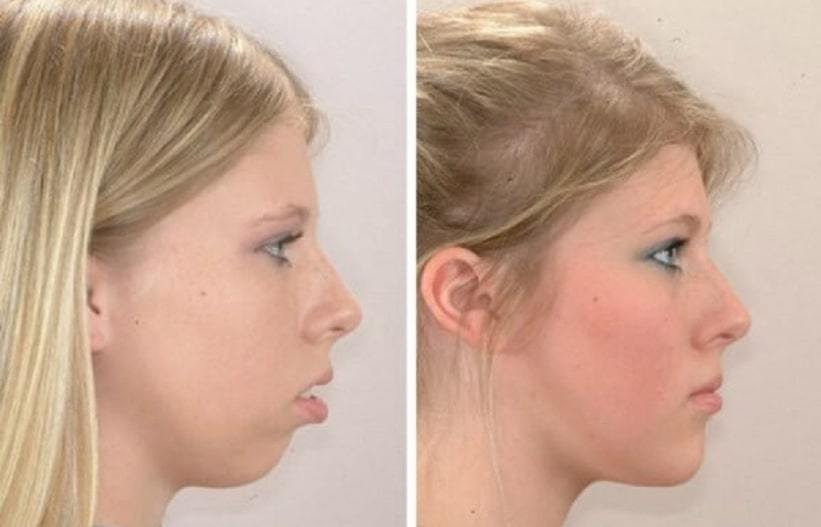
Jaw position is easy to see from the side. If one jaw is shifted forward or backward, the profile can look more “convex,” or conversely, slightly sunken. When the bite is corrected, the profile often becomes more harmonious, without sharp transitions.
Lips
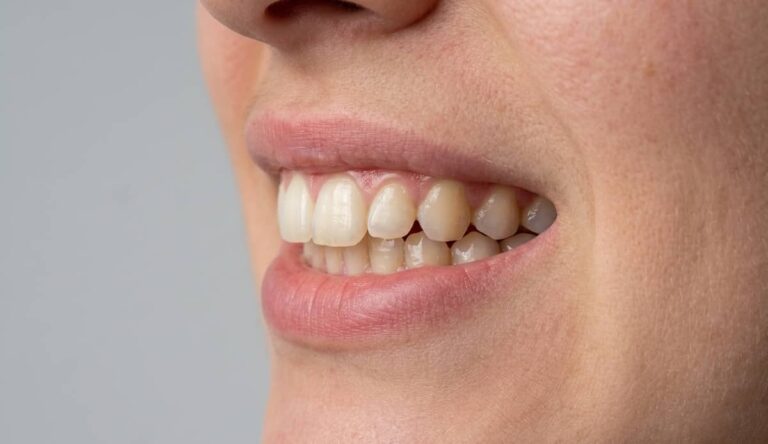
Lip position depends on where the teeth sit. If the teeth protrude, the lips may look strained or fail to close fully. If the teeth are tipped inward instead, the lips can look thinner. After treatment, they usually appear more relaxed and natural.
Chin
Even without surgery, bite position affects how the chin is perceived. It can look less defined, or conversely, too prominent, depending on how the lower jaw is positioned. After correction, the balance shifts and the chin looks more proportionate.
Facial Oval
If one side chews more than the other, the muscles work unevenly. Over time this can create slight asymmetry — one side looking more tense. When the bite is aligned, the load is distributed more evenly, and the face looks more balanced.
Symmetry
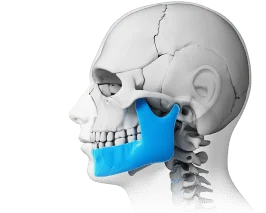
With a misaligned bite, the lower jaw can shift slightly to one side, making the face look “crooked,” especially in the lower half. After treatment, this lower-jaw asymmetry often becomes less noticeable — but it’s important to understand: if the cause lies in bone structure, it may not disappear completely.
In simple terms: the bite is the foundation. When it’s off, it shows in more than just the teeth. And when it’s corrected, it’s not just the smile that changes, but the overall perception of the face.
How the Face Changes After Braces: Stage by Stage
Changes after braces are placed don’t happen all at once. It’s a gradual process in which the teeth, muscles, and soft tissue adapt at different rates. That’s why it’s important to understand: what you see at different stages isn’t the final result.
During Treatment
At the start and midway through treatment, the face can genuinely look unusual — sometimes even less flattering than expected. This is a normal part of the process, not a sign that something has gone wrong.
What happens during this period:
the teeth are already moving actively, but haven’t yet settled into their final position;
the bite may look “unstable,” since some teeth are already aligned and others aren’t;
the lips may change shape, both from tooth movement and from the braces hardware itself;
the profile can temporarily shift and may look less harmonious.
Muscle adaptation also plays a role. The muscles are used to working in their old position and need time to adjust. So at this stage:
facial expressions can look somewhat strained;
there’s a sense of having an “unfamiliar face”;
asymmetry can sometimes even become more pronounced.
This is temporary. This is the period when the main work is happening, and it’s too early to judge the result.
After the Braces Come Off
How does the face change after braces? Once the braces are removed, the teeth are already in their planned position. But this still isn’t the “final” result in terms of appearance.
What’s usually noticeable right away:
the profile looks straighter and more balanced;
the lips settle into a more natural position, without tension;
the lower part of the face looks more harmonious.
But there’s an important nuance — the soft tissue is still adapting. After the braces come off:
the muscles gradually get used to the new jaw position;
facial expressions become more natural;
the face “relaxes” and looks more cohesive.
That’s why the final result takes shape not on the day the braces come off, but over the following months. The retention phase is also important during this time — it helps lock in the changes.
Can Braces Correct Facial Asymmetry?
How can braces correct facial asymmetry? This question often creates inflated expectations, so it’s worth setting clear boundaries from the start.
Braces can genuinely improve symmetry if the issue is bite-related. For example:
one side chews more actively than the other;
the teeth are unevenly positioned and “shift” the bite;
the lower jaw drifts slightly to one side when biting down.
In these situations, once the teeth are aligned and the bite is normalized, the face often looks more balanced — the asymmetry becomes less noticeable.
But if the cause runs deeper — in the structure of the jaw or bones — braces have limited effect. They don’t fundamentally change bone shape. In such cases, combined treatment may be needed, for example alongside surgery.
One more important point: a perfectly symmetrical face is the exception rather than the rule. The goal of treatment isn’t “perfect symmetry” — it’s a more harmonious, balanced appearance.
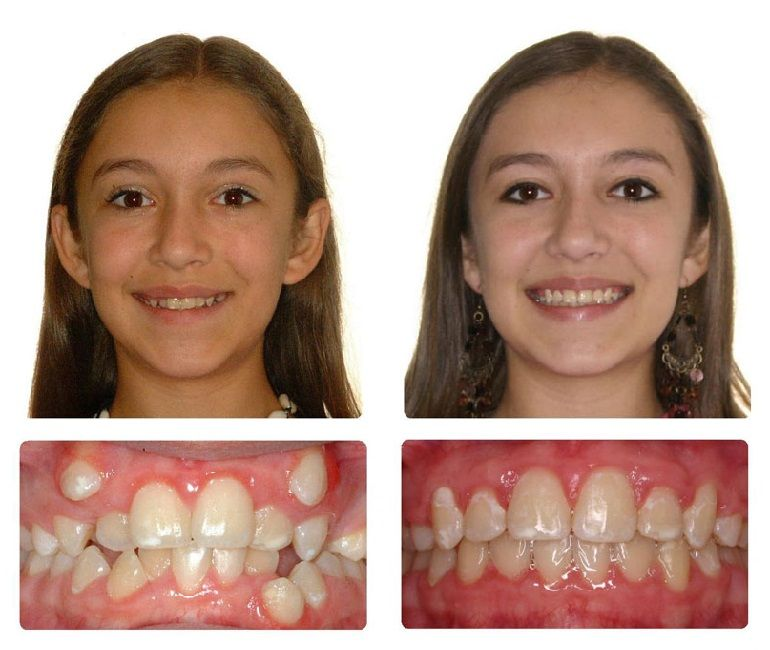
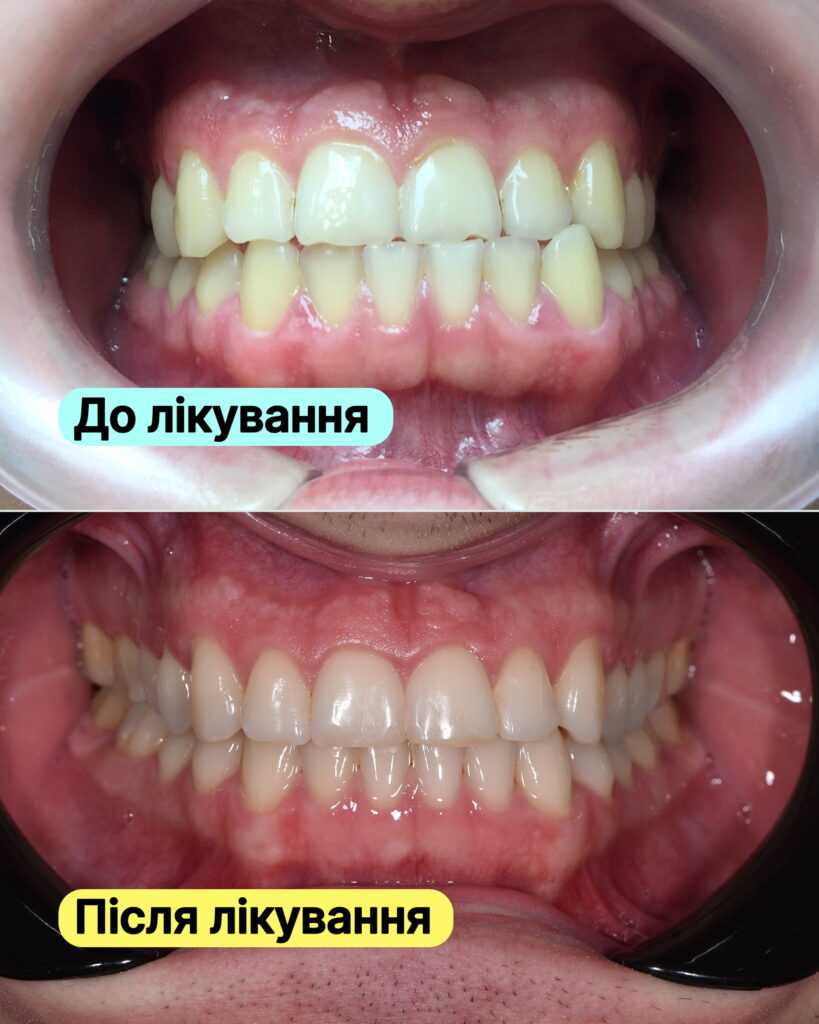
Patient’s Story Bite Correction with Damon Q Braces
A 29-year-old patient came to the clinic with complaints of malocclusion and misaligned teeth.
In the photo:
Before treatment — malocclusion and dental crowding.
After treatment — straight dental arch, proper bite alignment, and a harmonious smile.
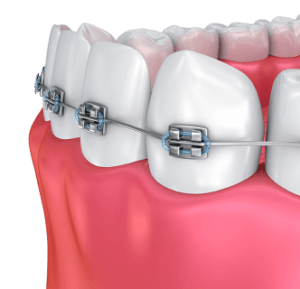
The Damon Q self-ligating metal braces were used for the treatment.
Thanks to the modern bracket design, treatment proceeds as efficiently as possible, and the teeth gradually move into their correct position.
The result is not only a more aesthetic smile but also a proper bite, which is important for the health of the teeth, gums, and temporomandibular joint.
What the Result of Bite Correction Depends On
The same type of braces can produce very different results in different people — and that’s normal. Orthodontic treatment is always individual: it depends on the starting point, the plan chosen, and how the process unfolds.
Age plays an important role. In teenagers, tissue is more pliable and the jaws are still forming, so changes often happen faster and can be more noticeable. In adults, results are still achievable, but the process usually takes longer, and certain anatomical features can’t be changed by braces alone.
The type of bite is an equally significant factor. Different bite issues affect appearance and function differently, so results vary too: in some cases the changes are subtle, in others more pronounced — especially when the profile or jaw position is involved.
The treatment plan itself also matters a great deal. Even with a similar starting point, the approach can differ: sometimes tooth extraction is needed, sometimes additional elements are used to help move teeth more precisely. The plan sets the direction for all the changes and affects how they show up in appearance.
Discipline is another separate factor. Orthodontic treatment works as a system: if visits are skipped, elastics aren’t worn, or recommendations are ignored, the teeth simply don’t move the way they should. As a result, the changes can be less noticeable or less stable.
And finally, there’s the retention stage. After braces come off, teeth tend to shift back toward their original position, so they need to be held in place. That’s what retainers are for. If this stage is skipped or shortened, even a well-achieved result can partially be lost.
In short, bite correction isn’t just about the braces themselves. It’s a combination of the starting situation, a well-designed plan, and how consistently that plan is followed.
Before-and-After Braces Photos: How to Properly Evaluate the Result
To understand exactly how the face changes after braces, before-and-after examples are a helpful reference. They show the dynamics well — how the profile, lip position, and overall facial balance shift. But it’s important to look at such photos not just as a “nice picture,” but to understand what’s actually influencing them.
Even within the same treatment, results can look different depending on the shooting conditions. The same face can look more harmonious, or conversely, less striking, due to minor details unrelated to the bite.
Keep a few things in mind when looking at the photos below:
Angle. A slight turn of the head or a different distance from the camera already changes how the profile and chin look.
Lighting. Soft light smooths out features, harsh light emphasizes shadows and volume.
Expression. Tense or relaxed lips create a different impression of the lower face.
Head position. Even a slight forward or backward tilt changes the line of the chin.
So it’s worth evaluating not just the “dramatic difference,” but the deeper changes:
whether the profile has become more balanced,
whether lip position at rest has changed,
whether the lower part of the face looks more harmonious.
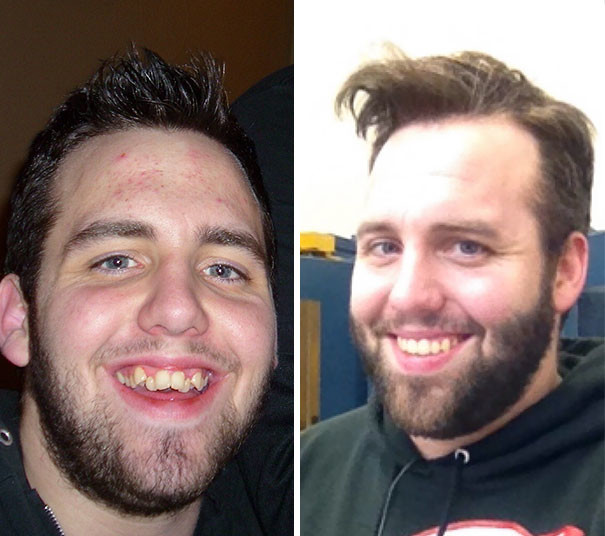
Below are examples that help show what before-and-after braces results look like for the face.
The face before and after braces doesn’t change dramatically, but the difference is noticeable in the details. Most often, the profile straightens out, the lips look more relaxed, and the lower part of the face appears more harmonious.
FAQ
Does the face change after braces?
Yes, but not dramatically. The profile and lip position are what change most often.
Do braces help with facial asymmetry?
Yes, if the cause is bite-related. If it’s in the bone structure, a different approach may be needed.
What should I do if there’s lower jaw asymmetry?
Start with an orthodontist consultation. From there, it depends on the case — either braces or combined treatment.
 (044) 394 90 94
  Holosiivska/Demiivska metro station











Your email will not be published on the site.