Special offer! Comprehensive professional teeth cleaning for only 1699 UAH.
Special offer! Comprehensive professional teeth cleaning for only 1699 UAH.
Special offer! Comprehensive professional teeth cleaning for only 1699 UAH.
Special offer! Comprehensive professional teeth cleaning for only 1699 UAH.
Special offer! Comprehensive professional teeth cleaning for only 1699 UAH.
Special offer! Comprehensive professional teeth cleaning for only 1699 UAH.
Special offer! Comprehensive professional teeth cleaning for only 1699 UAH.
Special offer! Comprehensive professional teeth cleaning for only 1699 UAH.
Special offer! Comprehensive professional teeth cleaning for only 1699 UAH.
Special offer! Comprehensive professional teeth cleaning for only 1699 UAH.
Sign up
 (044) 394 90 94
(044) 394 90 94  Holosiivska/Demiivska metro station
Sign up
(044) 394 90 94
(044) 394 90 94
Doctors


 Prices
Blog
Contacts
Prices
Blog
Contacts
пр.Лобановського, 130, Київ, Україна
Temporarily closed
Opening soon
78A, Irpinska St., Kyiv, Ukraine
Temporarily closed
Opening soon
32A, Heroiv Dnipra St., Kyiv, Ukraine
Temporarily closed
Opening soon
9B, Yevhena Chykalenko St. (Pushkinska), Kyiv, Ukraine
Temporarily closed
Opening soon
(044) 394 90 94
Back
Dentistry

General Dentistry
Dental surgery
Dental Implants
Maxillofacial Surgery
Dental prosthetics
Cosmetic dentistry

Professional Dental Hygiene

Periodontics
Orthodontic dentistry

Gnathology & TMJ Therapy

Pediatric Dentistry
Dental X-Rays
Back
Orthodontic Center
Orthodontic dentistry
Gnathology & TMJ Therapy
Back
Prosthodontic Center
Dental prosthetics
Back
MED-DEO Center for Maxillofacial Surgery & Facial Plastics
Maxillofacial Surgery
Plastic surgery
Back
Surgical Dental Center
Dental surgery
Dental Implants
Search on the site


Popular requests
Teeth whitening
Treatment of caries
Wisdom tooth extraction
Bracket system
Dental veneers
Tooth restoration
Pediatric dentist
Consultation with a dentist-therapist
Search results by: «».
Unfortunately, no results were found for your search: “Pediatric Endocrinologist”, nothing was found.
You may find these links useful:
Clinics "MED-DEO"
пр.Лобановського, 130, Київ, Україна
Temporarily closed
Opening soon
78A, Irpinska St., Kyiv, Ukraine
Temporarily closed
Opening soon
32A, Heroiv Dnipra St., Kyiv, Ukraine
Temporarily closed
Opening soon
9B, Yevhena Chykalenko St. (Pushkinska), Kyiv, Ukraine
Temporarily closed
Opening soon
Services
Dentistry Orthodontic Center Prosthodontic Center MED-DEO Center for Maxillofacial Surgery & Facial Plastics Surgical Dental CenterGeneral Dentistry
Dental surgery
Dental Implants
Maxillofacial Surgery
Dental prosthetics
Cosmetic dentistry
Professional Dental Hygiene
Periodontics
Orthodontic dentistry
Gnathology & TMJ Therapy
Pediatric Dentistry
Dental X-Rays
Orthodontic dentistry
Gnathology & TMJ Therapy
Dental prosthetics
Maxillofacial Surgery
Dental surgery
Dental Implants

What Is Hyperemia and How Does It Manifest?
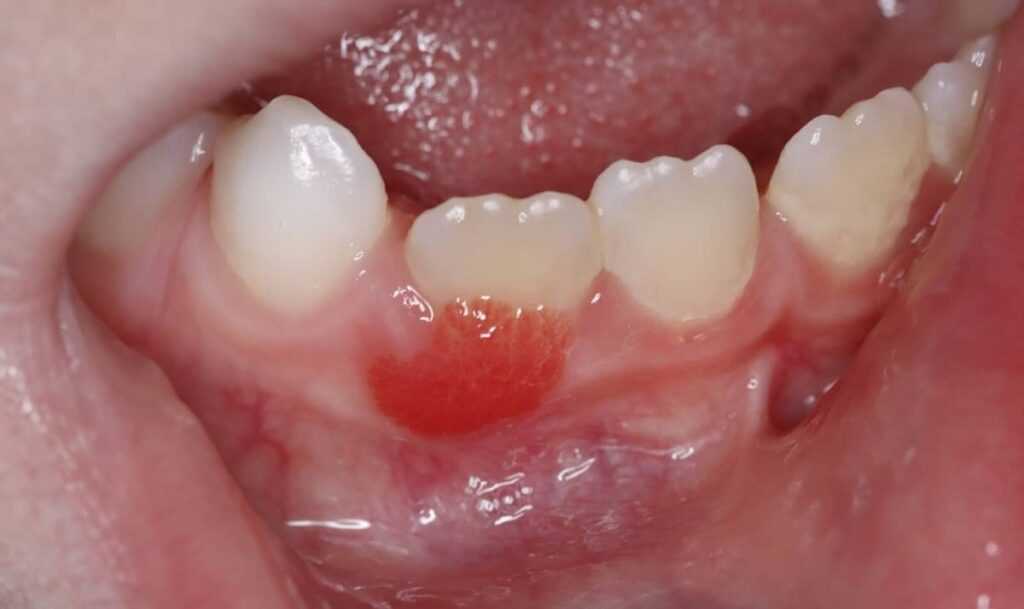
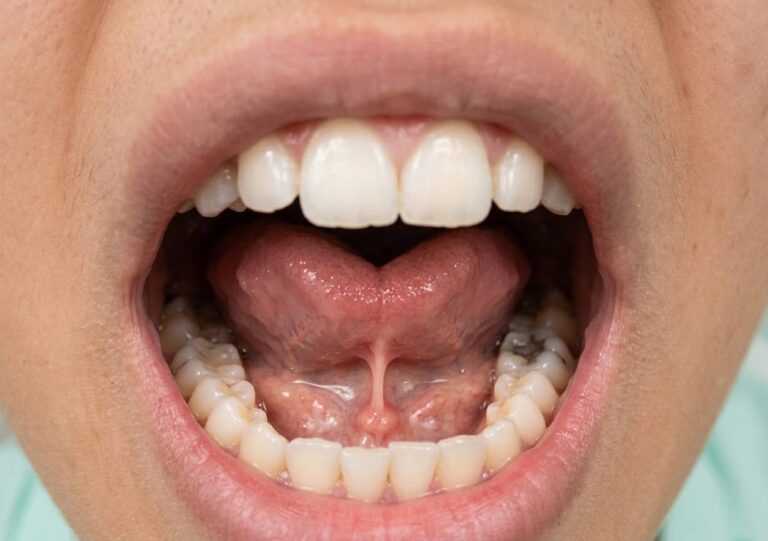
Patients frequently ask what hyperemia actually is — and, more importantly, whether it’s a disease in its own right. Hyperemia is a condition in which blood flow to a particular area increases, causing the tissue to redden. In other words, more blood than usual is being delivered to a specific site. In dentistry, this shows up as visible redness of the gums or the lining of the mouth. In some cases, swelling or heightened sensitivity accompanies the discoloration.
IMPORTANT: Hyperemia is not a standalone disease. However, it can be a sign of inflammation, irritation, tissue trauma, or another underlying issue.
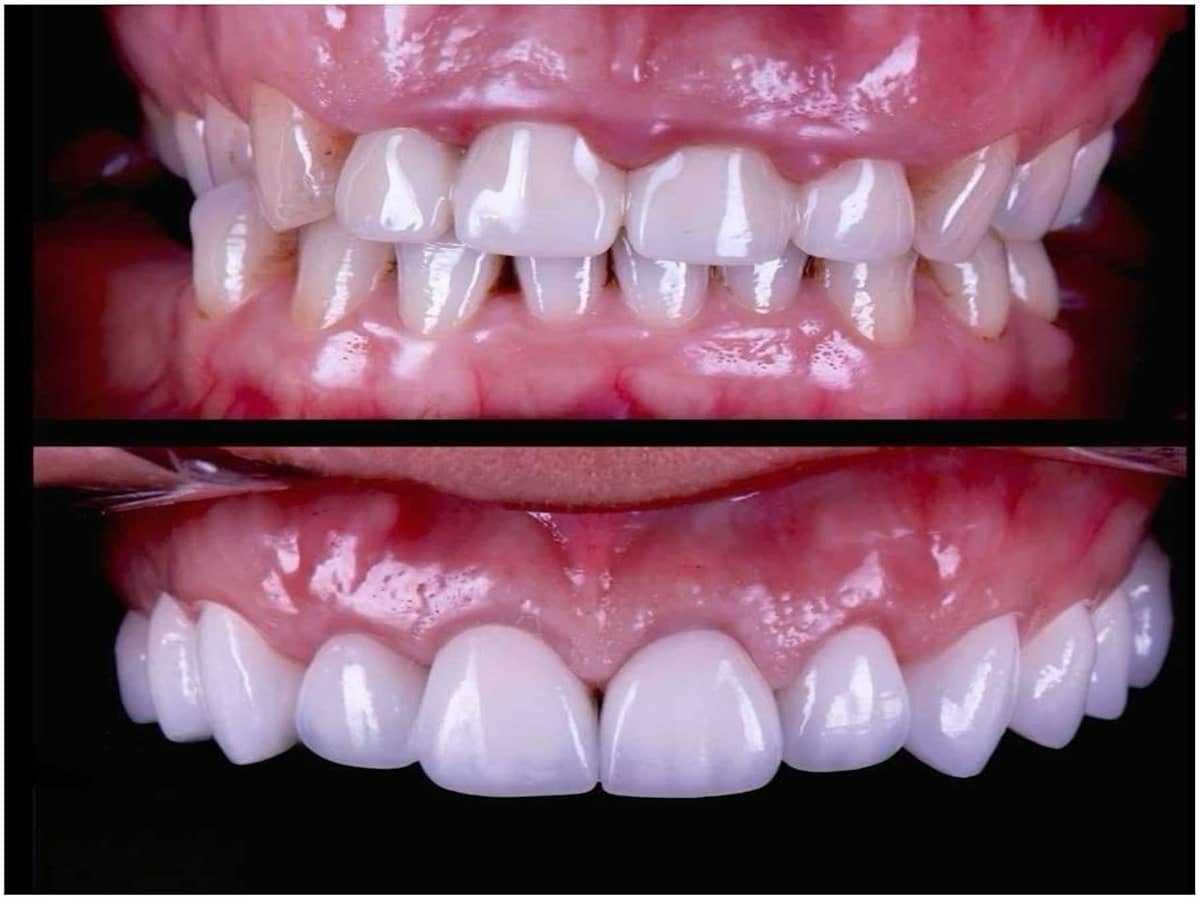
The condition typically presents as follows:
- Visible redness of the affected tissue
- Mild to pronounced swelling
- Increased tissue sensitivity
- Discomfort during eating or brushing
Dentists note that hyperemia is extremely common in clinical practice — but there’s no need to panic. What matters is identifying the underlying cause and treating it appropriately.
Gum, Oral Mucosa, and Tongue Hyperemia: Common Causes
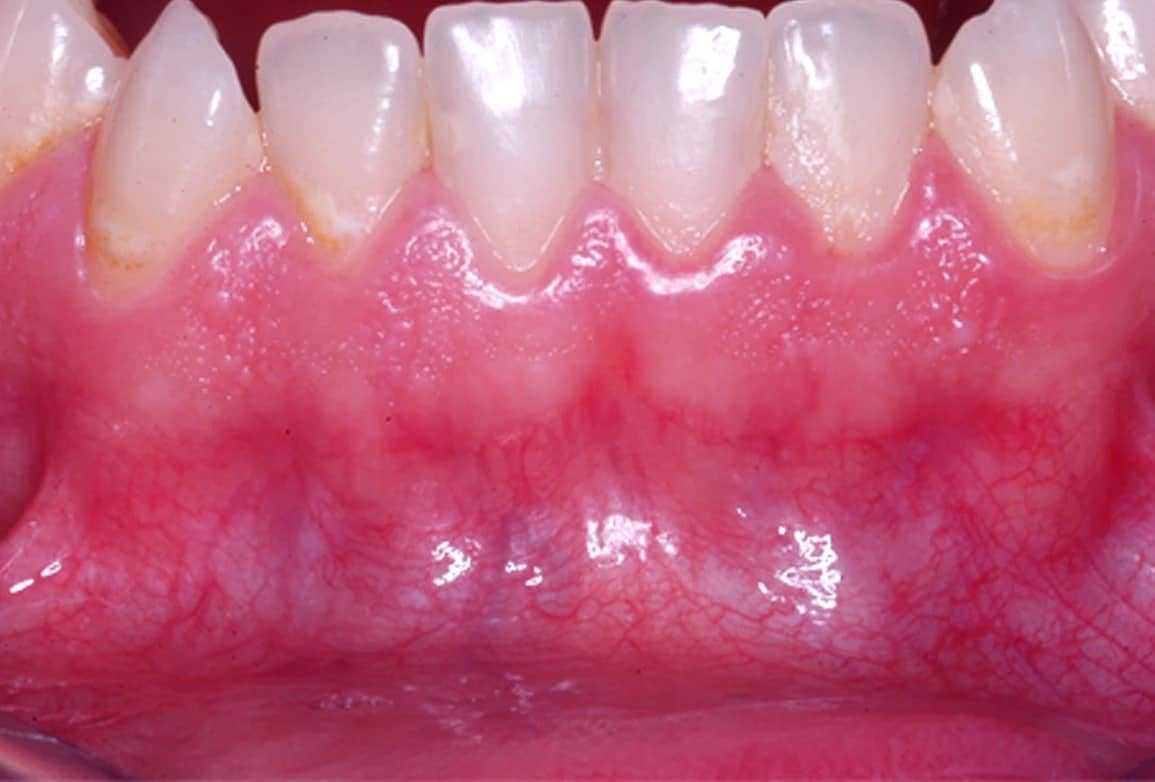
Gum hyperemia most often develops against a backdrop of inflammation — namely gingivitis or periodontitis. The oral mucosa or tongue may be affected at the same time. Hyperemic mucosa is frequently swollen in addition to being red, while a hyperemic tongue tends to be sensitive to food and temperature and may produce a burning sensation.
Whether it’s the mucosa, gums, or tongue, the underlying causes are usually the same:
- Bacterial plaque and tartar — the most common triggers of gingivitis and periodontitis
- Stomatitis (viral, bacterial, or fungal) — directly inflames the oral mucosa
- Mucosal trauma (hard foods, malocclusion, braces) — mechanically irritates the tissue, even if only briefly
- Allergic reactions (to toothpaste, mouthwash, or filling materials) — provoke an inflammatory response in the tissue
- Poor-quality fillings or ill-fitting prosthetic restorations — cause chronic inflammation through continuous irritation
Pulp Hyperemia: Causes and Treatment
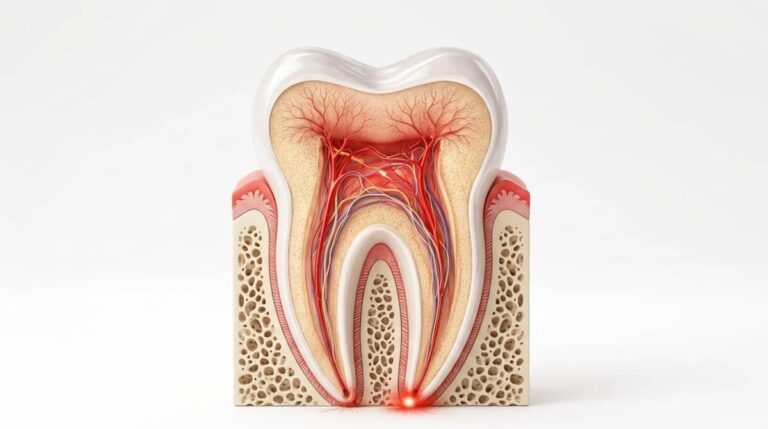
Pulp hyperemia deserves special attention. This is the initial stage of irritation or inflammation of the dental pulp — what most people call the tooth nerve. At this point, symptoms are limited to brief, sharp pain and possible sensitivity to hot or cold.
Treatment for pulp hyperemia depends on the underlying cause and the overall condition of the tooth — including how deep the cavity is. Left untreated, what seems like a minor issue can progress to pulpitis: a serious inflammation of the tooth nerve that often requires far more complex intervention, including nerve removal and root canal filling. To avoid reaching that point, it’s important not to brush off the symptoms and to see a dentist promptly.
When to See a Dentist Urgently
Some symptoms call for an urgent dental visit rather than a routine appointment. The following are red flags when gum or oral mucosal hyperemia is present:
- Severe or throbbing pain
- Bleeding gums
- Pronounced tissue swelling
- Persistent redness that doesn’t resolve on its own
- Significant discomfort or pain specifically during chewing or brushing
- Intense — sometimes unbearable — sensitivity to hot or cold
If any of these signs are present, the problem may be more serious than simple hyperemia. Either way, don’t delay: get a proper evaluation from a dentist and follow a treatment plan tailored to your situation.
Treatment typically begins with thorough diagnostics, followed by steps to address the root cause. Depending on the findings, this may include professional cleaning, filling replacement, or adjustment and replacement of orthodontic appliances. The dentist may also perform antiseptic treatment of the affected tissue, prescribe anti-inflammatory therapy, and treat any underlying cavities, gingivitis, periodontitis, or pulpitis.
Frequently Asked Questions
What is hyperemia? Gum hyperemia is increased blood flow to the oral mucosa. It manifests as redness and may indicate trauma or inflammation.
Why does gum hyperemia occur? It most commonly results from gum inflammation, excessive bacterial plaque buildup, or tissue trauma.
What does hyperemic mucosa mean? It means the oral mucosa has become red — and possibly swollen — due to an inflammatory process or some form of irritation.
Can hyperemia be a symptom of pulpitis? Yes, it can — particularly at an early stage, when the condition can still be resolved before complications set in.
Medically reviewed by Yuliia Laskava, general dentist and periodontist

Make an appointment
You can make an appointment by filling out the application form on the website, as well as using instant messengers:
Make an appointment
You can make an appointment by filling out the application form on the website, as well as using instant messengers:


Make an appointment easily using chatbots:
Also, call the numbers:
Modern dentistry and medical centre "MED-DEO"
Choose a clinic whose location is more convenient for you.
Kyiv, Holosiivska/Demiivska metro station
130 Lobanovskoho Avenue


Working hours:
Mon - Sun: 8:00 AM - 9:00 PM
No days off!
Call the numbers:
How to get to us? Create a route
Create a route
Kyiv, Akademistechko metro station
78A, Irpinska str.


Working hours:
Mon-Sun: 8.00-21.00
Without days off!
Call the numbers:
How to get to us?
Create a route
Create a route
Kyiv, Heroiv Dnipra metro station
32A, Heroiv Dnipra str.
Working hours:
Mon-Sun: 8.00-21.00
Without days off!
Call the numbers:
How to get to us?
Create a route
Create a route
Kyiv, Teatralna metro station
9B, E. Chykalenko (Pushkinska) str.



Working hours:
Mon-Sat: 8.00 - 21.00. Sun: by appointment.
Without days off!
Call the numbers:
How to get to us?
Create a route
Create a route
Відгук від клієнта
0:00
0:00


Your email will not be published on the site.