Tooth sensitivity is a brief, sharp pain or sudden discomfort triggered by a specific stimulus – cold, heat, sweetness, acidity, and so on. In dentistry, this condition is also referred to as dental hypersensitivity.
Patients themselves typically describe it as a sudden “shooting pain in the tooth,” “pain when breathing in cold air,” or simply “discomfort while brushing.” They also frequently report discomfort when consuming cold or hot drinks and food, and in some cases the reaction can be triggered by sweet or sour foods – these are, in fact, the most common culprits behind hypersensitivity. The mechanism behind all these symptoms is straightforward enough once you understand basic tooth anatomy.
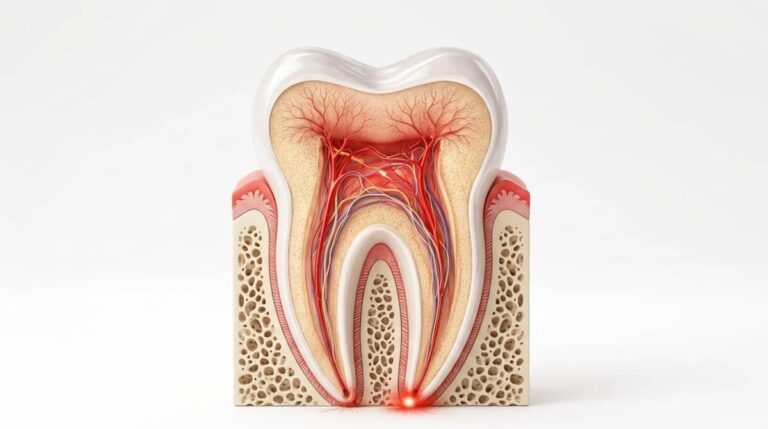
In simple terms, the key players here are enamel and dentin – the layer that lies beneath the enamel. Dentin contains microscopic tubules that transmit the response to a stimulus directly to the tooth’s nerve. When the enamel wears thin, the tooth’s cervical area (near the root) becomes exposed, making it much easier for irritants to reach the dentin.
IMPORTANT: Tooth sensitivity is not a standalone diagnosis. It is a symptom – or a consequence of changes in tooth or gum tissue – that deserves attention. To identify the precise cause, schedule an examination with your dentist.
The Main Causes of Increased Tooth Sensitivity
Heightened tooth sensitivity can stem from a wide range of factors – from everyday habits and oral hygiene routines to underlying dental conditions. What matters most is identifying the cause accurately and promptly, since the right approach to treatment depends entirely on getting that right.
Lifestyle and Behavioral Factors
In many cases, tooth sensitivity is directly tied to everyday habits – specifically, problematic behavioral and lifestyle patterns. These include:
Using a toothbrush that is too hard (firm bristles).
Using abrasive toothpaste.
Brushing too aggressively or applying excessive pressure.
Poor oral hygiene in general.
Overindulging in carbonated and acidic drinks.
Frequent and sudden temperature extremes in food and beverages.
DIY whitening experiments, especially without a dentist’s supervision.
Over time, these habits gradually wear down the enamel’s protective layer, leading to the problem of chronically sensitive teeth.
Dental Causes and Pathologies
Beyond lifestyle factors, a wide range of dental conditions and pathologies can be responsible for tooth sensitivity. These include:
Tooth decay at various stages.
Failing to replace old fillings in a timely manner.
Wedge-shaped defects – notches that form at the gumline of the tooth.
Chipped or cracked enamel.
Enamel erosion caused by bruxism (teeth clenching or grinding).
Gum recession and exposure of the tooth root.
Periodontitis and other conditions affecting the gums and supporting tooth structures.
Side effects of improper at-home or professional teeth whitening.
When sensitivity is rooted in dental pathology, it typically does not resolve on its own – which is all the more reason to seek professional help from a dentist.
Reactions to Cold, Heat, or Sweetness: How to Read the Symptom
The type of trigger can help a dentist “decode” the symptom much more quickly and pinpoint the underlying source of the problem. Depending on what sets off the sensitivity, the dentist can recommend the right preventive measures or course of treatment.
Here is what each type of response may indicate:
Reaction to cold – usually a brief, sharp pain lasting only a few seconds. Sensitivity to cold can point to exposed dentin or early-stage enamel changes.
Reaction to heat – the discomfort often lingers for some time even after the stimulus is removed. This type of reaction to hot temperatures may indicate pulp inflammation (nerve of the tooth).
Reaction to both cold and heat – this combination typically signals significant enamel wear and pronounced dentin exposure, and may also indicate more serious dental issues that warrant a professional examination.
Reaction to sweet or sour – pain triggered by sweet or acidic foods is frequently associated with tooth decay or enamel microcracks, resulting in heightened sensitivity to irritants.
How to Tell Sensitivity Apart from Cavities, Cracked Enamel, or Pulpitis
Not every response to hot or cold automatically means tooth sensitivity. Sometimes it is simply thinned enamel due to cracks; other times it could be deep-seated decay. Each condition does, however, have its own more characteristic symptoms that help set them apart:
General sensitivity (worn, thin enamel) – characterized by a brief, sharp pain or discomfort that disappears quickly once the stimulus is removed. Spontaneous (unprovoked) or nighttime pain is typically absent.
Tooth decay – more often presents as localized discomfort or pain in a specific area of the tooth.
Cracked enamel – sensitivity and pain tend to be triggered primarily by chewing or sudden contact with something cold or hot.
Pulpitis (nerve inflammation) – characterized by prolonged pain that persists even after the stimulus is gone, along with nighttime episodes, a throbbing quality to the pain, and frequent spontaneous pain attacks even without any contact with a trigger.
If you experience any of the symptoms described above – even if only a single tooth is bothering you – it is worth getting a dental check-up. This will help rule out hidden pathologies or catch and address them while they are still in the early stages.
Many patients want to know how to relieve tooth sensitivity quickly in the comfort of their own home. It is important to understand that home remedies can only temporarily ease symptoms – they do not address the root cause. So self-treatment is not a permanent fix, but it can serve as decent first aid to tide you over.
Here is what you can do at home to get some quick relief:
Temporarily switch your toothpaste to one formulated for sensitive teeth.
Switch to a soft-bristled toothbrush as well.
Pay close attention to how hard you press when brushing.
Pause the use of mouthwash for the time being.
Avoid very cold and very hot foods and drinks.
Cut back on acidic foods and beverages.
Follow a gentler diet overall for a while – nothing too hard or abrasive.
It bears repeating that none of these measures are a permanent solution. If the underlying cause is something like tooth decay, root exposure, gum disease, or another dental problem, there is simply no way to fix that at home. So if sensitive teeth are a recurring issue for you, the best thing you can do is see a dentist – that is the path to lasting oral health.
How Dentists Treat Tooth Sensitivity
Before beginning any treatment, a dentist will always identify the root cause of the problem. The answer to how to reduce tooth sensitivity depends not on the pain itself, but on what is causing it – the underlying issue, or a combination of issues.
Depending on the cause, a dentist may offer the following treatment options:
Professional fluoride treatment to strengthen enamel and reduce reactivity to stimuli.
Remineralization therapy to restore the mineral composition of enamel – highly effective in the early stages of enamel damage.
Application of specialized agents – for example, a desensitizing gel to temporarily block the sensitive dentin tubules.
Cavity treatment, if decay is the source of the pain.
Filling of wedge-shaped defects, microcracks, and other hard tissue damage.
Professional dental cleaning to remove plaque and eliminate factors that sustain gum inflammation.
A custom night guard for bruxism, if the sensitivity is linked to teeth grinding, excessive enamel load, and resulting wear or cracking.
In some cases, the dentist will walk the patient through a comprehensive approach – combining professional treatment, home care, and risk factor management. This may include recommendations such as:
Using toothpaste formulated for sensitive teeth.
Switching to a soft-bristled toothbrush.
Adopting a gentler brushing technique and avoiding brushing immediately after consuming acidic foods.
Scheduling regular check-ups every six months.
Managing dietary habits – cutting back on sweets and reducing acidic food and drink intake.
Avoiding excessive or frequent whitening, particularly aggressive methods.
Treating cavities promptly, even when they are still in the early stages.
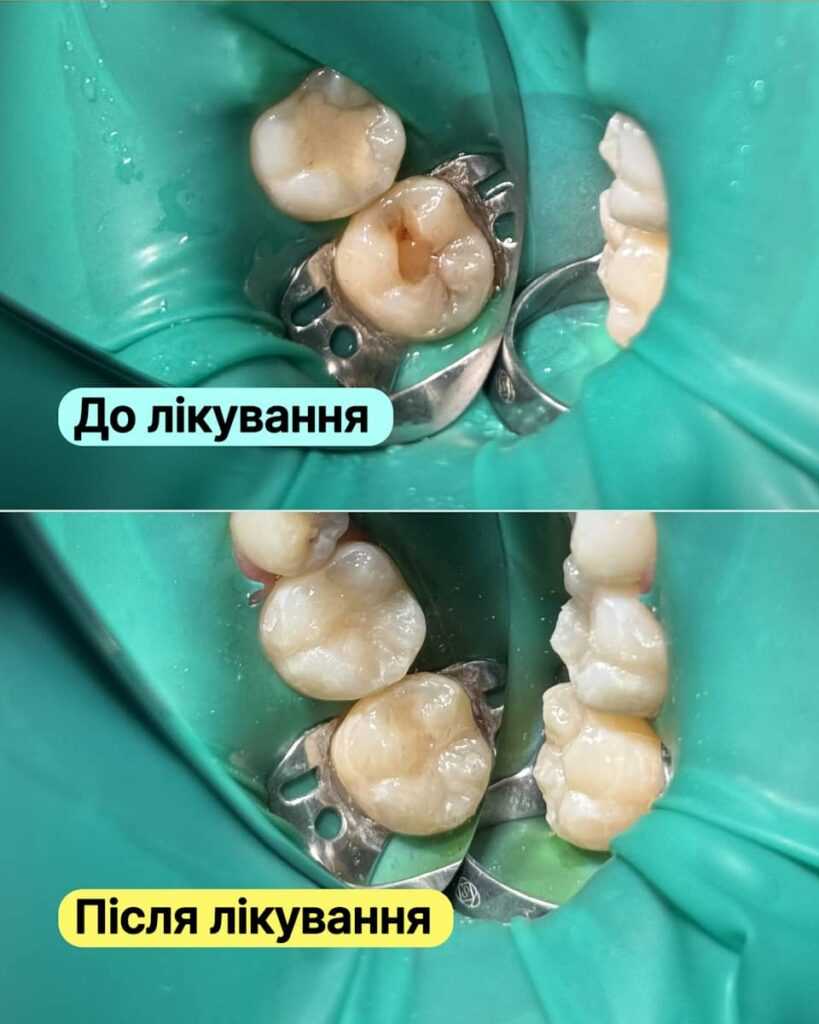
Patient’s Story 🦷 Treatment of Secondary Caries and Replacement of an Old Filling
📸 In the photo:
Before treatment — a damaged filling and secondary caries that developed underneath it.
After treatment — the tooth restored with a modern composite restoration that precisely reproduces its natural shape and chewing surface.
During treatment, the caries-affected tissues were removed and the old filling was replaced with a new composite restoration of tooth 4.6.
Timely replacement of damaged fillings helps stop the development of secondary caries, preserve healthy tooth tissues, and avoid more complex treatment in the future.
Sudden Spike in Tooth Sensitivity: When to See a Dentist Right Away
Some situations call for an urgent dental consultation. Specifically, you should see a dentist without delay – not just when sensitivity has spiked sharply, but when that spike is accompanied by any of the following additional symptoms:
Pain that does not subside after the stimulus is removed.
Nighttime toothache that has appeared.
Only one specific tooth is affected.
Swelling of the gum or cheek.
A filling has been damaged.
A chip or tooth injury has occurred.
The pain is intensifying day by day.
Particular attention is warranted when severely sensitive teeth appear suddenly with no obvious cause. This symptom can, of course, indicate decay, a significant enamel crack, or even nerve inflammation. Seeking timely care allows your dentist not only to quickly identify the specific cause of severe tooth sensitivity, but also to prevent the development of more serious complications down the line.
The author of this article is Ivan Plysko, a prosthodontist, general dentist, and oral surgeon.
 (044) 394 90 94
  Holosiivska/Demiivska metro station



















Your email will not be published on the site.