34401
Services Doctors
Clinics

пр.Лобановського, 130, Київ, Україна

Temporarily closed

Opening soon

стоматологія на лобановського

78A, Irpinska St., Kyiv, Ukraine

Temporarily closed

Opening soon

IMGP4938

32A, Heroiv Dnipra St., Kyiv, Ukraine

Temporarily closed

Opening soon

2024-10-23 11.56.42

9B, Yevhena Chykalenko St. (Pushkinska), Kyiv, Ukraine

Temporarily closed

Opening soon

IMGP5161
Prices Blog Contacts
Back Dentistry

Clinics "MED-DEO"

пр.Лобановського, 130, Київ, Україна

Temporarily closed

Opening soon

стоматологія на лобановського

78A, Irpinska St., Kyiv, Ukraine

Temporarily closed

Opening soon

IMGP4938

32A, Heroiv Dnipra St., Kyiv, Ukraine

Temporarily closed

Opening soon

2024-10-23 11.56.42

9B, Yevhena Chykalenko St. (Pushkinska), Kyiv, Ukraine

Temporarily closed

Opening soon

IMGP5161

Services

Dentistry

Service statistics

icon

More and more clients choose «MED-DEO»

45678

Number of services provided

34546

Number of patients who received the service

Initial doctor consultation for free* * subject to treatment in the clinic

Appointment by phone:

(044) 394 90 94

Periodontitis is an inflammation of the tooth root that occurs when an infection penetrates deep inside and begins to destroy the tissues that support the tooth.

In simple terms: bacteria have reached the root, causing pain and swelling. Treatment cannot be delayed, as the condition quickly progresses to purulent periodontitis and can result in tooth loss. Early treatment stops the inflammation and allows for full tooth restoration. Further in this article: brief symptoms, basic diagnostics, and modern methods for treating periodontitis.

Why Choose Med-Deo Clinic for Periodontitis Treatment

Професійна гігієна зубів

Periodontitis — inflammation at the base of the tooth root — often scares patients with the risk of tooth loss. But at the Med-Deo clinic, we prove that even such diagnoses are not a final verdict! Our experienced doctors (over 20 specialists in therapeutic dentistry) know how to effectively combat this disease using a comprehensive approach and modern treatment protocols. We do not rush into extractions — our goal is to preserve your natural tooth whenever possible.
Why trust us with periodontitis treatment?
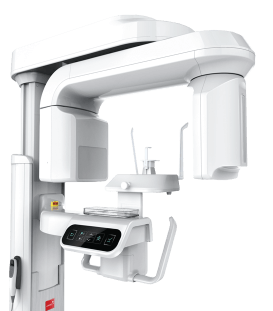
  • Professional equipment allows for accurate diagnosis of the disease stage and thorough cleaning of root canals;
  • Micro-invasive methods minimize intervention: we remove only affected tissues, preserving as much of the healthy tooth structure as possible;
  • High-quality filling materials ensure long-term results and prevent re-inflammation.
We understand that periodontitis treatment can cause anxiety, so we have created an atmosphere of total relaxation: next-generation anesthesia, distraction techniques, and complete comfort without pain or fear.
Our doctors don’t just treat — they meticulously restore the tooth using delicate craftsmanship. After filling the canals, we restore the crown portion with materials indistinguishable from natural tissues in color, translucency, and function.
Don’t let periodontitis lead to tooth loss! Trust the specialists at Med-Deo, where we offer more than just treatment — we offer a guarantee to save your smile.


Periodontitis treatment: 2026 prices

Service name

Price, UAH.

Emergency dental care

1600

Sign up

Mechanical root canal treatment (single-root tooth)

900

Sign up

Mechanical root canal treatment (two-root tooth)

1000

Sign up

Mechanical root canal treatment (three-root tooth)

1200

Sign up

Dentist’s consultation on oral care

390

Sign up

Injection anesthesia (application)

350

Sign up

Individual "Cofferdam" / "RUBBER-DAM" kit (application)

350

Sign up

Individual "OptraGate" kit (application)

250

Sign up

Root canal obturation by lateral condensation of "AH Plus" sealer (per 1 canal)

700

Sign up

Root canal obturation by warm gutta-percha condensation (per 1 canal)

900

Sign up

Root canal retreatment / Unsealing (per 1 canal)

800

Sign up

Application of devitalizing paste (или Devitalizing agent application)

400

Sign up

Single tooth examination (или X-ray of 1 tooth)

240

Sign up

Panoramic X-ray (OPG)

440

Sign up

Upper and lower jaw CT (Computed Tomography)

1200

Sign up
Popular Questions

How is a tooth with periodontitis treated?

Teeth with periodontitis are treated as follows:

  • Pulp opening and drainage: Accessing the tooth chamber to allow exudate to escape.
  • Root canal cleaning: Removing infected and necrotic tissues from the canals.
  • Antiseptic treatment: Thorough irrigation of the canals with antibacterial solutions.
  • Root canal filling: Sealing the canals with biocompatible materials.
  • Medication: Prescription of antibiotics and anti-inflammatory drugs.

What should I avoid during periodontitis treatment?

During treatment, you must not skip appointments, apply heat to the cheek, chew on the affected side, take medications without a prescription, or ignore pain and swelling.

What should I rinse my mouth with for periodontitis?

It is recommended to rinse with chlorhexidine solution, saline solution, or chamomile decoction — 3-4 times a day, using lukewarm (not hot) liquid.

Can teeth be restored after periodontitis?

Teeth can be partially restored: the gums are treated, loose teeth are stabilized, and in case of bone loss, bone grafting or implantation is performed.

What does periodontitis pain feel like?

The pain lasts from a few days to 2 weeks and intensifies when biting down or with temperature changes. It is localized under the tooth and may radiate to the gums or jaw.

How to distinguish pulpitis from periodontitis?

In pulpitis, the tooth may darken and the pain is sharp and episodic (paroxysmal). In periodontitis, the pain is a constant dull ache, and the gums may appear bluish.

Patient reviews on periodontitis treatment at Med-Deo

Leave a review
5

Based on reviews

Based on reviews

Anna Tyshenko

2026-06-28

Вже не перший рік лікуюсь , все як завжди на вищому рівні, Побережна Валентина Адамівна знає свою , обовʼязково ще повернусь і всім раджу

Наталія Сергіївна Пархомець

2026-06-07

Хочу щиро подякувати лікарю-стоматологу, Стельмаховичу Антону Романовичу, за професіоналізм, уважність та людяність. Прийом пройшов у комфортній атмосфері, лікар детально пояснив усі етапи лікування та надав рекомендації щодо догляду за зубами. Робота виконана якісно, безболісно та дужеакуратно. Рекомендую як висококваліфікованого спеціаліста, якому можна довірити своє здоров’я та посмішку.

Sofiia Kostenko

2026-05-22

Проходжу лікування у Грушецької Галини, чудова професійна лікарка - все зрозуміло, прозоро, якісно, щиро дякую!

Ірина Хижняк

2026-05-16

Дуже задоволена візитом у клініку! Приємний персонал, уважні лікарі та комфортна атмосфера. Все пояснили доступно, лікування пройшло безболісно та професійно. Видно, що тут дійсно піклуються про пацієнтів. Однозначно рекомендую! 😊

Дарья Светлова

2026-04-20

Перший візит дуже сподобався. Будемо продовжувати лікування в MED DEO

Florich Pixel

2026-04-19

Відвідав цю стоматологію дуже затишно лікар приємний в спілкуванні.

Iryna Petrenko

2026-03-25

Менжул Марія Андріївна - найкращий спеціаліст по лікуванню каналів під мікроскопом) вона врятувала мій зубчик від видалення) дякую МED-DEO❤️

Ann

2026-03-12

Є постійним клієнтом цієї клініки, щиро рекомендую, лікуємось всією сімʼєю вже дуже давно

Anna Fedorchuk

2026-02-27

Чудовий лікар Бнедис Сергій Сергійович. Багато років лікую у нього зуби. Вдячна за допомогу.

Марина К

2026-02-04

Доброго дня!Дуже вдячна стомотології.Команда професіоналів.Приємні та вічливі працівниці рецепшену.Особлива вдячність за лікування лікару-стоматологу Нікіті. Рекомендую.

Андрій

2026-01-16

Звернувся з сильним болем і набряком. Лікар швидко визначив запалення кореня зуба і запропонував чіткий план лікування. Усе робили обережно, під контролем, без зайвого дискомфорту. Результатом задоволений, зуб вдалося зберегти.

Вікторія

2026-01-04

Довго терпіла біль, не розуміючи, що проблема в запаленні кореня. Лікар уважно провів діагностику, все пояснив і одразу почав лікування. Після першого ж візиту стало значно легше, а з часом біль зник повністю. Дуже вдячна за професійний і турботливий підхід.

Ірина

2025-12-28

Зуб болів при накусуванні і був набряк, але після лікування періодонтиту все минуло. Лікар працював дуже уважно і пояснював причину кожного етапу лікування.

Максим «KaHDaPaIII» Дядюшка

2025-12-12

Лікував зуби у Олексія Єфімова. Все супер!

Анна Мельничук

2025-11-23

Була на консультації у Анни Смуток, дуже сподобалось,зробили план лікування. Персонал привітний.

Юлія Сергієнко

2025-11-14

Дуже вдячна лікарю-стоматологу за індивідуальний підхід,все зробили швидко, якісно і комфортно

Анна

2025-10-23

Після лікування періодонтиту біль зник повністю. Усе пройшло безболісно, а результат перевершив очікування, зуб врятовано. Щиро дякую лікарю Томашевській Олені!

ирина шалимова

2025-10-10

Хочу подякувати лікарю Чубай Олесі Миколаївні , врятувала жувальний зуб, який в інших клініках казали видаляти. Приємна і ввічлива лікарка, дуже раджу!

Кіра

2025-09-24

У мене було запалення кореня зуба, думав, що доведеться видаляти. Але лікар пролікував канали, зняв запалення, і зуб врятували. Дуже вдячний за уважність та професійність. Весь персонал дуже уважний та привітний, завжди допомагають!

Вікторія

2025-09-13

Звернулася з сильним запаленням, діагностували періодонтит. Стоматологиня Олена дуже уважно пояснила план лікування і провела все якісно. Біль зник, і я відчула полегшення вже наступного дня.

Наталія

2025-08-26

Періодонтит у мене протікав із гноєм, ясна навіть набрякли. Лікар одразу відкрив зуб, зробив дренаж і зняв запалення. Потім пролікував канали і поставив пломбу. Лікар Михайло дуже уважний, терпляче все пояснював і працював обережно."

Ірина

2025-08-10

Я прийшла з постійним ниючим болем і неприємним запахом з рота. Виявилося, що це періодонтит. Лікар розчистив канали, зняв запалення і зробив пломбування під мікроскопом. Зуб вдалося врятувати, хоча я думала, що його вже доведеться видаляти. Щира подяка лікарю за майстерність!

Валерія

2025-07-20

Лікували глибокий карієс із ураженням нерва. Канали прочистили ретельно, без болю, головне біль минула і з зубом все добре. Дуже дякую стоматологині Олені!

Артем

2025-07-12

Після лікування каналу мене більше не турбує біль при натисканні. Стоматологиня Людмила зробила все дуже акуратно, нікого болю, завжди цікавился моїм станом. Рекомендую!!!!

Марія

2025-06-29

Величезне спасибі клініці за швидке лікування гострого болю. Прийняли без черги, зробили якісну анестезію, одразу відчула полегшення. Рекомендую!

Ірина

2025-06-06

Прийшла з болем у жувальному зубі, запалення кореня. Лікували канали ретельно, у кілька етапів, максимально обережно, лікар все пояснював, тримав в курсі. Дуже задоволена, що потрапила саме в Мед-Део — дякую лікарю Марії, за врятований зуб і приємні візити!

Аліна

2025-05-28

Вперше проходила ендодонтичне лікування, хвилювалась, але в Мед-Део все пройшло ідеально. Процедура була комфортною, зуб перестав турбувати. Дуже сподобалося, як уважно ставляться до пацієнта, лікар наагався все робити обережно і цікавився моїм самопочуття. Після прийому залишилися тільки позитивні емоції!

Кіра

2025-05-11

Це вже мій другий досвід видалення нерва, але цього разу все пройшло набагато краще. Звернулася з нестерпним болем у зубі, виявилося періодонтит. Потрібно чистити канали, та пломбувати їх. Лікування пройшло чудово, комфорт, турбота, результат , усе на відмінно. Рекомндую.

Микола

2025-04-28

Шукав хорошого спеціаліста для лікування періодонтиту. Колега порекомендував лікаря Вячеслава Миколайовича. І справді дуже кваліфікований лікар, завдяки якому вдалося зберегти зуб і прибрати запалення. І клініка досить затишна, тому рекомендую!

Наталія

2025-04-03

Хочу подякувати за якісне лікування каналів, робота ювелірна! Все зроблено під мікроскопом, без болю, обережно, і вже тиждень як жодного дискомфорту. Зуб функціонує, виглядає естетично. Однозначно рекомендую цю клініку! Тут можна зробити потрібні знімки, персонал привітний.

Екатерина Божко

2021-04-28

В конце января сильно припухла щека и десна, температура поднялась. Стоматолог Грушецкая Галина сразу поставила диагноз периодонтит. Как она объяснила, возник он из-за давнего плохого пломбирования. Зуб тут же распломбировали и залечили под микроскопом, прошло все безболезненно и в комфортной обстановке. Спасибо!!!

Show more Hide

What is Tooth Periodontitis?

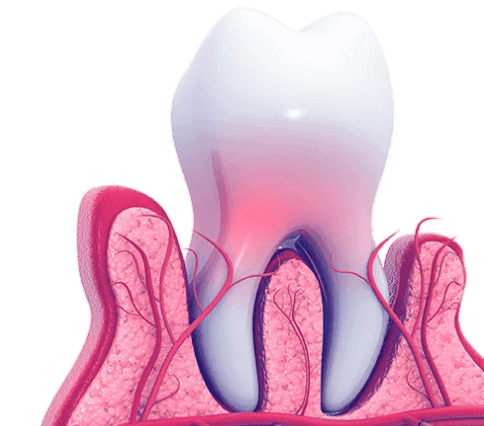
      Periodontitis is a condition where inflammation affects the area around the tooth root (the periodontium). Infection enters this zone through the root canal and begins to irritate the tissues responsible for the stability and health of the tooth. The periodontium consists of soft tissues located between the tooth root and the jawbone. They act as a “safety cushion”: softening chewing pressure, holding the tooth in the correct position, and providing slight natural mobility.

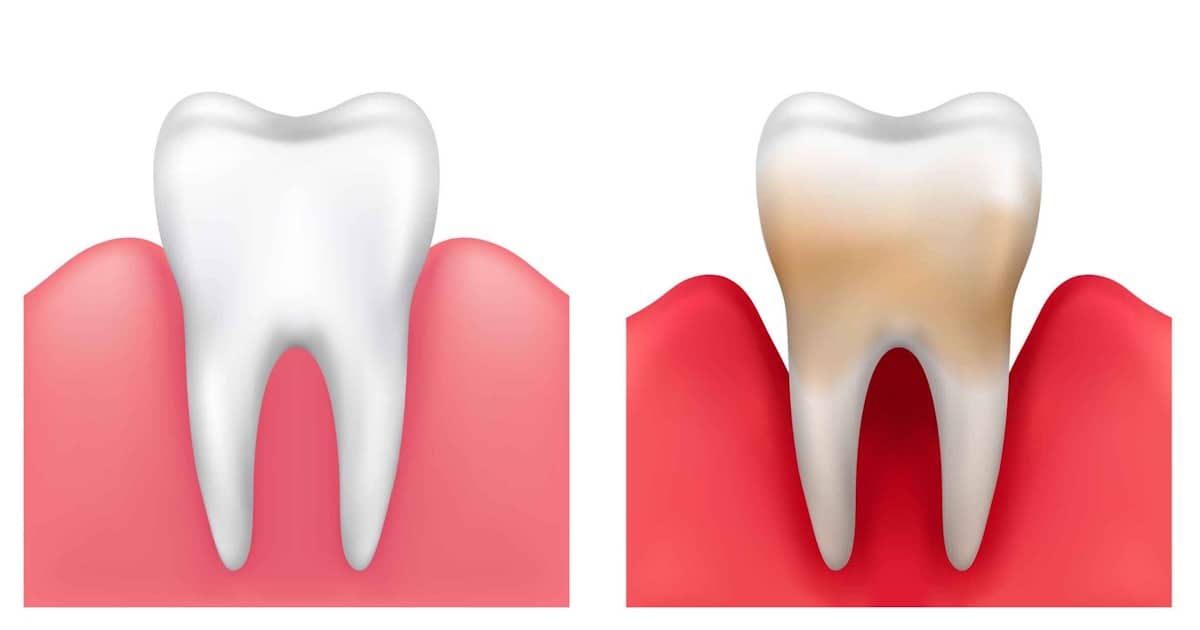
     Periodontitis is easily confused with other problems, but it has its own characteristics. It is not cavities (caries), because the enamel and dentin remain intact — it is the tissues around the root that become inflamed. And it is not pulpitis: here, the pain arises from pressure and inflammation near the root tip, rather than from irritation of the nerve inside the tooth. Unlike gingivitis or parodontitis, the gums may look perfectly healthy because the process is hidden deep in the bone.

що таке періодонтит

     Periodontitis vs. Parodontitis: Key Differences
Periodontitis and parodontitis (gum disease) are often confused, but they are actually different diseases that differ in the affected area, causes, and manifestations.
  • Periodontitis affects the tip of the tooth root and the surrounding tissues. The problem starts inside the tooth: from a cavity or pulpitis, the infection moves into the root canal and extends beyond it. The pain is sharp, “pressing,” and intensifies when biting. Swelling often appears, and sometimes even pus.
  • Parodontitis develops from the outside, in the gums and the bone that holds the tooth. The main cause is the buildup of plaque and tartar, as well as chronic gum inflammation. Pain is not always present, but bleeding, receding gums, bad breath, and gradual tooth mobility occur.


      Because of similar symptoms — swelling, discomfort, a feeling of pressure — patients often confuse these diagnoses. It is important to remember that treatment methods are completely different: periodontitis requires cleaning and filling the root canals, while parodontitis focuses on professional cleaning, curettage, and gum treatment.

Causes of Periodontitis

    The main cause of periodontitis is untreated pulpitis: when infection penetrates inside the tooth and reaches the root apex, inflammation of the surrounding tissues begins. Additionally, the problem may arise due to poor-quality or incomplete root canal treatment in the past — bacteria remain inside and gradually destroy the tissues.
                                                 
    Dental trauma, such as chips or severe impacts, also increases the risk of inflammation.
    Similarly, an incorrect bite or tooth overloading during chewing can cause micro-trauma to the periodontium, creating a favorable environment for infection.
                                           
    Sometimes, periodontitis develops as a complication of parodontitis (gum disease), when bacteria reach the root through periodontal pockets.
    Risk factors include weakened immunity, chronic systemic diseases, and other conditions that weaken the body’s natural defense mechanisms. All of this makes the teeth more vulnerable and accelerates the development of inflammation.
Need a
Diagnosis?

Call to book:

(044) 394-90-94

Sign up
icon icon
дагностика 1

Symptoms of Periodontitis: How to Recognize the Disease

icon
    Periodontitis can be identified by several characteristic signs, but the main signal is tooth pain. It can be sharp, throbbing, or pressing, intensifying when biting or chewing, and sometimes even with a light touch. The nature of the pain varies by form: in acute periodontitis, the pain is severe and pronounced, while in chronic periodontitis, it is a dull ache, faint, or sometimes almost unnoticeable.
    External manifestations are also key: the gums may be swollen, facial swelling (of the cheek) may appear, and sometimes a fistula forms or pus is discharged. The tooth may shift slightly or feel mobile. General symptoms often include fever, weakness, and malaise, indicating that the infection is affecting the entire body.

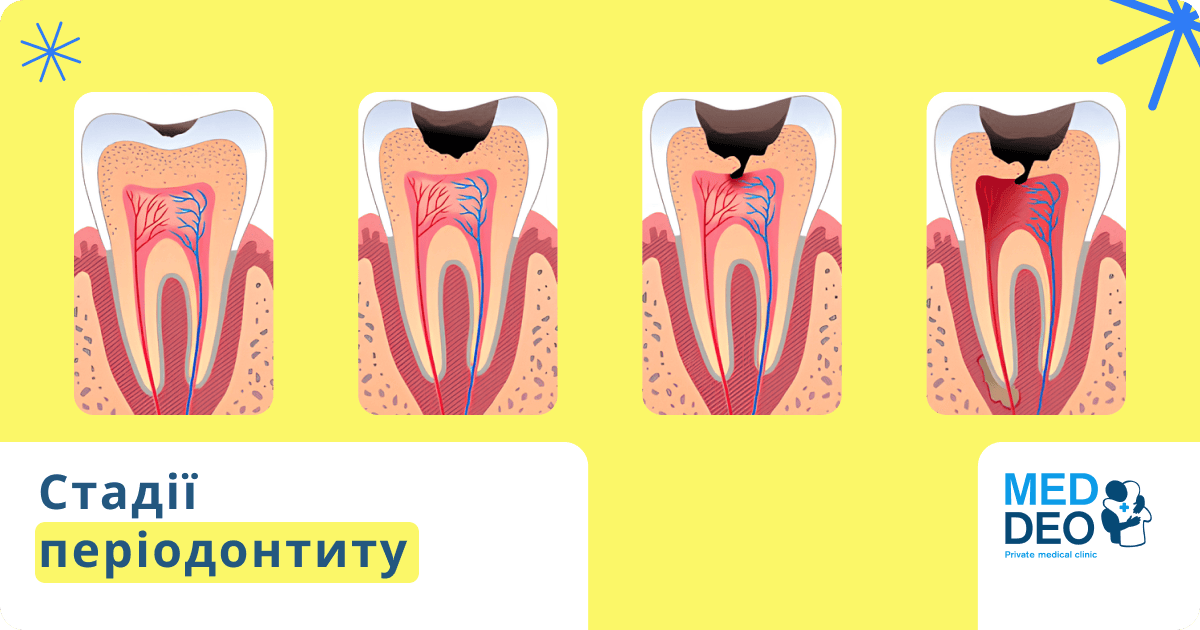
стадії періодонтиту

Symptoms of Periodontitis: How to Recognize the Disease
     Periodontitis can be identified by several characteristic signs, but the primary signal is tooth pain. It can be sharp, throbbing, or pressing, intensifying when biting or chewing, and sometimes even with a light touch to the tooth. Depending on the form of the disease, the nature of the pain may vary: in acute periodontitis, the pain is severe and pronounced, while in chronic periodontitis, it is a dull ache, faint, or sometimes almost unnoticeable.
     External manifestations are also important for recognition: the gums may be swollen, facial swelling (of the cheek) may appear, and sometimes a fistula forms or pus is discharged. Because of this, the tooth may shift slightly or feel mobile, which also signals an inflammatory process.
    Periodontitis is often accompanied by systemic symptoms: fever, weakness, and general malaise. These signs are especially prominent in the acute form and indicate that the infection is starting to affect the body as a whole.

Symptoms of chronic periodontitis

     Chronic periodontitis is often almost painless. The pain is usually mild, intermittent, or absent, so patients may not notice the problem for a long time.

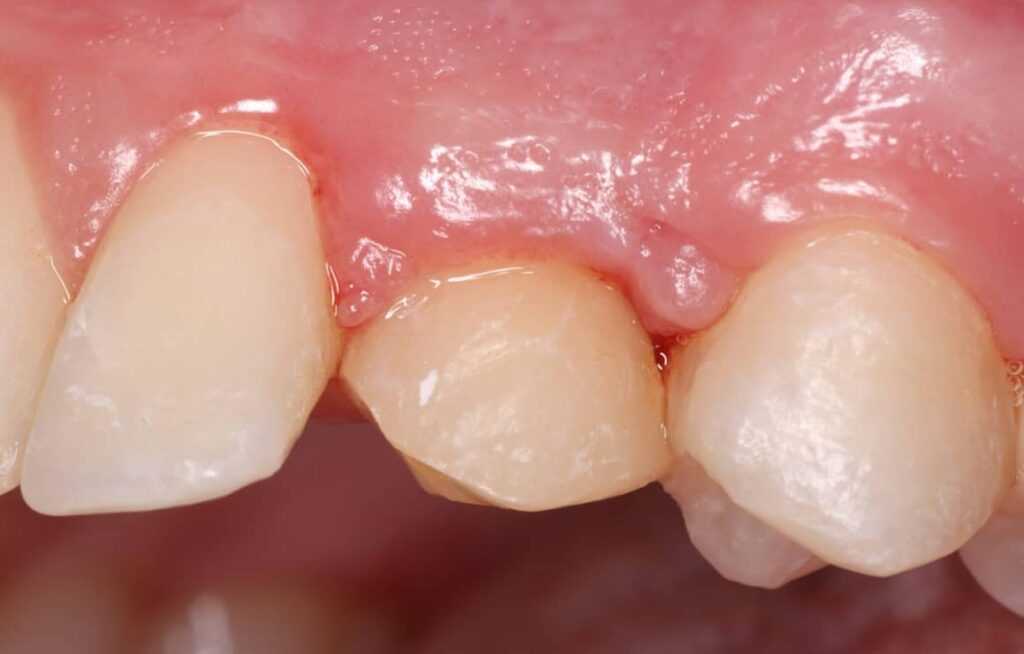
    One of the characteristic signs is the appearance of a fistula – a small canal in the gum through which pus is released. The tooth may change color, become darker or dull, and when chewing, there is a slight discomfort or “pressure” in the tooth.

     Sometimes chronic periodontitis manifests itself in periods of exacerbation, when the pain intensifies, the swelling becomes more noticeable, and the general condition worsens. It is precisely because of the subtle symptoms in the early stages that the chronic form often goes unnoticed until serious complications occur, which is why regular check-ups with a dentist are very important.

Types of Periodontitis: Disease Classification

icon

Гранулюючий періодонтит

   Periodontitis is divided into acute and chronic, which determines the symptoms and the treatment approach.
   Acute periodontitis appears suddenly and is accompanied by severe throbbing pain, swelling, and fever. It can be serous (swelling and discomfort without significant pus accumulation) or purulent (pronounced suppuration around the root, requiring urgent treatment).
   Chronic periodontitis develops gradually, often without severe pain, and manifests as periodic discomfort or a fistulous tract. The main forms are:
  • Fibrous — minimal inflammation, the tooth has almost no mobility.
  • Granulating — formation of granulations that destroy the tissues around the root.
  • Granulomatous — deep lesion with the formation of granulomas and a risk of bone destruction.
The choice of therapy depends on the type of periodontitis: acute forms require urgent cleaning and disinfection of the canals, chronic forms require endodontic treatment, while granulating and granulomatous forms sometimes require hardware processing or surgery.

   Granulating Periodontitis

Гранулюючий періодонтит

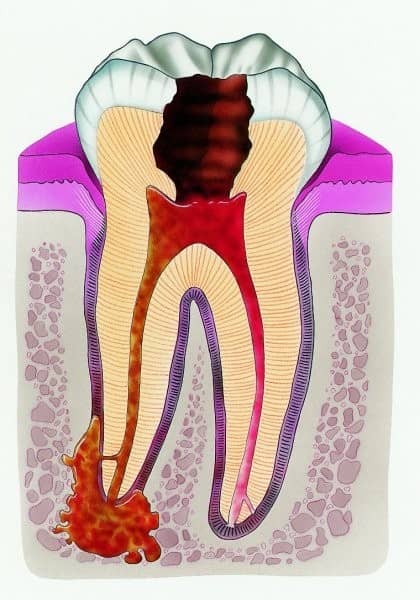
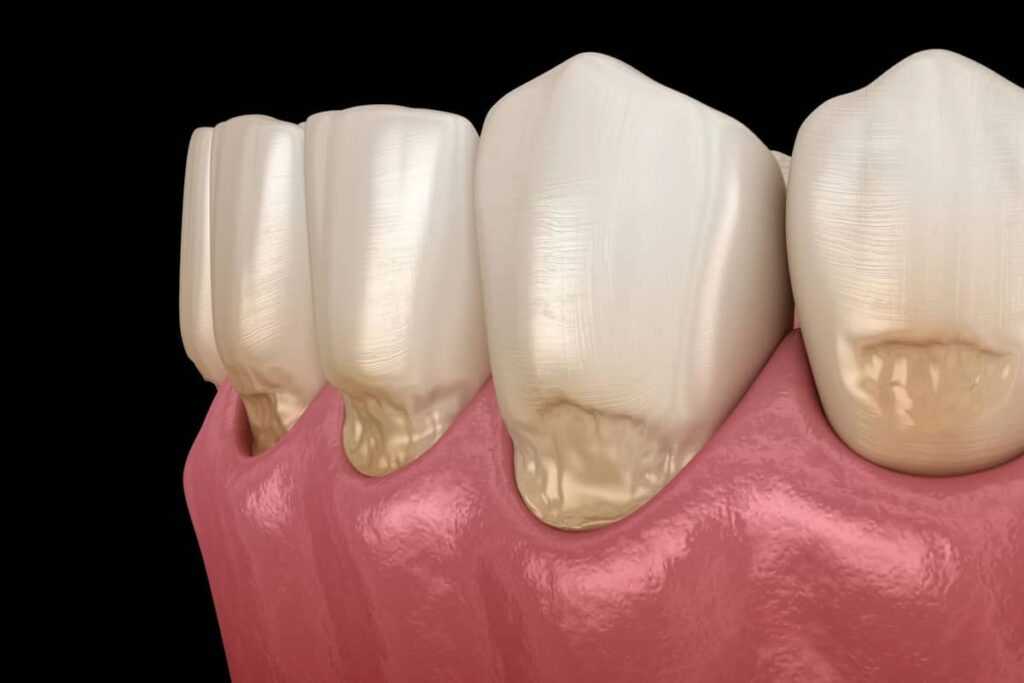
    Granulating periodontitis is one of the aggressive forms of chronic periodontitis. It develops during prolonged inflammation around the root, as the body forms granulation tissue that gradually destroys the bone.

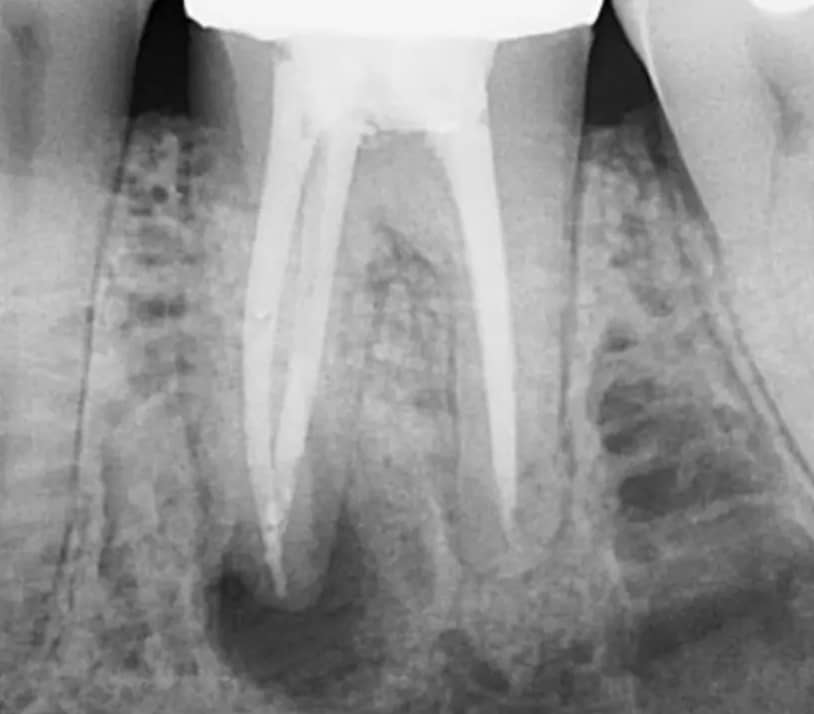
    Characteristic manifestations: fistulas on the gums with pus discharge, tooth mobility, and periodic dull pain. X-rays show darkening (radiolucency) at the root apex.

    Treatment involves canal cleaning, disinfection, and filling; sometimes, hardware methods or surgery are required to remove granulations. With timely treatment, the tooth can be saved and the inflammation eliminated.

    Granulomatous Periodontitis (Tooth Cyst)

   Granulomatous periodontitis, or a tooth cyst, develops gradually and often remains asymptomatic for a long time. Initially, a granuloma forms around the root apex to isolate the infection. Over time, it can transform into a cyst.

     Symptoms are usually minimal: slight discomfort when biting or mild pain under pressure. On an X-ray, periodontitis appears as a dark area (radiolucency) near the root, indicating a granuloma or a cyst.

     Treatment depends on the size of the lesion. Small formations are often treated conservatively through root canal cleaning and filling. Large cysts may require surgery to remove the affected tissue and restore the bone. Timely treatment allows for tooth preservation and prevents the spread of infection.

Would you like to undergo treatment?

Make an appointment with a doctor!

Sign up
icon icon
photo

Diagnostics of Periodontitis

Early diagnosis of periodontitis is important for preserving the tooth and preventing complications, such as granuloma or cyst.


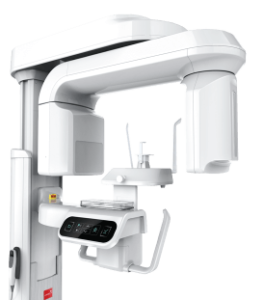
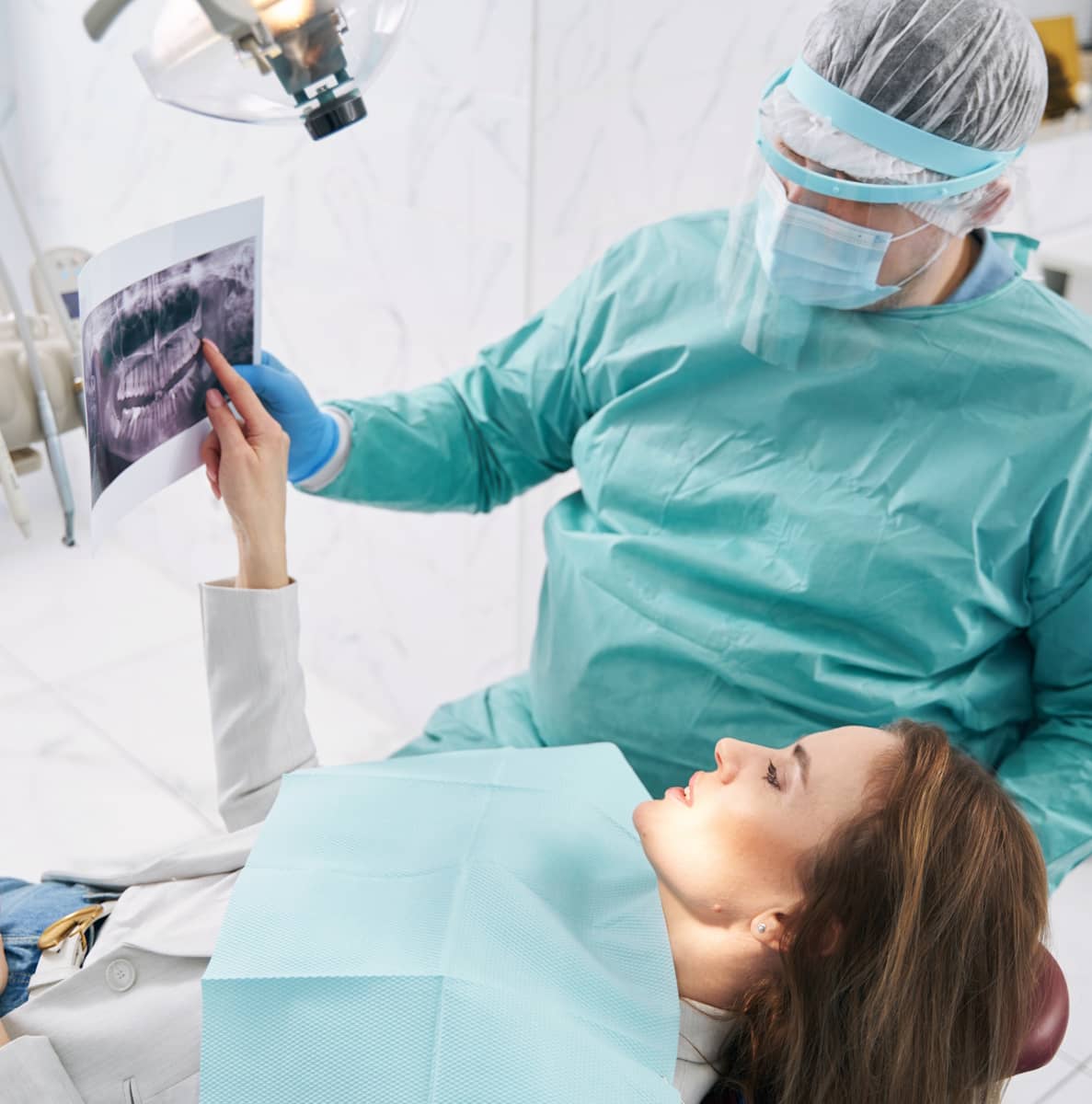
The first stage is a dentist’s examination: checking sensitivity, tooth mobility, percussion, palpation of the gums, and probing of periodontal pockets. This allows evaluating the inflammation around the root. Next, radiology is appropriately prescribed as the main diagnostic method. On an image, periodontitis looks like a darkening near the apex of the root. Targeted X-ray, panoramic, or CT are used for accurate determination of the lesion. Additionally, electroodontodiagnostics is used, which helps to evaluate the condition of the nerve and distinguish periodontitis from pulpitis.

Why periodontitis is dangerous: complications and consequences

Periodontitis is a serious inflammatory disease of the tooth, which, with untimely treatment, can lead to dangerous consequences. Local complications include periostitis (flux), abscess, and phlegmon. They manifest as severe pain, swelling, and fever, requiring urgent dental intervention.


If periodontitis is left without treatment, the tooth can become mobile and eventually fall out. Inflammation destroys bone tissue, which complicates further implantation and increases the risk of affecting adjacent teeth.

In addition to local problems, the disease can affect the body as a whole. A chronic infectious focus is capable of spreading bacteria into the blood, increasing the risk of sepsis and damage to internal organs. For a long time, asymptomatic periodontitis can weaken immunity and worsen the general condition.

Understanding these consequences helps to realize the seriousness of periodontitis and motivates to timely consult a dentist to preserve teeth and the health of the entire body.

Can periodontitis be cured without tooth extraction?

Yes, in most cases, a tooth with periodontitis can be preserved. It is important to consult a dentist at the early stages, as timely treatment significantly increases the chances of a successful outcome.

The tooth can be saved if it has integral walls, the root canals are passable, and the surrounding bone tissue is healthy enough. In such cases, conservative treatment — cleaning and filling the canals — allows for the complete elimination of inflammation and preservation of the tooth’s function. The success rate of such procedures is high, especially with timely consultation.

Tooth extraction becomes inevitable only in specific situations: with a vertical root fracture, canal perforation, or significant bone resorption, when it is impossible to save the tooth.
Understanding that the tooth can be saved reassures patients and motivates them not to delay the visit to the dentist, which is extremely important for oral health and the health of the entire body.

Need abr>Diagnosis?

Call to book:

(044) 394-90-94

Sign up
icon icon
дагностика 1

Methods of treating periodontitis

Стоматолог хірург у Києві

How to treat inflammation of the tooth root? Treatment of periodontitis is selected individually depending on the stage of the disease and the condition of the tooth. The main approaches are divided into conservative (therapeutic) and surgical.

The conservative method includes thorough cleaning of the root canals, disinfection and filling. This approach is effective in most forms of periodontitis, if the canals are open, the tooth is intact, and the surrounding bone tissue has not yet undergone significant destruction.

Surgical treatment is used in difficult cases: with large granulomas, tooth cysts, root perforations or when conservative treatment has not yielded results. It may include removal of granulations, bone grafting or apicoectomy (removal of the root apex).

In many cases, a combined approach is effective, when conservative methods are combined with surgical ones to preserve the tooth as much as possible and restore the tissues around it. The choice of method depends on the form of periodontitis, patency of the canals, the condition of the tooth and the general condition of the patient.

Conservative (endodontic) treatment of periodontitis

Conservative or endodontic treatment allows you to save the tooth even with inflammation of the tissues around the root.

The procedure begins with anesthesia, after which the doctor opens the tooth and, if necessary, removes the old filling. Then the root canals are mechanically cleaned with modern instruments and antiseptic treatment is performed to reduce the risk of infection.

Sometimes a temporary filling with calcium preparations is used to heal the tissues. After that, the canals are permanently sealed with gutta-percha and a control X-ray is taken. The treatment ends with the restoration of the crown part of the tooth.

Chronic periodontitis treatment protocol

The treatment of chronic periodontitis is based on a standardized protocol and depends on the form of the disease and the condition of the tooth. In simple cases, 2–3 visits are sufficient, while complex forms require more sessions for high-quality cleaning and filling of the canals.

  • The fibrous form is treated endodontically: cleaning of the canals, drug treatment and filling.
  • Granulating periodontitis requires careful removal of granulations and treatment with antiseptics, sometimes surgery is used.
  • Cysts are treated comprehensively: conservatively plus surgical removal of the affected tissue and bone restoration.

A temporary filling is applied between visits to allow tissue healing, and a permanent one is applied after inflammation is controlled. Success criteria: absence of pain and swelling, normal tooth mobility, bone restoration, and repeat X-ray. Following the protocol allows you to save the tooth and avoid complications.

Surgical methods of treating periodontitis

Surgical methods of periodontitis treatment are used when conservative methods are ineffective. The reasons may be different: the impossibility of full canal treatment, large cysts or lack of healing after therapeutic treatment.

One of the most common methods is root apex resection. The indication for the procedure is damage to the apex of the tooth that is not amenable to conservative therapy. The doctor removes the affected part of the root along with the inflamed tissue, after which the tooth is filled and stored in the jaw. This method allows you to save the tooth and restore its function.

For multi-rooted teeth, hemisection or amputation of the root is used, when one root is affected, and the others remain healthy. This allows you to save part of the tooth and avoid complete removal.

For large cysts, cystectomy is performed, which includes removal of the cystic cavity and restoration of bone tissue around the tooth. In extreme cases, tooth replantation is used, when the tooth is temporarily removed, treated and reinstalled in the jaw.

Modern microsurgical technologies significantly increase the accuracy of operations, reduce rehabilitation time and improve the prognosis for tooth preservation. After surgery, proper rehabilitation is important: monitoring tissue healing, restoration of the crown part of the tooth and prevention of re-inflammation.

Surgical methods allow you to save even complex teeth and preserve their function when conservative treatment does not yield results.

Would you like to undergo treatment?

Make an appointment with a doctor!

Sign up
icon icon
photo

Treatment of periodontitis in children

Професійна гігієна зубів

Periodontitis in children has its own characteristics, because tooth and bone tissues are still actively forming. The disease can proceed faster and more aggressively than in adults, so timely treatment to the dentist is especially important.

Baby teeth are treated if they are still able to perform the chewing function and support the development of the bite. Treatment of periodontitis of temporary teeth in children includes cleaning the canals, antiseptic treatment and temporary or permanent filling. Removal is indicated only in cases of severe destruction or the impossibility of effective treatment. Preservation of baby teeth is important for the correct formation of the jaw and the prevention of problems with permanent teeth.

Permanent teeth with unformed roots require a particularly delicate approach. Treatment of periodontitis of permanent teeth in children includes cleaning the canals, fillings and X-ray control.

In addition to the medical aspects, a psychological approach is important: the dentist explains the procedure to the child, uses playful methods and calms them down to reduce fear and form a positive attitude towards dental treatment.

Proper treatment of periodontitis in children allows you to save your teeth, avoid complications and ensure normal development of the jaw and bite.

How many times do you need to visit the dentist for periodontitis?

Periodontal treatment usually requires 2–4 visits, depending on the complexity of the case and the condition of the tooth.

Typical scenarios:

  • 2 visits — a simple case: cleaning the canals and permanent filling.
  • 3 visits — a chronic or partially affected canal: temporary filling, repeated cleaning and permanent filling.
  • 4+ visits — complex cases when treatment of chronic granulating periodontitis is required or there are already cysts.

At each appointment, the doctor administers anesthesia, cleans the canals, treats them with antiseptics and fills the tooth. The time between visits is 5–10 days, so that the tissues can recover. The number of visits depends on the form of periodontitis, the complexity of the canals and the condition of the bone. Knowing this helps to plan time and budget and increases the chances of saving the tooth.

Rehabilitation after periodontitis treatment

After periodontitis treatment, it is important to properly care for your tooth to speed up healing and avoid complications:

  • Diet: the first few days — soft, non-hot food; avoid hard, sticky, and spicy foods. Gradually, the diet can be expanded.
  • Physical activity: limit activity for 1–2 days so as not to provoke swelling or bleeding.
  • Hygiene: brush your teeth with a soft brush, carefully going around the treated tooth; you can use alcohol-free mouthwashes.

Normal sensations: slight discomfort, sensitivity to cold or hot.

Alarming symptoms: severe pain, swelling, discharge of pus or blood — consult a dentist immediately. Most patients recover in 5–10 days; a follow-up examination confirms successful treatment.

Prevention of periodontitis

Prevention of periodontitis begins with timely treatment of caries and pulpitis so that the infection does not spread to the root of the tooth.

Regular preventive examinations by a dentist (once every 6–12 months) help to detect problems in the early stages. Good oral hygiene is important: proper brushing technique, use of dental floss and rinses.

Professional teeth cleaning removes plaque and tartar, which reduces the risk of inflammation. After root canal treatment, it is useful to take control X-rays to make sure that the tooth has fully recovered.

To reduce dental injuries, especially when playing sports, protective mouthguards are recommended. Prevention also includes supporting immunity and treating concomitant diseases that can weaken the body.

Following these simple rules helps to keep teeth healthy and avoid the development of periodontitis.

We work with all insurance companies

On this page Contents of the page

icon

Dental services