Special offer! Comprehensive professional teeth cleaning for only 1699 UAH.
Special offer! Comprehensive professional teeth cleaning for only 1699 UAH.
Special offer! Comprehensive professional teeth cleaning for only 1699 UAH.
Special offer! Comprehensive professional teeth cleaning for only 1699 UAH.
Special offer! Comprehensive professional teeth cleaning for only 1699 UAH.
Special offer! Comprehensive professional teeth cleaning for only 1699 UAH.
Special offer! Comprehensive professional teeth cleaning for only 1699 UAH.
Special offer! Comprehensive professional teeth cleaning for only 1699 UAH.
Special offer! Comprehensive professional teeth cleaning for only 1699 UAH.
Special offer! Comprehensive professional teeth cleaning for only 1699 UAH.
Sign up
 (044) 394 90 94
(044) 394 90 94  Holosiivska/Demiivska metro station
Sign up
(044) 394 90 94
(044) 394 90 94
Doctors


 Prices
Blog
Contacts
Prices
Blog
Contacts
пр.Лобановського, 130, Київ, Україна
Temporarily closed
Opening soon
78A, Irpinska St., Kyiv, Ukraine
Temporarily closed
Opening soon
32A, Heroiv Dnipra St., Kyiv, Ukraine
Temporarily closed
Opening soon
9B, Yevhena Chykalenko St. (Pushkinska), Kyiv, Ukraine
Temporarily closed
Opening soon
(044) 394 90 94
Back
Dentistry
General Dentistry
Dental surgery
Dental Implants
Maxillofacial Surgery
Dental prosthetics
Cosmetic dentistry
Professional Dental Hygiene

Periodontics
Orthodontic dentistry
Gnathology & TMJ Therapy
Pediatric Dentistry
Dental X-Rays
Back
Orthodontic Center
Orthodontic dentistry
Gnathology & TMJ Therapy
Back
Prosthodontic Center
Dental prosthetics
Back
MED-DEO Center for Maxillofacial Surgery & Facial Plastics
Maxillofacial Surgery
Plastic surgery
Back
Surgical Dental Center
Dental surgery
Dental Implants
Search on the site


Popular requests
Teeth whitening
Treatment of caries
Wisdom tooth extraction
Bracket system
Dental veneers
Tooth restoration
Pediatric dentist
Consultation with a dentist-therapist
Search results by: «».
Unfortunately, no results were found for your search: “Pediatric Endocrinologist”, nothing was found.
You may find these links useful:
Clinics "MED-DEO"
пр.Лобановського, 130, Київ, Україна
Temporarily closed
Opening soon
78A, Irpinska St., Kyiv, Ukraine
Temporarily closed
Opening soon
32A, Heroiv Dnipra St., Kyiv, Ukraine
Temporarily closed
Opening soon
9B, Yevhena Chykalenko St. (Pushkinska), Kyiv, Ukraine
Temporarily closed
Opening soon
Services
Dentistry Orthodontic Center Prosthodontic Center MED-DEO Center for Maxillofacial Surgery & Facial Plastics Surgical Dental CenterGeneral Dentistry
Dental surgery
Dental Implants
Maxillofacial Surgery
Dental prosthetics
Cosmetic dentistry
Professional Dental Hygiene
Periodontics
Orthodontic dentistry
Gnathology & TMJ Therapy
Pediatric Dentistry
Dental X-Rays
Orthodontic dentistry
Gnathology & TMJ Therapy
Dental prosthetics
Maxillofacial Surgery
Dental surgery
Dental Implants


What is Angular Cheilitis: A Medical Perspective
From a medical standpoint, angular cheilitis—also known as perleche or angular stomatitis—is an inflammatory condition affecting the skin and mucous membranes specifically at the corners of the mouth. Cheilitis (angular stomatitis) is triggered by microtrauma followed by fungal or bacterial infection.
These cracks at the mouth corners develop because this area is constantly exposed to moisture from saliva and mechanical stress. Microcracks form easily here, creating ideal conditions for infection to take hold.
Angular cheilitis typically begins with mild redness and a small crack. This progresses to maceration (skin softening and breakdown), painful erosions, and eventually deep fissures.
What distinguishes angular cheilitis from other lip conditions is its location—strictly limited to the mouth corners, either one or both simultaneously. In contrast, cold sores or allergic cheilitis, for example, can appear anywhere on or around the lips.
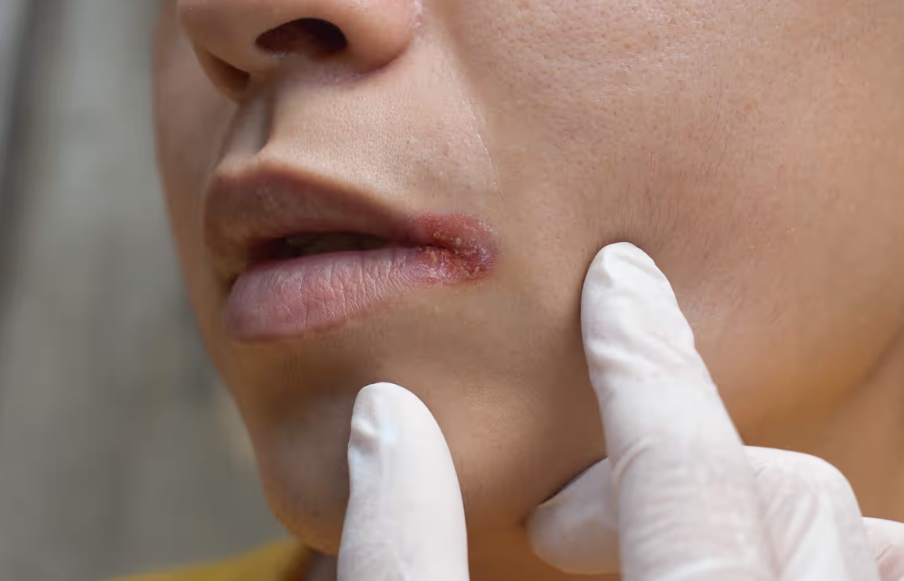
What Angular Cheilitis Looks Like: Visual Signs
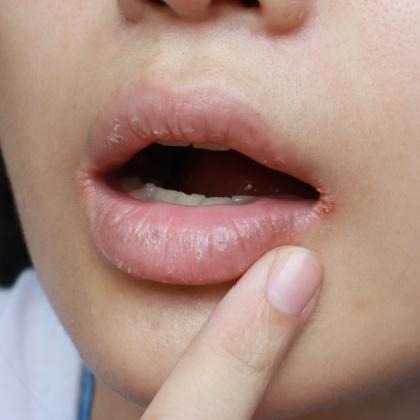
Redness, cracks, dryness and crusting, skin flaking, and sometimes oozing—these are all hallmarks of angular cheilitis. Here’s a detailed look at the external manifestations at different stages:
- Early stage – Redness and mild swelling are present, with a sensation of tightness at the mouth corners.
- Active stage – Painful cracks at the mouth corners with serous discharge (a yellowish “fluid” from inflammation). At this point, cheilitis is characterized by oozing and significant pain.
- Chronic course – The fissure doesn’t heal for an extended period, resulting in skin flaking and sores at the mouth corners, followed by crusting and even dense superficial scarring.
There are also differences between bacterial and fungal angular cheilitis. With bacterial cases, cracks at the mouth corners have a yellowish-gray coating or crusts that sometimes discharge pus. They’re typically unilateral, meaning in one corner only. With fungal infections, cracks are more macerated, have a characteristic white (cheesy) coating, and are more superficial (shallow). Fungal angular cheilitis is often bilateral—appearing in both mouth corners simultaneously.
Causes of Angular Cheilitis
The causes of angular cheilitis are multifactorial. Let’s explore the various factors in detail.
Infectious Causes
Angular cheilitis often results from activation of bacteria and fungi—in other words, infectious causes. Most commonly:
- Fungal infection – Specifically Candida fungi. Fungal infection becomes active with excessive skin moisture and weakened immunity.
- Bacterial infection – Caused by streptococcus and staphylococcus bacteria that live on the skin and activate when cracks appear and immunity is compromised. This leads to inflammation at the mouth corners and angular cheilitis with yellowish crusting.
- Mixed infection – When angular cheilitis results from a combination of fungal and bacterial infection. This significantly intensifies inflammation and delays healing.
- Weakened immunity – Either alone or combined with other factors, it facilitates pathogen growth at the mouth corners, accelerating angular cheilitis development. Immunity most often weakens due to dysbiosis, when intestinal microflora is disrupted, for example, through poor nutrition.
Overall, factors that promote pathogen growth are warmth, moisture, and sugar. These create ideal conditions, especially for Candida and other bacteria. The nature of the infection causing angular cheilitis can be determined by symptoms (coating color, presence of pus) and if necessary by swab culture.
Vitamin and Mineral Deficiencies
Angular cheilitis often results from vitamin and mineral deficiencies—in other words, avitaminosis. Here are the most common deficiencies leading to cracks and angular cheilitis at the mouth corners:
- Vitamin B2 (riboflavin) deficiency – A primary cause that triggers impaired mucous membrane regeneration. As a result, the mouth corners become highly vulnerable.
- Deficiency of other B vitamins – Including B6, B12, and folic acid. Angular cheilitis develops from weakened skin barrier function and slow healing of microcracks.
- Iron deficiency and anemia – These deficiencies disrupt tissue blood supply and slow skin/mucous membrane recovery, causing angular cheilitis.
- Zinc deficiency – Reduces immune defense and skin regeneration. This results in a more prolonged course of cracks at the mouth corners.
Any deficiency state in the body almost always affects mucous membranes and skin overall. They become dry, thin, more easily injured, and heal more slowly. At-risk groups typically include vegetarians, pregnant women, and people who frequently diet.
Mechanical and Habitual Factors
Angular cheilitis also has causes in seemingly ordinary mechanical and habitual factors, including:
- Lip-licking habit – The most common triggering habit, which dries out the mouth corners, creating ideal conditions for cracks and infection.
- Trauma from wide mouth opening – Sharp stretching or frequent mouth opening can provoke trauma to the corners and subsequent infection.
- Excessive salivation – Conversely causes excessive maceration of the mouth corners, where bacteria quickly multiply.
- Malocclusion – Its impact lies in causing displacement of the mouth angles, intensifying mechanical friction and tension. This quickly triggers cracks.
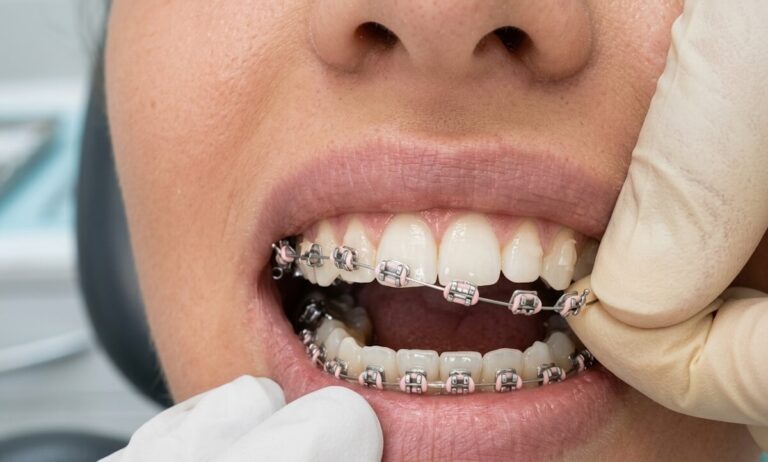
- Dentures, braces, orthodontic appliances – By changing tooth position and consequently bite, they often cause maceration of the mouth corners.
- Occupational factors (wind instrument musicians, etc.) – Prolonged pressure from musical instruments creates chronic skin irritation and microtrauma at the mouth corners.
Systemic Diseases
Chronic systemic diseases are also causes of angular cheilitis. Typically these include:
- Diabetes and elevated glucose levels – Ideal conditions for fungi and poor skin healing.
- GI diseases and malabsorption – Nutritional deficiencies trigger deficiencies that consequently weaken mucous membranes.
- Anemias of various origins – Deprive tissues of oxygen, thus slowing their regeneration (rapid renewal).
- Immunodeficiency states, particularly HIV infection – Severely weakens the body’s immunity, which doesn’t contain pathogenic flora when it enters cracks at the mouth corners.
- Cancer – Also often accompanied by severe deficiencies in the body and very weakened immunity. Naturally, angular cheilitis can form quickly as a result.
- Hormonal disorders – Affect skin condition, salivation, and local immunity.
IMPORTANT: If angular cheilitis has been chronic for a long time or frequently recurs—this is definitely a signal of a more serious problem. In this case, you should check your glucose levels, vitamin status, and GI function.
Types of Angular Cheilitis by Pathogen
Candidal (Fungal) Angular Cheilitis
Candidal angular cheilitis has the following characteristics:
- Caused by Candida fungi – Overgrowth of these fungi occurs particularly in the moist environment of the mouth corners.
- Characteristic signs – Whitish coating, maceration (softening), often absence of crusting.
- Risk factors – Antibiotic use, diabetes, pregnancy. These often alter microflora, reduce immunity, and consequently angular cheilitis forms.
- Tendency to become chronic – Fungal angular cheilitis more often returns as a recurrence without treating the underlying cause.
- Need for antifungal therapy – Topical antifungal ointments are what you need to treat Candidal angular cheilitis.
Streptococcal (Bacterial) Angular Cheilitis
Bacterial (streptococcal) angular cheilitis has the following characteristics:
- Pathogen – Specifically streptococci. These are bacteria that live in the mouth and on skin, and when activated can form cracks and angular cheilitis.
- Visual signs – Purulent and specifically yellowish crusts (unlike fungal, for example), plus sharp pain even at rest.
- More acute course – Also a characteristic sign of bacterial angular cheilitis. The acute phase begins quickly and very intensely here.
- Rapid spread without treatment – Streptococcal infection can spread to adjacent lip areas and further intensify surrounding swelling.
- Need for antibacterial agents – This is what will effectively and correctly treat angular cheilitis. This includes topical antibiotics (ointments, creams, etc.).
- Risk of complications – Without treatment, bacterial erosions and angular cheilitis can become even deeper and subsequently scar.
Mixed Form
Mixed-form angular cheilitis has the following characteristics:
- Combination of fungal and bacterial infection – When both streptococci or staphylococci and Candida activate simultaneously.
- Most severe variant – With combined infections, crack inflammation is even deeper and symptoms more intense.
- Treatment complexity – Therapy targeting only fungi or only bacteria is ineffective here. Combined treatment is how you can and should cure mixed-form angular cheilitis. Antifungals and antibacterial agents should be used, crucially under medical supervision.
- Prolonged healing – Also a feature specifically of mixed form, with frequent future recurrences if the underlying cause of angular cheilitis wasn’t eliminated.
Symptoms of Angular Cheilitis: Warning Signs
Patients with angular cheilitis often observe cracks at the mouth corners, redness, and oozing (skin maceration). Here’s a detailed description of all common symptoms of angular cheilitis that should alert you:
- Pain when opening the mouth – Pain sensations can range from mild discomfort to sharp pain.
- Burning and itching at the mouth corners – Usually indicates specifically fungal involvement.
- Limited lip mobility – When cracks at the mouth corners make it painful and difficult to fully open your mouth or smile.
- Pain when smiling, talking, discomfort eating – Any lip movement triggers this and can further traumatize the crack/angular cheilitis.
- Bleeding cracks – Usually occurs from tears in the crack itself or crusts on it.
- Constant feeling of tightness – When skin is severely dried out.
It’s important to note that all the symptoms listed above typically cause not only physical but also psychological discomfort. They can make conversation difficult, and patients often feel self-conscious about their appearance, avoiding social contact. In other words, angular cheilitis isn’t just a minor problem—it’s a genuine obstacle that affects a person’s quality of life. It definitely warrants treatment!
How Angular Cheilitis Differs from Cold Sores: Avoiding Confusion
Conditions like angular cheilitis and herpes are quite often confused. But to understand how to effectively treat angular cheilitis or herpes, you need to know their differences precisely. So here’s more detail about how herpes differs from angular cheilitis.
Convenient Comparison Table: Angular Cheilitis vs Herpes
| Criterion | Angular Cheilitis | Herpes |
|---|---|---|
| Location | Only mouth corners | Lips, around lips and on vermilion border, sometimes nose |
| Type of eruption | Cracks, erosions, maceration | Blisters → erosions → then crusts |
| Pain and discomfort | Mainly when opening mouth | Tingling, burning, then pain |
| Course | Slow, tendency to become chronic | Rapid, with fever |
| Causes | Multifactorial: deficiencies, infections, dryness, mechanical | HSV-1 herpes virus |
| Contagiousness | Not contagious | Highly contagious |
| Treatment | Antiseptics, antifungals, healing ointments | Antiviral topicals and oral antivirals (acyclovir) |
Diagnosis of Angular Cheilitis
The cause of angular cheilitis can be determined through diagnostic methods such as medical examination and laboratory tests. They’re usually used together to understand the nature of the problem. In other words, diagnosis helps determine precisely what’s causing angular cheilitis—whether it’s infection, deficiencies, or possibly mechanical factors.
Medical Examination
If cracks are already appearing, examination by a dentist is needed, or as indicated by a dermatologist or general practitioner. The doctor visually assesses crack depth, degree of maceration, presence of crusting, and infectious signs if present. A medical history is collected—frequency of angular cheilitis episodes, possible triggers that provoked them, and comorbidities are clarified. The doctor then performs a visual assessment of oral cavity condition, specifically checking for stomatitis or infection, tooth condition, oral mucosa condition, and salivation level. The doctor also needs to evaluate the person’s bite, as tooth occlusion directly affects load on the mouth corners and triggers microcracks.
Laboratory Tests
Before treating angular cheilitis, laboratory tests are sometimes important, especially if it’s not typical angular cheilitis but chronic with frequent recurrences. Tests are also important when examination raises suspicions of infection or systemic causes—requiring definitive confirmation.
So the doctor may order:
- Swab from the affected area to identify the pathogen
- Bacterial culture to specify the particular bacterial species
- Blood test—complete and/or biochemical to detect inflammation or deficiencies
- Blood test for vitamins B2, B6, B12, folic acid—also to detect these deficiencies
- Iron and ferritin test
- Glucose level determination—to rule out diabetes
- Immunogram for frequent recurrences
Treatment of Angular Cheilitis: A Comprehensive Approach
What treats angular cheilitis typically requires a comprehensive approach. This is what effectively resolves the problem while preventing future recurrences. Moreover, first and foremost—identify the underlying cause. Overall, therapy includes combining topical and systemic treatment. Individual selection of all agents considering the type of angular cheilitis is also important. Treatment duration depends on its form. If it’s acute—approximately 5-10 days of treatment. If chronic—about 2-3 weeks.
Here are specific recommendations on what treats angular cheilitis.
Topical Treatment
The best topical agents are:
- Antiseptic treatment – Chlorhexidine, Miramistin. To eliminate infection.
- Antifungal ointments for angular cheilitis – Clotrimazole, Nystatin ointment. To combat fungi.
- Antibacterial agents – Tetracycline ointment, Erythromycin ointment. Specifically for bacterial lesions.
- Healing preparations – Solcoseryl, Bepanten, D-panthenol. To accelerate skin recovery.
- Methyluracil ointment – What to apply to angular cheilitis for regeneration and faster healing.
- Zinc ointment – What to apply to angular cheilitis for drying.
But it’s important to remember: any effective angular cheilitis remedy still requires proper application technique. This means a thin layer 2-3 times daily and crucially, after cleansing and lightly drying the skin.
Systemic Therapy
The best options among systemic angular cheilitis treatments are:
- B-group vitamins – Complex preparations for better healing and mucous membrane restoration.
- Iron supplements for anemia – For skin cell regeneration.
- Zinc for healing – To boost local immunity.
- Immunomodulators for chronic form – Effective angular cheilitis treatment for chronic recurrences.
- Antifungal tablets – For severe candidiasis.
- Antibiotics – For bacterial complications or mixed infections.
- Management of underlying conditions – Through blood sugar control, GI condition, and hormones.
- Probiotics for intestinal immunity – As microflora support, especially during prolonged treatment and with antibiotics.
Getting Rid of Angular Cheilitis Overnight: Reality or Myth
Many patients often ask how to get rid of angular cheilitis effectively and very quickly. Literally, how to get rid of angular cheilitis overnight? But let’s be honest—it’s impossible, it’s a myth.
There’s no way to cure angular cheilitis in 1 day, if only because realistic complete healing timeframes are minimum 3-7 days, and that’s with properly selected treatment. In 1 day, tissues simply won’t have time to complete the regeneration (renewal) stage.
What you can definitely do in one night: significantly reduce pain and prevent crack deepening.
For this, apply this maximally effective express regimen:
- Antiseptic (Chlorhexidine)
- Plus healing ointment (Bepanten)
- Plus protection from mouth corner trauma (rich hygienic lip balm)
“Quick” methods supposedly for getting rid of angular cheilitis within 24 hours often create false expectations. This can lead to chronicity of the process, since the underlying cause isn’t eliminated—only symptoms are masked. And when it seems the crack has dried up or even disappeared, treatment stops. But deep layers of angular cheilitis still need treatment. So do everything properly and preferably with a doctor!
Home Remedies for Angular Cheilitis: What Works and What’s Dangerous
So-called folk remedies for angular cheilitis or options for treating angular cheilitis at home simply lack scientific evidence and may even worsen the condition. But let’s still provide an honest, critical review of some:
- What works and is safe: Sea buckthorn oil, rosehip oil, vitamin E oil, honey (if no allergy), propolis. Another relatively effective angular cheilitis remedy—aloe juice, chamomile and calendula decoctions for rinsing.
- What may help: Tea tree oil (but cautiously, as it can irritate).
- What doesn’t work and is dangerous: Baking soda (over-dries), lemon (acid intensifies pain), alcohol (chemical burn), toothpaste (contains irritants), salt (sharp pain), match sulfur (toxic).
REMEMBER: Whatever you use to treat angular cheilitis at home, there are conditions when it’s definitely ineffective. Namely—with chronic or infected angular cheilitis. Here medical agents and professional dental consultation are necessary.
Angular Cheilitis in Children: Special Features and Safe Treatment
Angular cheilitis in children has special features due to age and physiology. Children more often like to lick their lips and put various objects in their mouths. They also have weaker immunity—because of all this, infection more frequently and easily enters even microcracks.
Symptoms in children also differ from adults. Usually angular cheilitis in children manifests with greater pain, frequent food refusal, and increased tearfulness.
Safety of treatments for children is extremely important, but it’s determined by age. For example, for infants, antiseptic agents aren’t recommended or only in very minimal doses, along with pediatric healing ointments as needed. For preschoolers and schoolchildren, milder antifungal or antibacterial agents are better, and of course also by doctor’s prescription. Overall, among relatively safe ointments for them are Bepanten, D-panthenol, Solcoseryl, plus specifically pediatric antibacterial and antifungal agents.
Regarding folk remedies, for example, honey is completely forbidden under 1 year. Among what’s allowed: sea buckthorn oil, aloe, chamomile or calendula decoctions for rinsing.
If cheilitis in children already has chronic signs, spreads to a larger mucosal area, is extremely painful—then pediatric consultation is definitely needed.
Overall, it’s very important to break the child’s lip-licking habit. Motivational games, gentle reminders, moisturizing balms, and positive reinforcement help achieve this.
Complications of Angular Cheilitis
With improper or absent treatment of angular stomatitis or angular cheilitis, negative consequences can occur, including:
- Process becoming chronic with frequent recurrences
- Infection spreading to adjacent skin and mucosa areas
- Deep cracks with scarring
- Secondary infection joining with extremely difficult healing
- Pain syndrome limiting life activities
- Psychological discomfort and social isolation
- Cosmetic defect in chronic form as a visually unattractive scar
It’s worth knowing that angular cheilitis can also be a marker of serious disease—anemia, diabetes, immunodeficiency, etc.
Prevention of Angular Cheilitis
A complex of measures to prevent recurrences or angular cheilitis occurrence altogether is the best prevention. More detail about common prevention methods follows.
Hygiene Rules
Don’t forget about:
- Regular and proper oral hygiene
- Timely dental treatment
- Toothbrush replacement every 3 months
- Denture care
- Malocclusion correction
- Individual hygiene products
- Clean hands and avoiding touching lips
Breaking Bad Habits
Avoid lip licking—this is the main bad habit. Constantly moisturize them and consciously control the urge to lick. More specifically, follow these recommendations:
Use lip balm – As a barrier that moisturizes lips well.
Increase self-control – Keep a habit journal, praise and reward yourself for compliance.
Apply additional psychological techniques – Mindful living, meditation, and calming breathing exercises.
Replace one habit with another – Again, instead of licking, moisturize lips with balm each time.
Work with stress – Often it’s the main cause of licking. Walking and calm sports help here.
Balanced Nutrition
Overall this means:
Enriched diet:
- Foods with sufficient B vitamins (eggs, dairy, liver)
- Iron sources (meat, buckwheat, pomegranate)
- Zinc-containing products (pumpkin seeds, nuts)
- Omega-3 presence (fish, flaxseed oil)
- Definitely fresh vegetables and fruits
Regular meals – Preferably at the same time and same amount per day.
Limiting sweets – As they’re excellent flora for pathogen growth in cracks.
Adequate water consumption – To avoid dried mucosa.
Vitamin complexes in courses (fall, spring).
Diet correction – Avoid fasting and any severe restrictions.
Strengthening Immunity
One of the most important prevention points for angular cheilitis. Therefore recommended:
- Adequate sleep—definitely 7-8 hours
- Moderate but regular physical activity
- Hardening
- Frequent fresh air walks
- Stress avoidance
- Giving up bad habits
- Treatment of chronic infection foci
- Preventive immunomodulator courses—by doctor’s prescription
When You Must See a Doctor
To not miss warning signals that can worsen angular cheilitis at the mouth corner, pay attention to the following. If:
- Angular cheilitis doesn’t heal after more than 2 weeks of home treatment
- There are constant recurrences—more than 3-4 times per year
- Progressive condition worsening is observed
- Lesion spreading to other facial areas
- Severe pain syndrome
- Fever is present
- Purulent discharge is already observed
- Angular cheilitis in a child—particularly infants and young children
- Accompanying symptoms present—weakness, weight loss, significant thirst
- Angular cheilitis appearance is sudden and without obvious causes
Questions & Answers (FAQ)
Can you cure angular cheilitis in 1 day?
You cannot cure angular cheilitis in 1 day. Healing requires 3 to 7 days with properly selected therapy.
Is angular cheilitis contagious?
No, angular cheilitis is not contagious. Its cause is usually multifactorial. If there’s bacterial infection, sometimes it can be transmitted through very close contact between people.
What’s the best ointment for angular cheilitis?
The best ointment for angular cheilitis is what suits an individual person in their case. There’s no universal remedy for everyone. Typically antibacterial or antifungal ointments are used: Tetracycline, Clotrimazole, etc.
Why does angular cheilitis keep coming back?
Angular cheilitis keeps returning if the underlying cause isn’t eliminated. For example, deficiency states in the body, very weak immunity, certain chronic diseases.
Make an appointment
You can make an appointment by filling out the application form on the website, as well as using instant messengers:
Make an appointment
You can make an appointment by filling out the application form on the website, as well as using instant messengers:


Make an appointment easily using chatbots:
Also, call the numbers:
Modern dentistry and medical centre "MED-DEO"
Choose a clinic whose location is more convenient for you.
Kyiv, Holosiivska/Demiivska metro station
130 Lobanovskoho Avenue


Working hours:
Mon - Sun: 8:00 AM - 9:00 PM
No days off!
Call the numbers:
How to get to us? Create a route
Create a route
Kyiv, Akademistechko metro station
78A, Irpinska str.


Working hours:
Mon-Sun: 8.00-21.00
Without days off!
Call the numbers:
How to get to us?
Create a route
Create a route
Kyiv, Heroiv Dnipra metro station
32A, Heroiv Dnipra str.
Working hours:
Mon-Sun: 8.00-21.00
Without days off!
Call the numbers:
How to get to us?
Create a route
Create a route
Kyiv, Teatralna metro station
9B, E. Chykalenko (Pushkinska) str.



Working hours:
Mon-Sat: 8.00 - 21.00. Sun: by appointment.
Without days off!
Call the numbers:
How to get to us?
Create a route
Create a route
Відгук від клієнта
0:00
0:00


Your email will not be published on the site.