Special offer! Comprehensive professional teeth cleaning for only 1699 UAH.
Special offer! Comprehensive professional teeth cleaning for only 1699 UAH.
Special offer! Comprehensive professional teeth cleaning for only 1699 UAH.
Special offer! Comprehensive professional teeth cleaning for only 1699 UAH.
Special offer! Comprehensive professional teeth cleaning for only 1699 UAH.
Special offer! Comprehensive professional teeth cleaning for only 1699 UAH.
Special offer! Comprehensive professional teeth cleaning for only 1699 UAH.
Special offer! Comprehensive professional teeth cleaning for only 1699 UAH.
Special offer! Comprehensive professional teeth cleaning for only 1699 UAH.
Special offer! Comprehensive professional teeth cleaning for only 1699 UAH.
Sign up
 (044) 394 90 94
(044) 394 90 94  Holosiivska/Demiivska metro station
Doctors


 Prices
Blog
Contacts
Prices
Blog
Contacts
пр.Лобановського, 130, Київ, Україна
Temporarily closed
Opening soon
78A, Irpinska St., Kyiv, Ukraine
Temporarily closed
Opening soon
32A, Heroiv Dnipra St., Kyiv, Ukraine
Temporarily closed
Opening soon
9B, Yevhena Chykalenko St. (Pushkinska), Kyiv, Ukraine
Temporarily closed
Opening soon
Sign up
En
(044) 394 90 94
Back
Dentistry
General Dentistry
Dental surgery
Dental Implants
Maxillofacial Surgery
Dental prosthetics
Cosmetic dentistry

Professional Dental Hygiene

Periodontics
Orthodontic dentistry

Gnathology & TMJ Therapy
Pediatric Dentistry
Dental X-Rays
Back
Orthodontic Center
Orthodontic dentistry
Gnathology & TMJ Therapy
Back
Prosthodontic Center
Dental prosthetics
Back
MED-DEO Center for Maxillofacial Surgery & Facial Plastics
Maxillofacial Surgery
Plastic surgery
Back
Surgical Dental Center
Dental surgery
Dental Implants
Search on the site


Popular requests
Teeth whitening
Treatment of caries
Wisdom tooth extraction
Bracket system
Dental veneers
Tooth restoration
Pediatric dentist
Consultation with a dentist-therapist
Search results by: «».
Unfortunately, no results were found for your search: “Pediatric Endocrinologist”, nothing was found.
You may find these links useful:
Clinics "MED-DEO"
пр.Лобановського, 130, Київ, Україна
Temporarily closed
Opening soon
78A, Irpinska St., Kyiv, Ukraine
Temporarily closed
Opening soon
32A, Heroiv Dnipra St., Kyiv, Ukraine
Temporarily closed
Opening soon
9B, Yevhena Chykalenko St. (Pushkinska), Kyiv, Ukraine
Temporarily closed
Opening soon
Services
Dentistry Orthodontic Center Prosthodontic Center MED-DEO Center for Maxillofacial Surgery & Facial Plastics Surgical Dental CenterGeneral Dentistry
Dental surgery
Dental Implants
Maxillofacial Surgery
Dental prosthetics
Cosmetic dentistry
Professional Dental Hygiene
Periodontics
Orthodontic dentistry
Gnathology & TMJ Therapy
Pediatric Dentistry
Dental X-Rays
Orthodontic dentistry
Gnathology & TMJ Therapy
Dental prosthetics
Maxillofacial Surgery
Dental surgery
Dental Implants
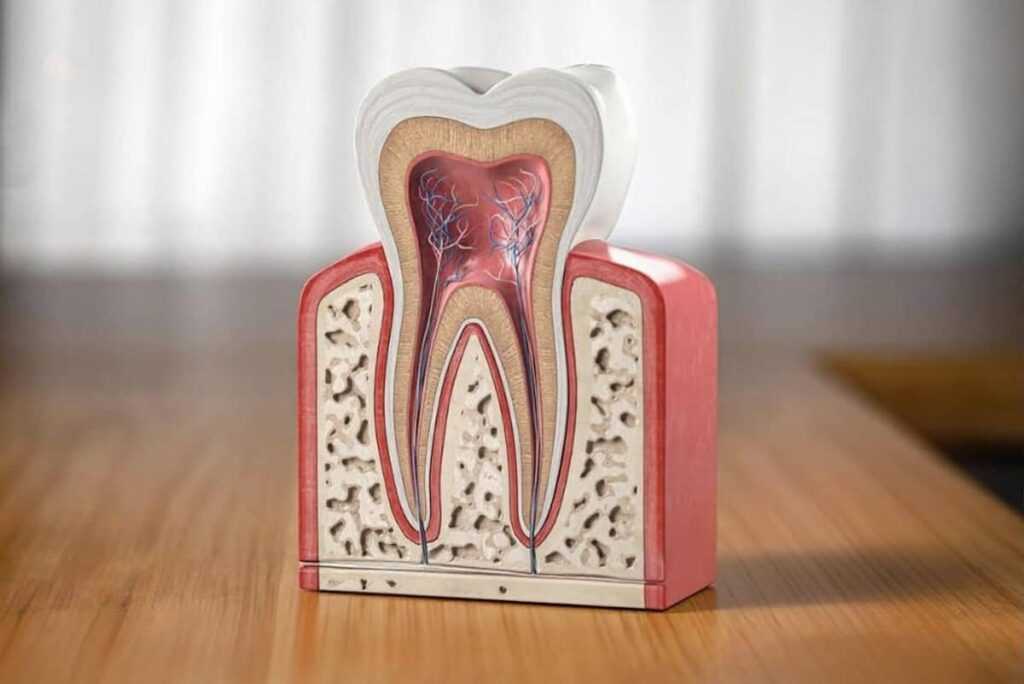

What Is Dentin and Where Is It Located in the Tooth
Dentin is the main hard tissue of the tooth, located beneath the enamel (the outer protective layer). In the tooth root, beneath the gums, dentin is protected by a separate outer layer known as cementum. Cementum protects the root itself and also firmly anchors the tooth within the jaw. Inside the dentin lies the tooth’s pulp — soft tissue containing blood vessels and nerves.
To answer the question of what dentin actually is, the key point is this: it’s the tooth’s framework. It’s what forms the bulk of the tooth’s volume and shields its internal structures. Dentin gives the tooth its strength and helps distribute chewing forces evenly, which reduces brittleness and the risk of cracks or chips.

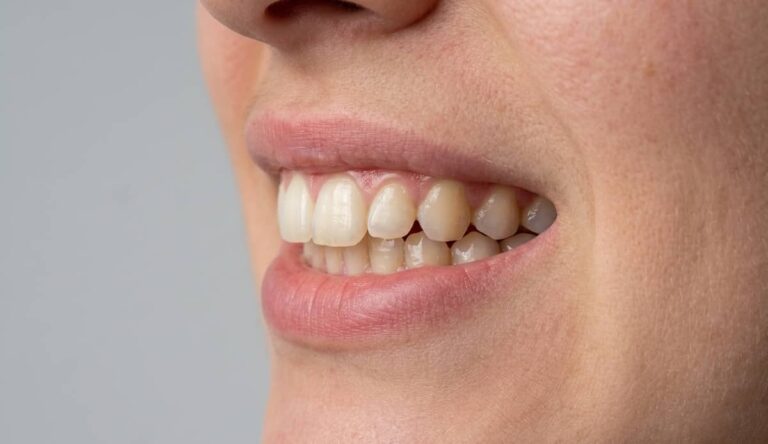
GOOD TO KNOW: When people talk about tooth dentin, they’re referring to the tissue that determines not just strength and sensitivity, but also the color of the tooth. Since dentin has a naturally yellowish tint, it partially shows through the semi-translucent enamel and influences the overall shade of the teeth.
The Structure of Dentin: Layers, Tubules, and Predentin
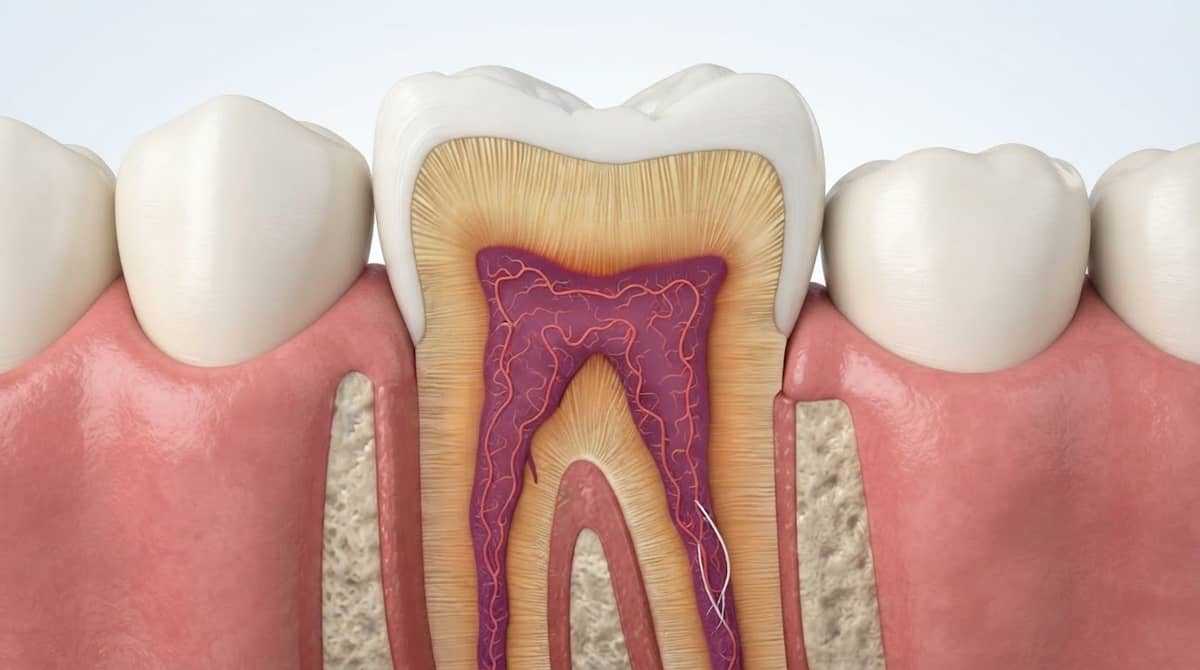
If you break down what a tooth is made of in detail, dentin makes up the largest portion of it. The structure of dentin itself involves several distinct components with their own medical terms: the main dense substance, microscopic tubules, functional dentin layers, and so on. All of these connect to the pulp and serve different functions at different stages of the tooth’s “life.”
Here’s a closer look at dentin’s structure.
Dentinal Tubules and Why They Affect Sensitivity
Dentinal tubules are thin microchannels that run directly through the dentin. They play a role in transmitting various stimuli and in tooth sensitivity overall. More specifically, these tubules are what carry:
- Reactions to cold and hot temperatures.
- Pain triggered by sweet or sour foods.
As the enamel thins, the dentin beneath it becomes exposed, and that’s when a person starts to notice noticeably heightened sensitivity to everything. The more exposed the dentinal tubules are, the greater that sensitivity becomes.
Predentin, Mantle Dentin, and Circumpulpal Dentin
Within the internal structure of dentin, there are several distinct zones (layers):
Predentin is the “young,” not-yet-fully-mineralized layer that’s still forming near the pulp. It exists specifically to produce “mature” dentin and drive its mineralization (hardening process).
Circumpulpal dentin is the main internal layer and the largest portion of dentin overall. It’s the layer that surrounds the pulp, protects it, and provides the tooth’s overall structural strength.
Mantle dentin is the outer layer, sitting directly beneath the enamel and above the circumpulpal dentin. It absorbs and distributes chewing forces within the tooth, shielding the deeper tissues from damage.
Put simply, the layers follow this order: enamel → mantle dentin → circumpulpal dentin → predentin → pulp.
The Composition of Dentin and How It Differs from Enamel
It’s worth understanding that the ratio of mineral content, organic components, and water in dentin is quite specific — this particular composition exists to serve dentin’s various functions.
So, the composition of dentin breaks down roughly as follows:
- About 70% mineral content — for hardness and strength.
- Roughly 20% organic material (mainly collagen) — for elasticity and reduced brittleness.
- About 10% water — to sustain the tissue’s ongoing “living” activity.
This is precisely why dentin is harder than bone, yet softer and less brittle than enamel. Its composition is built to support the tooth’s functions in a way that lets it withstand chewing pressure without cracking too easily, all while protecting its own inner tissues. In simpler terms: dentin’s composition is balanced so the tooth stays strong for as long as possible without becoming brittle.
The difference between enamel and dentin is straightforward: enamel protects against external forces and acts as the tooth’s outer “armor” (against wear and chipping), while dentin helps the tooth withstand chewing pressure, making it less brittle and preventing premature cracking. Dentin essentially functions as the tooth’s “shock absorber.”
Types of Dentin: Primary, Secondary, Tertiary, and Reparative
There are several different types of dentin that form over the course of a lifetime. Here’s a look at each one:
- Primary dentin — forms during tooth development, creating the tooth’s main structural tissue.
- Secondary dentin — unlike primary dentin, this type forms slowly after the tooth has already erupted. This is a normal part of age-related change, and it serves to protect the pulp and help the tooth adapt to the cumulative effects of wear over the years.
- Tertiary dentin — forms in response to irritation, such as decay or trauma, as a protective reaction.
- Reparative dentin — a type of protective dentin that essentially “repairs” damaged areas. It partially seals off and covers damaged tissue to keep it from deteriorating further.
Each of these types of dentin forms at a different stage of life, and together they act as the tooth’s natural defense system, helping preserve its strength for as long as possible.
What Functions Does Dentin Perform
Dentin carries out several critically important functions at once. These include:
- Supporting the enamel — providing structural backing that helps prevent cracking and breakdown during eating or sleep (for instance, in cases of bruxism).
- Protecting the pulp — shielding it from infection and mechanical stress through the internal protective layer dentin creates.
- Contributing to tooth sensitivity — transmitting signals about cold, heat, or pain to the tooth’s nerves through its microscopic tubules.
- Influencing enamel color — determining the overall shade of the teeth, since it shows through the enamel.
GOOD TO KNOW: Darkening of tooth tissue can result either from damage to the dentin or simply from age-related changes within it. But the key takeaway is this: without healthy dentin, it’s impossible to maintain overall tooth health, even if the enamel is in perfect condition. Without healthy dentin, the tooth loses its main structural support and the protection of its inner tissues, becoming more fragile and sensitive.
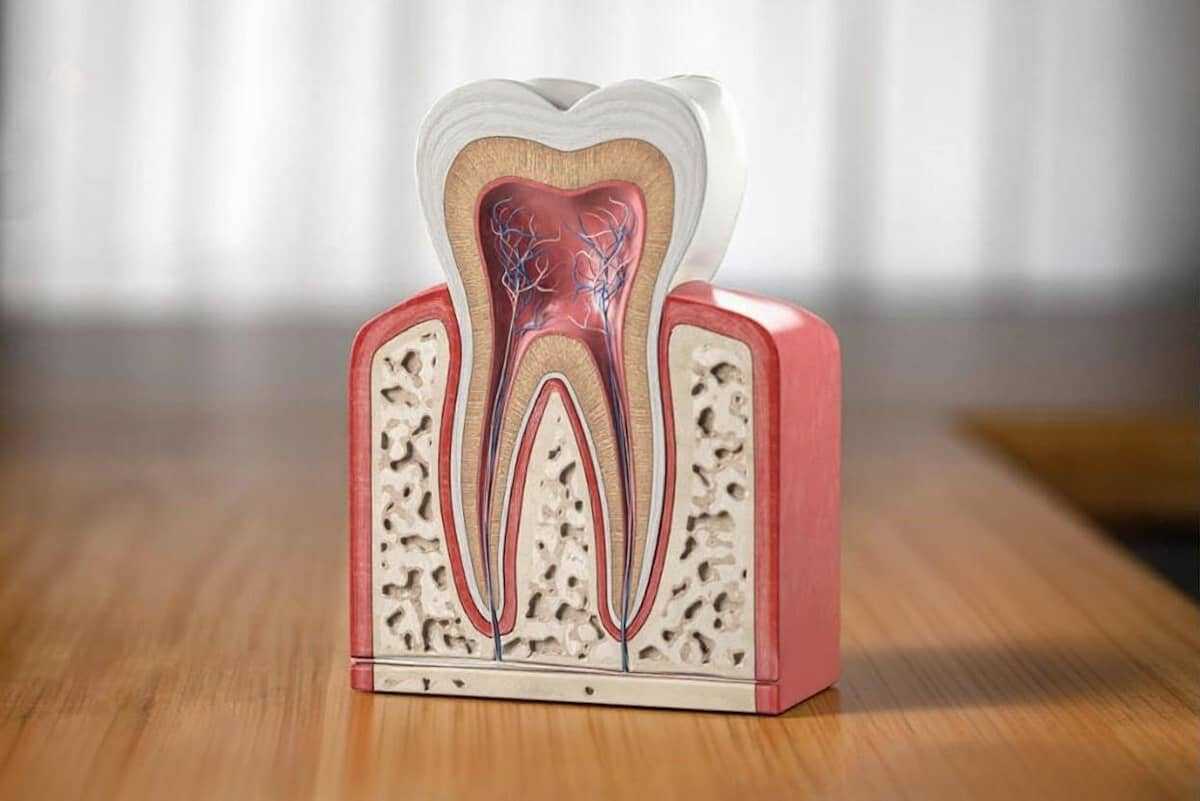
Why Dentin Becomes Exposed and How It Shows Up
Dentin exposure is a fairly common problem encountered in dental practice. The main causes include:
- Pathological enamel wear — gradual erosion of enamel caused by excessive pressure or a misaligned bite.
- Gum recession — when the gums recede and the tooth root becomes exposed.
- Overly aggressive brushing — excessive pressure on the enamel or using a brush that’s too stiff, both of which wear down enamel over time.
- Acidic exposure from food and drinks — acids gradually “soften” and break down enamel.
- Bruxism — involuntary teeth grinding and clenching, which also wears down enamel very quickly.
- Abfraction (wedge-shaped defects) — tissue loss specifically near the gumline, caused by mechanical or chewing overload, and sometimes by improper brushing technique.
In short: as enamel wears away, dentin becomes exposed as a result. And once it’s exposed, this typically shows up through symptoms such as:
- A sharp reaction to cold, hot, sweet, or sour stimuli.
- Noticeable discomfort while brushing.
- A sense of a persistent, aching tooth.
What Happens to Dentin with Decay, Wear, and Erosion
Dentin is affected somewhat differently depending on the specific dental issue or condition involved. Specifically:
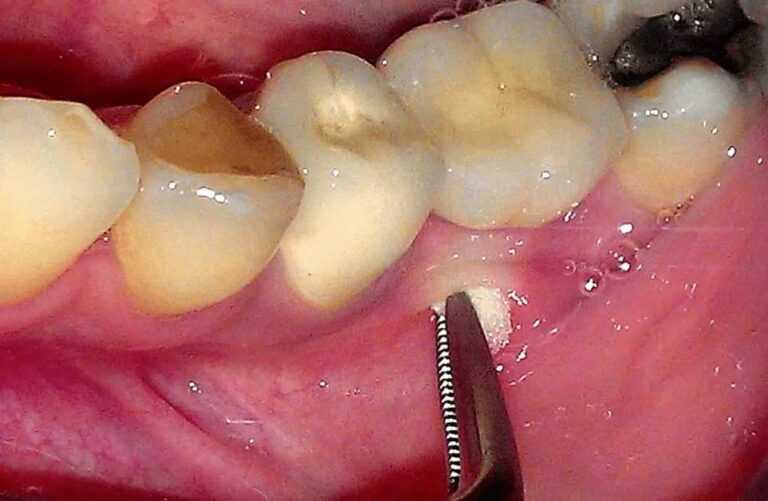
- With tooth decay — bacteria break down the enamel and reach the dentin fairly quickly. And because dentin has a softer structure, it deteriorates even faster once exposed.
- With enamel wear — the dentin gradually becomes exposed, and the tooth becomes shorter and more sensitive as a result.
- With enamel erosion — acid exposure strips minerals out of the enamel (a process called demineralization), which in turn weakens the underlying dentin structure.
Dentin is softer than enamel, so once it’s exposed to damage, it breaks down quickly and requires timely treatment. The most effective treatment approaches here typically include remineralization (replenishing the enamel’s mineral content), fluoride treatment, filling or composite restoration when needed, night guards for bruxism, and regular, timely professional dental cleanings.
Professional Dental Hygiene
MoreTo help prevent damage to dentin — and by extension, to enamel — it’s recommended to use a soft toothbrush and toothpaste formulated for sensitive teeth, follow proper brushing technique, treat any cavities promptly, limit consumption of acidic foods, and maintain a generally healthy diet.
Dentin in Baby Teeth: What’s Different
Dentin in children differs from the dentin found in permanent teeth. In children, dentin has the following characteristics:
- It’s thinner.
- It’s less mineralized.
- Its tubules are smaller.
Because of these differences, cavities in baby teeth develop significantly faster and can reach the pulp much more quickly than in adult teeth. That’s exactly why parents shouldn’t delay a visit to the dentist — whether for a routine checkup or at the first sign of a cavity or any complaint from the child. Even baby teeth are worth treating, precisely to prevent decay from damaging the tissue to the point where it affects the child’s future permanent teeth.
Dentin isn’t just an inner part of the tooth. It’s the tooth’s foundation and, essentially, its most critical tissue. Keeping dentin healthy matters for both adults and children alike!
Questions and Answers (FAQ)
What is dentin?
Dentin is the main internal tissue of the tooth. It forms the bulk of the tooth’s structure, distributes chewing pressure, protects the pulp, and provides support for the enamel.
How is dentin different from enamel?
Dentin differs from enamel in that it’s softer, more elastic, and contains tubules that transmit sensitivity. Enamel is harder and doesn’t have direct nerve endings (or sensitivity) of its own.
What is secondary dentin?
Secondary dentin is the type that forms slowly over the course of a person’s life, after the teeth have already erupted. It’s what helps protect teeth as we age.
Can dentin regenerate?
Dentin can regenerate, but only partially. For example, in response to irritation or injury, the tooth forms protective tertiary dentin. However, it can’t fully regenerate on its own and usually requires professional treatment.
Author: Kateryna Yarmolenko, Prosthodontist, General Dentist, and Oral Surgeon


Make an appointment
You can make an appointment by filling out the application form on the website, as well as using instant messengers:
Make an appointment
You can make an appointment by filling out the application form on the website, as well as using instant messengers:


Make an appointment easily using chatbots:
Also, call the numbers:
Modern dentistry and medical centre "MED-DEO"
Choose a clinic whose location is more convenient for you.
Kyiv, Holosiivska/Demiivska metro station
130 Lobanovskoho Avenue


Working hours:
Mon - Sun: 8:00 AM - 9:00 PM
No days off!
Call the numbers:
How to get to us? Create a route
Create a route
Kyiv, Akademistechko metro station
78A, Irpinska str.


Working hours:
Mon-Sun: 8.00-21.00
Without days off!
Call the numbers:
How to get to us?
Create a route
Create a route
Kyiv, Heroiv Dnipra metro station
32A, Heroiv Dnipra str.


Working hours:
Mon-Sun: 8.00-21.00
Without days off!
Call the numbers:
How to get to us?
Create a route
Create a route
Kyiv, Teatralna metro station
9B, E. Chykalenko (Pushkinska) str.


Working hours:
Mon-Sat: 8.00 - 21.00. Sun: by appointment.
Without days off!
Call the numbers:
How to get to us?
Create a route
Create a route
Відгук від клієнта
0:00
0:00


Your email will not be published on the site.