Special offer! Comprehensive professional teeth cleaning for only 1699 UAH.
Special offer! Comprehensive professional teeth cleaning for only 1699 UAH.
Special offer! Comprehensive professional teeth cleaning for only 1699 UAH.
Special offer! Comprehensive professional teeth cleaning for only 1699 UAH.
Special offer! Comprehensive professional teeth cleaning for only 1699 UAH.
Special offer! Comprehensive professional teeth cleaning for only 1699 UAH.
Special offer! Comprehensive professional teeth cleaning for only 1699 UAH.
Special offer! Comprehensive professional teeth cleaning for only 1699 UAH.
Special offer! Comprehensive professional teeth cleaning for only 1699 UAH.
Special offer! Comprehensive professional teeth cleaning for only 1699 UAH.
Sign up
 (044) 394 90 94
(044) 394 90 94  Holosiivska/Demiivska metro station
Sign up
(044) 394 90 94
(044) 394 90 94
Doctors


 Prices
Blog
Contacts
Prices
Blog
Contacts
пр.Лобановського, 130, Київ, Україна
Temporarily closed
Opening soon
78A, Irpinska St., Kyiv, Ukraine
Temporarily closed
Opening soon
32A, Heroiv Dnipra St., Kyiv, Ukraine
Temporarily closed
Opening soon
9B, Yevhena Chykalenko St. (Pushkinska), Kyiv, Ukraine
Temporarily closed
Opening soon
(044) 394 90 94
Back
Dentistry
General Dentistry
Dental surgery
Dental Implants
Maxillofacial Surgery
Dental prosthetics
Cosmetic dentistry
Professional Dental Hygiene

Periodontics
Orthodontic dentistry

Gnathology & TMJ Therapy
Pediatric Dentistry
Dental X-Rays
Back
Orthodontic Center
Orthodontic dentistry
Gnathology & TMJ Therapy
Back
Prosthodontic Center
Dental prosthetics
Back
MED-DEO Center for Maxillofacial Surgery & Facial Plastics
Maxillofacial Surgery
Plastic surgery
Back
Surgical Dental Center
Dental surgery
Dental Implants
Search on the site


Popular requests
Teeth whitening
Treatment of caries
Wisdom tooth extraction
Bracket system
Dental veneers
Tooth restoration
Pediatric dentist
Consultation with a dentist-therapist
Search results by: «».
Unfortunately, no results were found for your search: “Pediatric Endocrinologist”, nothing was found.
You may find these links useful:
Clinics "MED-DEO"
пр.Лобановського, 130, Київ, Україна
Temporarily closed
Opening soon
78A, Irpinska St., Kyiv, Ukraine
Temporarily closed
Opening soon
32A, Heroiv Dnipra St., Kyiv, Ukraine
Temporarily closed
Opening soon
9B, Yevhena Chykalenko St. (Pushkinska), Kyiv, Ukraine
Temporarily closed
Opening soon
Services
Dentistry Orthodontic Center Prosthodontic Center MED-DEO Center for Maxillofacial Surgery & Facial Plastics Surgical Dental CenterGeneral Dentistry
Dental surgery
Dental Implants
Maxillofacial Surgery
Dental prosthetics
Cosmetic dentistry
Professional Dental Hygiene
Periodontics
Orthodontic dentistry
Gnathology & TMJ Therapy
Pediatric Dentistry
Dental X-Rays
Orthodontic dentistry
Gnathology & TMJ Therapy
Dental prosthetics
Maxillofacial Surgery
Dental surgery
Dental Implants


Service statistics

More and more clients choose «MED-DEO»
Initial doctor consultation for free* * subject to treatment in the clinic
Appointment by phone:
(044) 394 90 94Splinting of mobile teeth in children is a medical procedure aimed at strengthening and stabilizing units that are wobbly in the dentition.
Thanks to a special dental splint, several teeth are secured into one block, which prevents them from moving and loosening further. Splinting is also recommended to consolidate the results of orthodontic treatment. The installation of splints is necessary to fix the teeth after wearing braces.
Teeth splinting for children price 2026
Service name
Price, UAH.
Splinting (3 teeth)
2400 ₴
Sign upplinting (6 teeth)
2950 ₴
Sign upApplication anesthesia (use)
150 ₴
Sign upInjectable anesthesia (use)
350 ₴
Sign upIndividual set "Cofferdam", ''RUBBER-DAM'' (use)
350 ₴
Sign upIndividual set ''Optra Gate'' (use)
250 ₴
Sign upPanoramic shot (OPTG)
440 ₴
Sign upConsultation with a pediatric dentist
390 ₴
Sign upTeeth cleaning "Air Flow" one jaw (alternate bite)
700 ₴
Sign upDental splinting for children at the Med-Deo clinic: high-quality and affordable
The Med-Deo clinic uses modern equipment for accurate diagnostics and effective treatment. Materials and orthodontic structures are certified. We use progressive technologies in the treatment of children’s teeth. We guarantee painlessness and quality. Contact professional dentists – keep your child’s teeth healthy!






We work with all insurance companies








Reviews about teeth splinting for children at Med-Deo
Tooth Contusion, Luxation, or Periodontitis in a Child: What to Do?
Tooth trauma and luxation (dislocation) in a child are reasons to seek immediate medical attention.
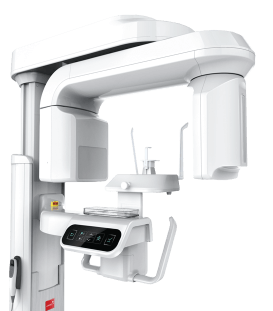
You should not attempt to solve the problem on your own. Only an experienced pediatric dentist, after a thorough examination and diagnosis, can accurately determine the nature of the injury. A tooth luxation and a crown fracture are completely different things; moreover, a fracture in the bone tissue may occur during the trauma. In modern dentistry in Kyiv, a comprehensive examination of the child will be conducted using the latest equipment. An X-ray or a panoramic shot will provide a clear and objective picture. After a diagnosis is established, the young patient may be prescribed splinting. Contusions and luxations are not the only indications for this procedure. Splinting is a popular method for treating teeth affected by periodontitis. Advanced or chronic stages of the disease often lead to tooth mobility. Installing splints allows for the teeth to be kept intact.

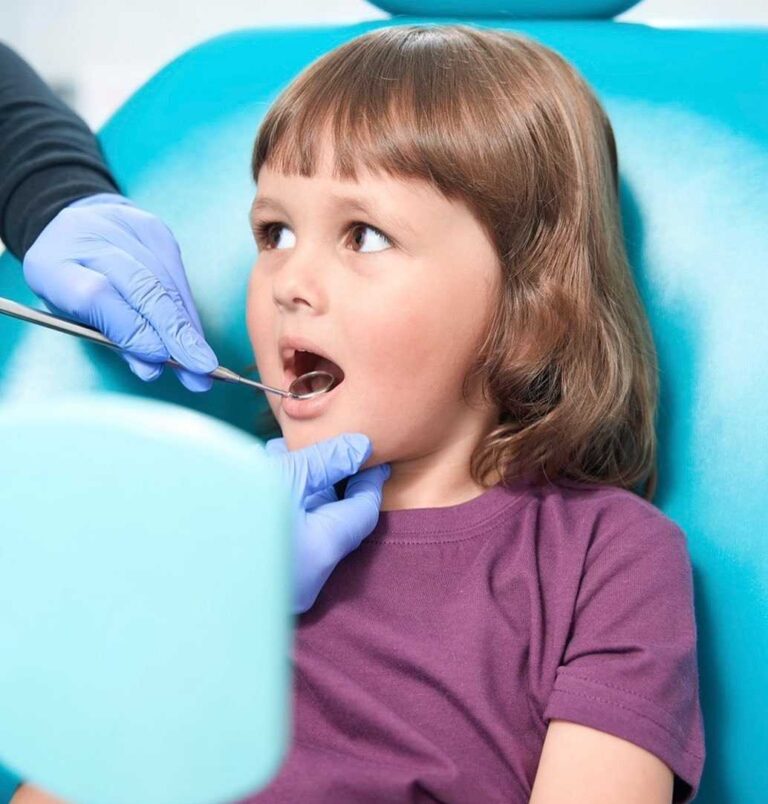
Dental Splinting in Children: Indications
If changes in tooth position or jaw discomfort are observed, it is necessary to consult a doctor for an examination. Only a professional can determine whether dental splinting is required for the child. Quite often, splinting is also needed to stabilize the results of orthodontic treatment.
In general, the indications for dental splinting may include the following signs and symptoms:
- A sensation of tooth mobility;
- Gum inflammation;
- Severe gum bleeding;
- Jaw pain;Difficulty chewing;
- Significant tooth crowding;
- Existing malocclusion (incorrect bite);
- Speech difficulties;
- Tooth and jaw injuries;
- Tooth loss.
If a doctor is not consulted in time, the teeth may shift to such an extent that splinting will no longer be effective. In such cases, more complex treatment may be required, causing greater physical and psychological discomfort for the child.
Good to know: When a doctor decides on dental splinting for a child, they consider factors such as the child’s age, the condition of their teeth and gums, and the type and severity of the anomaly or problem. Other factors include the presence of injuries, the prognosis for the further development of the child’s maxillofacial system, and their overall health status.

Methods of Dental Splinting in Children
The use of modern dental technologies allows for the quick and effective resolution of various oral health issues. Splinting helps prevent tooth mobility and premature tooth loss in children, while preserving a beautiful smile and proper chewing function. In our clinic, we use fiberglass, aramid fiber, crowns, and prosthetics for this procedure. There are several types of splinting:
- Temporary: This technology prevents trauma during certain dental procedures and is also used following tooth injuries.
- Long-term: The construction is installed to monitor the effectiveness of the tooth treatment.
- Permanent: A permanent splint looks aesthetic and does not cause discomfort.
In cases of periodontitis, splinting stops the process of bone tissue atrophy, tooth displacement, and tooth loss. For fixed splints, we use fiberglass—a modern, safe, and hypoallergenic material. Fiberglass splinting makes it possible to preserve even highly mobile teeth. The use of aramid fiber has also proven effective; this fiber is biocompatible and does not react with saliva or food. Bugel (clasp) prosthetics and crowns are used for older children. The cost of this dental procedure is currently affordable and provides a 100% chance of keeping the teeth intact.

Only an experienced pediatric dentist can determine the need for the procedure and select the optimal splinting method during a consultation.
Types of teeth splinting
Temporary splinting
Temporary splinting is a short-term method of stabilizing teeth. That is, unlike other types of splinting, temporary splinting is needed to quickly solve a particular problem. Temporary splinting of teeth is used for periodontitis, for malocclusion, and after injuries and surgery (tooth extraction, for example). And it is temporary splinting of teeth for periodontal diseases that is used most often. This is due to the fact that with inflammation of the gums, teeth are often mobile and need fixation for the period of their treatment. The duration of this type of splinting can be from several days to several months, but it is easier to remove or replace if necessary compared to other types.
Permanent splinting
Permanent splinting is a long-term fixation of teeth, which is done using special materials (metal splints, high-strength polymers, etc.). They ensure long-term use of the structure, because this is important even in the case of quite significant injuries or malocclusions. Permanent splinting is also used after orthodontic treatment, but one that requires a longer period of consolidation of the result. A permanent splint is also often installed on the front teeth, because they are more vulnerable to injuries or chips and, as a result, require long-term fixation. The duration of this type of splinting can be several months or several years.
Fiberglass splinting
Fiberglass splinting is a fixation method that provides greater strength of the corresponding structure. Teeth with this type of splinting are stabilized with mobility in a more advanced stage. This method is also used if it is necessary to ensure the aesthetics of the appearance of teeth with splinting. Fiberglass splinting is also necessary for teeth with very weakened structures due to past periodontal diseases or caries. After orthodontic treatment, this type of fixation can also be used. Unlike other types of tooth fixation, fiberglass band splinting leaves more natural jaw mobility. A fiberglass tire is installed for several months to several years – it all depends on the specific case.
Cable-stayed busbars
Cable splinting is a method of stabilizing teeth that involves the use of special tapes or wire threads. This provides greater flexibility of the structure and, as a result, greater jaw mobility. Cable splinting is used for injuries, malocclusions, as well as periodontal diseases and also after orthodontic treatment. Cable splinting is similar to fiberglass splinting, namely in the aesthetic appearance of the structure. That is, in this case, the materials also match the color of the teeth to a greater extent and are less noticeable. Another similarity is the duration of use – cable splinting is also installed from several months to at least a year. However, it should be noted that cable splinting is used less often for children than some other types.
Splinting of teeth with crowns
Splinting of teeth with crowns is a long-term fixation method, which is often needed for fairly significant dental defects. This method provides very reliable stabilization, because crowns are made of durable materials. However, it should be noted that splinting with crowns is used directly to stabilize several mobile teeth and restore their shape or aesthetics. While conventional dental crowns are also used to restore the shape and aesthetics, but for one tooth. The use of splinting with crowns is usually necessary after the treatment of serious caries and significant periodontal diseases. A splint on a tooth in the form of a crown is installed for a period of several years (for possible necessary replacement) and up to dozens of years. However, this method is used much less often for children.
Splinting for a jaw fracture
Splinting for a fractured jaw is the most common method of fixing teeth after an injury. In this case, both the teeth and the jaw are fixed. This is necessary for proper bone fusion during healing, which prevents teeth from shifting. Splinting for a fractured jaw involves materials that are both lightweight for ease of wear and tough for secure fixation. Unlike some other types of splinting, they are certainly not as aesthetic, but given the severity of the injury, they are more stable. The splint installed for a jaw fracture is always adapted to the patient’s anatomy for its comfortable wearing, as well as for the preservation of chewing and speech functions. Usually, splinting for a fracture is considered an emergency medical procedure. And the duration of wearing the structure in this case varies from approximately 1 to 2 months.
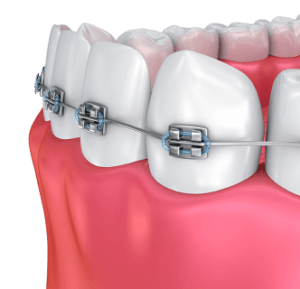
Splinting after braces
Splinting after braces is the important and final stage of fixing the position of the teeth, which is used after orthodontic treatment. It is the splint on the teeth after braces that helps not only to fix their new position, but also to prevent their displacement again. Ensuring the stability of the teeth in this case is critically important, because the treatment of bite anomalies is a rather laborious and long process. The duration of wearing a splint after braces can vary depending on the individual needs of the patient – and in time it is from several months to even a year. Most often, splinting after braces is done with the help of such special dental structures as retainers.
Make an appointment
Make an appointment
Pros and Cons of Dental Splinting
Like any procedure, dental splinting has its pros and cons, which vary based on individual needs and reactions to treatment. For children, understanding these factors is especially important because their teeth and jaws are still developing. Therefore, the procedure must be selected with maximum precision.
The pros of splinting include:
- Clear stabilization and reliable fixation of the teeth;
- Comfortable wear overall, thanks to modern lightweight materials;
- Aesthetic options, using materials that are nearly invisible;
- Tooth preservation and the avoidance of complex treatments when performed timely;
- Prevention of malocclusion or stabilizing results after orthodontic correction.
The cons of dental splinting may include occasional unpleasant sensations (a slight tightening discomfort) and short-term dietary restrictions (especially when chewing hard foods). Gum inflammation may also occur, but typically only if proper oral hygiene is not maintained.
In general, dental splinting is a procedure that yields a positive impact, including for children. With proper oral care while wearing the splint and regular dental supervision, this method is sure to resolve the issues it is intended to fix.
How the teeth splinting procedure is done at Med-Deo dentistry
In dentistry, dental splinting is performed by a specialist such as an orthodontist. The procedure itself is not painful, but working with children has its nuances. That is why it is better to mentally prepare the child before the visit by explaining the essence of the procedure and its stages in simple terms, creating a positive atmosphere. If the child asks directly whether it hurts, try not to frighten them.
During the appointment, it is helpful to let the child ask the doctor questions themselves. The doctor will also explain each step, which helps to keep the child calm.
Generally, the dental splinting procedure at “Med-Deo” follows these steps:
- Consultation and assessment of the teeth to identify indications for splinting.
- X-ray diagnostics, if necessary.
- Discussion of the splinting type and the overall treatment plan.
- Preparation of the specific oral area (local anesthesia is used very rarely in this case).
- Fixation of the teeth using the splint.
- Verification of the installation and recommendations for further care.
As for aftercare, the doctor usually advises against skipping daily oral hygiene and recommends avoiding hard foods in the child’s diet. Additionally, regular follow-up visits are recommended to monitor the condition of the splint and the teeth themselves.
Other pediatric dentistry services
Recommended articles:

Dental services
General Dentistry
Dental surgery
Dental Implants
Maxillofacial Surgery
Dental prosthetics
Cosmetic dentistry
Professional Dental Hygiene
Periodontics
Orthodontic dentistry
Gnathology & TMJ Therapy
Pediatric Dentistry
Відгук від клієнта
0:00
0:00


Світлана
2026-06-05
Лікар дуже делікатно працював і весь час підтримував маленького пацієнта. Усе пройшло спокійно та без зайвого стресу. Дякуємо за турботу і професіоналізм.
Оксана
2026-05-08
Дитині робили шинування зубів після травми. Лікар дуже обережний і спокійний. Все пояснив і підтримав нас. Загоєння проходить добре.
Юлія
2026-02-17
Дякуємо за уважність до деталей. Лікар спочатку познайомився з дитиною, дав звикнути до обстановки, і тільки потім почав огляд.
Яна
2025-12-14
Після травми зуби стали рухомими, і нам запропонували шинування. Лікар усе зробив дуже обережно і пояснив, як доглядати. Зуби стабілізувалися, і дитина не відчуває дискомфорту.
Світлана
2025-10-17
Після спортивної травми нам зробили шинування передніх зубів. Лікарка працювала дуже обережно, пояснила, як доглядати за порожниною рота, і постійно підтримувала контакт.
Ярослава
2025-08-17
Сину після падіння на майданчику трохи почали шататися зуби постійні, і набухли ясна. Стоматологиня подивилася, зробили знімок, порекомендувала зробити шинування, поки ясна знову стабілізуються. Наразі були на чистці і лікар сказав, що все вподярку, ясна стабілізувалися і зуби тримаються міцно. Дякуюємо лікарю Валентині!
Лідія
2025-07-20
Шинували кілька зубчиків під анестезією, дочка навіть не зрозуміла, що вже все! Дуже дбайливо, ігриво, й без тиску. Атмосфера в Мед-Део спокійна та приємна! Дякуємо!
Олена
2025-06-30
Дитина дуже сильно забила підборіддя, почали хитатися зубки. Ми звернулися в Мед-део за консультацією, стоматологиня порекомендувала спробувати шинування. І це спрацювало, ясна після травми заспокоїлися і зуби перестали хитатися.
Катя
2025-05-18
Донька на дитчому майданчику вдарилася зубами, після чого я побачила що зубки почали хитатися. Звернулися до дитячого лікаря в клініку Мед-део. Вона заспокоїла, що серйозного нічого немає, можна зробити шинування зубів і має десна стабілізуватися. Дякую за чітке пояснення та заспокоєння!
Віта
2025-03-20
У сина після травми почали хитатися кілька передніх зубів. Дуже переживала, що доведеться їх видаляти, але лікар запропонувала шинування. Процедура пройшла швидко та без болю, зубки зміцнили, і тепер усе добре! Дуже вдячна за професіоналізм і турботу про маленьких пацієнтів!
Алла
2025-01-28
Донька впала на дитячому майданчику й травмувала передні зубки. Звернулася до Мед-Део, лікар уважно все оглянула і пояснила, що можна врятувати зуби за допомогою шинування. Лікування провели швидко, знайшли до дитини підхід, навіть не капризувала. Дуже вдячні за вашу роботу!
Таня
2024-12-09
Після ортодонтичного лікування у дитини з’явилася рухливість зубів. У клініці запропонували шинування, щоб уникнути втрати. Лікар усе пояснила, процедура зайняла зовсім мало часу, і вже за кілька днів дитина звикла. Рекомендую!
Лариса
2024-11-16
Шинували сьогодні молочні зубчики дитині 7 років! Потрапили в цю лікарню випадково, але залишились в дуже приємному задоволенні! Лікувала зуб дитині дуже приємна дівчина! У ході всього процесу лікування говорила з дитиною, відволікала в результаті чого лікування пройшло досить швидко та психологічно легко для дитини! Рекомендую
Юлія
2024-10-14
У сина внаслідок удару почали хитатися кілька зубів. Звернулися в клініку Мед-Део, і лікар прийняла рішення про шинування. Процедура пройшла добре, жодного дискомфорту, дитина уважно слухала лікаря. Дуже вдячна лікарю за професіоналізм, а клініці за чудовий сервіс!
Надія
2024-09-20
Дитина скаржилася, що під час їжі один зуб став рухливим і болючим. У клініці зробили знімок та зробили шинування, щоб зміцнити зуби. Тепер донька їсть без болю, і я спокійна за її здоров’я. Дякую!
Ірина
2024-07-11
Дуже вдячна лікарям Мед-Деоза допомогу! У сина після удару почав хитатися зуб, я не знала що робити. Лікар порадила шинування, усе пояснила і заспокоїла, зуб має стабілізуватися. Процедура пройшла без сліз, лікар була уважна усе добре!
Марина
2024-04-23
Звернулися до клініки через хитання зубів у сина. Виявилося, що можна зберегти зуби поки мони самі не зміняться за допомогою шинування. Лікар усе зробила акуратно й пояснила, як доглядати за зубами після процедури. Дуже вдячні!
Ольга
2023-11-30
Після незначної травми у дитини почали хитатися молочні зуби, і ми звернулися до Мед-Део. Лікар оглянула і запропонувала шинування, щоб уникнути передчасного випадіння. Лікування пройшло чудово, дитина навіть не плакала! Дякуємо клініці за професіоналізм!