34867
Services Doctors
Clinics

пр.Лобановського, 130, Київ, Україна

Temporarily closed

Opening soon

стоматологія на лобановського

78A, Irpinska St., Kyiv, Ukraine

Temporarily closed

Opening soon

IMGP4938

32A, Heroiv Dnipra St., Kyiv, Ukraine

Temporarily closed

Opening soon

2024-10-23 11.56.42

9B, Yevhena Chykalenko St. (Pushkinska), Kyiv, Ukraine

Temporarily closed

Opening soon

IMGP5161
Prices Blog Contacts
Back Dentistry

Clinics "MED-DEO"

пр.Лобановського, 130, Київ, Україна

Temporarily closed

Opening soon

стоматологія на лобановського

78A, Irpinska St., Kyiv, Ukraine

Temporarily closed

Opening soon

IMGP4938

32A, Heroiv Dnipra St., Kyiv, Ukraine

Temporarily closed

Opening soon

2024-10-23 11.56.42

9B, Yevhena Chykalenko St. (Pushkinska), Kyiv, Ukraine

Temporarily closed

Opening soon

IMGP5161

Services

Dentistry

Service statistics

icon

More and more clients choose «MED-DEO»

imgp4938 1 e1728980728653 2048×1

Initial medical consultation for free* * subject to treatment in the clinic

Appointment by phone:

(044) 394 90 94

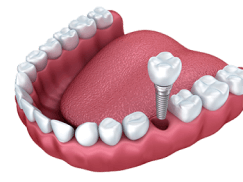
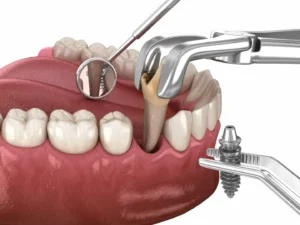
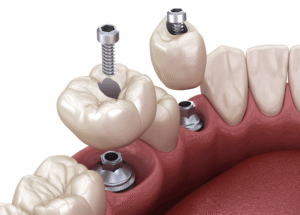
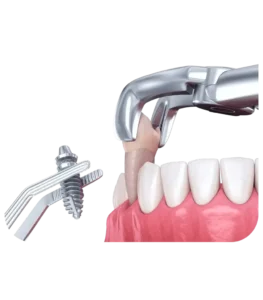
Immediate dental implantation is a method of tooth restoration in which the implant is placed directly after extraction.

In a single appointment, the dentist first removes the damaged tooth and then immediately inserts the implant into the same socket. The patient therefore does not need to wait several months for the bone to heal. This approach significantly reduces treatment time and allows for rapid tooth restoration. That said, the suitability of immediate implantation depends on the condition of the bone and gums, so the final decision is always made by the dentist following examination.

одномоментна імплантація

Immediate Dental Implantation: Price in 2026

Service name

Price, UAH.

Extraction of a loose tooth

550

Sign up

Tooth extraction (removal)

from 900

Sign up

Tooth extraction (complex, atypical tooth extraction)

from 1600

Sign up

Tooth extraction (atypical extraction of tooth 8) – Level 1 complexity

from 2850

Sign up

Tooth extraction (atypical extraction of tooth 8) – Level 2 complexity

from 3950

Sign up

Extraction of a baby tooth due to periodontitis

350

Sign up

MegaGen Implants

from 16500

Sign up

Initial consultation with a maxillofacial surgeon

700

Sign up

Initial consultation with a candidate of medical sciences (C.M.S.)

1200

Sign up

Initial online consultation with a maxillofacial surgeon

800

Sign up

Follow-up online consultation with a maxillofacial surgeon

600

Sign up

Online consultation with a dentist

300

Sign up

Consultation with an oral surgeon

500

Sign up

Injection anesthesia (use)

350

Sign up

Computer-assisted injection anesthesia (application)

600

Sign up

Suturing with a non-traumatic suture

900

Sign up

Suturing

440

Sign up

Removal of stitches

200

Sign up

Consultation with an anesthesiologist

1000

Sign up

Infusion therapy

1200

Sign up

The first hour of sedation

5800

Sign up

An additional 30 minutes of sedation

2000

Sign up

An additional hour of sedation

3300

Sign up

Gum Former (Korea) (Osstem, Dentis) (installation)

6000

Sign up

Intraosseous Implant (Korea: Osstem, Dentis) (placement)

11500

Sign up
Frequently Asked Questions on the topic:

How many implants can be placed in a single session?

The number of implants that can be placed in a single session depends on the condition of the bone and the patient’s overall health: 1–2 implants for replacing individual teeth; 4–6 implants for full-arch restoration.

Reviews of immediate implant placement at Med-Deo

Leave a review
5

Based on reviews

Based on reviews

Олександр

2026-06-14

Мені провели одномоментну імплантацію після видалення зуба. Дуже сподобалось, що лікування було чітко сплановане. Лікар працював впевнено та акуратно. Дякую за чудовий результат і комфорт під час лікування.

Андрій

2026-05-06

Робили одномоментну імплантацію після видалення зуба. Дуже переживала, але лікар усе пояснив і підтримав. Процедура пройшла набагато легше, ніж очікувала. Дякую за професіоналізм і уважність.

Варвара

2026-02-08

Дуже вдячна за людяність і підтримку. Я хвилювалась більше морально, ніж фізично. Але лікар створив таку атмосферу, що страх зник ще до початку процедури.

Ілля

2025-12-09

Мені зробили одномоментну імплантацію одразу після видалення зуба. Дуже сподобалось, що не довелося довго чекати і ходити без зуба. Лікар працював акуратно, а відновлення пройшло легко.

Тетяна

2025-10-20

Мені видалили зуб і одразу встановили імплант. Я дуже хвилювалась перед процедурою, але все пройшло настільки швидко і спокійно, що навіть не помітила, коли лікар закінчив. Не було болю, лише легкий дискомфорт, який минув через день. Тепер імплант виглядає як свій власний зуб.

Ольга

2025-08-17

Одномоментна імплантація – це справді зручно і сучасно. Мені пояснили, що це дозволяє зберегти кістку і уникнути зайвих втручань. Результат перевершив очікування: жодного болю, все загоїлося швидко, і я знову можу нормально їсти.

Show more Hide

What Is Immediate Implantation and Who Is It For?

одномоментна імплантація

Immediate dental implantation is a contemporary method of tooth restoration in which the implant is placed directly after extraction. In a single visit, the dentist removes the damaged tooth and immediately inserts an implant into the same socket — there is no need to wait several months for the bone to heal, as is required with conventional implantation.

The principle is straightforward: the implant acts as an artificial tooth root, anchored in the bone. Once it has integrated, a crown is fitted, and the tooth looks and functions almost like a natural one.

Immediate dental implantation is most commonly performed in the front tooth zone, where the aesthetics of the smile are particularly important. It is also well suited to patients who wish to restore a missing tooth quickly and avoid a lengthy multi-stage treatment course.

The key distinction from conventional implantation is the absence of a ‘waiting period’ after extraction. However, the feasibility of immediate implantation depends on the condition of the bone tissue and gums, so the final decision is made by the dentist after examination and diagnosis.

As for pricing, the cost of immediate dental implantation depends on the implant brand, case complexity, and the level of the clinic. As a general guide, the base procedure starts from approximately UAH 14,000 per tooth, while premium systems can reach UAH 30,000. When a permanent crown is included, a full ‘turnkey’ implant package will be higher.

For those seeking a more affordable option, prices in Ukraine start from approximately UAH 9,500–12,000 per tooth. Lower-cost options typically include a basic implant without premium components and a standard scope of services.

Need a diagnosis?

To make a reservation by phone:

(044) 394-90-94

Sign up
icon icon
дагностика 1

Immediate vs. Conventional Implantation: What Is the Difference?

одномоментна імплантація

Both immediate and conventional implantation restore a missing tooth using an implant. The main difference between the two methods lies in when the implant is placed after extraction and how long the overall treatment takes.

Choosing between immediate and conventional implantation depends on bone condition, clinical situation, and patient preferences. Here’s a comparison of both methods:
ParameterImmediate ImplantationConventional Implantation
Number of proceduresTooth is extracted and implant placed in a single appointmentTooth is extracted first; implant is placed several months later
Treatment durationShorter, as there is no lengthy waiting periodLonger, as healing of the bone must be awaited
Temporary crownMay be fitted immediately in some casesCrown is usually placed only after full implant integration

CostMay be slightly higher due to procedure complexityPayment is often spread across several stages
Risk considerationsRequires good bone conditions and absence of inflammationSuitable for most cases, including more complex ones

An implantologist will select the optimal method based on bone condition and individual patient factors.


Immediate dental implantation is typically chosen when a tooth requires extraction but the bone tissue is well preserved and there is no active inflammation. This approach is frequently used in the front tooth zone, where rapid aesthetic restoration is a priority.

Conventional implantation is better suited to more complex situations — for example, when inflammation is present, there is insufficient bone volume, or additional tissue preparation is required. In such cases, a staged approach allows for a more stable and predictable outcome.

Would you like to undergo treatment?

Make an appointment with your doctor!

Sign up
icon icon
photo

Indications and Contraindications

Immediate dental implantation is not appropriate in every clinical situation. For the implant to integrate successfully, the dentist must confirm that the bone tissue is intact and that there is no active inflammation in the extraction site. A thorough examination and diagnostic assessment are therefore mandatory before the procedure.

Indications for Immediate Implantation

This method is most commonly used when a tooth requires extraction but there is an opportunity to place the implant straight away:

  • root fracture or crack;
  • dental trauma where restoration is no longer possible;
  • complications of tooth decay, including periodontitis;
  • severe tooth destruction where a filling or crown is no longer a viable option;
  • orthopaedic indications for extraction.

Contraindications to Immediate Implantation

In certain situations, placing an implant immediately after extraction is not possible. The main contraindications include:

  • active periodontal disease in an acute phase;
  • significant bone tissue deficiency;
  • destruction of the inter-radicular septum;
  • serious systemic conditions, including oncological disease, blood disorders, or uncontrolled endocrine conditions.

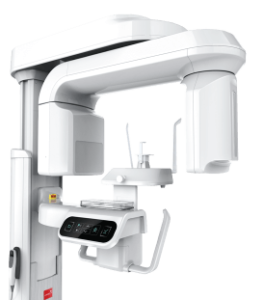
It is important to remember that the suitability of immediate implantation is assessed on an individual basis. The final decision is made by the dentist only after clinical examination and cone-beam CT imaging, which allows for a precise evaluation of bone tissue status.

Stages of Immediate Dental Implantation

одномоментна імплантація

Immediate dental implantation proceeds through several clear and straightforward stages. Even when the implant is placed on the same day, preparation and post-procedure monitoring are essential for a successful outcome.

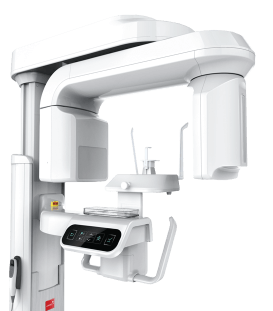
  1. Consultation and CT Imaging. The dentist examines the teeth, gathers information about the condition of the oral cavity, and arranges a cone-beam CT scan. The CT allows precise assessment of bone tissue and tooth positioning, and determines whether immediate implant placement is feasible.
  2. Professional Dental Cleaning. A professional clean is recommended prior to implantation to reduce bacterial load and lower the risk of post-procedure inflammation.
  3. Atraumatic Tooth Extraction. The tooth is removed as carefully as possible to avoid damaging the bone and socket walls. This is critical, as the implant will be placed directly into this socket.
  4. Implant Placement. After extraction, the dentist places the implant into the bone. It acts as an artificial root and gradually fuses with the bone over time, providing a reliable foundation for the future crown.
  5. Suturing and Suture Removal. Where necessary, sutures are placed to ensure proper tissue healing. These are typically removed 7–10 days later at a follow-up appointment.
  6. Follow-up Examination and Prosthetic Restoration. After an appropriate interval, the dentist assesses how well the implant has integrated. If all is satisfactory, a permanent crown is fitted, restoring the shape and function of the tooth.

Single-Stage and Two-Stage Protocols

Within the framework of immediate dental implantation, two protocol options are used:

  • Single-stage protocol — the crown can be fitted almost immediately, sometimes even on the day of implantation. This approach is often used for front teeth to restore smile aesthetics without delay.
  • Two-stage protocol — after implant placement, a waiting period is required for full osseointegration. This typically takes 1.5 to 6 months, after which the crown is fitted.

The choice of protocol is always made by the dentist, based on the primary stability of the implant and the condition of each patient’s bone.

Treatment Timeline: How Long Does the Entire Process Take?

Immediate implantation allows the implant to be placed on the same day as extraction, but this does not mean the entire process is complete in a single day. It is important to understand the distinction between immediate implant placement and the completion of treatment with a permanent crown.

  • A temporary crown may be fitted as soon as 2 hours after implantation, or within 1 week, depending on implant stability and the chosen protocol.
  • Full osseointegration and permanent crown placement typically takes 1.5 to 6 months.

The speed of treatment is influenced by:

  • Bone condition — bone density and volume determine how quickly the implant will integrate;
  • Overall patient health — immune status, chronic conditions, and lifestyle can slow healing;
  • Implant type and chosen protocol — with a single-stage protocol, a temporary crown can be fitted sooner; with a two-stage protocol, full bone integration must be awaited.

In other words, even when the implant is placed on the same day, a full course of treatment spans several months. This is necessary for reliable implant integration and the long-term durability of the crown.

Advantages and Disadvantages of Immediate Implantation

Immediate implantation offers a number of advantages that make it a popular choice for tooth restoration. There is, however, one important consideration to be aware of.

Advantages

  • Treatment is completed more quickly, as there is no gap between extraction and implant placement.
  • Fewer surgical procedures — everything is handled in a single visit.
  • The option to fit a temporary crown immediately after implantation.
  • Less post-procedure discomfort compared to a two-stage approach.
  • Prevention of bone atrophy — bone volume is preserved and does not diminish following extraction.
  • Preservation of the natural gum contour, which is especially important for front teeth.
  • Immediate improvement of smile aesthetics.
  • The ability to plan prosthetic restoration immediately after implant placement.
  • Well suited to those wishing to avoid prolonged treatment.
  • Greater overall convenience and less stress for the patient.

Disadvantage

Statistically, there is a marginally higher risk of implant rejection compared with the conventional two-stage approach.

It is important to understand, however, that ‘marginally higher’ does not mean ‘high’. The risk remains low and depends on bone quality, the standard of the implant, the precision of the dentist, and the patient’s adherence to post-procedure recommendations.

With the right approach, immediate implantation remains a safe and effective method of rapid tooth restoration.

Complication Risk: When to Seek Urgent Medical Attention

After immediate implantation, some symptoms are a normal physiological response, while others may indicate complications.

What Is Considered Normal

The following symptoms in the days after the procedure are typically expected:

•        mild swelling or redness at the implant site;

•        moderate pain controllable with pain relief medication;

•        minor bruising or haematoma;

•        slight bleeding during the first few hours;

•        temporary numbness or tingling in the area of the procedure.


These symptoms generally resolve within a few days and do not require urgent attention, provided the condition is gradually improving.

Symptoms That Require Immediate Medical Attention

Contact your dentist without delay if you notice:

•        throbbing or worsening pain that does not respond to pain relief medication;

•        prolonged or heavy bleeding;

•        discharge of pus or an unpleasant odour from the socket;

•        swollen or tender lymph nodes;

•        raised temperature, chills, or a general deterioration in wellbeing.


If you notice any of these symptoms, do not delay — contact your dentist. Even if you are uncertain, it is always better to seek a professional assessment than to wait.

This information is provided for general guidance only and does not replace medical consultation following immediate dental implantation. In the event of any complications, always consult your dentist.

How to Care for Your Mouth After Immediate Implantation

To ensure the implant integrates successfully and the gums heal quickly, it is important to follow a few straightforward guidelines.

Diet

  • First 1–2 days: eat only soft, lukewarm food. Avoid hard, spicy, or very hot items.
  • First week: avoid hard, sticky, or very sweet foods to prevent trauma to the socket.

Tooth Brushing

  • Do not touch the implant site with a toothbrush during the first 24 hours.
  • Then brush gently, avoiding pressure on the socket.
  • Use a soft-bristle brush and the antiseptic mouthwash recommended by your dentist.

Rinsing

  • Rinse with antiseptic 2–3 times a day after meals, starting from the day after the procedure.
  • Rinse gently — light movements are sufficient; vigorous rinsing can disturb the wound.

Physical Activity

  • Avoid intense exercise and heavy lifting for the first 3–5 days.

Medication

  • Follow all prescriptions from your dentist: pain relief, antibiotics, and anti-inflammatory drugs.
  • Do not miss doses — this helps prevent complications.

Following these straightforward guidelines significantly improves the chances of successful implant integration and helps maintain healthy gums and bone. Even minor deviations can affect the outcome, so it is worth being attentive and adhering to all of your dentist’s recommendations.

We work with all insurance companies

On this page Contents of the page

icon

Dental services