33315
Services Doctors
Clinics

пр.Лобановського, 130, Київ, Україна

Temporarily closed

Opening soon

стоматологія на лобановського

78A, Irpinska St., Kyiv, Ukraine

Temporarily closed

Opening soon

IMGP4938

32A, Heroiv Dnipra St., Kyiv, Ukraine

Temporarily closed

Opening soon

2024-10-23 11.56.42

9B, Yevhena Chykalenko St. (Pushkinska), Kyiv, Ukraine

Temporarily closed

Opening soon

IMGP5161
Prices Blog Contacts
Back Dentistry

Clinics "MED-DEO"

пр.Лобановського, 130, Київ, Україна

Temporarily closed

Opening soon

стоматологія на лобановського

78A, Irpinska St., Kyiv, Ukraine

Temporarily closed

Opening soon

IMGP4938

32A, Heroiv Dnipra St., Kyiv, Ukraine

Temporarily closed

Opening soon

2024-10-23 11.56.42

9B, Yevhena Chykalenko St. (Pushkinska), Kyiv, Ukraine

Temporarily closed

Opening soon

IMGP5161

Services

Dentistry

Service statistics

icon

More and more clients choose «MED-DEO»

132000

Number of services provided

102000

Number of patients who received the service

imgp4938 1 e1728980728653 2048×1

Initial consultation with a doctor for free* * subject to treatment in the clinic

Appointment by phone:

(044) 394 90 94

Why choose ultrasonic teeth cleaning at MED-DEO?

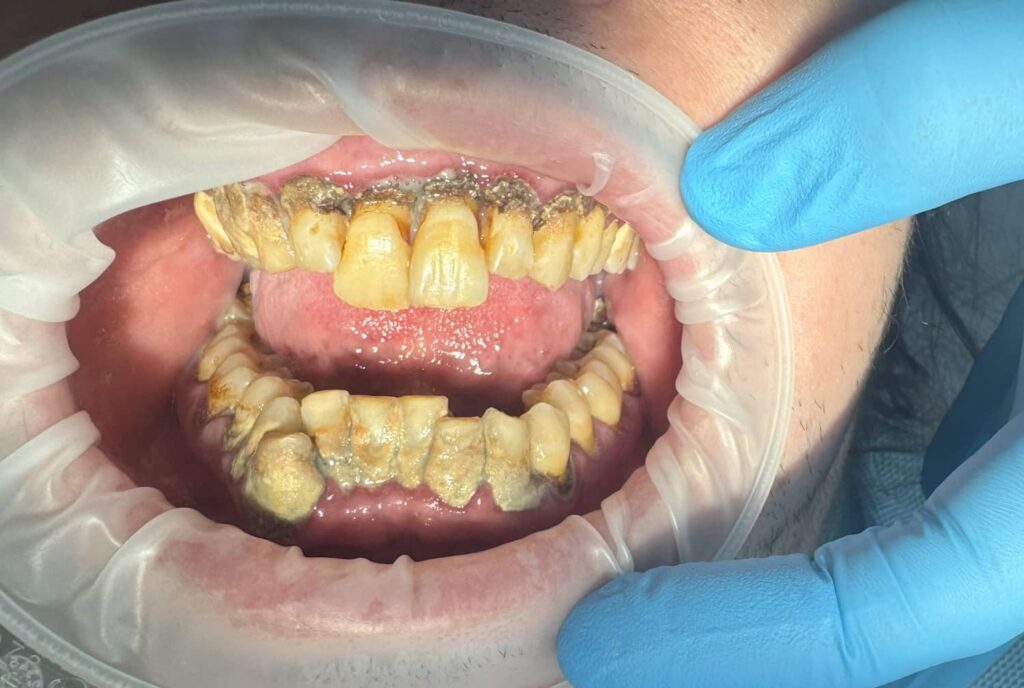
Did you know that even with perfect daily hygiene, your toothbrush is powerless against dental calculus? This hard deposit, which cannot be washed away or cleaned at home, becomes a silent threat to oral health. It not only ruins the aesthetics of your smile but also creates an environment for the development of cavities, gum inflammation, and even periodontitis.

Fortunately, modern dentistry offers an effective solution — ultrasonic teeth cleaning. Ultrasonic teeth cleaning is a professional procedure using a device that generates vibrations at a frequency of 20-50 kHz. The dentist painlessly and thoroughly removes both calculus and dense plaque, restoring natural cleanliness and health to the teeth.

The price of ultrasonic teeth cleaning in 2026

Service name

Price, UAH.

Лікувально-профілактична чистка зубів із застосуванням піскоструйного апарату AirFlow (без Optra Gate)

1100

Sign up

Лікувально-профілактична чистка зубів із застосуванням піскоструйного апарату PROPHYflex 3 та порошку KaVo PROPHYpearls (без Optra Gate)

1800

Sign up

Комплексна професійна чистка зубів Скалер + AirFlow + полірування (без Optra Gate)

2050

Sign up

Комплексна чистка зубів із застосуванням порошку KaVo PROPHYflex (без Optra Gate)

2600

Sign up

Індивідуальний набір ''Optra Gate'' (використання)

250

Sign up

Dentist's consultation on oral care

390

Sign up

Injection anesthesia (application)

350

Sign up

Individual "Cofferdam" / "RUBBER-DAM" set (use)

350

Sign up

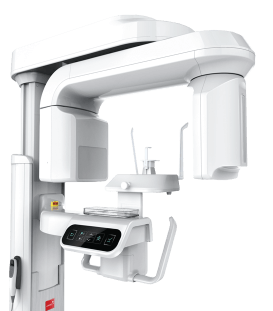
Panoramic X-ray (OPG)

440

Sign up

CT scan of the upper and lower jaw

1200

Sign up
Frequently asked questions:

What is ultrasonic teeth cleaning?

Ultrasonic teeth cleaning is a professional hygiene procedure in which a dentist uses a special scaler to remove dental calculus and dense plaque. Professional ultrasonic teeth cleaning is based on the impact of ultrasonic vibrations and the cavitation effect of the water stream, which allows safe and effective cleaning of even subgingival areas and roots, preventing gum inflammation and cavities.

How much does ultrasonic teeth cleaning cost in Kyiv?

The price of ultrasonic teeth cleaning starts from 1100 UAH. However, the full cost of ultrasonic teeth cleaning in Kyiv is formed individually, as the doctor evaluates the scope of work — the intensity of plaque and the number of teeth requiring treatment.

Is ultrasonic cleaning painful?

Ultrasonic teeth cleaning is usually painless but may cause discomfort, especially with sensitive teeth or significant dental calculus. Sensations are described as tingling or vibration with coolness from water. With high sensitivity, the dentist can apply local anesthetic gel if desired.

What is included in ultrasonic teeth cleaning?

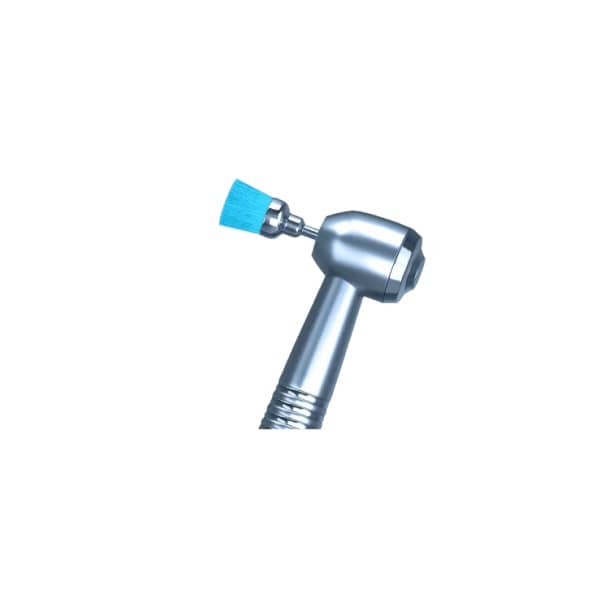
Professional ultrasonic teeth cleaning offered by modern dentistry is a comprehensive procedure that begins precisely with ultrasonic teeth cleaning using a special scaler to remove hard calculus. Then, for the perfect result, dentistry often complements it with polishing using the Air Flow method and brushes with paste to remove all pigments and give the enamel smoothness. Such professional ultrasonic teeth cleaning often concludes with the application of protective fluoride varnish, making it not only aesthetic but also a therapeutic and preventive foundation for oral health.

What should you avoid after ultrasonic teeth cleaning?

After ultrasonic teeth cleaning, it is very important to observe certain restrictions to consolidate the perfect result and avoid unpleasant sensations.

First of all, after visiting the hygienist, you should avoid food and drinks for at least 2-3 hours. In addition, for the next 24-48 hours, it is better to avoid coffee, strong tea, red wine, berry juices, and brightly colored products like beets or soy sauce. This especially applies to smoking — it’s better to refrain from cigarettes for at least a day.

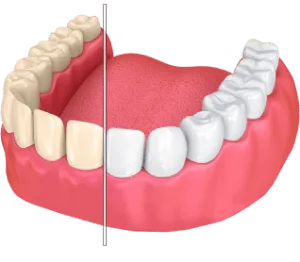
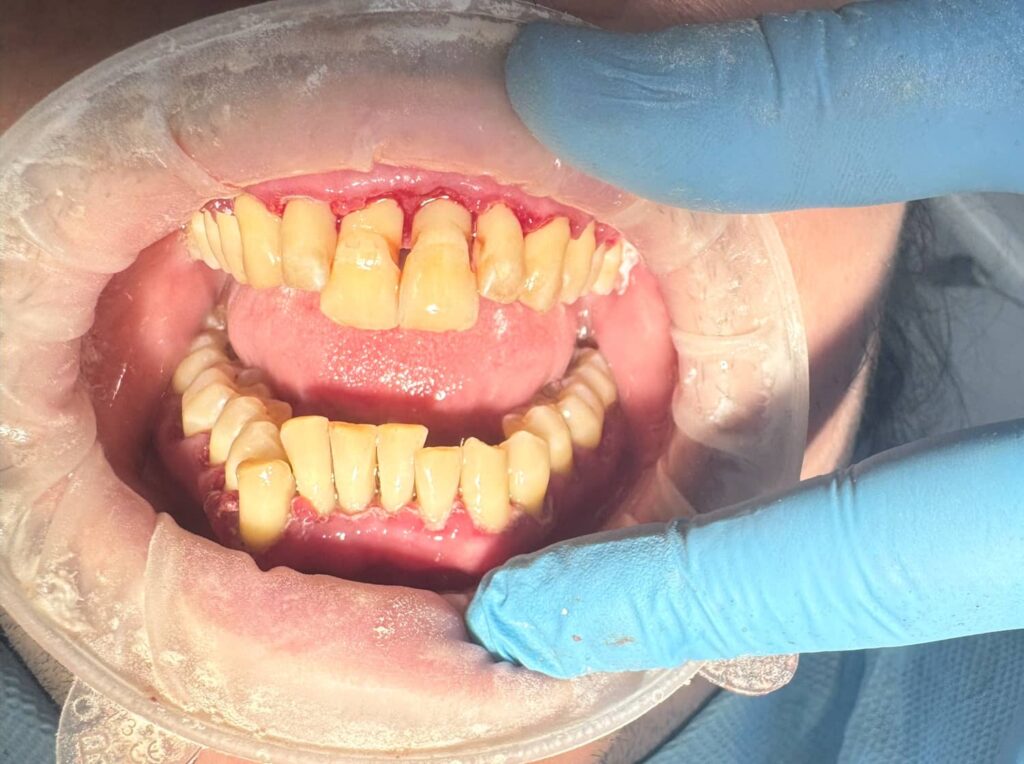
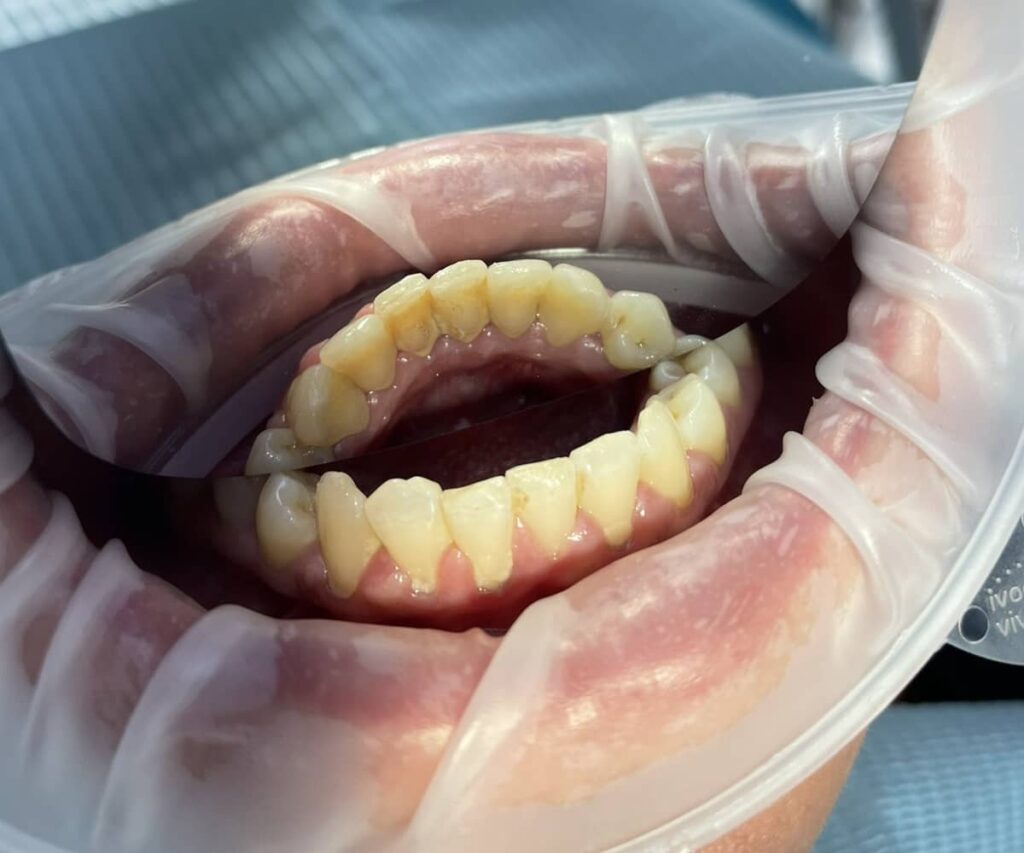
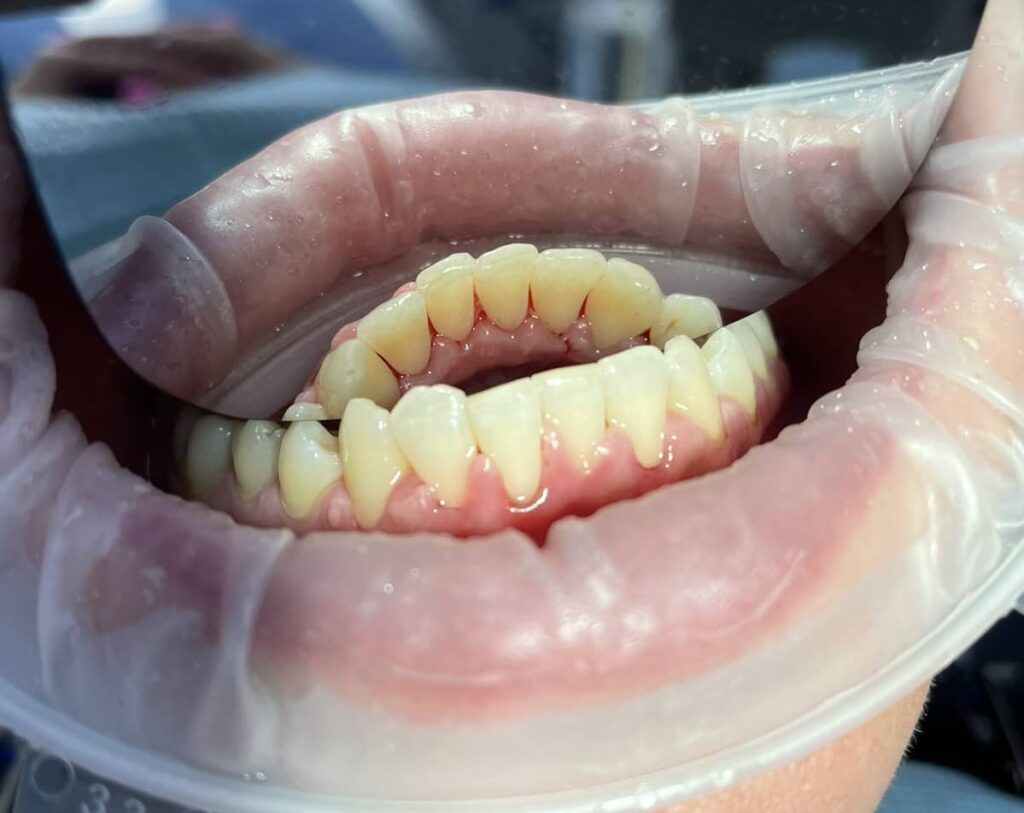
Photo: before and after brushing your teeth
Комплексна чистка зубів ДО Комлексна чистка зубів ПІСЛЯ
Чистка зубів

Comprehensive teeth cleaning Zubriy D.

giginichna chistka zubiv (1) giginichna chistka zubiv (2)
Чистка зубів

Hygienic teeth cleaning by Dr. Radish

Reviews of ultrasonic teeth cleaning at Med-Deo

Leave a review
5

Based on reviews

Based on reviews

Ганна

2026-06-08

Роблю професійну чистку регулярно і цього разу залишилася особливо задоволена. Лікар працював дуже делікатно та уважно. Після процедури зуби стали гладенькими і чистими. Велика подяка

Світлана

2026-05-12

Робила ультразвукову чистку зубів. Лікар працював дуже обережно і постійно цікавився самопочуттям. Після процедури зуби стали гладенькі та чисті. Дуже задоволена результатом.

Оксана

2026-04-24

Лікар працює обережно і уважно. Камінь прибрали повністю. Зуби стали гладенькі і світліші.

Соломія

2026-03-05

Робила ультразвукову чистку. Лікар працює обережно і пояснює процес. Камінь прибрали повністю. Зуби стали гладенькі і світліші.

Євгенія

2026-02-05

Робила ультразвукову чистку, результат видно одразу. Камінь прибрали повністю, зуби стали світліші.

Олена

2026-01-17

Трохи була чутливість під час процедури, але терпимо. Після чистки відчуття свіжості і гладенькі зуби.

Наталія

2025-10-13

Процедура зайняла близько години, лікар працював дуже акуратно. Дали рекомендації по догляду.

Show more Hide

What Is Ultrasonic Teeth Cleaning: The Principle of Action

What is ultrasonic teeth cleaning? Ultrasonic teeth cleaning is a modern professional method for removing dental calculus and plaque. It is performed using a special device called an ultrasonic scaler or piezo scaler. Its operating principle is based on high-frequency vibrations. They purposefully destroy the bond between the enamel surface and dense deposits, breaking the calculus into small particles.

The main feature and advantage of the method is that the tip itself, when used correctly, does not directly touch the tooth surface but works at a minimal distance. This completely eliminates the risk of mechanical damage to the enamel by the instrument.

Throughout the entire procedure, a thin stream of water or special antiseptic solution is continuously supplied through the tip. This liquid immediately performs several vital functions: it cools the tooth, preventing it from overheating due to vibrations, instantly washes away destroyed calculus particles, and, thanks to the cavitation effect, enhances the cleaning process.

Indications for Ultrasonic Cleaning: When the Procedure Is Needed

All reasons for ultrasonic teeth cleaning can be divided into two main types: for prevention and for medical indications.

Preventive reasons are the basis for scheduled visits to a dental hygienist. Specialists recommend undergoing this procedure twice a year, even if you notice no complaints or discomfort.

Medical reasons are situations when cleaning becomes mandatory rather than simply recommended. First and foremost, this concerns the formation of hard dental deposits. Additionally, the procedure is necessary when dark spots appear on the enamel caused by consuming coffee, tea, red wine, or smoking.

The following symptoms may indicate the need for ultrasonic dental calculus removal:

  • bleeding gums during brushing;
  • persistent bad breath;
  • swelling;
  • redness.

Moreover, the procedure is a mandatory preparation stage for any dental treatment: whether it’s placing a quality filling, fixing a crown, or whitening, as treating or restoring requires a clean surface.

Need
Diagnostics?

Appointments by phone:

(044) 394-90-94

Sign up
icon icon
дагностика 1

How Often Should You Get Ultrasonic Teeth Cleaning

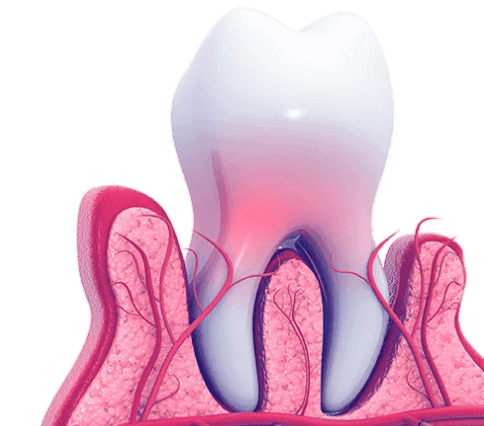
Most dentists recommend undergoing ultrasonic teeth cleaning on a scheduled basis once every six months. This regularity is optimal because it is precisely after 6 months following the procedure that soft plaque begins to more actively transform into hard deposits. That’s why systematic ultrasonic dental calculus removal prevents it from accumulating in critical volumes, preventing the development of gingivitis and periodontitis.

However, this interval is flexible and should be adjusted by the doctor individually. Patients with perfect home hygiene who are almost not prone to calculus formation, under a specialist’s observation, may visit the hygienist less frequently — once every 8 or even 12 months. Conversely, there are a number of conditions requiring significantly more frequent ultrasonic teeth cleaning — every 3-4 months. These include gum diseases (gingivitis, periodontitis), tendency toward rapid calculus formation, smoking, as well as the presence of orthodontic appliances such as braces or dental implants.

Benefits of Ultrasonic Teeth Cleaning

Ultrasonic cleaning is not chosen randomly — it’s a choice in favor of effectiveness, comfort, and dental health. Here are its main advantages:

Pain-free and comfortable. The procedure typically does not cause pain. With sensitivity present, mild discomfort is possible, which is easily controlled.

Safe for enamel. The scaler tip vibrates but does not directly contact the tooth surface, eliminating mechanical damage.

High effectiveness. Ultrasound powerfully destroys and removes even old, dense dental calculus that cannot be removed at home.

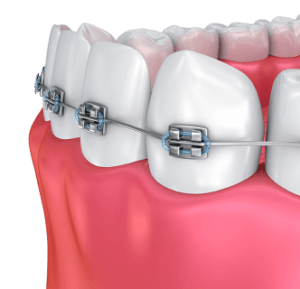
Deep cleaning of hard-to-reach areas. The procedure allows thorough cleaning of interdental spaces, periodontal pockets, and areas around orthodontic appliances.

Antiseptic action. During ultrasound operation, water bubbles form which, when bursting, locally destroy bacteria, promoting disinfection.

Natural enamel brightening. The effectiveness of ultrasonic teeth cleaning before and after — brightening the natural tooth color by 1-2 shades.

Reliable prevention. Regular cleaning is the most effective way to prevent cavities, gingivitis, periodontitis, and other oral diseases.

Long-lasting fresh feeling. After removing the source of odor, breath becomes fresh for a long time.

Speed of performance. Standard ultrasonic teeth cleaning lasts from 30 to 60 minutes.

Affordable cost. Relatively low price of ultrasonic teeth cleaning compared to therapeutic treatment that could be avoided through prevention.

Long-lasting result. With proper hygiene maintenance, the effect of clean and smooth teeth can last up to 6 months.

Versatility and compatibility. The method is safe and recommended for patients with various appliances: braces, veneers, implants, and other types of prosthetics.

Thus, ultrasonic teeth cleaning is an investment in dental health that provides not only a brilliant smile but also a solid foundation for its longevity.

Stages of Ultrasonic Teeth Cleaning: How the Procedure Works

The ultrasonic teeth cleaning procedure is comprehensive and systematic, aimed not only at removing plaque but also at preventing its recurrence. It proceeds in several stages:

Stage 1. Consultation and examination. The doctor examines the teeth and gums, determines the volume of deposits and the need for anesthesia.

Stage 2. Preparation. Cream is applied to the patient’s lips, protective glasses are provided, and anesthesia is administered if needed.

Stage 3. Ultrasonic dental calculus removal. Using a scaler, calculus is sequentially removed above and below the gums, constantly rinsing it away with water.

Stage 4. Teeth polishing. Teeth are polished with special pastes or Air Flow to make the surface smooth.

Stage 5. Fluoridation. If desired, fluoride-containing gel is applied to strengthen enamel and reduce sensitivity.

Stage 6. Final recommendations. The doctor gives advice on home care, brushing technique, and selecting hygiene products.

The duration of ultrasonic teeth cleaning typically ranges from 30 to 60 minutes. The time depends on the quantity and density of dental deposits, individual patient characteristics, and the necessity for additional stages.

Is Ultrasonic Teeth Cleaning Painful?

Definitely not — ultrasonic teeth cleaning is completely painless for most patients. During the procedure, you feel only slight vibration, coolness from water, and possibly a quiet whistling of the device. Discomfort during ultrasonic teeth cleaning may occur only in individual cases — with severe tooth sensitivity, gum inflammation, or deep periodontal pockets.

Contraindications to Ultrasonic Teeth Cleaning

Like any medical procedure, ultrasonic teeth cleaning has certain limitations. All possible limitations are divided into two clear categories: absolute and relative contraindications. Understanding this difference is critically important.

Absolute contraindications:

  • presence of a pacemaker in the patient;
  • severe heart rhythm disorders;
  • epilepsy;
  • malignant tumors in the oral cavity and head/neck area.

Relative contraindications:

  • first trimester of pregnancy;
  • acute infectious diseases;
  • severe bronchial asthma;
  • childhood age before permanent dentition formation;
  • pronounced tooth hypersensitivity;
  • demineralized enamel;
  • chronic diseases in acute phase.

The presence of most relative contraindications to ultrasonic teeth cleaning does not mean complete refusal of professional hygiene. In all the above-mentioned cases, the alternative is manual scaling using special instruments.

Ultrasonic Teeth Cleaning During Pregnancy

The period of pregnancy is not included in the contraindications to ultrasonic teeth cleaning. During this period, the procedure is not only not prohibited but strongly recommended, however, with strict adherence to optimal timing to ensure safety for both mother and child.

Ultrasonic teeth cleaning during pregnancy has its peculiarities depending on the trimester:

First trimester (1-12 weeks) — scheduled cleaning is recommended to be postponed due to the period of active fetal organ formation, resorting to it only when absolutely necessary.

Second trimester (13-27 weeks) — this is the ideal and safest time for the procedure, when the main risks are minimal, and the ultrasound impact is limited only to the oral cavity.

Third trimester (28-40 weeks) — cleaning is possible, but it is often physically uncomfortable for the pregnant woman due to the large belly, so it requires special positioning.

Thus, ultrasonic cleaning is an important, safe, and preventive measure for the health of the mother and future child when following the protocol and choosing the right time.

Is Ultrasonic Cleaning Harmful to Teeth: Debunking Myths

Ultrasonic teeth cleaning is safe. Most fears are misinterpretations of normal sensations after the procedure. Therefore, let’s debunk the most common myths:

Myth 1. Ultrasound thins the enamel. No, the tip does not contact the enamel directly but acts through ultrasonic vibrations.

Myth 2. Teeth become permanently sensitive. No, there is a probability of temporary reaction to hot and cold. However, permanent sensitivity is a sign of previously existing problems.

Myth 3. Ultrasound loosens teeth. No, if teeth are mobile after cleaning — these are manifestations of periodontitis. The calculus previously mechanically “splinted” and concealed the problem.

Myth 4. Gaps appear between teeth. No, these are natural spaces between teeth that were previously filled with calculus. This is normal anatomy, not damage.

Myth 5. Cleaning injures gums. No, slight bleeding is possible with inflammation, but it quickly passes. The procedure promotes gum health by removing the cause of inflammation — calculus.
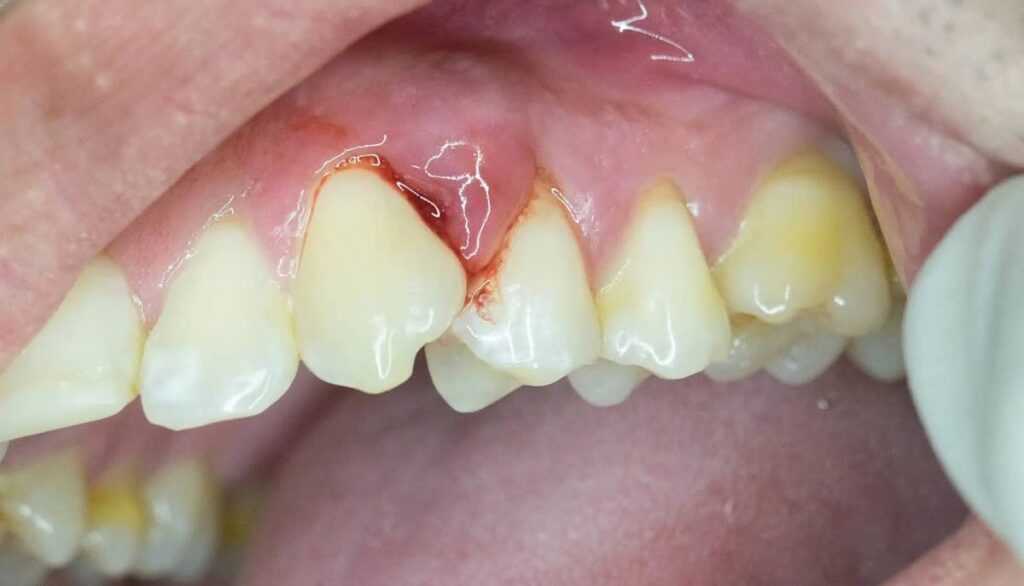
Therefore, the main disadvantages of ultrasonic teeth cleaning are actually not harm from the procedure but temporary sensations when the oral cavity returns to a healthy state after removing massive deposits.

Ultrasonic Cleaning vs Air Flow vs Comprehensive Hygiene: What’s the Difference?

Professional oral hygiene is the foundation of dental and gum health, as well as an aesthetic smile. However, the question often arises: which cleaning method to choose?

To understand the difference and make an informed choice, it’s important to clearly understand what exactly each procedure does. Here’s a comparison of three main methods: ultrasonic teeth cleaning, Air Flow, and comprehensive hygiene.

Ultrasonic CleaningAir FlowComprehensive Hygiene
Purposedental calculus removalsoft plaque and pigmentation removalcomplete cycle
Operating principleultrasonic vibrationsmixture of water, air, powderultrasound, Air Flow, polishing, fluoridation
What it removessupragingival and subgingival calculussoft plaque, pigment stains, smoker’s plaquecalculus, plaque, pigmentation
Applicationwith hard depositsafter ultrasound for polishingfor everyone once every 6 months
Main effectcleaning, periodontitis preventionbrightening, smoothnessmaximum cleanliness
Duration20-30 min10-20 min60 min
Approximate cost400-600 UAH400-600 UAH1200-2500 UAH

Thus, comprehensive hygiene is the most effective option because it combines the strengths of both methods: ultrasonic teeth cleaning removes hard deposits that threaten gum health, and Air Flow cleans and polishes the tooth surface. Additional polishing and fluoridation consolidate the result, strengthen the enamel, and provide a long-lasting effect.

Care After Ultrasonic Teeth Cleaning: Dentist’s Recommendations

First, during the first 2-3 hours after ultrasonic teeth cleaning, it is recommended to completely abstain from food and any drinks except water.

Second, during the first day, dietary restrictions should be observed. Key prohibitions concern staining products (such as coffee, tea, or red wine), as well as acidic foods and drinks that may temporarily increase sensitivity. It is also extremely important to refrain from smoking, as nicotine very quickly forms new plaque.

Third, for the next 2-3 days, when increased sensitivity may persist, you should use exclusively a soft toothbrush and special non-abrasive paste for sensitive teeth.

Finally, for long-term preservation of the ultrasonic teeth cleaning effect, it is necessary to follow basic hygiene rules: brush teeth thoroughly twice a day, use dental floss or an irrigator daily to clean interdental spaces, and limit sugar consumption.

Other professional dental hygiene services
icon icon 3 hygiene 300×260
We cooperate with all insurance companies

On this page Contents of the page

icon

Dental services