Special offer! Comprehensive professional teeth cleaning for only 1699 UAH.
Special offer! Comprehensive professional teeth cleaning for only 1699 UAH.
Special offer! Comprehensive professional teeth cleaning for only 1699 UAH.
Special offer! Comprehensive professional teeth cleaning for only 1699 UAH.
Special offer! Comprehensive professional teeth cleaning for only 1699 UAH.
Special offer! Comprehensive professional teeth cleaning for only 1699 UAH.
Special offer! Comprehensive professional teeth cleaning for only 1699 UAH.
Special offer! Comprehensive professional teeth cleaning for only 1699 UAH.
Special offer! Comprehensive professional teeth cleaning for only 1699 UAH.
Special offer! Comprehensive professional teeth cleaning for only 1699 UAH.
Sign up
 (044) 394 90 94
(044) 394 90 94  Holosiivska/Demiivska metro station
Sign up
(044) 394 90 94
(044) 394 90 94
Doctors


 Prices
Blog
Contacts
Prices
Blog
Contacts
пр.Лобановського, 130, Київ, Україна
Temporarily closed
Opening soon
78A, Irpinska St., Kyiv, Ukraine
Temporarily closed
Opening soon
32A, Heroiv Dnipra St., Kyiv, Ukraine
Temporarily closed
Opening soon
9B, Yevhena Chykalenko St. (Pushkinska), Kyiv, Ukraine
Temporarily closed
Opening soon
(044) 394 90 94
Back
Dentistry

General Dentistry
Dental surgery
Dental Implants
Maxillofacial Surgery
Dental prosthetics
Cosmetic dentistry

Professional Dental Hygiene

Periodontics
Orthodontic dentistry

Gnathology & TMJ Therapy

Pediatric Dentistry
Dental X-Rays
Back
Orthodontic Center
Orthodontic dentistry
Gnathology & TMJ Therapy
Back
Prosthodontic Center
Dental prosthetics
Back
MED-DEO Center for Maxillofacial Surgery & Facial Plastics
Maxillofacial Surgery
Plastic surgery
Back
Surgical Dental Center
Dental surgery
Dental Implants
Search on the site


Popular requests
Teeth whitening
Treatment of caries
Wisdom tooth extraction
Bracket system
Dental veneers
Tooth restoration
Pediatric dentist
Consultation with a dentist-therapist
Search results by: «».
Unfortunately, no results were found for your search: “Pediatric Endocrinologist”, nothing was found.
You may find these links useful:
Clinics "MED-DEO"
пр.Лобановського, 130, Київ, Україна
Temporarily closed
Opening soon
78A, Irpinska St., Kyiv, Ukraine
Temporarily closed
Opening soon
32A, Heroiv Dnipra St., Kyiv, Ukraine
Temporarily closed
Opening soon
9B, Yevhena Chykalenko St. (Pushkinska), Kyiv, Ukraine
Temporarily closed
Opening soon
Services
Dentistry Orthodontic Center Prosthodontic Center MED-DEO Center for Maxillofacial Surgery & Facial Plastics Surgical Dental CenterGeneral Dentistry
Dental surgery
Dental Implants
Maxillofacial Surgery
Dental prosthetics
Cosmetic dentistry
Professional Dental Hygiene
Periodontics
Orthodontic dentistry
Gnathology & TMJ Therapy
Pediatric Dentistry
Dental X-Rays
Orthodontic dentistry
Gnathology & TMJ Therapy
Dental prosthetics
Maxillofacial Surgery
Dental surgery
Dental Implants
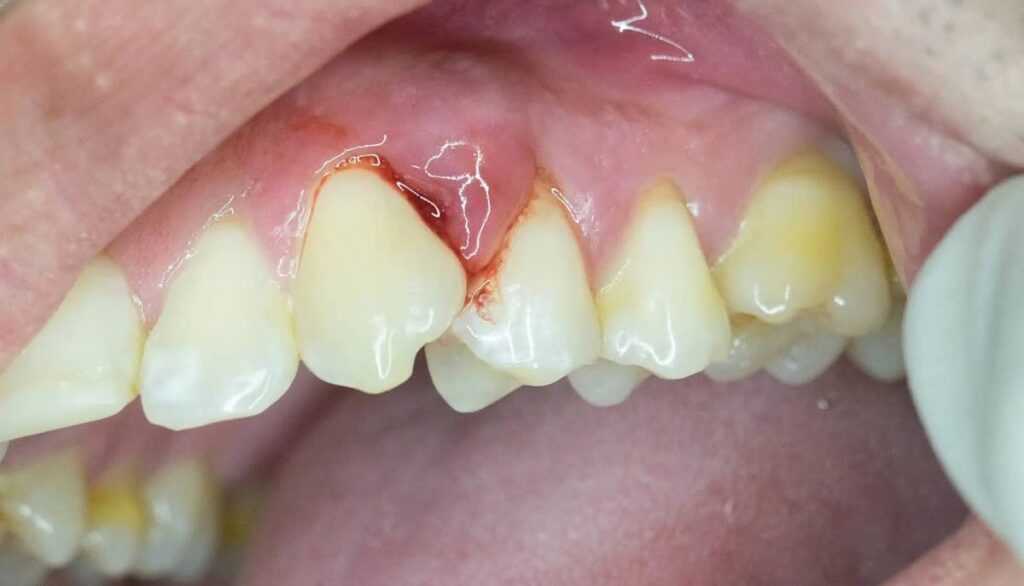

Oral health is not merely a matter of aesthetic appeal but also an important indicator of overall body condition. Unfortunately, many people neglect the first warning signs, such as bleeding gums, perceiving them as temporary discomfort. However, this is exactly how a real threat to teeth develops, starting from ordinary gingivitis—periodontitis. This is a serious inflammatory disease of the tissues surrounding the tooth, which gradually destroys the gums and bone tissue, leading to tooth loss. Alarming statistics show that in 90% of patients who ignored gingivitis treatment, the inflammatory process progresses to periodontitis, transforming into a chronic problem with far-reaching consequences. In this article, we will examine what periodontitis is, including its symptoms, causes, forms and stages, as well as methods of diagnosis, treatment, and prevention.
What is Periodontitis: Definition and Basic Knowledge
What is periodontitis? Periodontitis is a serious chronic inflammatory disease of the periodontium—a functional complex of tissues that surrounds and holds the tooth in the bone. The periodontium includes the gums, periodontal ligament (microscopic fibers that attach the tooth root to the bone), root cementum, and alveolar bone.
The development of periodontitis begins with gingivitis—superficial inflammation of the gums caused by the accumulation of microbial dental plaque. If gingivitis is not treated, the inflammation does not remain limited to the gums alone. It spreads deeper: the fibers of the periodontal ligament are destroyed, and destruction of the alveolar bone that supports the teeth begins. A pathological space forms between the tooth root and the gum, where infection penetrates. It is precisely this process of supporting tissue destruction that leads to loosening and loss of teeth.
Regarding prevalence, periodontitis is one of the most widespread dental problems in the world. According to the World Health Organization, certain forms of it are observed in 30-40% of the adult population.
Although periodontitis is most commonly diagnosed in people aged 35-50 years, it has no strict age boundaries. Aggressive forms of periodontitis are distinguished, which can affect young people and even children, often having a tendency for rapid progression.
Treatment of periodontitis
The cost of periodontitis treatment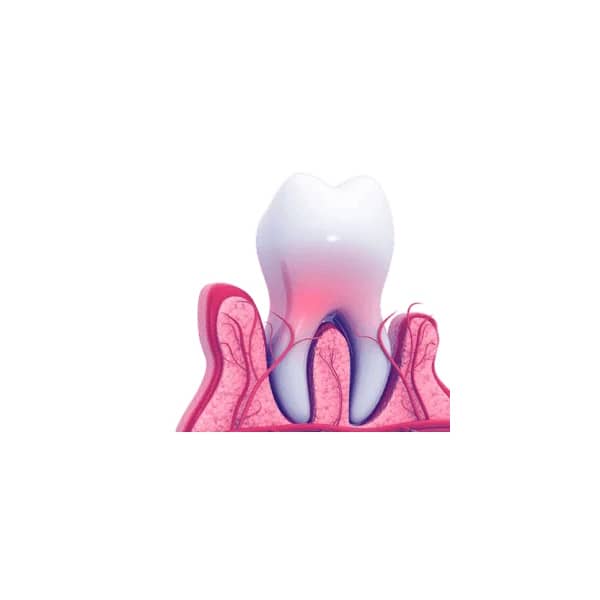
Symptoms of Periodontitis: How to Recognize the Disease
Recognizing periodontitis in its early stages is difficult. Its development is a dynamic process that gradually transitions from barely noticeable signs to a pronounced clinical picture that significantly affects quality of life.
In the early stages, periodontitis symptoms are mild and perceived as temporary minor discomfort. This is precisely what makes them dangerous, as they are systematically ignored. These include:
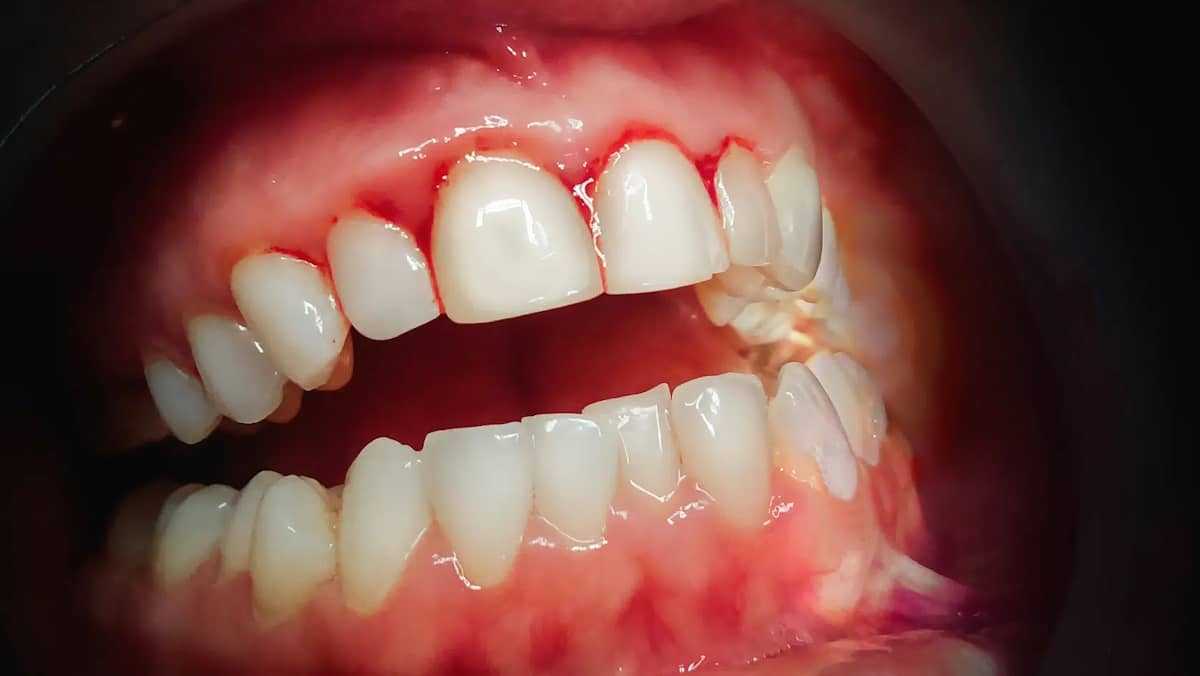
- minor gum bleeding
- slight redness and swelling of the gum margin
- absence of pain
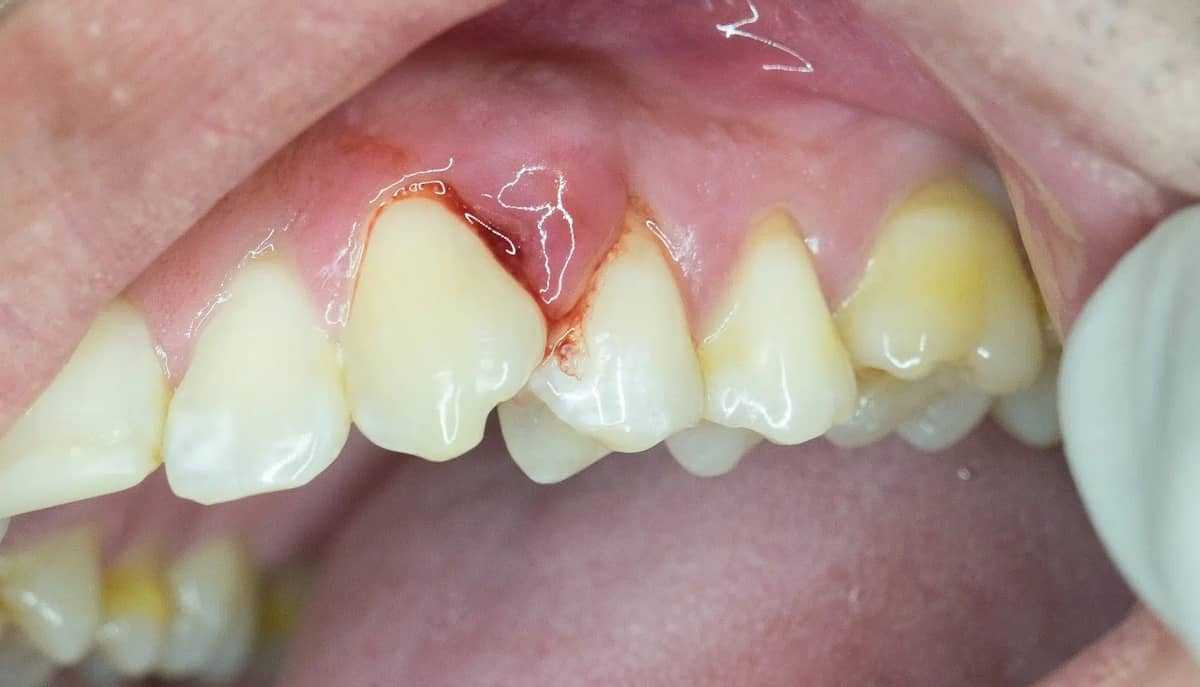
When inflammation destroys the deep structures of the periodontium, symptoms become obvious and alarming:
- persistent halitosis
- metallic or salty taste
- pus discharge from under the gums when pressed
- gum recession
- increased tooth sensitivity
- tooth shifting and widening of gaps between them
- pathological tooth mobility
- pain and discomfort when chewing
Moreover, periodontitis symptoms can extend beyond the physical. The patient may be concerned about the aesthetic appearance of their smile, permanent fear of losing teeth, and embarrassment due to unpleasant odor.
Causes of Periodontitis: Why the Disease Develops
Periodontitis is a multifactorial disease that occurs as a result of complex interaction between bacteria and the body’s response. Its causes can be conditionally divided into three major groups: local, general, and genetic-mechanical:
Local:
- insufficient oral hygiene
- accumulation of dental plaque and calculus
- gingivitis in early stages
- presence of caries
- poor-quality restorations
General:
- weakened immunity
- chronic diseases
- improper nutrition and deficiencies
- sleep deprivation and chronic stress
- harmful habits, particularly smoking and excessive alcohol consumption
Genetic-mechanical:
- malocclusion
- constant traumatic occlusion
- gum injuries
According to simplified classification, the causes of periodontitis are divided into three categories: ignoring gingivitis treatment in early stages, poor oral hygiene, and weakened immunity.
Stages and Degrees of Periodontitis: Disease Classification
Periodontitis is classified according to two main criteria: severity degree and form/localization of progression.
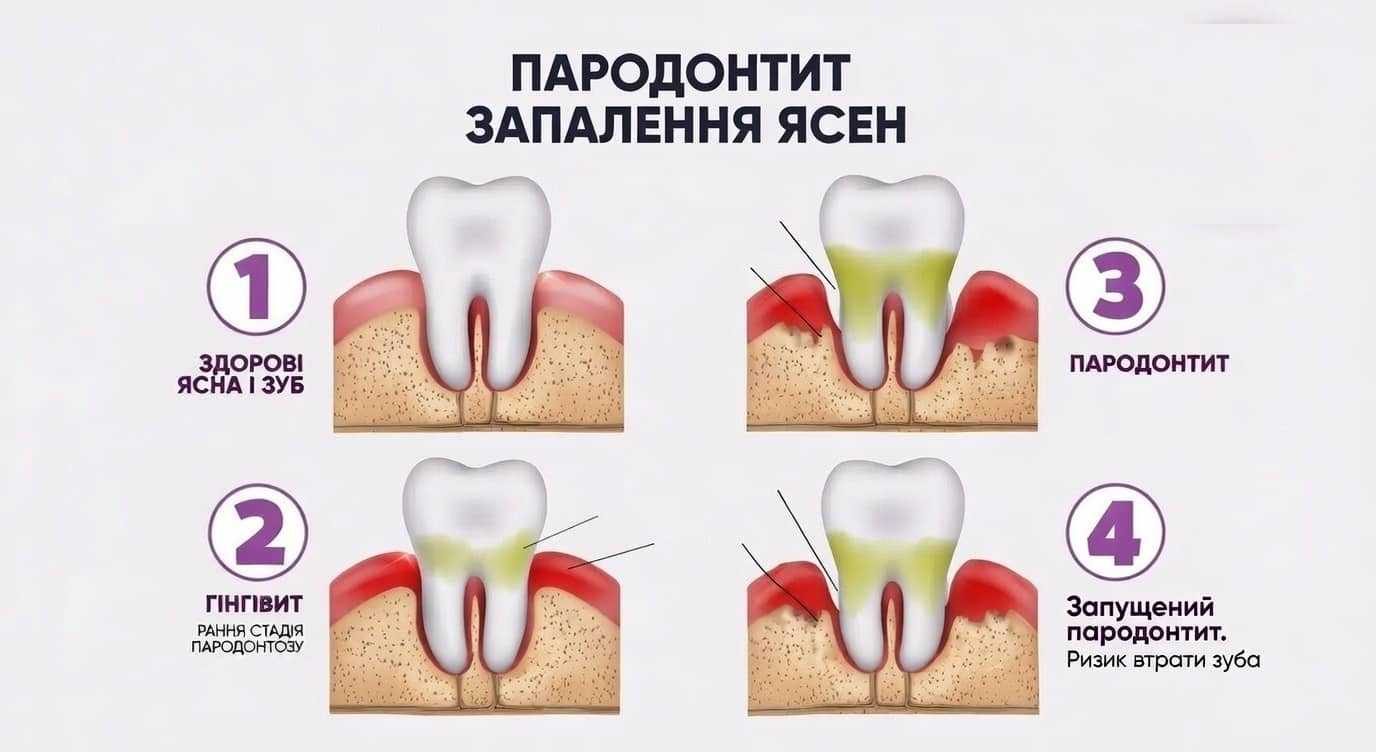
Ступінь вThe severity degree is determined by the periodontist during examination using a special instrument—a periodontal probe, which measures the depth of inflammatory “pockets” between the tooth and gums, as well as through X-ray imaging. The following degrees of lesion are distinguished:
- Grade I (mild)—initial stage that develops from untreated gingivitis
- Grade II (moderate)—characterized by progressive destruction of supporting tissues
- Grade III (severe)—advanced stage with irreversible changes
Classification by form and localization complements classification by severity degree and describes the nature of disease progression:
By course:
- Acute periodontitis is characterized by sudden development with pronounced symptoms: severe pain, swelling, bleeding, possible abscess formation
- Chronic periodontitis has gradual, often asymptomatic development over many years
By extent:
- Localized periodontitis affects 1-4 teeth in one limited area. Often associated with local factors: trauma from incorrectly installed filling/crown, trapped food, tooth position anomaly
- Generalized periodontitis—the most common and dangerous form, encompassing periodontal tissues of most or all teeth on one or both jaws
Thus, understanding the stages of periodontitis is critically important for every patient. A clear understanding of pathology development allows one to realize the seriousness of the situation and the necessity of immediate action. The earlier periodontitis symptoms are detected and an accurate diagnosis is established, the more effective, less invasive, and economically accessible the treatment will be.
Diagnosis of Periodontitis: How the Doctor Detects the Disease
Treatment of periodontitis begins with its diagnosis. This is a comprehensive step-by-step process aimed not only at confirming the fact of inflammation but also at determining its severity, cause, nature of progression, and degree of tissue damage. It forms the basis for developing an individual treatment plan and consists of the following stages:
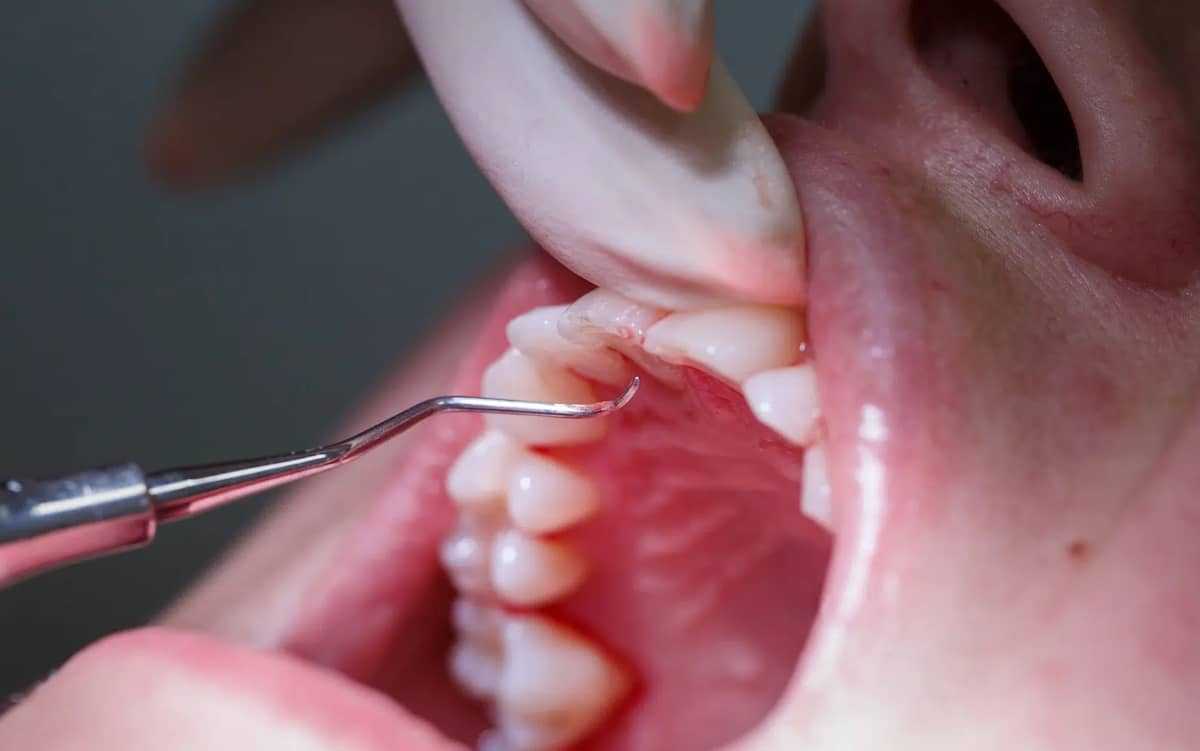
Clinical examination. The doctor visually assesses the condition of the gums and checks their bleeding with a light touch of a probe. The mobility of each tooth is also evaluated using a special scale, and the presence of dental plaque and calculus.
Probing of periodontal pockets. Using a thin probe, the depth of the space between the tooth and gums is measured. A depth exceeding 3 mm indicates a pathological pocket where bacteria multiply.
Radiological examination. A panoramic image (OPG) or CT scan allows clear visualization of the bone tissue condition around the teeth. The image shows the degree of bone destruction (resorption), which confirms the diagnosis of periodontitis and determines its severity.
Use of indices and scales. For objective assessment, indices are used, for example, to count bleeding areas or teeth covered with plaque. This allows obtaining numerical indicators of periodontal condition.
Specialized laboratory studies. In complex cases, microscopic analysis of gingival fluid may be performed to determine the type of bacteria. Sometimes blood or saliva tests are needed to assess the overall state of immunity.
Diagnosing periodontitis in early stages is the key to successful treatment. Many periodontitis symptoms, such as gum bleeding or bad breath, are often ignored, leading to disease progression. Therefore, when any alarming signs are detected, it is important to immediately consult a specialist for comprehensive diagnostics, which allows accurate assessment of the problem’s scope.
Forms of Periodontitis: Distinguishing Acute and Chronic Forms
Acute and chronic forms of periodontitis differ dramatically in their course.
The acute form, which occurs less frequently, is usually a reaction to a clear local cause, such as trauma from a filling or foreign body. It develops suddenly, within several days, accompanied by intense throbbing pain, sharp swelling, vivid inflammation, and often purulent abscess formation, requiring immediate treatment.
In contrast, the vast majority of cases are chronic periodontitis. It gradually develops over years, almost not manifesting itself in early stages, except for possible mild bleeding.
МMedical Treatment of Periodontitis
How to treat periodontitis? Modern methods of periodontitis treatment include a whole range of pharmacological agents that form the basis of medical treatment. These include local antiseptics for rinsing and pocket irrigation, anti-inflammatory gels for applications, and in complex cases—antibiotics. Thus, comprehensive periodontitis treatment is always combined.
Regarding the cost of periodontitis treatment, it is formed individually and depends on the disease degree, volume of procedures, and spectrum of prescribed medications.
Surgical Treatment of Periodontitis: When Surgery is Needed
How to treat periodontitis surgically? Surgical treatment of periodontitis is indicated for deep periodontal pockets (over 5-6 mm), where it is impossible to mechanically clean the root.
The main methods of surgical periodontitis treatment include both less invasive and open operations. The former include closed curettage and modern Vector therapy, which allows thorough root polishing using ultrasound. More details about these methods can be found on the page dedicated to closed curettage and Vector therapy.
When access is insufficient, open curettage or flap surgery is performed. This is the gold standard of surgical treatment, allowing removal of all subgingival deposits and pathological tissues under visual control.
Separate procedures exist for soft tissue correction. Gingivectomy is the removal of overgrown inflamed tissue, while gingivoplasty is aimed at restoring the aesthetic gum contour.
Modern methods of periodontitis treatment also include regenerative technologies. Guided bone regeneration (GBR) using membranes and bone substitutes allows restoration of native bone tissue. PRF therapy and plasmlifting use growth factors from the patient’s own blood to accelerate healing.
Unfortunately, in advanced cases, when the tooth has grade 3-4 mobility, the only rational solution often remains extraction with subsequent implant restoration to prevent infection spread.
The MED-DEO dental clinic network offers a full range of services for periodontitis treatment in Kyiv. The price of periodontitis treatment is formed individually after consultation and depends on the chosen method and scope of work.
Periodontitis in Children: Features and Treatment
Treatment of periodontitis in children has significant features related to the specifics of the child’s body and dentofacial system development. This disease, although occurring less frequently (in 5-7% of children) than in adults, is serious because it often proceeds in a more aggressive form with rapid progression.
The main cause is, as a rule, underdeveloped hygiene skills, complete neglect of tooth brushing, or incorrect technique. During bite change and permanent tooth eruption, the situation can be complicated by gum trauma and microbial flora condensation.
Diagnosis is complicated by the fact that the child rarely complains initially, and parents often perceive gum bleeding during brushing as something normal, which delays seeking medical attention.
Therefore, the key component of treatment is not only dental procedures but also mandatory training of the child in daily oral hygiene. This stage is often more important than medical intervention.
The treatment itself in early stages is exclusively conservative in nature and aimed at eliminating the cause. It includes:
- professional hygiene
- medical therapy
- sanitation of the entire oral cavity
Due to the risk of rapid development of aggressive periodontitis, careful monitoring is necessary. After the main course of treatment, regular preventive visits to the hygienist every 2-3 months are mandatory for hygiene control and preventive cleanings.
Prevention of Periodontitis: How to Avoid the Disease
Prevention of periodontitis is a comprehensive approach based on joint activities of the patient at home and professionals in the clinic. The main idea is that the best treatment for periodontitis is its competent and consistent prevention.
The main component of periodontitis prevention is impeccable home hygiene. Key rules: brush teeth at least twice a day, with evening brushing being mandatory to prevent accumulated plaque from destroying enamel and irritating gums overnight.
It is important to use a soft brush to avoid traumatizing the gums and to daily use dental floss or an irrigator for cleaning interdental spaces—the main reservoir of bacteria. Care can be supplemented with a mouthwash containing antiseptic components.
However, even ideal home cleaning does not guarantee complete protection from hard dental calculus formation. Therefore, professional hygiene at the dentist is mandatory. The minimum frequency of visits for plaque and calculus removal is twice a year.
Dietary correction plays a significant role. It is necessary to limit sticky and soft carbohydrate foods (white bread, sweets) that easily adhere to teeth, creating an ideal environment for bacteria. It is beneficial to consume hard fruits and vegetables (apples, carrots), which provide mechanical cleaning of enamel and gum massage.
Leading a healthy lifestyle is critically important. Complete smoking cessation is the most important step, as nicotine sharply worsens gum blood supply and suppresses immune defense. Stress control, sufficient sleep, and physical activity support the body’s general immunity, increasing its resistance to infection.
Finally, it is necessary to care for overall health. Effective treatment of systemic diseases such as diabetes, and correction of vitamin and microelement deficiencies are an integral part of periodontitis prevention, as oral health is inextricably linked to the health of the entire body.
Written by: Yuliia Laskava, Dental Therapist and Periodontist



Make an appointment
You can make an appointment by filling out the application form on the website, as well as using instant messengers:
Make an appointment
You can make an appointment by filling out the application form on the website, as well as using instant messengers:


Make an appointment easily using chatbots:
Also, call the numbers:
Modern dentistry and medical centre "MED-DEO"
Choose a clinic whose location is more convenient for you.
Kyiv, Holosiivska/Demiivska metro station
130 Lobanovskoho Avenue


Working hours:
Mon - Sun: 8:00 AM - 9:00 PM
No days off!
Call the numbers:
How to get to us? Create a route
Create a route
Kyiv, Akademistechko metro station
78A, Irpinska str.


Working hours:
Mon-Sun: 8.00-21.00
Without days off!
Call the numbers:
How to get to us?
Create a route
Create a route
Kyiv, Heroiv Dnipra metro station
32A, Heroiv Dnipra str.
Working hours:
Mon-Sun: 8.00-21.00
Without days off!
Call the numbers:
How to get to us?
Create a route
Create a route
Kyiv, Teatralna metro station
9B, E. Chykalenko (Pushkinska) str.



Working hours:
Mon-Sat: 8.00 - 21.00. Sun: by appointment.
Without days off!
Call the numbers:
How to get to us?
Create a route
Create a route
Відгук від клієнта
0:00
0:00


Your email will not be published on the site.