37553
Services Doctors
Clinics

пр.Лобановського, 130, Київ, Україна

Temporarily closed

Opening soon

стоматологія на лобановського

78A, Irpinska St., Kyiv, Ukraine

Temporarily closed

Opening soon

IMGP4938

32A, Heroiv Dnipra St., Kyiv, Ukraine

Temporarily closed

Opening soon

2024-10-23 11.56.42

9B, Yevhena Chykalenko St. (Pushkinska), Kyiv, Ukraine

Temporarily closed

Opening soon

IMGP5161
Prices Blog Contacts
Back Dentistry

Clinics "MED-DEO"

пр.Лобановського, 130, Київ, Україна

Temporarily closed

Opening soon

стоматологія на лобановського

78A, Irpinska St., Kyiv, Ukraine

Temporarily closed

Opening soon

IMGP4938

32A, Heroiv Dnipra St., Kyiv, Ukraine

Temporarily closed

Opening soon

2024-10-23 11.56.42

9B, Yevhena Chykalenko St. (Pushkinska), Kyiv, Ukraine

Temporarily closed

Opening soon

IMGP5161

Services

Dentistry

Service statistics

icon

More and more clients choose «MED-DEO»

65390

Number of services provided

63267

Number of patients who received the service

for free* * subject to treatment in the clinic

Appointment by phone:

(044) 394 90 94

Prices for adhesive bridge:

Service name

Price, UAH.

Orthopedic designs

from 5700

Sign up

Dentist's consultation on oral care

390

Sign up

Injection anesthesia (application)

350

Sign up

Computer-controlled injection anesthesia (application)

600

Sign up

Individual "Cofferdam" / "RUBBER-DAM" kit (application)

350

Sign up

Individual "Optra Gate" kit (application)

250

Sign up

Examination of 1 tooth

240

Sign up

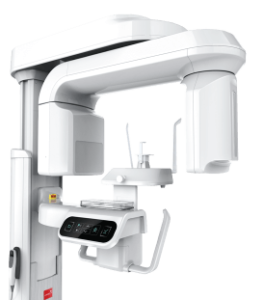
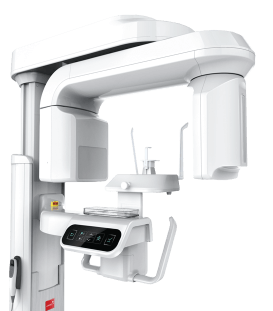
Panoramic X-ray (OPG)

440

Sign up

CT scan of the upper and lower jaws

1200

Sign up

A-silicone impression taking

800

Sign up

C-silicone impression taking

500

Sign up

Digital impression taking (Intraoral scanning)

1200

Sign up
Popular questions on the topic

What is adhesive dental prosthetics?

Adhesive dental prosthetics or simply adhesive prosthesis is a modern method of prosthetics that replaces a lost tooth. In this case, the adhesive bridge is attached to the neighboring teeth thanks to adhesive “wings”. The neighboring teeth themselves, to which the bridge is attached, are almost not ground.

Which is better: a bridge or an implant?

Which is better – an adhesive bridge or a standard implant with a crown on top – depends on the individual case. A bridge does not always withstand the same load as an implant with a crown, but a bridge is cheaper, faster to install, and does not require surgery.

How long do dental bridges last?

Dental bridges last from 7 to 15 years. Reviews of adhesive bridges say that their service life is from 3 to 7 years. The term depends on the person’s hygiene, the material of the bridge, the chewing load on it and the regularity of professional hygiene at the dentist.

How much does a dental bridge cost?

Adhesive bridge prosthesis prices in Kyiv vary. Today, it is approximately from 5,000 to 10,000 UAH, depending on the material (ceramics, composite), the total number of teeth, and the complexity of the entire operation.


Reviews about adhesive bridges at Med-Deo

Leave a review
5

Based on reviews

Based on reviews

Дмитро

2026-05-02

Потрібно було швидко відновити зуб, і лікар запропонував адгезивний міст. Все пояснив і зробив дуже акуратно. Конструкція зручна і виглядає добре. Дякую за професійний підхід.

Максим

2026-02-11

Робив мостоподібний протез. Хвилювався за комфорт, але все виявилось значно простіше. Конструкція міцна і зручна, жування повністю відновилось.

Юлія

2026-01-22

Потрібно було швидко відновити відсутній зуб без складного протезування. Лікар запропонував адгезивний міст і детально пояснив усі плюси та мінуси. Процедура пройшла швидко і безболісно, а результат виглядає дуже акуратно.

Інна

2025-10-20

Мені встановили адгезивний міс швидко, без болю і без обточування сусідніх зубів. Результат чудовий, звикла дуже шидко, дякую лікарю Владиславу !

Ігор

2025-09-12

Після втрати зуба лікар запропонував адгезивний міст. Встановлення було швидким і безболісним, а результат виглядає дуже природно.

Анастасія

2025-07-20

Дуже задоволена адгезивним мостом – легкий, акуратний і зовсім не відчувається в роті. Як тимчасовий варіант дуже якісно виконано!

Show more Hide

What is an adhesive bridge and what does it look like?

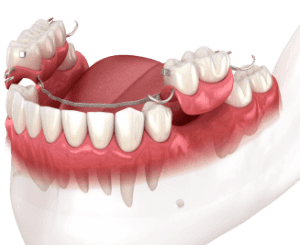
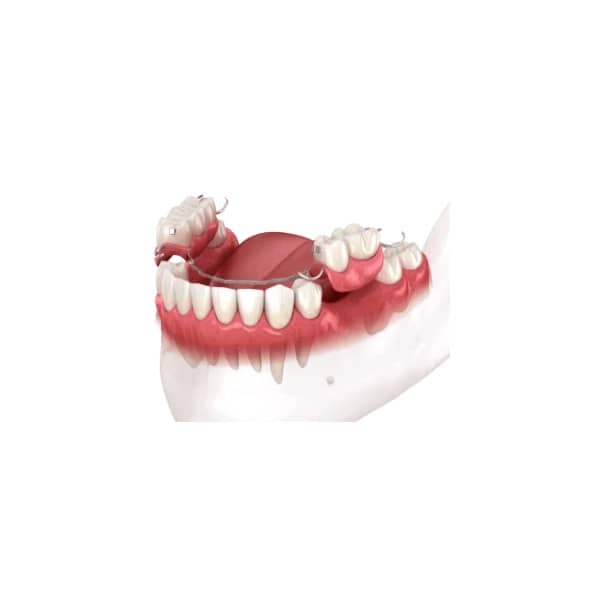
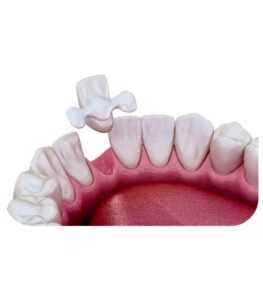
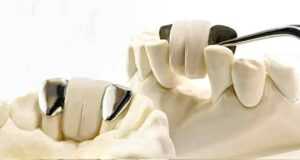
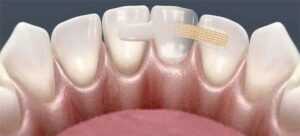
Адгезивний містAn adhesive bridge (Maryland bridge) is a type of dental prosthesis that replaces a missing tooth without the use of an implant. This is achieved by anchoring the bridge to the adjacent teeth with thin, wing-like tabs using a special dental adhesive (cement).

  • A full tooth replacement without implant placement.
  • Quick and conservative installation—with virtually no teeth prepping (shaping).
  • Can be placed both temporarily and for a longer term, most commonly on front teeth.
  • Looks natural and requires gentle care.
  • Lasts for 3–7 years, and sometimes up to 10 years.
An adhesive bridge, of course, differs from a traditional dental bridge in both design and appearance. In a traditional bridge, the adjacent teeth are significantly prepped to accommodate retention crowns. The artificial pontic (the replacement tooth) sits between these crowns to fill the gap, and the entire structure is supported by the adjacent abutment teeth. An adhesive bridge, in contrast, requires no teeth prepping or only minimal preparation (on the inner surface to attach the “wings”). The prosthesis itself is bonded directly to the enamel of the adjacent teeth using medical cement. Visually, this makes it less bulky than a traditional bridge.

When comparing them further, a traditional bridge is considered a stronger structure, but the adhesive method is truly more conservative since it preserves tooth structure. It is mostly suitable for replacing front teeth, as they experience lower chewing loads.

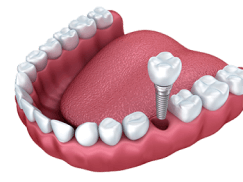
The adhesive method also differs significantly from dental implantation. Implantation involves the surgical placement and subsequent osseointegration of an implant into the jawbone. This is an invasive, longer, and more expensive process. Compared to an implant with a crown on top, an adhesive bridge is painless, simpler to install, and remains a more affordable option today.

Which teeth can be fitted with an adhesive bridge?

An adhesive bridge can theoretically be placed on any tooth. However, it is most commonly installed on the front (anterior) teeth. It is extremely rare to place them on chewing teeth (molars and premolars), where a traditional bridge or an implant with a crown is a much better choice.

For example, an adhesive bridge on the 6th tooth (first molar) is definitely not recommended. First of all, it is a chewing tooth, and secondly, the 6th tooth bears the heaviest chewing load. At the very least, even if installed on the 6th tooth or other chewing teeth, the lifespan of the bridge will likely be shorter. Alternatively, it makes more sense to install it on chewing teeth as a temporary solution—for instance, when a patient is preparing for dental implantation and wants to quickly and affordably fill the gap of a missing tooth for a short period. This is often done for aesthetic reasons. Visually, everything will look very natural with an adhesive bridge—meaning that neither in real life nor in photos will the adhesive prosthesis differ from a real tooth. The color is selected very carefully, and modern types of such bridges do not contain any metal elements.

Need a
Diagnostic

Call to book an appointmen

(044) 394-90-94

Sign up
icon icon
дагностика 1

Indications and contraindications

Indications for an adhesive bridge placement:

  • Loss of 1 tooth, or less frequently 2 teeth—specifically in the smile zone.
  • Desire for a conservative and quick tooth restoration.
  • Temporary restoration before the subsequent placement of an implant.
  • Inability to place an implant due to certain reasons (for example, insufficient jawbone density, etc.).
  • Very young age—the adhesive method is recommended over an implant due to ongoing jaw growth.

Naturally, the adhesive bridge is also suitable for those who have other contraindications to implantation. However, the adhesive bridge itself has some contraindications of its own. Among them are:

  • Absence of molars (large chewing teeth) and sometimes premolars—bridges are extremely rarely placed on them.
  • Destruction, mobility, or the presence of large fillings on the teeth to which the bridge will be attached.
  • Loss of a large number of teeth—3 or more (the bridge simply will not hold).
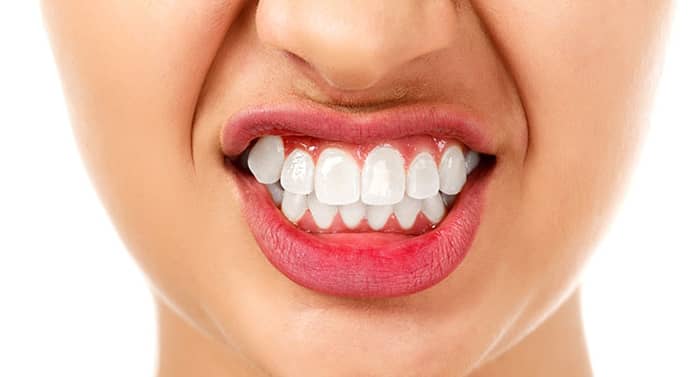
  • The bad habit of bruxism—teeth grinding.
  • Active-phase gum disease—it must be treated first.
  • Malocclusion (incorrect bite) and excessive load even on the front teeth.

Both the doctor and numerous reviews on adhesive prosthodontics state that if such a bridge is installed despite contraindications, it will not last long.

What are the types of adhesive bridges?

Адгезивний містTypes of adhesive bridges are most commonly categorized by their fabrication method. Therefore, they are classified as follows:

  • Direct adhesive bridges (fabricated directly in the mouth)
    Also known as the therapeutic type. These are formed directly during the doctor’s appointment right inside the patient’s mouth. The procedure uses a pre-made artificial tooth placed into the gap of the missing tooth, after which the dentist shapes the necessary connecting “wings” using the same photopolymer (composite) material. Everything is then cured with a special dental lamp until the material hardens, bonding the structure to the adjacent teeth. This type of adhesive bridge is most often used as a temporary option—either before dental implant placement or when the dentition needs to be restored very quickly. In terms of time, it is practically completed in a single dental visit. Its lifespan ranges from 1 to 3 years.
  • Indirect adhesive bridges (laboratory-made)
    Also known as the prosthodontic type. This option is fabricated in a specialized dental laboratory based on individual impressions. It is considered more aesthetic and capable of withstanding higher loads. Because of this, it is suitable for long-term prosthodontics, lasting longer—anywhere from 3 to even 7 years. The exact duration depends on daily chewing loads, oral hygiene, and the material from which the bridge is made.
  • Combined option
    This is a combination where the prosthesis itself is fabricated in a dental laboratory, but the final adjustments, polishing, and fitting are done by the doctor during the appointment directly in the patient’s oral cavity. This type is used when a strong prosthesis is required along with a highly precise fit tailored to the patient’s bite or other anatomical features. It has an approximate lifespan of 2 to 5 years.

The price of an adhesive bridge also depends on its type. The prosthodontic variant—meaning the laboratory-made one—is considered the most expensive. The combined option usually features a slightly lower price, while the therapeutic type (the ready-made artificial option crafted “directly in the mouth”) is the most affordable today. At the Med-Deo clinic, the prices for an adhesive bridge in Kyiv are truly reasonable, both at the Holosiivska branch and other locations.

Methods of Securing Adhesive Bridges

The actual anchoring of adhesive bridges is done by bonding thin “wings” directly to the adjacent teeth. They are secured using an adhesive—a specialized dental cement. This is how the adhesive dental prosthesis is kept permanently in place. In other words, securing it does not involve invasive (surgical) intervention, unlike a dental implant, for example.

This anchoring method allows adhesive bridges to hold for years, as it provides a reliable and completely safe chemical fixation. The main prerequisites for installing an adhesive bridge are strong and healthy adjacent teeth without very large fillings, healthy gums in the respective area, and an overall correct bite.

Would you like to undergo treatment?

Make an appointment with a doctor!

Sign up
icon icon
photo

How long does an adhesive bridge last?

An adhesive bridge lasts for 3–7 years. Universal bridges, which the doctor “creates” directly in the patient’s mouth, can last for 1–3 years, while individually fabricated ones last longer.

It is a common belief that an adhesive bridge is only a temporary solution. However, this is a misconception, as it serves as a full-fledged prosthodontic option and can be used both as a temporary measure and for a fairly long term.

The lifespan of an adhesive bridge generally depends on the material used, the chewing load on the teeth, and oral hygiene. If the condition of the teeth adjacent to the bridge deteriorates, it can potentially affect the prosthesis in the future as well. The absence of bad habits, a proper diet, regular routine dental check-ups, and even a person’s stress levels all impact the lifespan of an adhesive bridge.

Pros and cons of using an adhesive bridge

Like many dental treatments or prosthodontic methods, the adhesive bridge has its pros and cons. Among the advantages are:

  • Minimal or virtually no tooth preparation (shaping).
  • Fast installation process.
  • Complete financial affordability.
  • Absence of surgical and traumatic procedures.
  • The exact same aesthetic appeal as other bridges or dentures.

Among the disadvantages are:

  • Unsuitable for replacing chewing teeth (molars).
  • Overall lower durability compared to a traditional bridge.
  • Requires completely healthy teeth (preferably without fillings) to anchor onto.
  • Risk of debonding (coming loose) when biting hard objects/food or due to bruxism.
  • Unsuitable for those looking for an extremely long-term solution to replace a missing tooth.

How is an adhesive bridge installed?

Адгезивний містAn adhesive bridge is installed in stages over a specific period. If it is a universal, therapeutic bridge (such as a temporary one), it takes 1–2 dental visits. If it is an individually fabricated bridge, it takes about 1–2 weeks for laboratory fabrication plus 30–60 minutes for bonding in the dentist’s chair.

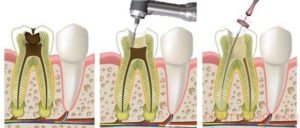
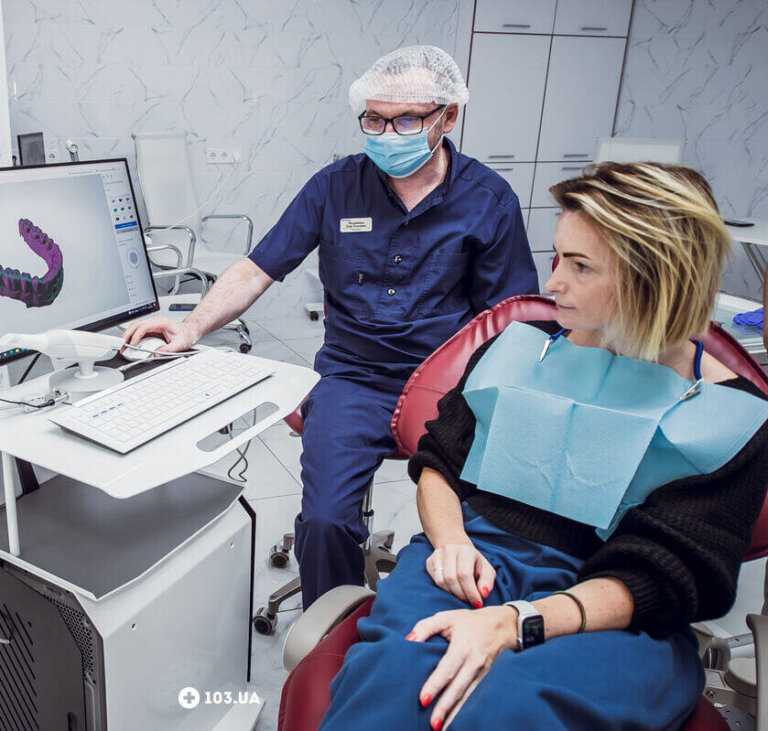
Anesthesia is usually not required for the installation of an adhesive bridge. It is used only as a last resort if the patient’s teeth are extremely sensitive. The placement process itself involves the following steps:
  1. Oral examination by the dentist and assessment of the condition of the adjacent teeth.
  2. Preparation of the adjacent teeth—plaque removal, professional cleaning, and light polishing if necessary.
  3. Selection of the bridge—either a pre-made universal option or taking impressions for laboratory fabrication.
  4. Trial fitting of the bridge to check aesthetics, bite, etc.
  5. If everything is correct—direct adhesive bonding of the bridge to the adjacent teeth.
  6. Final polishing and a re-check of its comfortable position in the patient’s mouth—both in terms of feel and aesthetics.

Regarding dental care with an adhesive bridge, it is important not to skip brushing your teeth twice a day and to use dental floss or an oral irrigator. You should also avoid hard foods and biting down on hard objects; if bruxism develops, consult a doctor for a protective nightguard.


Sources:

  1. Стандарти медичної допомоги “Хвороби твердих тканин зуба, ортопедичне лікування штучними коронками” -Order of the Ministry of Health of Ukraine No. 333 dated 02/20/2023.
  2. Клінічна настанова “Коронки, незнімні мостоподібні протези та зубні імплантати” – Order of the Ministry of Health of Ukraine No. 333 dated 02/20/2023 (State Expert Center of the Ministry of Health).
  3. Practical advice for successful clinical treatment with resin-bonded bridges
  4. Clinical Efficacy of Anterior Ceramic Materials in Resin-Bonded Fixed Dental Prostheses with Different Bridge Designs—A Systematic Review and Meta-Analysis
  5. Full-ceramic resin-bonded fixed dental prostheses: A systematic review
We work with all insurance companies

On this page Contents of the page

icon

Dental services