35721
Services Doctors
Clinics

пр.Лобановського, 130, Київ, Україна

Temporarily closed

Opening soon

стоматологія на лобановського

78A, Irpinska St., Kyiv, Ukraine

Temporarily closed

Opening soon

IMGP4938

32A, Heroiv Dnipra St., Kyiv, Ukraine

Temporarily closed

Opening soon

2024-10-23 11.56.42

9B, Yevhena Chykalenko St. (Pushkinska), Kyiv, Ukraine

Temporarily closed

Opening soon

IMGP5161
Prices Blog Contacts
Back Dentistry

Clinics "MED-DEO"

пр.Лобановського, 130, Київ, Україна

Temporarily closed

Opening soon

стоматологія на лобановського

78A, Irpinska St., Kyiv, Ukraine

Temporarily closed

Opening soon

IMGP4938

32A, Heroiv Dnipra St., Kyiv, Ukraine

Temporarily closed

Opening soon

2024-10-23 11.56.42

9B, Yevhena Chykalenko St. (Pushkinska), Kyiv, Ukraine

Temporarily closed

Opening soon

IMGP5161

Services

Dentistry

Статистика послуги

icon

More and more clients choose «MED-DEO»

1248

Number of services provided

1200

Number of patients who received the service

Initial consultation with a doctor

The cost of a consultation: 1000 UAH.

Appointment by phone:

(044) 394 90 94

Mole removal is a medical procedure that rids the skin of benign growths.

90% of people have moles, or nevi, as they are called in medicine. But not everyone needs to remove them. Although, it is moles that can cause the development of cancer or distort a person's appearance. For your own safety, peace of mind and aesthetic confidence, you should show your moles to a dermatologist. The doctor will give a recommendation: whether to remove the formation or not, and will determine the optimal method for getting rid of nevi. Mole removal in Kyiv is a painless and safe operation, which is performed at the Med Deo clinic.

Nevus removal price 2026

Service name

Price, UAH.

Removal of benign skin neoplasms up to 1.5 cm with closure of the defect with local tissues (atheromas, lipomas, nevi)

7600

Sign up

Removal of benign skin neoplasms from 1.5 to 3.5 cm with autoplasty

20000

Sign up

Excisional biopsy of maxillofacial neoplasms

10000

Sign up

Initial consultation with a maxillofacial surgeon, candidate of medical sciences

1200

Sign up

Follow-up consultation with a maxillofacial surgeon, candidate of medical sciences

800

Sign up

Initial consultation with a maxillofacial surgeon

700

Sign up

Follow-up consultation with a maxillofacial surgeon

500

Sign up

Dressing

200

Sign up

First aid for maxillofacial wounds up to 3 cm

3000

Sign up

First aid for maxillofacial wounds from 3 cm to 5 cm

5200

Sign up

Application of delayed sutures

1000

Sign up
Frequently asked questions on the topic:

Can a nevus be removed?

Moles can be removed as needed or at the patient’s request. Excision of the neoplasm is performed for medical reasons, for example, if the nevus causes discomfort, poses a potential health threat, or has signs of malignant transformation. Removal of nevi can also be performed for cosmetic reasons, if the patient wants to change their appearance or improve the aesthetics of the skin.

How long does it take for a wound to heal after nevus removal?

The healing time of the wound may vary depending on the size and depth of the removed mole, as well as the individual characteristics of the body. Usually the wound heals within 3-5 days after excision with a laser or radio wave method, and up to two weeks after the surgical procedure.

Still have questions?

Make an appointment with a doctor!icon

Make an appointment Make an appointment

Reviews about nevus removal at the Med-Deo clinic

Leave a review
5

Based on reviews

Based on reviews

Марина

2026-07-08

Давно планувала видалити невус, але постійно відкладала через страх. Лікар створив дуже спокійну атмосферу і відповів на всі мої запитання. Процедура пройшла швидко та без дискомфорту. Велика подяка за уважне ставлення.

Тетяна

2026-04-20

Видаляла невус, трохи переживала. Лікар усе пояснив і зробив процедуру акуратно. Загоєння пройшло без проблем. Дякую за професіоналізм і увагу.

Антоніна

2026-02-07

Було трохи страшно, але процедура зайняла небагато часу. Зараз залишився ледь помітний слід.

Віра

2025-12-12

Звернулась через зміну форми невуса. Після консультації вирішили видаляти. Задоволена, що не відкладала.

Мирослав

2025-09-22

Видаляла родимку на спині, бо постійно травмувалась. Все пройшло добре, матеріал відправили на аналіз, що додало спокою.

Show more Hide

What are moles (nevi) and why do they appear?

The cause of moles (nevi) is the increased activity of melanocytes. Melanin determines a person’s skin, hair, and eye color. This pigment is synthesized by melanocytes, which are responsible for UV protection and melanin production.

When melanin accumulates in a specific area of the skin, hyperpigmentation begins. Melanocytes cluster together, and the area may become raised. Externally, this change in pigmentation appears as spots. They can vary in color—from very pale to very dark. Freckles, or ephelides, are also a manifestation of hyperpigmentation.

The appearance of moles can have a genetic origin. They are established as early as the embryonic development stage, which is why infants can be born with congenital nevi or hemangiomas. Excessive UV radiation can increase the number of moles. This is why doctors advise against heavy tanning, especially during peak hours of solar activity.

Hormones, trauma, stress, improper skincare, and age-related changes can also trigger the growth of nevi. Most moles are benign growths. They can appear and disappear on their own. After a consultation with a dermatologist, it is possible to determine the origin and condition of these formations and decide whether mole removal is necessary.

Author of the article: Davyd Keyan

Types of birthmarks

By origin, a distinction is made between congenital nevi, which are visible immediately after birth, and acquired nevi, the appearance of which is caused by various factors.

By size, moles are divided into three groups: small (less than 1.5 mm), medium (from 1.5 mm to 1 cm), and large (larger than 1 cm). Depending on the depth of the epidermis involved, they are classified as:

  • Epidermal moles — located in the upper layers of the skin;
  • Dermo-epidermal nevi — located in both the epidermis and the dermis;
  • Dermoid nevi — extending into the deeper layers of the dermis.

Skin formations can be non-vascular, appearing as pigmentation, stalk-like or warty elevations, or vascular, known as hemangiomas. Vascular moles can be red or pink and vary in size. Capillary moles are flat in structure and located on the skin surface. Cavernous formations have a nodular shape and are located within the thickness of the dermis. Warty brown and gray plaques have a hard and uneven surface. Dark plaques are called pigmented moles; they are sometimes covered with hair.

Moles can be congenital or acquired. Interestingly, congenital nevi can appear on any part of the body: the face, armpits, buttocks, palms, or soles. Acquired ones typically choose areas exposed to UV light, although hormonal changes can also cause them to appear in various locations. Not all moles require removal, just as not all of them can become dangerous.

Dermatologists distinguish several types of moles:

  • Fibroepithelial nevi: soft, ranging in color from flesh-toned to brown, and in size from 1 mm to 1 cm.
  • Warty (verrucous) nevi: look like a chain of yellow nodules with a hard surface.
  • Becker’s nevus: a yellow-brown spot up to 100 cm² in size.
  • Intradermal nevi: typical birthmarks of variable appearance.
  • Giant pigmented nevi: usually congenital, covering a large area, located on the back or limbs.
  • Dysplastic nevi (Clark’s nevi): benign pigmented formations that appear in adolescents or adults; they have an increased risk of malignancy — the transformation from benign to dangerous.

Author of the article: Davyd Keyan

Need a
Diagnostic?

Call to book an appointmen

(044) 394-90-94

Sign up
icon icon
imgp4956 1024×683

When to remove moles: indications

Indications for mole removal can be both medical and cosmetic. If there is a suspicion that a nevus may cause oncological disease, if it restricts movement, or is constantly damaged, a doctor will recommend mandatory removal. If a mole affects a person’s perception of their appearance or causes discomfort, the indication for removal is cosmetic. In both cases, the decision to remove a nevus is made by a doctor after performing a dermoscopy.

Medical Indications

There are several reasons for removing moles based on medical indications:

  • Location in friction areas: on the neck, lower back, or armpits, causing constant trauma and discomfort.
  • Dysplastic nevus with a high risk of malignancy: removal of a dysplastic nevus occurs after thorough examination.
  • Constant sun exposure: when located on the nose, forehead, cheeks, or shoulders.
  • Trauma to the mole, which has caused bleeding or inflammation of the nevus.
  • Changes in shape, color, or size: this is where the ABCDE rule applies. These are the first letters of the words: Asymmetry, Border, Color, Diameter, and Evolving (change).

If a self-examination reveals even one of these signs, it is necessary to consult a dermatologist immediately. Do not engage in self-treatment.

Aesthetic Considerations

The aesthetic reasons for recommending mole removal can vary:

  • Large size of the nevus, making it prominent on exposed areas of the skin.
  • Location on the face, neck, or hands, which affects the overall appearance.
  • Mole removal on the face is the most common surgery performed for aesthetic reasons.
  • Unpleasant appearance, such as growths that protrude significantly or are covered with coarse hair.
  • Psychological discomfort or the development of insecurities (complexes).

No matter how much you want to get rid of a bothersome nevus, you should not do it yourself. No folk medicine methods will permanently remove a mole. Only a doctor can perform this safely.

Author of the article: Davyd Keyan

Signs of dangerous moles: the ABCDE rule

To detect dangerous moles at an early stage, it is necessary to perform regular self-diagnosis. This is the ABCDE rule mentioned earlier. Here are the detailed criteria that should prompt a visit to a medical center:

  • A (Asymmetry): One half of the mole does not match the other, and this was not the case before.
  • B (Border): The borders of the nevus have become uneven, blurred, or jagged.
  • C (Color): Specks of black, red, or other colors have appeared in what was previously a uniform-colored nevus.
  • D (Diameter): The nevus has started to “grow” and is now larger than 6 mm (the eraser on the end of a pencil can serve as a measurement guide).
  • E (Evolution): A previously “stable” nevus has started to grow, bleed, or itch; flaking of the skin on or around it has begun, or the skin has become coarser.

Other warning signs include pain, redness, or discharge from the nevus. If even one of these criteria appears, you must consult a dermatologist immediately.

Author of the article: Davyd Keyan

Surgical removal of moles

Mole removal in Kyiv is performed using various methods: laser, radio waves, electrocoagulation, cryodestruction, surgical excision, radiosurgery (radio knife), tissue evaporation, vascular coagulation, and liquid nitrogen.

The most suitable method for each case is determined by the doctor after an examination. The cost of mole removal depends on the scope of work and the chosen method.

Surgical excision of a nevus is a classic and reliable procedure. The excision of a mole is performed with a standard surgical blade. The price of surgical mole removal depends on the volume and complexity of the work.

Surgical removal is suitable for large and deep nevi. This method is mandatory if melanoma or a malignant nature of the mole is suspected. Its advantages include the possibility of histological examination of the excised material and the complete removal of the nevus.

Disadvantages of surgical nevus removal include: minor bleeding, the need for suturing at the site of intervention, and a longer healing process. Recovery takes 3–4 weeks. The price of surgical mole removal is higher than other methods due to the complexity of the surgery. However, this method often saves a patient’s life by preventing the development of skin cancer. Surgical mole removal is the price of a patient’s life and health.

Preparation for Mole Removal

A mandatory step in preparing for mole removal is a consultation with a dermatologist and dermoscopy. This is a simple procedure where the nevus is examined under magnification to assess the risk of malignancy. When choosing the surgical method, preparation includes blood tests: a complete blood count (CBC) and a coagulogram. If a nevus needs to be removed near the eye, an additional consultation with an ophthalmologist may be required.

Before the procedure, you should refrain from using photosensitizers, which include certain antibiotics and cosmetics. Sunbathing and tanning beds are prohibited for two weeks prior to the treatment.

Psychological preparation is also an important stage. Before removing a mole, you should discuss your expectations with the doctor and receive a realistic prognosis of the result. On the day of the procedure, regardless of the chosen method, you should arrive with clean skin, free of cosmetics.

Author of the article: Davyd Keyan

Would you like to undergo treatment?

Make an appointment with a doctor!

Sign up
icon icon
doc47

How is the mole removal procedure done?

The mole removal procedure in Kyiv is painless. When choosing the surgical method, it is performed under local or general anesthesia, depending on the complexity of the operation. In most cases, a few hours after the removal, you can return home and carefully follow the doctor’s recommendations for fast healing.

Contraindications for mole removal include pregnancy, acute infections, oncological diseases, diabetes mellitus, blood clotting disorders, allergy to anesthesia, and active herpes outbreaks.

Post-Procedure Care and Recovery
In the first few days after the nevus removal, minor pain, redness, and swelling are considered normal. To alleviate these, you should take the prescribed pain relievers. The wound should be treated twice a day with antiseptics such as chlorhexidine or miramistin. The aseptic dressing must be changed daily. The wound must not get wet for 2–3 days.

After 3–5 days, a crust (scab) forms at the removal site. Under no circumstances should you peel it off yourself; it will fall off on its own within 1–2 weeks.

A follow-up examination is required after 7–10 days. If the surgical method was chosen, the doctor will remove the sutures and provide further care instructions. If a laser was used, full healing typically occurs within 1–2 weeks.

Radiofrequency mole removal requires 2–3 weeks for full recovery, while surgical intervention takes 3–4 weeks. The scar at the site of the operation may initially be red, but it will fade over 6 months and eventually become almost invisible.

Do’s and Don’ts After the Procedure

Washing: Do not wet the wound for three days, though a light shower is permitted. Clothing: If the nevus was on the body, it is advisable to wear soft, comfortable clothing made of natural materials.

Activities: Daily walks are encouraged, but you must avoid sun exposure, tanning beds, saunas, and swimming pools for one month. Cosmetics: Refrain from applying any cosmetics for two weeks. Subsequently, use SPF 50+ sunscreen for six months to prevent hyperpigmentation.

Exercise: Light physical activity is allowed after one week. Return to intense workouts no sooner than one month later. Restrictions: It is strictly forbidden to rub or scratch the wound. For the first 3–5 days, do not consume alcohol, as it affects blood clotting. By following these recommendations, healing will be quick and without complications.

Author of the article: Davyd Keyan

Complications after mole removal

Mole removal is a procedure that may have certain side effects. Immediately after the excision of a nevus, redness, swelling, and minor pain may occur. In most cases, these unpleasant sensations disappear within a few days. However, in 1–2% of all cases, rare complications such as hematoma or bleeding may occur.

There is a small risk that the aesthetic results may not meet expectations. A hypertrophic scar may form at the removal site; this can happen in individuals with a genetic predisposition to keloid scarring. Cases of depigmentation or hyperpigmentation at the removal site are rare and typically disappear within a few months.

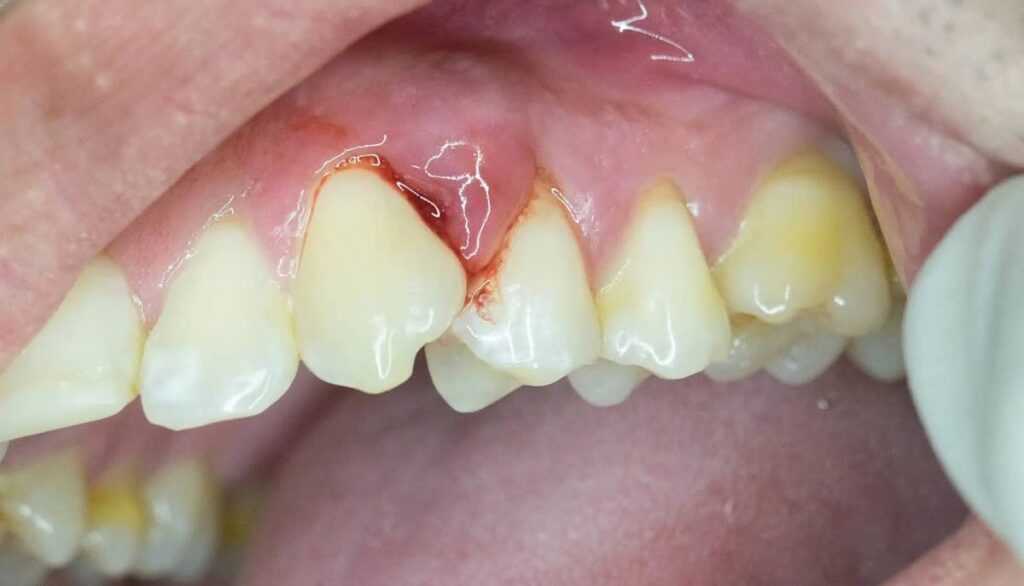
If the mole cells are not completely removed, a recurrence of the nevus is possible. This occurs in 1–3% of all cases and usually happens if the doctor lacks the necessary experience. Mole removal and its consequences are not about pain, but about improving appearance and getting rid of high-risk growths. To minimize risks, it is important to choose an experienced dermatologist, a clinic with modern equipment such as Med-Deo, and to follow all specialist recommendations.

Author of the article: Davyd Keyan

Choosing a clinic and doctor for mole removal

Criteria for choosing a reliable dermatologist may vary, but the unwavering rule should be high qualifications, certification, and at least 5 years of experience. Attention should also be paid to the equipment, specifically the condition of dermatoscopes and the sterility of instruments.
It is also helpful to study patient reviews—not just on the clinic’s own website, but on independent platforms such as Google or ProDoc. Look for not only written feedback but also “before and after” photos of nevus removal. After evaluating the results of previous patients, you can book a consultation. During your first visit, observe how transparent the doctor-patient relationship is. Experienced specialists provide a clear cost for mole removal with no hidden fees. A doctor should explain all risks, offer alternatives, and provide realistic expectations without sugarcoating. While many specialists perform nevus removal in Kyiv, you should choose the best of the best.


“Red flags” for a patient may include excessively low prices for mole removal, promises of “miraculous results,” or the absence of a license. In such cases, you should not hesitate to seek another specialist.

Author of the article: Davyd Keyan

Recommended articles:
We work with all insurance companies