Special offer! Comprehensive professional teeth cleaning for only 1699 UAH.
Special offer! Comprehensive professional teeth cleaning for only 1699 UAH.
Special offer! Comprehensive professional teeth cleaning for only 1699 UAH.
Special offer! Comprehensive professional teeth cleaning for only 1699 UAH.
Special offer! Comprehensive professional teeth cleaning for only 1699 UAH.
Special offer! Comprehensive professional teeth cleaning for only 1699 UAH.
Special offer! Comprehensive professional teeth cleaning for only 1699 UAH.
Special offer! Comprehensive professional teeth cleaning for only 1699 UAH.
Special offer! Comprehensive professional teeth cleaning for only 1699 UAH.
Special offer! Comprehensive professional teeth cleaning for only 1699 UAH.
Sign up
 (044) 394 90 94
(044) 394 90 94  Holosiivska/Demiivska metro station
Sign up
(044) 394 90 94
(044) 394 90 94
Doctors


 Prices
Blog
Contacts
Prices
Blog
Contacts
пр.Лобановського, 130, Київ, Україна
Temporarily closed
Opening soon
78A, Irpinska St., Kyiv, Ukraine
Temporarily closed
Opening soon
32A, Heroiv Dnipra St., Kyiv, Ukraine
Temporarily closed
Opening soon
9B, Yevhena Chykalenko St. (Pushkinska), Kyiv, Ukraine
Temporarily closed
Opening soon
(044) 394 90 94
Back
Dentistry

General Dentistry
Dental surgery
Dental Implants
Maxillofacial Surgery
Dental prosthetics
Cosmetic dentistry

Professional Dental Hygiene

Periodontics
Orthodontic dentistry

Gnathology & TMJ Therapy

Pediatric Dentistry

Dental X-Rays
Back
Orthodontic Center
Orthodontic dentistry
Gnathology & TMJ Therapy
Back
Prosthodontic Center
Dental prosthetics
Back
MED-DEO Center for Maxillofacial Surgery & Facial Plastics
Maxillofacial Surgery
Plastic surgery
Back
Surgical Dental Center
Dental surgery
Dental Implants
Search on the site


Popular requests
Teeth whitening
Treatment of caries
Wisdom tooth extraction
Bracket system
Dental veneers
Tooth restoration
Pediatric dentist
Consultation with a dentist-therapist
Search results by: «».
Unfortunately, no results were found for your search: “Pediatric Endocrinologist”, nothing was found.
You may find these links useful:
Clinics "MED-DEO"
пр.Лобановського, 130, Київ, Україна
Temporarily closed
Opening soon
78A, Irpinska St., Kyiv, Ukraine
Temporarily closed
Opening soon
32A, Heroiv Dnipra St., Kyiv, Ukraine
Temporarily closed
Opening soon
9B, Yevhena Chykalenko St. (Pushkinska), Kyiv, Ukraine
Temporarily closed
Opening soon
Services
Dentistry Orthodontic Center Prosthodontic Center MED-DEO Center for Maxillofacial Surgery & Facial Plastics Surgical Dental CenterGeneral Dentistry
Dental surgery
Dental Implants
Maxillofacial Surgery
Dental prosthetics
Cosmetic dentistry
Professional Dental Hygiene
Periodontics
Orthodontic dentistry
Gnathology & TMJ Therapy
Pediatric Dentistry
Dental X-Rays
Orthodontic dentistry
Gnathology & TMJ Therapy
Dental prosthetics
Maxillofacial Surgery
Dental surgery
Dental Implants
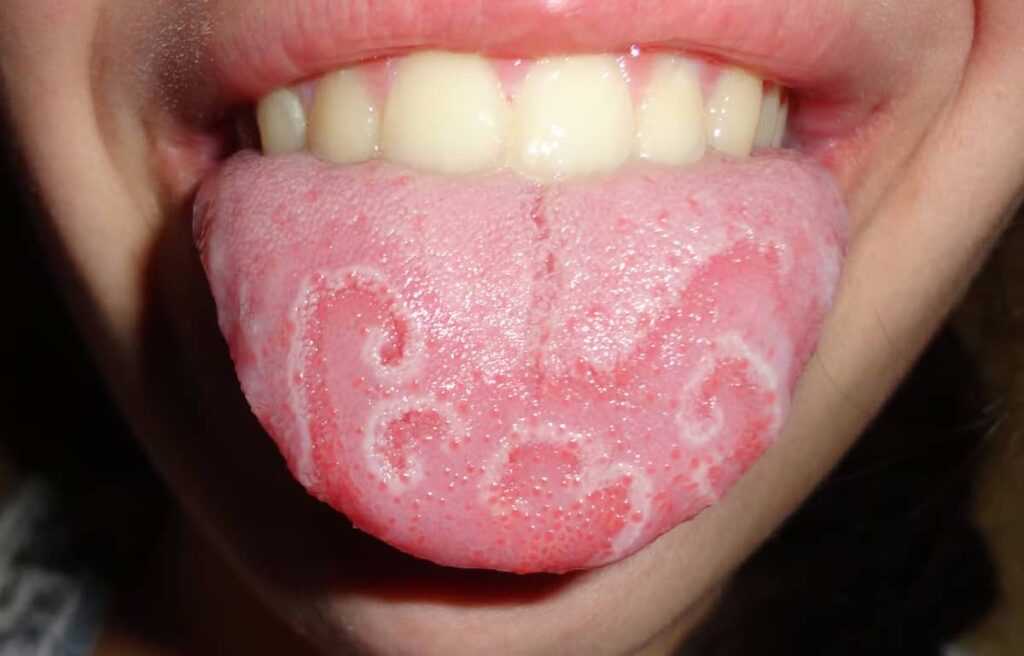

Sometimes we look in the mirror and notice that our tongue has become patchy—with red areas and white borders. It looks odd and even a bit alarming. In fact, this condition is called geographic tongue. It’s not a dangerous condition, but it can cause discomfort or concern about its appearance.
What is Geographic Tongue
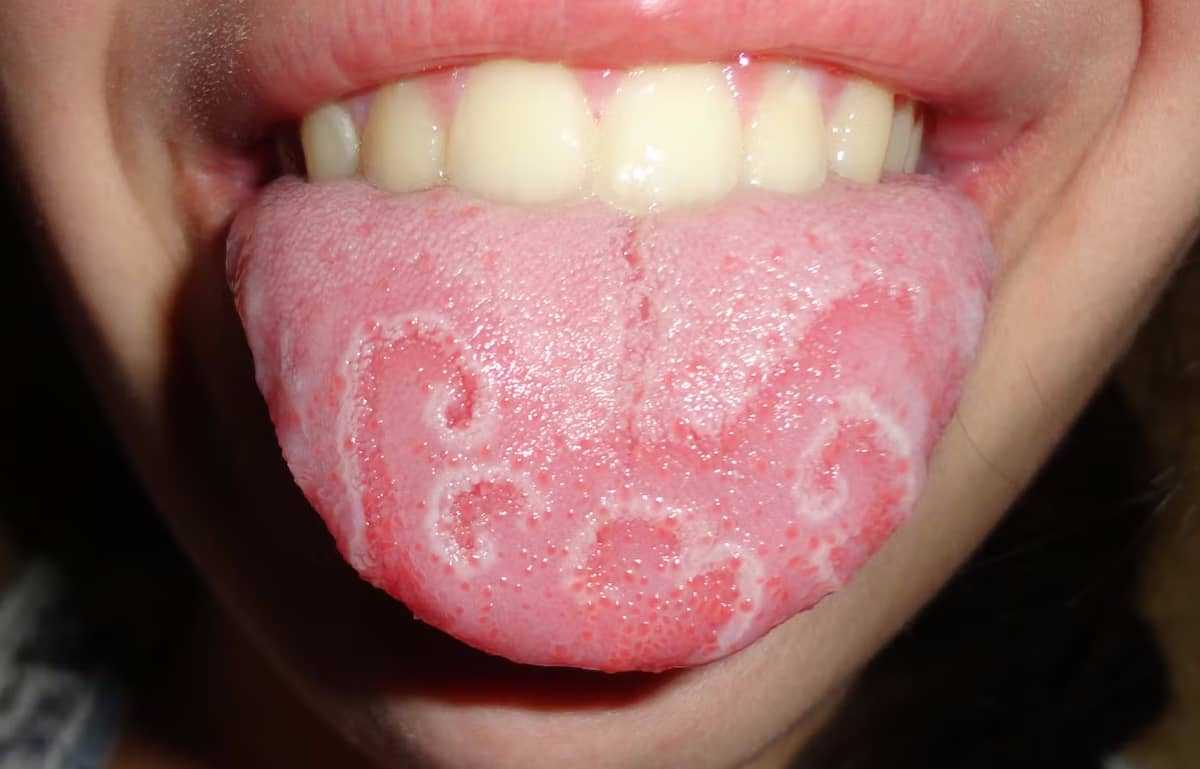
Geographic tongue is a condition where red patches with white or light borders appear on the tongue’s surface. Due to their appearance, they resemble the outlines of a geographic map—hence the name.
In medical terminology, this condition has several names: desquamative glossitis or benign migratory glossitis. It’s not dangerous and doesn’t spread from person to person. Statistically, geographic tongue affects approximately 1-2% of the population, more commonly in adults, though it can appear in children as well. It’s not a separate disease but rather a symptom of the tongue’s mucous membrane reacting to irritation, nutritional deficiencies, or other factors.
What Does Geographic Tongue Look Like
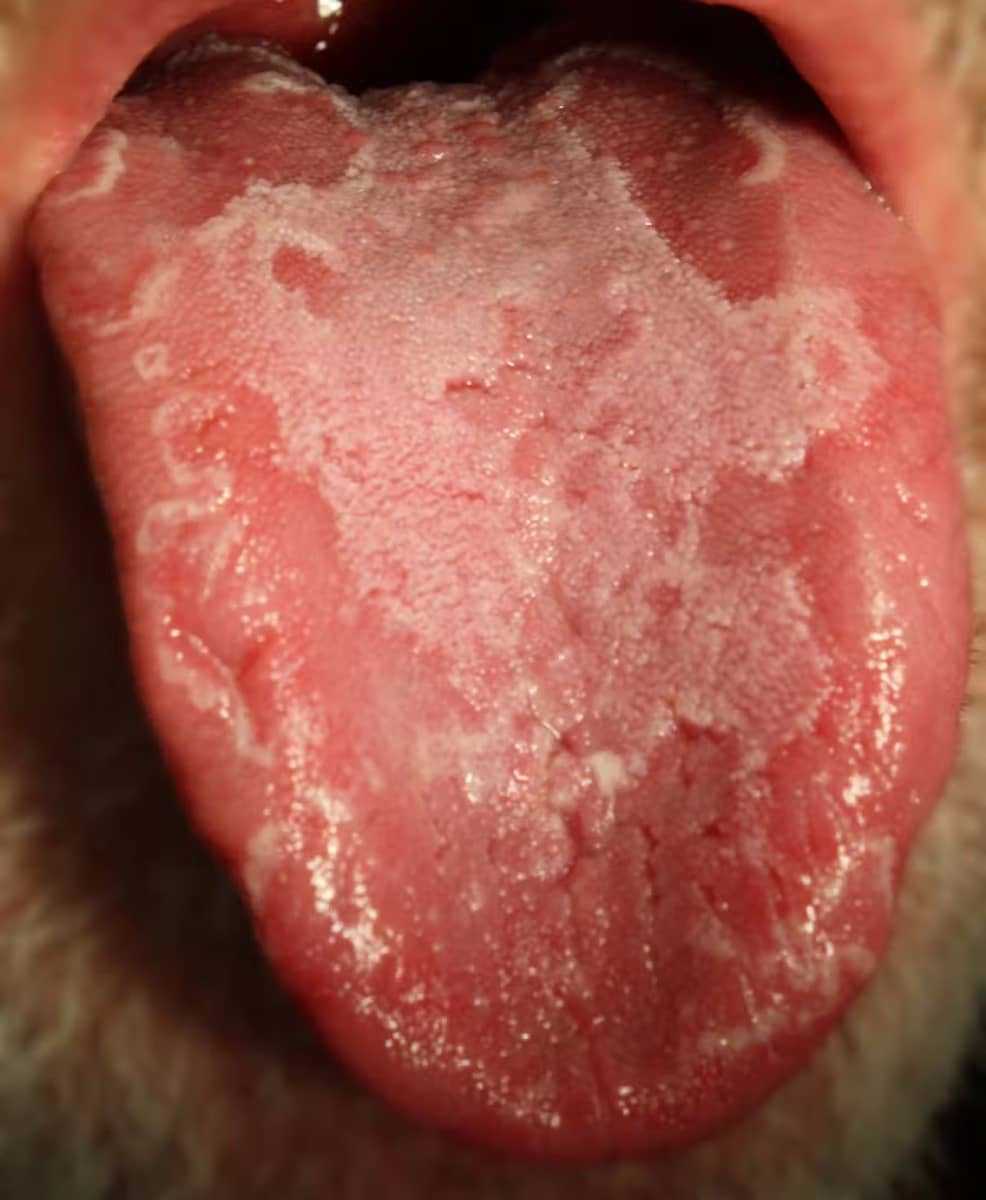
Geographic tongue is easy to recognize by its characteristic appearance. Red or pink patches of irregular shape appear on the tongue’s surface, resembling the outlines of continents on a map.
The edges of these patches often have white or yellowish snake-like borders that clearly distinguish the affected areas from healthy mucosa. Changes are typically noticeable on the top or sides of the tongue.
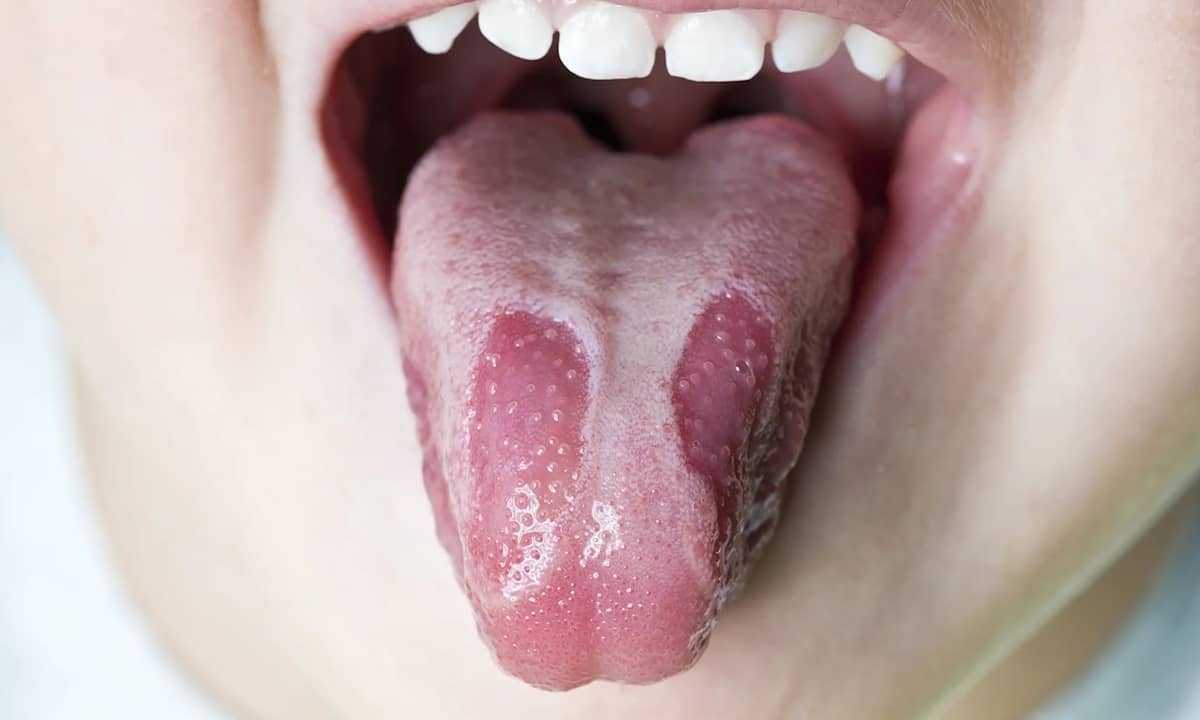
In the center of the patches, the surface appears smooth and shiny—this occurs due to atrophy of the filiform papillae, which give the tongue its rough texture.
Another distinctive feature is its migratory nature. The patches can disappear and reappear in different locations within just a few days, so the tongue’s appearance constantly changes.
Photos of geographic tongue can be seen below to better understand what this condition looks like.
The Migratory Nature of Geographic Tongue
One of the most interesting features of this condition is its migratory character, which is why geographic tongue is also medically referred to as migratory erythema. This means that the red patches on the tongue constantly change their location on its surface.
Typically, the affected areas disappear within a few days and then appear in different spots—so the tongue’s shape and appearance can change even within a single week. A complete cycle of such changes usually takes 1-2 weeks, after which the process may repeat itself.
The reason for this phenomenon is the loss and subsequent regeneration of filiform papillae that cover the tongue’s mucous membrane. When they temporarily disappear, a smooth red patch forms, and when they regenerate, the old area “heals” while a new one appears nearby.
This migratory course isn’t dangerous, though it may worry people encountering this condition for the first time.
Types of Red Patches on the Tongue: How to Distinguish Geographic Tongue
Red patches on the tongue don’t always mean geographic tongue. It’s important to pay attention to their appearance and accompanying symptoms:
- Geographic tongue: red or pink patches on the tongue with white/yellowish borders, migratory, smooth surface, usually painless.
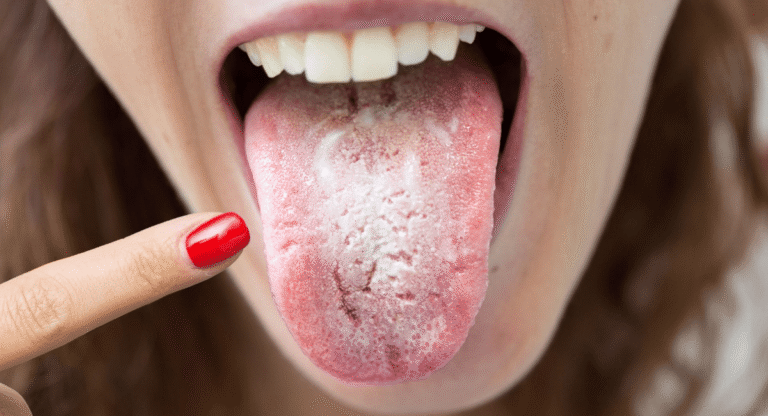
- Candidiasis: white coating that easily comes off, leaving a red surface; may involve burning sensation and unpleasant taste.
- Glossitis: red, inflamed, painful patches; often due to infection, trauma, or vitamin B deficiency.
- Trauma or burn: localized patches after hot food or biting; painful but quickly resolve.
- Allergy: patches after contact with an allergen, may be accompanied by burning or swelling.
- Tongue cancer: patch doesn’t disappear for weeks, has a firm surface, irregular edges, or ulceration—requires urgent medical consultation.
If patches don’t go away or change, don’t try to self-diagnose—see a dentist.
Symptoms of Geographic Tongue
For most people, geographic tongue is asymptomatic—meaning it doesn’t hurt and doesn’t interfere with daily life. However, sometimes unpleasant sensations may occur, especially after consuming certain foods:
- burning or tingling sensation while eating;
- sensitivity to hot, acidic, or spicy foods;
- altered taste perception, when food seems too salty or bitter;
- mild discomfort when talking or swallowing (rare).
These manifestations are usually temporary and resolve on their own once the irritant is removed. However, if burning or pain persists for several days, it’s worth seeing a dentist to rule out other causes of mucosal damage.
Causes of Geographic Tongue
The exact causes of geographic tongue aren’t yet fully established. Doctors believe this condition has a multifactorial nature, meaning it arises under the influence of several factors at once.
Genetic predisposition is considered most likely—if any relatives had geographic tongue, the risk of developing this condition is higher. Some studies also link it to immune system characteristics and increased reactivity of the mucous membrane.
Additionally, there are trigger factors that can provoke the appearance or intensification of symptoms:
- stress and emotional strain;
- hormonal changes (for example, during pregnancy or menopause);
- deficiency of B vitamins, iron, or zinc;
- allergic reactions to foods or oral care products;
- gastrointestinal or immune system disorders.
In most cases, geographic tongue isn’t associated with serious pathologies. However, if patches don’t disappear for a long time or are accompanied by pain, it’s worth seeing a dentist for diagnosis clarification.
Geographic Tongue in Children
Geographic tongue in children is more common than in adults—around 2-3%, especially before age 5. The condition is usually benign and doesn’t require treatment.
Its appearance is often associated with teething, viral infections, parasitic infestations, or weakened immunity. It may be accompanied by exudative diathesis and increased mucosal sensitivity.
It’s not dangerous for a child’s health and development. Patches usually disappear on their own within a few weeks or months.
If pain, burning, or food refusal appears, you should consult a pediatric dentist or pediatrician for examination and recommendations.
Geographic Tongue in Adults
Geographic tongue in adults is less common—more frequent in women due to hormonal fluctuations. Changes are often noticed accidentally during tooth brushing or dental examination.
It usually doesn’t hurt or interfere, but may react to stress, hot or spicy food, and hormonal changes (menstruation, pregnancy, menopause).
Sometimes it’s associated with chronic gastrointestinal diseases, endocrine system disorders, allergies, or autoimmune processes, acting as a symptom rather than an independent disease.
Geographic tongue isn’t dangerous and doesn’t spread; observation and elimination of triggers are usually sufficient for the condition to stabilize.
How to Treat Geographic Tongue: Basic Principles
In most cases, geographic tongue doesn’t require special treatment. The main thing is to eliminate triggers and maintain oral health. How to treat geographic tongue and what works best:
- Symptomatically: for burning or tingling, gentle gels and rinses can be used.
- Oral sanitation: regular brushing of teeth and tongue, using floss and antiseptics.
- Treatment of comorbidities: gastrointestinal, hormonal, or immune.
- Correction of vitamin deficiencies: especially B vitamins, iron, and zinc.
- Observation: if there’s no discomfort, the doctor monitors the condition and explains that it’s a benign process.
The main thing is not to panic and not to self-treat. Often the tongue stabilizes or resolves on its own.
Medical Treatment of Geographic Tongue
Although geographic tongue usually doesn’t require special treatment, in some cases a doctor may recommend medications to reduce discomfort or speed up mucosal recovery.
Among the main options:
- Multivitamin complexes—especially important are B vitamins, folic acid, and zinc, which support the tongue’s mucosal health.
- Antihistamines if there’s an allergic component causing burning or tingling.
- Topical corticosteroids used as gels or ointments for severe burning or inflammation.
- Lidocaine gels help quickly relieve pain and discomfort.
- Antiseptic rinses (chlorhexidine, miramistin) reduce the risk of secondary infection and maintain oral cleanliness.
- Oil solutions of vitamin A promote regeneration of the tongue’s mucous membrane.
- Anti-inflammatory agents, when needed, help reduce swelling and redness.
It’s important to remember that any medications should be prescribed by a doctor, especially for children or in the presence of comorbidities. Most often, drug therapy is needed only for pronounced discomfort, while the tongue changes themselves pose no health threat.
Geographic Tongue and Diet: What You Can and Can’t Eat
With geographic tongue, it’s important to pay attention to diet. To reduce discomfort and burning, it’s worth limiting:
- spicy, acidic, salty, and hot dishes;
- alcohol and tobacco products;
- citrus fruits and pineapples if there’s burning;
- tomatoes and tomato sauces.
Instead, these can help ease the condition:
- soft porridges, puréed soups, dairy products;
- cold or room-temperature dishes;
- foods rich in B vitamins.
Proper nutrition helps reduce tongue irritation and speed up mucosal recovery.
Can Geographic Tongue Go Away on Its Own?
Geographic tongue typically has a variable chronic course. Periods of spontaneous remission are often observed, when patches on the tongue disappear, and periods of exacerbation, when they reappear.
In children, geographic tongue often resolves with age, especially after 5-6 years. In adults, it may remain lifelong but usually doesn’t progress or worsen.
It’s important to know that geographic tongue doesn’t transform into cancer and poses no life threat. The main thing is to monitor the tongue’s condition and consult a dentist only if pain, prolonged discomfort, or suspicious changes appear.
Prevention of Geographic Tongue
It’s impossible to completely prevent geographic tongue, since the main factor is genetic predisposition. However, there are several ways to reduce the likelihood of symptoms and ease their course:
- Strengthening immunity—adequate sleep, activity, and hardening.
- Balanced nutrition with sufficient B vitamins, iron, and zinc.
- Timely treatment of gastrointestinal diseases and control of chronic conditions.
- Stress reduction, as nervous strain can trigger exacerbations.
- Quality oral hygiene: brushing teeth and tongue, and using mouthwashes.
- Regular preventive dental check-ups to monitor tongue and mucosal condition.
- Quitting smoking, which irritates the mucous membrane and may worsen discomfort.
Following these simple guidelines helps reduce manifestations of geographic tongue, maintain oral health, and overall comfort.
Article author: Dr. Valentyna Poberezhna, Pediatric Dentist | General Dentist | Periodontist



Make an appointment
You can make an appointment by filling out the application form on the website, as well as using instant messengers:
Make an appointment
You can make an appointment by filling out the application form on the website, as well as using instant messengers:


Make an appointment easily using chatbots:
Also, call the numbers:
Modern dentistry and medical centre "MED-DEO"
Choose a clinic whose location is more convenient for you.
Kyiv, Holosiivska/Demiivska metro station
130 Lobanovskoho Avenue


Working hours:
Mon - Sun: 8:00 AM - 9:00 PM
No days off!
Call the numbers:
How to get to us? Create a route
Create a route
Kyiv, Akademistechko metro station
78A, Irpinska str.



Working hours:
Mon-Sun: 8.00-21.00
Without days off!
Call the numbers:
How to get to us?
Create a route
Create a route
Kyiv, Heroiv Dnipra metro station
32A, Heroiv Dnipra str.
Working hours:
Mon-Sun: 8.00-21.00
Without days off!
Call the numbers:
How to get to us?
Create a route
Create a route
Kyiv, Teatralna metro station
9B, E. Chykalenko (Pushkinska) str.




Working hours:
Mon-Sat: 8.00 - 21.00. Sun: by appointment.
Without days off!
Call the numbers:
How to get to us?
Create a route
Create a route
Відгук від клієнта
0:00
0:00


Your email will not be published on the site.