There are numerous reasons why gums hurt. However, the primary cause of gum pain is inflammation due to accumulated bacteria. Moreover, one inflammation tends to trigger another, which can lead to even more serious problems if left untreated. In other words, if gingivitis goes untreated, it progresses to periodontitis, and eventually, you could lose a tooth completely.
Let’s discuss the most common reasons why gums hurt in adults and children, as the factors are nearly identical in both cases.
So, when gums hurt, the causes may include:
Inflammatory diseases – most commonly gingivitis and periodontitis.
Various infectious lesions – including bacterial infections, as well as viral and fungal ones. For example, candidiasis, herpes, etc.
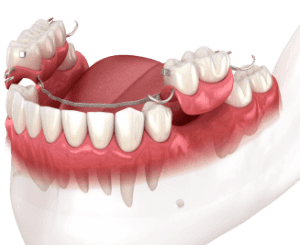
Mechanical injuries and poor-quality prosthetics – chafing from them or localized gum damage. Besides prosthetics, damage can be caused by a hard toothbrush or even certain solid foods.
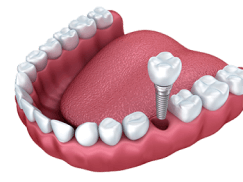
Dental procedures and their complications – tooth extraction, implant placement, and sometimes professional dental cleaning when performed incorrectly can damage the periodontium (tissues surrounding the tooth).
Systemic factors – for example, hormonal imbalances, diabetes, vitamin and mineral deficiencies.
Symptoms and Types of Gum Pain
Pain associated with gum inflammation can be classified as:
Sharp pain – a signal of an abscess or an acute inflammatory process.
Aching pain – typically indicates chronic gum irritation.
Throbbing pain – a sign of infection or even pus in the periodontal tissues.
Burning pain – signals damage to either the gum mucosa or nerve endings, or sometimes indicates an allergy or fungal infection.
Symptoms typically associated with gum pain include:
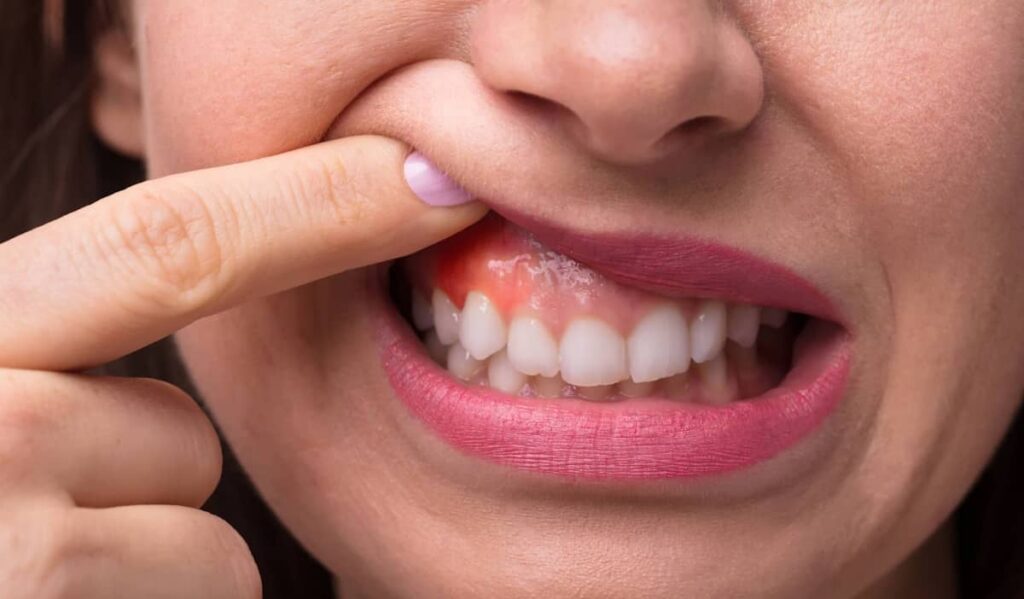
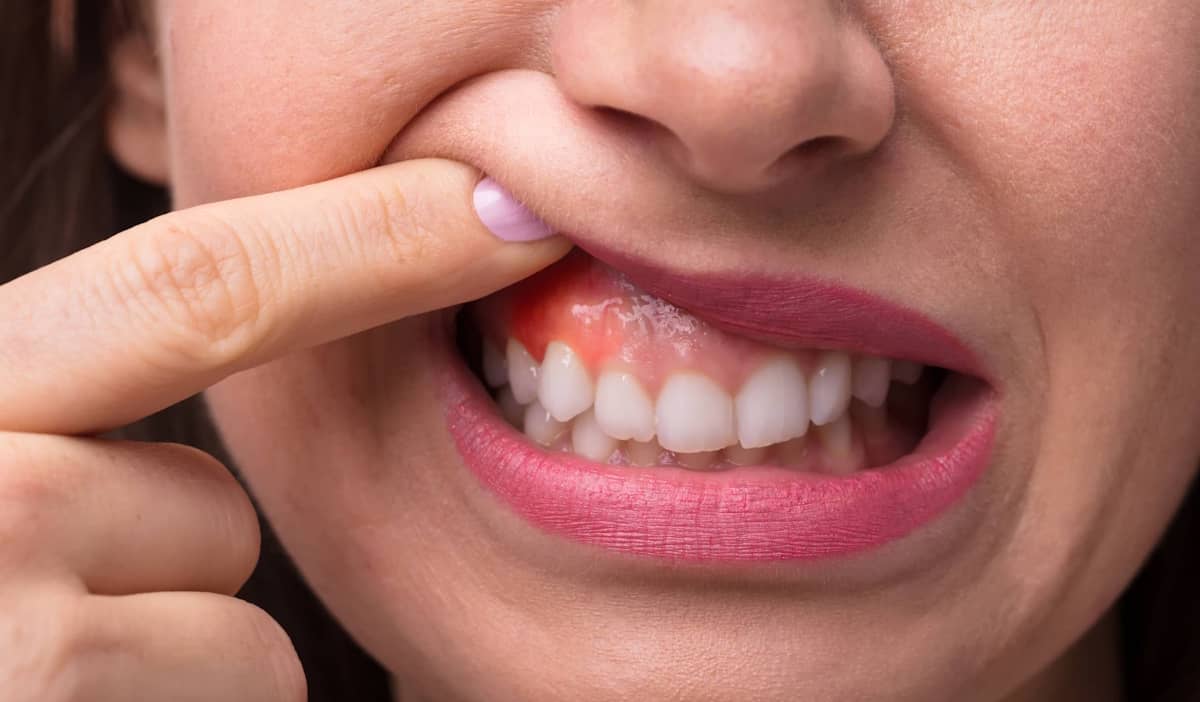
Visual signs – such as swollen gums, white spots, or redness of the gums (i.e., color changes).
Specifically, burning gums, as a separate symptom, most often signals an allergic reaction. Additionally, when gums burn, it may sometimes indicate a deficiency of B vitamins, presence of candida, excessive dry mouth, or stomatitis.
Bleeding gums, especially when brushing teeth. By the way, this is often the first sign of gingivitis onset.
There are symptoms when gum pain may indicate a quite serious pathology. Here’s a useful checklist of warning signs:
If there’s a fever – you should urgently see a doctor; it may be acute inflammation and infection.
If there’s pus – professional medical help is also necessary; trying to remove pus at home on your own can be dangerous. Pus may indicate a bacterial infection and abscess (localized significant accumulation of pus).
If pain persists – for example, more than 2-3 days, you should also see a dentist, as this may indicate a transition to chronic inflammation.
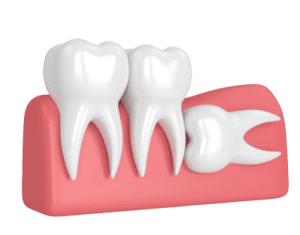
Additionally, it’s useful to know about more localized symptoms. When gums are swollen between front teeth, this indicates localized inflammation of the interdental papilla. It serves as a protective space between teeth to prevent bacteria or food from getting stuck there. When gums hurt at the very back, this indicates that there’s likely inflammation around a wisdom tooth. Because this area is difficult to clean with a toothbrush, bacteria accumulate there even faster. When gums hurt where there are no teeth, this is a sign that there’s inflammation of the mucosa itself or there’s so-called residual periodontitis after root canal filling or incomplete root removal.
Gingivitis and Periodontitis: Main Gum Diseases
When talking about gum pain, the most common diseases that can cause it are gingivitis and periodontitis:
Gingivitis – this is superficial gum inflammation, meaning without bone involvement. Usually, it’s the initial stage of inflammatory diseases, which can then progress to periodontitis without treatment. Gingivitis involves inflammation of the gum margin itself – which is precisely why gums hurt directly near the tooth. Gingivitis also presents symptoms such as bleeding, gum redness, swelling, and sometimes bad breath.
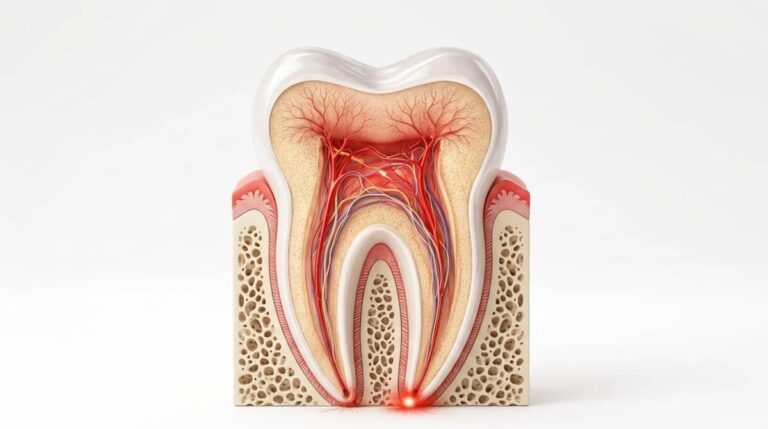
Periodontitis – this is already a deeper lesion of the tissues that hold the tooth (periodontium). Such gum problems typically develop as a complication after gingivitis. Characteristic symptoms of periodontitis include the formation of gum pockets, when gums seemingly pull away from teeth. Bacteria accumulate in them. Other symptoms include tooth mobility and pus. Without treatment, you can lose the tooth completely.
The main differences between gingivitis and periodontitis are that the former can still be completely cured, while the latter already directly affects the bone. Periodontitis, unlike gingivitis, is a chronic process that destroys the tooth’s support. But it shouldn’t be confused with periodontosis, for example. Because periodontosis is a slow destruction of these tissues around the tooth, but it’s non-inflammatory and without pain and pus.
Overall, it’s worth noting that dental plaque is the main root cause of many gum problems. But pain and inflammation of the periodontium are also caused by infectious lesions.
Stomatitis and Other Oral Cavity Infections
Various common infectious lesions of the periodontium have their own different symptomatic manifestations, besides pain. Among them:
Stomatitis – this is when the oral mucous membrane is inflamed, but specifically it can be:
Aphthous – with ulcers on the gums.
Herpetic – with small herpetic blisters on the gums and cheeks.
Candidal – with white, cheese-like plaque also on the gums and cheeks.
White gums – in adults and children, this can be a sign of many things, both infectious candidiasis again and non-infectious leukoplakia, for example. Leukoplakia is chronic tissue irritation that provokes white dense spots on the gums.
Bacterial infections – usually caused by purulent processes and often involve bad breath. Among them are alveolitis (inflammation of the socket after tooth extraction) or periodontitis (inflammation of periapical tissues after poor canal treatment).
The difference between infectious lesions and periodontal diseases is that infections are more acute and localized. While periodontal conditions are characterized by a slow course and chronic state.
What to Do if Gums Hurt: Action Algorithm
Besides understanding the symptoms, it’s also important to know what to do when gums hurt at home. After all, this can prevent the development of many complications before seeing a doctor.
So, if gums hurt, what to do at home – action algorithm:
First Aid for Acute Pain
The main things here are antiseptic rinsing and pain relief. More specifically:
First, it’s important to make a general assessment of the urgency of help. If the pain isn’t severe and there’s no swelling, you can rinse the oral cavity with an antiseptic solution and take a painkiller if needed. If the pain is significant and there’s already swelling or redness – you should get to a doctor as soon as possible, and until then, also rinse, take painkillers, and possibly apply a compress externally, but only a cold one.
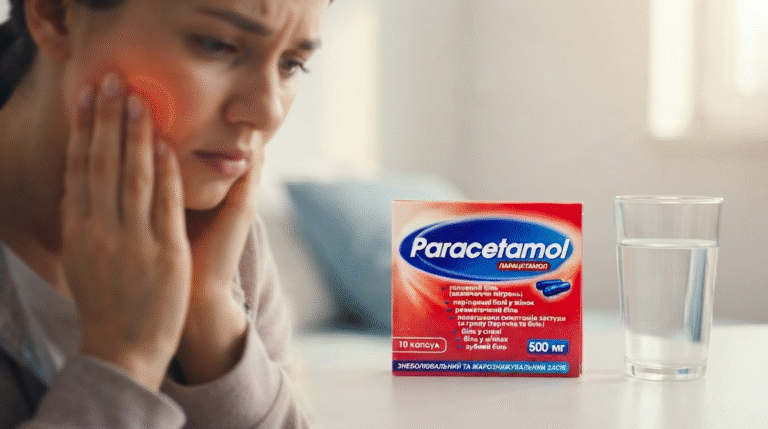
Taking painkillers – any of them should only be taken short-term. Common ones are usually ibuprofen or acetaminophen.
Restrictions on such actions as heating, self-incision of an abscess, pressing on it. All of this can only lead to complications.
When Urgent Dental Care Is Needed
This is usually the case if gums are red and hurt quite severely or pus has even appeared. Also, if swelling spreads to the face and there’s a fever – this is also a signal that help is urgently needed. And before visiting the doctor, it’s important to:
Not take any antibiotics on your own.
Not traumatize the affected area (either brush teeth very carefully or just rinse with an antiseptic).
Not touch the affected area with your hands, don’t press on the gums and cheek.
Not eat solid food and if possible, limit food intake altogether until the acute condition passes.
What to Rinse Your Mouth With for Gum Pain
Speaking in more detail about what to rinse your mouth with when gums hurt, we’ll note the most common options. Among them:
Pharmacy Antiseptic Products
More powerful and sometimes require “preparation” (for example, dilution with water). They can destroy bacteria, viruses, and fungi, especially with regular use (course up to 5-7 days). Specifically:
Furacilin – dissolve a tablet in a dosage of 0.02 mg with 100 ml of hot water, and rinse with a solution at room temperature, 3-4 times a day.
Chlorhexidine – no dilution needed, it’s ready for rinsing. Should be taken in a dosage of 0.05%. Rinse 2-3 times a day for literally up to 30 seconds holding in the mouth.
Miramistin – also ready for rinsing in a dosage of 0.01%. Use the same way – 30 seconds in the mouth, 2-3 times a day.
Stomatofit and other ready-made products – herbal and milder. They’re usually ready to use, soothe and reduce inflammation, accelerate healing, but aren’t therapeutic.
Home Solutions
In the form of a baking soda-salt combination (half a teaspoon of each per 1 glass of warm water) or herbal decoctions (from calendula, chamomile, oak bark). They provide a mild but temporary anti-inflammatory effect, reduce swelling and pain.
With any rinsing when gums hurt, there’s still a proper technique and precautions. Therefore, the main thing here is to hold almost any rinse solution in your mouth for no more than 30 seconds, don’t swallow it (but spit it out), and also don’t drink or eat after this for about 20 minutes. The frequency and duration of the rinsing course is usually from 7 to a maximum of 10 days (but it’s better to coordinate this with a doctor). It’s also important not to mix similar-acting and similar-composition products together.
Anti-inflammatory Gels and Ointments for Gums
Specifically, gum pain, as well as their swelling, redness, and even gum recession (when they recede from the tooth, exposing the root) – all of this is also eliminated with special anti-inflammatory gels and ointments. The most commonly used are:
Metrogyl Denta – gel with antiseptic and antibacterial components. Prescribed for gingivitis and significant gum inflammation. Destroys bacteria and microbes, eliminates bleeding and inflammation. It’s recommended to apply 2-3 times a day in a thin layer after brushing teeth.
Cholisal – gel with an anesthetic component and anti-inflammatory. Indicated for gum inflammation and pain. Significantly relieves existing pain, removes burning gums, their redness, and heals quite quickly overall. Should be applied 2-3 times a day, even possible for severe pain.
Solcoseryl – ointment-paste with components that stimulate faster tissue regeneration. Prescribed for wounds and ulcers on the gums, for their irritation and recession. Heals and restores periodontal tissues, reduces pain. It’s recommended to apply 1-2 times a day in a thin layer after oral hygiene.
Kamistad – gel with analgesic, soothing, and anti-inflammatory components. Contains chamomile extract and lidocaine. Indicated for gum pain and inflammation. Quickly eliminates these symptoms and also generally soothes the mucosa. Should be applied up to 3 times a day after oral hygiene.
All anti-inflammatory gels and ointments for gums require proper application technique. The nuance here is to apply such preparations in a small amount and preferably with a clean cotton swab. The mucosa and gums should be relatively dry, meaning without food or drink residue. After application – it’s important not to rinse with anything and accordingly not to eat/drink for at least 20-30 minutes. As for the treatment course and frequency of use – it’s recommended to use all such gels or ointments for gum problems for no longer than 5-10 days and from 1 to 3 times a day. But still, it’s better specifically as prescribed by a dentist.
Professional Treatment at the Dentist
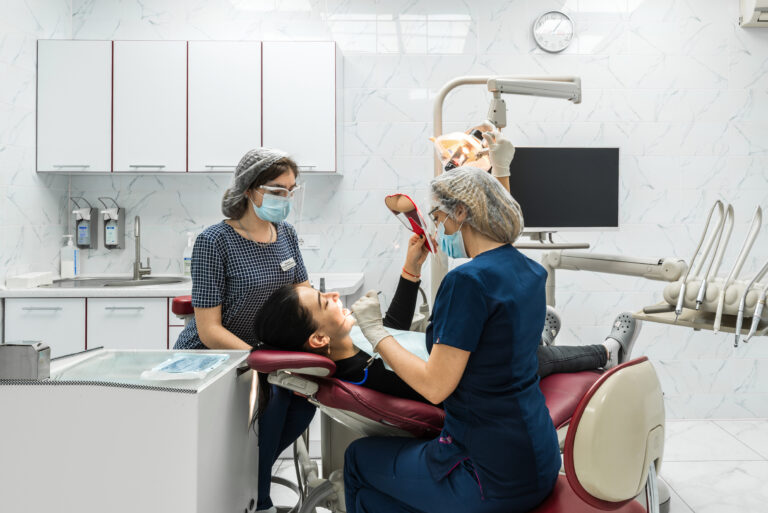
Besides self-help at home, what to do when gums hurt is definitely to see a dentist. Professional treatment at the dentist involves the following stages:
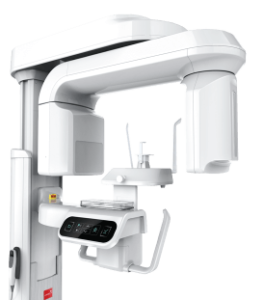
Diagnosis – the doctor conducts an examination and assessment of the gum condition and the oral cavity in general. Also, if necessary, they measure the depth of gum pockets and may take an X-ray to understand whether there’s destruction of bone tissue.
Professional teeth cleaning – a necessary measure to remove tartar and plaque. After all, they are the main cause of gum inflammation and other complications later.
If necessary, curettage of periodontal pockets – this is already quite deep cleaning of the gums, namely, gum pockets. Curettage is needed if the infection has spread significantly – to prevent periodontitis.
Medication therapy – involves various anti-inflammatory drugs, antibiotics, etc. Helps relieve acute inflammation and eliminate bacterial infection, and thus prevent complications.
In advanced cases, surgical methods – important for restoring the natural contour of the gums, for increasing the space between the cheek\lip, for eliminating significant inflammation with very deep gum pockets. Specifically, these are gingivectomy, vestibuloplasty, flap surgery. All of them help create better access for oral hygiene, remove existing inflammation and bacteria, and also prevent further destruction of the periodontium.
Also, as an option, physiotherapy and laser treatment – may be needed for chronic gum inflammation or when conservative treatment doesn’t help. With previous surgical intervention, these methods are only auxiliary for faster gum healing and reduction of residual symptoms.
In general, with any option for professional treatment at the dentist – the doctor makes a prognosis for relief times, based on how serious the gum inflammation was initially. Also, of course, the treatment duration is influenced by individual characteristics of each organism. Usually, noticeable relief occurs in about 5-7 days. But, for example, chronic forms of inflammation require several weeks.
Frequently Asked Questions About Gum Pain
Can gum pain go away on its own?
Gum pain can go away on its own if it’s very mild inflammation. With serious inflammation, treatment will be needed for final pain elimination.
How long does gingivitis take to treat?
Gingivitis takes approximately 1-2 weeks to treat. But provided there’s professional treatment by a doctor and adherence to proper hygiene at home. Poor oral hygiene can even negate the effect of therapy, and inflammation will return.
Can you get professional cleaning during inflammation?
You can and even should get professional cleaning during inflammation. It’s the first stage of treatment, as it removes all bacteria – the main cause of inflammation.
What toothpastes are better to use?
It’s better to use toothpastes with anti-inflammatory and antiseptic components. Especially if you’re prone to gum problems. It’s better to have a dentist individually select a toothpaste.
Are antibiotics needed for gum pain?
Antibiotics for gum pain will only be needed if a doctor prescribes them based on indications. Usually, this is for such signs of bacterial infection as pus, significant swelling, elevated body temperature.
How to distinguish tooth pain from gum pain?
Tooth pain can be distinguished from gum pain by the presence of pulsation and reaction to heat. If such sensations are present, it means it’s specifically tooth pain. With gum pain, there’s more often just bleeding and swelling.
Are gum diseases contagious?
Gum diseases are generally not contagious. But conditionally, bacterial infections that actually cause diseases and gum inflammation can be contagious through shared hygiene items or household objects.
Author: Dr. Iryna Viktorivna Sashchuk Therapeutic Dentist, Oral Surgeon, Periodontist
 (044) 394 90 94
  Holosiivska/Demiivska metro station

















Your email will not be published on the site.