What a Hollywood Smile Really Is – and Why It’s About More Than White Teeth
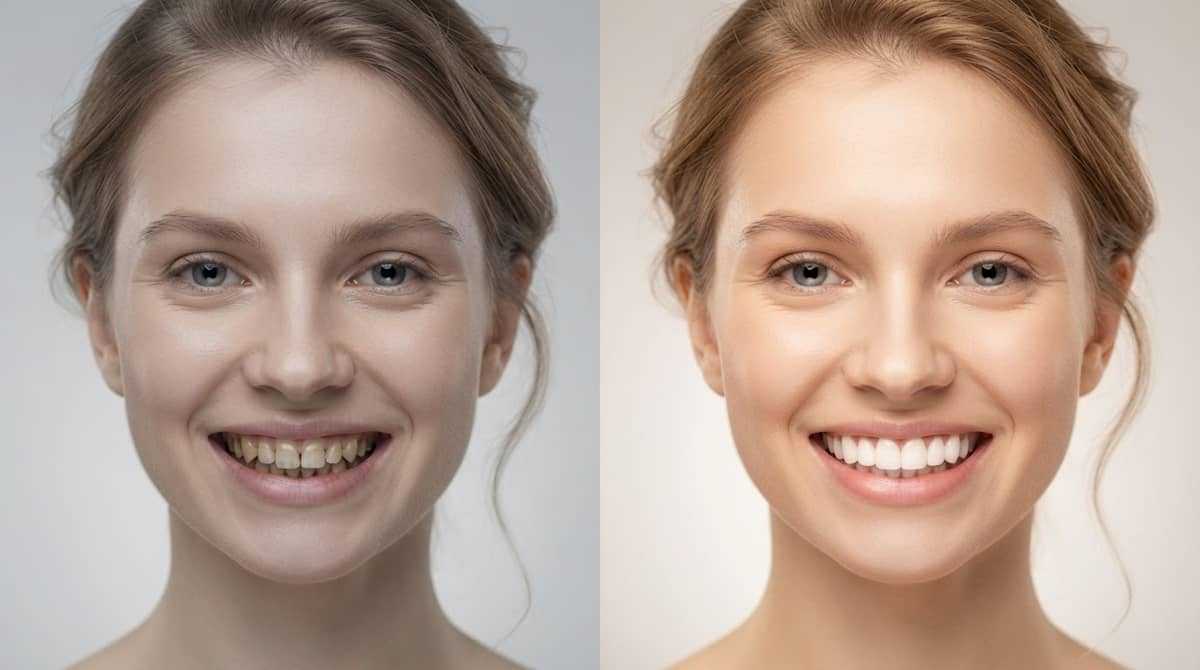
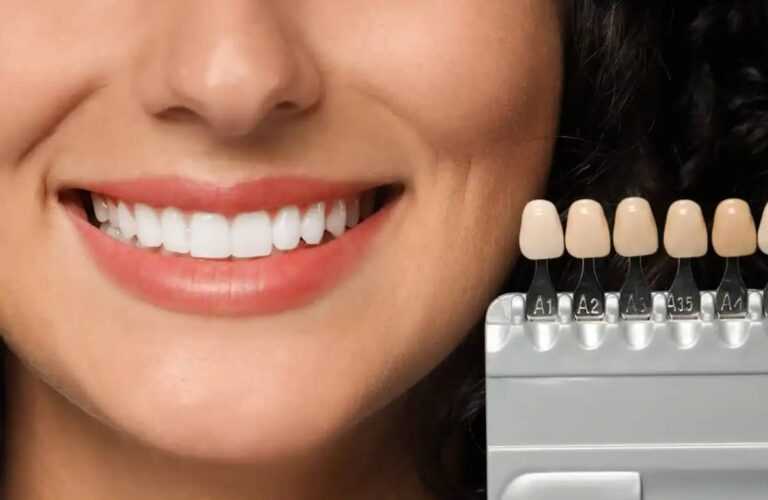
Most people today assume that a Hollywood smile means nothing more than very white teeth. But modern aesthetic dentistry takes a much broader view of the concept. True smile perfection – by widely accepted standards – is about harmony across the board: not just gleaming white enamel, but the balance of tooth shape, proportion, and symmetry, combined with enamel color, the gumline, and how everything fits the individual’s facial features.
Even the lightest possible shade of enamel won’t guarantee a beautiful result on its own. If the teeth are uneven in shape, vary in length, or are out of proportion, the aesthetic simply won’t be there. The most common complaints patients bring in are dark stains on the enamel, crooked teeth, worn edges, or general dissatisfaction with tooth color. That’s exactly why a professionally crafted Hollywood smile is always built individually – tailored precisely to the anatomical characteristics of each patient.
IMPORTANT TO UNDERSTAND: There is no universal template for beauty or the perfect smile. What looks natural and attractive on one person can look completely out of place on another. A dentist’s goal isn’t to produce the same “perfect teeth” for everyone – it’s to achieve the most natural result possible for the specific case and the specific person, taking into account their bite, their wishes, and all their individual characteristics.
What Procedures a Hollywood Smile May Involve
A Hollywood smile today can be created using a wide range of dental techniques – and it’s certainly not limited to veneers, as most people assume. The choice of procedures depends on a significant number of factors: the initial condition of the teeth, the health of the gums, the bite, and the patient’s aesthetic goals. A combination of different techniques is what allows the final result to look truly natural.
A Hollywood smile treatment plan may include any of the following:
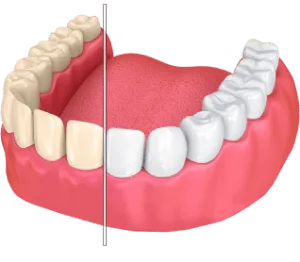
Professional teeth whitening – brightens the enamel and gives it a fresher, more polished look.
Composite artistic restoration – corrects minor defects in the shape, structure, and color of individual teeth.
Veneer placement – ceramic overlays that comprehensively transform the shape, color, and proportions of the teeth in the smile zone.
Lumineers – a variation of ultra-thin, minimally invasive ceramic overlays that improve dental aesthetics while preserving more natural tooth structure.
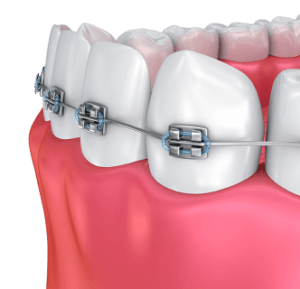
Orthodontic treatment with braces or aligners – straightens teeth and corrects the bite for a more harmonious smile.
Crown restoration – rebuilds the shape, chewing function, and appearance of severely damaged teeth (where most of the original tooth is missing).
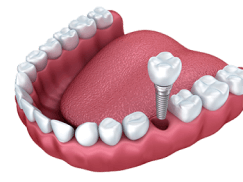
Dental implants (for the complete loss of one or more teeth) – restores the integrity of the dental arch and the natural beauty of the smile.
Gum contouring and reshaping – makes the gumline more harmonious and symmetrical.
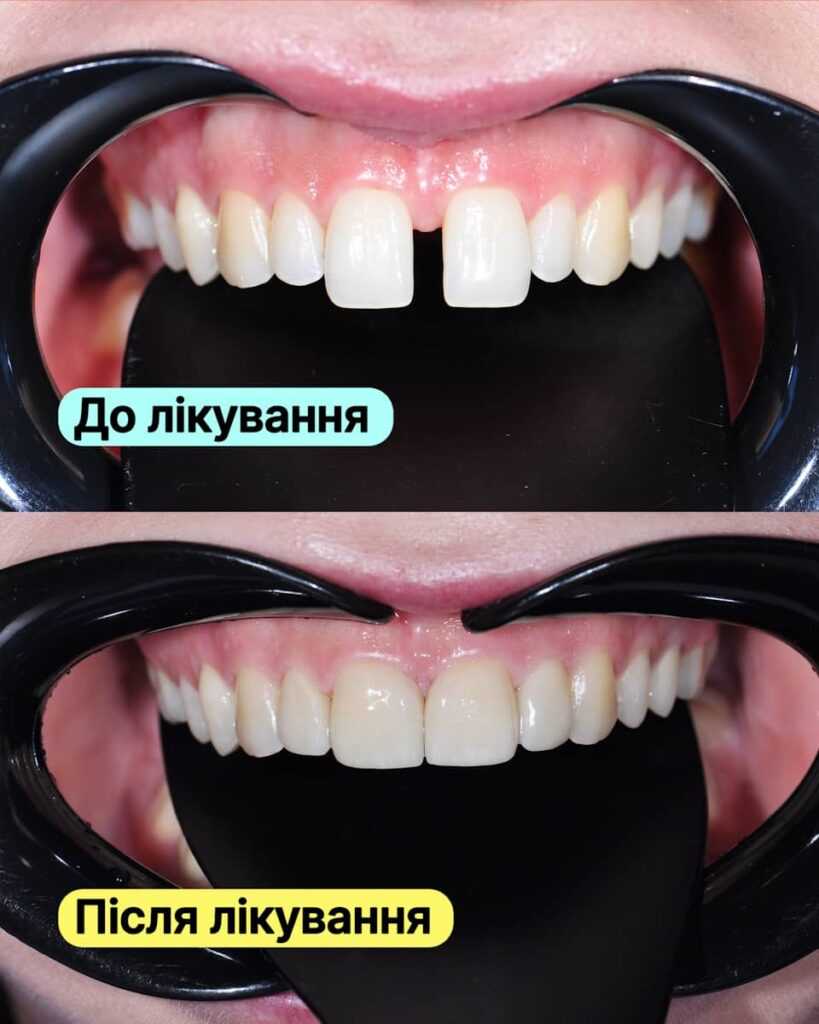
Patient’s Story 🦷 Aesthetic Smile Transformation with Veneers
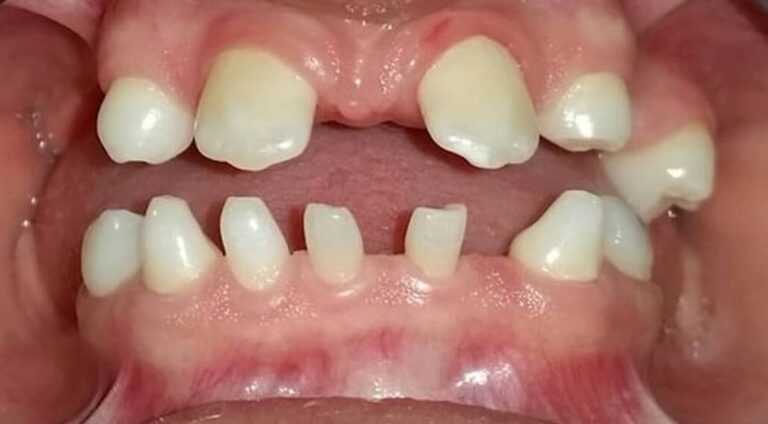
A 25-year-old patient came to the clinic with a complaint of a pronounced diastema (a gap between the front teeth) that affected the aesthetics of her smile and her self-confidence.
Based on the diagnosis and treatment planning, 4 E.max ceramic veneers were placed.
Why E.max?
natural translucency and color, as close as possible to natural enamel;
high strength;
durability;
excellent aesthetics in the smile zone.
As a result, it was possible to harmoniously close the diastema, preserve the natural appearance of the teeth, and create a beautiful, balanced smile 😊
Improving your smile’s aesthetics doesn’t always require extensive dental intervention. Sometimes less invasive approaches – such as whitening or restorative work (veneers, crowns, or composite bonding) – are all it takes.
In some cases, the teeth are well-positioned and well-shaped, but have simply lost their natural brightness over time. Professional whitening can address this completely and restore the smile’s appeal.
For minor chips, cracks, gaps between teeth, localized imperfections, or naturally occurring irregularities in tooth shape, composite restoration, veneers, or crowns are usually sufficient. The underlying causes of aesthetic concerns often include enamel staining, age-related wear, or older restorations that have darkened over time against the surrounding natural teeth.
When a Comprehensive Approach Is Needed
In some situations, achieving the desired smile requires a multi-step treatment plan – one procedure alone won’t get the job done. This is typically the case when there are significant bite issues, pronounced asymmetry in the dental arch, serious structural defects, or missing teeth.
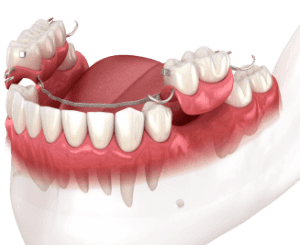
In these scenarios, the dentist develops a combined treatment plan that may include orthodontics (braces or aligners), prosthetics or implants, and – as the final stage – aesthetic restoration such as veneers. This comprehensive approach doesn’t just create beautiful teeth; it ensures they are functionally correct and harmonious for you specifically.
Hollywood Smile vs. Veneers: What’s the Difference?
These two terms are frequently confused, even though they are definitely not the same thing. The mix-up happens because veneers are a well-known tool used in creating a Hollywood smile. The word is everywhere, so it’s easy to assume veneers are the only – or at least the fastest – route. But that’s a misconception.
Let’s clear this up once and for all:
Veneers are thin ceramic or composite overlays bonded to the front surface of the teeth. Their purpose is to improve the shape, color, and overall appearance of the teeth in the smile zone.
A Hollywood smile, on the other hand, is the final aesthetic outcome – and it can be achieved in a variety of ways. Veneers are just one of the possible tools for getting there.
Why don’t all patients need veneers? If your natural teeth have good shape, proper alignment, and only minor aesthetic flaws, the desired result can sometimes be achieved through professional whitening or artistic restoration of individual teeth. Orthodontic treatment may also be needed in some cases, but once the bite is corrected, the smile often becomes nearly perfect on its own. And of course, everyone’s definition of “perfect” is different. The foundation of a beautiful smile remains healthy teeth and gums, a proper bite, and a consistently bright, even tooth color. Everything else is simply the individual method of achieving what we call a Hollywood smile.
How the Perfect Smile Is Created: From Consultation to Final Result
Your ideal smile isn’t created in a single visit. It’s a step-by-step process where each stage plays an important role in delivering the expected outcome.
A Hollywood smile treatment typically involves the following stages:
Initial dental consultation – assessment of the teeth and gums, and a discussion of the patient’s goals and wishes.
Comprehensive diagnostics – a thorough examination of the teeth, gums, and bite to determine whether any underlying issues need to be treated first.
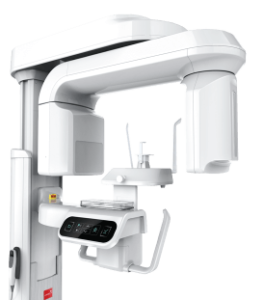
Photo analysis and digital scanning – creating a precise digital model of the teeth to plan the final result.
Smile design planning – digital modeling of how the smile will look, taking into account facial structure and patient preferences.
Final approval of tooth shape and color – confirming the look of the future smile before treatment begins.
Treatment execution – carrying out all planned procedures, from any necessary dental care and whitening through to aesthetic corrections.
Placement of restorations or prosthetic structures – fitting veneers, crowns, or any other required dental work.
Follow-up check-ups and the adaptation phase – the dentist reviews the results and supports the patient as they adjust to their new smile.
Diagnostics and Planning
It’s worth emphasizing that diagnostics and planning are critically important stages – they are the true foundation of a beautiful smile. At this point, the dentist analyzes every detail and, before any treatment begins, shows the patient what the outcome will look like. Taking into account the condition of the teeth and gums, the specifics of the bite, facial symmetry, and the natural proportions of the patient’s existing smile, the dentist models the future result. Digital smile modeling allows the patient to evaluate in advance whether they like the projected color and shape of their new teeth, whether it meets their expectations, or whether adjustments are needed before treatment starts.
Final Implementation and Adaptation
This final stage is equally important. Following the main course of treatment, veneers or crowns are placed – and aesthetic restoration may also be performed – all depending on the individually agreed treatment plan.
In the first few days after all dental work is complete, patients typically need some time to adjust – both to the new physical sensations and to the new look. This is a completely normal part of the process; it simply takes time to get used to seeing a new smile in the mirror. In some cases, to protect the final result, the dentist may recommend a nightguard for bruxism, a gentle diet immediately after procedures, and mindful management of chewing load. Proper at-home care, regular professional cleaning, and scheduled check-ups are also essential – all of this helps extend the longevity of the teeth and preserve the new aesthetic result.
What Determines the Cost of a Hollywood Smile
The cost of a Hollywood smile depends on a range of factors – and it’s important to understand why no universal price exists. As noted above, a Hollywood smile is not a one-size-fits-all package. It is careful, individualized work aimed at a result that is right for you.
The final cost may depend on:
The initial condition of the teeth and gums.
The number of teeth in the smile zone.
Whether preparatory treatment is needed – the materials and procedures involved.
The scope and type of orthodontic treatment, if required.
The type of restoration and the materials selected (composite, veneers, crowns, etc.).
The overall complexity of the individual case and the patient’s specific goals.
At Med-Deo Clinic, following a comprehensive diagnostic evaluation and consultation, you will receive an accurate cost breakdown for your procedure. Our primary goal here is not simply to improve the appearance of your teeth – it is to create a beautiful, long-lasting smile that is genuinely natural and harmonious for you.
FAQ
What is a Hollywood smile in simple terms?
Simply put, it’s an aesthetically harmonious smile with the right tooth shape, the right color, and proportions tailored to your specific facial features.
Does a Hollywood smile always mean veneers?
No – a Hollywood smile doesn’t always involve veneers. Veneers are just one of the ways to achieve it. In many cases, other procedures are sufficient, without any ceramic overlays at all – especially if the patient’s natural teeth were in reasonably good condition to begin with.
Can you get a perfect smile without grinding down your teeth?
Yes, it’s possible to achieve a beautiful smile without any tooth reduction. For example, if whitening and bite correction are enough to reach the desired result, no grinding is needed. It all depends on the specific clinical situation.
How many teeth are typically included in the smile zone?
The smile zone typically includes the upper 8-10 teeth that are visible when you smile. However, this number can vary from person to person.
The author of this article is Serhiy Benedys, a prosthodontist, general dentist, and oral surgeon.
 (044) 394 90 94
  Holosiivska/Demiivska metro station




















Your email will not be published on the site.