Dental implants are a reliable, highly predictable way to replace missing teeth. For the vast majority of patients, implants integrate successfully, hold up well under the demands of everyday chewing, and last for many years. That said, it’s important to be honest: as with any surgical procedure, complications can occasionally arise.
What Is Implant Rejection: The Basics
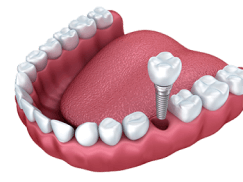
Implant rejection is a condition in which a dental implant fails to integrate with the surrounding bone – or loses its hold in the bone over time. Under normal circumstances, a process called osseointegration takes place after placement: the bone gradually fuses with the implant surface, creating a secure, lasting bond.
When osseointegration is disrupted, the implant may remain unstable. Inflammation can develop around it, the surrounding bone tissue gradually loses volume, and the implant itself may begin to shift.
That said, not every instance of pain following dental implant surgery means the implant is failing. In the first few days after placement, the body naturally responds to the procedure – some swelling, discomfort, sensitivity, and minor bleeding are all to be expected. This is perfectly normal, provided the symptoms gradually subside.
When implant rejection is occurring, symptoms don’t always appear right away. In some cases, there’s only mild discomfort when chewing at first, with swelling, bleeding, or implant mobility developing later.
Implant Rejection vs. Peri-Implantitis – Are They the Same Thing?
No – these are two distinct conditions, though they can be related.
Peri-implantitis is an inflammatory condition affecting the soft and hard tissues surrounding an implant. Early signs may include redness, swelling, gum bleeding, or general discomfort. If left untreated, the inflammation can spread deeper and lead to bone loss around the implant.
Implant rejection, on the other hand, refers specifically to a situation in which the implant loses its stability or fails to integrate with the bone in the first place. Peri-implantitis can lead to rejection, but not every instance of inflammation will ultimately result in implant loss.
This is why any sign of inflammation after implant placement warrants a visit to your dentist. Caught early, the process can often be halted before it causes serious damage.
How to Tell If an Implant Has Failed: Signs of Rejection
Implant rejection can present in different ways. Sometimes symptoms appear almost immediately after surgery; in other cases, they don’t show up until months or even years after the crown has been placed. So how do you know if your implant isn’t integrating properly?
When it comes to implant rejection, spotting the warning signs early is critical:
Implant mobility – a dental implant should never feel loose. If it moves, this may indicate that it hasn’t fused with the bone, or that it has lost its bony support.
Swelling that persists beyond three weeks – some swelling after surgery is expected, but it should gradually go down over time.
Pus or discharge – a clear sign of infection that requires prompt treatment.
Pain when chewing or applying pressure – particularly if the pain isn’t fading but getting worse.
Redness, bruising, or bleeding gums – these changes may point to inflammation around the implant site.
An unpleasant taste or odor in the mouth – a common sign of bacterial infection.
Fever – especially when accompanied by pain, swelling, or discharge.
Numbness in the lip, chin, or gums – a serious symptom that may indicate nerve irritation or damage.
A particular red flag is when everything seemed to be healing well and then pain, swelling, bleeding, or discomfort when chewing suddenly returns. In that situation, it’s best not to wait and hope it resolves on its own.
Normal Healing vs. Rejection: How to Tell the Difference
After implant placement, the surrounding tissues need time to heal. Some degree of discomfort in the first few days is entirely expected and doesn’t necessarily mean something has gone wrong.
During the first week, the following are generally considered normal:
Moderate pain following dental implant surgery
Swelling of the gums or cheek
Minor bleeding in the first few hours
Sensitivity to touch
Discomfort when chewing or opening the mouth wide
A slight temperature elevation on the first day
Under normal circumstances, these symptoms ease gradually. Patients start to feel better, swelling subsides, pain is managed with prescribed medications, and the gum tissue heals quietly.
When Rejection Occurs: Early, Middle, and Late Stages
Implant rejection can occur at various points in time – it isn’t always a problem that surfaces in the days immediately following surgery. In some cases, an implant functions well at first, and complications only emerge much later.
The early stage covers the first few weeks after implant placement. It is most often linked to a failure of normal osseointegration. Contributing factors may include infection, insufficient bone quality, excessive loading, impaired healing, or an individual response from the patient’s immune system.
The middle stage may appear one to two years after the prosthetic restoration is completed. It is frequently triggered by chronic inflammation around the implant, inadequate oral hygiene, overloading of the implant structure, bite problems, or a lack of regular follow-up appointments.
The late stage occurs three to five or more years after placement. In these cases, the implant may cause no trouble for a long time before inflammation gradually develops around it, or the surrounding bone tissue slowly begins to diminish.
This is precisely why caring for a dental implant doesn’t end once the crown is placed. Even when nothing hurts, regular check-ups, professional cleaning, and monitoring of the tissue around the implant remain essential.
Why Rejection Happens: Causes Related to Treatment, the Patient, and Overall Health
Rejection rarely has a single cause. More often, it results from a combination of factors: bone quality, general health, oral hygiene habits, the load placed on the implant, and the specifics of the treatment itself.
Causes related to treatment:
Failure to follow proper surgical protocol
Excessive pressure on the bone during implant placement
An ill-suited implant system
Insufficient pre-operative diagnostic workup
Placing an implant where bone volume or density is inadequate
Poor distribution of chewing forces after prosthetic restoration
Causes related to the patient:
Smoking
Inadequate oral hygiene
Not following post-operative instructions
Loading the implant too early
Trauma to the implant site
Missing scheduled follow-up appointments
Chewing hard foods during the healing period
Causes related to overall health:
Low bone density or insufficient bone volume
Diabetes, particularly when poorly controlled
Autoimmune conditions
Hormonal imbalances
Metabolic disorders
Chronic inflammatory conditions
An individual reaction to the implant material – though this is rare
This section isn’t meant to assign blame. Its purpose is to illustrate why thorough pre-operative diagnostics, an open and honest conversation with your dentist, and careful adherence to post-operative instructions all matter so much.
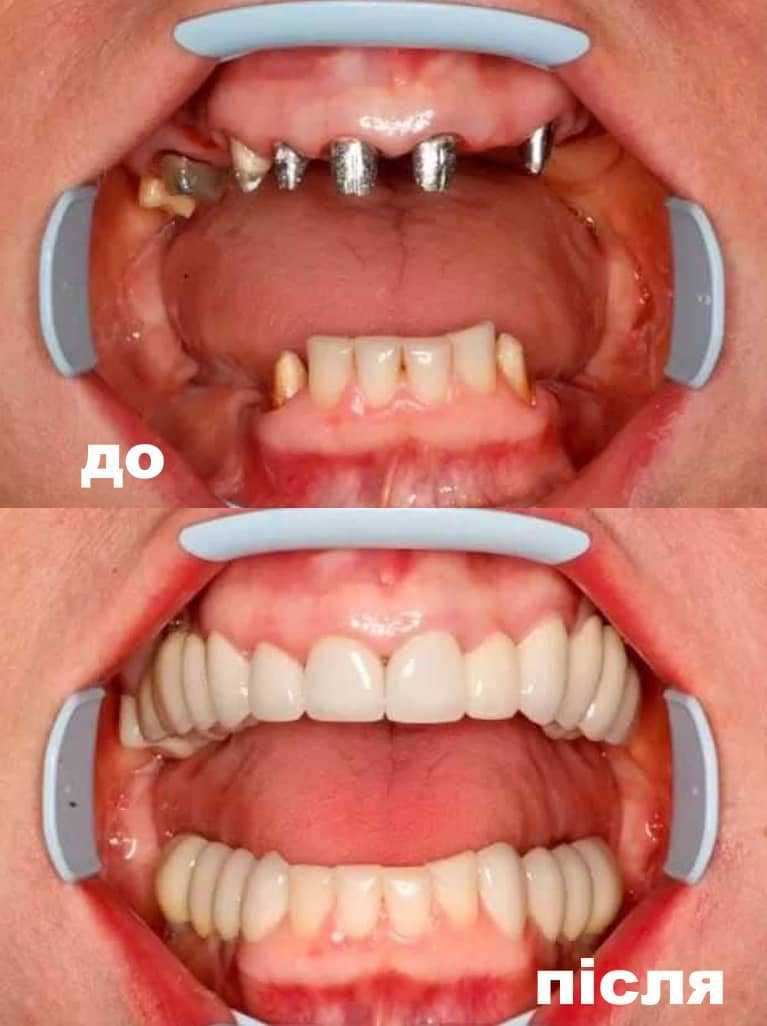
Patient’s Story 🦷 Dental Implantation Using the All-on-6 Method
A 50-year-old patient came to the clinic with complaints of significant destruction and missing teeth in the upper jaw, which affected both chewing function and the aesthetics of the smile.
📸 In the photo:
Before treatment — significant tooth loss and destruction of the upper jaw dental arch;
After treatment — full restoration of the dental arch with a permanent prosthetic конструкtion.
The treatment was carried out in two stages:
During the first stage, implantation under sedation was performed with placement of 6 Osstem implants in the upper jaw with immediate loading.
After 6 months, permanent prosthetics were performed using the All-on-6 method on a titanium bar.
As a result, the patient received a fully restored dental arch, stable support for chewing, and a natural smile aesthetic ✨
Not every risk factor can be eliminated entirely, but patients genuinely have a great deal of influence over whether their implant integrates smoothly and lasts for years to come.
The single most important habit is consistent, thorough daily oral hygiene. Brush twice a day, and pay particular attention to cleaning around the implant site. Once your dentist gives the go-ahead, a water flosser can be a valuable tool for removing food debris and plaque from areas that are difficult to reach with a toothbrush.
Beyond that, it’s important to:
Avoid smoking for at least two to three months after surgery – ideally, quit altogether
Avoid chewing hard foods on the side of the implant while it’s healing
Keep your hands, tongue, and any foreign objects away from the surgical site
Take all prescribed medications exactly as directed
Attend every scheduled follow-up appointment
Tell your dentist about all chronic conditions and medications before the procedure
During the first year after implant placement, aim to visit your dentist at least three times, or follow the individualized schedule your provider recommends. Regular check-ups and professional cleanings should continue long after that – they make it possible to catch problems early, before they become serious.
Implant Rejection at Med-Deo: Our Approach
At Med-Deo, the implantation process begins not with surgery, but with diagnostics and treatment planning. Your dentist will assess bone quality and volume, gum health, your bite, the overall clinical picture, and any potential risk factors – all to determine the safest, most predictable path forward.
After the implant is placed, patients receive clear, practical guidance on oral care, diet, activity restrictions, and follow-up scheduling. We monitor the healing process closely and take note even of symptoms that patients themselves might consider minor.
We work with high-quality materials and well-established implant systems. All procedures are carried out by experienced implantologists who consider not just the condition of your teeth, but your overall health.
Experiencing discomfort after implant surgery? Call us or submit a request – we’ll help you determine whether what you’re feeling is a normal part of healing or a symptom that needs attention.
Frequently Asked Questions (FAQ)
How can I tell if my implant hasn’t integrated?
Possible signs of implant failure include mobility of the implant, pain that isn’t improving or is getting worse, prolonged swelling lasting more than three weeks, discharge or pus, bad breath, bleeding, or a change in the color of the gum tissue.
How long does implant integration take?
On average, osseointegration takes between two and six months.
Does a failing implant cause pain?
Pain can be one of the symptoms of implant rejection – particularly if it intensifies over time, doesn’t subside, or is accompanied by swelling, bleeding, an unpleasant odor, or discharge from the gums.
Can an implant be saved if there’s inflammation?
In some cases, yes – provided you see your dentist early in the process.
Is it possible to have a second implant placed after rejection?
In many cases, re-implantation after rejection is absolutely possible.
What is the main cause of implant rejection?
There is no single overriding cause. The risk of complications is most commonly elevated by infection, smoking, poor oral hygiene, failure to follow post-operative instructions, overloading the implant, insufficient bone volume or quality, and poorly controlled chronic health conditions.
The information in this article is intended for general informational purposes only and is not a substitute for a consultation with a dental implantologist. If you notice any concerning symptoms, please seek professional advice.
The author of this article is Mykhailo Yefimov, a dental surgeon and implantologist.
 (044) 394 90 94
  Holosiivska/Demiivska metro station


















Your email will not be published on the site.