Special offer! Comprehensive professional teeth cleaning for only 1699 UAH.
Special offer! Comprehensive professional teeth cleaning for only 1699 UAH.
Special offer! Comprehensive professional teeth cleaning for only 1699 UAH.
Special offer! Comprehensive professional teeth cleaning for only 1699 UAH.
Special offer! Comprehensive professional teeth cleaning for only 1699 UAH.
Special offer! Comprehensive professional teeth cleaning for only 1699 UAH.
Special offer! Comprehensive professional teeth cleaning for only 1699 UAH.
Special offer! Comprehensive professional teeth cleaning for only 1699 UAH.
Special offer! Comprehensive professional teeth cleaning for only 1699 UAH.
Special offer! Comprehensive professional teeth cleaning for only 1699 UAH.
Sign up
 (044) 394 90 94
  Holosiivska/Demiivska metro station
Doctors


 Prices
Blog
Contacts
пр.Лобановського, 130, Київ, Україна
Temporarily closed
Opening soon
78A, Irpinska St., Kyiv, Ukraine
Temporarily closed
Opening soon
32A, Heroiv Dnipra St., Kyiv, Ukraine
Temporarily closed
Opening soon
9B, Yevhena Chykalenko St. (Pushkinska), Kyiv, Ukraine
Temporarily closed
Opening soon
Sign up
En
(044) 394 90 94
Back
Dentistry
General Dentistry
Dental surgery
Dental Implants
Maxillofacial Surgery
Dental prosthetics
Cosmetic dentistry
Professional Dental Hygiene

Periodontics
Orthodontic dentistry
Gnathology & TMJ Therapy

Pediatric Dentistry
Dental X-Rays
Back
Orthodontic Center
Orthodontic dentistry
Gnathology & TMJ Therapy
Back
Prosthodontic Center
Dental prosthetics
Back
MED-DEO Center for Maxillofacial Surgery & Facial Plastics
Maxillofacial Surgery
Plastic surgery
Back
Surgical Dental Center
Dental surgery
Dental Implants
Search on the site


Popular requests
Teeth whitening
Treatment of caries
Wisdom tooth extraction
Bracket system
Dental veneers
Tooth restoration
Pediatric dentist
Consultation with a dentist-therapist
Search results by: «».
Unfortunately, no results were found for your search: “Pediatric Endocrinologist”, nothing was found.
You may find these links useful:
Clinics "MED-DEO"
пр.Лобановського, 130, Київ, Україна
Temporarily closed
Opening soon
78A, Irpinska St., Kyiv, Ukraine
Temporarily closed
Opening soon
32A, Heroiv Dnipra St., Kyiv, Ukraine
Temporarily closed
Opening soon
9B, Yevhena Chykalenko St. (Pushkinska), Kyiv, Ukraine
Temporarily closed
Opening soon
Services
Dentistry Orthodontic Center Prosthodontic Center MED-DEO Center for Maxillofacial Surgery & Facial Plastics Surgical Dental CenterGeneral Dentistry
Dental surgery
Dental Implants
Maxillofacial Surgery
Dental prosthetics
Cosmetic dentistry
Professional Dental Hygiene
Periodontics
Orthodontic dentistry
Gnathology & TMJ Therapy
Pediatric Dentistry
Dental X-Rays
Orthodontic dentistry
Gnathology & TMJ Therapy
Dental prosthetics
Maxillofacial Surgery
Dental surgery
Dental Implants
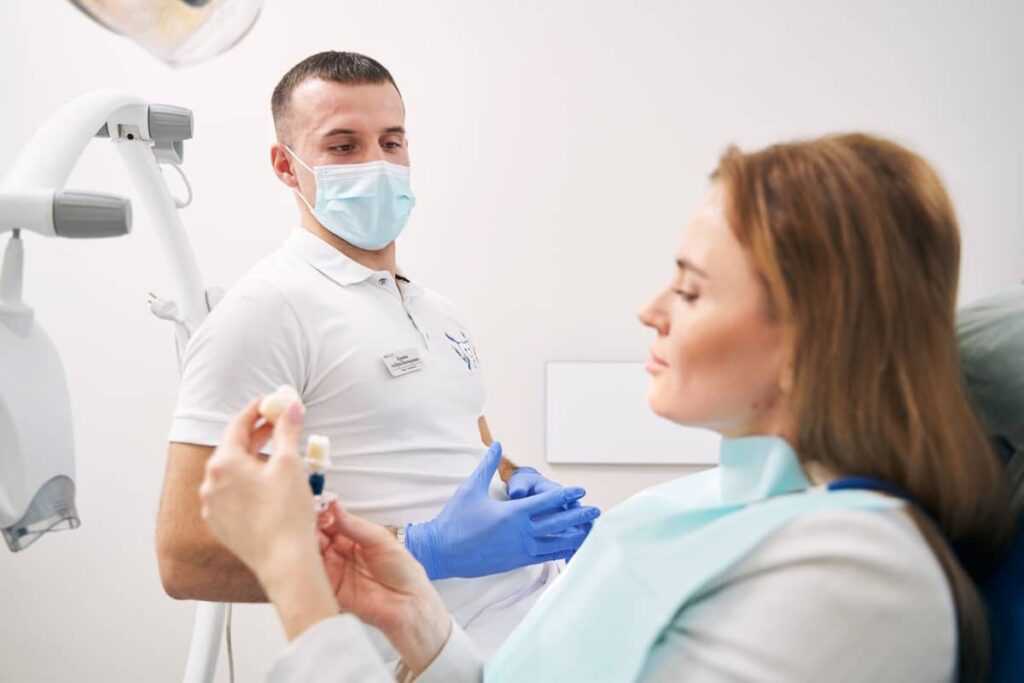

A prosthodontist is a dentist who restores severely damaged teeth and replaces missing ones, rebuilding their shape, function, and proper alignment within the dental arch. The main goal is to bring back normal chewing function and a natural, attractive smile. To do this, a prosthodontist uses crowns, inlays, bridges, dentures, and implant-supported restorations.
This is a separate specialty because losing or badly damaging teeth takes more than treating the tooth itself. A prosthodontist restores teeth or the entire dental arch along with the functions tied to them. That means working with cosmetic defects as well as with the bite and the way the teeth meet. When needed, they can also assess the condition of the temporomandibular joint (TMJ) and bring in other specialists for comprehensive care, such as a general dentist, an implant surgeon, or an orthodontist.
What Is Prosthodontics?
Prosthodontics is a branch of dentistry distinct from general (restorative) dentistry and oral surgery. Its main task is to fully restore teeth and the function of the entire masticatory system. A general dentist mostly treats dental diseases, while a surgeon performs surgical procedures. A prosthodontist, by contrast, restores what a tooth has already lost to decay, injury, or tissue breakdown from other causes.
It’s worth understanding that a prosthodontist doesn’t just deal with aesthetics or dentures. They carefully evaluate the patient’s entire dental arch, bite, chewing load, and anatomical proportions. Based on that, they choose a restoration method, which can range from a small inlay to a full-arch reconstruction. It all depends on the individual case and the patient’s needs.
What Does a Prosthodontist Do?
A prosthodontist’s work begins with diagnosis and a consultation. Such a specialist is more than a denture maker: they are a doctor who handles many tasks. Starting with an assessment of the teeth and gums, the prosthodontist analyzes the patient’s bite and how both jaws function, and orders additional tests if needed. They define the specifications of the future restoration (crowns or bridges, for example), which a dental technician then fabricates in a dental laboratory.
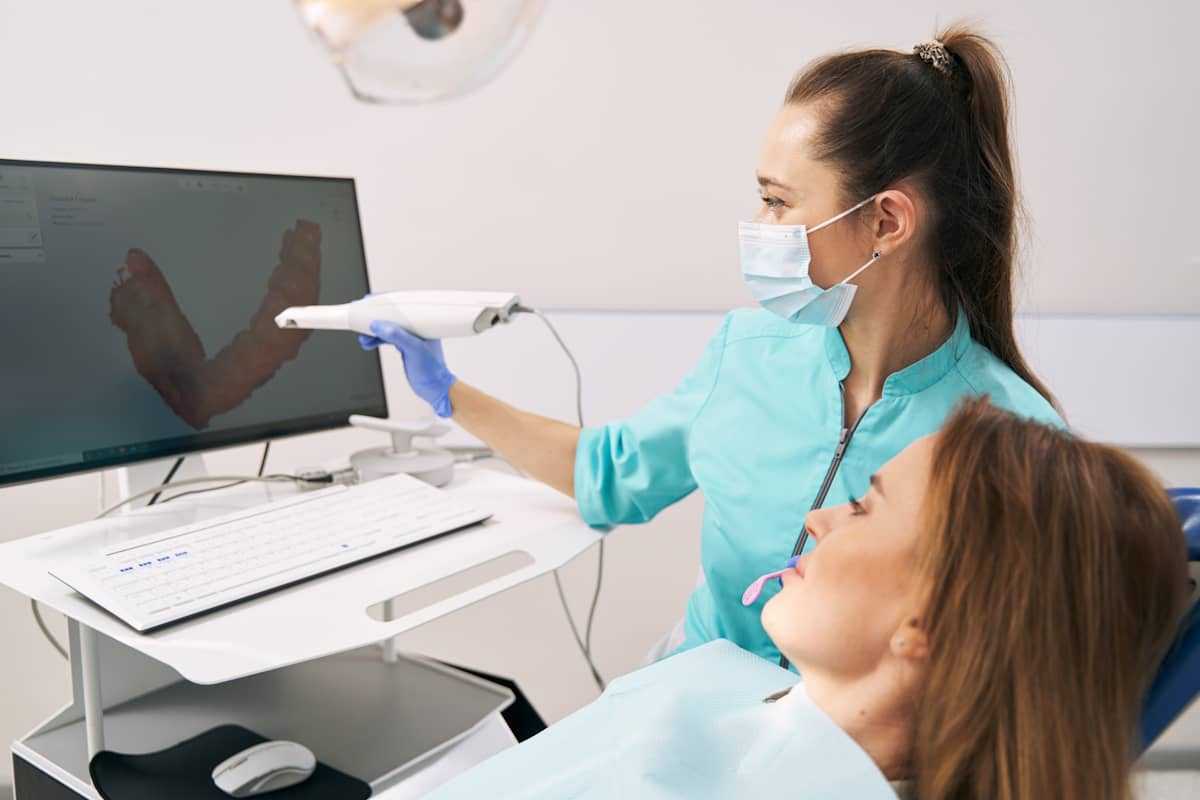
Overall, a prosthodontist plans the restoration of the dental arch so that the finished prosthetic work is functional, stable, and suited to the individual patient. The aim is to give people back a comfortable life, so they can chew, speak, and smile with ease.
A prosthodontist’s responsibilities include the following:
- Diagnosis – assessing the condition of the masticatory system and any existing restorations.
- Treatment planning – choosing the best approach and defining every stage of treatment.
- Restoring destroyed or severely damaged teeth – using inlays, crowns, and other restorations.
- Tooth replacement – replacing missing teeth with bridges, removable dentures, and other prostheses.
- Restoring chewing function and a proper bite – re-establishing correct contact between the teeth and the way they close together.
- Cosmetic restoration – recreating the shape, color, and proportions of the teeth to preserve a natural look.
- Implant-supported restorations – placing prostheses on previously placed implants to replace a missing tooth. This is a team effort with an implant surgeon.
- Replacing old restorations – evaluating them and, if necessary, replacing them with new ones.
How a Prosthodontist Differs from a General Dentist and an Oral Surgeon
Patients often don’t know which doctor to book with. In that case, it helps to go by the nature of the problem. A prosthodontist, for example, restores the shape and function of teeth and the dental arch. You’d see one when a tooth is badly damaged or missing altogether, or when the contact between your teeth has changed.
A general dentist, unlike a prosthodontist, treats tooth diseases: cavities, pulpitis, periodontitis, and the like. By placing fillings, they help preserve as much of the natural tooth structure as possible.
An oral surgeon, in turn, handles surgical treatment when it’s needed, such as placing implants. After that, the prosthodontist attaches the crown to the implant. A surgeon can also perform tooth extractions, gum surgery, and other necessary procedures in the mouth.
In complex cases, a prosthodontist works alongside other specialists, including a general dentist, a surgeon, an orthodontist, or a gnathologist (a bite and jaw-joint specialist). This approach matters because it allows for a comprehensive reconstruction of the entire dental arch rather than the replacement of just a couple of teeth.
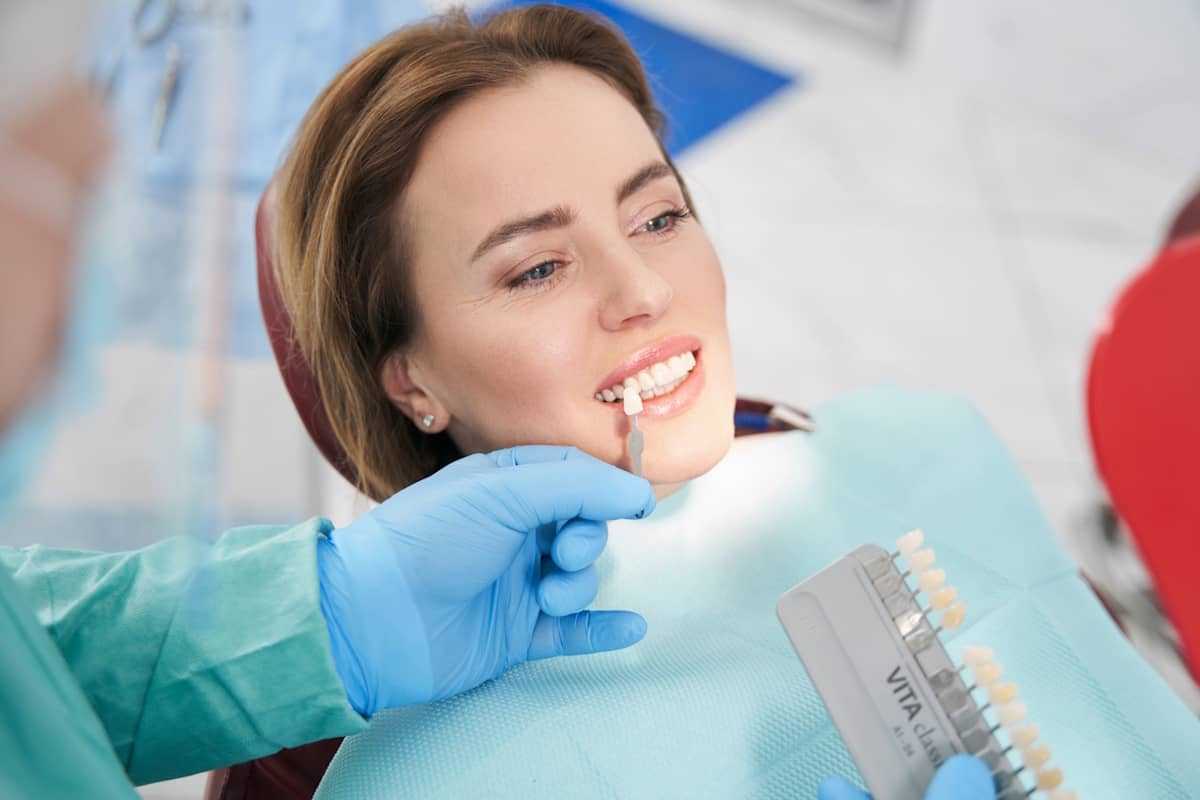
When to See a Prosthodontist: Indications
You should book a consultation with a prosthodontist in the following situations:
- You’re missing one or more teeth.
- A tooth is badly damaged and an ordinary filling isn’t enough.
- An old crown, bridge, or denture is damaged and no longer works well.
- Your dental arch is visibly misaligned.
- Your teeth have become loose, often because of periodontitis.
- Your teeth show marked wear, particularly from bruxism.
- You’re unhappy with the look of your smile, either overall or because of particular teeth.
- You’re planning implant-supported restorations.
IMPORTANT: You don’t have to wait until a tooth is completely lost. The sooner a prosthodontist evaluates your situation, the more restoration options you’ll have and the more of your tooth can be saved. Don’t put off seeing a doctor.
Symptoms and Conditions a Prosthodontist Treats
As for specific clinical conditions, a prosthodontist treats the following:
- Loose teeth and loss of tooth stability – often caused by periodontitis, and splinting can help here.
- Edentulism (adentia) – partial or complete tooth loss.
- Dental arch deformation – when teeth gradually drift out of position after one or more are lost.
- Bite disorders and improper contact between teeth – these create excessive chewing load and tooth wear. An orthodontist usually works together with the prosthodontist in these cases.
- Tooth wear caused by bruxism – grinding and clenching that wear the teeth down over time.
What Restorations Does a Prosthodontist Use?
The choice depends on the number of teeth involved, how badly they’re damaged, your bite, the health of your gums, and even your aesthetic wishes and budget. The prosthetic options include:
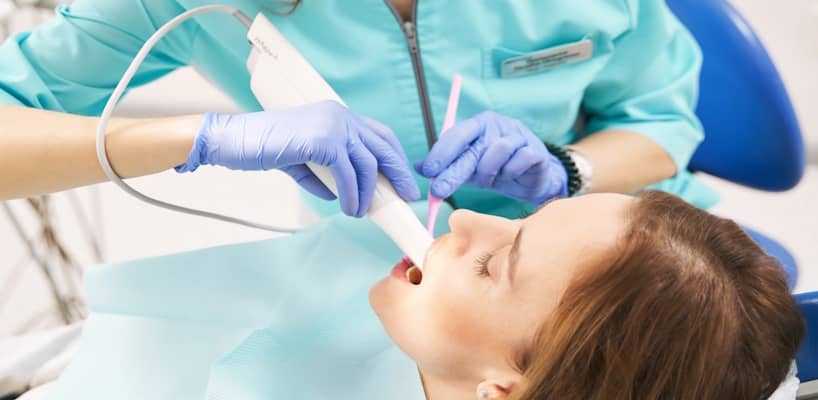
- Crown – an artificial “cap” that restores the shape and chewing surface of a tooth so it can function normally. It’s anchored to the tooth itself, to what remains of it, or to an implant. Crowns are made of ceramic, zirconia, or porcelain-fused-to-metal.
- Bridge – a restoration that replaces one or more missing teeth and is anchored to neighboring teeth or to implants. Bridges restore the continuity of the dental arch.
- Veneers – thin shells bonded to the front surface of the teeth to correct their shape, proportions, and color.
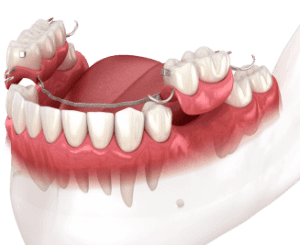
- Removable denture – a prosthesis that the patient can take out and put back in whenever needed. It’s usually used when many teeth are missing or when other types of restoration aren’t suitable.
- Fixed denture – a general term for restorations that the patient can’t remove. It can be a crown or a bridge spanning several teeth or implants.
- Inlay – a custom-made restoration that rebuilds part of a severely damaged tooth. It’s used when an ordinary filling isn’t enough but there is still enough healthy tooth structure to support an inlay.
Removable and Fixed Dentures
As a rule, all the prostheses a prosthodontist can use fall into two groups: removable and fixed. Below are the differences between them and what each option is best suited for.
Removable dentures
This is a prosthesis that the patient can take out and put back in without help.
- Advantages – it can replace several or many missing teeth without complex procedures, and the denture itself is easier to keep clean at home.
- Suitable for – not only older adults, but anyone with any number of remaining teeth, provided the clinical situation allows this type of denture.
- Limitations – these depend on the condition of the individual’s teeth and gums, as a removable denture can be less stable when worn.
Fixed dentures
These are restorations that are fixed permanently in place, and the patient can’t remove them.
- Advantages – they offer high stability and secure fixation, and they make chewing more comfortable, especially with hard foods.
- Suitable for – restoring individual teeth, severely damaged teeth, or teeth that are missing altogether.
- Limitations – these may apply if there aren’t enough sound teeth or other supports to anchor a fixed denture. In that case, placing an implant beforehand may solve the problem.
IMPORTANT: Whichever type of restoration you have, you need proper daily oral hygiene and denture care, as well as regular preventive checkups with your dentist. The lifespan of a prosthesis depends on the material, the chewing load, and how well it’s looked after.
Implant-Supported Restorations
It’s worth noting that when a tooth is lost, an implant can serve as an artificial support (essentially a root) for a future crown or bridge. A prosthodontist plans exactly what this restoration will look like once the implant is in place, most often in collaboration with an implant surgeon.
The advantage of this approach is a longer-lasting result. In addition, replacing a lost tooth this way doesn’t require grinding down the neighboring teeth, as is usually done when placing a traditional bridge. That said, the final decision on whether implants are possible is made only after diagnostics and an assessment of the patient’s bone tissue.
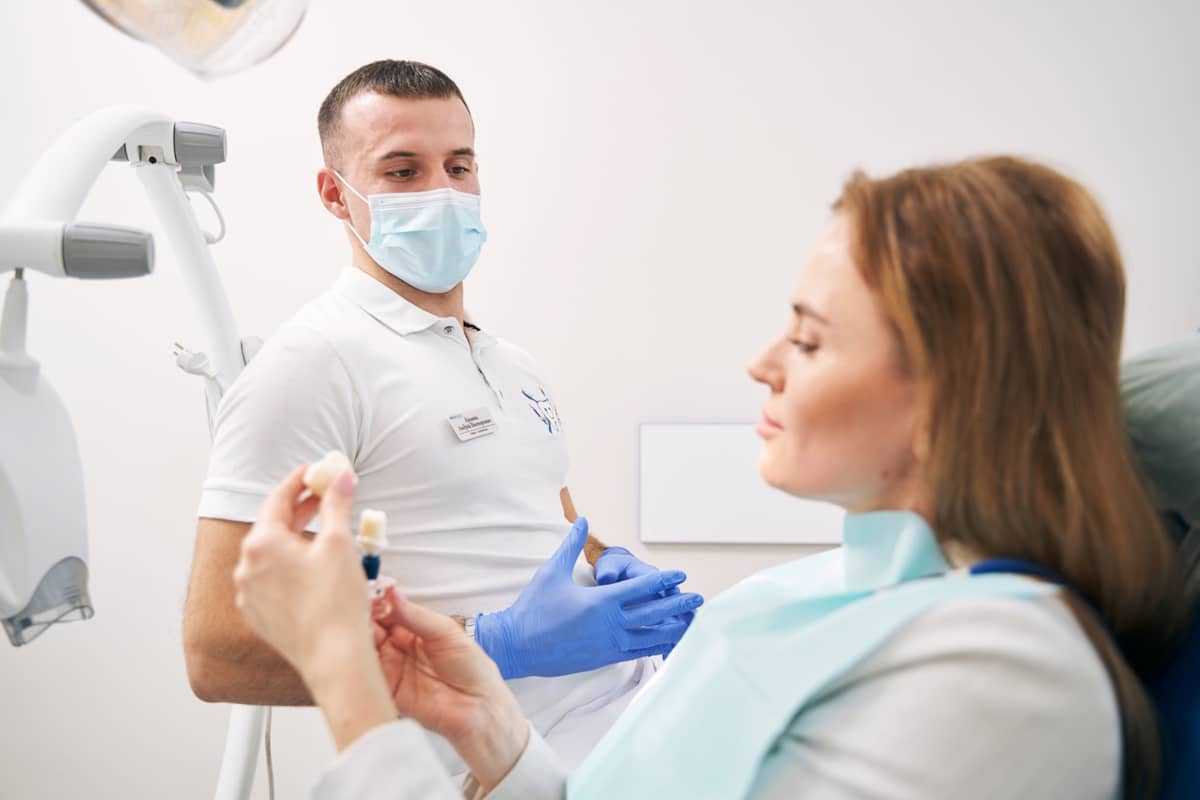
What to Expect at Your First Prosthodontist Appointment
The first appointment with a prosthodontist usually starts with a conversation. The doctor asks about your complaints, your treatment history, any restorations already in your mouth, and any previous surgeries.
Next:
- The doctor performs an initial examination, visually assessing your teeth, gums, bite, dental arch, and chewing function.
- If indicated, they order X-rays or other tests.
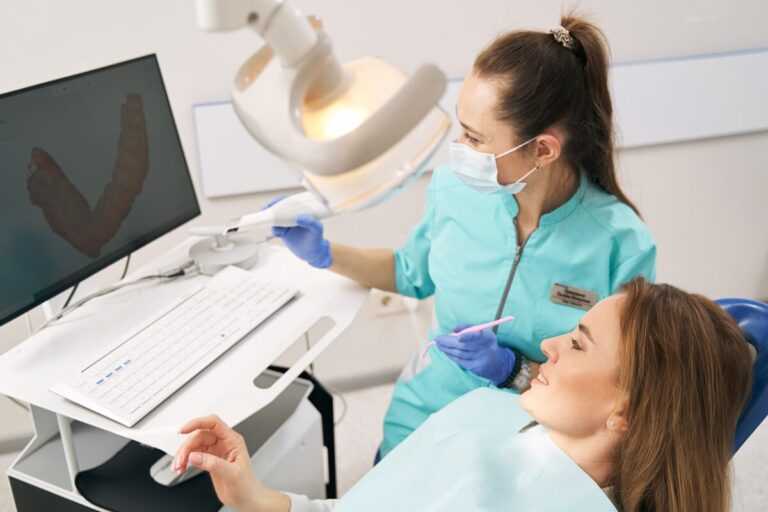
- To plan the prosthetic treatment, a digital impression or digital scan of the dental arch may also be used. This produces an accurate model of your teeth and bite for designing the future restoration.
After the diagnostics, the doctor explains the available options and draws up a treatment plan. If other specialists are needed, they walk you through the sequence of stages and explain what each is for.
At our Med-Deo clinic in Kyiv, the prosthodontist offers high-quality prosthetic treatment and an accurate assessment of your situation thanks to detailed diagnostics. So the first consultation isn’t necessarily about getting a denture right away. It’s first about getting answers to all your questions and discussing with the doctor the best way forward in your particular case!
Author: Pavlo Muzychenko, Prosthodontist and General Dentist


Make an appointment
You can make an appointment by filling out the application form on the website, as well as using instant messengers:
Make an appointment
You can make an appointment by filling out the application form on the website, as well as using instant messengers:


Make an appointment easily using chatbots:
Also, call the numbers:
Modern dentistry and medical centre "MED-DEO"
Choose a clinic whose location is more convenient for you.
Kyiv, Holosiivska/Demiivska metro station
130 Lobanovskoho Avenue


Working hours:
Mon - Sun: 8:00 AM - 9:00 PM
No days off!
Call the numbers:
How to get to us? Create a route
Kyiv, Akademistechko metro station
78A, Irpinska str.


Working hours:
Mon-Sun: 8.00-21.00
Without days off!
Call the numbers:
How to get to us?
Create a route
Create a route
Kyiv, Heroiv Dnipra metro station
32A, Heroiv Dnipra str.


Working hours:
Mon-Sun: 8.00-21.00
Without days off!
Call the numbers:
How to get to us?
Create a route
Create a route
Kyiv, Teatralna metro station
9B, E. Chykalenko (Pushkinska) str.


Working hours:
Mon-Sat: 8.00 - 21.00. Sun: by appointment.
Without days off!
Call the numbers:
How to get to us?
Create a route
Create a route
Відгук від клієнта
0:00
0:00


Your email will not be published on the site.