Special offer! Comprehensive professional teeth cleaning for only 1699 UAH.
Special offer! Comprehensive professional teeth cleaning for only 1699 UAH.
Special offer! Comprehensive professional teeth cleaning for only 1699 UAH.
Special offer! Comprehensive professional teeth cleaning for only 1699 UAH.
Special offer! Comprehensive professional teeth cleaning for only 1699 UAH.
Special offer! Comprehensive professional teeth cleaning for only 1699 UAH.
Special offer! Comprehensive professional teeth cleaning for only 1699 UAH.
Special offer! Comprehensive professional teeth cleaning for only 1699 UAH.
Special offer! Comprehensive professional teeth cleaning for only 1699 UAH.
Special offer! Comprehensive professional teeth cleaning for only 1699 UAH.
Sign up
 (044) 394 90 94
(044) 394 90 94  Holosiivska/Demiivska metro station
Sign up
(044) 394 90 94
(044) 394 90 94
Doctors


 Prices
Blog
Contacts
Prices
Blog
Contacts
пр.Лобановського, 130, Київ, Україна
Temporarily closed
Opening soon
78A, Irpinska St., Kyiv, Ukraine
Temporarily closed
Opening soon
32A, Heroiv Dnipra St., Kyiv, Ukraine
Temporarily closed
Opening soon
9B, Yevhena Chykalenko St. (Pushkinska), Kyiv, Ukraine
Temporarily closed
Opening soon
(044) 394 90 94
Back
Dentistry
General Dentistry
Dental surgery
Dental Implants
Maxillofacial Surgery
Dental prosthetics
Cosmetic dentistry
Professional Dental Hygiene

Periodontics
Orthodontic dentistry

Gnathology & TMJ Therapy
Pediatric Dentistry
Dental X-Rays
Back
Orthodontic Center
Orthodontic dentistry
Gnathology & TMJ Therapy
Back
Prosthodontic Center
Dental prosthetics
Back
MED-DEO Center for Maxillofacial Surgery & Facial Plastics
Maxillofacial Surgery
Plastic surgery
Back
Surgical Dental Center
Dental surgery
Dental Implants
Search on the site


Popular requests
Teeth whitening
Treatment of caries
Wisdom tooth extraction
Bracket system
Dental veneers
Tooth restoration
Pediatric dentist
Consultation with a dentist-therapist
Search results by: «».
Unfortunately, no results were found for your search: “Pediatric Endocrinologist”, nothing was found.
You may find these links useful:
Clinics "MED-DEO"
пр.Лобановського, 130, Київ, Україна
Temporarily closed
Opening soon
78A, Irpinska St., Kyiv, Ukraine
Temporarily closed
Opening soon
32A, Heroiv Dnipra St., Kyiv, Ukraine
Temporarily closed
Opening soon
9B, Yevhena Chykalenko St. (Pushkinska), Kyiv, Ukraine
Temporarily closed
Opening soon
Services
Dentistry Orthodontic Center Prosthodontic Center MED-DEO Center for Maxillofacial Surgery & Facial Plastics Surgical Dental CenterGeneral Dentistry
Dental surgery
Dental Implants
Maxillofacial Surgery
Dental prosthetics
Cosmetic dentistry
Professional Dental Hygiene
Periodontics
Orthodontic dentistry
Gnathology & TMJ Therapy
Pediatric Dentistry
Dental X-Rays
Orthodontic dentistry
Gnathology & TMJ Therapy
Dental prosthetics
Maxillofacial Surgery
Dental surgery
Dental Implants
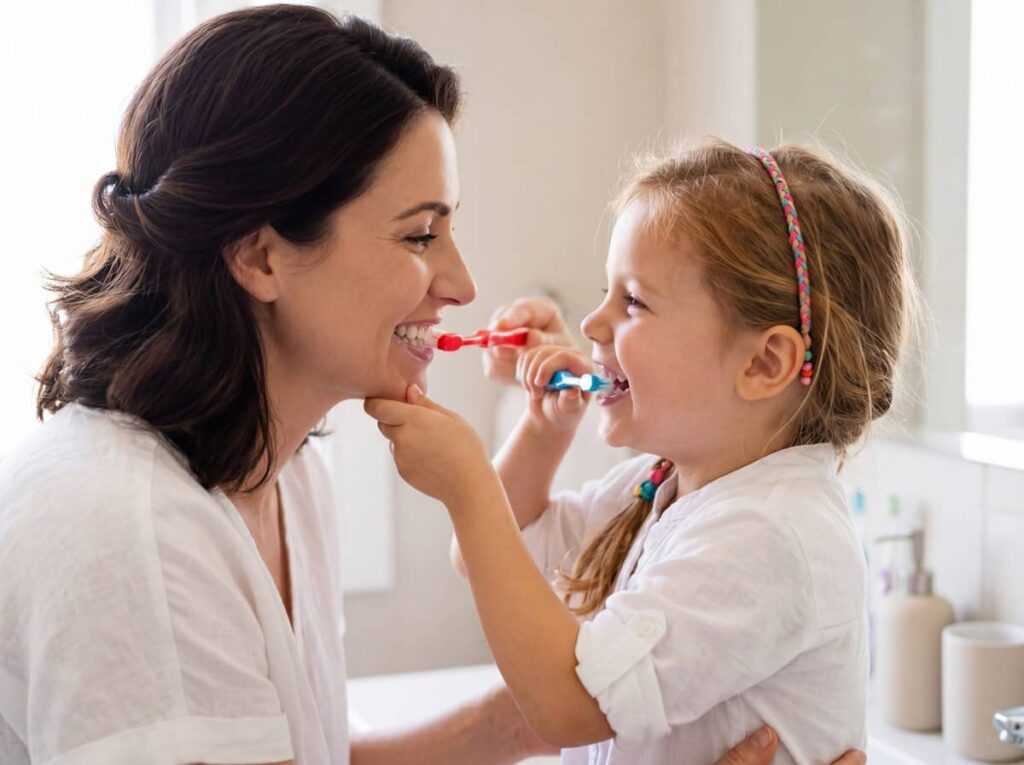

Oral care doesn’t start once a child “already has a lot of teeth” — it begins much earlier, even before the first teeth appear or right after they erupt. The technique and tools change as the child grows: what works for an infant won’t work for a two-year-old. And here’s something parents often forget: most children still can’t brush their teeth properly on their own even at age 4–5 — they need an adult’s supervision.
What Age Should You Start Brushing a Child’s Teeth
What age should you start brushing a child’s teeth? You should really start within the first few months of life. Even before any teeth appear, residue from milk or formula builds up in the mouth, the oral microflora is forming, and the gums need care too. This isn’t about achieving “perfect cleanliness” — it’s about building a habit and basic hygiene.
Once the first tooth comes in (usually around 5–8 months), brushing should become a regular, twice-daily routine. Don’t wait until all the baby teeth have erupted: cavities in children can develop very quickly, especially with nighttime feedings or sugary drinks.
The approach changes as the child grows:
- first comes gentle gum cleaning
- then the first teeth, using a minimal amount of toothpaste
- after age one, a full brushing routine
- closer to preschool age, teaching independence — but still under supervision
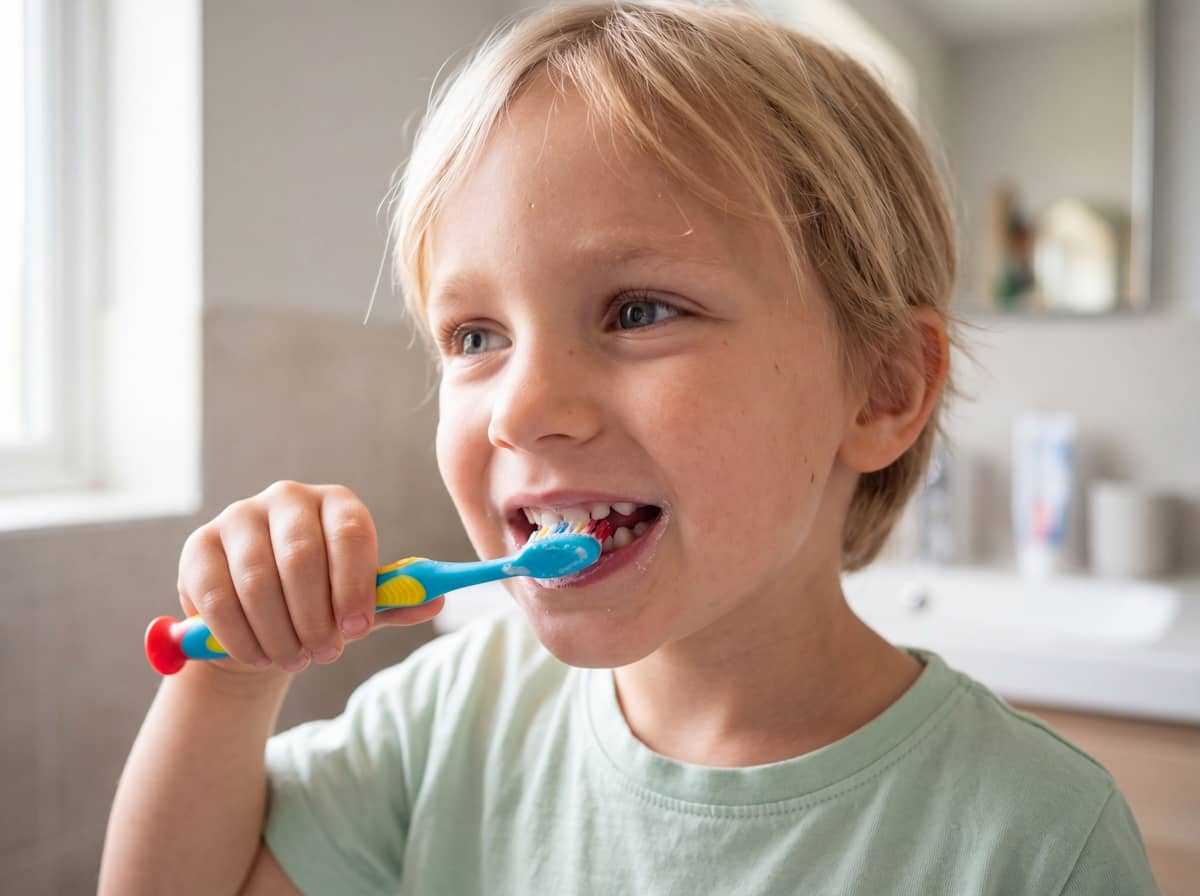
Caring for the Gums Before Teeth Appear
This stage is simple but important. It’s often skipped, which is a mistake — it’s actually what helps a child stay calm about having things done in their mouth.
How to clean a baby’s gums before age one:
- Take a piece of sterile gauze or a special silicone fingertip brush.
- Moisten it with boiled water at room temperature.
- Gently wipe the gums, tongue, and the inside of the cheeks.
Once a day is enough, ideally in the evening. The motions should be as gentle as possible — this isn’t really “brushing,” more like light cleaning.
What to avoid:
- no toothpaste at all
- no “folk remedies” (honey, baking soda, etc.)
- no pressure — gums are very sensitive
Professional Teeth Cleaning for Children
Children’s Teeth Cleaning in Kyiv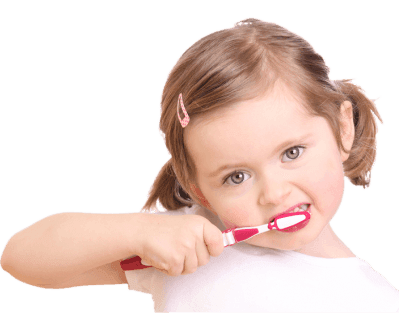
How to Brush a Baby’s First Teeth (Under Age One)
Once the first tooth appears, care becomes more specific.
How to brush a baby’s teeth:
- Tool: a silicone fingertip brush or an ultra-soft infant toothbrush.
- Frequency: twice a day — morning and, without fail, before bed.
- Toothpaste: a minimal amount (literally a grain-of-rice size).
- Motion: short, light strokes without pressure — make sure to cover every surface.
- Time: about 1–2 minutes.
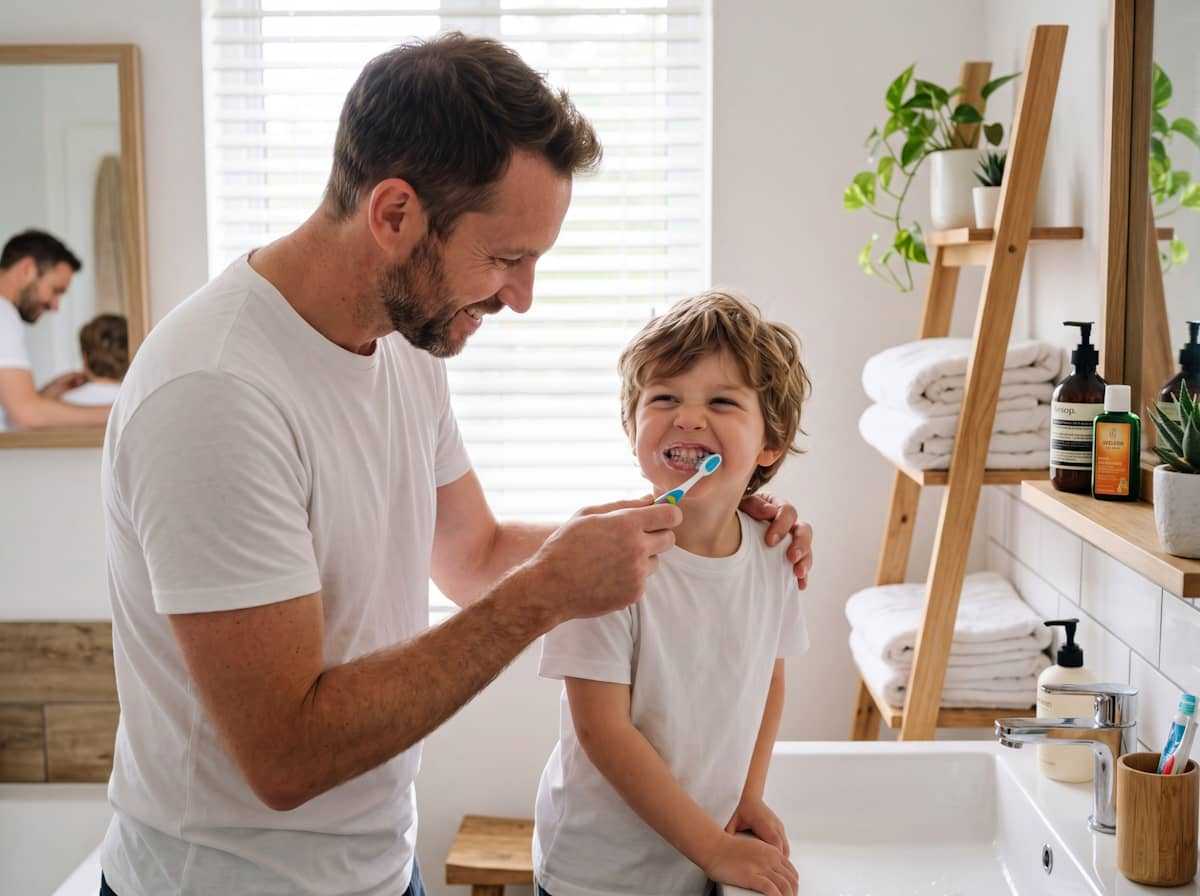
A practical note on brushing those first teeth: at this age, kids often protest not because of the brushing itself, but because of the discomfort or simply not understanding what’s happening. A consistent position (for example, the child lying with their head toward you), a calm voice, and the same routine every day all help.
How to Brush a Child’s Teeth at Age One and Beyond
How should you brush a one-year-old’s teeth? After age one, brushing is no longer optional — it becomes part of the daily routine. This is the age when a child’s attitude toward hygiene really starts to form, so if the process feels clear and predictable now, things will be much easier later on.
Ideally, brushing becomes as stable a ritual as dinner or bedtime:
- morning — after breakfast
- evening — before bed (the most important brushing of the day)
At 1–2 years old, a child still can’t brush their teeth thoroughly on their own — they lack the coordination and understanding of the sequence. So the right approach looks like this: the child brushes first and gets used to the process, then an adult always finishes the job.
A few other things that matter at this age:
- don’t change the routine every day — the same sequence reduces resistance
- don’t drag the process out — short and consistent beats long and occasional
- don’t expect a “perfect result” from the child — your role is the key one
Choosing a Toothbrush and Toothpaste by Age
You don’t need anything complicated here, but a few details really do affect comfort and results.
Toothbrush:
- a small head — to easily reach the back teeth without irritating the gums
- soft or ultra-soft bristles — anything firmer isn’t suitable at this age
- a short, thick handle — easier for a child to grip
- ideally no bulky decorative elements that get in the way of controlling the brush
A good sign that you’ve picked the right toothbrush: it doesn’t cause discomfort and lets you finish the brushing calmly.
Toothpaste:
- only children’s toothpaste appropriate for the age (this matters because of the formula and concentration of active ingredients)
- a pleasant flavor, but not so candy-like that the child wants to swallow it
- a minimal formula, free of harsh abrasives or irritants
If a child reacts badly to a particular toothpaste, switch it rather than trying to force them to get used to it.
How Much Toothpaste a Child Needs
This is where people most often go wrong — many parents use an adult-sized amount, but for a child that’s too much.
A simple guideline:
- under age 3 — just a smear, about the size of a grain of rice
- after age 3 — a small pea-sized amount
Why it matters not to overdo it:
- more toothpaste doesn’t clean better — the brushing technique does the work, not the foam
- kids almost always swallow some of it
- too much foam makes it harder to control the process and cuts down on actual brushing time
What to do if a child swallows toothpaste:
- cut the amount down to the bare minimum
- don’t panic — it’s typical at this age
- gradually show them how to spit it out, but without pressuring them
When it comes to brushing a child’s teeth, what matters most isn’t the amount of toothpaste — it’s consistency and proper technique.
How to Properly Brush a Child’s Teeth: Step-by-Step Instructions
Here’s a clear step-by-step routine for brushing a child’s teeth:
1. Preparation
Put a small, age-appropriate amount of toothpaste on the brush. Position the child so you have a clear view of their teeth — sitting up or lying down with the head tilted slightly back both work. The key is that both you and the child feel comfortable, without any strain.
2. Outer Surfaces of the Teeth
Start with the easiest area. Use gentle, sweeping motions — from the gums toward the edge of the tooth. Don’t “saw” back and forth horizontally or press hard; that doesn’t clean any better, it just irritates the gums. Move through the row in order, without skipping around.
3. Chewing Surfaces
This is where the most food residue collects. Use short back-and-forth motions without pressure. Pay special attention to the back teeth — kids tend to skip these most often.
4. Inner Surfaces
This is the area that gets missed most often. Hold the brush at a slight angle and use careful, controlled movements. Slower but thorough is better here — rushing usually leaves plaque behind.
5. The Gumline
Also go along the gumline, where soft plaque tends to build up. Keep the movements as gentle as possible. If your child is sensitive there, slow down, but don’t skip this area.
6. Brushing Time
About 2 minutes on average. Rather than guessing, it helps to use a timer or a short song — that way you can keep to the time without turning it into a battle.
7. Finishing Up
Have the child spit out the leftover toothpaste. A thorough rinse isn’t strictly necessary — a small rinse, or none at all, is fine depending on the child’s age.
8. Adult Supervision
Even if the child took part in the process, always check the result and finish any spots they missed. At preschool age, this isn’t being overly cautious — it’s a necessity.
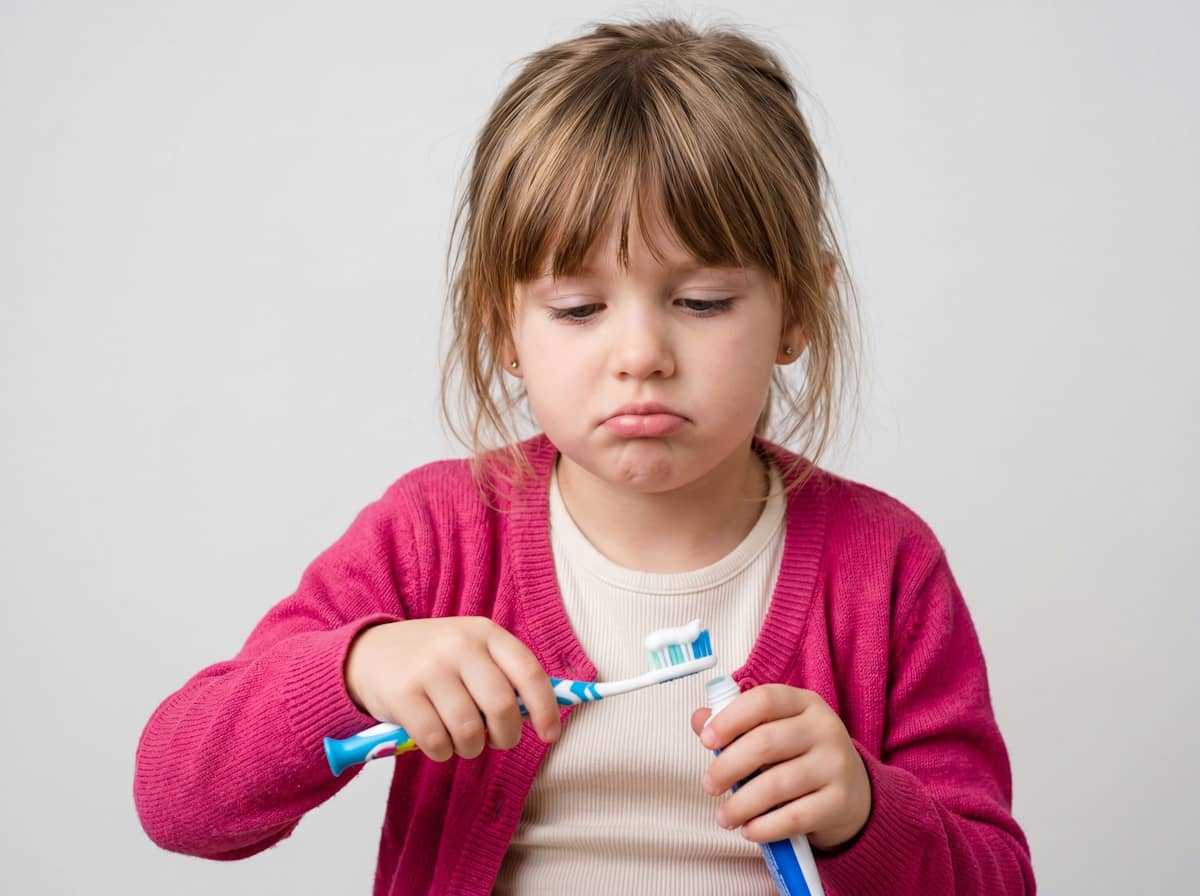
The rules for brushing kids’ teeth are simple: what matters isn’t force or how much toothpaste you use, but a consistent sequence, gentle motions, and regularity.
Proper Brushing Technique for Children
The main idea isn’t to “scrub harder” — it’s to brush in a consistent, gentle sequence.
How to brush a child’s teeth properly:
- motions should be sweeping, not random
- no need to press hard — it doesn’t speed anything up
- don’t skip the inner surfaces — they’re the ones most often left dirty
- 2 minutes is the real minimum, not some ideal to aim for
Timers or short kids’ songs help a lot here — they set the pace and cut down on conflict.
Common Mistakes When Brushing
Most problems with kids’ teeth don’t come from a lack of brushing — they come from brushing too superficially or making mistakes along the way. Most often, brushing only lasts 20–30 seconds, which isn’t enough time to properly clean the chewing and inner surfaces. The real target should be around two minutes, following a clear sequence of motions.
Another common mistake is using too much toothpaste. More foam doesn’t mean a better clean — if anything, it gets in the way and raises the risk of the child swallowing it. A minimal, age-appropriate amount is all you need.
Pressing too hard with the brush is also a problem. It doesn’t make teeth any cleaner, but it can irritate the gums and leave the child with a negative association with brushing altogether. In children’s oral care, only gentle, controlled movements actually work.
Skipping the evening brushing deserves special mention — it’s one of the most critical mistakes. At night, saliva barely protects the teeth, so plaque has much longer to act on the enamel, raising the risk of cavities.
Choosing the right toothbrush matters too. If it’s too stiff or too big, it makes brushing harder and can cause discomfort, which leads the child to start avoiding the whole process.
It’s also a mistake to expect full independence at age 2–4. Children at this age still can’t clean every surface properly on their own, so without an adult checking and finishing the job, plaque will still be left behind.
In the end, what matters isn’t just regularity, but quality — proper technique, enough time, and an adult’s involvement.
How to Teach a Child to Brush Their Teeth Without Tears or Pressure
How do you get a child into the habit of brushing their teeth? In short: through habit, not force. Children pick up on emotions quickly, and if brushing becomes associated with stress, the problem only gets worse.
Motivation Through Play, Routine, and Parental Example
The simplest things tend to work best:
- brush your teeth together — children imitate what they see
- use a timer or a “two-minute song”
- let the child pick their own toothbrush or toothpaste
- keep a sticker calendar
- praise specific actions, not just “good job” in general
The routine should be predictable — the same sequence every single day.
What to Do If a Child Refuses to Brush Their Teeth
Usually, the reason a child won’t brush isn’t really about their “personality” — it’s about discomfort or a bad past experience. Once you identify the actual cause, resistance usually drops significantly.
Fear or a negative past experience: Make the process shorter and as gentle as possible, avoiding any sudden movements. You can start with a brief “warm-up” instead of a full brushing session.
Tiredness: Don’t leave brushing until the child is already worn out. It’s better to brush a bit earlier, while they’re still calm.
Resistance and a desire for control: Give them small choices — which toothbrush, which toothpaste, “you go first or me first.” This reduces pushback.
Disliking the toothpaste: If the flavor is unpleasant, just switch it. This is a common but often overlooked cause.
Sensitivity: Be extra gentle, and consider breaking the process into shorter steps.
The main point is not to force the child, but to adapt the process to fit them. With this approach, the habit takes hold much more easily and with far less stress.
Children’s Dental Care: What Else Affects Enamel Health
A toothbrush and toothpaste are the basics of children’s dental care, but they don’t “cancel out” everyday habits. If a child is constantly exposed to sugar or their routine is inconsistent, even good brushing technique won’t provide full protection.
Here’s what really matters when it comes to children’s dental care:
Frequent snacking, especially on sweets: Every snack triggers an “acid attack” on the enamel. If a child eats small amounts frequently — cookies, snack bars, dried fruit — their teeth barely get any time to recover. It’s better to have fewer, more structured snack times than constant grazing.
Juice and sweetened drinks: Even “kids'” juices contain sugar and acids. If a child sips them throughout the day, that’s constant exposure for the enamel. Ideally, limit these drinks and serve them with meals rather than between them. Water should be the main drink.
Falling asleep with a bottle: This is one of the leading causes of early childhood cavities. Milk, formula, or juice sits on the teeth all night, while saliva — which normally helps protect them — is barely active during sleep. If a child is used to a bedtime bottle, work on gradually weaning them off it or switching to water.
Not drinking water after sweets: It’s not always possible to brush right after eating something sweet, but even a few sips of water afterward help reduce the damage by rinsing away some of the sugar and acid.
Irregular dental checkups: Early-stage problems often aren’t visible at home. Regular checkups catch issues early, before they turn into more complicated treatment.
Bottom line: enamel health isn’t just about how you brush — it’s also about what and how often a child eats and drinks throughout the day.
Pediatric Orthodontist in Kyiv
Trusted pediatric orthodontist in Kyiv at Med-Deo ClinicWhen Can a Child Start Brushing Their Teeth on Their Own
The fact that a child can hold a toothbrush confidently doesn’t mean they’re brushing effectively. That takes skills that develop gradually: coordination, attentiveness, and the habit of following a consistent sequence.
On average:
- children need an adult to finish the job up to around age 6–8
- sometimes longer — this depends less on age and more on how well the child is actually managing on their own
In practice, this looks like:
- the child starts brushing on their own
- the adult checks the result
- the adult finishes any difficult spots as needed (back teeth, inner surfaces)
If you notice plaque or missed spots, it’s still too early for full independence. On the other hand, once a child consistently cleans every surface and can stick with a full 2 minutes, you can start gradually stepping back.
The author of this article is Kateryna Sazhneva, a pediatric dentist, general dentist, and medical director of the Med-Deo dental clinic chain.
Make an appointment
You can make an appointment by filling out the application form on the website, as well as using instant messengers:
Make an appointment
You can make an appointment by filling out the application form on the website, as well as using instant messengers:


Make an appointment easily using chatbots:
Also, call the numbers:
Modern dentistry and medical centre "MED-DEO"
Choose a clinic whose location is more convenient for you.
Kyiv, Holosiivska/Demiivska metro station
130 Lobanovskoho Avenue


Working hours:
Mon - Sun: 8:00 AM - 9:00 PM
No days off!
Call the numbers:
How to get to us? Create a route
Create a route
Kyiv, Akademistechko metro station
78A, Irpinska str.


Working hours:
Mon-Sun: 8.00-21.00
Without days off!
Call the numbers:
How to get to us?
Create a route
Create a route
Kyiv, Heroiv Dnipra metro station
32A, Heroiv Dnipra str.
Working hours:
Mon-Sun: 8.00-21.00
Without days off!
Call the numbers:
How to get to us?
Create a route
Create a route
Kyiv, Teatralna metro station
9B, E. Chykalenko (Pushkinska) str.



Working hours:
Mon-Sat: 8.00 - 21.00. Sun: by appointment.
Without days off!
Call the numbers:
How to get to us?
Create a route
Create a route
Відгук від клієнта
0:00
0:00


Your email will not be published on the site.