Special offer! Comprehensive professional teeth cleaning for only 1699 UAH.
Special offer! Comprehensive professional teeth cleaning for only 1699 UAH.
Special offer! Comprehensive professional teeth cleaning for only 1699 UAH.
Special offer! Comprehensive professional teeth cleaning for only 1699 UAH.
Special offer! Comprehensive professional teeth cleaning for only 1699 UAH.
Special offer! Comprehensive professional teeth cleaning for only 1699 UAH.
Special offer! Comprehensive professional teeth cleaning for only 1699 UAH.
Special offer! Comprehensive professional teeth cleaning for only 1699 UAH.
Special offer! Comprehensive professional teeth cleaning for only 1699 UAH.
Special offer! Comprehensive professional teeth cleaning for only 1699 UAH.
Sign up
 (044) 394 90 94
(044) 394 90 94  Holosiivska/Demiivska metro station
Doctors


 Prices
Blog
Contacts
Prices
Blog
Contacts
пр.Лобановського, 130, Київ, Україна
Temporarily closed
Opening soon
78A, Irpinska St., Kyiv, Ukraine
Temporarily closed
Opening soon
32A, Heroiv Dnipra St., Kyiv, Ukraine
Temporarily closed
Opening soon
9B, Yevhena Chykalenko St. (Pushkinska), Kyiv, Ukraine
Temporarily closed
Opening soon
Sign up
En
(044) 394 90 94
Back
Dentistry
General Dentistry
Dental surgery
Dental Implants
Maxillofacial Surgery
Dental prosthetics
Cosmetic dentistry

Professional Dental Hygiene

Periodontics
Orthodontic dentistry

Gnathology & TMJ Therapy

Pediatric Dentistry
Dental X-Rays
Back
Orthodontic Center
Orthodontic dentistry
Gnathology & TMJ Therapy
Back
Prosthodontic Center
Dental prosthetics
Back
MED-DEO Center for Maxillofacial Surgery & Facial Plastics
Maxillofacial Surgery
Plastic surgery
Back
Surgical Dental Center
Dental surgery
Dental Implants
Search on the site


Popular requests
Teeth whitening
Treatment of caries
Wisdom tooth extraction
Bracket system
Dental veneers
Tooth restoration
Pediatric dentist
Consultation with a dentist-therapist
Search results by: «».
Unfortunately, no results were found for your search: “Pediatric Endocrinologist”, nothing was found.
You may find these links useful:
Clinics "MED-DEO"
пр.Лобановського, 130, Київ, Україна
Temporarily closed
Opening soon
78A, Irpinska St., Kyiv, Ukraine
Temporarily closed
Opening soon
32A, Heroiv Dnipra St., Kyiv, Ukraine
Temporarily closed
Opening soon
9B, Yevhena Chykalenko St. (Pushkinska), Kyiv, Ukraine
Temporarily closed
Opening soon
Services
Dentistry Orthodontic Center Prosthodontic Center MED-DEO Center for Maxillofacial Surgery & Facial Plastics Surgical Dental CenterGeneral Dentistry
Dental surgery
Dental Implants
Maxillofacial Surgery
Dental prosthetics
Cosmetic dentistry
Professional Dental Hygiene
Periodontics
Orthodontic dentistry
Gnathology & TMJ Therapy
Pediatric Dentistry
Dental X-Rays
Orthodontic dentistry
Gnathology & TMJ Therapy
Dental prosthetics
Maxillofacial Surgery
Dental surgery
Dental Implants
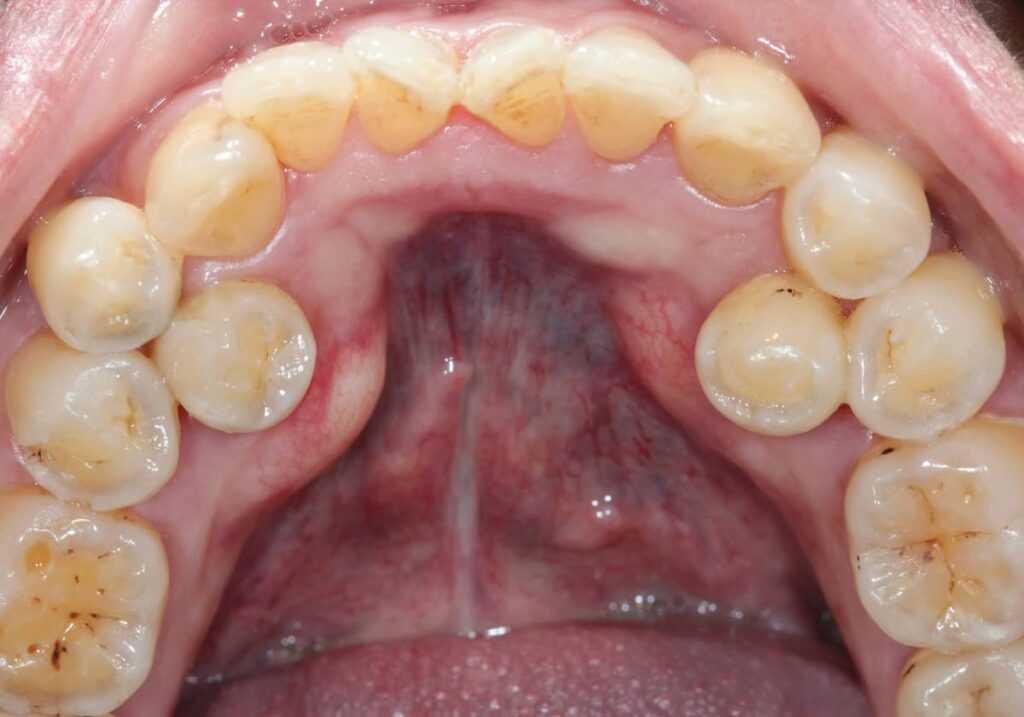

What Are Hyperdontia, Polydontia, and Supernumerary Teeth
Hyperdontia is an anomaly involving the number of teeth. From a medical standpoint, it is a condition in which a person develops more teeth than the norm allows. Under normal circumstances, for example, an adult should have between 28 and 32 teeth (depending on whether wisdom teeth are present). When an additional tooth appears, a dentist may identify it as an extra dental unit — or a supernumerary tooth.
Hyperdontia is also referred to as polydontia. These are simply more and less commonly used terms for the same condition. Either way, the defining feature is an excess number of teeth — regardless of whether the tooth sits outside the dental arch or within it. Such teeth can interfere with the normal growth of other teeth, affect the bite, and cause problems throughout the oral cavity.
Beyond the clinical terms “hyperdontia” and “polydontia,” people in everyday conversation often use simpler language: “teeth growing in two rows,” “an extra tooth,” or “a tooth coming out of the gum.”
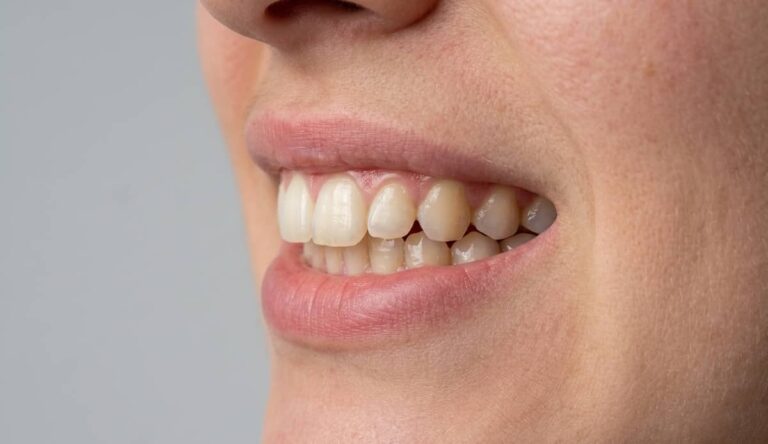
In dental practice, this condition occurs in both adults and children, and its presentations vary widely — from a “second tooth” within the arch to a tooth growing outside the arch or even on the palate. It can also happen that a supernumerary tooth remains embedded in the bone without ever erupting. In such cases, a person may be completely unaware of its existence until a dentist spots it on an X-ray or CT scan. Whether or not to extract the tooth upon discovery is always an individual decision made by the dentist — typically hinging on whether the tooth is causing problems for the surrounding teeth or the bite.
Causes of Hyperdontia: Why Does an Extra Tooth Appear?
The exact causes of hyperdontia cannot always be established with certainty. However, modern dentistry points to several widely accepted scientific explanations. Hyperdontia may arise from:
- Disruptions in the formation of tooth buds — sometimes during the development stage, an “extra bud” appears that either remains embedded in the bone or gives rise to an additional tooth.
- Hereditary predisposition — when similar extra teeth have appeared in parents or close relatives, the genetic likelihood increases significantly.
- Factors during fetal development — sometimes these changes in the dental-jaw system take shape while the child is still developing in the womb.
Patients cannot determine the cause of hyperdontia on their own, which is precisely why professional diagnosis and a dental consultation are so important. People often come in asking things like “can there be a 9th tooth after the wisdom tooth?” or “what is this small extra tooth I have?” After an examination and diagnostic workup, the dentist can give a clear answer as to whether a supernumerary tooth is indeed present.
How to Tell If a Child Has a Tooth Growing Over Another Tooth — or Teeth in Two Rows
Parents sometimes notice that a child has a tooth growing over another tooth, or that a second row of teeth seems to be forming. This is naturally alarming, but it’s important to understand: it doesn’t always mean hyperdontia.
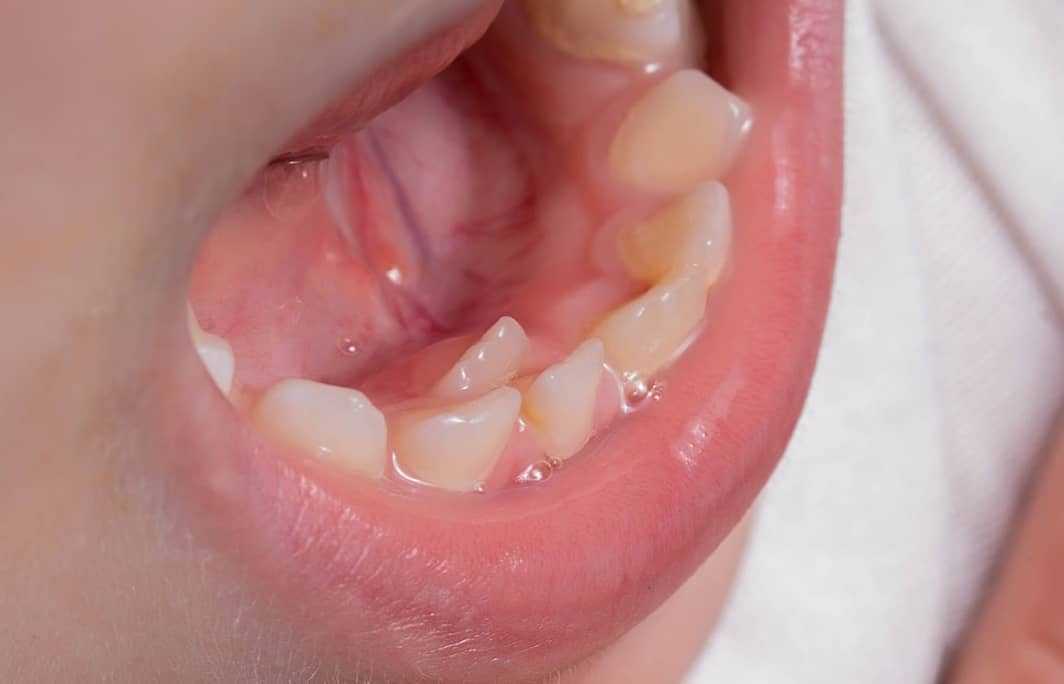
In most children, a permanent tooth begins to erupt before the baby tooth has had a chance to fall out. This is precisely what creates the impression of teeth growing in two rows — and it happens most often in the lower front tooth area.
That said, there are situations where waiting is not the right call and a dental visit is warranted right away. For example, if the permanent tooth has already erupted behind the baby tooth but the baby tooth shows no signs of coming loose. Or if the child is developing a visible “second row” that is noticeably pushing other teeth out of position. It’s also worth paying attention if a tooth is erupting at an unusual angle or appearing in an atypical part of the jaw — and especially if the tooth is causing discomfort during chewing, which is a clear signal that a professional evaluation is needed.
When a Second Row of Teeth Is Linked to Delayed Baby Tooth Loss
In most cases, a second row of teeth in children develops simply because the baby teeth are holding on while the permanent teeth are already coming in. Delayed baby tooth loss is a fairly common occurrence during the transition to a permanent bite. In these situations, the new teeth may appear either behind or above the baby teeth.
The reason is straightforward: the root of the baby tooth is resorbing more slowly than it should. This means the situation isn’t necessarily supernumerary teeth at all — it may simply be a normal eruption pattern where one tooth sits slightly higher than the others. Even so, it’s always a good idea to bring the child in for a dental checkup. Waiting it out is not advisable, and parents should never try to loosen or remove the baby tooth themselves.
Signs That Point Specifically to a Supernumerary Tooth
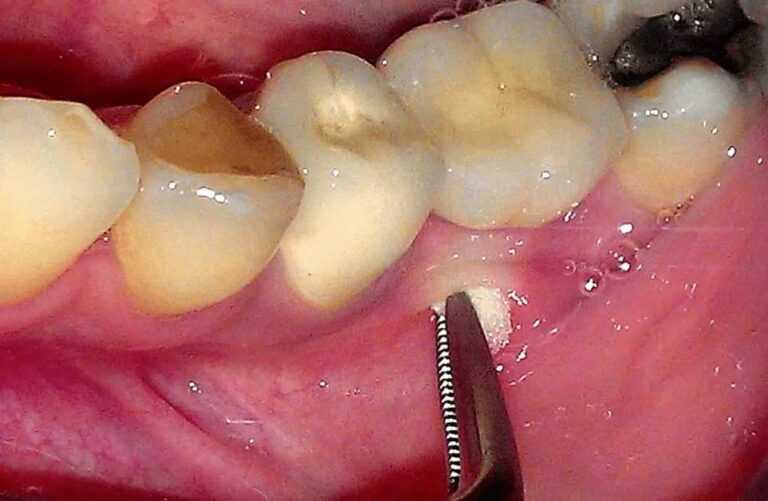
A tooth growing on the palate is one of the more obvious signs of a supernumerary tooth — it’s hard to miss, and it interferes with both chewing and speech. But there are other, less immediately apparent signs that indicate the presence of a tooth that simply shouldn’t be there. These include a tooth that:
- Erupts outside the main dental arch — closer to the gum line or behind other teeth.
- Is unusually small or cone-shaped.
- Is crowding or displacing neighboring teeth.
- Is contributing to overall dental crowding.
- Appears in a clearly atypical location (on the palate, or close to the cheek or lip).
Parents often describe the problem in everyday terms: “a tooth under a tooth,” “tiny teeth,” or “little teeth growing on top of other teeth.” In casual speech, supernumerary front incisors are sometimes called “rabbit teeth,” though this is not a clinical term.
Why Supernumerary Teeth Are a Problem
If left unmonitored or untreated, supernumerary teeth can lead to a range of complications. The main ones include:
- Displacement of neighboring teeth and gradual deformation of the entire dental arch.
- Bite problems and improper tooth occlusion.
- Crowding and a resulting lack of space for other teeth.
- Delayed eruption of permanent teeth.
- Repeated irritation and trauma to the lining of the tongue or cheek.
- Aesthetic concerns due to visibly uneven teeth.
- Difficulties with speech and chewing, which affects both smile aesthetics and digestive function.
- Challenges with oral hygiene due to hard-to-reach areas between teeth.
The key takeaway here is this: supernumerary teeth are not merely a cosmetic issue. They affect the functioning of the entire dental-jaw system, cause orthodontic complications, and can eventually lead to overworked chewing muscles, headaches, and even gastrointestinal problems.
Diagnosis: How Hyperdontia Is Confirmed
Diagnosing hyperdontia typically begins with a clinical dental examination, during which the dentist assesses the patient’s tooth positioning, bite, degree of crowding, and any visible signs of supernumerary teeth. However, a visual examination alone is often not enough — extra teeth may be impacted, meaning they haven’t fully erupted or remain entirely within the bone. An impacted tooth is invisible during a standard examination but clearly visible on an X-ray or CT scan.
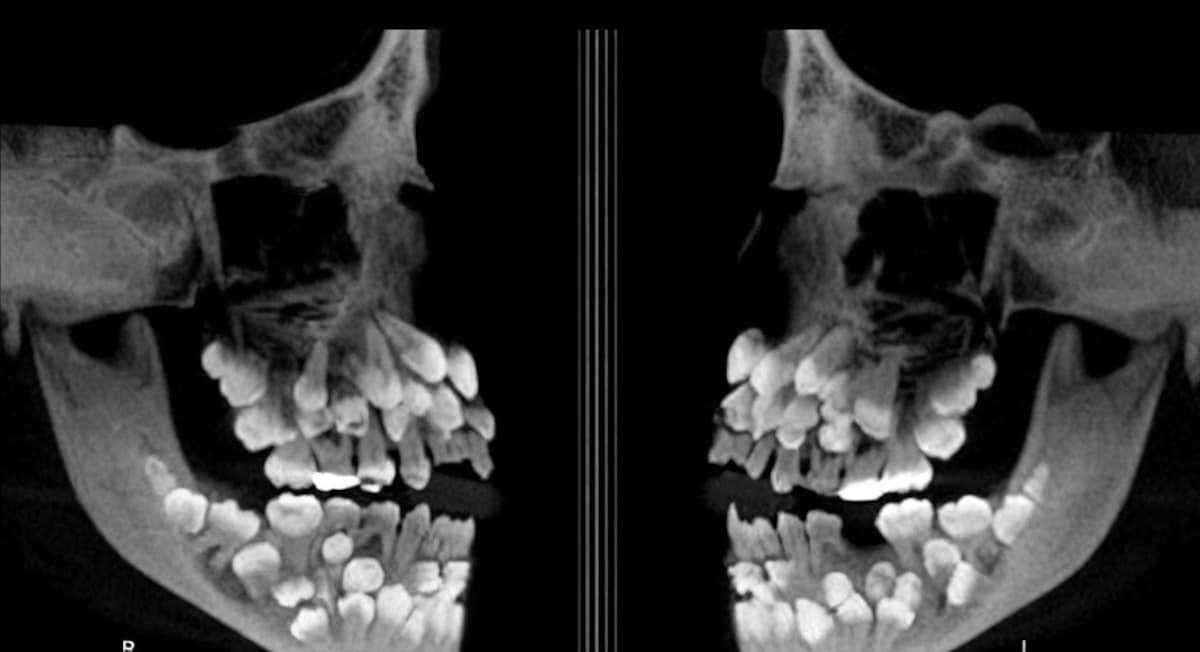
For a thorough and accurate diagnosis of supernumerary teeth, the following imaging studies may be used:
- Panoramic X-ray — a broad overview of the jaws and all teeth.
- Cone beam CT (CBCT) — a detailed three-dimensional study of the jaws.
- Periapical X-rays — targeted images of an individual tooth or specific area of the jaw.
This type of imaging pinpoints the exact location of the teeth, identifies any additional tooth buds if present, and assesses their impact on the dental-jaw system. Based on these findings, the dentist recommends the appropriate course of action for the existing hyperdontia.
Treatment of Polydontia: When Extraction Is Required
Treatment for polydontia is tailored to each individual case, taking into account a range of factors: the patient’s age, the position of the tooth, its effect on the bite and appearance, and the risk of complications.
In some cases, simple monitoring is all that’s needed — particularly when the patient has no complaints and the tooth isn’t interfering with neighboring teeth. In other cases, extraction is necessary, especially when the supernumerary tooth is disrupting the bite or blocking the eruption of permanent teeth in children.
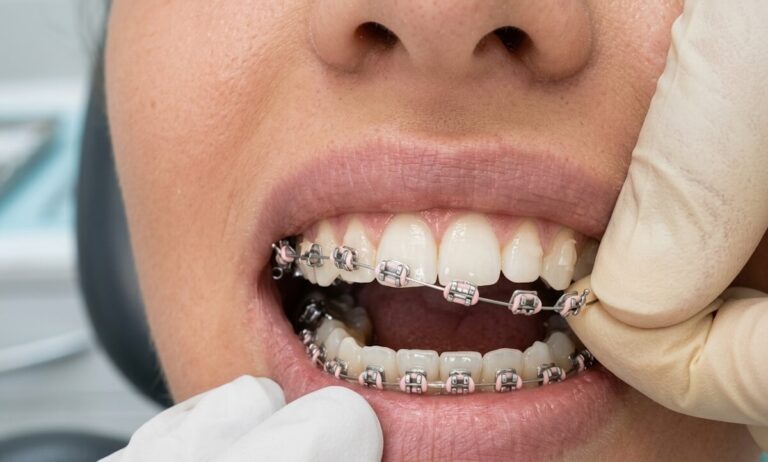
After surgical extraction, orthodontic correction with braces or clear aligners is typically recommended to properly realign the dental arch following the removal of the supernumerary tooth or teeth. This gradually normalizes the bite and allows the teeth and jaws to function correctly — both during chewing and while speaking.
Some patients only seek dental help once a supernumerary tooth has become a significant problem in their daily life. In such situations, it’s important not to delay treatment. Orthodontic correction can become increasingly complex, particularly as a patient gets older or when the case of hyperdontia is severe.
What Parents and Patients Should Do After Discovering an Extra Tooth
If you’ve noticed an extra tooth — in yourself or in your child — the most important thing is not to panic, and definitely not to try to handle it yourself (meaning: do not attempt to extract or shift the tooth on your own).
The best course of action is:
- Schedule a consultation with a dentist.
- Undergo a clinical examination.
- Have an X-ray or CT scan performed as indicated.
- Receive a treatment plan from an oral surgeon or orthodontist.
- Follow all monitoring or treatment recommendations.
Attempting to loosen, shift, or extract a tooth at home will only make things worse. And even when the tooth seems like a minor issue, only proper diagnostic imaging can reveal the full picture — including its impact on the bite and neighboring teeth. So if you spot a supernumerary tooth, don’t wait: see a dentist as soon as possible. Early diagnosis makes the problem easier and faster to resolve.
FAQ
What is hyperdontia?
Hyperdontia is the presence of supernumerary teeth — that is, more teeth than the normal count.
Can there be a 9th tooth?
Yes, a person can have a 9th tooth. However, it is considered supernumerary — a tooth that would not normally have developed. Whether it is truly an extra 9th tooth can only be confirmed by a dentist following an examination and diagnostic imaging.
What should I do if my child has a tooth growing over another tooth?
If a child has a tooth growing over another tooth, you should schedule a consultation with a dentist. The cause could be either a supernumerary tooth or a delayed baby tooth that has not yet fallen out.
What is the difference between hyperdontia and a delayed baby tooth?
Hyperdontia involves the formation of an additional tooth that would not normally exist. A delayed baby tooth simply means the existing baby tooth is falling out later than expected.
The author of this article is Oksana Terentyeva, a prosthodontist, general dentist, oral surgeon, and periodontist.


Make an appointment
You can make an appointment by filling out the application form on the website, as well as using instant messengers:
Make an appointment
You can make an appointment by filling out the application form on the website, as well as using instant messengers:


Make an appointment easily using chatbots:
Also, call the numbers:
Modern dentistry and medical centre "MED-DEO"
Choose a clinic whose location is more convenient for you.
Kyiv, Holosiivska/Demiivska metro station
130 Lobanovskoho Avenue


Working hours:
Mon - Sun: 8:00 AM - 9:00 PM
No days off!
Call the numbers:
How to get to us? Create a route
Create a route
Kyiv, Akademistechko metro station
78A, Irpinska str.


Working hours:
Mon-Sun: 8.00-21.00
Without days off!
Call the numbers:
How to get to us?
Create a route
Create a route
Kyiv, Heroiv Dnipra metro station
32A, Heroiv Dnipra str.


Working hours:
Mon-Sun: 8.00-21.00
Without days off!
Call the numbers:
How to get to us?
Create a route
Create a route
Kyiv, Teatralna metro station
9B, E. Chykalenko (Pushkinska) str.


Working hours:
Mon-Sat: 8.00 - 21.00. Sun: by appointment.
Without days off!
Call the numbers:
How to get to us?
Create a route
Create a route
Відгук від клієнта
0:00
0:00


Your email will not be published on the site.