Special offer! Comprehensive professional teeth cleaning for only 1699 UAH.
Special offer! Comprehensive professional teeth cleaning for only 1699 UAH.
Special offer! Comprehensive professional teeth cleaning for only 1699 UAH.
Special offer! Comprehensive professional teeth cleaning for only 1699 UAH.
Special offer! Comprehensive professional teeth cleaning for only 1699 UAH.
Special offer! Comprehensive professional teeth cleaning for only 1699 UAH.
Special offer! Comprehensive professional teeth cleaning for only 1699 UAH.
Special offer! Comprehensive professional teeth cleaning for only 1699 UAH.
Special offer! Comprehensive professional teeth cleaning for only 1699 UAH.
Special offer! Comprehensive professional teeth cleaning for only 1699 UAH.
Sign up
 (044) 394 90 94
(044) 394 90 94  Holosiivska/Demiivska metro station
Sign up
(044) 394 90 94
(044) 394 90 94
Doctors


 Prices
Blog
Contacts
Prices
Blog
Contacts
пр.Лобановського, 130, Київ, Україна
Temporarily closed
Opening soon
78A, Irpinska St., Kyiv, Ukraine
Temporarily closed
Opening soon
32A, Heroiv Dnipra St., Kyiv, Ukraine
Temporarily closed
Opening soon
9B, Yevhena Chykalenko St. (Pushkinska), Kyiv, Ukraine
Temporarily closed
Opening soon
(044) 394 90 94
Back
Dentistry

General Dentistry
Dental surgery
Dental Implants
Maxillofacial Surgery
Dental prosthetics
Cosmetic dentistry

Professional Dental Hygiene

Periodontics
Orthodontic dentistry

Gnathology & TMJ Therapy

Pediatric Dentistry

Dental X-Rays
Back
Orthodontic Center
Orthodontic dentistry
Gnathology & TMJ Therapy
Back
Prosthodontic Center
Dental prosthetics
Back
MED-DEO Center for Maxillofacial Surgery & Facial Plastics
Maxillofacial Surgery
Plastic surgery
Back
Surgical Dental Center
Dental surgery
Dental Implants
Search on the site


Popular requests
Teeth whitening
Treatment of caries
Wisdom tooth extraction
Bracket system
Dental veneers
Tooth restoration
Pediatric dentist
Consultation with a dentist-therapist
Search results by: «».
Unfortunately, no results were found for your search: “Pediatric Endocrinologist”, nothing was found.
You may find these links useful:
Clinics "MED-DEO"
пр.Лобановського, 130, Київ, Україна
Temporarily closed
Opening soon
78A, Irpinska St., Kyiv, Ukraine
Temporarily closed
Opening soon
32A, Heroiv Dnipra St., Kyiv, Ukraine
Temporarily closed
Opening soon
9B, Yevhena Chykalenko St. (Pushkinska), Kyiv, Ukraine
Temporarily closed
Opening soon
Services
Dentistry Orthodontic Center Prosthodontic Center MED-DEO Center for Maxillofacial Surgery & Facial Plastics Surgical Dental CenterGeneral Dentistry
Dental surgery
Dental Implants
Maxillofacial Surgery
Dental prosthetics
Cosmetic dentistry
Professional Dental Hygiene
Periodontics
Orthodontic dentistry
Gnathology & TMJ Therapy
Pediatric Dentistry
Dental X-Rays
Orthodontic dentistry
Gnathology & TMJ Therapy
Dental prosthetics
Maxillofacial Surgery
Dental surgery
Dental Implants


Aphthous stomatitis often appears suddenly: while eating, you might feel a sharp discomfort, followed by a painful small ulcer on the mucosa. It can interfere with eating, drinking hot beverages, and even talking. For some, these “aphthae” emerge after stress, for others—after biting the cheek or due to certain vitamin deficiencies. And although they look tiny, the sensations can be quite unpleasant. That’s why it’s important to understand why they appear, how they heal, and what helps ease the condition.
What is Aphthous Stomatitis
Aphthous stomatitis is a common oral mucosal disease characterized by small, painful ulcers called aphthae. Typically, they have a light surface with a fibrinous coating and a red inflamed rim around the edge. Sizes can vary: for some, an aphtha is barely noticeable—2–3 mm, while for others—it reaches nearly a centimeter and feels significantly more pronounced.
Most often, such ulcers appear on movable areas of the mucosa: on the inner surface of the lips, cheeks, under the tongue, or on its lateral surfaces. Aphthae can be solitary—when only one painful spot emerges, or multiple, when several elements form simultaneously and discomfort becomes much more pronounced. These features help understand the course of the disease and select the right treatment approach.
Causes of Mouth Ulcers
Aphthous stomatitis has a multifactorial nature—meaning in most cases, there’s no single clear cause. Ulcers appear as a result of the body’s reaction to certain triggers, each launching its own mechanism.
Immunological Factors
Aphthae are often linked to disruption of local mucosal immunity. In some people, the immune system reacts improperly and triggers an autoimmune process—when the body’s own mucosal cells are perceived as foreign.
The risk increases with immunodeficiency states: after infections, prolonged stress, or chronic diseases. During these periods, the mucosa weakens and becomes more easily inflamed.
T-lymphocytes play a key role. They activate an inflammatory response and trigger a cascade of changes that lead to the appearance of a painful aphtha.
Traumatic Injury
Many aphthae appear specifically after mucosal trauma. Most commonly, these are mechanical injuries: a hard toothbrush, uncomfortable dentures, sharp tooth edges, or braces. Even accidentally biting the cheek or lip can become a trigger.
Aphthae also arise after chemical or thermal exposure—for example, from very hot food, acidic products, or spices that irritate the mucosa. Hard foods like crackers or nuts also easily leave microtraumas that later become inflamed.
When the mucosa is damaged, the body launches an inflammatory response, and a characteristic painful ulcer forms at the injury site.
Nutritional and Metabolic Disorders
Aphthae often appear against the backdrop of deficiency in important nutrients—primarily vitamin B12, folic acid, and iron. When these elements are lacking, the mucosa recovers more slowly and is more easily damaged. This applies to both avitaminosis and milder hypovitaminosis.
Impaired absorption of nutrients also plays an important role. With celiac disease or gluten intolerance, the body doesn’t receive enough vitamins and microelements, which increases the risk of aphthae.
In some patients, ulcers are linked to allergic reactions to foods—citrus fruits, nuts, chocolate, spices, or preservatives can cause mucosal irritation and trigger inflammation.
Systemic Diseases
Aphthae are more common with colitis, gastritis, and Crohn’s disease, when intestinal inflammation affects the immune response in the oral cavity.
Endocrine disorders also play a role, particularly thyroid diseases and diabetes—they alter mucosal regeneration and immune function.
With hematological diseases, especially anemias, the mucosa becomes thinner and more vulnerable, which also contributes to aphthae formation.
Behçet’s syndrome deserves special attention, where mouth ulcers are one of the key symptoms and often occur regularly.
Overall, aphthae can be a marker of various systemic pathologies, so with frequent or severe recurrences, it’s important to assess not only the oral cavity’s condition but also overall health.
Psychoemotional Factors
Stress is the main trigger for aphthae. During emotional tension and chronic fatigue, local immunity decreases, and the mucosa becomes more sensitive to irritation. Sleep deprivation, overload, and intense experiences slow tissue recovery.
The psychosomatic factor is also important: stress alters mucosal blood supply and weakens its protective mechanisms, causing aphthae to appear more frequently.
Symptoms and Signs of Aphthous Stomatitis
Aphthous stomatitis manifests as painful, rounded ulcers with a light coating and red border. Aphthae are usually located on the cheeks, lips, or tongue and can range from a few millimeters to nearly a centimeter.
Pain intensifies during eating and talking. Often before an aphtha appears, tingling or burning is felt. With multiple lesions, weakness and slight fever are possible.
These symptoms allow quick recognition of aphthous stomatitis and distinguish it from other mucosal lesions.
What Aphthae Look Like
Aphthae typically have a rounded or oval shape and clearly defined borders. A red inflammatory rim is visible around the edge, while the center shows a characteristic yellowish-gray fibrinous coating. Sizes can vary: from almost pinpoint elements to large ulcers reaching several millimeters or more.

The depth of the lesion also varies: superficial aphthae heal faster, while deeper ones produce more pronounced pain and may leave temporary pigmentation. In different forms of aphthous stomatitis, ulcers can be solitary, multiple, or recur more frequently, but their appearance remains characteristic and recognizable.
Pain Sensations
Pain with aphthous stomatitis is usually sharp and burning. It sharply intensifies during eating, talking, or even light contact with the tongue. If the aphtha is large, eating normally becomes almost impossible—any food intake causes discomfort.
Tooth brushing also becomes difficult: the brush easily touches the affected area, and pain sharply intensifies. Constant discomfort affects sleep, mood, and overall well-being, so even one aphtha can noticeably reduce quality of life.
Where Do Aphthae Most Often Appear?
Aphthae usually occur in areas of the mucosa that are easily traumatized. Most commonly, this is the inner surface of the lips and cheeks. They often appear on the lateral surfaces of the tongue or on its tip—in these places, ulcers cause the greatest discomfort.
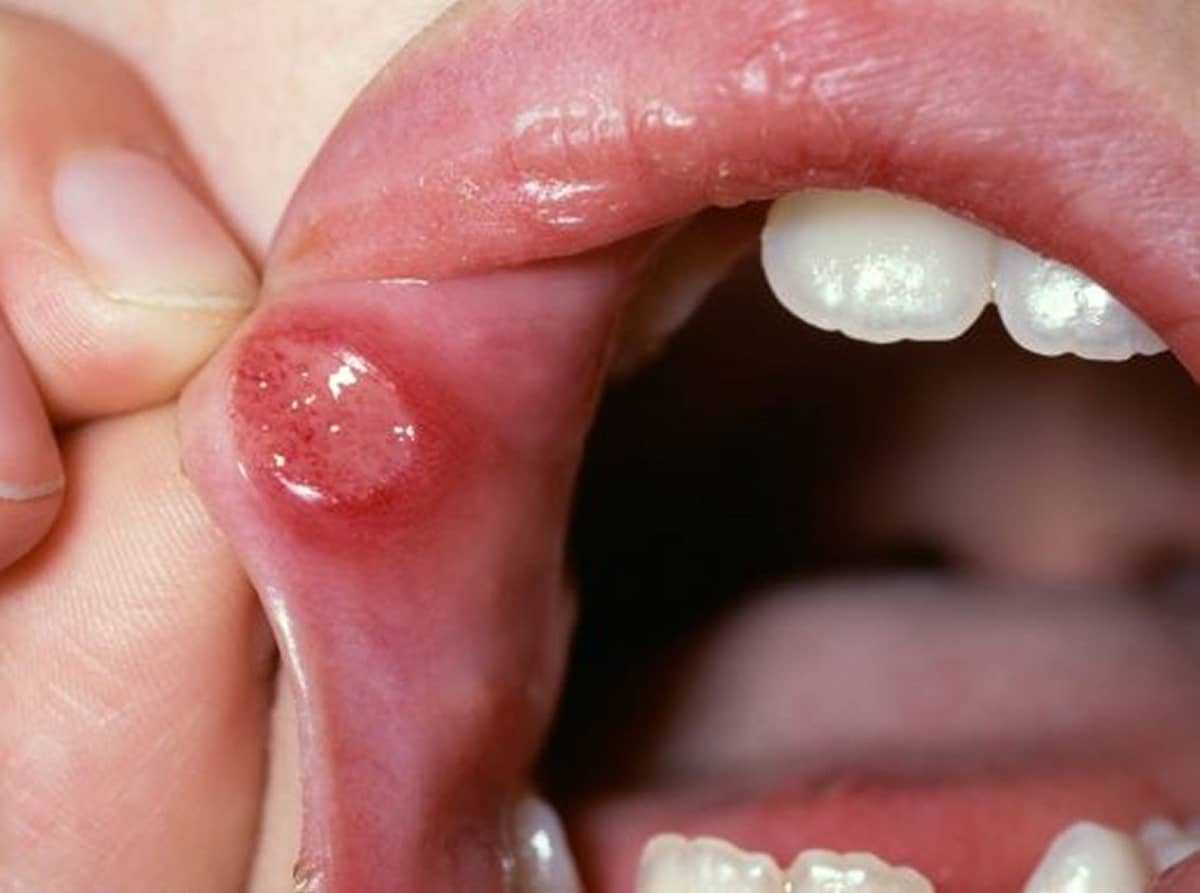
Less frequently, aphthae form on the soft or hard palate and in the transitional fold between the cheek and gums. Aphthae on the gums are uncommon.
Important: aphthae do not affect attached mucosa and the vermilion border of the lips. This is one of the key symptoms that helps distinguish them from herpes, which affects precisely these areas most often.
Types and Forms of Aphthous Stomatitis
Aphthous stomatitis can manifest differently, so several forms are distinguished in practice. They differ in the appearance of aphthae, their size, depth, and how long healing takes. This classification helps more accurately understand the disease’s course and select proper treatment.
Fibrinous Form
The fibrinous form is the most common variant of aphthous stomatitis. It’s characterized by small superficial erosions with light fibrinous coating and moderate pain. Usually, such aphthae heal within 7–14 days and don’t leave scars.

The course of this form is considered relatively mild, but it has a tendency to recur. In many people, aphthae recur 1–3 times per year, especially after stress, colds, or minor mucosal injuries.
Necrotic Form
The necrotic form is a more severe variant of aphthous stomatitis. The ulcers are deeper, with elements of necrosis, so pain is felt much more intensely than with ordinary aphthae. Healing is prolonged to 2–4 weeks, and after such lesions, scarring may remain.
Due to its more complex course, this form requires active treatment and specialist supervision. Necrotic aphthae often indicate problems with the body’s overall health, so it’s important to promptly consult a dentist or physician for detailed diagnostics.
Glandular Form
The glandular form is associated with minor salivary gland damage, so aphthae appear precisely along their excretory ducts. Ulcers often arise in the same places, since gland inflammation recurs and maintains a chronic process.
This form is characterized by a connection with salivary gland pathology—disruption of their function, duct blockage, or chronic inflammation. Because of this, treatment has its specifics: it’s important not only to heal the aphtha but also to restore normal gland function to prevent recurrences.
Scarring Form (Sutton’s Disease)
The scarring form, or Sutton’s disease, is the most severe form of aphthous stomatitis. The ulcers are large and deep, sometimes reaching 1–1.5 cm, causing very intense and prolonged pain. Healing can extend up to three months, and almost always after such aphthae, rough scars remain.
Due to scarring, the mucosa gradually deforms, affecting speech, chewing, and overall comfort. Such a course requires serious treatment and mandatory medical supervision, since the scarring form is often associated with deeper systemic disorders and has a tendency for regular recurrences.
Chronic Recurrent Aphthous Stomatitis
Chronic recurrent aphthous stomatitis is a condition where aphthae appear three or more times per year. The disease progresses in waves: after a remission period, exacerbation returns with painful ulcers that interfere with eating and talking.
Recurrences usually have their causes. The most common triggers are stress, decreased immunity, vitamin deficiency, mucosal microtrauma, hormonal changes, and infections. Many people also experience seasonality: tongue aphthae more often return in autumn or spring.
To control the chronic form, it’s important not only to treat aphthae during exacerbation but also to engage in prevention. This includes dietary correction, elimination of deficiencies, stress management, and treatment of comorbidities.
The prognosis is mostly favorable: with the right approach, recurrence frequency decreases, and symptom-free periods become longer.
Diagnosis of Aphthous Stomatitis
Diagnosis is based on clinical examination: the doctor assesses the appearance of aphthae, their number, depth, and localization. It’s important to exclude other diseases that can give similar symptoms—herpes, fungal infections, traumatic ulcers, allergic reactions, and systemic pathologies.
If necessary, blood tests are ordered to check for iron deficiency, vitamin B12 and folic acid, as well as markers of inflammation or autoimmune disorders. If aphthae occur frequently or have an atypical appearance, consultations with a gastroenterologist, immunologist, or dermatologist may be needed.
Dental Examination
Diagnosis begins with visual inspection. The dentist assesses the size, number, and localization of aphthae, and also determines the stage of the process—from prodrome to the healing stage.
A detailed medical history is mandatory: frequency of recurrences, possible triggers, comorbidities, dietary and stress factors. The doctor also checks whether there are traumatic elements in the oral cavity—sharp tooth edges, uncomfortable fillings, braces, or prostheses that may maintain inflammation.
Laboratory Tests
To clarify the causes of aphthae and exclude other conditions, basic and extended tests are ordered. First, a complete blood count is performed, and levels of vitamin B12, folic acid, and ferritin are determined—their deficiency often provokes recurrences.
With frequent or severe exacerbations, an immunogram may be needed to assess immune system function. If malabsorption is suspected, celiac disease tests and other GI examinations are conducted.
Biopsy is rarely needed—usually with atypical aphthous ulcers, suspected autoimmune processes, precancerous conditions, or when treatment is ineffective. Laboratory data are important for differential diagnosis with herpes, fungal infections, traumatic ulcers, and systemic diseases.
How Aphthous Differs from Herpetic Stomatitis
Aphthous and herpetic stomatitis have different origins and appearances, so it’s important to distinguish between them.
Herpes begins with small, multiple vesicles on attached mucosa or the vermilion border of the lips. The vesicles rupture, forming erosions. Fever often occurs, malaise appears, and the condition itself is contagious, since it’s caused by HSV virus.
Aphthous stomatitis manifests as one or several larger ulcers on movable mucosa—cheeks, lips, or tongue. Temperature is usually normal, and the disease isn’t transmitted by contact, as it’s associated with immune processes, trauma, or deficiencies.
Treatment is also different: herpes requires antiviral medications, while aphthous stomatitis needs local anti-inflammatory treatment, trigger elimination, and deficiency correction.
Treatment of Aphthous Stomatitis
Treatment of aphthous stomatitis is always comprehensive. It combines local therapy, which relieves pain and accelerates healing, and systemic methods that affect the cause of aphthae appearance. The regimen is selected individually: considering the form of stomatitis, frequency of recurrences, comorbidities, and possible triggers.
In most cases, treatment includes anti-inflammatory gels or solutions, pain relief agents, vitamin deficiency correction, and elimination of traumatic factors in the oral cavity. With severe or chronic course, medications affecting the immune response may be needed.
Properly selected therapy allows faster symptom relief, reduced recurrence frequency, and restored comfort in daily life.
Local Treatment
How to treat aphthous stomatitis locally? Antiseptic rinses are used to cleanse the mucosa—chlorhexidine or miramistin.
Pain is well relieved by anesthetic gels: Cholisal, Kamistad. If necessary, anti-inflammatory and keratoplastic agents are added, which accelerate mucosal recovery.
The scheme is simple: rinse, then apply gel. Use 2–3 times daily depending on symptoms.
Systemic Therapy
Systemic treatment is necessary when aphthae recur frequently or there are pronounced deficiencies. Most often, B vitamins, folic acid, and iron supplements are prescribed—they help restore the mucosa and reduce recurrence frequency.
With regular exacerbations, immunomodulators may be used, and if there’s an allergic component—antihistamines. A mandatory part of therapy is treatment of underlying GI diseases, thyroid disorders, or anemia.
Systemic deficiency correction is conducted in courses, usually from 4 to 12 weeks, depending on test results and treatment response. This approach helps stabilize the condition and reduce the number of recurrences.
Modern Treatment Methods
Modern approaches include hardware methods that accelerate healing and reduce pain. Most commonly used is laser therapy—it quickly relieves inflammation, reduces sensitivity, and shortens aphtha healing time.
Ozone therapy, photodynamic therapy, and ultrasound treatment are also applied. These methods improve circulation, reduce bacterial load, and stimulate tissue regeneration.
Advantages of hardware procedures are minimal trauma, rapid effect, and absence of adverse reactions. Most modern dental clinics in Ukraine offer such methods, so they’re accessible for both acute and recurrent forms of stomatitis.
Aphthae in Children: Features of Manifestation and Treatment
Aphthae in children are common and usually more painful than in adults. A child may refuse food, be tearful, and brush teeth poorly due to discomfort.
For treatment, only safe pediatric products are used: age-appropriate antiseptic rinses, anesthetic gels, and mild anti-inflammatory medications. Diet should be soft, not acidic, and not spicy.
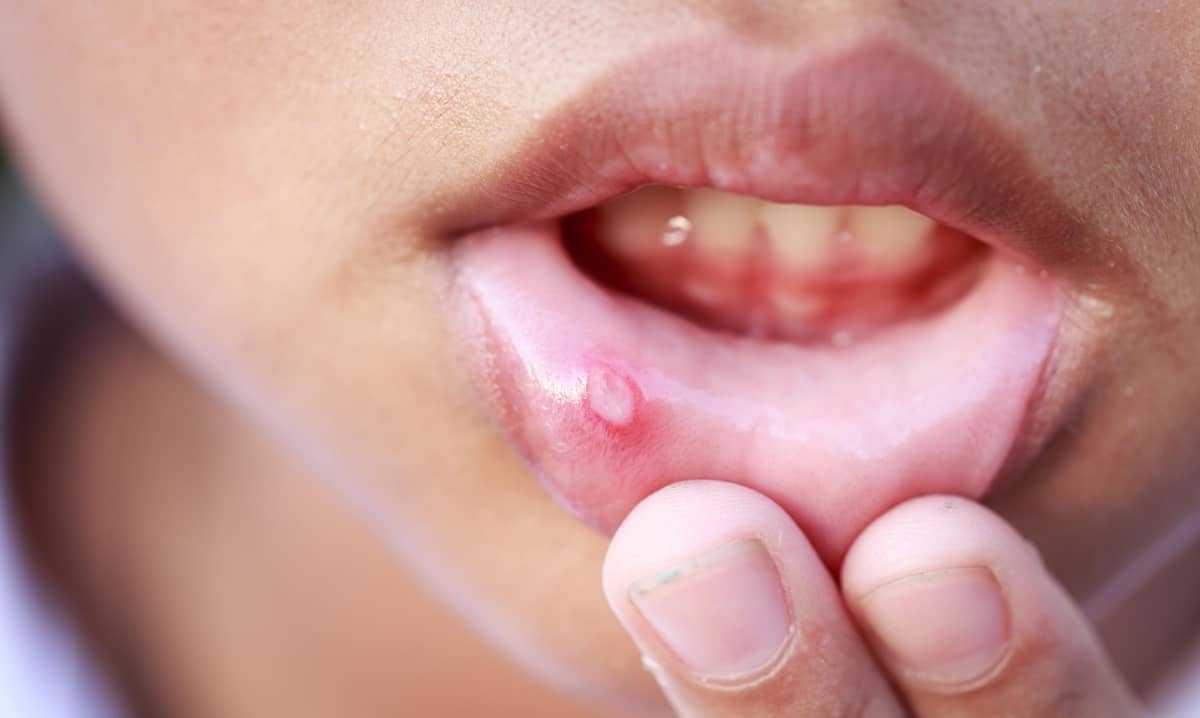
Psychological support is also important: calm explanations, gentle hygiene, and comfortable conditions.
See a doctor if aphthae recur frequently, don’t heal for more than two weeks, or are accompanied by fever—in such cases, deficiencies need checking and underlying diseases excluded.
Complications of Aphthous Stomatitis
Possible consequences of aphthous stomatitis without or with improper treatment:
- Chronification of the process—aphthae appear regularly, heal more slowly
- Secondary bacterial infection, which intensifies pain and prolongs recovery
- Scarring and mucosal deformation in severe and deep forms
- Spread of inflammatory process to larger areas of the oral cavity
- Deterioration of quality of life due to pain, eating difficulties, and hygiene issues
- Psychological discomfort with frequent recurrences—exhaustion, irritability, mood decline
Such complications are easily prevented with timely diagnosis and proper treatment.
Prevention of Aphthous Stomatitis
Prevention helps reduce recurrence frequency and ease disease course. Main measures:
- Careful oral hygiene: soft brush, non-traumatic products
- Avoiding trauma—sharp tooth edges, hard foods, aggressive rinses
- Correction of vitamin B12, folic acid, and iron deficiency based on test results
- Stress control and normal sleep schedule, since stress is a key aphthae trigger
- Balanced diet without excessive acidic, spicy, and mucosal-irritating foods
- Treatment of underlying GI diseases, endocrine disorders, allergies
- Smoking cessation, which intensifies mucosal inflammation
- Immune support—healthy daily routine, adequate protein, vitamins
Regular prevention significantly reduces the likelihood of new episodes and helps keep aphthous stomatitis under control.
When Should You Definitely See a Doctor?
See a doctor if aphthae don’t heal for more than 10–14 days, become very large, or excessively painful. Consultation is mandatory when recurrences happen more than three times a year, high fever appears, weakness, or enlarged lymph nodes.
It’s also important to get examined if ulcers constantly arise in the same place, or if there’s suspicion of allergy, anemia, celiac disease, and other underlying conditions. If home treatment doesn’t help, that’s also a reason to consult a specialist for diagnosis clarification and effective therapy selection.
Questions and Answers (FAQ)
1. How long does an aphtha take to heal? A typical aphtha heals within 7–14 days. Deeper and larger ones may take longer to heal.
2. Is aphthous stomatitis contagious? No, aphthous stomatitis is not transmitted. It’s not a viral infection.
3. Can aphthae be treated with folk remedies? No. Folk remedies can irritate the mucosa and worsen the condition. Use pharmacy products.
4. Why do aphthae appear in the same spot? Often this is related to repeated trauma or chronic inflammation in that area, sometimes—to salivary gland problems.
5. What tests should be done for frequent aphthae? It’s recommended to get CBC, ferritin, vitamin B12, folic acid, celiac disease tests, and, if necessary, an immunogram.
6. Can you cauterize an aphtha with alcohol or brilliant green? No. This causes chemical burn and slows healing.
7. How to distinguish an aphtha from herpes? An aphtha is a separate ulcer on movable mucosa. Herpes begins with small vesicles on the lip edge or attached mucosa, often accompanied by fever.
This article was written by Dr. Yulia Laskavaya, a dentist-therapist at Med-Deo Clinic. Dr. Laskavaya specializes in therapeutic dentistry and has extensive experience in diagnosing and treating oral mucosal conditions.
Make an appointment
You can make an appointment by filling out the application form on the website, as well as using instant messengers:
Make an appointment
You can make an appointment by filling out the application form on the website, as well as using instant messengers:


Make an appointment easily using chatbots:
Also, call the numbers:
Modern dentistry and medical centre "MED-DEO"
Choose a clinic whose location is more convenient for you.
Kyiv, Holosiivska/Demiivska metro station
130 Lobanovskoho Avenue


Working hours:
Mon - Sun: 8:00 AM - 9:00 PM
No days off!
Call the numbers:
How to get to us? Create a route
Create a route
Kyiv, Akademistechko metro station
78A, Irpinska str.



Working hours:
Mon-Sun: 8.00-21.00
Without days off!
Call the numbers:
How to get to us?
Create a route
Create a route
Kyiv, Heroiv Dnipra metro station
32A, Heroiv Dnipra str.
Working hours:
Mon-Sun: 8.00-21.00
Without days off!
Call the numbers:
How to get to us?
Create a route
Create a route
Kyiv, Teatralna metro station
9B, E. Chykalenko (Pushkinska) str.




Working hours:
Mon-Sat: 8.00 - 21.00. Sun: by appointment.
Without days off!
Call the numbers:
How to get to us?
Create a route
Create a route
Відгук від клієнта
0:00
0:00


Your email will not be published on the site.