Special offer! Comprehensive professional teeth cleaning for only 1699 UAH.
Special offer! Comprehensive professional teeth cleaning for only 1699 UAH.
Special offer! Comprehensive professional teeth cleaning for only 1699 UAH.
Special offer! Comprehensive professional teeth cleaning for only 1699 UAH.
Special offer! Comprehensive professional teeth cleaning for only 1699 UAH.
Special offer! Comprehensive professional teeth cleaning for only 1699 UAH.
Special offer! Comprehensive professional teeth cleaning for only 1699 UAH.
Special offer! Comprehensive professional teeth cleaning for only 1699 UAH.
Special offer! Comprehensive professional teeth cleaning for only 1699 UAH.
Special offer! Comprehensive professional teeth cleaning for only 1699 UAH.
Sign up
 (044) 394 90 94
(044) 394 90 94  Holosiivska/Demiivska metro station
Sign up
(044) 394 90 94
(044) 394 90 94
Doctors


 Prices
Blog
Contacts
Prices
Blog
Contacts
пр.Лобановського, 130, Київ, Україна
Temporarily closed
Opening soon
78A, Irpinska St., Kyiv, Ukraine
Temporarily closed
Opening soon
32A, Heroiv Dnipra St., Kyiv, Ukraine
Temporarily closed
Opening soon
9B, Yevhena Chykalenko St. (Pushkinska), Kyiv, Ukraine
Temporarily closed
Opening soon
(044) 394 90 94
Back
Dentistry
General Dentistry
Dental surgery
Dental Implants
Maxillofacial Surgery
Dental prosthetics
Cosmetic dentistry
Professional Dental Hygiene

Periodontics
Orthodontic dentistry

Gnathology & TMJ Therapy
Pediatric Dentistry
Dental X-Rays
Back
Orthodontic Center
Orthodontic dentistry
Gnathology & TMJ Therapy
Back
Prosthodontic Center
Dental prosthetics
Back
MED-DEO Center for Maxillofacial Surgery & Facial Plastics
Maxillofacial Surgery
Plastic surgery
Back
Surgical Dental Center
Dental surgery
Dental Implants
Search on the site


Popular requests
Teeth whitening
Treatment of caries
Wisdom tooth extraction
Bracket system
Dental veneers
Tooth restoration
Pediatric dentist
Consultation with a dentist-therapist
Search results by: «».
Unfortunately, no results were found for your search: “Pediatric Endocrinologist”, nothing was found.
You may find these links useful:
Clinics "MED-DEO"
пр.Лобановського, 130, Київ, Україна
Temporarily closed
Opening soon
78A, Irpinska St., Kyiv, Ukraine
Temporarily closed
Opening soon
32A, Heroiv Dnipra St., Kyiv, Ukraine
Temporarily closed
Opening soon
9B, Yevhena Chykalenko St. (Pushkinska), Kyiv, Ukraine
Temporarily closed
Opening soon
Services
Dentistry Orthodontic Center Prosthodontic Center MED-DEO Center for Maxillofacial Surgery & Facial Plastics Surgical Dental CenterGeneral Dentistry
Dental surgery
Dental Implants
Maxillofacial Surgery
Dental prosthetics
Cosmetic dentistry
Professional Dental Hygiene
Periodontics
Orthodontic dentistry
Gnathology & TMJ Therapy
Pediatric Dentistry
Dental X-Rays
Orthodontic dentistry
Gnathology & TMJ Therapy
Dental prosthetics
Maxillofacial Surgery
Dental surgery
Dental Implants
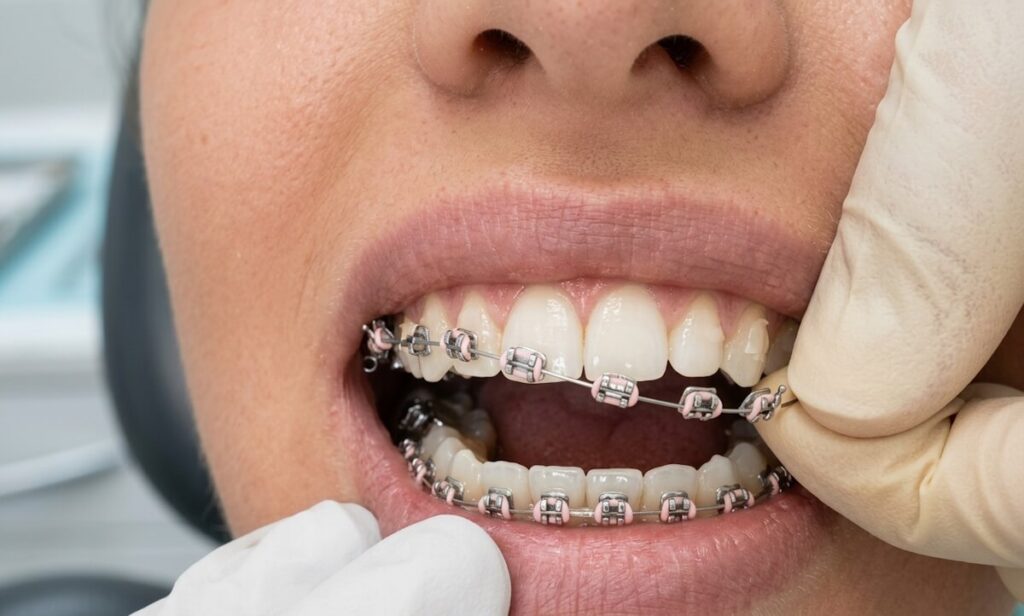

When It’s Time to Take Your Braces Off
Orthodontic treatment is a fairly complex process, so patients often have plenty of questions along the way. For example: How are braces removed once treatment is complete? What comes after braces? And how long do the results last?
In fact, both placing and removing braces are controlled processes. Your orthodontist plans them as part of your individual treatment plan. That said, the doctor decides to remove braces only after checking:
- The position of your teeth.
- How your jaws come together.
- The stability of your bite.
- The overall condition of your mouth.
In other words, the decision is never based on how the patient feels. It is made only once the doctor has confirmed that the planned result has been achieved.
Braces Installation
Learn moreIt’s important to understand that treatment doesn’t end when the braces come off. There is still the so-called retention period ahead. It is needed to lock in the results of orthodontic treatment and keep your new smile in place for years to come.
Why shouldn’t braces come off ahead of schedule? Only the clinical picture and the expected positive progress show whether tooth movement is complete and whether the braces can be removed. Doing so too early increases the risk that your teeth will shift again and your bite problems will return.
COMING UP IN THIS ARTICLE: how braces are removed, what is placed afterward, and how much it costs.
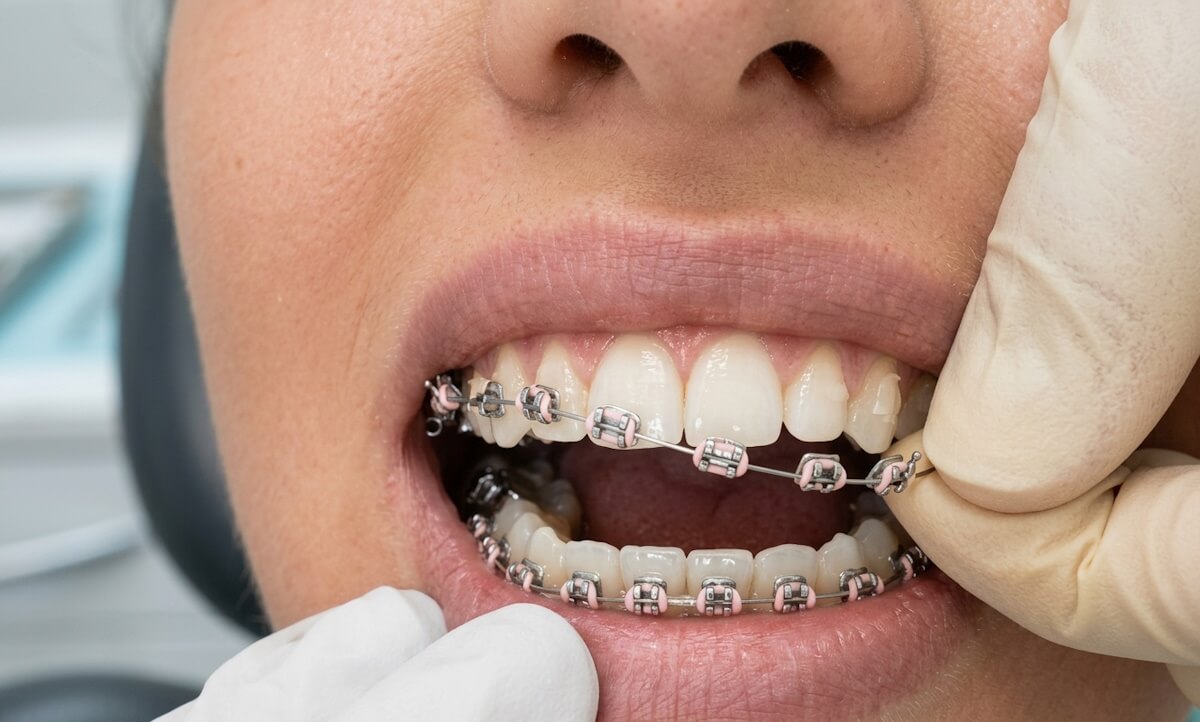
What Happens When Braces Are Removed
Many patients wonder whether removing braces is a complicated procedure. It isn’t. It’s a standard procedure that your orthodontist performs following a well-established routine. It doesn’t hurt, it’s carried out under the doctor’s full control, and it doesn’t damage healthy enamel.
Below is a closer look at how the braces are taken off.
What Happens in the Orthodontist’s Chair
Typically, the process of removing braces goes like this:
- A check-up of the braces and your mouth.
- Removal of the archwire.
- Removal of the braces themselves.
- Cleaning the adhesive off your teeth.
- Polishing the enamel.
- If needed, professional cleaning or enamel remineralization.
In most cases, all of these steps are completed in a single visit. During the same appointment, the orthodontist usually also selects a retainer to hold the results after your braces treatment.
Does Removing Braces Hurt, and How Long Does It Take?
Naturally, the question patients ask most often is: does it hurt to have braces removed? To be honest, no. In most cases, the procedure is practically painless. You may feel a little brief discomfort, similar to light pressure on your teeth.
After the braces are off, some people also notice mild tooth sensitivity or a reaction to cold. All of this is generally considered a normal response and goes away within a few days. It depends on each person’s individual tooth sensitivity.
The removal itself takes about 30-60 minutes. If additional procedures are done at the same time, or if a retainer is fitted, it may take a bit longer.
What Comes After Braces
What happens after braces is just as important a stage. If the results of orthodontic treatment aren’t secured, your teeth may shift again. Several factors play into this: teeth’s natural tendency to drift back to their original positions, and the fact that the surrounding bone takes time to remodel after treatment.
So after braces, special retention devices are placed. Put simply, these are retainers, which is why this stage is called the retention period. They don’t straighten your teeth; they hold them in their new, correct position.
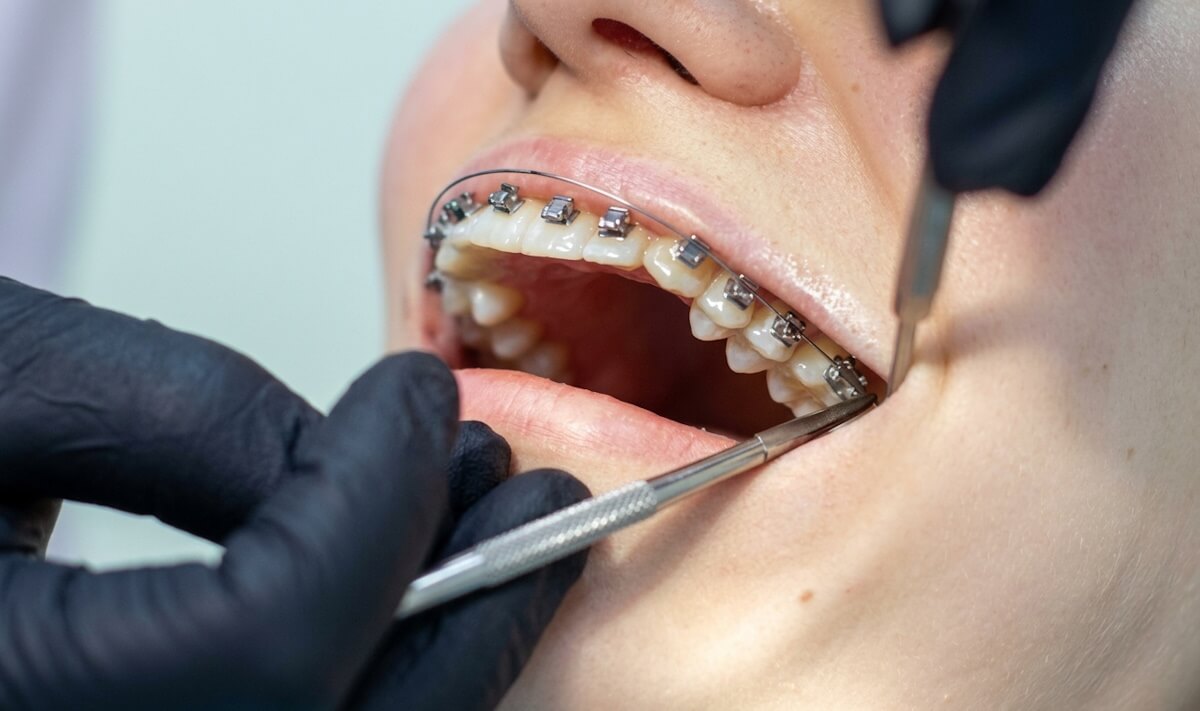
Of the available retention options, orthodontists most often recommend one of two:
- Fixed retainer – a thin metal wire bonded to the inner surface of the front teeth. It’s invisible when you talk and does a good job of keeping your bite stable. It suits people who don’t want to keep track of wearing a device themselves, or who need their teeth held in place at all times for clinical reasons.
- Clear retainer (aligner-style tray) – a transparent, removable device that’s usually worn on a schedule set by your doctor. To make it, the orthodontist takes impressions or digitally scans your teeth beforehand. It suits people for whom a removable retainer is clinically enough, or it can be used together with a fixed retainer for an even more stable result.
The choice of retainer always depends on your clinical situation, the original bite problem, the patient’s age and, of course, the risk of relapse. Often the best results come from combining a fixed retainer with a clear tray.
Your Teeth After Braces: What’s Normal
Once treatment is finished and all the orthodontic hardware is off, patients take a close look at their new smile. Sometimes certain changes cause concern. Most of them are perfectly normal and nothing to worry about. Others, however, do call for a follow-up visit.
Next, let’s look at when there’s no reason to panic and when an additional check-up is needed.
Sensitivity, Adhesive Residue, Spots, and Enamel Texture
In the first few days, your teeth may be sensitive after the braces come off, especially when you eat or drink something cold or hot. This usually passes on its own. In general, typical sensations after the procedure include:
- A temporary feeling of smoothness on your enamel after polishing.
- A slight change in the familiar feel of your teeth’s surface.
- A few traces of adhesive, if it couldn’t all be removed right away (if needed, your doctor can easily remove them at your follow-up visit).
It’s also worth knowing that if oral hygiene wasn’t thorough while you wore braces, light or dark spots may appear on the enamel once they’re removed. These aren’t caused by taking the braces off. They simply reflect changes in the enamel resulting from inadequate home care. In that case, your dentist can perform cosmetic enamel restoration.
When to See Your Orthodontist Again
A follow-up exam after orthodontic treatment is mandatory. But there are signs that mean you should see your doctor sooner, or come back in:
- Severe pain that doesn’t ease.
- Sudden or lasting tooth sensitivity.
- Irritation or injury to the soft tissue from the retainer.
- A retainer that has come loose or is damaged.
- Any concerns about the condition of your enamel or the position of your teeth.
Most of these situations can arise simply from your teeth and retainer adjusting after treatment is complete. Don’t wait for the problem to go away on its own. Everything is easy to resolve once your doctor has examined you, and the sooner the doctor assesses your teeth, the easier it is to fix any issues.
Caring for Your Teeth After Braces
Of course, after braces it’s not enough to just wear your retainers to lock in the results. Proper dental care matters during this period too. It’s what really helps you keep your beautiful smile for the long term and maintain your overall oral health.
Here are some practical recommendations for the retention period.
IMPORTANT IN THE FIRST FEW DAYS
- Keep your hygiene routine gentle – use only a soft-bristled toothbrush for now.
- Keep an eye on sensitivity – if your teeth have become more sensitive, temporarily avoid very cold, hot, or overly hard foods.
- In general, stick to a gentle diet in the first few days, especially if your doctor has advised it.
- Clean your retainer or tray regularly – as your doctor has recommended.
IMPORTANT IN THE FIRST MONTH
- Follow your retainer or tray wear schedule strictly.
- Carefully follow all of your orthodontist’s recommendations.
- Maintain regular, thorough but gentle oral hygiene at home.
- Don’t skip any scheduled check-ups with your doctor.
- If needed, have a professional cleaning or enamel remineralization if your doctor recommends it (this helps your enamel recover even faster).
How Much Does Braces Removal Cost?
The cost of braces removal depends on several factors, mainly the scope of work required in your particular case. That’s why there’s no one-size-fits-all answer. The price is set individually and, above all, only after an orthodontist has examined you.
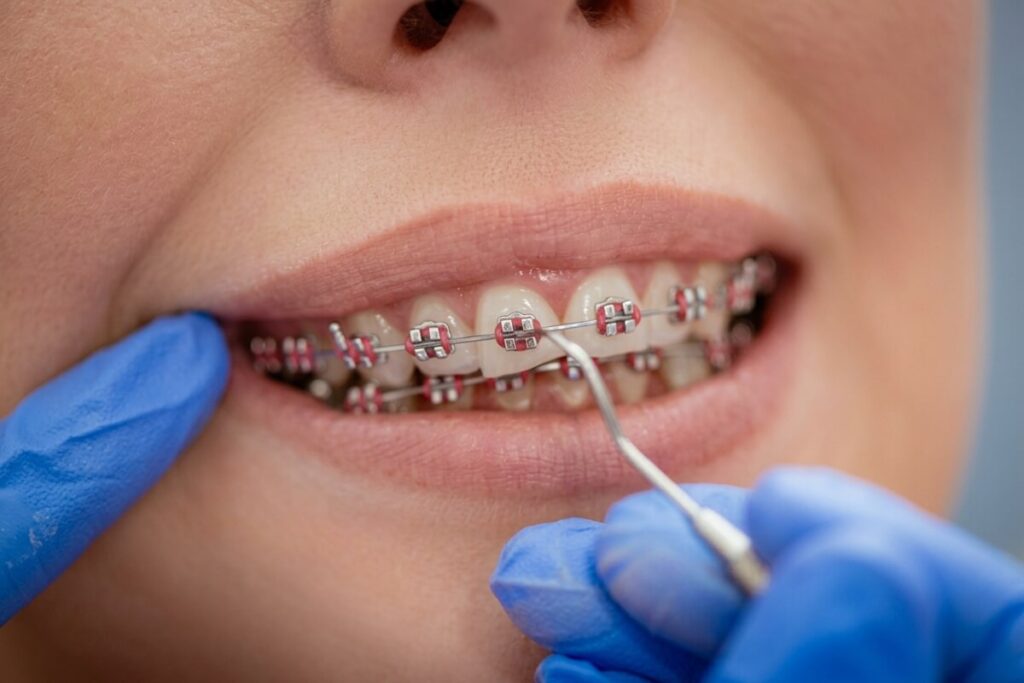
So, the cost of braces removal may be affected by the following:
- How complex the procedure is in your particular case.
- Whether adhesive residue needs to be cleaned off your teeth.
- Enamel polishing.
- Professional cleaning.
- Whether enamel remineralization is needed (as indicated).
- Placement of a fixed retainer or fabrication of a custom tray.
- Follow-up check-ups after treatment is complete.
The administrator at Med-Deo Clinic will be happy to book you an appointment. There, together with your doctor, you can discuss any concerns, draw up a clear action plan, and find out the cost of all services related to braces removal and orthodontic treatment in general.
Frequently Asked Questions (FAQ)
Does it hurt to have braces removed?
Removing braces usually doesn’t hurt. During the procedure, you may feel light pressure on your teeth or just brief discomfort.
How long does braces removal take?
Removing braces takes approximately 30-60 minutes. If the doctor also fits a retainer or takes impressions for a clear retainer during the same appointment, the visit may run slightly longer.
What comes after braces?
After braces, you’ll usually get a retainer, either removable (a clear tray) or fixed (a thin metal wire). It’s needed to lock in the results and keep your teeth in their new, correct position.
Can I eat right after my braces are removed?
Yes, you can eat right away. If your teeth feel sensitive in the first few days, it’s best to avoid very hot, cold, or hard foods during that time.
Why might my teeth be sensitive after braces are removed?
Teeth can be sensitive after braces removal because the enamel and tooth tissues are adjusting after orthodontic treatment ends. It usually goes away on its own within a few days.
Article author: Tatyana Zhivilova, pediatric dentist, orthodontist, general dentist, and gnathologist



Make an appointment
You can make an appointment by filling out the application form on the website, as well as using instant messengers:
Make an appointment
You can make an appointment by filling out the application form on the website, as well as using instant messengers:


Make an appointment easily using chatbots:
Also, call the numbers:
Modern dentistry and medical centre "MED-DEO"
Choose a clinic whose location is more convenient for you.
Kyiv, Holosiivska/Demiivska metro station
130 Lobanovskoho Avenue


Working hours:
Mon - Sun: 8:00 AM - 9:00 PM
No days off!
Call the numbers:
How to get to us? Create a route
Create a route
Kyiv, Akademistechko metro station
78A, Irpinska str.


Working hours:
Mon-Sun: 8.00-21.00
Without days off!
Call the numbers:
How to get to us?
Create a route
Create a route
Kyiv, Heroiv Dnipra metro station
32A, Heroiv Dnipra str.
Working hours:
Mon-Sun: 8.00-21.00
Without days off!
Call the numbers:
How to get to us?
Create a route
Create a route
Kyiv, Teatralna metro station
9B, E. Chykalenko (Pushkinska) str.



Working hours:
Mon-Sat: 8.00 - 21.00. Sun: by appointment.
Without days off!
Call the numbers:
How to get to us?
Create a route
Create a route
Відгук від клієнта
0:00
0:00


Your email will not be published on the site.