Special offer! Comprehensive professional teeth cleaning for only 1699 UAH.
Special offer! Comprehensive professional teeth cleaning for only 1699 UAH.
Special offer! Comprehensive professional teeth cleaning for only 1699 UAH.
Special offer! Comprehensive professional teeth cleaning for only 1699 UAH.
Special offer! Comprehensive professional teeth cleaning for only 1699 UAH.
Special offer! Comprehensive professional teeth cleaning for only 1699 UAH.
Special offer! Comprehensive professional teeth cleaning for only 1699 UAH.
Special offer! Comprehensive professional teeth cleaning for only 1699 UAH.
Special offer! Comprehensive professional teeth cleaning for only 1699 UAH.
Special offer! Comprehensive professional teeth cleaning for only 1699 UAH.
Sign up
 (044) 394 90 94
(044) 394 90 94  Holosiivska/Demiivska metro station
Sign up
(044) 394 90 94
(044) 394 90 94
Doctors


 Prices
Blog
Contacts
Prices
Blog
Contacts
пр.Лобановського, 130, Київ, Україна
Temporarily closed
Opening soon
78A, Irpinska St., Kyiv, Ukraine
Temporarily closed
Opening soon
32A, Heroiv Dnipra St., Kyiv, Ukraine
Temporarily closed
Opening soon
9B, Yevhena Chykalenko St. (Pushkinska), Kyiv, Ukraine
Temporarily closed
Opening soon
(044) 394 90 94
Back
Dentistry
General Dentistry
Dental surgery
Dental Implants
Maxillofacial Surgery
Dental prosthetics
Cosmetic dentistry

Professional Dental Hygiene

Periodontics
Orthodontic dentistry

Gnathology & TMJ Therapy

Pediatric Dentistry
Dental X-Rays
Back
Orthodontic Center
Orthodontic dentistry
Gnathology & TMJ Therapy
Back
Prosthodontic Center
Dental prosthetics
Back
MED-DEO Center for Maxillofacial Surgery & Facial Plastics
Maxillofacial Surgery
Plastic surgery
Back
Surgical Dental Center
Dental surgery
Dental Implants
Search on the site


Popular requests
Teeth whitening
Treatment of caries
Wisdom tooth extraction
Bracket system
Dental veneers
Tooth restoration
Pediatric dentist
Consultation with a dentist-therapist
Search results by: «».
Unfortunately, no results were found for your search: “Pediatric Endocrinologist”, nothing was found.
You may find these links useful:
Clinics "MED-DEO"
пр.Лобановського, 130, Київ, Україна
Temporarily closed
Opening soon
78A, Irpinska St., Kyiv, Ukraine
Temporarily closed
Opening soon
32A, Heroiv Dnipra St., Kyiv, Ukraine
Temporarily closed
Opening soon
9B, Yevhena Chykalenko St. (Pushkinska), Kyiv, Ukraine
Temporarily closed
Opening soon
Services
Dentistry Orthodontic Center Prosthodontic Center MED-DEO Center for Maxillofacial Surgery & Facial Plastics Surgical Dental CenterGeneral Dentistry
Dental surgery
Dental Implants
Maxillofacial Surgery
Dental prosthetics
Cosmetic dentistry
Professional Dental Hygiene
Periodontics
Orthodontic dentistry
Gnathology & TMJ Therapy
Pediatric Dentistry
Dental X-Rays
Orthodontic dentistry
Gnathology & TMJ Therapy
Dental prosthetics
Maxillofacial Surgery
Dental surgery
Dental Implants


What Is a Gum Abscess?
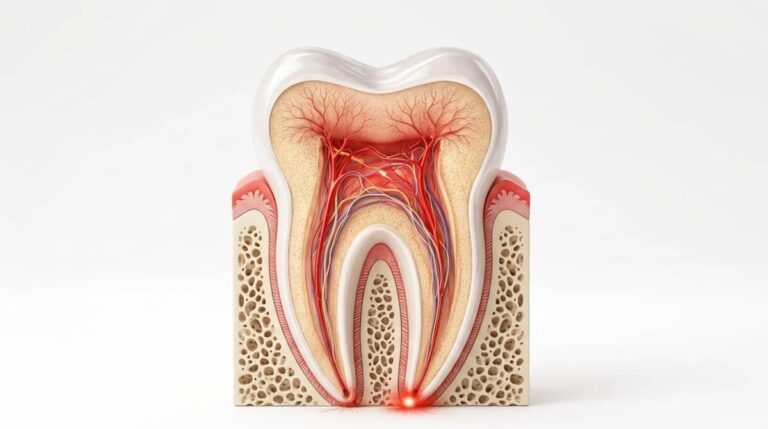
A gum abscess is an acute inflammatory process affecting the periosteum (the membrane covering the bone) of a tooth, accompanied by the formation of a purulent pocket near the root. The disease typically develops due to a bacterial infection. Most commonly, the source of infection comes from food particles that penetrate deep into the tooth tissue or gum pocket, where they gradually decompose and trigger inflammation. Another less common but dangerous factor can be fragments of dental instruments accidentally left in root canals during treatment.
An abscess is a localized collection of pus that, as it grows, causes redness and swelling of the gums. This results in severe throbbing pain that radiates to the cheeks and chin.
Many patients mistakenly believe that periostitis isn’t a serious condition and attempt to treat it themselves using various rinses and ointments, but this often leads to complications.
A ruptured abscess with pus draining externally doesn’t guarantee recovery. The inflammatory process can continue, spreading to adjacent teeth and jawbone.
Dentists strongly recommend seeking professional care if an abscess develops. This helps quickly eliminate pain, provide effective treatment, and prevent complications.
Treatment of a tooth cyst
More
Dental Abscess: Signs
The development of a gum abscess is accompanied by the following manifestations:
- Formation of a swelling in the area of the affected tooth
- Swelling and redness of the gums
- Intense throbbing pain that worsens when touching the affected area
- Swelling of the cervical lymph nodes
- Sometimes swelling of the cheeks or chin and elevated body temperature
The most characteristic signs of a tooth abscess are redness of the gums, appearance of a “bump” above the tooth root, and severe pain. Other symptoms may appear later when the abscess enlarges or the inflammatory process spreads to adjacent tissues.
What Can Be Confused with an Abscess
An abscess is an infectious-inflammatory disease of the tooth periosteum characterized by swelling and may contain pus. However, its signs can resemble symptoms of other conditions. Pathologies that can be confused with an abscess include:
- Cavities or their complications, such as pulpitis and periodontitis, which can also cause pain and swelling
- Tooth or gum injuries leading to swelling and pain resembling abscess symptoms
- Gum diseases (for example, gingivitis or periodontitis), which may present with symptoms similar to an abscess, including swelling and bleeding gums
- Furunculosis or other infectious diseases that lead to the formation of pustules and swelling in the facial area
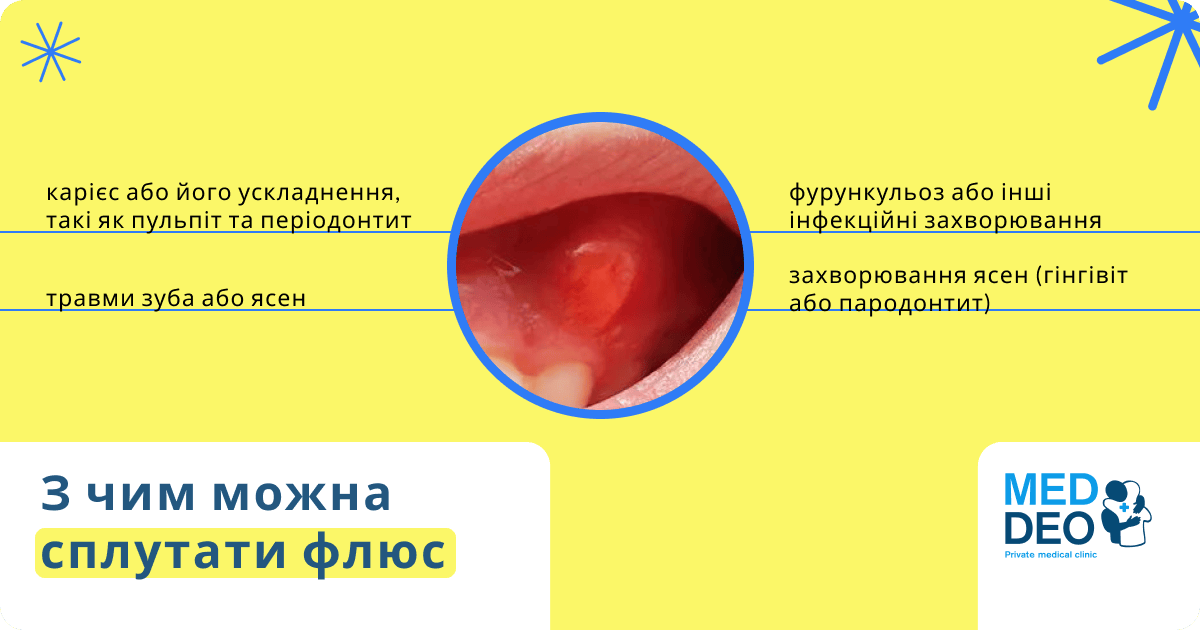
It’s important to avoid self-treatment and consult a dentist when symptoms appear for accurate diagnosis and appropriate treatment.
Types of Abscesses
Depending on the route of infection penetration into the jaw periosteum, the following forms of periostitis can be distinguished:
- Odontogenic periostitis: caused by tooth disease
- Hematogenous: caused by infection spread through the bloodstream
- Lymphogenic: occurs when infection spreads through lymphatic pathways
- Traumatic: develops as a result of periosteal damage
Considering the clinical course, abscesses can be:
- Acute: includes serous or purulent periostitis
- Chronic: simple or ossifying periostitis
Acute serous periostitis of the jaw is characterized by infiltration of the periosteum and accumulation of a moderate amount of serous exudate in the inflammatory focus. Acute purulent periostitis of the jaw is accompanied by the formation of a localized abscess under the periosteum and formation of fistulas through which pus flows outward.
Chronic jaw abscess is characterized by a prolonged infectious-inflammatory process in the periosteum. With simple periostitis, the process of new bone tissue formation is reversible, while with ossifying periostitis, rapid progression of ossification and hyperostosis is observed.
Considering the degree of spread, purulent periostitis of the jaw can be localized (in the area of one or several teeth) or diffuse (covering practically the entire jaw).
Symptoms of Gum Abscesses
Symptoms of gum abscesses may include the following:
- Formation of a lump in the area of the diseased tooth
- Swelling and redness of the gums
- Severe throbbing pain that intensifies when touching the affected area
- Swelling of cervical lymph nodes, sometimes swelling of the cheek or chin
- Elevated body temperature
With an abscess, swelling appears on the cheek and facial shape changes due to swelling of soft tissues in the area around the jaw.
What does an abscess look like? The most characteristic signs of an abscess are redness of the gums, formation of a “bump” above the tooth root, and severe pain. Other symptoms may appear later due to enlargement of the abscess or spread of the inflammatory process to adjacent tissues.ктично всю щелепу).


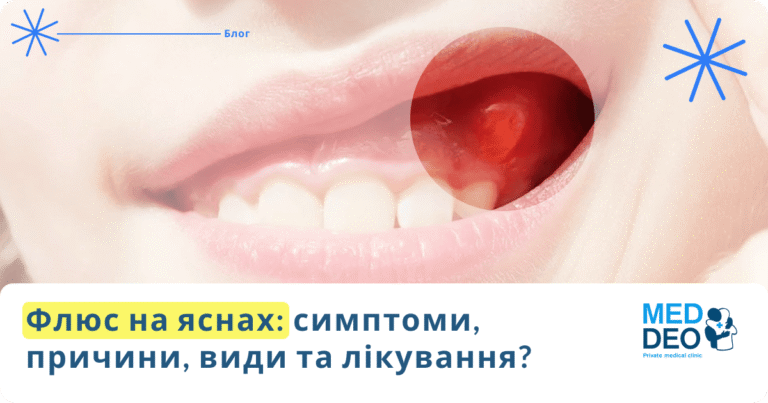
Stages of Disease Development
Typically, how an abscess begins is clearly expressed; redness, gum swelling, and pain occur within one or several days. This course of disease is characteristic of the active form.
In approximately 10-12% of cases, chronic periostitis occurs, in which most symptoms are absent, including pain. The patient may notice only slight redness of the gums and minor discomfort when chewing or brushing teeth. However, the inflammatory process continues to progress, leading to thickening of the periosteum and enlargement of the abscess. In the presence of provoking factors, the disease can become acute.
Acute abscess develops in three stages:
- Initial: characterized by slight redness of the gums and mild pain when touched
- Moderate: manifests with swelling, formation of a “spherical” tumor (abscess), and throbbing pain
- Severe: accompanied by swelling of the lips, cheeks, or chin, enlarged lymph nodes, elevated body temperature, and general deterioration of well-being
Can an Abscess Be Treated at Home
In the early stages of abscess formation, home treatment methods can be attempted, but they are aimed at alleviating symptoms until you can obtain qualified medical care from a dentist. It’s necessary to understand that self-treatment of an abscess at home doesn’t replace the need to consult a specialist, especially if symptoms don’t improve or worsen.
It should be remembered that only a qualified medical professional can provide complete and effective treatment of an abscess, particularly an advanced process.
It’s worth noting that one of the integral stages in treating an abscess is the procedure of incising the abscess and manipulations that help extract pus from the gums.
This action should not be performed independently, as without specialized instruments it’s quite difficult to achieve complete removal of exudate. Moreover, it’s impossible to ensure proper drainage placement, which can lead to repeated pus accumulation. Self-intervention increases the risk of other infections entering the wound, which can cause the development of serious complications.
Treatment of Abscess at Med-Deo Dental Clinic
Only an experienced specialist knows how to properly treat an abscess and can provide a comprehensive approach and develop treatment tactics depending on the cause of the pathological process.
At Med-Deo dental clinic, abscess treatment includes the following stages:
- Examination and diagnostics to establish an accurate diagnosis
- Procedure for opening the abscess and removing pus
- Irrigation of the wound with antiseptic solutions and removal of infected tissue
- Installation of drainage for effective pus discharge
- Prescription and administration of antibiotics to fight infection and prevent recurrence
- If necessary, prescription of anti-inflammatory medications to relieve pain and inflammation
- Elimination of the root cause of the abscess (treatment of cavities or removal of the diseased tooth)
Effective treatment of an abscess can only be achieved with timely consultation with a specialist. The earlier treatment of the abscess begins, the higher the likelihood of preserving the tooth and preventing consequences.
What to Rinse With to Draw Out Pus
Effective methods for rinsing the mouth with an abscess to promote drainage include using antiseptic solutions such as chlorhexidine or hydrogen peroxide. Herbal decoctions can also be used, for example, chamomile or sage, which have anti-inflammatory and antimicrobial properties, as well as baking soda and salt solution.
It’s important to follow the doctor’s recommendations and perform rinses regularly to speed up the healing process and prevent the spread of infection.
If you or your child develops an abscess, it’s important to seek help from specialists. The experienced doctors at Med-Deo clinic will provide quality and timely treatment aimed at effectively eliminating the problem.
Remember that immediate consultation with professionals will help prevent possible complications and preserve dental health.
Author: dentist-therapist Galina Petrivna Grushetska
Make an appointment
You can make an appointment by filling out the application form on the website, as well as using instant messengers:
Make an appointment
You can make an appointment by filling out the application form on the website, as well as using instant messengers:


Make an appointment easily using chatbots:
Also, call the numbers:
Modern dentistry and medical centre "MED-DEO"
Choose a clinic whose location is more convenient for you.
Kyiv, Holosiivska/Demiivska metro station
130 Lobanovskoho Avenue


Working hours:
Mon - Sun: 8:00 AM - 9:00 PM
No days off!
Call the numbers:
How to get to us? Create a route
Create a route
Kyiv, Akademistechko metro station
78A, Irpinska str.


Working hours:
Mon-Sun: 8.00-21.00
Without days off!
Call the numbers:
How to get to us?
Create a route
Create a route
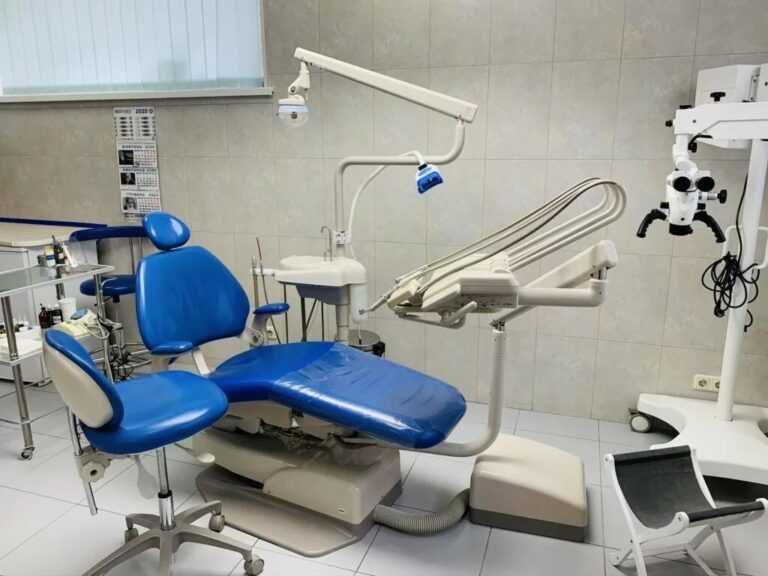
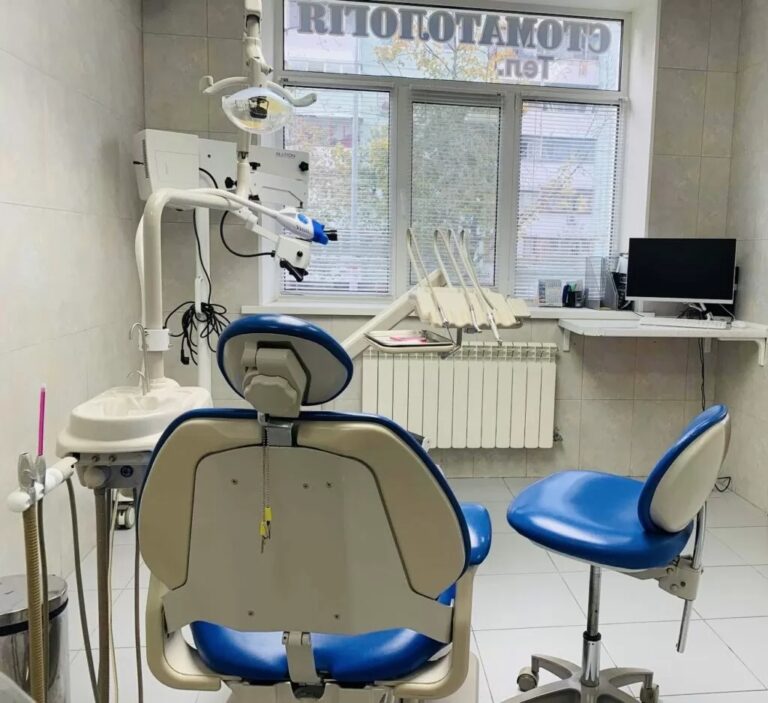
Kyiv, Heroiv Dnipra metro station
32A, Heroiv Dnipra str.
Working hours:
Mon-Sun: 8.00-21.00
Without days off!
Call the numbers:
How to get to us?
Create a route
Create a route
Kyiv, Teatralna metro station
9B, E. Chykalenko (Pushkinska) str.



Working hours:
Mon-Sat: 8.00 - 21.00. Sun: by appointment.
Without days off!
Call the numbers:
How to get to us?
Create a route
Create a route
Відгук від клієнта
0:00
0:00

Your email will not be published on the site.