Special offer! Comprehensive professional teeth cleaning for only 1899 UAH.
Special offer! Comprehensive professional teeth cleaning for only 1899 UAH.
Special offer! Comprehensive professional teeth cleaning for only 1899 UAH.
Special offer! Comprehensive professional teeth cleaning for only 1899 UAH.
Special offer! Comprehensive professional teeth cleaning for only 1899 UAH.
Special offer! Comprehensive professional teeth cleaning for only 1899 UAH.
Special offer! Comprehensive professional teeth cleaning for only 1899 UAH.
Special offer! Comprehensive professional teeth cleaning for only 1899 UAH.
Special offer! Comprehensive professional teeth cleaning for only 1899 UAH.
Special offer! Comprehensive professional teeth cleaning for only 1899 UAH.
Sign up
 (044) 394 90 94
  Holosiivska/Demiivska metro station
Doctors


 Prices
Blog
Contacts
пр.Лобановського, 130, Київ, Україна
Temporarily closed
Opening soon
78A, Irpinska St., Kyiv, Ukraine
Temporarily closed
Opening soon
32A, Heroiv Dnipra St., Kyiv, Ukraine
Temporarily closed
Opening soon
9B, Yevhena Chykalenko St. (Pushkinska), Kyiv, Ukraine
Temporarily closed
Opening soon
Sign up
En
(044) 394 90 94
Back
Dentistry
General Dentistry
Dental surgery
Dental Implants
Maxillofacial Surgery
Dental prosthetics
Cosmetic dentistry
Professional Dental Hygiene

Periodontics
Orthodontic dentistry

Gnathology & TMJ Therapy

Pediatric Dentistry
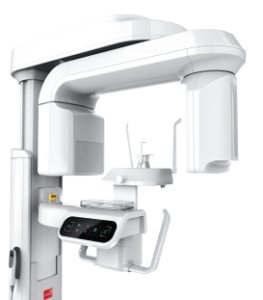
Dental X-Rays
Back
Orthodontic Center
Orthodontic dentistry
Gnathology & TMJ Therapy
Back
Prosthodontic Center
Dental prosthetics
Back
MED-DEO Center for Maxillofacial Surgery & Facial Plastics
Maxillofacial Surgery
Plastic surgery
Back
Surgical Dental Center
Dental surgery
Dental Implants
Search on the site


Popular requests
Teeth whitening
Treatment of caries
Wisdom tooth extraction
Bracket system
Dental veneers
Tooth restoration
Pediatric dentist
Consultation with a dentist-therapist
Search results by: «».
Unfortunately, no results were found for your search: “Pediatric Endocrinologist”, nothing was found.
You may find these links useful:
Clinics "MED-DEO"
пр.Лобановського, 130, Київ, Україна
Temporarily closed
Opening soon
78A, Irpinska St., Kyiv, Ukraine
Temporarily closed
Opening soon
32A, Heroiv Dnipra St., Kyiv, Ukraine
Temporarily closed
Opening soon
9B, Yevhena Chykalenko St. (Pushkinska), Kyiv, Ukraine
Temporarily closed
Opening soon
Services
Dentistry Orthodontic Center Prosthodontic Center MED-DEO Center for Maxillofacial Surgery & Facial Plastics Surgical Dental CenterGeneral Dentistry
Dental surgery
Dental Implants
Maxillofacial Surgery
Dental prosthetics
Cosmetic dentistry
Professional Dental Hygiene
Periodontics
Orthodontic dentistry
Gnathology & TMJ Therapy
Pediatric Dentistry
Dental X-Rays
Orthodontic dentistry
Gnathology & TMJ Therapy
Dental prosthetics
Maxillofacial Surgery
Dental surgery
Dental Implants

Wisdom tooth removal consists of several stages. First comes an examination and diagnosis, followed by anesthesia and then the extraction itself. The procedure can be either simple or involve sectioning the tooth into fragments, for example when it sits at an angle or has several roots. After the tooth is out, the dentist cleans the socket where it was and stitches it closed.
During the extraction, the patient feels pressure, slight pulling, and the movement of instruments, but no pain, because the procedure is done under anesthesia. After the procedure, the patient may need to come back for a follow-up exam if the dentist requests it.
Wisdom tooth extraction
Wisdom Tooth Extraction CostIn this article, we’ll look at why wisdom teeth cause problems in the first place and when they really do need to come out. We’ll also cover how wisdom teeth are removed in different cases (simple and complex), how preparation works, what types of anesthesia are available, and how long recovery takes.
What a Wisdom Tooth Is and Why It’s Problematic
Wisdom teeth are the third molars, the last (eighth) teeth in each row. That’s why they’re commonly called simply “eights.” Not everyone gets them, and they don’t always erupt fully; for example, a person may have fewer than all four. They come in late, usually between the ages of 17 and 25 and sometimes as late as 30. But the process is individual, and some people’s wisdom teeth never erupt at all. These are known as impacted teeth: they’ve formed but remain fully or partly in the jawbone or under the gums.

There’s nothing special about how a wisdom tooth looks compared to other chewing teeth. It looks very similar to the other molars, but it often has atypical roots that can be curved or fused together. The modern jaw, which has changed and become smaller over the course of human evolution, often doesn’t have enough room for wisdom teeth to erupt properly. That’s why they can be problematic, especially if a tooth grows at an angle and is already pressing against its neighbors.
It’s also worth noting that a wisdom tooth barely takes part in chewing. Because it sits at the very back of the dental arch, food hardly ever reaches it. This is especially true if the wisdom tooth has come in on only one jaw, only partly, or at a tilt: it simply has nothing to meet and grind food against, because it has no opposing tooth (antagonist). That’s why not having wisdom teeth, or losing them, generally doesn’t affect chewing.
However, this same position makes wisdom teeth hard to clean, because a toothbrush barely reaches them. As a result, food debris and plaque build up around the tooth, especially if it has only partly erupted. This is another of the “problems with wisdom teeth,” and it raises the risk of cavities and gum inflammation.
The structure of a wisdom tooth’s roots, its position in the bone, and its proximity to a nerve or the maxillary sinus all make removal more complicated. In other words, the process can differ from removing an ordinary tooth. That’s why a wisdom tooth sometimes calls for proper surgery rather than a few minutes of work with forceps.
Why Remove Wisdom Teeth: Indications
There are clinical indications for removing wisdom teeth. These include:
- Cavities and pulpitis in a wisdom tooth – treatment can be complicated by the tooth’s remote location, so removal sometimes becomes the more sensible option. Root canal treatment can be especially difficult here, because the tooth’s position usually means curved canals and very limited, awkward access to them.
- Pericoronitis – when the flap of gum tissue (“hood”) over a partly erupted wisdom tooth becomes inflamed, it can cause pain, swelling, and even difficulty opening the mouth.
- Crowding and pressure on neighboring teeth – if a wisdom tooth keeps pushing against the neighboring second molar, causing it to shift, decay, or even undergo resorption (begin losing part of its root).
- A cyst or other tumor-like growth – changes like these around an impacted tooth very often call for surgery.
- Impaction with pain – when partial eruption (most often due to the tooth’s abnormal position) is accompanied by pain or inflammation.
- Preparation for orthodontic treatment or an implant – when a wisdom tooth may interfere with the necessary movement of teeth or with placing an implant.
It’s important to understand: the decision to remove a wisdom tooth is made by the dentist individually for each patient, and not simply based on symptoms or complaints of pain. It’s made after a panoramic X-ray or a CT scan of the jaw, and with an understanding of the whole clinical picture.
Do You Have to Remove Wisdom Teeth If They Don’t Hurt?
If your wisdom teeth don’t hurt, removing them isn’t mandatory. But many patients believe “if it doesn’t hurt, don’t touch it.” That’s not quite right, because the need to remove a wisdom tooth can arise whether or not there’s pain. For example, when there’s a cyst, a cavity on the contact surface, or damage to the root of the neighboring tooth. All of this is initially symptom-free and only shows up later on an X-ray. So whether removal is necessary is, of course, determined by the dentist after diagnostics. In this case, the dentist assesses the position of the tooth itself, the condition of the bone around it and of its roots, any signs of inflammation, the risks to neighboring teeth, and whether proper hygiene is possible.
It should also be said that international guidelines today don’t support preventive removal of wisdom teeth without urgent need and without indications. Even if they’ve erupted only partly, healthy impacted wisdom teeth shouldn’t be removed just for the sake of it. If such a tooth isn’t causing problems, monitoring it with regular dental checkups is perfectly acceptable.
When a Wisdom Tooth Can Be Kept and When Removal Is Postponed
There are cases when a wisdom tooth can be left in place, treated instead of removed, or simply monitored if it’s healthy. This is usually the case when the tooth:
- Has fully erupted.
- Sits correctly in the dental arch.
- Is sufficiently mineralized (strong) and shows no signs of decay.
- Is accessible for proper cleaning that won’t injure the lining of the cheek.
- Doesn’t bother its “neighbors,” doesn’t press on them, and doesn’t negatively affect the bite.
- Has no inflamed tissue around it and no potential risk of it developing.
Of course, there are also contraindications, or recommendations to postpone wisdom tooth removal. In some cases it’s worth delaying if there is:
- An acute infection in the oral cavity.
- Uncontrolled (decompensated) diabetes, meaning blood sugar isn’t under control.
- Uncontrolled hypertension or other cardiovascular conditions.
- Use of anticoagulants (blood thinners) – this should be coordinated with the doctor who prescribed them.
- A cold, flu, or another acute respiratory illness.
- The first and third trimesters of pregnancy.
Important: These contraindications are NOT a “ban forever.” They’re a reason to take preparation more seriously and to consult your doctors about the removal. For example, removing wisdom teeth during pregnancy requires an individual assessment of the stage of pregnancy and the patient’s condition. Elective procedures may be postponed, but urgent dental treatment, including extractions, is performed during pregnancy when indicated.

Preparing for Removal: Diagnostics and What to Tell Your Dentist
Before the procedure, the dentist needs to understand not only what’s going on with the tooth itself, but also how safe it is to remove it at all. The dentist may order diagnostic tests such as:
- A periapical X-ray – to assess the specific tooth and the position of its roots relative to the neighboring tooth.
- An OPG (panoramic X-ray) – an overall picture of the entire dental arch and both jaws.
- A CT scan of the jaw – in complex cases, to see exactly how close the tooth’s root is to the nerve (in the lower jaw) or the maxillary sinus (in the upper jaw). This matters because it helps the dentist avoid damaging the nerve or the sinus during removal.
What a patient should be sure to tell the dentist before having a tooth removed:
- Any chronic conditions.
- If you’re pregnant.
- Any medications you take, especially blood thinners or drugs for strengthening bones (bisphosphonates).
- Allergies and reactions to anesthetics.
- Any previous bad experiences with tooth extractions.
- A strong fear of dental procedures (dental phobia) or a pronounced gag reflex.
QUICK PRACTICAL NOTES: Before a procedure like a tooth extraction, don’t go in hungry. If you’ll have local anesthesia, it’s better to eat before your appointment. But if you’ll have sedation, eating beforehand isn’t recommended (follow your dentist’s instructions here). It’s also best not to plan anything important for the day of the procedure, and to arrange for someone to pick you up afterward if you’re having sedation.
How Wisdom Teeth Are Removed: Steps of the Procedure
How a wisdom tooth is removed usually depends on its position. But the general sequence of steps is as follows:
- Step 1. Examination and X-ray analysis – roughly 5-10 minutes to determine how complex the case is.
- Step 2. Anesthesia and checking that it’s working – roughly up to 10-15 minutes to administer the anesthetic and wait for it to take effect. The patient feels only a quick prick, and then the area goes numb.
- Step 3. Access to the tooth – if the tooth has erupted and is accessible, the dentist moves on to a careful extraction. But if the tooth has only partly erupted or hasn’t erupted at all, a small incision in the gum and lifting of the tissue may be needed. Here the patient may feel pressure, pulling, and movement, but not sharp pain, because the anesthesia is working. This takes about 5 minutes.
- Step 4. The extraction itself – the dentist’s approach depends on exactly how the tooth is positioned. In simple cases, it’s removed with forceps and an elevator (a metal instrument that looks like a small spade). In complex cases, the dentist may carefully remove some of the bone around the tooth and divide the tooth into fragments to take it out piece by piece. While the wisdom tooth is being pulled, the patient may feel pressure, pulling, and the movement of instruments, sometimes vibration, but again no sharp pain. The anesthesia blocks pain sensations. All of this takes about 5-15 minutes for a simple extraction and 20-30 minutes for a complex one.
- Step 5. Cleaning and rinsing the socket – also known as curettage, when small tissue remnants are removed and the socket is treated with an antiseptic.
- Step 6. Stitches – if needed, the socket is stitched closed, for example when a gum incision was made and the extraction was surgical.
- Step 7. Home care recommendations and scheduling a follow-up exam.
Next, we’ll go into more detail about the nuances of simple and complex wisdom tooth removal, and exactly how removing upper and lower teeth differs.
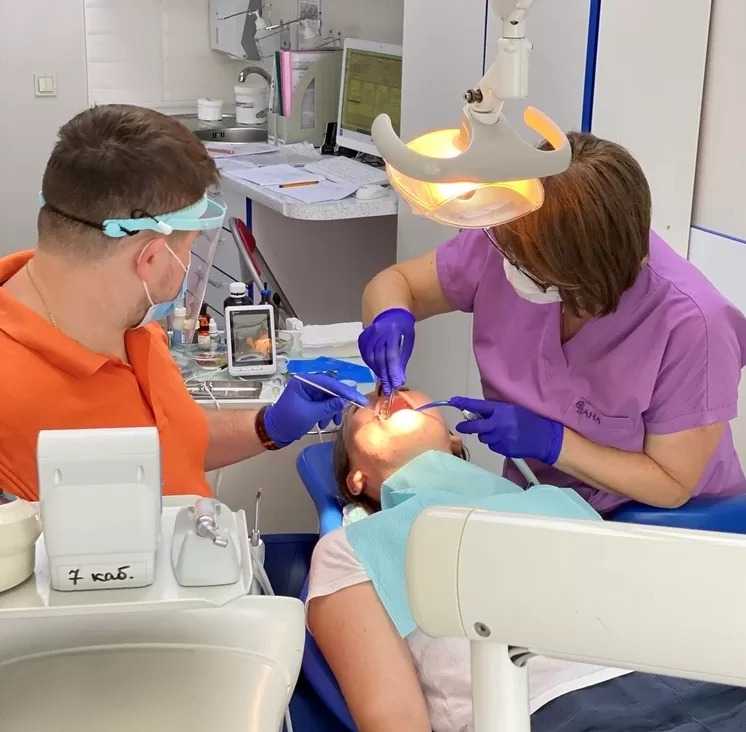
Simple Wisdom Tooth Extraction
A simple wisdom tooth extraction is possible when the tooth:
- Has fully or almost fully erupted.
- Has straight roots, and not many of them.
- Isn’t significantly tilted or impacted.
- Is freely accessible to the dentist’s instruments.
In this case, the dentist uses forceps and an elevator, and the procedure generally takes about 20-25 minutes overall. Stitches are rarely needed here, since the socket usually heals without them.
Complex (Atypical) Wisdom Tooth Extraction
A complex wisdom tooth extraction is needed when the tooth:
- Is impacted, meaning it hasn’t fully erupted.
- Is malpositioned (dystopia), meaning it sits in an abnormal, atypical position.
- Has curved or fused roots.
- Is located close to the inferior alveolar nerve or the maxillary sinus.
In such cases, removing a wisdom tooth involves the dentist making a small incision in the gum to gain access to the bone. If necessary, the tooth is sectioned into fragments so they can be removed one at a time, and then stitches are placed. This is a full surgical operation that requires a specially qualified dentist, namely an oral surgeon.
How Removing Upper and Lower Wisdom Teeth Differs
There is a difference between removing a wisdom tooth from the top and from the bottom. The upper jaw has fairly porous bone (that is, it’s less dense), so removal there is usually easier. But at the same time, the roots of some upper teeth can sit quite close to the maxillary sinus. This requires special attention when planning the procedure.
The lower jaw has denser bone, and the tooth’s roots are closer to the canal that houses the nerve. That’s why, after a lower wisdom tooth is removed, swelling, discomfort, or temporary numbness of the lip, tongue, or chin may last longer. In complex cases involving a lower tooth, the dentist may even suggest sedation so that the patient can tolerate the longer procedure more comfortably.
Does It Hurt to Pull a Wisdom Tooth?
There’s no pain during the procedure, because the anesthesia is working. So, does it hurt to remove a wisdom tooth? No, but you will still feel pressure and some movement from the dentist’s work. You may also feel pulling, the tooth moving, vibration from the instruments, and the sound of them working. All of this is perfectly normal. But if you do feel pain during the procedure, tell your dentist. They can add more anesthetic and adjust the approach on the spot or, in some cases, change the extraction technique. By the way, anesthesia can wear off more quickly when there’s acute inflammation of the tooth or the surrounding tissue.
Types of Anesthesia: Local Anesthesia and Sedation
Looking more closely at the types of pain relief used when a wisdom tooth is removed, there are two main options: local anesthesia or sedation. Local anesthesia is the basic and most common type of pain relief in modern dentistry. It’s enough for most simple cases and some complex ones. The patient stays fully conscious throughout.
Sedation is used for pronounced dental phobia (fear of dental procedures) or a gag reflex. It may also be used when wisdom teeth are removed on both sides in a single session or for a complex, atypical procedure. Depending on the method of sedation, the patient may remain conscious and able to communicate with the dentist while being deeply relaxed. This makes the whole procedure more comfortable.
It’s worth noting that once the tooth is out and the anesthesia wears off, sensation returns, so the dentist may recommend a painkiller. As prescribed by the dentist, this is usually either ibuprofen or paracetamol.
How Long Removal and Recovery Take
How long removal takes and how long recovery lasts depend largely on how complex the case is. For example, a simple extraction heals faster: cheek swelling goes down within 2-3 days, and discomfort fades within 3-5 days. That’s if there are no stitches. With a complex extraction, the tissues take longer to recover. Swelling can last 4-7 days, and stitches are removed on day 7-10. Full comfort returns within 2-3 weeks.
Separately, it’s worth noting that after wisdom teeth are removed, a symptom called trismus can sometimes occur, which is temporarily limited mouth opening. It’s caused by spasm of the chewing muscles and happens more often after a complex, atypical extraction. The condition gradually resolves within a few days and usually clears up on its own. But if your dentist recommends it, you can help yourself by holding a cold compress, wrapped in cloth, against your cheek for about 10 minutes. Cold is used primarily in the first hours or day after the procedure to control and reduce swelling.
IMPORTANT TO UNDERSTAND: These recovery times are approximate ranges, not an exact guarantee. Every body reacts to the procedure and recovers differently. It all depends on the person’s age, the state of their immune system, the extent of the procedure, and how closely the patient follows the dentist’s recommendations.
What You Can and Can’t Eat After Wisdom Tooth Removal
In the first few hours after the procedure, it’s best not to eat, especially while the numbness is still pronounced, so you don’t accidentally injure the lining of your mouth. During the first day, it’s best to eat soft foods at a comfortable temperature (NOT hot). For example:
- Yogurt.
- Mashed potatoes.
- Pureed soup.
- Omelet.
- Well-cooked porridge.
- Soft cheese.
- And other foods that don’t require active chewing.
In the following days, you can gradually expand your diet as you feel able, and return to your usual diet within a week.
For about 3-5 days, it’s best to temporarily avoid:
- Very hot food and drinks.
- Hard and crunchy food.
- Spicy foods.
- Small seeds and food that easily gets lodged in the socket.
- Alcohol and smoking.
It’s also not recommended to drink through a straw, because it can create suction in the mouth and contribute to dislodging the blood clot in the healing socket.
How to Care for the Socket and Brush Your Teeth
In the first few days after a tooth is removed, keeping the socket clean is important. But during the first 24 hours in particular, you shouldn’t rinse your mouth vigorously, because that can wash the blood clot out of the socket. The clot, in turn, protects the wound from infection. Instead of rinsing, the dentist will usually prescribe antiseptic mouth baths starting 1-2 days after the procedure. You can and should brush your teeth, but gently, with a soft toothbrush, avoiding the socket area. Also try not to keep touching the spot with your tongue, and never touch it with your fingers or cotton swabs.
After the extraction, the dentist may sometimes place a hemostatic sponge in the socket: it stops the bleeding and then dissolves on its own, so you shouldn’t remove or touch it. If you notice blood seeping from the socket at home, bite down firmly but gently on a sterile gauze pad for 20-30 minutes. If the blood clot that protects the wound comes out, a so-called “dry socket” and tissue inflammation can develop. It may also be accompanied by a rise in temperature, pus discharge, and worsening pain. If that happens, be sure to see your dentist as soon as possible!
Frequently Asked Questions (FAQ)
Can a wisdom tooth be pulled in one visit if it hasn’t erupted yet?
Yes, a wisdom tooth that hasn’t erupted can be pulled in a single visit. In this case, the dentist removes it surgically, carefully cutting the gum and gaining full access to the tooth. Sometimes the dentist may also divide the tooth into fragments so it can be removed carefully, piece by piece.
Do you have to remove wisdom teeth if they aren’t causing problems?
No, removing wisdom teeth that aren’t causing problems isn’t necessary. Usually, patients’ fear is more about whether it hurts to remove a wisdom tooth at all. But the dentist will explain: it doesn’t hurt, because the anesthesia is working, but if the tooth is healthy, growing straight, and fully erupted, there’s simply no need to remove it.
How many wisdom teeth can be removed in one procedure?
Two wisdom teeth can be removed in one procedure, and in some cases all of them. The basic approach to extracting a wisdom tooth is essentially the same as with several teeth. The only differences are the length of the procedure, the type of anesthesia, and the recovery period.
How many days until I can go back to work and sports?
You can go back to work and sports within 1-3 days. But it all depends on how quickly you recover, how much pain you have, and how you feel overall. And while you can return to work almost right away if you feel good, it’s recommended to wait at least 3-5 days before resuming physical exertion, so it doesn’t trigger bleeding or dislodge the blood clot in the socket.
Conclusion
In closing, let’s note once more: wisdom tooth removal is a predictable, controlled procedure. The choice of removal method is made based on X-rays and other diagnostics. The extraction itself is done under anesthesia and is usually well tolerated, almost always without pain. And how quickly you recover depends largely on how closely you follow your dentist’s recommendations.
This material is for informational purposes only and does not replace a consultation with a dentist.
Article author: Serhiy Benedys, prosthodontist, general dentist, and oral surgeon


Make an appointment
You can make an appointment by filling out the application form on the website, as well as using instant messengers:
Make an appointment
You can make an appointment by filling out the application form on the website, as well as using instant messengers:


Make an appointment easily using chatbots:
Also, call the numbers:
Modern dentistry and medical centre "MED-DEO"
Choose a clinic whose location is more convenient for you.
Kyiv, Holosiivska/Demiivska metro station
130 Lobanovskoho Avenue


Working hours:
Mon - Sun: 8:00 AM - 9:00 PM
No days off!
Call the numbers:
How to get to us? Create a route
Kyiv, Akademistechko metro station
78A, Irpinska str.


Working hours:
Mon-Sun: 8.00-21.00
Without days off!
Call the numbers:
How to get to us?
Create a route
Create a route
Kyiv, Heroiv Dnipra metro station
32A, Heroiv Dnipra str.


Working hours:
Mon-Sun: 8.00-21.00
Without days off!
Call the numbers:
How to get to us?
Create a route
Create a route
Kyiv, Teatralna metro station
9B, E. Chykalenko (Pushkinska) str.


Working hours:
Mon-Sat: 8.00 - 21.00. Sun: by appointment.
Without days off!
Call the numbers:
How to get to us?
Create a route
Create a route
Відгук від клієнта
0:00
0:00


Your email will not be published on the site.