Special offer! Comprehensive professional teeth cleaning for only 1699 UAH.
Special offer! Comprehensive professional teeth cleaning for only 1699 UAH.
Special offer! Comprehensive professional teeth cleaning for only 1699 UAH.
Special offer! Comprehensive professional teeth cleaning for only 1699 UAH.
Special offer! Comprehensive professional teeth cleaning for only 1699 UAH.
Special offer! Comprehensive professional teeth cleaning for only 1699 UAH.
Special offer! Comprehensive professional teeth cleaning for only 1699 UAH.
Special offer! Comprehensive professional teeth cleaning for only 1699 UAH.
Special offer! Comprehensive professional teeth cleaning for only 1699 UAH.
Special offer! Comprehensive professional teeth cleaning for only 1699 UAH.
Sign up
 (044) 394 90 94
  Holosiivska/Demiivska metro station
Doctors


 Prices
Blog
Contacts
пр.Лобановського, 130, Київ, Україна
Temporarily closed
Opening soon
78A, Irpinska St., Kyiv, Ukraine
Temporarily closed
Opening soon
32A, Heroiv Dnipra St., Kyiv, Ukraine
Temporarily closed
Opening soon
9B, Yevhena Chykalenko St. (Pushkinska), Kyiv, Ukraine
Temporarily closed
Opening soon
Sign up
En
(044) 394 90 94
Back
Dentistry
General Dentistry
Dental surgery
Dental Implants
Maxillofacial Surgery
Dental prosthetics
Cosmetic dentistry
Professional Dental Hygiene

Periodontics
Orthodontic dentistry

Gnathology & TMJ Therapy
Pediatric Dentistry

Dental X-Rays
Back
Orthodontic Center
Orthodontic dentistry
Gnathology & TMJ Therapy
Back
Prosthodontic Center
Dental prosthetics
Back
MED-DEO Center for Maxillofacial Surgery & Facial Plastics
Maxillofacial Surgery
Plastic surgery
Back
Surgical Dental Center
Dental surgery
Dental Implants
Search on the site


Popular requests
Teeth whitening
Treatment of caries
Wisdom tooth extraction
Bracket system
Dental veneers
Tooth restoration
Pediatric dentist
Consultation with a dentist-therapist
Search results by: «».
Unfortunately, no results were found for your search: “Pediatric Endocrinologist”, nothing was found.
You may find these links useful:
Clinics "MED-DEO"
пр.Лобановського, 130, Київ, Україна
Temporarily closed
Opening soon
78A, Irpinska St., Kyiv, Ukraine
Temporarily closed
Opening soon
32A, Heroiv Dnipra St., Kyiv, Ukraine
Temporarily closed
Opening soon
9B, Yevhena Chykalenko St. (Pushkinska), Kyiv, Ukraine
Temporarily closed
Opening soon
Services
Dentistry Orthodontic Center Prosthodontic Center MED-DEO Center for Maxillofacial Surgery & Facial Plastics Surgical Dental CenterGeneral Dentistry
Dental surgery
Dental Implants
Maxillofacial Surgery
Dental prosthetics
Cosmetic dentistry
Professional Dental Hygiene
Periodontics
Orthodontic dentistry
Gnathology & TMJ Therapy
Pediatric Dentistry
Dental X-Rays
Orthodontic dentistry
Gnathology & TMJ Therapy
Dental prosthetics
Maxillofacial Surgery
Dental surgery
Dental Implants
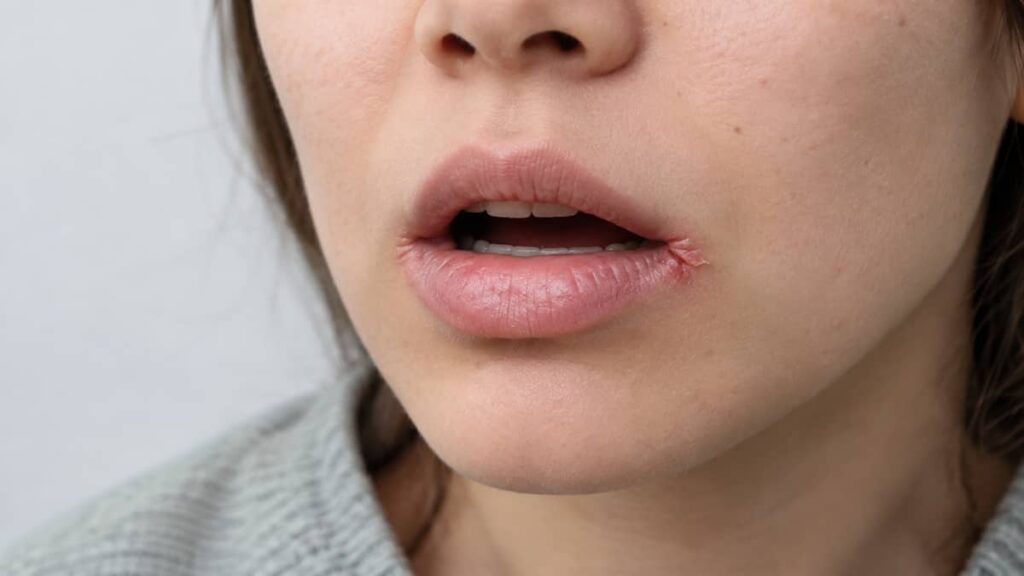

Are your lips red and burning, cracked and dry? It’s not always clear why this happens. If the problem keeps coming back or won’t go away, it’s worth getting to the bottom of the cause.
In this article, we explain what cheilitis is, how to recognize it, and which factors trigger symptoms in children and adults. We’ll also cover psychosomatics, diagnosis, treatment, home care, and preventive measures.
What Is Cheilitis: Definition and General Overview
Cheilitis is an inflammation of the lips. There are several forms, depending on the affected area and the cause (a specific reaction to cold, wind, or sun, an allergy, an infection, a vitamin deficiency, and so on).
The condition can be primary (arising on its own) or symptomatic (appearing alongside dental problems, skin diseases, or disorders of the internal organs). One of the best-known examples is angular cheilitis, commonly called “cracked mouth corners.” It affects the corners of the mouth, which turn red, become dry, and therefore crack.
If the cause is related to the condition of the oral cavity, the patient is examined by a dentist. If needed, the dentist will refer them on to a dermatologist or another specialist.
Causes of Cheilitis: Why Lips Burn and Dry Out
In children and adults, cheilitis can result from simple irritation, an allergy, an infection, or a change in how the body functions. Sometimes several factors combine. Let’s look at what exactly triggers or sustains lip inflammation:
- External physical irritants. Frost, dry air, strong wind, and excessive UV exposure damage the protective barrier. As a result, the tissues lose moisture faster and become more sensitive to other irritants.
- Nutrient deficiency. Vitamin deficiency, especially a lack of B vitamins, impairs tissue regeneration. Iron-deficiency anemia can also cause cracked lips and other changes in the mucous membranes.
- Contact with allergens. These can include components of toothpaste, cosmetics, lip balms, hygiene products, and dental materials. In this case, the inflammation is sustained by repeated contact with the substance.
- Infectious agents. Cheilitis can be triggered by streptococcal or staphylococcal infection, the Candida fungus, and other microorganisms. Viral infections such as herpes are also potential causes of lip lesions.
- Gastrointestinal diseases. Digestive disorders and impaired nutrient absorption affect the condition of the skin and mucous membranes. Celiac disease is also considered among the possible factors, as a condition involving disruption of the gut microbiome.
- Endocrine and systemic diseases. Diabetes, for example, increases susceptibility to infections and slows healing. In rare cases, lip swelling is caused by Melkersson–Rosenthal syndrome.
- Non-contagious inflammatory skin diseases. Atopic dermatitis, psoriasis, and eczema can spread to the lip area and sustain the inflammatory process.
- Dental triggers. A malocclusion, dentures, and braces can further irritate the tissues. The lips are also injured more often when the teeth come together.
- Psychological factors. Stress, anxiety disorders, and depressive states influence the course of certain forms of cheilitis. However, a person’s psycho-emotional state is not a universal cause of all types of the condition.
If the cause isn’t obvious or the problem keeps returning, switching to a different protective lip balm is unlikely to fix it. It’s better to book an appointment with a dentist at Med-Deo and find out which factor is keeping the inflammation going. The treatment of cheilitis will depend on exactly that.
Cheilitis in Children: Specific Causes and Triggers
Lip inflammation in young children is often linked to behavioral habits: licking or biting the lips and touching the face with unwashed hands. Saliva moisturizes the surface temporarily, but once it evaporates, it makes the dryness worse.
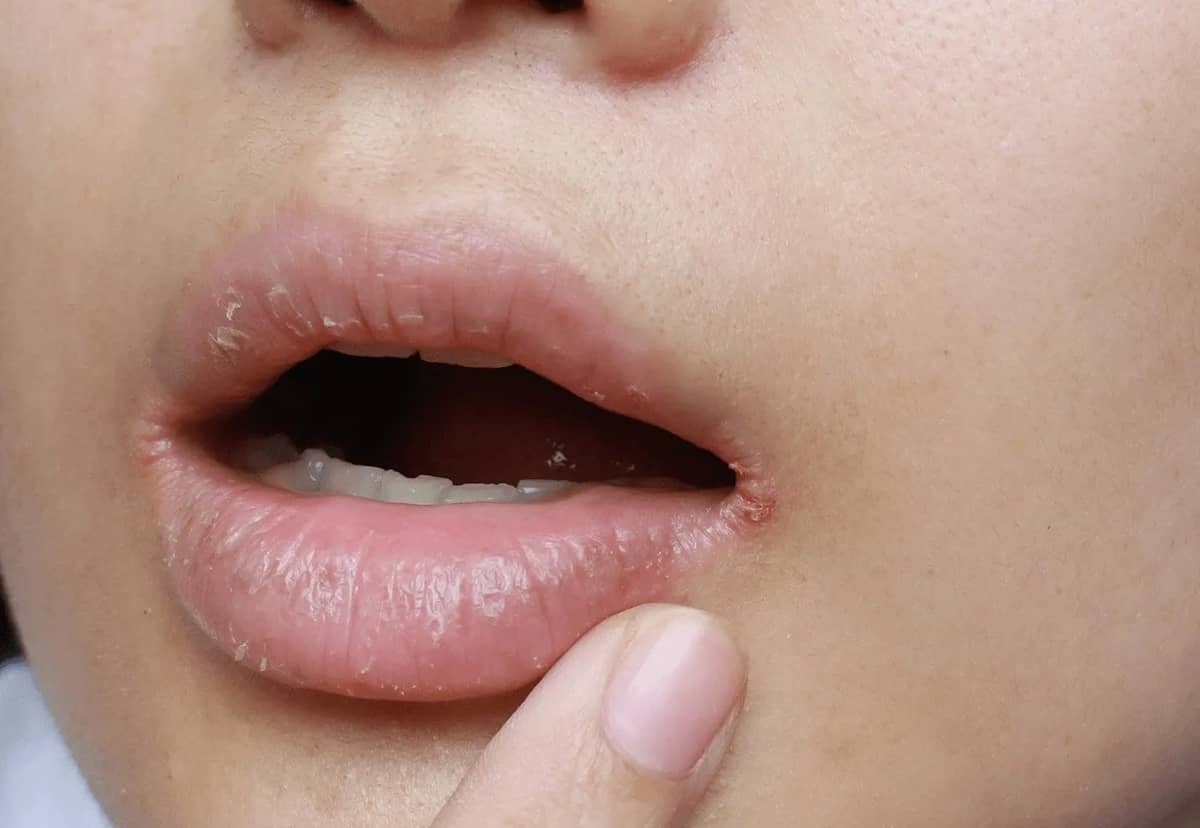
Cheilitis in children can also be the body’s reaction to allergic irritants, reduced immunity, or impaired nutrient absorption (for example, with celiac disease or other conditions that cause malabsorption).
If a child’s lips have been red for quite a long time, dry out often, or crack, and the child complains of burning and pain, make an appointment with a pediatrician or a dentist.
Symptoms of Cheilitis: How to Tell Whether Your Lips Are Inflamed
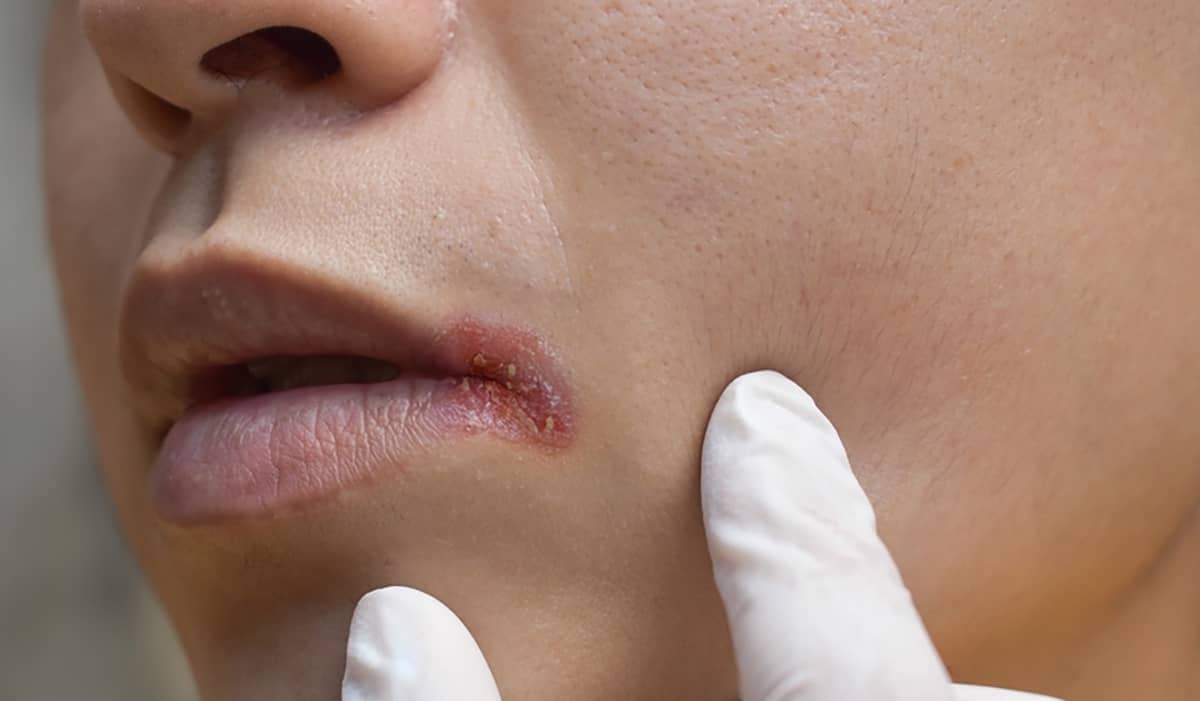
There are plenty of signs of a lip condition. It may be accompanied by an excess of blood in the vessels (hyperemia) and the appearance of cracks, crusts, blisters, ulcers, and erosions. People report dryness, bleeding, swelling, itching, pain, redness around the lips, and flaking of the epithelium.
If your lips are just a little dry, they usually recover quickly once they are moisturized and the irritant is removed. With cheilitis, symptoms last longer, return, and gradually get worse. If your lips feel like they’re burning from the inside, or new unpleasant symptoms appear, it’s worth seeing a specialist.
How to Tell Cheilitis from Herpes and Allergies: Differential Diagnosis
If your lips are burning, is the cause cheilitis? Unfortunately, there is no definite answer. Several lip conditions look alike, so it’s hard to identify the cause from a single symptom.
But there is a solution: differential diagnosis (for example, herpes vs. cheilitis) at the Med-Deo dental clinic.
| Condition | What may point to the cause |
|---|---|
| Cheilitis | Dryness, flaking, redness, cracks, and burning (across the entire surface of the lips or in one area). |
| Herpes | Tingling or burning at first, followed by clusters of fluid-filled blisters. |
| Contact allergy | A reaction to a new skincare, decorative, or medicated cosmetic product. Redness, itching, and swelling are common. |
| Iron or vitamin deficiency | Changes in the lips combined with general weakness and changes in the mucous membranes, tongue, and gums. |
This table is for general information only and does not replace an examination by a doctor. If your lips are burning, or symptoms keep returning or don’t go away, look for the cause. Masking the discomfort only helps temporarily.
Types of Cheilitis and Their Characteristics
Cheilitis has many forms, and they differ in cause, location, and clinical presentation. Some are characterized by dryness and flaking, others by cracks, erosions, swelling, and so on. Below, we look at the main types of cheilitis and the signs that distinguish them.
Angular Cheilitis (Cracked Mouth Corners): Causes and Course
The inflammation is located in one or both corners of the mouth. The skin here turns red, swells, and becomes painful, and cracks, crusts, and sometimes weeping patches appear. The pain makes it hard to open the mouth wide. It is usually caused by streptococci or the Candida fungus; both can also be present at the same time.
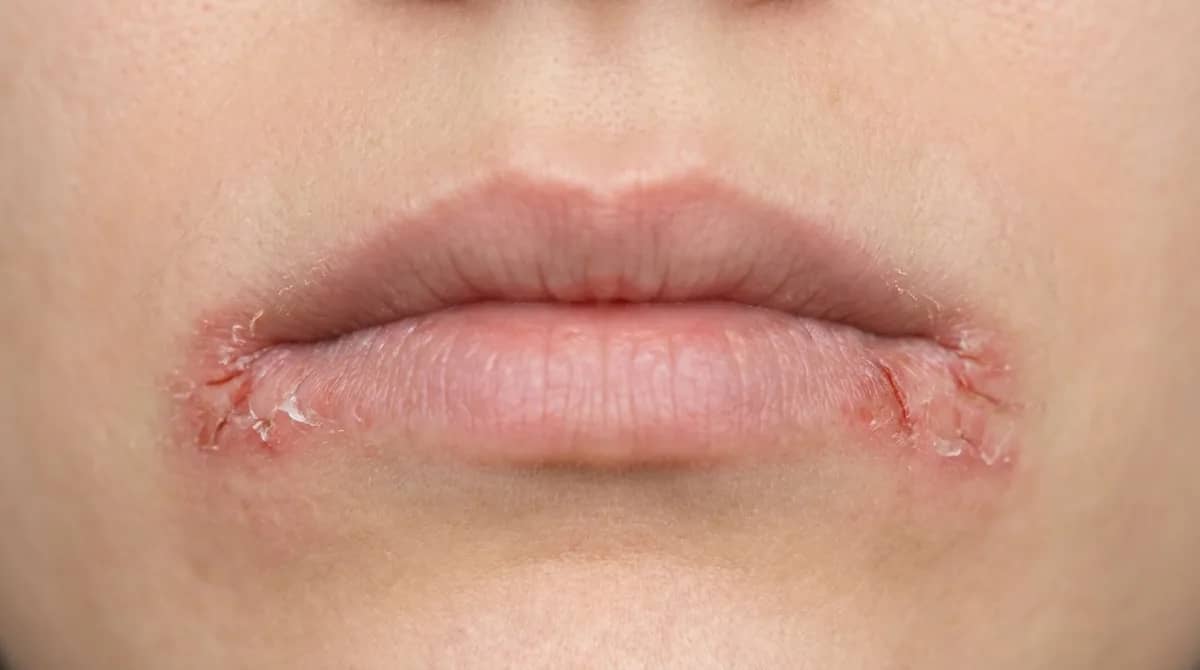
The risk is higher in children who habitually lick their lips, people with poorly fitted dentures, and people with diabetes or an iron or vitamin deficiency. So if angular cheilitis is diagnosed, treatment should also include eliminating the risk factors.
Manganotti’s Cheilitis: When a Cracked Lip Is Serious
A chronic lesion of the lower lip with one or more persistent erosions. The condition is traditionally described in men over 50. The main risk factors are smoking, chronic lip trauma, and prolonged sun exposure (actinic cheilitis has similar causes).
Any hardening, bleeding, or erosion that takes a long time to heal or keeps coming back needs to be examined by a doctor. Where indicated, a histological examination or biopsy is performed to rule out dysplastic changes and squamous cell carcinoma of the lip.
Exfoliative Cheilitis: Psychosomatics and Lip Peeling
A rare chronic condition characterized by continuous or cyclical peeling of the vermilion border of the lips. The lower lip is affected more often, but sometimes the process involves both.
A thickened layer of scales forms as a result of excessive keratinization and then peels off. Thin, transparent films, burning, itching, soreness, cracks, and bleeding with the formation of hemorrhagic crusts may occur.
The causes of exfoliative cheilitis have not been definitively established. In some patients, stress, licking, biting, or picking at the scales may keep the condition going.
Atopic Cheilitis: Dry, Itchy Lips
This is one form of dermatitis on the lips. Usually not only the vermilion border but also the adjacent skin is affected. It is characterized by dry lips, flaking, itching, redness, and cracks.
The course is wave-like: periods of flare-up alternate with remission. Atopic cheilitis most often affects children and young people with eczema or other atopic conditions. Flare-ups can be sustained by cold, dry air, saliva, cosmetics, and other irritants.
Actinic Cheilitis: The Effects of Prolonged Sun Exposure
A chronic sun-induced lesion that mainly affects the lower lip. It results from the damaging effect of ultraviolet radiation, so it is more common in fair-skinned people who spend a lot of time outdoors; it occurs about 3 times more often in men.
The vermilion border gradually loses its clear boundary with the skin and becomes dry, rough, and thin or, conversely, thickened in patches. Hyperkeratosis, flaking, redness, soreness, cracks, erosions, and crusts may appear.
Actinic cheilitis is a precancerous condition and may be accompanied by dysplastic changes; in an unfavorable course, the risk of squamous cell carcinoma of the lip increases.
Weather-Related Cheilitis: A Special Reaction to the Weather
Inflammation caused by unfavorable weather conditions (cold, frost, wind, dry air, sharp temperature swings). Moisture is lost from the surface of the lips faster, which weakens their natural protective barrier.
Weather-related cheilitis most often affects the vermilion border. It shows up as superficial flaking and a feeling of tightness. Once the irritant is removed, symptoms usually ease, but if exposure is prolonged, the lips crack and hurt.
People with fair skin and increased sensitivity to weather are at risk, as are those who spend a lot of time outdoors, especially in cold or windy weather.
Allergic, Eczematous, and Contact Cheilitis: A Reaction to Contact
These forms develop after the lips come into contact with a substance that causes an allergic or irritant reaction. Triggers include components of cosmetics (lipsticks, toothpaste, mouthwashes) and contact with the mouthpieces of wind instruments.
The clinical picture depends on the nature of the reaction: redness, swelling, flaking, and itching are possible. With a prolonged course, the skin thickens. Small blisters, once they burst, turn into weeping eczema and later into bloody crusts.
If symptoms regularly appear after contact with a particular product or material, the doctor will order a patch test or another allergy test.
Glandular Cheilitis: Changes in the Salivary Glands
A rare form linked to changes in the minor salivary glands of the lips. It affects the inner surface of the lower lip: the gland ducts widen, and their openings may be visible on the surface. Sometimes mucus or saliva is released from them when pressure is applied. The lip is swollen, thickened, and painful. Secondary bacterial infection can cause purulent discharge, ulcers, and abscesses.
Glandular cheilitis appears more often in middle-aged and older men. The exact cause is unknown; possible factors include chronic irritation, sun exposure, and smoking.
Candidal Cheilitis: A Fungal Lip Infection
A fungal infection caused by an overgrowth of Candida. The changes are most often located in the corners of the mouth and may be accompanied by oral candidiasis. Typical signs are cracks, redness, and maceration on the lips and in the mouth corners.
It occurs in people who wear dentures, have diabetes or a weakened immune system, or have recently taken antibiotics. Antifungal agents are used to treat candidal cheilitis.
Hypovitaminosis Cheilitis: The Result of Deficiencies
This type of cheilitis develops as a result of a sharp shortage of certain nutrients, primarily iron and B vitamins. Symptoms include dryness, flaking, and cracks that bleed; the condition of the tongue often changes at the same time, resulting in glossitis.
It occurs when the diet is unbalanced or digestion is impaired. Treating it requires laboratory testing, correction of the confirmed deficiency, and treatment of its cause.
Macrocheilia: Sudden Lip Swelling
A persistent or recurrent enlargement of one or both lips with a chronic course (periods of relapse and remission). It is often regarded as a manifestation of granulomatous inflammation or orofacial granulomatosis rather than a separate disease.
It may also be associated with Melkersson–Rosenthal syndrome. In that case, a triad is typical: recurrent lip swelling, recurrent paralysis or paresis of the facial nerve, and a folded (furrowed) tongue. All three signs don’t always appear together, so the absence of one does not rule out the syndrome.
Diagnosing Cheilitis: Which Doctor to See
Your lips are burning and you don’t know what to do? Start with a consultation with a dentist or a dermatologist. The dentist will assess the condition of the lips together with the teeth, gums, bite, dentures, and braces. The dermatologist will focus on changes in the skin and the vermilion border of the lips.
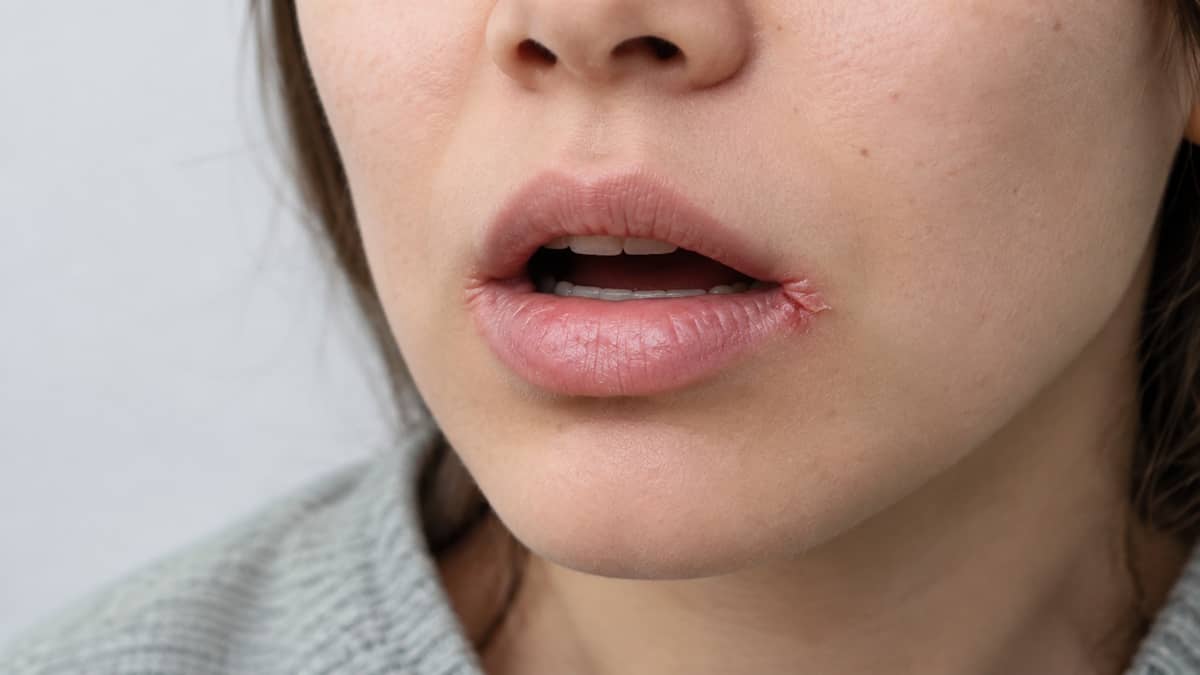
During the examination, the doctor will ask when the symptoms appeared, how they change, and whether they recur. If needed, Med-Deo patients are prescribed:
- a complete blood count;
- a blood chemistry panel;
- tests for iron and vitamin deficiency;
- tests for bacterial or fungal infection;
- an allergy test or patch test;
- a histological examination of the affected area (if a precancerous condition is suspected).
If cheilitis is linked to an allergy, a skin disease, or a systemic pathology, the doctor refers the patient to an allergist, endocrinologist, gastroenterologist, psychologist, or another specialist. After all, effective treatment of cheilitis requires identifying and eliminating the cause of the problem.
Treating Cheilitis: Modern Methods Depending on the Form
How to treat cheilitis depends on its form and cause. There is no universal ointment that works equally well for an infection, a vitamin deficiency, and chronic sun exposure.
You should not choose hormonal or other medications on your own. Self-treatment won’t deliver the desired result and may even make things worse. Only a doctor knows what is best for treating cheilitis, and depending on the diagnosis, may prescribe:
- antifungal ointments for candidal lesions;
- topical antibiotics if a bacterial infection is confirmed;
- antiseptics for treating affected areas where needed;
- antihistamines for an allergic component;
- corticosteroid ointments for certain inflammatory and allergic forms;
- vitamin complexes if tests confirm the relevant deficiency;
- healing agents to support the repair of damaged tissue.
In some cases, based on local clinical indications, treatment of cheilitis includes physiotherapy. Methods that may be used, depending on the clinical situation, include ultrasound, laser therapy, and magnetotherapy.
If cheilitis on the lips is related to the condition of the teeth, gums, dentures, braces, or bite, appropriate dental treatment and oral rehabilitation are prescribed.
What You Can and Can’t Do with Cheilitis
If your lips are burning or irritated, you should temporarily eliminate anything that might aggravate the inflammation and interfere with skin recovery.
You can and should:
- apply a neutral protective lip balm;
- gently cleanse the lips without alcohol-based products or harsh scrubs;
- use a mild toothpaste if your regular one causes burning or irritation;
- blot your lips with a soft towel after eating or washing instead of rubbing them;
- avoid prolonged contact between saliva and the skin around the lips;
- see a doctor if the changes don’t go away after more than two weeks.
Strongly discouraged:
- licking or biting your lips;
- picking off scales and crusts;
- popping blisters;
- using ointments that affect hormonal balance on your own;
- masking the inflammation with decorative cosmetics;
- putting off an examination if symptoms keep recurring.
This kind of care helps reduce irritation, but it does not replace treatment of cheilitis if the cause requires medication.
Preventing Cheilitis: How to Protect Your Lips from Inflammation
A few simple habits are enough to make your lips less reactive to cold, sun, and other irritants. They are especially important for people who have already wondered more than once why their lips dry out and burn.
- Protect your lips from the sun. If you spend a long time walking or working outdoors, use a product with a high SPF of 30–50+ (even in the morning, when it seems like there’s no sun).
- Avoid products that make your condition worse. Prioritize hypoallergenic cosmetics free of fragrances and certain potentially irritating ingredients.
- Maintain a healthy oral microbiome. Brush your teeth regularly, use interdental hygiene products, and treat cavities and gum disease promptly.
- Watch your fluid balance. Insufficient fluid intake is one reason lips dry out. However, a lack of water alone doesn’t explain every case of cheilitis.
- Eat a balanced diet. Your diet should include protein, iron, and other substances needed for tissue regeneration. It’s better to take vitamins and minerals only after a deficiency has been confirmed.
- Give up harmful habits. Quitting smoking and stopping licking and biting your lips will help. Delicate skin will suffer less trauma, and inflammation will heal faster.
- Visit your Med-Deo dentist regularly. This is especially important if you have dentures or braces, or if you often have problems with your teeth and gums.
If, despite these measures, you still can’t tell why your lips are burning again, the cause may lie beyond skincare. In that case, see a doctor to find out what exactly is triggering the problem.
Questions and Answers About Cheilitis (FAQ)
Is cheilitis contagious?
Cheilitis itself is not a contagious disease, since it’s a general term for lip inflammation, not an infection. Contagiousness depends on the cause. For example, the herpes virus can pass from person to person, while Candida and some bacteria can cause infectious cheilitis under certain conditions. The risk of transmission is determined by the diagnosis, and only then does the doctor decide how to treat cheilitis in a particular case.
Why do my lips burn from the inside?
Burning on the inner side can be linked to irritation of the mucous membrane, an allergic reaction, an infection, dryness, or other conditions of the oral cavity. But it is quite difficult to tell from appearance alone why the lips are burning. If the symptom persists, gets worse, or is accompanied by ulcers, swelling, or changes in the mucous membrane, we recommend booking an examination with a doctor as soon as possible.
How long does cheilitis take to heal?
Treatment of cheilitis takes anywhere from a few days to several weeks or longer (it all depends on the form and cause of the condition). Once the trigger is eliminated, symptoms can disappear quickly, whereas infectious, allergic, and chronic forms require targeted therapy. If your condition doesn’t improve, the doctor will re-examine you, review the diagnosis, and adjust the plan going forward.
Can cheilitis go away on its own?
Sometimes it becomes clear why the lips are dry and burning once a short-term irritant (cold, wind, an unsuitable skincare product, etc.) is removed. At the same time, repeated flare-ups, cracks that don’t heal for weeks and keep bleeding, and new erosions and ulcers require examination. There is a chance that the cause of the condition lies elsewhere, such as an infection, an allergy, or a nutrient deficiency.
What makes untreated cheilitis dangerous?
Depending on the form of the condition, the doctor determines how to treat cheilitis, since different types have different courses and risks. Most of them don’t pose a serious threat, but chronic inflammation can flare up regularly. Certain lesions, including Manganotti’s cheilitis and some forms of the actinic type, are conditions with a risk of malignant transformation and the development of squamous cell carcinoma of the lip.
Cheilitis and Pregnancy: Is Treatment Safe?
How to treat cheilitis during pregnancy depends on the cause of the condition and the gestational age. In the first trimester, medications are avoided unless necessary, while in the second and third trimesters, topical therapy may be prescribed if indicated (when the expected benefit outweighs the risks). Still, you should not choose or use corticosteroid ointments, antibiotics, antifungals, or other medications on your own without first consulting a specialist.
Article author: Andrii Kratik, prosthodontist, restorative dentist, oral surgeon, and implant dentist

Make an appointment
You can make an appointment by filling out the application form on the website, as well as using instant messengers:
Make an appointment
You can make an appointment by filling out the application form on the website, as well as using instant messengers:


Make an appointment easily using chatbots:
Also, call the numbers:
Modern dentistry and medical centre "MED-DEO"
Choose a clinic whose location is more convenient for you.
Kyiv, Holosiivska/Demiivska metro station
130 Lobanovskoho Avenue


Working hours:
Mon - Sun: 8:00 AM - 9:00 PM
No days off!
Call the numbers:
How to get to us? Create a route
Kyiv, Akademistechko metro station
78A, Irpinska str.


Working hours:
Mon-Sun: 8.00-21.00
Without days off!
Call the numbers:
How to get to us?
Create a route
Create a route
Kyiv, Heroiv Dnipra metro station
32A, Heroiv Dnipra str.


Working hours:
Mon-Sun: 8.00-21.00
Without days off!
Call the numbers:
How to get to us?
Create a route
Create a route
Kyiv, Teatralna metro station
9B, E. Chykalenko (Pushkinska) str.


Working hours:
Mon-Sat: 8.00 - 21.00. Sun: by appointment.
Without days off!
Call the numbers:
How to get to us?
Create a route
Create a route
Відгук від клієнта
0:00
0:00


Your email will not be published on the site.