Special offer! Comprehensive professional teeth cleaning for only 1699 UAH.
Special offer! Comprehensive professional teeth cleaning for only 1699 UAH.
Special offer! Comprehensive professional teeth cleaning for only 1699 UAH.
Special offer! Comprehensive professional teeth cleaning for only 1699 UAH.
Special offer! Comprehensive professional teeth cleaning for only 1699 UAH.
Special offer! Comprehensive professional teeth cleaning for only 1699 UAH.
Special offer! Comprehensive professional teeth cleaning for only 1699 UAH.
Special offer! Comprehensive professional teeth cleaning for only 1699 UAH.
Special offer! Comprehensive professional teeth cleaning for only 1699 UAH.
Special offer! Comprehensive professional teeth cleaning for only 1699 UAH.
Sign up
 (044) 394 90 94
(044) 394 90 94  Holosiivska/Demiivska metro station
Sign up
(044) 394 90 94
(044) 394 90 94
Doctors


 Prices
Blog
Contacts
Prices
Blog
Contacts
пр.Лобановського, 130, Київ, Україна
Temporarily closed
Opening soon
78A, Irpinska St., Kyiv, Ukraine
Temporarily closed
Opening soon
32A, Heroiv Dnipra St., Kyiv, Ukraine
Temporarily closed
Opening soon
9B, Yevhena Chykalenko St. (Pushkinska), Kyiv, Ukraine
Temporarily closed
Opening soon
(044) 394 90 94
Back
Dentistry
General Dentistry
Dental surgery
Dental Implants
Maxillofacial Surgery
Dental prosthetics
Cosmetic dentistry
Professional Dental Hygiene

Periodontics
Orthodontic dentistry

Gnathology & TMJ Therapy

Pediatric Dentistry
Dental X-Rays
Back
Orthodontic Center
Orthodontic dentistry
Gnathology & TMJ Therapy
Back
Prosthodontic Center
Dental prosthetics
Back
MED-DEO Center for Maxillofacial Surgery & Facial Plastics
Maxillofacial Surgery
Plastic surgery
Back
Surgical Dental Center
Dental surgery
Dental Implants
Search on the site


Popular requests
Teeth whitening
Treatment of caries
Wisdom tooth extraction
Bracket system
Dental veneers
Tooth restoration
Pediatric dentist
Consultation with a dentist-therapist
Search results by: «».
Unfortunately, no results were found for your search: “Pediatric Endocrinologist”, nothing was found.
You may find these links useful:
Clinics "MED-DEO"
пр.Лобановського, 130, Київ, Україна
Temporarily closed
Opening soon
78A, Irpinska St., Kyiv, Ukraine
Temporarily closed
Opening soon
32A, Heroiv Dnipra St., Kyiv, Ukraine
Temporarily closed
Opening soon
9B, Yevhena Chykalenko St. (Pushkinska), Kyiv, Ukraine
Temporarily closed
Opening soon
Services
Dentistry Orthodontic Center Prosthodontic Center MED-DEO Center for Maxillofacial Surgery & Facial Plastics Surgical Dental CenterGeneral Dentistry
Dental surgery
Dental Implants
Maxillofacial Surgery
Dental prosthetics
Cosmetic dentistry
Professional Dental Hygiene
Periodontics
Orthodontic dentistry
Gnathology & TMJ Therapy
Pediatric Dentistry
Dental X-Rays
Orthodontic dentistry
Gnathology & TMJ Therapy
Dental prosthetics
Maxillofacial Surgery
Dental surgery
Dental Implants
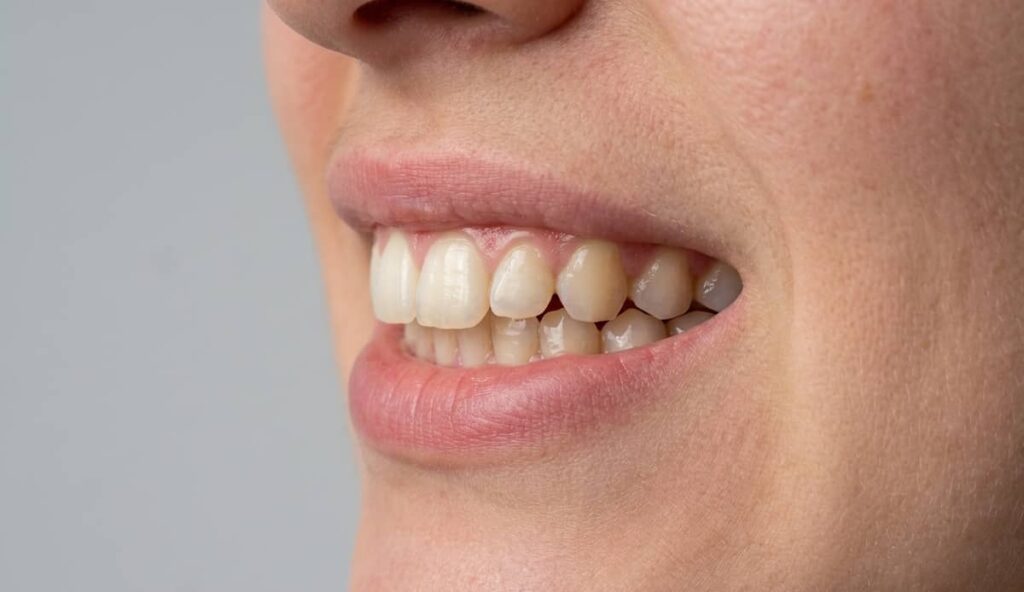
Patients often come to an orthodontist complaining of worn enamel or discomfort when chewing, with no idea what’s causing it. The root cause is a jaw and dental anomaly known as a deep bite.
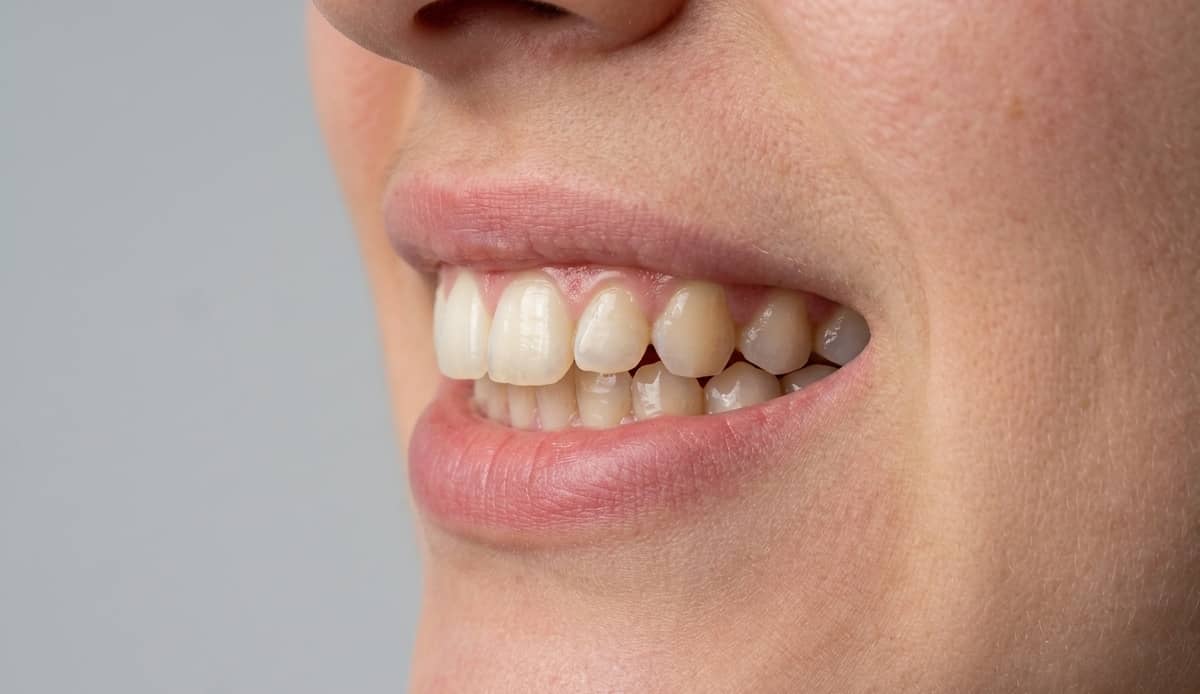
Normally, the teeth should only touch lightly, allowing the lower jaw to move freely. With a deep bite, however, the lower incisors can be completely hidden behind the upper ones, or even injure the mucous membrane of the palate.
What a Deep Bite Is and How to Recognize It
When the upper teeth overlap the lower ones excessively, the jaws are not closing properly. Visually, this shows up as a shortened lower third of the face: the chin looks less defined and the lips appear more tightly pressed together.
When Overlap Is Normal and When It Is a Pathology
The physiological norm is a vertical overlap of the incisors of about 1–2 millimeters (roughly one third of the crown height). If the overlap significantly exceeds this, it is a deep bite and warrants a consultation with a dentist-orthodontist.
To draw the line between normal and pathological, doctors look at several factors:
- how much the teeth make contact when the jaws close;
- whether the patient can chew freely;
- whether the lower incisors are in traumatic contact with the palate’s mucous membrane.
If you notice that your lower teeth are barely visible when your jaws are closed, it’s worth booking an appointment.
Main Signs in Children and Adults
As a rule, the condition comes with a set of symptoms that can be a nuisance for years. The body spends a long time trying to adapt to the faulty bite, so the signs build up gradually. They become obvious only once the compensatory capacity of the muscles and joints is exhausted:
- Increased enamel wear on the front teeth.
- Constant jaw tension and tired chewing muscles.
- Impaired diction and trouble pronouncing certain sounds.
- Injury to the palate’s mucous membrane from the lower teeth.
- Clicking or discomfort in the temporomandibular joint (TMJ).
- Periodic headaches that get worse over time.
Without proper correction, the disorder causes irreversible changes. For example, food is chewed less effectively, the joints stop working properly, and overall health suffers.
Why a Deep Bite Develops
Identifying the root cause is essential for building an effective treatment plan, since the source of the problem can be either congenital or acquired over a lifetime.
Heredity, Micrognathia, and Jaw Development
Genetic factors play the leading role in shaping the size and proportions of the dentofacial system. In many cases, a bite anomaly is caused by micrognathia, an underdevelopment of one of the jaws (most often the lower one), which leads to improper closure.
If the parents had a hereditary predisposition to such problems, the likelihood of the child developing them is higher. Because micrognathia is a serious deformation of the facial skeleton, it’s important to have an early orthodontic checkup. The doctor will catch the problem in time and prescribe treatment that supports proper bite formation.
Acquired Factors That Make the Problem Worse
Sometimes the condition develops after the teeth have already erupted, as a result of external circumstances. These include:
- Bad habits: prolonged thumb, tongue, or object sucking.
- Mouth breathing, which keeps the mouth constantly open (in childhood, proper nasal breathing is especially important for the harmonious development of the facial skeleton).
- Early loss of baby teeth, which causes neighboring teeth to shift.
- Improper chewing load.
Children are the most vulnerable to acquired factors, since their dentofacial system is still actively growing and forming.
Deep Distal Bite and Micrognathia: How They Differ and Connect
A deep distal bite combines two anomalies. The first is excessive vertical overlap, where the upper incisors cover the lower ones too much. The second is sagittal displacement of the jaws, where the lower jaw sits behind the upper one.
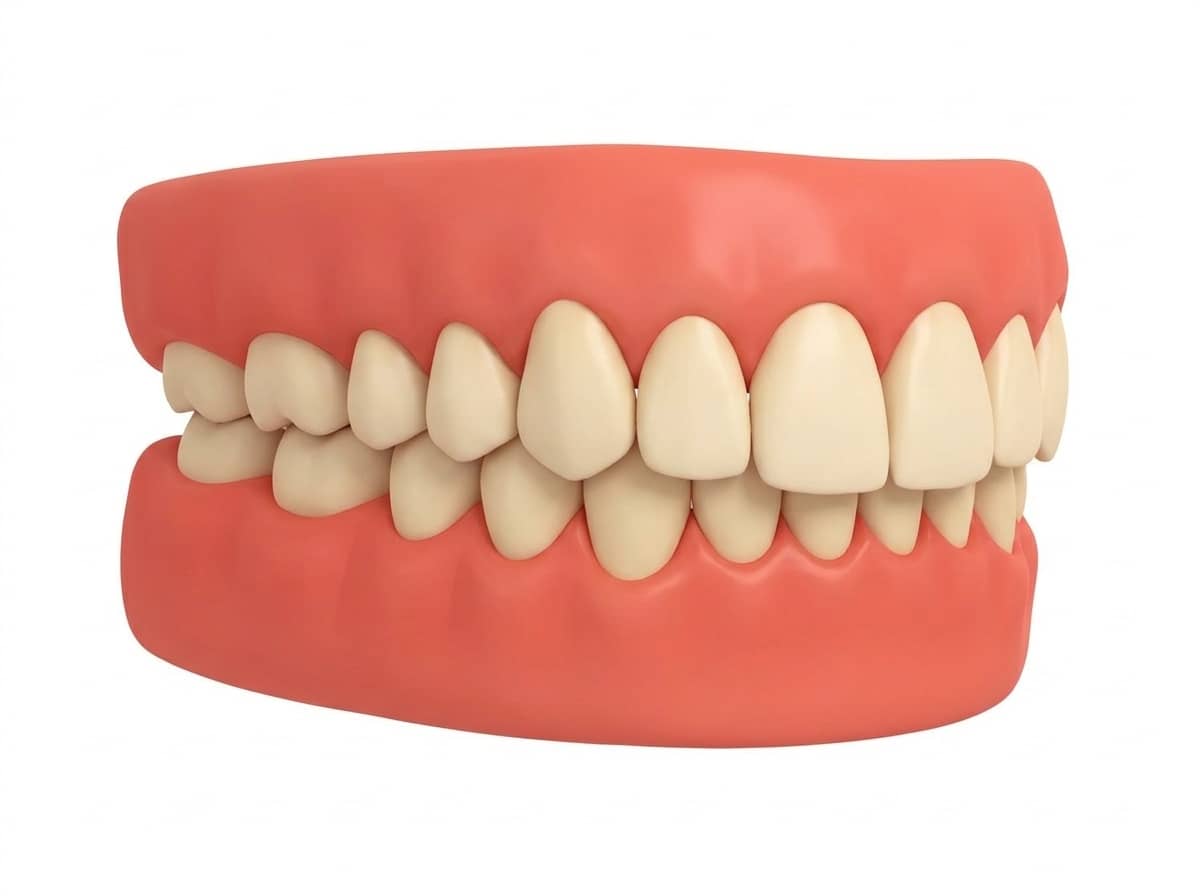
One possible cause of this displacement is the micrognathia described above. That’s why it’s important to determine whether the problem involves only the position of the teeth or has a skeletal origin.
Orthodontic diagnostics are used for this, and the specialist chooses a treatment strategy based on the results. If the cause is impaired growth of the facial bones, then in addition to correcting the bite, it makes sense to monitor jaw development.
Why an Untreated Deep Bite Is Dangerous
Correcting the bite is a necessary step toward protecting the health of the entire dentofacial system. Ignoring the condition has consequences: over time it leads to the destruction of enamel and the soft tissues of the mouth.
Consequences for Teeth, Gums, and the TMJ
Constant excessive pressure on the front teeth makes them pathologically mobile. This brings unpleasant consequences such as:
- gum recession (the gum line dropping lower);
- wedge-shaped defects (damage to the enamel near the tooth neck);
- exposed tooth necks as a result of gum recession;
- joint overload, which eventually causes chronic pain;
- chipped fillings, veneers, and crowns due to uneven load distribution;
- loosening of teeth under prolonged overload.
These processes develop gradually, so patients often don’t notice the damage until pain appears.
Effects on Speech, Appearance, and Everyday Comfort
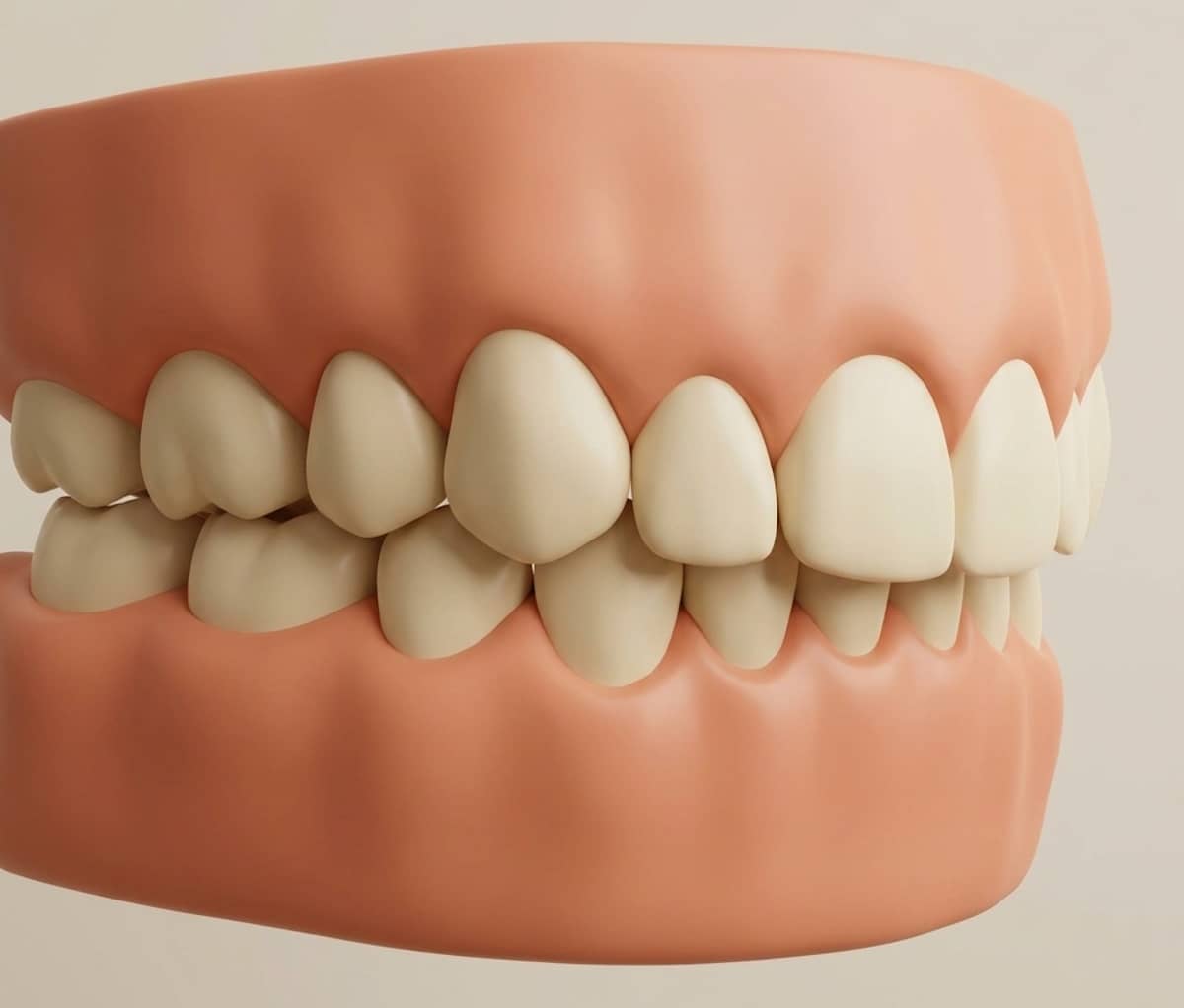
Because the jaw position is off, some sounds are pronounced less clearly. Vigorous chewing and long conversations sometimes tire the chewing muscles.
The changes are visible from the outside too. With a pronounced bite anomaly, the lower third of the face looks shorter and the lips don’t fully close at rest. As a result, many people feel self-conscious about their smile and avoid being photographed.
How the Doctor Makes a Diagnosis Before Treatment
Orthodontic diagnostics make it possible to establish the cause of the anomaly. At the initial appointment at MED-DEO, the dentist takes a medical history, performs a clinical examination, and assesses the position of the teeth, the relationship between the jaws, and how the temporomandibular joint is working.
Based on the history, the origin of the disorder (dentoalveolar or skeletal) is determined, and the treatment plan depends on it.
Which Examinations You May Need
The doctor may recommend one or more diagnostic tests to see the clinical picture in 3D. Depending on the situation, the following may be prescribed:
- Photo protocol (photos of the face and smile) – lets the doctor assess facial proportions and the smile, and records the starting condition before treatment.
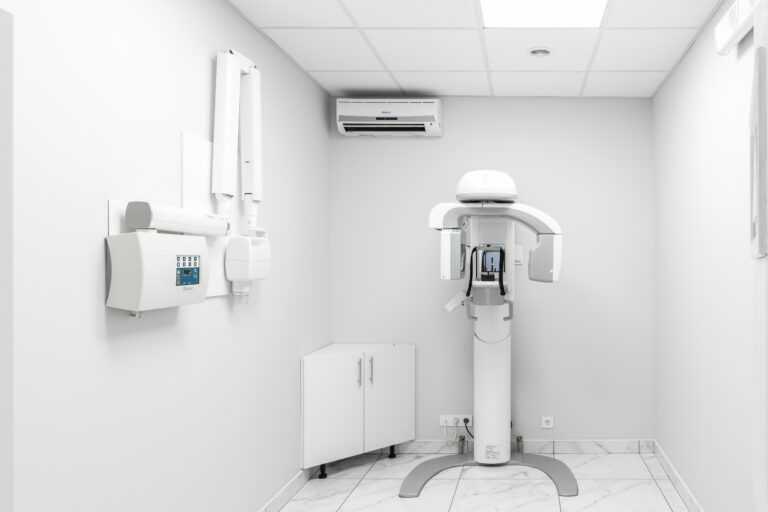
- Panoramic X-ray (OPG) – shows the position of the teeth, the condition of the roots and bone tissue, and any hidden pathologies.
- Cephalometric X-ray (lateral cephalogram) – helps assess the relationship between the jaws and the direction of their growth, and identify skeletal abnormalities.
- Digital scanning or impressions – used to create an accurate model of the dental arches and plan tooth movement.
- Computed tomography (CT) – prescribed when indicated, to examine the bone structures and the temporomandibular joint.
With the examination results in hand, it’s easier for the dentist to build the right treatment plan and predict its outcome.
Panoramic dental X-ray
Panoramic dental X-ray (Orthopantomogram)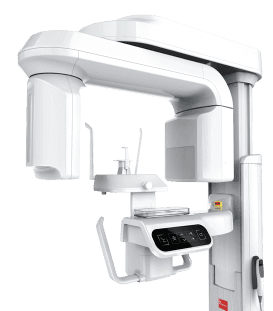
How Diagnostic Results Affect the Choice of Treatment
Two patients with similar complaints may be offered different solutions. If the problem is only the position of the teeth, orthodontic correction is enough. If a skeletal pathology is diagnosed, the approach has to be comprehensive and may involve a surgeon.
Deep Bite: How to Correct It
If a deep bite has been diagnosed, the orthodontist decides how to correct it after completing the diagnostics. The choice of method depends on the patient’s age and the severity of the anomaly. The main goal is to unlock the movement of the lower jaw and achieve a physiological bite.
Braces, Aligners, and Appliances for Children
The following methods are used to correct the pathological overlap and restore proper joint function:
- Orthodontic plates and trainers. Used in childhood (up to age 11–12) to guide jaw growth while the bone tissue is still malleable.
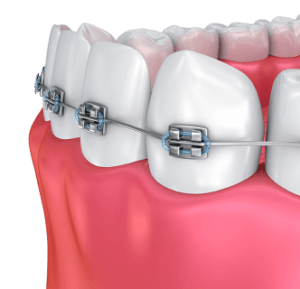
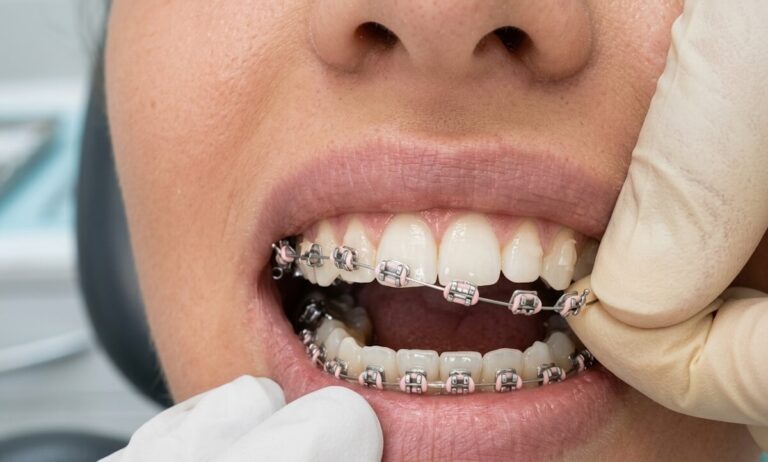
- Braces. Change the position of the teeth, reduce the excessive vertical overlap, and establish a proper bite in teenagers and adults.
- Aligners. Gradually move the teeth with a series of custom-made clear trays. Suitable for correcting mild to moderate bite problems.
Once treatment is complete, the retention period begins. Retainers or retention trays are used to lock in the result.
When Comprehensive or Surgical Treatment Is Needed
Sometimes a bite anomaly is caused by pronounced skeletal abnormalities. In such cases, braces or aligners are combined with orthognathic surgery, which corrects the position of the upper or lower jaw.
The results of comprehensive orthodontic treatment are a proper bite, an even distribution of chewing load, improved chewing function, and better-balanced facial proportions.
When to Start Treatment and How Long It Takes
The best approach is an early orthodontic checkup (at about 5–7 years old). At this age, the doctor can spot problems in time and, if necessary, influence proper jaw growth.
That said, a deep bite can also be corrected in adulthood. On average, treatment takes from 1.5 to 2.5 years, depending on the clinical situation (the complexity of the anomaly, the chosen method, and so on).
Prevention and What You Can Do Before a Consultation
A bite anomaly can’t always be fully prevented (especially if it has genetic causes). Still, you can realistically reduce the risk of developing it or of it getting worse by following a few recommendations:
- Keep an eye on children’s habits. Don’t let your child suck their thumb or a pacifier beyond the recommended age (and avoid chewing on objects like pens and pencils yourself).
- Treat dental problems promptly. Don’t put off treating cavities, and don’t skip regular preventive checkups with your dentist.
- Maintain proper nasal breathing. See a doctor if breathing through the nose is difficult, since chronic rhinitis and adenoids hurt jaw development.
Noticed that your lower teeth are almost completely covered by the upper ones? Don’t wait for pain or other symptoms to appear. The sooner a MED-DEO orthodontist evaluates your bite, the easier and more effective the treatment will be.
Frequently Asked Questions (FAQ)
What is a deep bite?
A deep bite is an anomaly in which the upper front teeth overlap the lower ones by more than a third of the crown height. This often leads to faster tooth wear and overloaded chewing muscles and temporomandibular joint, and in pronounced cases it affects facial features. Without timely treatment, the condition often progresses and makes the whole dentofacial system work harder.
Are a closed bite and a deep bite the same thing?
In dentistry, “deep bite” and “closed bite” are synonyms. However, the first term is the standard one in medical practice, so orthodontists use it more often. Both refer to excessive vertical overlap of the lower incisors by the upper ones when the teeth close, which impairs chewing, diction, and the function of the temporomandibular joint. This condition calls for a doctor’s consultation.
Can a deep bite be corrected without braces?
A deep bite can be corrected without braces, but only in certain clinical cases. In children, plates or functional appliances are used. For adults, aligners are an option. If the problem stems from jaw growth abnormalities or is distinctly skeletal in nature, fixed orthodontic appliances alone won’t be enough. The orthodontist determines the best treatment method after a comprehensive diagnosis.
How long does deep bite treatment take?
Deep bite treatment takes from 1.5 to 2.5 years, but the exact timeline can only be determined after a comprehensive diagnosis. If the problem is minor, correction will be completed sooner, while pronounced skeletal anomalies can take longer. Afterward, the patient wears retainers while the bone tissue and ligament apparatus adapt to the new tooth position.
When might surgery be needed for a deep bite?
Orthognathic surgery isn’t indicated for every patient with a deep bite. It’s used only when the main cause is significant skeletal abnormalities and moving the teeth alone won’t achieve a proper relationship between the jaws. The doctor makes the final decision after a comprehensive diagnosis. The surgery is often combined with orthodontic treatment to fully correct the bite and occlusion.
Article author: prosthodontist, restorative dentist, and oral surgeon Kateryna Yarmolenko

Make an appointment
You can make an appointment by filling out the application form on the website, as well as using instant messengers:
Make an appointment
You can make an appointment by filling out the application form on the website, as well as using instant messengers:


Make an appointment easily using chatbots:
Also, call the numbers:
Modern dentistry and medical centre "MED-DEO"
Choose a clinic whose location is more convenient for you.
Kyiv, Holosiivska/Demiivska metro station
130 Lobanovskoho Avenue


Working hours:
Mon - Sun: 8:00 AM - 9:00 PM
No days off!
Call the numbers:
How to get to us? Create a route
Create a route
Kyiv, Akademistechko metro station
78A, Irpinska str.


Working hours:
Mon-Sun: 8.00-21.00
Without days off!
Call the numbers:
How to get to us?
Create a route
Create a route
Kyiv, Heroiv Dnipra metro station
32A, Heroiv Dnipra str.
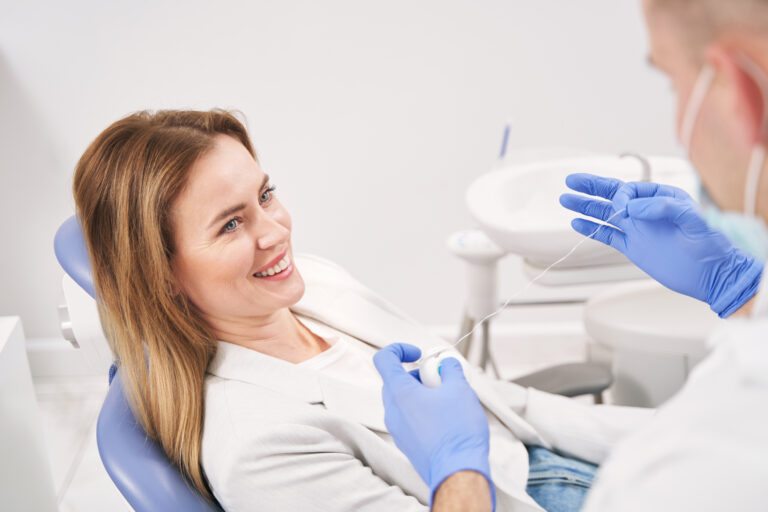
Working hours:
Mon-Sun: 8.00-21.00
Without days off!
Call the numbers:
How to get to us?
Create a route
Create a route
Kyiv, Teatralna metro station
9B, E. Chykalenko (Pushkinska) str.

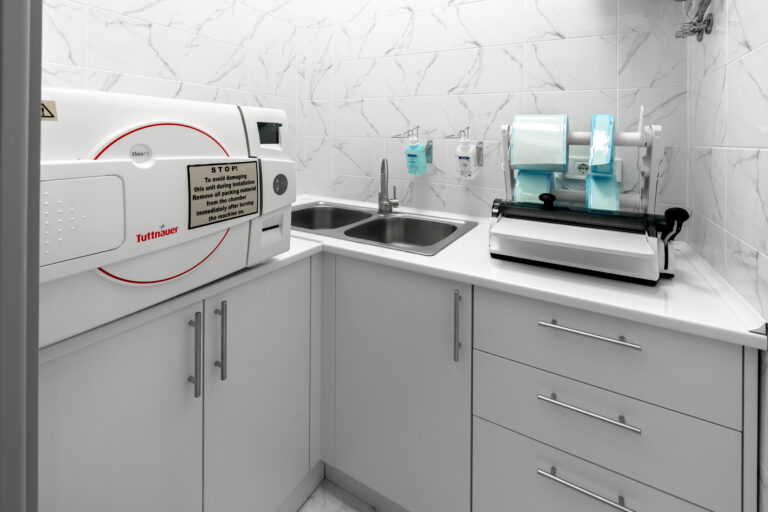


Working hours:
Mon-Sat: 8.00 - 21.00. Sun: by appointment.
Without days off!
Call the numbers:
How to get to us?
Create a route
Create a route
Відгук від клієнта
0:00
0:00


Your email will not be published on the site.