Special offer! Comprehensive professional teeth cleaning for only 1699 UAH.
Special offer! Comprehensive professional teeth cleaning for only 1699 UAH.
Special offer! Comprehensive professional teeth cleaning for only 1699 UAH.
Special offer! Comprehensive professional teeth cleaning for only 1699 UAH.
Special offer! Comprehensive professional teeth cleaning for only 1699 UAH.
Special offer! Comprehensive professional teeth cleaning for only 1699 UAH.
Special offer! Comprehensive professional teeth cleaning for only 1699 UAH.
Special offer! Comprehensive professional teeth cleaning for only 1699 UAH.
Special offer! Comprehensive professional teeth cleaning for only 1699 UAH.
Special offer! Comprehensive professional teeth cleaning for only 1699 UAH.
Sign up
 (044) 394 90 94
(044) 394 90 94  Holosiivska/Demiivska metro station
Sign up
(044) 394 90 94
(044) 394 90 94
Doctors


 Prices
Blog
Contacts
Prices
Blog
Contacts
пр.Лобановського, 130, Київ, Україна
Temporarily closed
Opening soon
78A, Irpinska St., Kyiv, Ukraine
Temporarily closed
Opening soon
32A, Heroiv Dnipra St., Kyiv, Ukraine
Temporarily closed
Opening soon
9B, Yevhena Chykalenko St. (Pushkinska), Kyiv, Ukraine
Temporarily closed
Opening soon
(044) 394 90 94
Back
Dentistry

General Dentistry
Dental surgery
Dental Implants
Maxillofacial Surgery
Dental prosthetics
Cosmetic dentistry

Professional Dental Hygiene

Periodontics
Orthodontic dentistry

Gnathology & TMJ Therapy

Pediatric Dentistry
Dental X-Rays
Back
Orthodontic Center
Orthodontic dentistry
Gnathology & TMJ Therapy
Back
Prosthodontic Center
Dental prosthetics
Back
MED-DEO Center for Maxillofacial Surgery & Facial Plastics
Maxillofacial Surgery
Plastic surgery
Back
Surgical Dental Center
Dental surgery
Dental Implants
Search on the site


Popular requests
Teeth whitening
Treatment of caries
Wisdom tooth extraction
Bracket system
Dental veneers
Tooth restoration
Pediatric dentist
Consultation with a dentist-therapist
Search results by: «».
Unfortunately, no results were found for your search: “Pediatric Endocrinologist”, nothing was found.
You may find these links useful:
Clinics "MED-DEO"
пр.Лобановського, 130, Київ, Україна
Temporarily closed
Opening soon
78A, Irpinska St., Kyiv, Ukraine
Temporarily closed
Opening soon
32A, Heroiv Dnipra St., Kyiv, Ukraine
Temporarily closed
Opening soon
9B, Yevhena Chykalenko St. (Pushkinska), Kyiv, Ukraine
Temporarily closed
Opening soon
Services
Dentistry Orthodontic Center Prosthodontic Center MED-DEO Center for Maxillofacial Surgery & Facial Plastics Surgical Dental CenterGeneral Dentistry
Dental surgery
Dental Implants
Maxillofacial Surgery
Dental prosthetics
Cosmetic dentistry
Professional Dental Hygiene
Periodontics
Orthodontic dentistry
Gnathology & TMJ Therapy
Pediatric Dentistry
Dental X-Rays
Orthodontic dentistry
Gnathology & TMJ Therapy
Dental prosthetics
Maxillofacial Surgery
Dental surgery
Dental Implants
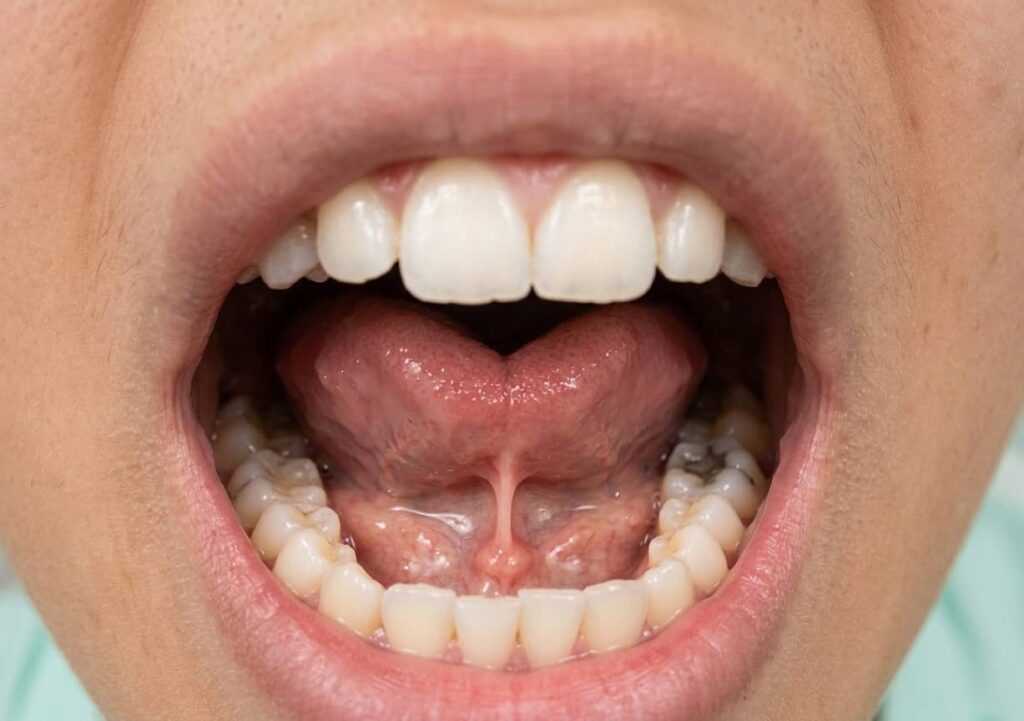

Have you noticed that your baby struggles to latch or to pronounce certain sounds? A short lingual frenulum is often the cause. It is a common anatomical variation that can be corrected easily and safely.
What Is the Lingual Frenulum and What Does It Do
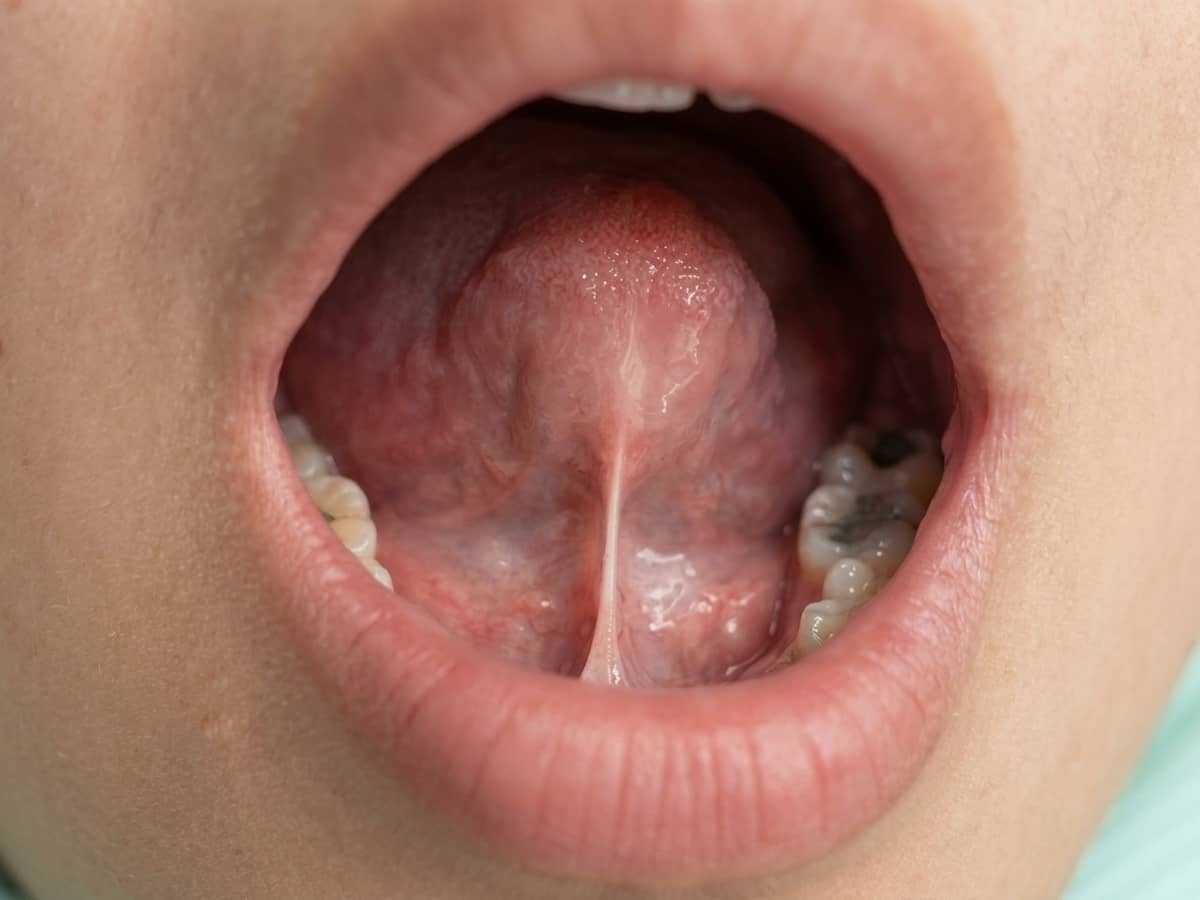
The lingual frenulum is a vertical fold of mucous membrane that connects the underside of the tongue to the floor of the mouth. It consists mainly of connective tissue. This area has few nerve endings and blood vessels, so it is not very sensitive, which makes procedures easier.
Its main functions:
- supporting correct articulation and speech;
- helping move food around during chewing and swallowing;
- contributing to the mouth’s natural self-cleaning;
- helping stabilize tongue movements.
Incidentally, the body has similar folds, the frenula of the upper and lower lips. We covered them in a separate article on the MED-DEO website.
What’s Normal: How the Frenulum Under the Tongue Should Look
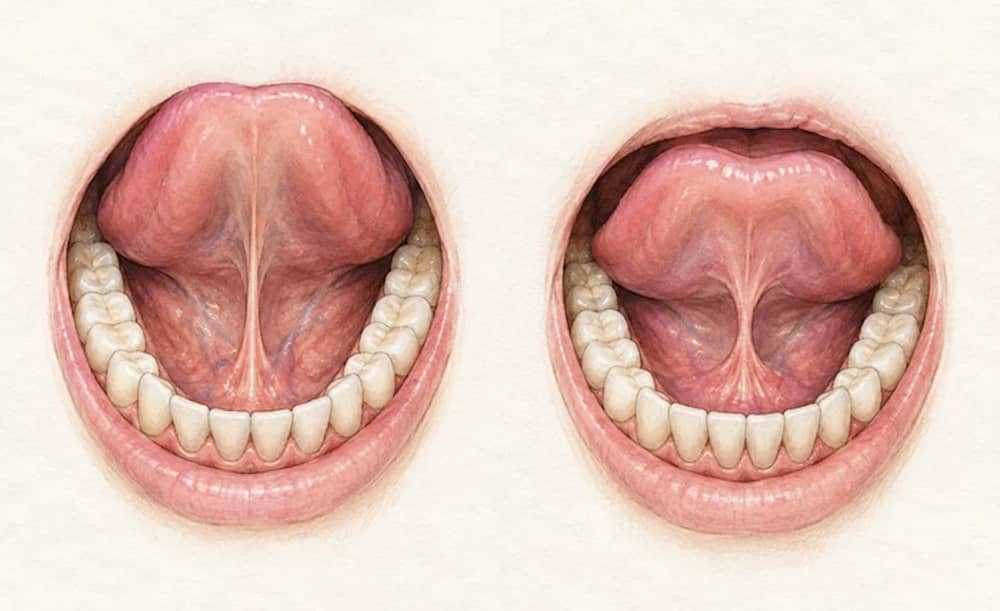
In a healthy person, the frenulum starts at the middle of the underside of the tongue and attaches roughly 5–8 mm from the lower front teeth. It is about 2 cm long and up to 0.4 cm wide.
In infants, these measurements are considerably smaller. The key criterion is how freely the tip of the tongue moves. A visible fold of tissue does not necessarily mean a problem. What matters is whether the tongue functions fully.
Short Lingual Frenulum (Ankyloglossia): What It Is and Why It Happens
In medicine, a short lingual frenulum is called ankyloglossia, or tongue-tie. It is a congenital anomaly in which the fold of mucous membrane is too short, attached too close to the tip, or unusually thick. The main consequence is restricted tongue mobility.
Parents should understand that this is purely an anatomical feature of fetal development, not the result of poor care after birth.
Causes of a Short Lingual Frenulum
Heredity is among the main causes: if a parent had the condition, the likelihood that a child will have it increases. Genetic factors in general play a role, as do first-trimester factors that affect how the tissues of the face and mouth form. Sometimes a short frenulum occurs alongside other anomalies, such as a cleft lip or palate.
There is no reason to panic or feel guilty. This condition can be corrected.
Anterior vs. Posterior Ankyloglossia: What’s the Difference
Specialists distinguish two types:
- Anterior ankyloglossia: a thin or short band of tissue is clearly visible near the tip of the tongue.
- Posterior (hidden) ankyloglossia: the band is tucked deep within the tissue.
The second type is the one most often missed during an exam. A baby whose frenulum looks normal may still have trouble feeding, because a deep bundle of fibers anchors the base of the tongue muscle. That is why early diagnosis matters.
Symptoms of a Short Lingual Frenulum
Signs change with age, since the tongue performs different tasks at different stages of oral development. Symptoms depend on how severe the restriction is.
Signs in Infants: Breastfeeding Problems
A short lingual frenulum in infants is usually identified right after birth:
- the baby tires quickly during feeds and stays latched for a long time because of poor suction;
- clicking sounds occur during feeding because the seal is lost;
- the baby swallows air, which causes colic;
- the baby gains weight poorly and may partially or completely refuse the breast.
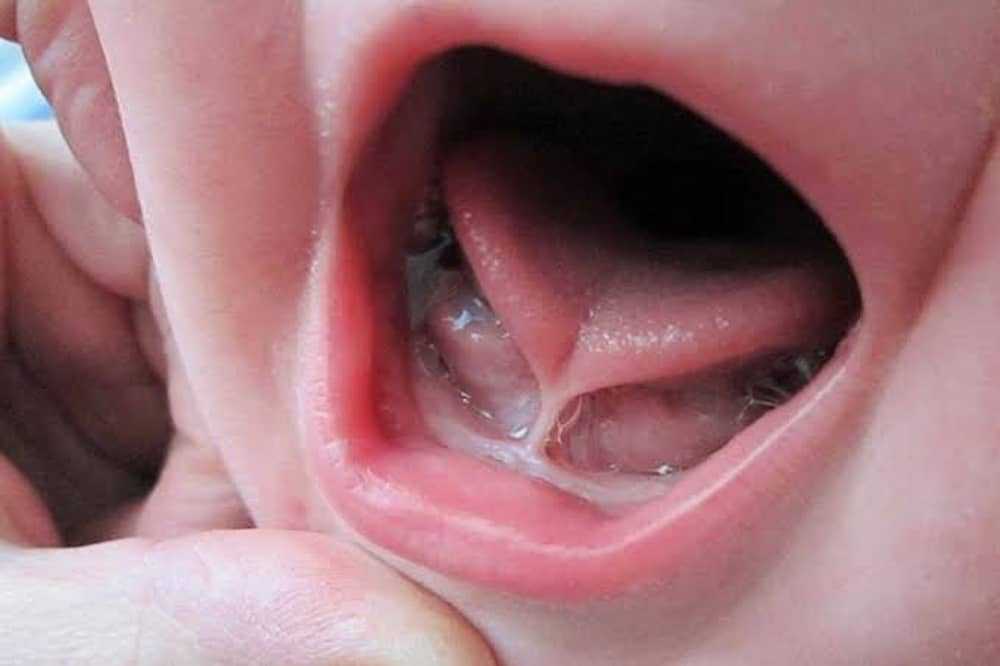
As a result, the mother develops cracked nipples, discomfort, and milk stasis. A neonatologist and a lactation consultant will always pay attention to these signs.
Signs in Children Over 2: Speech, Teeth, and Bite
In older children, the symptoms of a short lingual frenulum include:
- difficulty pronouncing “r,” “l,” “s,” “z,” and other alveolar sounds;
- being unable to lift the tongue to the palate or lick the lips;
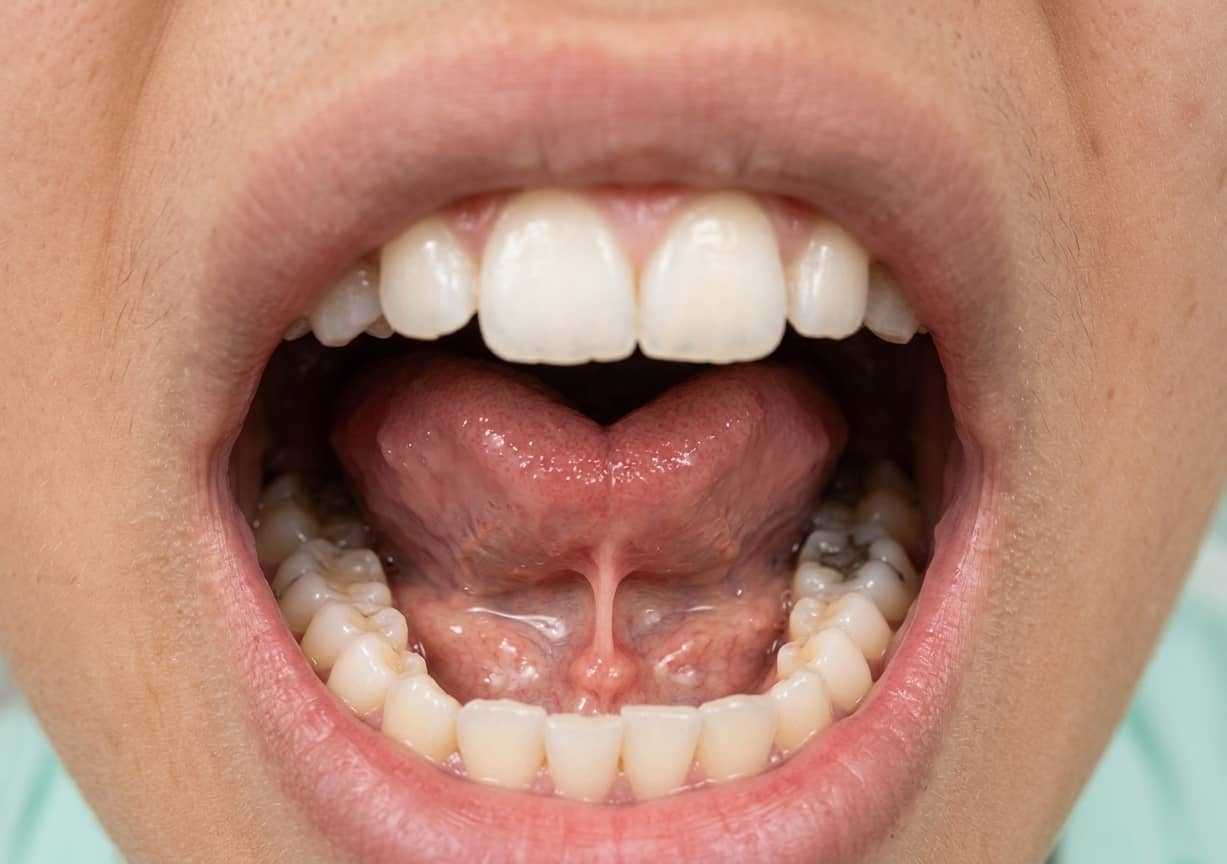
- the tongue taking on a heart shape when the child tries to stick it out;
- malocclusion and lagging growth of the lower jaw;
- shifted teeth, crowding, and a diastema;
- trouble chewing and swallowing.
Not every speech problem is caused by this fold of tissue, so the diagnosis should be made by a speech therapist.
Short Lingual Frenulum in Adults
If the frenulum wasn’t released in childhood, adults may run into the following problems:
- impaired diction;
- difficult oral hygiene, which leads to gum disease and gum recession;
- complications with prosthetics and orthodontic treatment.
In adulthood, the procedure is performed under anesthesia and with sutures.
Home Test: How to Check the Lingual Frenulum Yourself
Parents can do a simple check before a consultation. Ask your child to open their mouth and try to:
- lift the tongue to the roof of the mouth;
- stick it out past the lips;
- lick the upper lip;
- run the tongue along the inside of the lips.
Adults can also do this self-check in front of a mirror.
Even if the attachment point is unusual or the frenulum is thicker than normal, the decision on whether to release it is made by a dental surgeon after an examination.
Does the Frenulum Need to Be Released? Indications and Contraindications
When deciding whether to release the frenulum, specialists take into account whether there are functional problems.
Grounds for intervention:
- feeding problems in infants;
- articulation problems confirmed by a speech therapist;
- risk of developing bite abnormalities;
- preparation for orthodontic treatment.
Medical contraindications:
- acute inflammatory conditions and cancer;
- absence of clinical indications;
- osteomyelitis of the jaw;
- flare-ups of chronic diseases or severe mental disorders.
A frenotomy performed “just in case,” with no complaints, is not advisable.
The Best Age for Frenulum Release
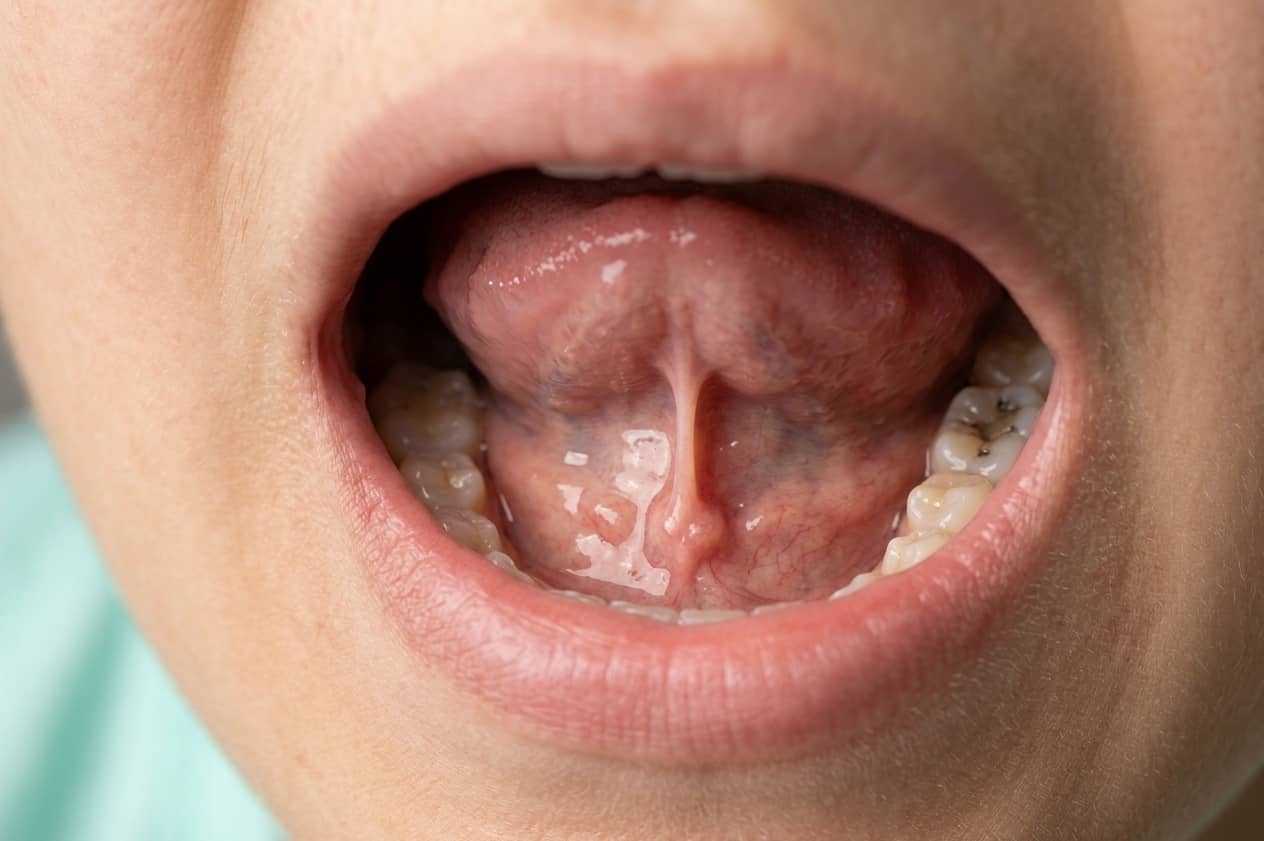
There are three main windows for releasing the frenulum:
- From 10 days to 3 months: ideal when there are feeding problems.
- Ages 2–2.5: the period of active speech development.
- Age 5: before baby teeth are replaced by permanent ones.
When there are clear indications, the procedure can be performed at any age.
Which Specialists to See
Identifying the problem takes a team approach. The specialists involved are:
- a pediatric dental surgeon;
- an orthodontist;
- an ENT specialist;
- a pediatrician;
- a speech therapist.
A comprehensive assessment makes it possible to build an individual treatment plan. For more about the service and the clinic’s doctors, see the tongue frenuloplasty page on the MED-DEO website.
Frenotomy, Frenectomy, and Frenuloplasty: What’s the Difference
These often-confused terms refer to different surgical techniques:
- Frenotomy is a simple transverse cut of the fold. It is used in infants, takes very little time, and requires no sutures.
- Frenectomy is the complete removal of the structure. It is prescribed when the band is significantly thick.
- Frenuloplasty (tongue frenulum plastic surgery) involves repositioning the tissue to create a new attachment point. It is performed on adults and on children from age 5, and requires sutures.
The approach the doctor chooses directly determines the overall scope of the procedure, and that in turn affects how much it costs to release the tongue frenulum in a particular case.
How the Frenulum Is Released: Steps of the Procedure
Understanding how the frenulum is released can ease unnecessary worry. It is a standard outpatient procedure that consists of the following steps:
- Examining the floor of the mouth and assessing tongue mobility.
- Choosing anesthesia, if needed.
- Cutting the frenulum.
- Controlling bleeding (vessel coagulation or a hemostatic sponge).
Afterward, the patient receives detailed aftercare instructions.
Lingual Frenulum Plastic Surgery
MoreFrenulum Release in Infants
In newborns, the fold contains almost no blood vessels. In infants, the frenulum is released with sterile scissors or a scalpel, and the procedure takes 5–10 minutes. Anesthesia is usually unnecessary, and a gauze pad is used to stop the bleeding. The baby can be put to the breast right afterward.
Frenulum Release in Children and Adults
In older patients, the tissue is denser. Because of this, releasing the frenulum in children and adults involves medication: local anesthesia, or general sedation for anxious patients. A modern laser method (diode laser) makes it possible to cut the band without bleeding. If a scalpel is used, dissolvable sutures are placed.
Recovery After Frenulum Release: Aftercare and Healing Time
Recovery is quick, and full healing within 7–10 days is normal for most patients. Post-procedure guidelines:
- take pain relievers if needed;
- rinse with an antiseptic solution;
- eat food at a moderate temperature;
- do tongue exercises (articulation exercises or myofunctional therapy).
A follow-up visit on day 2 or 3 lets the doctor assess how healing is going. If discomfort and pain increase, contact the clinic immediately.
Possible Complications and Whether the Frenulum Can Grow Back
Complications are extremely rare. They include minor bleeding or infection of the wound.
Parents are usually most concerned about recurrence. If scar tissue forms, a repeat procedure may be necessary. To avoid this, myofunctional therapy is prescribed: exercises that keep the scar from contracting.
Questions About a Short Lingual Frenulum
What is a frenotomy in simple terms?
A frenotomy is a surgical procedure in which the frenulum is cut to free the tongue muscle and restore its natural mobility. It is quick and safe, and it helps eliminate functional limitations in the mouth. It doesn’t require a long hospital stay and is performed on an outpatient basis.
What is the best age to release the tongue frenulum?
The best timing for releasing the frenulum in children depends on the specific medical indications. For infants, it is best done in the first months of life to normalize feeding. To preserve clear diction, doctors recommend ages 2–3 or age 5, before the baby teeth fall out.
Does it hurt to release the frenulum in a baby?
A frenotomy in newborns is practically painless, because this area has few nerve endings at that age. The baby feels only brief discomfort from having their mouth held open by the doctor. Right after the procedure, the baby can be put to the breast to calm down completely.
Can the tongue frenulum grow back?
The frenulum does not grow back, but without proper rehabilitation, dense scar tissue forms. To maintain the mobility gained, articulation exercises and special tongue exercises are essential. They prevent the scar from contracting and remove the risk of restricted movement returning.
How do I know whether the frenulum needs to be released?
The main guide for deciding on release is whether there are impairments in oral function. These include feeding difficulties in infants, trouble pronouncing certain sounds, or limited upward movement of the tongue. The final decision on whether the procedure is appropriate is made by a pediatric dental surgeon after an examination.
What happens if the frenulum isn’t released?
If the frenulum isn’t released in time, a child may develop malocclusion and persistent speech defects. In adulthood, this can lead to complications such as gum recession and inflammatory gum disease. It also creates significant technical difficulties for future orthodontic treatment or prosthetics.
This material is for informational purposes only, since only a qualified specialist can prescribe treatment or confirm the need for a procedure at an in-person consultation.
To learn more, including the price of tongue frenulum release, the steps involved, and how to book an appointment, visit the service page on the MED-DEO website.
Article author: Kateryna Sazhneva, pediatric dentist, medical director of Med Deo clinic, highest-category physician with experience since 2003.





Make an appointment
You can make an appointment by filling out the application form on the website, as well as using instant messengers:
Make an appointment
You can make an appointment by filling out the application form on the website, as well as using instant messengers:


Make an appointment easily using chatbots:
Also, call the numbers:
Modern dentistry and medical centre "MED-DEO"
Choose a clinic whose location is more convenient for you.
Kyiv, Holosiivska/Demiivska metro station
130 Lobanovskoho Avenue


Working hours:
Mon - Sun: 8:00 AM - 9:00 PM
No days off!
Call the numbers:
How to get to us? Create a route
Create a route
Kyiv, Akademistechko metro station
78A, Irpinska str.



Working hours:
Mon-Sun: 8.00-21.00
Without days off!
Call the numbers:
How to get to us?
Create a route
Create a route
Kyiv, Heroiv Dnipra metro station
32A, Heroiv Dnipra str.

Working hours:
Mon-Sun: 8.00-21.00
Without days off!
Call the numbers:
How to get to us?
Create a route
Create a route
Kyiv, Teatralna metro station
9B, E. Chykalenko (Pushkinska) str.




Working hours:
Mon-Sat: 8.00 - 21.00. Sun: by appointment.
Without days off!
Call the numbers:
How to get to us?
Create a route
Create a route
Відгук від клієнта
0:00
0:00


Your email will not be published on the site.