Special offer! Comprehensive professional teeth cleaning for only 1699 UAH.
Special offer! Comprehensive professional teeth cleaning for only 1699 UAH.
Special offer! Comprehensive professional teeth cleaning for only 1699 UAH.
Special offer! Comprehensive professional teeth cleaning for only 1699 UAH.
Special offer! Comprehensive professional teeth cleaning for only 1699 UAH.
Special offer! Comprehensive professional teeth cleaning for only 1699 UAH.
Special offer! Comprehensive professional teeth cleaning for only 1699 UAH.
Special offer! Comprehensive professional teeth cleaning for only 1699 UAH.
Special offer! Comprehensive professional teeth cleaning for only 1699 UAH.
Special offer! Comprehensive professional teeth cleaning for only 1699 UAH.
Sign up
 (044) 394 90 94
(044) 394 90 94  Holosiivska/Demiivska metro station
Doctors


 Prices
Blog
Contacts
Prices
Blog
Contacts
пр.Лобановського, 130, Київ, Україна
Temporarily closed
Opening soon
78A, Irpinska St., Kyiv, Ukraine
Temporarily closed
Opening soon
32A, Heroiv Dnipra St., Kyiv, Ukraine
Temporarily closed
Opening soon
9B, Yevhena Chykalenko St. (Pushkinska), Kyiv, Ukraine
Temporarily closed
Opening soon
Sign up
En
(044) 394 90 94
Back
Dentistry

General Dentistry
Dental surgery
Dental Implants
Maxillofacial Surgery
Dental prosthetics
Cosmetic dentistry

Professional Dental Hygiene

Periodontics
Orthodontic dentistry

Gnathology & TMJ Therapy

Pediatric Dentistry

Dental X-Rays
Back
Orthodontic Center
Orthodontic dentistry
Gnathology & TMJ Therapy
Back
Prosthodontic Center
Dental prosthetics
Back
MED-DEO Center for Maxillofacial Surgery & Facial Plastics
Maxillofacial Surgery
Plastic surgery
Back
Surgical Dental Center
Dental surgery
Dental Implants
Search on the site


Popular requests
Teeth whitening
Treatment of caries
Wisdom tooth extraction
Bracket system
Dental veneers
Tooth restoration
Pediatric dentist
Consultation with a dentist-therapist
Search results by: «».
Unfortunately, no results were found for your search: “Pediatric Endocrinologist”, nothing was found.
You may find these links useful:
Clinics "MED-DEO"
пр.Лобановського, 130, Київ, Україна
Temporarily closed
Opening soon
78A, Irpinska St., Kyiv, Ukraine
Temporarily closed
Opening soon
32A, Heroiv Dnipra St., Kyiv, Ukraine
Temporarily closed
Opening soon
9B, Yevhena Chykalenko St. (Pushkinska), Kyiv, Ukraine
Temporarily closed
Opening soon
Services
Dentistry Orthodontic Center Prosthodontic Center MED-DEO Center for Maxillofacial Surgery & Facial Plastics Surgical Dental CenterGeneral Dentistry
Dental surgery
Dental Implants
Maxillofacial Surgery
Dental prosthetics
Cosmetic dentistry
Professional Dental Hygiene
Periodontics
Orthodontic dentistry
Gnathology & TMJ Therapy
Pediatric Dentistry
Dental X-Rays
Orthodontic dentistry
Gnathology & TMJ Therapy
Dental prosthetics
Maxillofacial Surgery
Dental surgery
Dental Implants
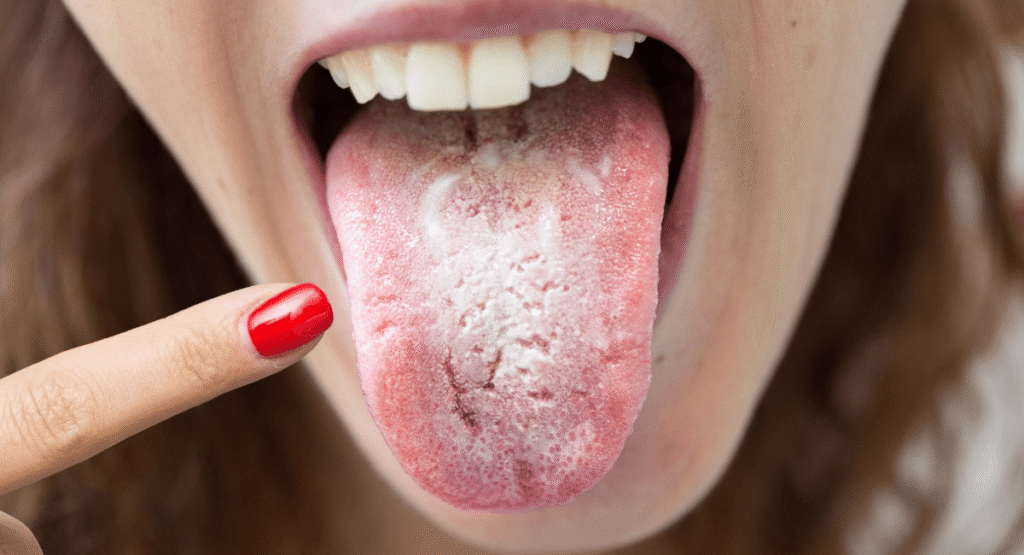

Oral thrush, or oral candidiasis, is a fungal infection of the mucous membrane caused by the overgrowth of Candida fungi. It most commonly affects infants and young children, older adults, and people with weakened immune systems, although it can occur in anyone at any age. The good news is that thrush responds well to treatment when you see a doctor promptly.
IN THIS ARTICLE, WE’LL COVER: The types of oral candidiasis, its symptoms and causes, how it’s diagnosed, treated, and prevented. We’ll also touch on some notable features of thrush specifically in women and in infants.
What Is Oral Thrush and Why Does Candidiasis Occur?
Oral candidiasis develops when Candida fungi begin multiplying aggressively. Under normal circumstances, these fungi are simply part of the mouth’s natural microflora. But when that microflora is disrupted — whether immunity weakens or the mucosal pH shifts — the fungi multiply well beyond their usual numbers, producing thrush’s telltale white coating.
Depending on how the condition manifests, several clinical variants are recognized. Below, we’ll cover the essentials about the fungus itself and the different forms thrush can take.
Candida Albicans: An Opportunistic Resident of the Body
It’s worth understanding that Candida is actually a whole genus of fungi, but when people refer to it specifically, they usually mean Candida albicans. This species is often described as part of the “opportunistic” flora. Here’s what that means: under normal conditions, the fungus lives quietly on the oral mucosa, in the intestines, and on the mucous membranes of other organs. With healthy immune defenses, it causes no harm and produces no symptoms whatsoever. But once the microflora balance is disrupted, this fungus can multiply excessively, and oral candidiasis becomes a real possibility. This kind of imbalance typically shows up with weakened immunity, long-term use of certain medications, or chronic illness.
Types of Oral Candidiasis
Oral candidiasis comes in several forms, each with a telltale sign that can help you get a rough sense of what you’re dealing with:
- Classic thrush (pseudomembranous candidiasis) — white, cottage-cheese-like patches on the tongue and other areas of the mucosa.
- Hyperplastic candidiasis — thick white patches in the mouth that are difficult to scrape off.
- Atrophic (erythematous) candidiasis — redness and burning of the oral mucosa without the pronounced white coating.
- Angular cheilitis (candidal) — cracks and sores at the corners of the mouth.
Causes of Oral Thrush in Adults and Children
Oral candidiasis, or thrush, doesn’t stem from any single cause. It can develop due to a range of factors, generally grouped into external and internal categories — everything from medications and hygiene habits to underlying illnesses and immune status. Below, we’ll break down the most common categories of causes in more detail.
Weakened Immunity, Chronic Illness, and Hormonal Changes
Sometimes the appearance of thrush is actually an early warning sign of another underlying condition. Common culprits include:
- General immune weakness.
- Diabetes, hypothyroidism, and other endocrine disorders.
- HIV infection.
- Pregnancy and the hormonal shifts that come with it.
- Stress, exhaustion, and chronic sleep deprivation.
It’s worth noting that hormonal changes, much like weakened immunity, alter the condition of the mucosa, making it a more hospitable environment for fungal growth. That’s why oral candidiasis tends to crop up more often under these circumstances.
Antibiotics and Other Medications That Can Trigger Candidiasis
The medications most commonly linked to thrush on the tongue include:
- Antibiotics (typically broad-spectrum) — these wipe out not just harmful bacteria but also the beneficial microflora that normally keeps fungal growth in check.
- Hormonal medications (particularly inhaled corticosteroids used for asthma) — long-term use can suppress local immunity and encourage the fungus to multiply on the mucosa.
PRACTICAL TIP: If you’ve been on antibiotics for an extended period, ask your doctor about taking probiotics afterward and be diligent about oral hygiene. This helps support the oral mucosa’s microflora and can also help prevent intestinal dysbiosis.
Dentures, Smoking, and Poor Oral Hygiene
There are also mechanical and lifestyle-related factors that can encourage fungal growth on the tongue, such as:
- Inadequate denture care.
- Smoking.
- Tongue or lip piercings.
- Minor injuries to the mucosa.
PRACTICAL TIP: If you wear braces, dentures, or other dental appliances, make it a habit to clean them thoroughly every day (especially before bed) and keep up with regular dental checkups.
Symptoms of Oral Thrush: How to Recognize It
Oral thrush symptoms vary depending on how far the condition has progressed — naturally, symptoms become more pronounced as it advances. Pain and a burning sensation in the mouth tend to show up later on, while the early stage may involve only mild discomfort, dryness, and a barely noticeable white coating.
Let’s take a closer look at the symptoms so you can get a sense of where things stand.
White Coating, Burning, Itching, and Other Telltale Signs
In the early stages of oral thrush, the only visible symptom is typically a white coating. This forms from dead mucosal cells, Candida fungi, and their metabolic byproducts. Left untreated, the infection progresses and symptoms intensify.
As thrush advances, the symptoms generally include:
- A cottage-cheese-like white coating in the mouth.
- Burning and itching.
- Redness of the mucosa.
- Discomfort and dryness in the mouth.
- Pain while eating or swallowing.
- Bad breath.
All of these symptoms stem from local inflammation and irritation of the oral mucosa.
Thrush on the Tongue: What It Looks Like and How It’s Different
Thrush on the tongue is one of the most common manifestations of oral candidiasis. In fact, where the coating shows up can offer a clue as to whether it’s fungal in nature. With candidiasis of the tongue, the coating tends to be thicker and harder to remove, and the mucosa underneath is usually red. By contrast, a coating that’s simply due to poor hygiene — without a fungal component — typically disappears easily after a normal tongue-cleaning.
Here are the hallmark signs of thrush on the tongue:
- A whitish coating on the surface.
- Swelling of the tongue.
- A tight or constricted sensation on the tongue.
- Altered taste, sometimes including a metallic taste.
Together, these symptoms often cause general discomfort while eating and can even lead to a loss of taste. These are usually the complaints that first bring patients to the doctor, often without realizing thrush is the cause.
A White-Coated Palate: When It’s Thrush and When It’s Normal
A white coating on the roof of the mouth (palate) is another common sign of thrush — though it doesn’t always signal a problem. Sometimes it’s simply a natural physiological state of the mucosa. More specifically, a white coating on the palate is often completely normal:
- Right after eating, from leftover food particles.
- In infants, especially right after feeding.
That said, if there’s a fairly thick, cottage-cheese-like film on the palate that doesn’t come off on its own, it’s worth seeing a dentist, who can assess the condition of the mouth and offer appropriate guidance.
Thrush in Women: Photos and Distinctive Features
Overall, thrush looks much the same in women as it does in children or men. However, women often experience it due to hormonal fluctuations unique to them. Oral candidiasis in women can be triggered by hormonal imbalances during:
- Pregnancy.
- The premenstrual period.
- Menopause.
To give you a clearer picture of what candidiasis looks like, below are photos of oral thrush. That said, keep in mind: even if you recognize the same fungal coating in your own mouth as shown in these photos, that doesn’t mean you should try to treat it yourself. Only a doctor can make a definitive diagnosis, typically after a visual examination, and then prescribe the appropriate treatment. It’s also worth noting that oral and vaginal candidiasis can occur at the same time, though they remain distinct forms of the same fungal infection.
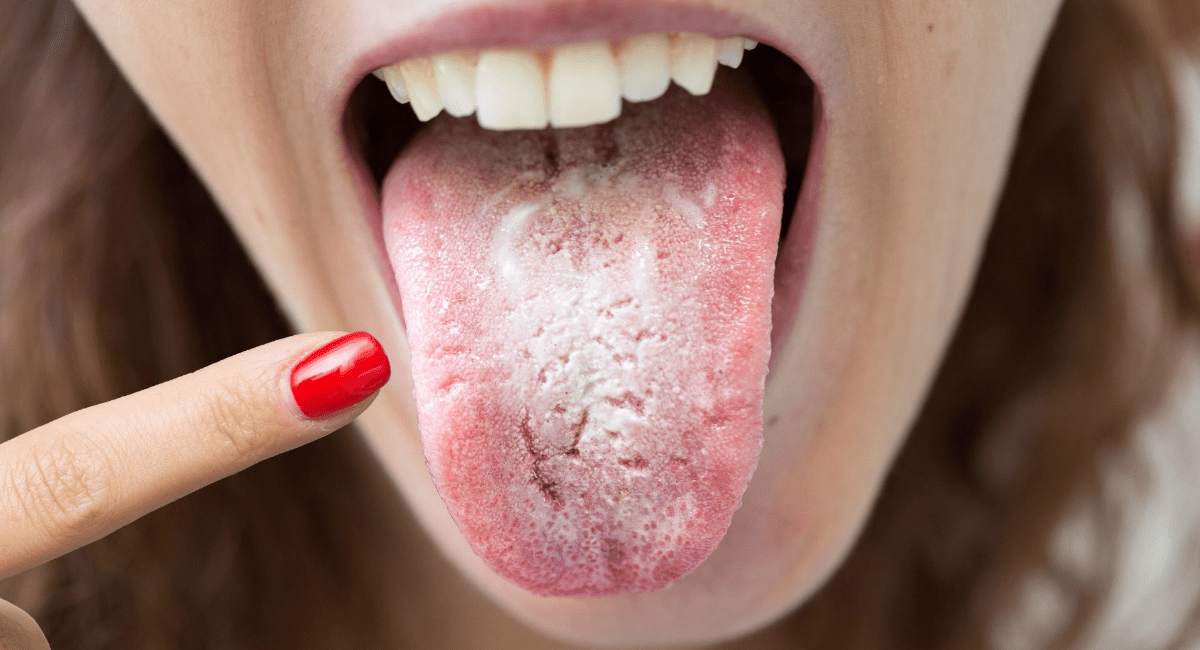
[Photo: thrush in women — a characteristic cottage-cheese-like coating on the tongue]
Thrush in Infants and Children: How to Recognize It and What Parents Should Do
Thrush is significantly more common in infants under one year old, largely because their immune systems haven’t fully developed yet. It also tends to progress differently than in adults — typically developing more quickly in children, though with prompt treatment it can also clear up faster. In children, it most often shows up as small white patches in the mouth.
Below, we’ll go over the early signs of thrush in infants and children of different ages, to help parents recognize when it’s time to see a doctor.
Oral Thrush in Infants: Early Signs and Behavioral Cues
Thrush in infants typically presents as:
- White patches on the tongue and gums that won’t wipe away.
- Fussiness specifically during feeding.
- Complete refusal to breastfeed or bottle-feed due to discomfort.
Additional signs may include general fussiness, frequent crying, and disrupted sleep over a period of time.
Below is a photo showing what thrush looks like in infants. The key thing to look for: a white coating that lingers well after feeding. If you notice this sign, don’t try to scrape the coating off yourself — see a pediatrician or pediatric dentist instead.
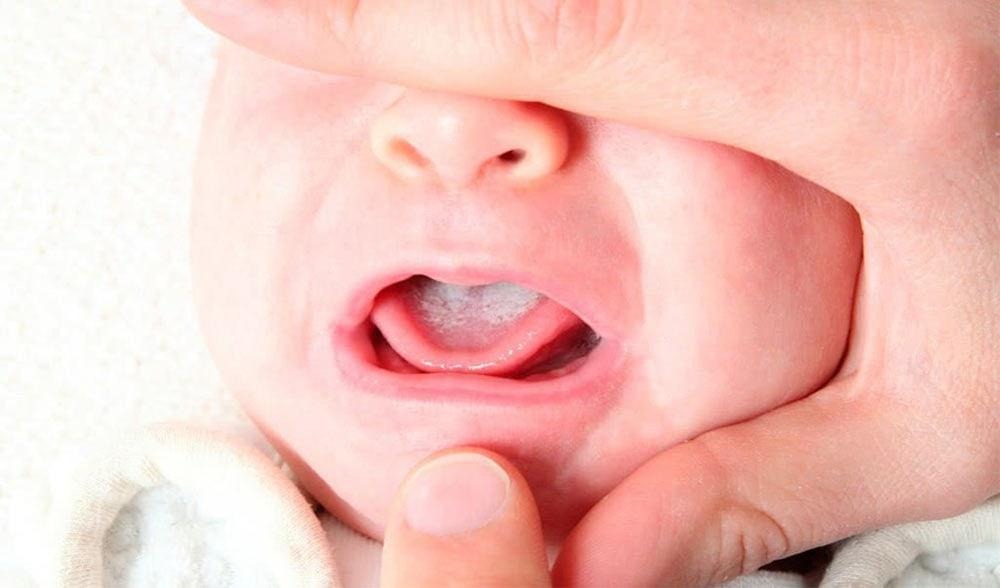
[Photo: thrush in infants]
Oral Thrush in Children of All Ages
In older children, thrush often develops from habits like thumb-sucking or pacifier use. Thrush in a 4-year-old (or older) can also appear after a cold or a course of antibiotics, both of which can lower immunity. Treatment is tailored individually at this age, but just as in infants, the childhood form of thrush generally responds well to therapy — especially with prompt medical attention.
Below is a photo showing thrush in children. The key diagnostic clue: the coating is difficult to remove and doesn’t clear up on its own.
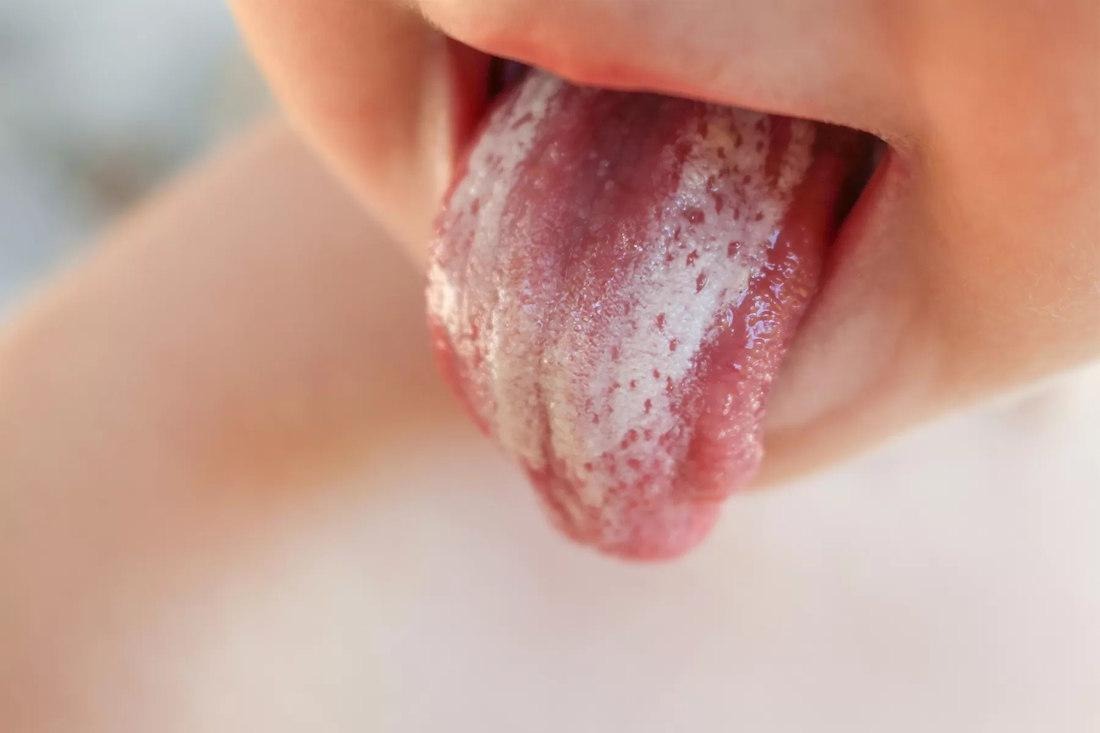
[Photo: thrush in children]
Is Oral Thrush Contagious, and How Does It Spread?
Candida fungus is contagious. Thrush can spread through kissing, sharing utensils or personal hygiene items, and from mother to child during breastfeeding. In someone with a healthy immune system, contact with the fungus rarely leads to thrush right away, since the body naturally keeps its growth in check. However, in those with underdeveloped or weakened immunity, or chronic illness, the risk is genuinely higher. That’s why thrush is significantly more common in infants, children, and older adults than in healthy adults.
Here are some practical hygiene tips for families with young children to help minimize the risk of thrush:
- Never lick your baby’s pacifier or spoon.
- Sterilize bottles and pacifiers regularly.
- Nursing mothers should keep an eye on the condition of their own mucosa.
Diagnosing Thrush: When and Which Doctor to See
Oral thrush (also known as candidal stomatitis) is typically diagnosed and treated by a dentist. For children, that means a pediatric dentist or pediatrician. When needed, an endocrinologist or immunologist may also get involved — for example, if thrush keeps recurring and the underlying cause needs to be identified. In general, it’s worth seeing a doctor once the coating persists for several days, or if pain or burning has developed.
Diagnosis of oral candidiasis typically involves:
- A visual examination of the mucosa.
- A swab for microscopic examination and culture.
- A blood glucose test (if diabetes is suspected).
It’s important to understand that self-diagnosing based on photos from the internet is no substitute for seeing a doctor. A white coating can be caused by conditions other than thrush, and only a doctor can provide an accurate diagnosis and prescribe effective treatment.
How to Treat Thrush: Modern Medications and Approaches
How to treat thrush is a decision your doctor will make on a case-by-case basis, depending on the form of the infection and how far it has spread in the mouth. That said, the main treatment approaches today generally include:
- For mild cases — topical antifungal treatments, gels, or solutions applied to the mucosa.
- For more severe cases — systemic antifungal medications in pill form.
- Sometimes, as a supportive measure — an antiseptic or antifungal oral spray, which can make it easier to treat hard-to-reach areas.
Treatment for adults with oral thrush differs from treatment for children — not just in which medications are used, but also in dosage. Commonly prescribed medications include nystatin, clotrimazole, and fluconazole, though the exact dosage, regimen, and duration of treatment should only be determined by a doctor after an examination, taking the patient’s age into account.
Treating Thrush at Home: What Helps and What’s Risky
Many patients wonder how to treat thrush at home, hoping to avoid medication altogether. But in reality, home remedies generally can’t fully cure the condition — at best, they offer temporary relief, and even that isn’t guaranteed.
So, what can help at home? As a supportive measure, you might consider rinsing with:
- Baking soda solution — this temporarily shifts the mouth’s pH, which can help slow fungal growth somewhat.
- Chamomile tea — has a mild anti-inflammatory effect and may reduce mucosal irritation.
What you should definitely avoid when trying to treat thrush at home:
- Harsh antiseptics — these can further irritate an already inflamed mucosa.
- Honey, garlic, and other popular home remedies — these don’t replace antifungal treatment and may actually make things worse.
Even remedies that seem safe for short-term relief are worth discussing with a doctor beforehand, ideally before your appointment.
Diet and Oral Candidiasis: What to Eat and What to Avoid
Diet alone won’t cure thrush at home, but it can meaningfully affect how quickly you recover, since the fungus feeds actively on sugar. During a bout of candidiasis, it’s a good idea to limit:
- Sweets and yeast-based baked goods.
- Fast-digesting carbohydrates.
- Foods with hidden sugar — sweetened drinks, sauces, ready-made breakfast foods, and the like.
Instead, to support your immune system during this time, consider including:
- Vegetables.
- Fermented dairy products with live cultures (kefir, unsweetened yogurt).
- Lean meat and fish.
- Plenty of water, to help maintain healthy mucosal moisture in the mouth.
A balanced diet — and especially keeping blood glucose levels in check — supports both immunity and gut microflora, which in turn affects the fungal balance in the body. That said, in more serious cases, diet alone is no substitute for medical treatment.
Why Thrush Comes Back: Causes of Recurrence and Chronic Cases
Common reasons thrush on the tongue or in the mouth keeps coming back include:
- Incomplete treatment — stopping therapy as soon as symptoms disappear, without finishing the full course.
- Not addressing the underlying cause — such as uncontrolled diabetes, poor denture care, or improper use of hormonal medications.
- Repeated exposure to the source — for example, within a family, if only one person is treated while others remain carriers of the fungus.
The takeaway: with fungal infections, it’s not enough to just get rid of the symptoms — you need to complete the full course of treatment and address the root cause. That’s the only way to achieve lasting results.
The Dangers of Untreated Thrush: Possible Complications
Left untreated, a fungal infection can spread quickly — typically to the throat and esophagus, causing pain and difficulty swallowing. The fungus can also spread to internal organs, particularly in people with significantly weakened immune systems, such as those with HIV or undergoing chemotherapy. This can pose a serious health risk. That said, to be clear, this level of severity generally only occurs if the infection is left completely unaddressed. With prompt medical care, the risk of complications is minimal.
Parents should be especially vigilant, since thrush tends to progress faster in children due to their still-developing immune systems. If you notice early signs of candidiasis in a child, don’t hesitate — see a pediatrician or pediatric dentist right away.
Preventing Oral Thrush
To reduce the chances of getting thrush, follow these simple preventive habits:
- Maintain consistent oral hygiene — brush your teeth twice a day, and use a tongue scraper and dental floss.
- If you wear dentures or braces, clean them thoroughly every day. Remove removable dentures at night.
- Keep chronic conditions under control — particularly blood glucose levels if you have diabetes.
- Limit sugar in your diet and avoid smoking.
- Support your immune system with adequate sleep, a balanced diet, sufficient water intake, and moderate physical activity.
- Get regular dental checkups even if you have no complaints — this helps catch early signs of candidiasis before symptoms become pronounced.
These simple habits genuinely reduce the likelihood of developing thrush, whether for the first time or as a recurrence.
Frequently Asked Questions (FAQ)
What does thrush look like in infants?
Thrush in infants appears as a white, cottage-cheese-like coating on the tongue, cheeks, or palate, and sometimes as small blisters. This is similar to how it looks in a 4-year-old or older child. The key sign is that the coating is difficult to remove on its own.
How long does it take to treat oral thrush?
Oral thrush typically clears up within 7–14 days, provided the right treatment is chosen and the doctor’s recommendations are followed.
Can baking soda cure thrush?
No, baking soda alone can’t cure thrush. A baking soda rinse may provide some additional, temporary symptom relief, but it doesn’t work in every case and isn’t a treatment in itself.
Is thrush contagious through kissing?
Yes, thrush can be transmitted through kissing, though this is uncommon in people with a healthy immune system.
The author of this article is Iryna Sashchuk, a general dentist, oral surgeon, and periodontist.


Make an appointment
You can make an appointment by filling out the application form on the website, as well as using instant messengers:
Make an appointment
You can make an appointment by filling out the application form on the website, as well as using instant messengers:


Make an appointment easily using chatbots:
Also, call the numbers:
Modern dentistry and medical centre "MED-DEO"
Choose a clinic whose location is more convenient for you.
Kyiv, Holosiivska/Demiivska metro station
130 Lobanovskoho Avenue


Working hours:
Mon - Sun: 8:00 AM - 9:00 PM
No days off!
Call the numbers:
How to get to us? Create a route
Create a route
Kyiv, Akademistechko metro station
78A, Irpinska str.


Working hours:
Mon-Sun: 8.00-21.00
Without days off!
Call the numbers:
How to get to us?
Create a route
Create a route
Kyiv, Heroiv Dnipra metro station
32A, Heroiv Dnipra str.


Working hours:
Mon-Sun: 8.00-21.00
Without days off!
Call the numbers:
How to get to us?
Create a route
Create a route
Kyiv, Teatralna metro station
9B, E. Chykalenko (Pushkinska) str.


Working hours:
Mon-Sat: 8.00 - 21.00. Sun: by appointment.
Without days off!
Call the numbers:
How to get to us?
Create a route
Create a route
Відгук від клієнта
0:00
0:00


Your email will not be published on the site.