Special offer! Comprehensive professional teeth cleaning for only 1699 UAH.
Special offer! Comprehensive professional teeth cleaning for only 1699 UAH.
Special offer! Comprehensive professional teeth cleaning for only 1699 UAH.
Special offer! Comprehensive professional teeth cleaning for only 1699 UAH.
Special offer! Comprehensive professional teeth cleaning for only 1699 UAH.
Special offer! Comprehensive professional teeth cleaning for only 1699 UAH.
Special offer! Comprehensive professional teeth cleaning for only 1699 UAH.
Special offer! Comprehensive professional teeth cleaning for only 1699 UAH.
Special offer! Comprehensive professional teeth cleaning for only 1699 UAH.
Special offer! Comprehensive professional teeth cleaning for only 1699 UAH.
Sign up
 (044) 394 90 94
(044) 394 90 94  Holosiivska/Demiivska metro station
Sign up
(044) 394 90 94
(044) 394 90 94
Doctors


 Prices
Blog
Contacts
Prices
Blog
Contacts
пр.Лобановського, 130, Київ, Україна
Temporarily closed
Opening soon
78A, Irpinska St., Kyiv, Ukraine
Temporarily closed
Opening soon
32A, Heroiv Dnipra St., Kyiv, Ukraine
Temporarily closed
Opening soon
9B, Yevhena Chykalenko St. (Pushkinska), Kyiv, Ukraine
Temporarily closed
Opening soon
(044) 394 90 94
Back
Dentistry
General Dentistry
Dental surgery
Dental Implants
Maxillofacial Surgery
Dental prosthetics
Cosmetic dentistry
Professional Dental Hygiene

Periodontics
Orthodontic dentistry

Gnathology & TMJ Therapy

Pediatric Dentistry
Dental X-Rays
Back
Orthodontic Center
Orthodontic dentistry
Gnathology & TMJ Therapy
Back
Prosthodontic Center
Dental prosthetics
Back
MED-DEO Center for Maxillofacial Surgery & Facial Plastics
Maxillofacial Surgery
Plastic surgery
Back
Surgical Dental Center
Dental surgery
Dental Implants
Search on the site


Popular requests
Teeth whitening
Treatment of caries
Wisdom tooth extraction
Bracket system
Dental veneers
Tooth restoration
Pediatric dentist
Consultation with a dentist-therapist
Search results by: «».
Unfortunately, no results were found for your search: “Pediatric Endocrinologist”, nothing was found.
You may find these links useful:
Clinics "MED-DEO"
пр.Лобановського, 130, Київ, Україна
Temporarily closed
Opening soon
78A, Irpinska St., Kyiv, Ukraine
Temporarily closed
Opening soon
32A, Heroiv Dnipra St., Kyiv, Ukraine
Temporarily closed
Opening soon
9B, Yevhena Chykalenko St. (Pushkinska), Kyiv, Ukraine
Temporarily closed
Opening soon
Services
Dentistry Orthodontic Center Prosthodontic Center MED-DEO Center for Maxillofacial Surgery & Facial Plastics Surgical Dental CenterGeneral Dentistry
Dental surgery
Dental Implants
Maxillofacial Surgery
Dental prosthetics
Cosmetic dentistry
Professional Dental Hygiene
Periodontics
Orthodontic dentistry
Gnathology & TMJ Therapy
Pediatric Dentistry
Dental X-Rays
Orthodontic dentistry
Gnathology & TMJ Therapy
Dental prosthetics
Maxillofacial Surgery
Dental surgery
Dental Implants
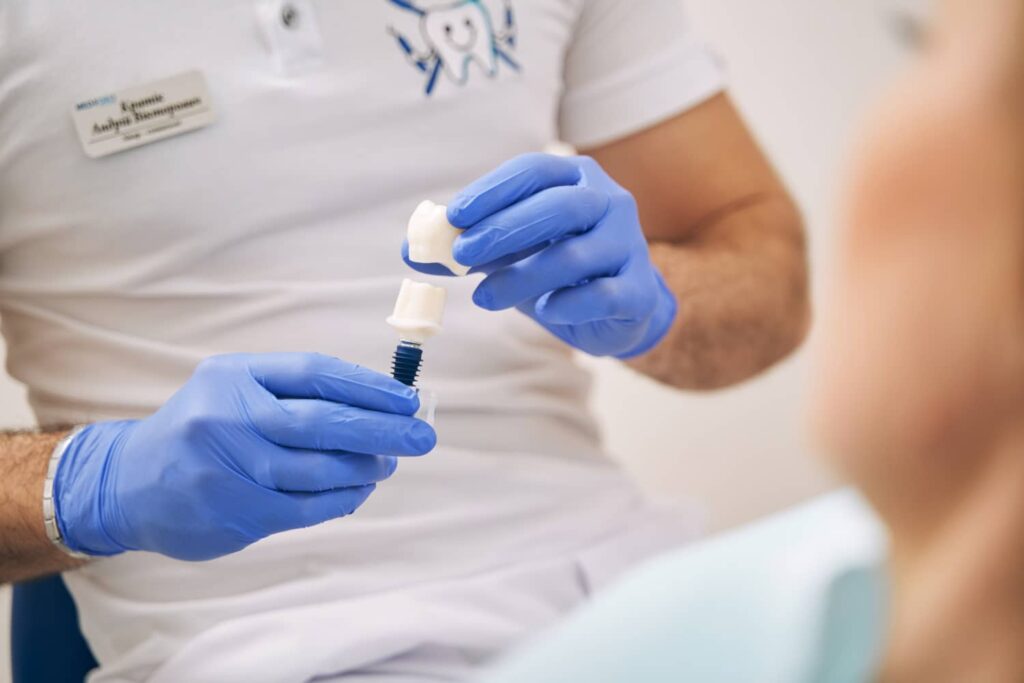

Losing a tooth causes significant discomfort. Chewing becomes harder, neighboring teeth begin to tilt toward the gap, and the jawbone, no longer under load, starts to atrophy. Some types of traditional prosthetics rely on adjacent teeth for support, which may require reshaping them. Modern dentistry offers a physiological solution that fully restores chewing function and the look of your smile. Dental implantation is one of the most reliable methods of replacing lost teeth in adult patients.
At the MED-DEO clinic network, we help patients regain their health and confidence in everyday life. Here we walk through every aspect of the procedure, from preparation and diagnostics to how long the finished restoration lasts.
Dental Implants in Kyiv
Dental implantation priceWhat Is Dental Implantation and How Does It Work
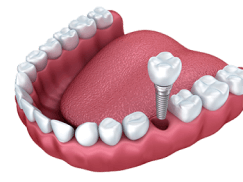
At its core, dental implantation is a high-precision surgical procedure in which a titanium implant that replaces the tooth root is placed in the jawbone. This artificial root becomes a solid foundation for the future prosthetic restoration.
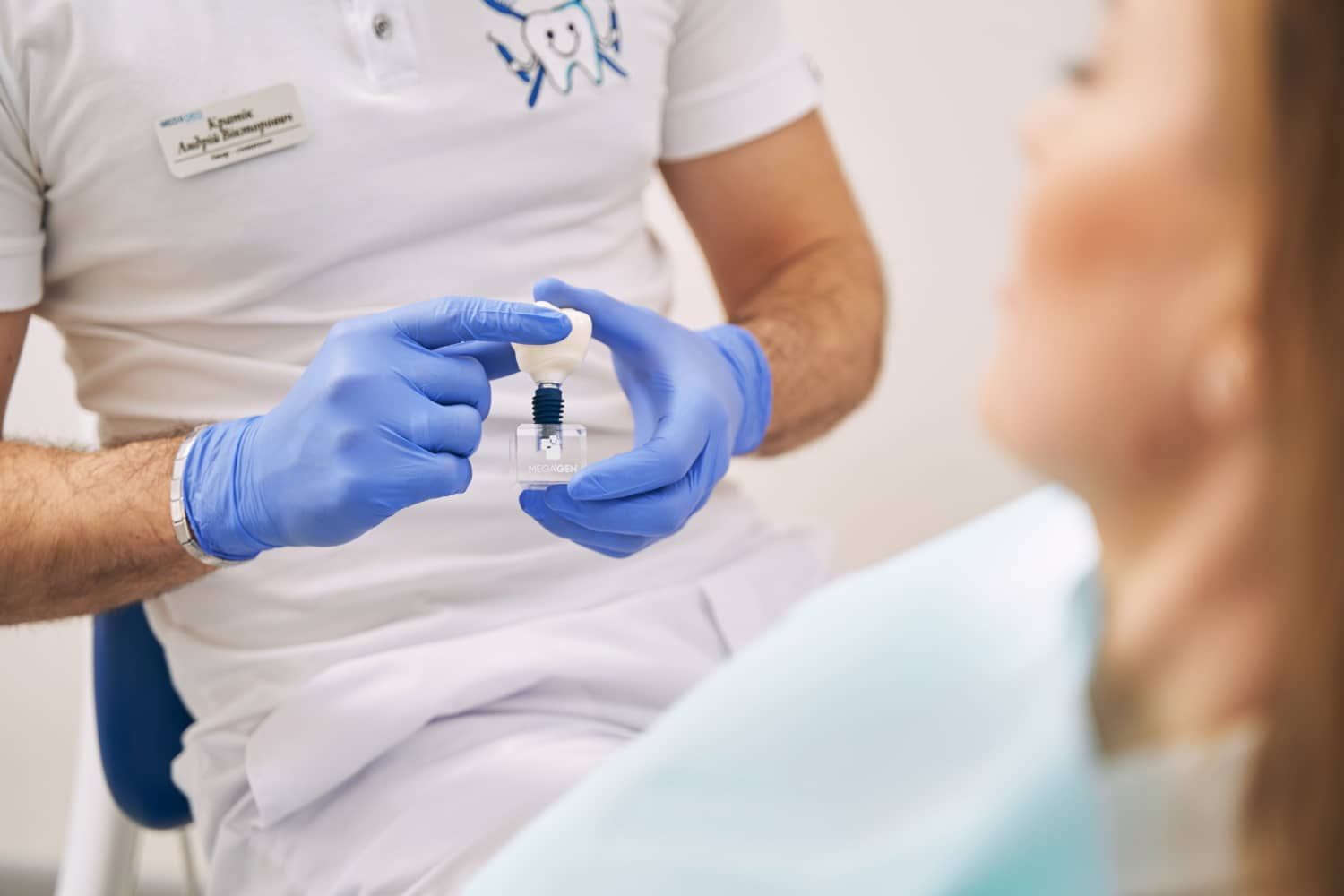
An artificial tooth consists of three components, each with its own function:
- Titanium screw. The intraosseous part, surgically placed in the jawbone.
- Abutment. The connecting element (the intermediate piece between the implant and the crown), which is screwed onto the artificial root once it has healed in place.
- Crown. The visible outer part (a fixed prosthesis) that matches the shape and color of a natural tooth.
Thanks to this design, chewing forces are transferred directly to the bone, just as they are with natural roots. The key to success is osseointegration (the process by which the titanium screw fuses with the bone). Titanium is chosen for good reason: it is highly biocompatible and hypoallergenic, which helps it integrate with bone tissue. That said, complications and implant rejection are still possible.
The main advantage of dental implantation over bridges is that it preserves the neighboring teeth. To place a traditional bridge, the abutment teeth are usually ground down, and while they don’t always need to be devitalized, in some cases they do. With an implant, the adjacent teeth stay intact. Implantation also helps reduce bone loss in the area of the missing tooth, fully restores chewing function, and brings back a natural-looking smile.
Indications and Contraindications for Dental Implantation
The procedure is recommended for most types of dental arch defects. The main indications include:
- Loss of a single tooth in the front or chewing section.
- Several missing teeth in a row, where a bridge is difficult to place.
- Complete edentulism (no teeth in one or both jaws).
- The need to restore the aesthetics of your smile when other methods aren’t an option.
Dental implantation is performed on a doctor’s advice after a thorough examination and a review of CT scans. The list of restrictions is not a reason to self-diagnose or give up on restoring your teeth. Most obstacles today can be overcome. A mandatory preliminary consultation lets the doctor assess your overall health and choose a safe treatment plan.
Absolute Contraindications to Dental Implantation
There are conditions in which surgery is dangerous to your health or makes successful healing unlikely. These include:
- Decompensated heart and vascular diseases.
- Cancer in the active phase of treatment.
- Severe endocrine disorders.
- Psychiatric disorders during an acute episode.
- Bone diseases (osteoporosis) and blood disorders.
- Immunodeficiency conditions (severe HIV/AIDS).
- Acute inflammatory processes in the mouth.
These conditions carry a high risk of poor wound healing, increase the risk of bleeding, and significantly reduce the chances of the titanium fusing properly with the bone.
Relative Contraindications and Preparing for Dental Implantation
These restrictions are temporary and can be lifted with appropriate preparation. They include:
- Acute infectious diseases.
- Disorders of the temporomandibular joint.
- Cavities in neighboring teeth.
- Diabetes mellitus in the compensated stage (requires blood sugar control and an individual risk assessment by the dentist).
- Smoking.
- Insufficient bone volume.
Dental implantation becomes possible after acute inflammation has been treated, chronic conditions are under control, the mouth has been sanitized, and the bone has been built up.
A few practical tips before your visit to the surgeon:
- Have a proper meal beforehand (it reduces saliva production and stabilizes your blood sugar).
- Brush your teeth thoroughly and use a mouthwash.
- Tell your doctor in advance if you take anticoagulants or any other medication.
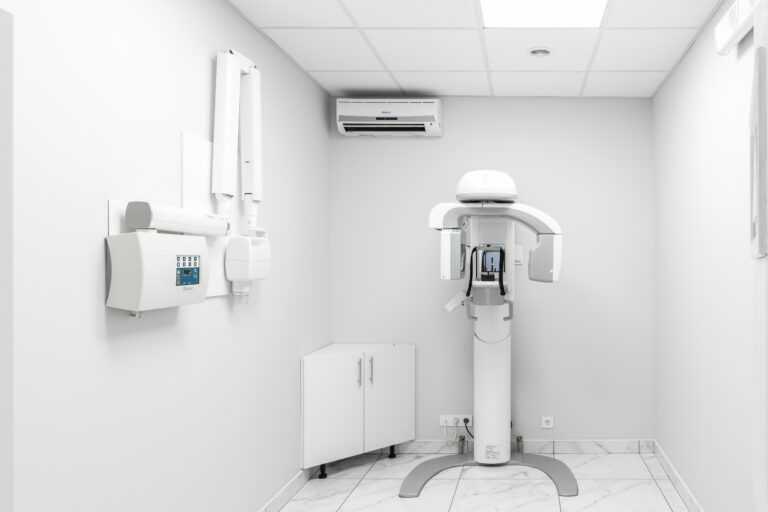
Thorough preparation also includes an initial examination, blood tests, a panoramic X-ray (orthopantomogram), and a computed tomography (CT) scan. Dental implantation in Kyiv at the MED-DEO clinic always begins with comprehensive diagnostics.
How Dental Implantation Works: A Step-by-Step Guide
Understanding the sequence of events helps patients overcome the fear of the unknown. The entire process at the clinic is fully controlled, and every step is discussed with the surgeon in advance. Dental implantation consists of several logical stages.
Diagnostics and Planning for Dental Implantation
The doctor studies a 3D scan of your jaw. The dentist assesses the height and width of the alveolar ridge, the condition of the neighboring tooth roots, the absence of inflammation, and the exact location of the maxillary sinuses and nerve canals.
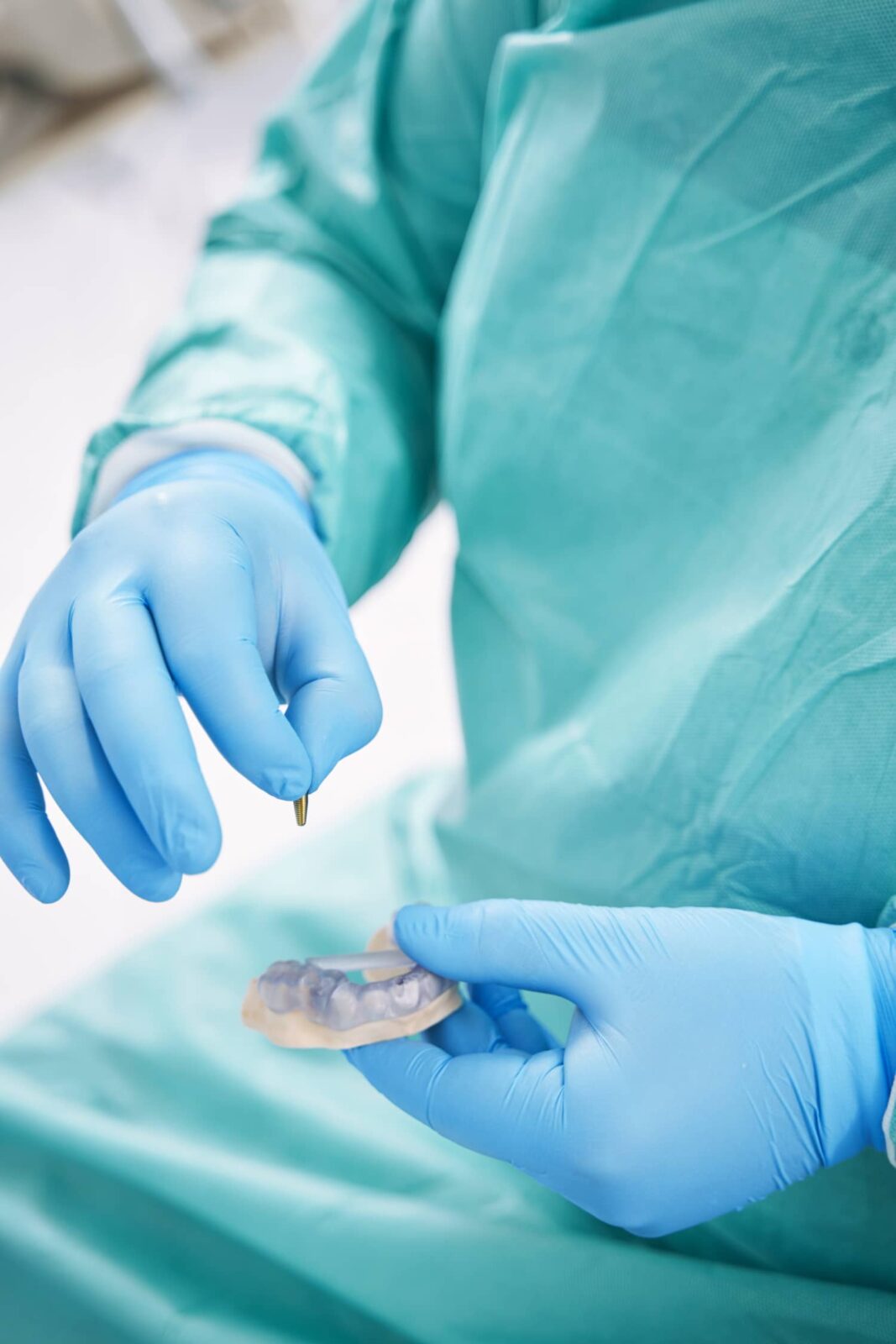
To rule out errors, 3D planning is used for dental implantation. Specialized software generates a custom surgical guide for implant placement, which makes it possible to position the titanium screw at the correct angle with sub-millimeter accuracy. Based on the analysis, the implant’s length, diameter, and manufacturer are chosen, along with the surgical protocol.
The Surgical Stage of Dental Implantation
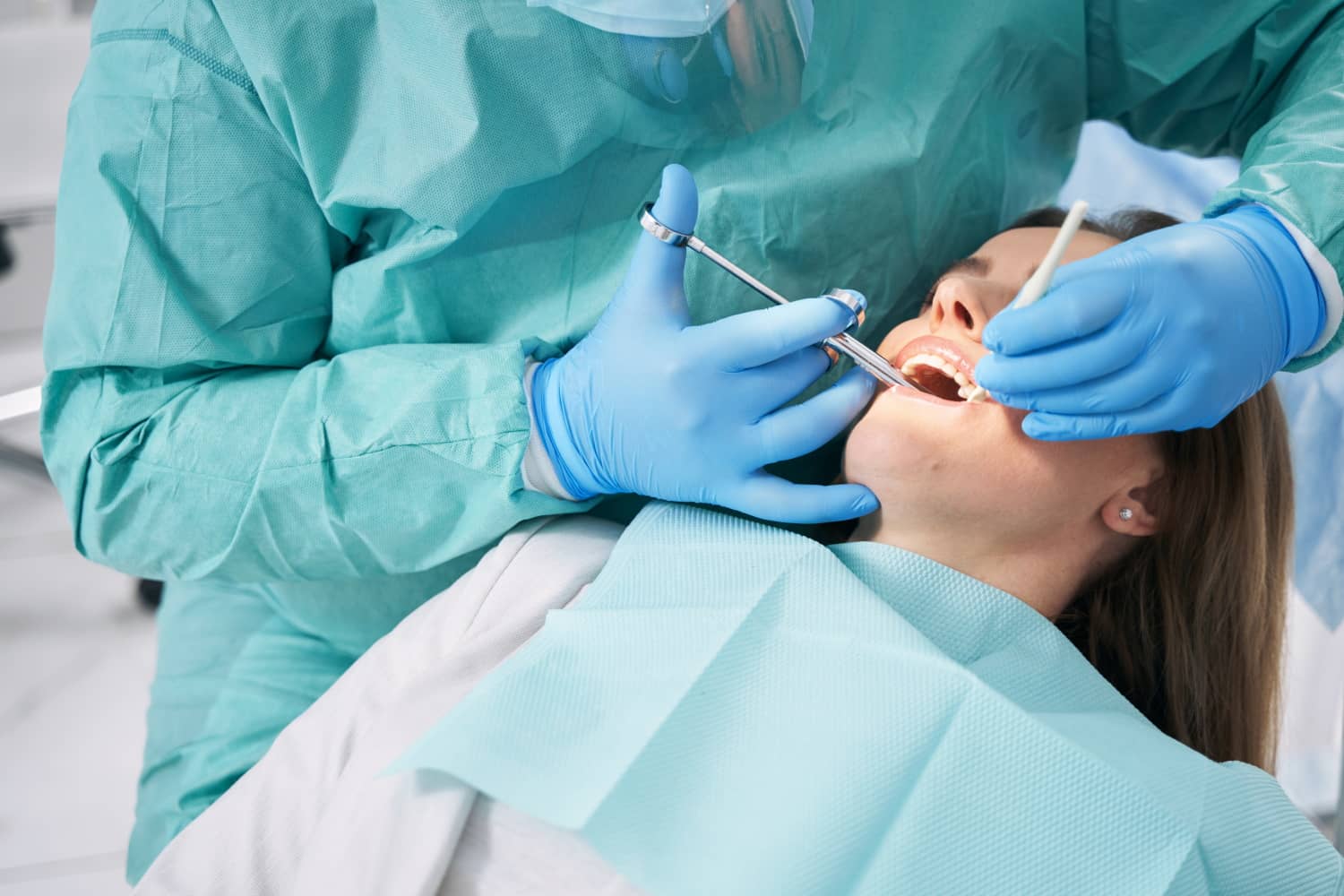
The procedure is performed under effective local anesthesia. You won’t feel any pain, only a slight sensation of pressure. Placing a single implant takes 20 to 40 minutes. In complex cases, sedation (medication-induced sleep) can be used at the patient’s request.
During the procedure, the oral surgeon makes a small incision in the gum, prepares a socket in the bone, and screws in the artificial root. Depending on the situation, either the classic two-stage protocol is used, or single-stage (immediate) dental implantation is performed right after the damaged tooth is extracted.
Once the surgery is complete, the gum is stitched closed. During the first few days, you’ll be advised to apply cold compresses, eat soft foods, and avoid physical exertion.
Placing the Abutment and Crown After Dental Implantation
Once osseointegration is complete (often 2–4 months in the lower jaw and 3–6 months in the upper jaw), the prosthetic stage begins. The doctor places a healing abutment (gum former) for 10–14 days to shape an attractive gum contour.
Next comes the abutment itself, after which precise impressions are taken or a digital scan is performed. A crown made of ceramic or zirconium dioxide is fabricated in the lab. Once it is fixed in place, the tooth restoration is complete, and the doctor determines the permissible chewing load and your ongoing care routine. The pause between stages is necessary for osseointegration and for the implant to stabilize in the bone.
Does Dental Implantation Hurt, and How Long Does Treatment Take
The main question on patients’ minds is the level of discomfort. Quality anesthesia completely blocks pain signals in the treatment area. During the procedure, you will feel only the touch of instruments.
Once the anesthesia wears off, normal post-operative reactions are possible during the first 2–3 days: slight swelling, discomfort, or moderate pain, all of which are easily managed with prescribed painkillers. Recovery is smooth. You can return to your usual diet as early as the next day, unless your doctor advises otherwise. The total treatment time, from the first visit to the final crown, is usually 3 to 6 months.
Dental Implantation in Challenging Anatomical Conditions: Sinus Lift and Bone Grafting
When teeth have been missing for a long time, the bone gradually resorbs. Bone atrophy or volume deficiency develops, which makes it harder to anchor an implant securely.
| Procedure | When It’s Used | What It Involves |
|---|---|---|
| Sinus lift | Insufficient bone in the lateral areas of the upper jaw. | The floor of the maxillary sinus is carefully raised and the space is filled with bone graft material. |
| Bone grafting (osteoplasty) | Insufficient width or height of the alveolar ridge. | Bone graft material is added to create the volume needed to support the artificial root. |
These procedures make treatment possible even in difficult cases, and in many of them the anatomical deficit can be compensated for with bone grafting or a sinus lift.
Aftercare, Longevity, and Prevention After Dental Implantation
How long a restoration lasts depends on good hygiene. With proper care and regular checkups, implants can function for many years. Choose manufacturers that offer a lifetime warranty on their titanium posts.
The key factors for longevity:
- Thorough oral hygiene (using an oral irrigator, interdental brushes, and a soft toothbrush).
- Avoiding smoking during the post-operative period.
- Attending follow-up exams and professional cleanings every 6 months.
Following your doctor’s recommendations helps reduce the risk of complications and contributes to the long life of the restoration.
Dental Implantation FAQ
Does dental implantation hurt?
During dental implantation, local anesthesia significantly reduces or eliminates pain; you may feel pressure or touch. For anxious patients, treatment can be carried out under sedation.
What restrictions apply after dental implantation?
For the first 3–5 days after dental implantation, you should limit physical activity and avoid saunas, swimming pools, and hot baths. It’s also recommended to avoid smoking as a risk factor, as well as alcohol and food that is too hard, hot, or spicy.
At what age can you get dental implants?
Dental implantation is usually performed once jaw growth is complete. The age at which this happens varies from person to person (from 18–20 years). There is no upper age limit; treatment is successfully performed even in older age, provided there are no severe absolute contraindications.
The author of this article is Davyd Keyan, a dental surgeon, maxillofacial surgeon, and plastic surgeon.


Make an appointment
You can make an appointment by filling out the application form on the website, as well as using instant messengers:
Make an appointment
You can make an appointment by filling out the application form on the website, as well as using instant messengers:


Make an appointment easily using chatbots:
Also, call the numbers:
Modern dentistry and medical centre "MED-DEO"
Choose a clinic whose location is more convenient for you.
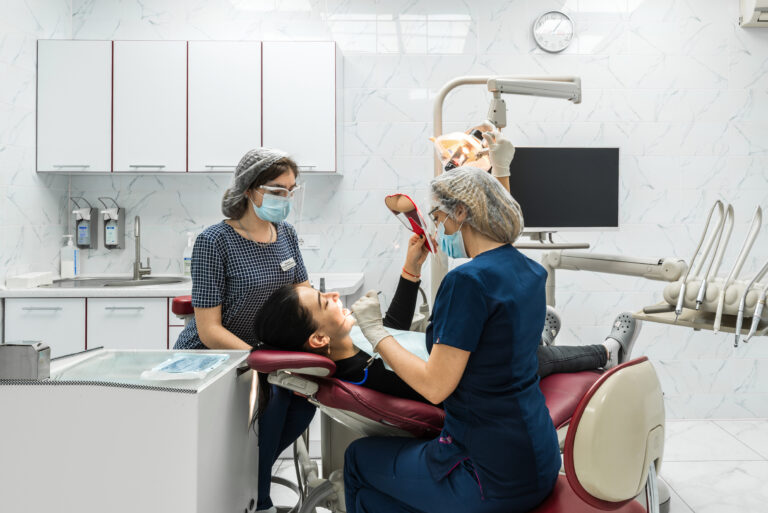
Kyiv, Holosiivska/Demiivska metro station
130 Lobanovskoho Avenue


Working hours:
Mon - Sun: 8:00 AM - 9:00 PM
No days off!
Call the numbers:
How to get to us? Create a route
Create a route
Kyiv, Akademistechko metro station
78A, Irpinska str.


Working hours:
Mon-Sun: 8.00-21.00
Without days off!
Call the numbers:
How to get to us?
Create a route
Create a route
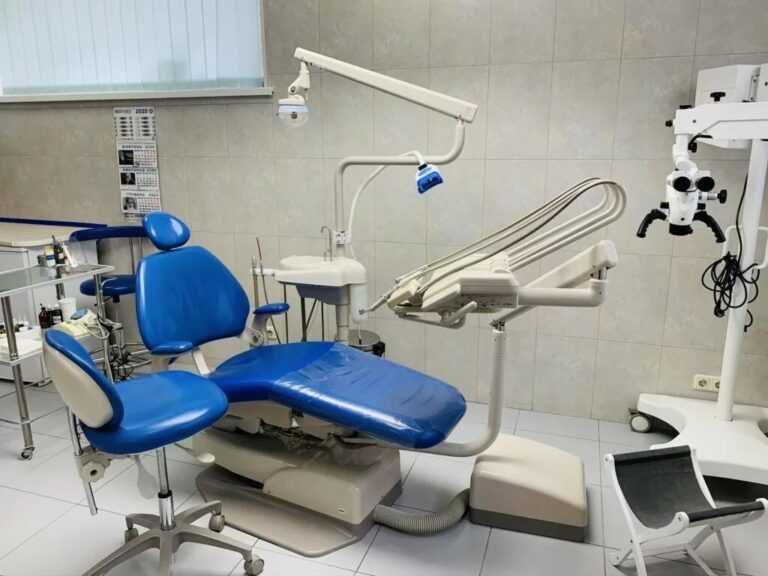
Kyiv, Heroiv Dnipra metro station
32A, Heroiv Dnipra str.
Working hours:
Mon-Sun: 8.00-21.00
Without days off!
Call the numbers:
How to get to us?
Create a route
Create a route
Kyiv, Teatralna metro station
9B, E. Chykalenko (Pushkinska) str.



Working hours:
Mon-Sat: 8.00 - 21.00. Sun: by appointment.
Without days off!
Call the numbers:
How to get to us?
Create a route
Create a route
Відгук від клієнта
0:00
0:00


Your email will not be published on the site.