Special offer! Comprehensive professional teeth cleaning for only 1699 UAH.
Special offer! Comprehensive professional teeth cleaning for only 1699 UAH.
Special offer! Comprehensive professional teeth cleaning for only 1699 UAH.
Special offer! Comprehensive professional teeth cleaning for only 1699 UAH.
Special offer! Comprehensive professional teeth cleaning for only 1699 UAH.
Special offer! Comprehensive professional teeth cleaning for only 1699 UAH.
Special offer! Comprehensive professional teeth cleaning for only 1699 UAH.
Special offer! Comprehensive professional teeth cleaning for only 1699 UAH.
Special offer! Comprehensive professional teeth cleaning for only 1699 UAH.
Special offer! Comprehensive professional teeth cleaning for only 1699 UAH.
Sign up
 (044) 394 90 94
(044) 394 90 94  Holosiivska/Demiivska metro station
Sign up
(044) 394 90 94
(044) 394 90 94
Doctors


 Prices
Blog
Contacts
Prices
Blog
Contacts
пр.Лобановського, 130, Київ, Україна
Temporarily closed
Opening soon
78A, Irpinska St., Kyiv, Ukraine
Temporarily closed
Opening soon
32A, Heroiv Dnipra St., Kyiv, Ukraine
Temporarily closed
Opening soon
9B, Yevhena Chykalenko St. (Pushkinska), Kyiv, Ukraine
Temporarily closed
Opening soon
(044) 394 90 94
Back
Dentistry
General Dentistry
Dental surgery
Dental Implants
Maxillofacial Surgery
Dental prosthetics
Cosmetic dentistry
Professional Dental Hygiene

Periodontics
Orthodontic dentistry

Gnathology & TMJ Therapy

Pediatric Dentistry
Dental X-Rays
Back
Orthodontic Center
Orthodontic dentistry
Gnathology & TMJ Therapy
Back
Prosthodontic Center
Dental prosthetics
Back
MED-DEO Center for Maxillofacial Surgery & Facial Plastics
Maxillofacial Surgery
Plastic surgery
Back
Surgical Dental Center
Dental surgery
Dental Implants
Search on the site


Popular requests
Teeth whitening
Treatment of caries
Wisdom tooth extraction
Bracket system
Dental veneers
Tooth restoration
Pediatric dentist
Consultation with a dentist-therapist
Search results by: «».
Unfortunately, no results were found for your search: “Pediatric Endocrinologist”, nothing was found.
You may find these links useful:
Clinics "MED-DEO"
пр.Лобановського, 130, Київ, Україна
Temporarily closed
Opening soon
78A, Irpinska St., Kyiv, Ukraine
Temporarily closed
Opening soon
32A, Heroiv Dnipra St., Kyiv, Ukraine
Temporarily closed
Opening soon
9B, Yevhena Chykalenko St. (Pushkinska), Kyiv, Ukraine
Temporarily closed
Opening soon
Services
Dentistry Orthodontic Center Prosthodontic Center MED-DEO Center for Maxillofacial Surgery & Facial Plastics Surgical Dental CenterGeneral Dentistry
Dental surgery
Dental Implants
Maxillofacial Surgery
Dental prosthetics
Cosmetic dentistry
Professional Dental Hygiene
Periodontics
Orthodontic dentistry
Gnathology & TMJ Therapy
Pediatric Dentistry
Dental X-Rays
Orthodontic dentistry
Gnathology & TMJ Therapy
Dental prosthetics
Maxillofacial Surgery
Dental surgery
Dental Implants


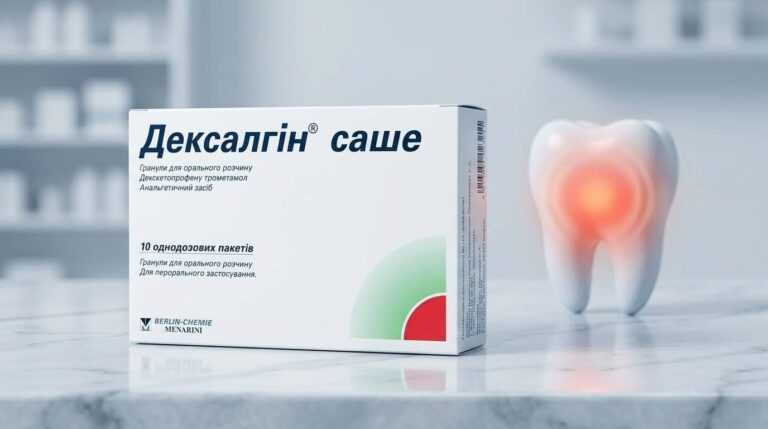
When a toothache suddenly strikes, it can throw you completely off balance. That’s why the first instinct is to find a way to get rid of it right here, right now. And Ketanov tablets often help with toothaches.
Ketanov is a painkiller that temporarily reduces acute tooth pain or significant discomfort after dental procedures. But that’s not everything Ketanov is used for. Overall, it’s a powerful analgesic, especially effective against pain linked to inflammation. At the same time, however, it only eliminates the symptom, not the cause of the pain. In other words, Ketanov won’t cure cavities, severe gum inflammation, or infection. So even if it brings relief, you should still see a dentist to identify the actual source of the pain.
In this article, we’ll break down clearly: when this painkiller is appropriate and when it isn’t, the correct dosage, and how children or pregnant women should (or shouldn’t) take Ketanov. We’ll also cover side effects, contraindications, and cases where you definitely shouldn’t wait for the pain to go away on its own.
What Ketanov Is and How It Works
It’s important to understand that Ketanov is a brand name. Its active ingredient is ketorolac tromethamine. Overall, it’s a nonsteroidal anti-inflammatory drug (NSAID) with pronounced analgesic action. In simple terms, it blocks the formation of substances in the body responsible for pain, inflammation, and even fever. Compared to well-known drugs like ibuprofen or paracetamol (acetaminophen), ketorolac has a significantly stronger effect on the body – including notable relief for toothaches.
The mechanism of action is straightforward: ketorolac blocks specific enzymes called COX-1 and COX-2. These enzymes are involved in producing the substances that trigger pain and inflammation (known as prostaglandins).
IMPORTANT NOTE: Even though Ketanov helps with severe toothaches, it does not address the underlying cause! In other words, Ketanov will not cure cavities, pulpitis, inflammation of the tooth nerve, an abscess with pus, and so on. These issues obviously require dental treatment.
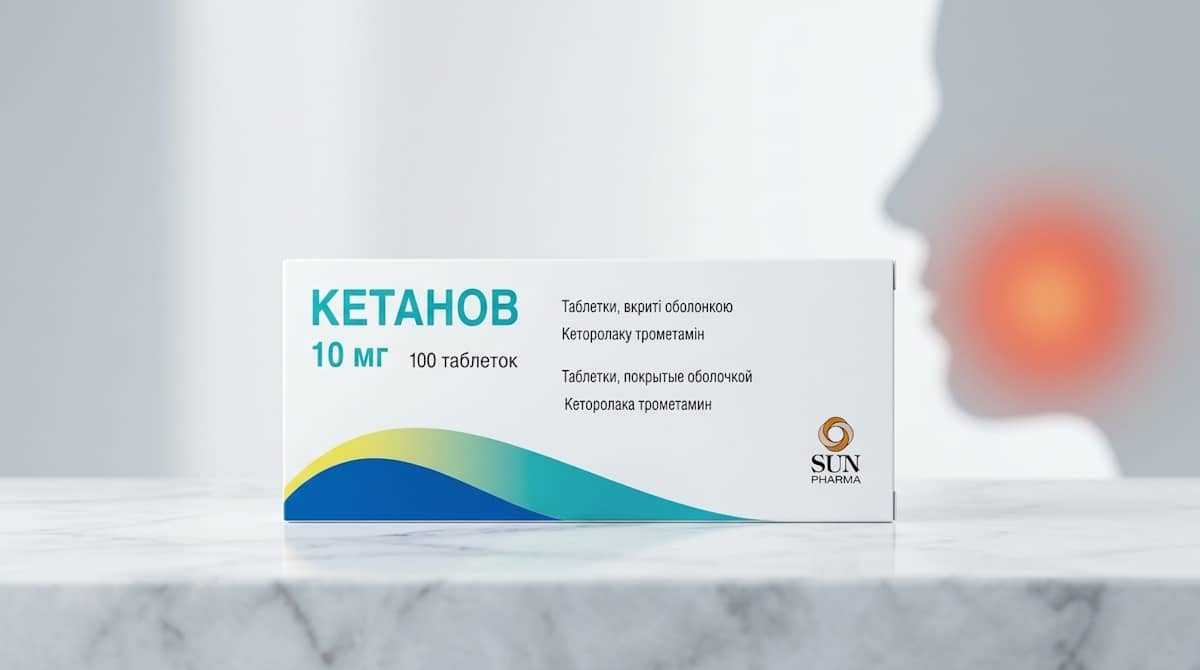
Next, let’s look at how Ketanov differs from a similar drug with the same active ingredient – Ketorol.
Ketanov vs. Ketorol – What’s the Difference
Ketanov and Ketorol are two different brand names for the same active substance: ketorolac. Both drugs share ketorolac as their main active ingredient, but they come from different manufacturers. The differences lie in the manufacturer, additional inactive ingredients, coating, and sometimes even packaging and dosage form.
Another difference is that Ketanov is typically manufactured in Romania, while Ketorol comes from India. That said, neither can really be called “better” or “stronger.” When it comes to severe toothaches, Ketanov and Ketorol essentially work the same way. The amount of active ingredient (ketorolac) is identical in both, so you shouldn’t expect any meaningful difference in pain relief.
The key factor isn’t which manufacturer is “better,” but rather getting the right dosage for your specific situation.
Does Ketanov Really Help With Toothaches?
Yes, taking Ketanov genuinely helps with tooth pain. It’s especially effective when the pain is linked to inflammation or tissue damage – for example, after surgery, following a tooth extraction, and similar situations. It’s usually taken short-term, specifically to manage acute or moderate but bothersome pain. It’s considered a first-line medication, provided there are no contraindications – in other words, one of the first options typically recommended.
For toothaches, the drug starts working within roughly 30-40 minutes, which is when you should feel the first signs of relief. The effect typically lasts around 4-6 hours.
Specifically, Ketanov is used for:
- Acute tooth pain caused by inflammation.
- Throbbing or aching pain due to inflammation or infection.
- Pain following a tooth extraction.
- Pain after other traumatic dental procedures.
- Unbearable discomfort when seeing a dentist right away isn’t possible.
When comparing this drug to ibuprofen or paracetamol, none of them can be called definitively “the strongest for everyone.” Ibuprofen, for instance, works more gently and more slowly. Paracetamol barely affects inflammation and only slightly reduces pain sensation, though it’s good at lowering fever. Ketanov, on the other hand, specifically targets the inflammatory component of pain, which is why it’s often more effective for acute cases. But no matter how strong the effect, once the pain subsides, you still need to address the root cause – meaning, see a dentist, get proper treatment, and minimize the risk of complications.
When Ketanov Doesn’t Help With Toothaches
Sometimes Ketanov simply doesn’t relieve tooth pain. In that case, if there’s little to no effect, you shouldn’t increase the dose. This may actually be a sign that the underlying cause requires more than just “masking” – it needs prompt treatment.
Ketanov most often fails to relieve toothache in these situations:
- Advanced pulpitis with significant damage to the pulp (tooth nerve).
- A tooth abscess or gumboil that already contains pus.
- Pain caused by pronounced inflammation of the tissue around the tooth (periodontitis).
- Neuralgic pain, where the cause lies in the nervous system rather than the tooth itself.
WORTH REMEMBERING: A complete lack of effect from Ketanov is definitely a signal to see a doctor. At the same time, it’s not a reason to increase the dose or frequency on your own – that is, taking it against the instructions and ignoring contraindications. Other reasons to seek immediate dental care for a toothache include facial or cheek swelling, fever, difficulty swallowing, and trouble breathing.
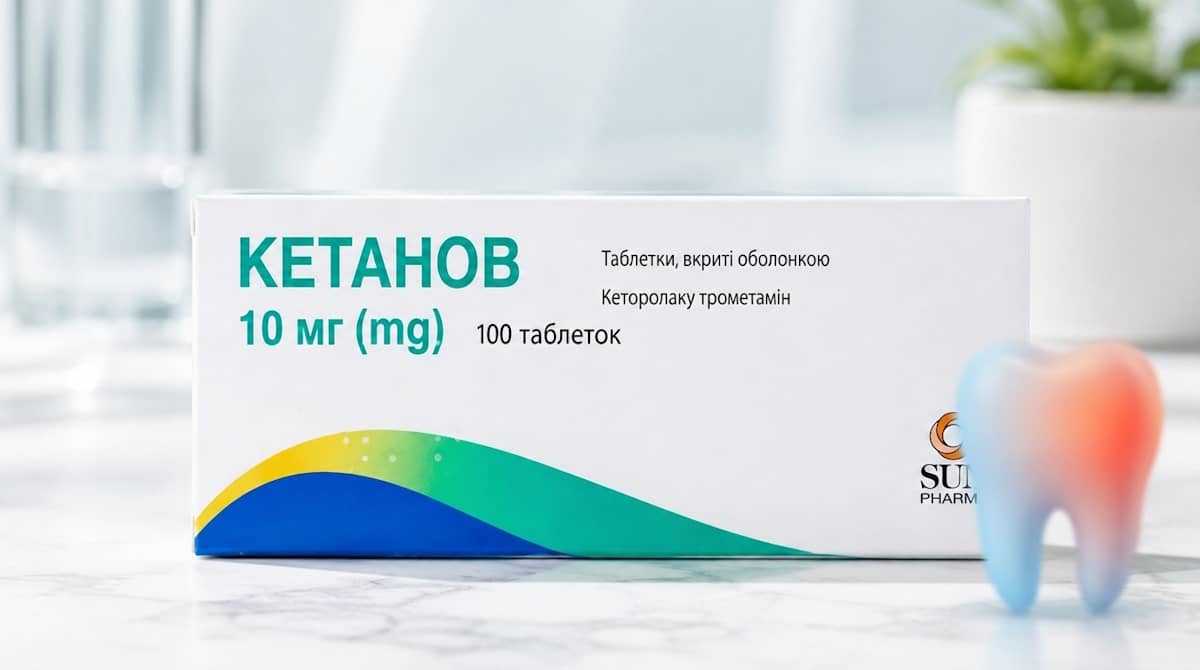
Ketanov Instructions and Dosage
It’s important to review the instructions for Ketanov, as this will help you understand the correct dosage and frequency for your specific situation. First, it’s worth noting the available forms: Ketanov tablets (containing 10 mg of ketorolac) and injections. For toothaches and home use, only tablets are used – injections should only be administered by a medical professional and as prescribed.
As for dosage, the standard adult dose is 1 Ketanov tablet (10 mg) per dose, with a maximum of 4 tablets per day (no more than 40 mg total). Below, for your convenience, is a table with the specific figures from the Ketanov instructions.
Key Points on Taking Ketanov
IMPORTANT: Regarding course duration – no longer than 5 days is not just a recommendation, it’s a strict limit. Exceeding it won’t improve pain relief, but it does increase the risk of serious side effects, for example affecting the gastrointestinal tract, kidneys, and so on. It’s also worth noting that the dosage listed in the Ketanov instructions applies to adults – the drug is not used in children and adolescents under 16.
How to Take Ketanov Correctly: Step-by-Step Instructions
The question of how to take Ketanov for a toothache usually comes up once the pain is already quite intense. It’s important to follow the instructions and not ignore any contraindications you may have. It’s also essential to consider other medications you’re taking. For example, don’t combine it with other NSAIDs like ibuprofen or diclofenac, even if their active ingredient differs from ketorolac’s. This can still lead to adverse reactions, particularly gastrointestinal bleeding.
The correct way to take Ketanov tablets is as follows:
- Take the tablets during or after a meal.
- Swallow them whole with a glass of water – don’t chew.
- Maintain the proper interval between doses – 4-6 hours.
- Important: if there’s no effect or only a weak effect after 40 minutes, do NOT take the next dose early.
- Do not combine the drug with alcohol!
Ketanov for Children and During Pregnancy – What You Need to Know
These two patient groups deserve special attention when it comes to Ketanov, since this is where the risks of self-medication are highest. Here’s what to know:
- Ketanov for children: The drug is officially not used in children under 16 due to insufficient research on its effects on a child’s body and possible negative impact on the gastrointestinal tract.
- Ketanov during pregnancy: The drug is contraindicated throughout pregnancy, especially in the third trimester, due to risks to the fetus and potential complications during labor.
- Ketanov while breastfeeding: The drug is contraindicated because it can pass into breast milk.
Safer alternatives in these cases include paracetamol or another option chosen together with your doctor!
Can You Put a Ketanov Tablet Directly on the Tooth?
No, you should not place a Ketanov tablet against a tooth or gums. This won’t provide any pain relief, since the drug is designed for oral use and absorption after ingestion – not for local absorption through the mucous membrane of the mouth. To be precise, this method simply doesn’t deliver a therapeutically meaningful concentration to produce any pain-relieving effect.
Beyond simply not working, placing the tablet against a tooth can actually cause harm. Prolonged contact between the tablet and the oral mucosa can cause irritation or even a chemical burn. If a dentist determines during an exam that local anesthesia is needed, they’ll recommend gels specifically designed for that purpose. If you’re taking Ketanov on your own at home, don’t place it against your tooth or gums – simply swallow it with a glass of water.
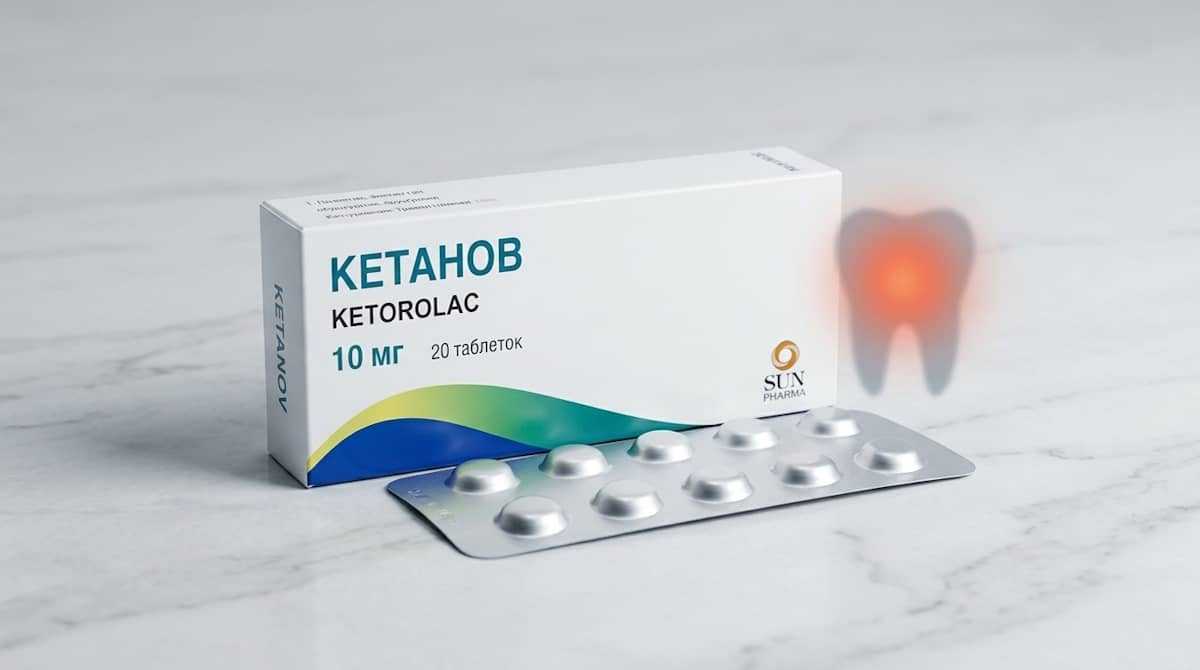
Contraindications and Side Effects of Ketanov
Besides understanding what Ketanov helps with, it’s important to know its contraindications. Uncontrolled use of any medication can worsen your condition rather than improve it.
Even a short course of analgesics like this one requires taking into account the condition of the stomach, kidneys, and cardiovascular system, as well as any other medications being taken. The official Ketanov instructions include a number of restrictions. If you’re unsure whether you have any relevant contraindications, it’s best not to take the drug or to consult a doctor first. Below is a more detailed look at both the contraindications and side effects.
Contraindications for Ketanov:
- Active peptic ulcer of the stomach or duodenum.
- Severe kidney impairment or high risk of kidney failure.
- Severe liver dysfunction.
- Bronchial asthma (especially the aspirin-sensitive form – a reaction to aspirin).
- Blood clotting disorders or high risk of bleeding.
- Concurrent treatment with anticoagulants.
- Pregnancy and breastfeeding.
- Children under 16.
- Heart failure and conditions where NSAIDs may worsen fluid retention or raise blood pressure.
- Hypersensitivity to ketorolac or other NSAIDs.
Possible side effects typically involve:
- Gastrointestinal: nausea, abdominal pain, heartburn, irritation of the stomach lining.
- Kidneys: fluid retention, swelling, increased blood pressure.
- Blood: effects on clotting, leading to longer bleeding time.
- CNS (central nervous system): dizziness, drowsiness, headache.
IMPORTANT: If you experience black stools, vomiting blood, severe abdominal pain, a pronounced allergic reaction, a sharp decrease in urine output, or other unusual symptoms while taking Ketanov, stop taking the drug immediately and seek medical attention!
Ketanov and Alcohol: Why Mixing Them Is Dangerous
Combining Ketanov with alcohol isn’t just inadvisable – it’s dangerous. Both factors can increase strain on the digestive tract and kidneys. When taking NSAIDs, alcohol can further irritate the stomach lining and even increase the risk of gastrointestinal bleeding. At the same time, the dehydration commonly caused by alcohol further impairs kidney function, potentially reducing their ability to filter blood.
The takeaway is clear: don’t drink alcohol while taking Ketanov! Even a small amount during a short course of treatment won’t do your body any favors.
Ketanov After Tooth Extraction
Ketorolac reduces the production of substances that cause inflammation and pain. That’s precisely why Ketanov is one of the first-line medications dentists use after tooth extraction, including wisdom tooth removal. It’s genuinely effective for short-term relief of acute post-surgical pain.
Wisdom tooth extraction
MoreBeyond relieving acute pain, Ketanov also reduces gum swelling that sometimes occurs after a surgical procedure. Of course, all of this works well as long as the person has no contraindications. The typical dosing schedule in this case is 1 tablet (10 mg) every 4-6 hours as needed. The key is NOT to exceed the daily limit of 40 mg. You also shouldn’t exceed the course duration – either a few days (as prescribed by your doctor) or a maximum of 5 days, as stated in the instructions. It’s best to have your dentist determine the specific regimen following an extraction.
REMEMBER: Normally, pain after a tooth extraction gradually subsides. But if after 2-3 days it hasn’t decreased – or has actually gotten worse – this could be a sign of alveolitis (inflammation of the socket where the tooth was removed). In that case, see a dentist as soon as possible rather than increasing your painkiller dose!
The main thing to understand about Ketanov is that it reduces acute pain and inflammation, but only temporarily. If the underlying cause of these symptoms isn’t addressed, they’ll return. So don’t overuse any analgesics – it’s better to resolve the issue professionally with a doctor’s help.
Frequently Asked Questions (FAQ)
What is Ketanov used for, and is it a prescription drug?
Ketanov is a tablet used for acute pain and short-term relief, including toothaches and pain after tooth extraction. Yes, it is a prescription medication.
How long does it take for Ketanov to start working on a toothache?
Ketanov starts working on toothaches within 30-40 minutes. The pain-relieving effect itself lasts roughly 4-6 hours.
How many Ketanov tablets can you take in one day?
You can take a maximum of 4 Ketanov tablets (10 mg each) per day. In other words, the maximum allowed daily dose is no more than 40 mg total.
Ketanov vs. Nurofen (ibuprofen) – which is better for toothaches?
Both Ketanov and Nurofen can reduce toothache. Ketanov sometimes works better, but this varies from person to person.
Can you take Ketanov on an empty stomach?
It’s best not to take Ketanov on an empty stomach. It’s recommended to take it during or after a meal, with water.
What should you do if the tooth still hurts after taking Ketanov?
If the tooth still hurts after taking Ketanov, don’t increase the dose on your own. See a dentist for help.
Author of the article: Kateryna Sazhneva—pediatric dentist, medical director of the Med Deo clinic, and a physician of the highest category with experience since 2003.


Make an appointment
You can make an appointment by filling out the application form on the website, as well as using instant messengers:
Make an appointment
You can make an appointment by filling out the application form on the website, as well as using instant messengers:


Make an appointment easily using chatbots:
Also, call the numbers:
Modern dentistry and medical centre "MED-DEO"
Choose a clinic whose location is more convenient for you.
Kyiv, Holosiivska/Demiivska metro station
130 Lobanovskoho Avenue


Working hours:
Mon - Sun: 8:00 AM - 9:00 PM
No days off!
Call the numbers:
How to get to us? Create a route
Create a route
Kyiv, Akademistechko metro station
78A, Irpinska str.


Working hours:
Mon-Sun: 8.00-21.00
Without days off!
Call the numbers:
How to get to us?
Create a route
Create a route
Kyiv, Heroiv Dnipra metro station
32A, Heroiv Dnipra str.
Working hours:
Mon-Sun: 8.00-21.00
Without days off!
Call the numbers:
How to get to us?
Create a route
Create a route
Kyiv, Teatralna metro station
9B, E. Chykalenko (Pushkinska) str.




Working hours:
Mon-Sat: 8.00 - 21.00. Sun: by appointment.
Without days off!
Call the numbers:
How to get to us?
Create a route
Create a route
Відгук від клієнта
0:00
0:00


Your email will not be published on the site.