Special offer! Comprehensive professional teeth cleaning for only 1699 UAH.
Special offer! Comprehensive professional teeth cleaning for only 1699 UAH.
Special offer! Comprehensive professional teeth cleaning for only 1699 UAH.
Special offer! Comprehensive professional teeth cleaning for only 1699 UAH.
Special offer! Comprehensive professional teeth cleaning for only 1699 UAH.
Special offer! Comprehensive professional teeth cleaning for only 1699 UAH.
Special offer! Comprehensive professional teeth cleaning for only 1699 UAH.
Special offer! Comprehensive professional teeth cleaning for only 1699 UAH.
Special offer! Comprehensive professional teeth cleaning for only 1699 UAH.
Special offer! Comprehensive professional teeth cleaning for only 1699 UAH.
Sign up
 (044) 394 90 94
(044) 394 90 94  Holosiivska/Demiivska metro station
Doctors


 Prices
Blog
Contacts
Prices
Blog
Contacts
пр.Лобановського, 130, Київ, Україна
Temporarily closed
Opening soon
78A, Irpinska St., Kyiv, Ukraine
Temporarily closed
Opening soon
32A, Heroiv Dnipra St., Kyiv, Ukraine
Temporarily closed
Opening soon
9B, Yevhena Chykalenko St. (Pushkinska), Kyiv, Ukraine
Temporarily closed
Opening soon
Sign up
En
(044) 394 90 94
Back
Dentistry

General Dentistry
Dental surgery
Dental Implants
Maxillofacial Surgery
Dental prosthetics
Cosmetic dentistry

Professional Dental Hygiene

Periodontics
Orthodontic dentistry

Gnathology & TMJ Therapy

Pediatric Dentistry
Dental X-Rays
Back
Orthodontic Center
Orthodontic dentistry
Gnathology & TMJ Therapy
Back
Prosthodontic Center
Dental prosthetics
Back
MED-DEO Center for Maxillofacial Surgery & Facial Plastics
Maxillofacial Surgery
Plastic surgery
Back
Surgical Dental Center
Dental surgery
Dental Implants
Search on the site


Popular requests
Teeth whitening
Treatment of caries
Wisdom tooth extraction
Bracket system
Dental veneers
Tooth restoration
Pediatric dentist
Consultation with a dentist-therapist
Search results by: «».
Unfortunately, no results were found for your search: “Pediatric Endocrinologist”, nothing was found.
You may find these links useful:
Clinics "MED-DEO"
пр.Лобановського, 130, Київ, Україна
Temporarily closed
Opening soon
78A, Irpinska St., Kyiv, Ukraine
Temporarily closed
Opening soon
32A, Heroiv Dnipra St., Kyiv, Ukraine
Temporarily closed
Opening soon
9B, Yevhena Chykalenko St. (Pushkinska), Kyiv, Ukraine
Temporarily closed
Opening soon
Services
Dentistry Orthodontic Center Prosthodontic Center MED-DEO Center for Maxillofacial Surgery & Facial Plastics Surgical Dental CenterGeneral Dentistry
Dental surgery
Dental Implants
Maxillofacial Surgery
Dental prosthetics
Cosmetic dentistry
Professional Dental Hygiene
Periodontics
Orthodontic dentistry
Gnathology & TMJ Therapy
Pediatric Dentistry
Dental X-Rays
Orthodontic dentistry
Gnathology & TMJ Therapy
Dental prosthetics
Maxillofacial Surgery
Dental surgery
Dental Implants
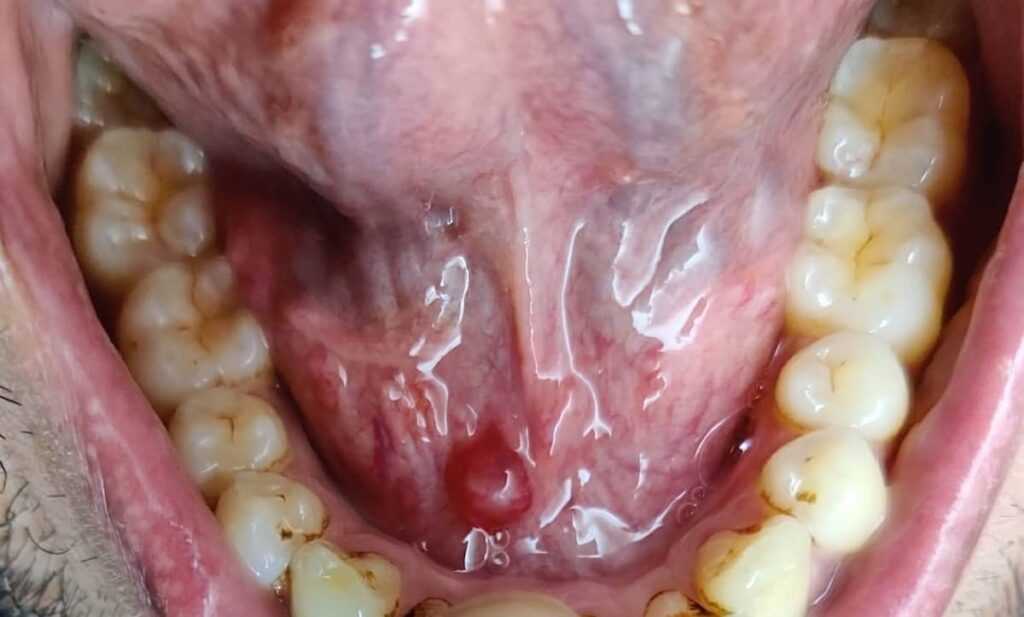
Why a Lump, Bump, or Swelling May Appear Under the Tongue
If you suddenly notice a lump under your tongue, there is no need to panic. This is not a separate disease — it is merely a symptom. In most cases, it may be related to trauma in the sublingual area, inflammation, a blocked sublingual salivary gland, a cyst, an infection, or a new growth.
The condition may appear as a bump under the tongue or sometimes as swelling or puffiness in the same area. In any case, it is impossible to accurately determine the cause without a clinical examination of the floor of the mouth. However, there are typical scenarios that can help you get your bearings.
Most Common Causes of a Formation Under the Tongue
When a lump appears under the tongue, the main causes may include:
- Mechanical trauma to the mucosa — caused by malocclusion or overly hard food.
- Stomatitis or glossitis — inflammatory diseases of the oral mucosa and tongue.
- Candidiasis — a fungal infection.
- Inflammation of the salivary gland.
- A cyst — for example, a ranula (a benign sublingual cyst).
- Papilloma and other benign formations.
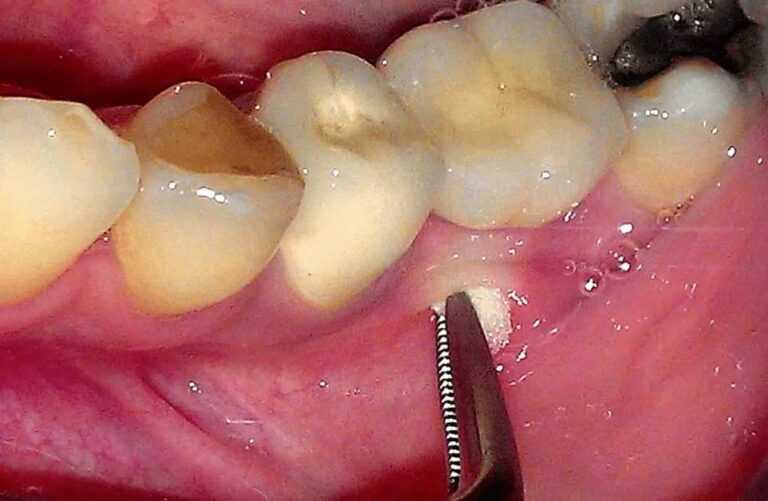
Patients sometimes notice growths on the tongue or even growths at the root of the tongue, which may point to entirely different processes. For instance, a growth on the tongue may simply be caused by enlarged lingual tonsils. The difference between all these conditions lies in the cause, the rate of growth, the level of pain, and the outward appearance. An infection often produces pain and redness, whereas a cyst is usually a soft and painless ball under the tongue.
Mucosal Trauma and Post-Injury Inflammation
Micro-trauma to the oral mucosa and post-injury inflammation are among the most frequent and straightforward causes. Malocclusion, biting the tongue, sharp food, an overly stiff toothbrush, a broken tooth fragment, or any other form of trauma can trigger local hardening followed by pain and swelling. In such cases, pain under the tongue or a feeling of pain specifically during tongue movement may arise. This type of formation is often temporary and resolves within a few days.
Blocked Salivary Gland, Mucous Cyst, and Ranula
Among the frequent causes of a lump under the tongue are a blocked salivary gland, a mucous cyst, and a ranula — all part of the same chain of events. When the salivary gland duct becomes blocked, normal saliva drainage is disrupted. As a result, saliva accumulates in the surrounding tissue and forms a mucous cyst. If this process occurs specifically in the sublingual area, the cyst is given a separate name — a ranula. It presents as a translucent lump in the mouth, typically painless and soft to the touch. Occasionally this lump under the tongue may enlarge and cause discomfort while eating or speaking, though it may also periodically decrease in size.
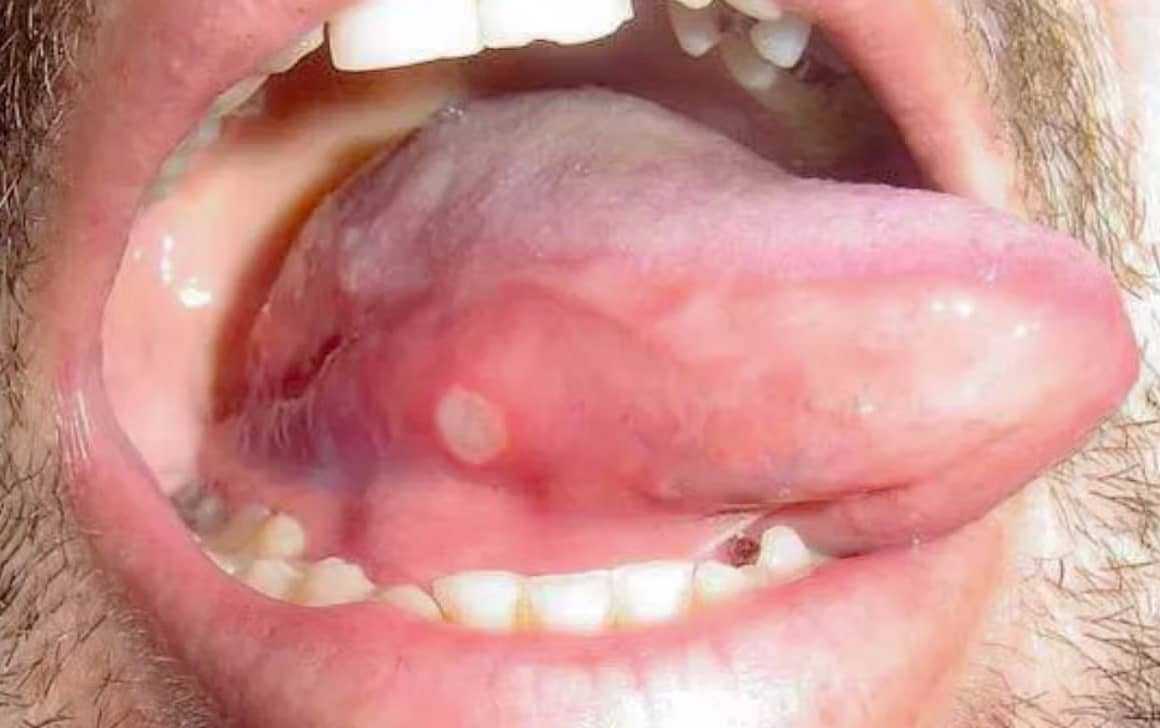
When It Hurts Under the Tongue: What Pain, Swelling, and Puffiness Indicate
Pain under the tongue is a signal that either a traumatic or an inflammatory process is present. Accompanying symptoms may include:
- Burning and tingling — usually indicating mucosal irritation or stomatitis.
- Throbbing — usually indicating an active inflammatory process or abscess formation.
- A sensation of a foreign body or puffiness — usually indicating a blocked salivary gland or cyst (ranula).
- Discomfort or pain when swallowing or moving the tongue — usually indicating mucosal trauma or inflammation.
- A sensation that the area under the tongue is swollen — usually indicating inflammatory edema or impaired saliva drainage.
IMPORTANT: A symptom alone does not equal a diagnosis. The same lump under the tongue may have entirely different causes.
Symptoms That May Be Relatively Minor
Some possible symptoms of a lump on or under the tongue are usually temporary and relatively minor — a consequence of slight trauma or mild irritation. These include:
- Small size of the lump.
- Mild or no pain at all.
- Reduction of the lump within 2–3 days.
- No subsequent growth.
Even in such cases, it is worth keeping an eye on the lump — especially if it diminishes but does not disappear entirely.
Warning Signs Requiring Urgent Examination
If there is a lump under the tongue, the following signs indicate that you should see a doctor as soon as possible:
- Rapid enlargement.
- Progressive hardening.
- Severe pain.
- Presence of pus.
- Bleeding.
- Difficulty swallowing.
- Difficulty speaking.
- Elevated body temperature.
- Enlarged lymph nodes.
- Duration of the problem exceeding 7–10 days.
Can a Lump Under the Tongue Resolve on Its Own?
If there is only minor mucosal irritation, a lump under the tongue may sometimes diminish on its own. However, a persistent, painful, growing, or recurrent formation must NOT be ignored.
So when should you stop waiting and see a doctor? If the lump under the tongue:
- Does not disappear (even if it reduces in size).
- Is actively growing.
- Is painful.
- Recurs frequently after going away.
A persistent lump under the tongue that does not resolve on its own tends to harden over time and cause significant discomfort in daily life. This condition absolutely requires professional treatment.
Which Doctor to See If a Growth Appears Under the Tongue
The first specialist to consult when a growth appears under the tongue is a dentist or oral surgeon. They perform the initial examination and assess the condition of the mucosa to determine whether the lump requires further diagnostics or intervention.
Depending on findings, other specialists may be involved:
- Dentist — examines for inflammatory processes, trauma, and infections; prescribes initial treatment.
- Oral surgeon — removes cysts, ranulas, and other benign formations; also handles complex cases (very large or deeply located lumps).
- Maxillofacial surgeon — assists when deep or sizeable formations have begun to affect adjacent tissues (sublingual muscles, salivary ducts); performs complex surgical interventions when necessary.
- ENT specialist — becomes involved when there are symptoms related to the throat or the root of the tongue.
- Oncologist — required to rule out or confirm tumour processes; evaluates atypical rapid growth, density, bleeding, etc.
Involvement of additional specialists is always warranted when a complex growth under the tongue or an otherwise unclear new formation is suspected. It is essential to consult a qualified physician so as not to waste time and to receive an accurate diagnosis and appropriate treatment.
How a Doctor Determines the Cause of a Formation Under the Tongue
To correctly diagnose a lump under the tongue, a doctor typically employs the following methods:
- Visual examination of the lump — to immediately establish its exact location, appearance, and whether there is redness or nearby mucosal trauma.
- Palpation — by gently probing, the doctor determines whether it is soft or hard, painful or not, and whether it is mobile or seems ‘attached’ to deeper tissues. Mobility is generally a more reassuring sign.
- Overall assessment of the lump and surrounding mucosa — colour, consistency, size, and density.
- Symptom history — when the lump appeared, whether it is growing and how fast, and whether it changes during eating or speaking.
- If necessary — ultrasound, CT scan, or biopsy, which allow a more precise understanding of what lies inside the lump and in the surrounding tissues.
IMPORTANT: Relying solely on photos from the internet is a mistake. The same lump may look similar in pictures yet have a completely different origin. Diagnosis should always be entrusted to a qualified doctor.
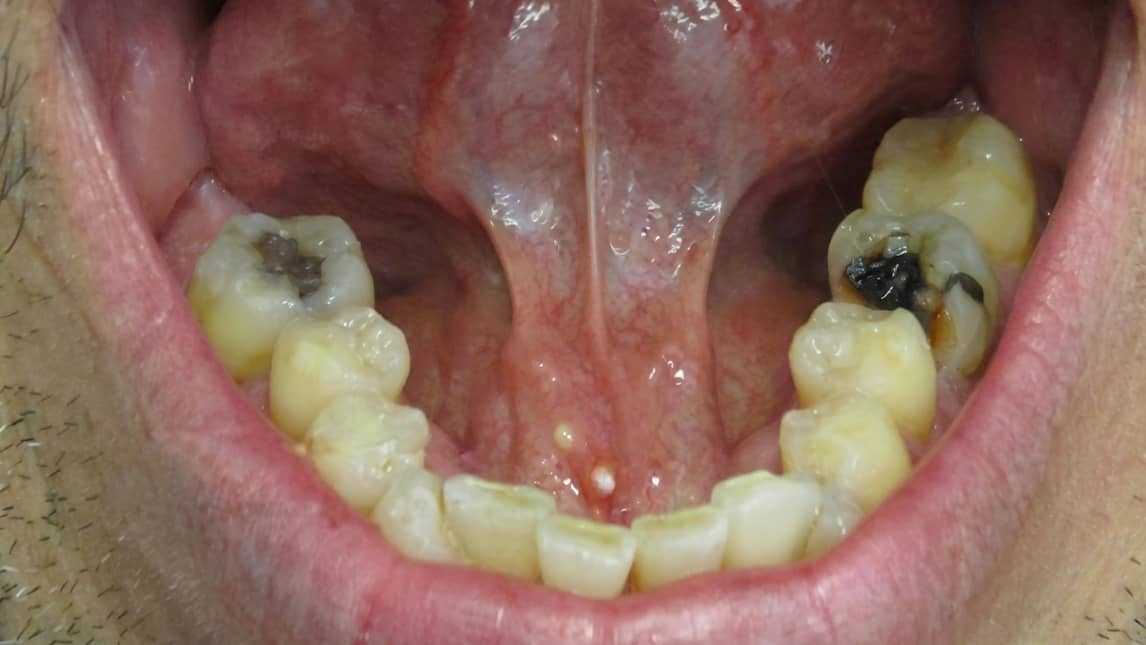
How a Lump, Bump, or Growth Under the Tongue Is Treated
Treatment of a lump or ball under the tongue depends on its cause:
- For trauma — local care aimed at healing (rinsing, careful hygiene, avoiding hard and sharp foods).
- For infection — anti-inflammatory therapy, sometimes combined with antiseptic agents; antifungal medications may also be indicated.
- For a cyst or new growth — other approaches are used, sometimes including surgery.
- For a blocked gland — initial observation, followed by surgical removal only if necessary.
The key to treating a lump or bump under the tongue is eliminating its underlying cause — or, if it is not a mucosal injury, treating the primary disease. It is vital NOT to ignore symptoms and to seek medical attention promptly, so that treatment can be quicker and simpler. To prevent such growths under the tongue, maintain proper oral hygiene, avoid trauma, treat all dental problems in a timely manner, and attend routine check-ups every six months.
Medically reviewed by Viktoriia Ododіuk — Pediatric Maxillofacial Surgeon & Oral Surgeon


Make an appointment
You can make an appointment by filling out the application form on the website, as well as using instant messengers:
Make an appointment
You can make an appointment by filling out the application form on the website, as well as using instant messengers:


Make an appointment easily using chatbots:
Also, call the numbers:
Modern dentistry and medical centre "MED-DEO"
Choose a clinic whose location is more convenient for you.
Kyiv, Holosiivska/Demiivska metro station
130 Lobanovskoho Avenue


Working hours:
Mon - Sun: 8:00 AM - 9:00 PM
No days off!
Call the numbers:
How to get to us? Create a route
Create a route
Kyiv, Akademistechko metro station
78A, Irpinska str.


Working hours:
Mon-Sun: 8.00-21.00
Without days off!
Call the numbers:
How to get to us?
Create a route
Create a route
Kyiv, Heroiv Dnipra metro station
32A, Heroiv Dnipra str.


Working hours:
Mon-Sun: 8.00-21.00
Without days off!
Call the numbers:
How to get to us?
Create a route
Create a route
Kyiv, Teatralna metro station
9B, E. Chykalenko (Pushkinska) str.


Working hours:
Mon-Sat: 8.00 - 21.00. Sun: by appointment.
Without days off!
Call the numbers:
How to get to us?
Create a route
Create a route
Відгук від клієнта
0:00
0:00


Your email will not be published on the site.