Special offer! Comprehensive professional teeth cleaning for only 1699 UAH.
Special offer! Comprehensive professional teeth cleaning for only 1699 UAH.
Special offer! Comprehensive professional teeth cleaning for only 1699 UAH.
Special offer! Comprehensive professional teeth cleaning for only 1699 UAH.
Special offer! Comprehensive professional teeth cleaning for only 1699 UAH.
Special offer! Comprehensive professional teeth cleaning for only 1699 UAH.
Special offer! Comprehensive professional teeth cleaning for only 1699 UAH.
Special offer! Comprehensive professional teeth cleaning for only 1699 UAH.
Special offer! Comprehensive professional teeth cleaning for only 1699 UAH.
Special offer! Comprehensive professional teeth cleaning for only 1699 UAH.
Sign up
 (044) 394 90 94
(044) 394 90 94  Holosiivska/Demiivska metro station
Doctors


 Prices
Blog
Contacts
Prices
Blog
Contacts
пр.Лобановського, 130, Київ, Україна
Temporarily closed
Opening soon
78A, Irpinska St., Kyiv, Ukraine
Temporarily closed
Opening soon
32A, Heroiv Dnipra St., Kyiv, Ukraine
Temporarily closed
Opening soon
9B, Yevhena Chykalenko St. (Pushkinska), Kyiv, Ukraine
Temporarily closed
Opening soon
Sign up
En
(044) 394 90 94
Back
Dentistry
General Dentistry
Dental surgery
Dental Implants
Maxillofacial Surgery
Dental prosthetics
Cosmetic dentistry

Professional Dental Hygiene

Periodontics
Orthodontic dentistry

Gnathology & TMJ Therapy

Pediatric Dentistry
Dental X-Rays
Back
Orthodontic Center
Orthodontic dentistry
Gnathology & TMJ Therapy
Back
Prosthodontic Center
Dental prosthetics
Back
MED-DEO Center for Maxillofacial Surgery & Facial Plastics
Maxillofacial Surgery
Plastic surgery
Back
Surgical Dental Center
Dental surgery
Dental Implants
Search on the site


Popular requests
Teeth whitening
Treatment of caries
Wisdom tooth extraction
Bracket system
Dental veneers
Tooth restoration
Pediatric dentist
Consultation with a dentist-therapist
Search results by: «».
Unfortunately, no results were found for your search: “Pediatric Endocrinologist”, nothing was found.
You may find these links useful:
Clinics "MED-DEO"
пр.Лобановського, 130, Київ, Україна
Temporarily closed
Opening soon
78A, Irpinska St., Kyiv, Ukraine
Temporarily closed
Opening soon
32A, Heroiv Dnipra St., Kyiv, Ukraine
Temporarily closed
Opening soon
9B, Yevhena Chykalenko St. (Pushkinska), Kyiv, Ukraine
Temporarily closed
Opening soon
Services
Dentistry Orthodontic Center Prosthodontic Center MED-DEO Center for Maxillofacial Surgery & Facial Plastics Surgical Dental CenterGeneral Dentistry
Dental surgery
Dental Implants
Maxillofacial Surgery
Dental prosthetics
Cosmetic dentistry
Professional Dental Hygiene
Periodontics
Orthodontic dentistry
Gnathology & TMJ Therapy
Pediatric Dentistry
Dental X-Rays
Orthodontic dentistry
Gnathology & TMJ Therapy
Dental prosthetics
Maxillofacial Surgery
Dental surgery
Dental Implants
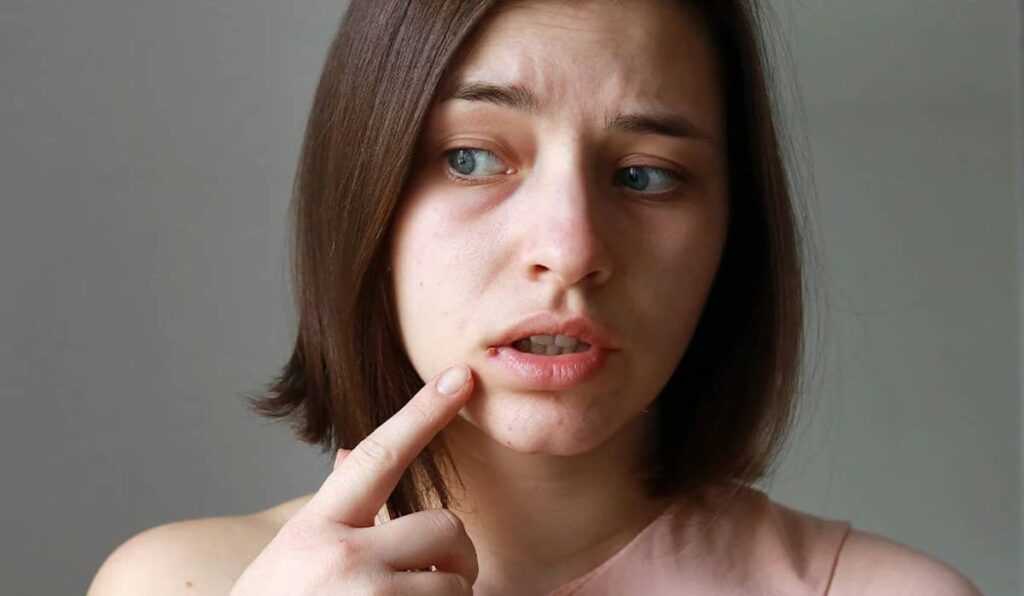
When a “pimple” appears on the lip, it’s not always something simple or harmless. The causes can vary widely — from ordinary inflammation or irritation to herpes, a canker sore, or a mucocele (a small salivary gland cyst). They often look similar on the surface, but behave differently and require different treatment approaches.
To avoid guessing and accidentally making things worse, it’s important to pay attention to the details: whether there is pain or itching, what the formation looks like, how quickly it appeared, and whether it’s changing. This helps you calmly assess the situation and understand what to do next.
What a Rash or Pimple in the Lip Area Means
When a rash or something resembling a “pimple” appears on the lip, it’s not always acne like you’d see on facial skin. This area has a different tissue structure: there’s thin skin, mucous membrane, and ducts of small salivary glands. Because of this, various conditions can develop here that look very similar to one another.
It could be ordinary irritation from food, wind, or cosmetics, mild inflammation, herpes, a canker sore, or a mucocele — a soft “bubble” that forms due to a blocked salivary gland. On the outside, it often looks like the same “pimple,” but the sensations and progression can differ: sometimes it itches more, sometimes it hurts, and sometimes it causes almost no discomfort at all.
That’s why it’s important not to rush to conclusions or rely solely on appearance. It’s better to pay attention to accompanying symptoms — whether there’s pain, burning, how quickly the formation appeared, and whether it changes over time. This helps more accurately understand what’s happening and whether anything needs to be done right away.
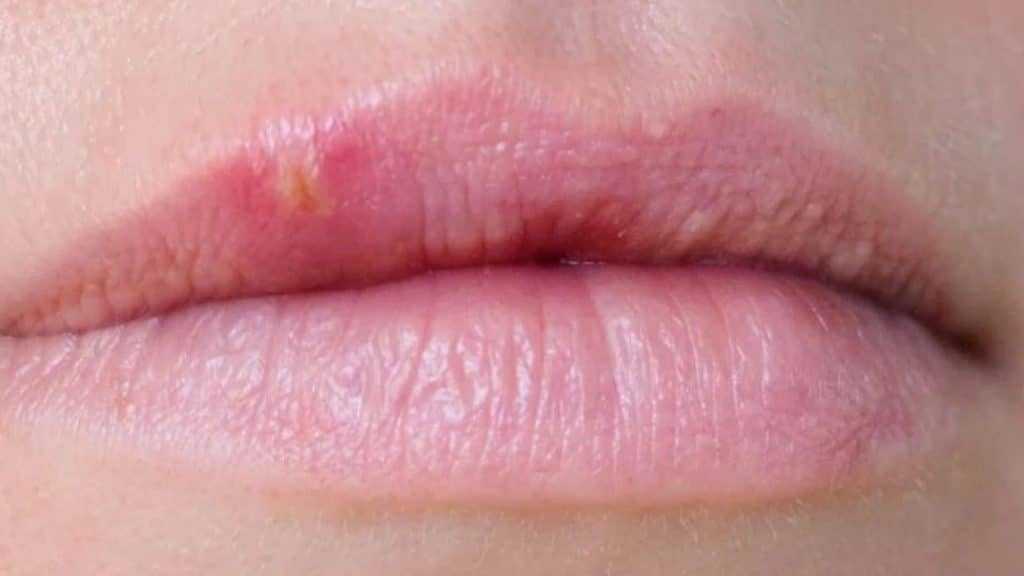
Why Lip Rashes Appear
A rash or “pimple” on the lip doesn’t appear out of nowhere. In most cases, there’s a specific cause — sometimes completely simple, and sometimes one that requires medical attention. It can be either a reaction to external factors or a manifestation of an infection or internal changes in the body.
Most often, a rash on the lips is associated with irritation, microtraumas, unsuitable cosmetics, infections (such as herpes), dental problems, hormonal fluctuations, or a weakened immune system. That’s why it’s important to look not only at the “pimple” itself, but also at what’s happening around it — how it appeared, whether there’s pain or itching, and how quickly everything is changing.
Everyday, Traumatic, and Cosmetic Factors
Very often, everything starts with small things we don’t even notice. Biting your lip, scratching it with hard food, chapping it in the cold — and a day later a small inflammation can appear.
Another common factor is the habit of touching your face with your hands. Hands always carry bacteria, and they easily get onto the sensitive skin of the lips. The result — a white pimple on the lip or irritation.
Cosmetics can also be a cause. Balms, lipsticks, or tints sometimes dry out the lips or cause a reaction, especially if they contain aggressive ingredients or fragrances. Add wind, sun, and the habit of licking your lips — and the mucous membrane becomes even more vulnerable.
Smoking makes things worse separately: it irritates tissues and slows their recovery, which is why rashes may appear more often and take longer to heal.
Infectious, Dental, and Systemic Causes
If a rash on the lip hurts, itches, or changes quickly — it’s no longer just irritation. In such cases, the cause is often an infection. The most common option is herpes: usually a tingling or burning sensation appears first, and then characteristic blisters form on the lip.
Besides herpes, it could be candidiasis (a fungal infection), aphthous ulcers, or even a reaction to inflammation in the oral cavity — for example, with gum or tooth problems.
Sometimes the cause runs deeper. A weakened immune system, severe stress, lack of sleep, or hormonal changes can trigger lip rashes. In such cases, they may appear regularly, and this is already a signal to pay attention to your overall health — not just the “pimple” itself.
Types of Formations by Appearance
When something resembling a pimple appears on the lip, the first thing to do is simply look carefully at how it looks. By its appearance, you can already get a rough idea of what it is: mild irritation, a blockage, or something infectious.
These rashes are broadly categorized in a simple way: white, red, purulent, subcutaneous, or fluid-filled pimples on the lips. This isn’t a complex medical classification — it’s a practical everyday way to orient yourself without unnecessary panic.
White, Red, Purulent, and Subcutaneous Elements
White pimples on the lips usually look like small light spots or nodules. Often this is simply a blockage or mild inflammation. They usually cause almost no pain and can go away on their own if left alone.
A red rash on the lips looks more like irritation. It may burn or hurt slightly and appears after wind, spicy food, or new cosmetics. In such cases, the cause is often superficial, and the condition improves quickly once the irritant is removed.
A purulent pimple on the lip looks more “serious”: a white or yellowish head is visible, and it may hurt when pressed. This is a sign of bacterial inflammation. Squeezing such formations is a bad idea — it can only make things worse.
Subcutaneous formations are when you feel a dense “ball” under the lip or a subcutaneous pimple on the lip. It may not hurt, but it doesn’t disappear quickly. This is often associated with a blocked duct or mucocele. Such formations can persist longer and sometimes require a doctor’s examination.
Fluid-Filled Element and When to Think About Herpes
If a fluid-filled pimple appears inside the lip, the first thought is herpes. This is logical — but not always correct.
With herpes, there’s usually a “lead-up”: first a tingling, itching, or burning sensation is felt, and only then do small blisters appear — often not just one, but several. They may then burst and dry out.
If a single fluid-filled pimple on the lip doesn’t hurt and barely changes — it could be an entirely different situation, such as a mucocele or a reaction to trauma. So it’s important not to rush to conclusions and to watch how things develop over a few days.
What the Location Tells You
The place where a “pimple” appears on the lip says a lot. It’s not just a detail — the location often already suggests which direction to look. Some problems are typical for the mucous membrane inside the lip, others — for the skin around it.
So it’s worth clarifying for yourself right away: is the pimple inside the lip, on the lip itself, or somewhere nearby — above, below, or to the side.
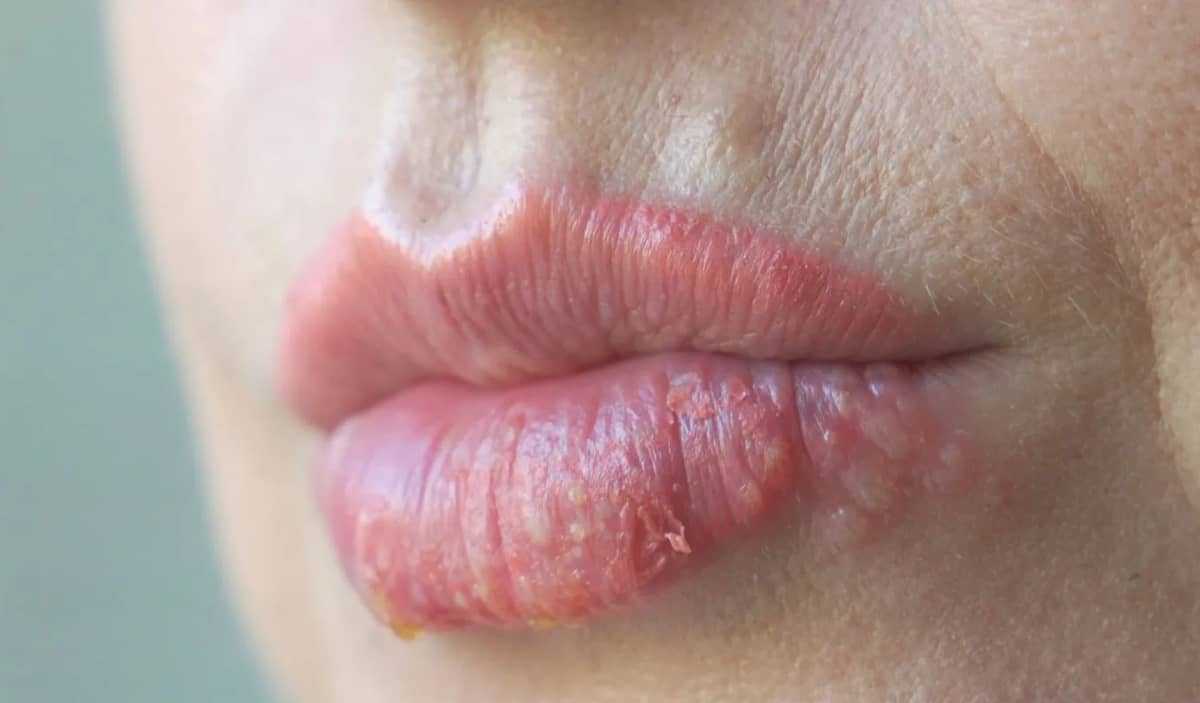
Formation on the Inner Surface of the Lip
If the pimple is on the inner side of the lip, on the mucous membrane, it’s almost never an ordinary pimple. The tissue structure here is different, and so the causes are different.
Most often, this is a canker sore — a small painful pimple inside the lip that can appear after stress, biting, or simply “against the background” of a weakened immune system. A mucocele is also common — a soft fluid-filled bubble that forms due to a blocked salivary gland duct (often after trauma).
And one more straightforward option — mechanical damage: biting the lip, injuring it with hard food, burning it with something hot. In such cases, it’s usually clear where it came from, and everything gradually heals.
The Area Above, Below, and Around the Lips
If the “pimple” is not on the lip itself but on the skin nearby — a pimple above the lip — the logic is different. There are pores and hair follicles here, so typical skin issues are possible.
It could be a classic pimple near the lip due to a blocked pore, slight follicle inflammation, or a reaction to cosmetics — a cream, foundation, lip balm, or even toothpaste.
Very simple things also have an effect: touching with hands, friction, cold, wind, or even a face mask. All of this can cause local irritation or a pimple below the lip.
So if you pay attention not only to the “pimple” itself but also to exactly where it appeared, the picture becomes much clearer — and it’s easier to decide whether it’s a minor issue or whether it’s better to see a doctor.
When It’s Not an Ordinary Pimple
Not everything that looks like a “pimple” on the lip is actually acne. There are several signs that suggest it could be something else:
- Grouped elements — when several small blisters appear together, often transparent: this could be herpes.
- Burning or tingling before the “pimple” even appears.
- Recurrence — if rashes appear regularly in the same places.
- An ulcer or open mucosal defect — a sign of canker sores or trauma.
- Rapid enlargement or spreading — when the “pimple” quickly becomes larger, more painful, or spreads to neighboring areas.
If you notice any of these signs, don’t put it off — it’s better to see a doctor or dentist to understand the cause precisely.
How to Distinguish a Pimple from Herpes, a Canker Sore, Mucocele, Fordyce Spots, and Perioral Dermatitis
To understand what exactly has appeared on the lip, it’s useful to compare several simple criteria: appearance, sensations, location, progression, and when to see a doctor.
This comparison helps you quickly orient yourself on what it might be and whether you should see a doctor. If the formation hurts, changes quickly, or recurs often — don’t wait, it’s better to see a specialist.
What to Do at Home Before Consulting a Doctor and What to Avoid
When a pimple or rash appears on the lip, there’s no need to panic. Most such formations are harmless, but it’s important to manage them correctly before seeing a doctor.
First of all, maintain cleanliness: don’t touch your lips with dirty hands. Light moisturizing with a hypoallergenic balm will help prevent drying and cracking, while applying a clean cold cloth will reduce burning or swelling. It’s also useful to monitor changes: size, color, number of elements, and the appearance of new formations will help the doctor determine the cause more quickly.
At the same time, there are things you must not do. Don’t squeeze pimples on your lips or cauterize them with alcohol, iodine, or antiseptic — this will only worsen the inflammation and may leave scars. Don’t cover the rash with fragranced cosmetics that can irritate the skin. And under no circumstances take antibiotics or antiviral medications on your own — this can be both dangerous and ineffective.
When and Which Doctor to See
If a pimple or rash appears on the lip and doesn’t go away on its own or causes discomfort, it’s important to know who to turn to.
- If the rash is inside the mouth or on the mucous membrane of the lips or cheeks — especially after trauma or with suspected mucocele or mucosal inflammation — see a dentist.
- If there are white pimples on the lips, on the skin around the mouth, they recur frequently, or herpes, perioral dermatitis, or other skin problems are suspected — it’s better to see a dermatologist.
- A general practitioner will help if the rash is accompanied by general malaise, fever, or is spreading quickly.
There are several signals when you shouldn’t wait and should seek help immediately: severe pain or burning, swelling that makes it difficult to open the mouth, fever, pus, recurring rashes, a rash in children, or suspected herpes or infection. In such cases, a specialist consultation will help quickly determine the cause and get the right treatment.
Preventing Recurrent Rashes
To keep pimples and rashes from returning, follow a few simple rules.
- Maintain hygiene: wash your hands before touching your face or mouth, and keep your oral cavity clean.
- Be mindful of cosmetics — choose hypoallergenic balms and lipsticks without irritating ingredients.
- Don’t traumatize your lips: avoid biting, rubbing, or contact with hard food.
- Manage stress, since a weakened immune system often triggers recurrent rashes.
- Don’t skip routine dental check-ups — this helps catch oral problems early before they trigger new rashes.
Following these rules will reduce the risk of recurrent formations and keep your lips healthy.
FAQ
Is a pimple on the lip always herpes?
No — canker sores, mucoceles, Fordyce spots, or inflammatory elements can appear on the lips, all of which look like pimples on the outside but have different causes.
How do I know when I need to see a doctor?
If the formation hurts, grows quickly, is accompanied by swelling, pus, or fever, recurs frequently, or appears in a child — it’s better not to wait and to show it to a specialist.
Can I squeeze a pimple on the lip?
No — squeezing increases the risk of infection and scarring.
What remedies can be used at home?
A light hypoallergenic moisturizing balm, clean cold cloths to reduce swelling and burning. Do not use alcohol, iodine, or antiseptic solutions.
Should I be concerned about recurring rashes?
Yes — prevention helps reduce the risk of recurrences: clean hands, lip care, avoiding trauma and stress, and routine dental visits.
Can I take antibiotics or antiviral medications on my own?
No — without a doctor’s prescription, this can be both dangerous and ineffective.
The author of this article is Irina Sashchuk, a general dentist, oral surgeon, and periodontist.


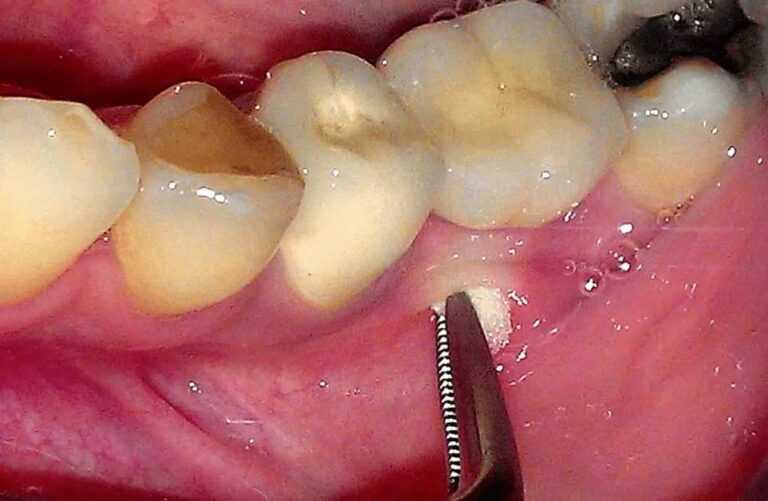
Make an appointment
You can make an appointment by filling out the application form on the website, as well as using instant messengers:
Make an appointment
You can make an appointment by filling out the application form on the website, as well as using instant messengers:


Make an appointment easily using chatbots:
Also, call the numbers:
Modern dentistry and medical centre "MED-DEO"
Choose a clinic whose location is more convenient for you.
Kyiv, Holosiivska/Demiivska metro station
130 Lobanovskoho Avenue


Working hours:
Mon - Sun: 8:00 AM - 9:00 PM
No days off!
Call the numbers:
How to get to us? Create a route
Create a route
Kyiv, Akademistechko metro station
78A, Irpinska str.


Working hours:
Mon-Sun: 8.00-21.00
Without days off!
Call the numbers:
How to get to us?
Create a route
Create a route
Kyiv, Heroiv Dnipra metro station
32A, Heroiv Dnipra str.


Working hours:
Mon-Sun: 8.00-21.00
Without days off!
Call the numbers:
How to get to us?
Create a route
Create a route
Kyiv, Teatralna metro station
9B, E. Chykalenko (Pushkinska) str.


Working hours:
Mon-Sat: 8.00 - 21.00. Sun: by appointment.
Without days off!
Call the numbers:
How to get to us?
Create a route
Create a route
Відгук від клієнта
0:00
0:00


Your email will not be published on the site.