Special offer! Comprehensive professional teeth cleaning for only 1699 UAH.
Special offer! Comprehensive professional teeth cleaning for only 1699 UAH.
Special offer! Comprehensive professional teeth cleaning for only 1699 UAH.
Special offer! Comprehensive professional teeth cleaning for only 1699 UAH.
Special offer! Comprehensive professional teeth cleaning for only 1699 UAH.
Special offer! Comprehensive professional teeth cleaning for only 1699 UAH.
Special offer! Comprehensive professional teeth cleaning for only 1699 UAH.
Special offer! Comprehensive professional teeth cleaning for only 1699 UAH.
Special offer! Comprehensive professional teeth cleaning for only 1699 UAH.
Special offer! Comprehensive professional teeth cleaning for only 1699 UAH.
Sign up
 (044) 394 90 94
(044) 394 90 94  Holosiivska/Demiivska metro station
Doctors


 Prices
Blog
Contacts
Prices
Blog
Contacts
пр.Лобановського, 130, Київ, Україна
Temporarily closed
Opening soon
78A, Irpinska St., Kyiv, Ukraine
Temporarily closed
Opening soon
32A, Heroiv Dnipra St., Kyiv, Ukraine
Temporarily closed
Opening soon
9B, Yevhena Chykalenko St. (Pushkinska), Kyiv, Ukraine
Temporarily closed
Opening soon
Sign up
En
(044) 394 90 94
Back
Dentistry
General Dentistry
Dental surgery
Dental Implants
Maxillofacial Surgery
Dental prosthetics
Cosmetic dentistry

Professional Dental Hygiene

Periodontics
Orthodontic dentistry

Gnathology & TMJ Therapy

Pediatric Dentistry

Dental X-Rays
Back
Orthodontic Center
Orthodontic dentistry
Gnathology & TMJ Therapy
Back
Prosthodontic Center
Dental prosthetics
Back
MED-DEO Center for Maxillofacial Surgery & Facial Plastics
Maxillofacial Surgery
Plastic surgery
Back
Surgical Dental Center
Dental surgery
Dental Implants
Search on the site


Popular requests
Teeth whitening
Treatment of caries
Wisdom tooth extraction
Bracket system
Dental veneers
Tooth restoration
Pediatric dentist
Consultation with a dentist-therapist
Search results by: «».
Unfortunately, no results were found for your search: “Pediatric Endocrinologist”, nothing was found.
You may find these links useful:
Clinics "MED-DEO"
пр.Лобановського, 130, Київ, Україна
Temporarily closed
Opening soon
78A, Irpinska St., Kyiv, Ukraine
Temporarily closed
Opening soon
32A, Heroiv Dnipra St., Kyiv, Ukraine
Temporarily closed
Opening soon
9B, Yevhena Chykalenko St. (Pushkinska), Kyiv, Ukraine
Temporarily closed
Opening soon
Services
Dentistry Orthodontic Center Prosthodontic Center MED-DEO Center for Maxillofacial Surgery & Facial Plastics Surgical Dental CenterGeneral Dentistry
Dental surgery
Dental Implants
Maxillofacial Surgery
Dental prosthetics
Cosmetic dentistry
Professional Dental Hygiene
Periodontics
Orthodontic dentistry
Gnathology & TMJ Therapy
Pediatric Dentistry
Dental X-Rays
Orthodontic dentistry
Gnathology & TMJ Therapy
Dental prosthetics
Maxillofacial Surgery
Dental surgery
Dental Implants
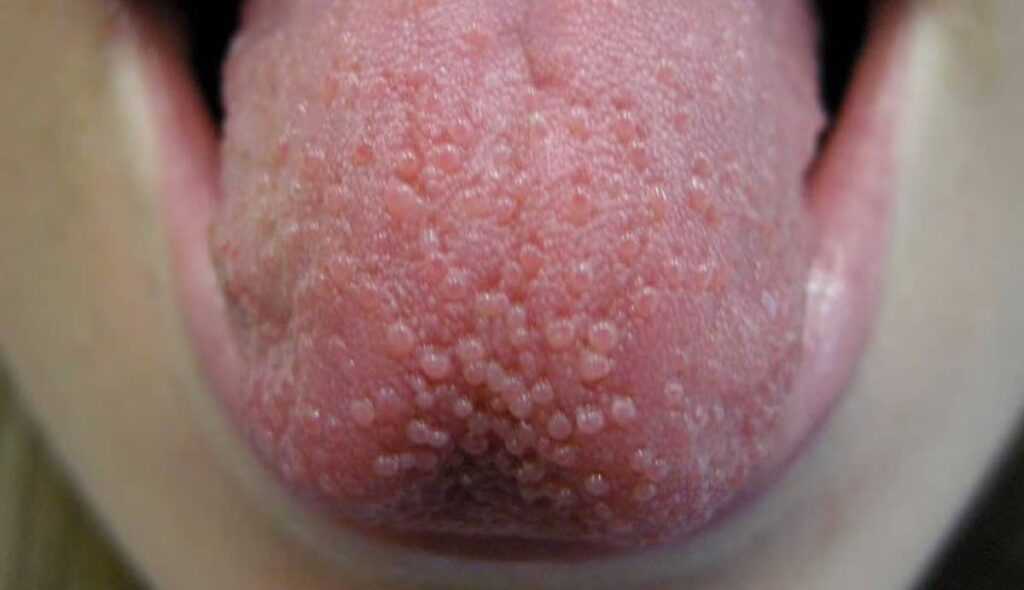

Bumps on the tongue are a problem many people encounter, from teenagers to adults. One thing to understand straight away: these are not acne, because the tongue has no sebaceous glands. Instead, small inflammatory or traumatic lesions appear on the mucous membrane — they can cause discomfort or even pain.
This article explains what these bumps are, why they appear, how to identify them, when to be concerned, and what treatments are genuinely effective.
What Is a Tongue Bump? A Medical Explanation
Bumps on the tongue are small inflammatory or traumatic lesions on the mucous membrane that may visually resemble ordinary spots on the skin. It is important to understand that these are not acne, because the tongue has no sebaceous glands.
The tongue is covered in papillae, has a rich blood supply, and heals quickly. For this reason, even minor trauma or irritation of the mucous membrane can immediately produce visible bumps.
In medical terminology, these formations may be referred to in different ways:
- Glossitis — inflammation of the tongue’s mucous membrane;
- Papillitis — swelling or inflammation of the papillae;
- Aphtha — a small, painful ulcer on the mucous membrane.
Understanding these terms helps avoid confusing tongue bumps with other conditions, and makes it easier to identify the right course of treatment promptly.
Types of Tongue Bumps: What Different Formations Look Like
To understand what has appeared on the tongue, it is useful to categorise bumps by colour, shape, size, texture, and tenderness. This helps identify the type of formation more quickly and determine whether medical attention is needed.
Red Bumps and Lumps on the Tongue
Red bumps stand out clearly on the surface of the tongue. They may appear individually or in clusters, and are often painful to the touch. The red colour indicates inflammation — blood is rushing to the affected area.
Possible causes:
- tongue injuries (biting, sharp foods);
- papillitis (inflammation of the papillae);
- early-stage aphthous stomatitis;
- allergic reaction to food or medication.
These bumps may be accompanied by swelling, burning, and pain during eating.
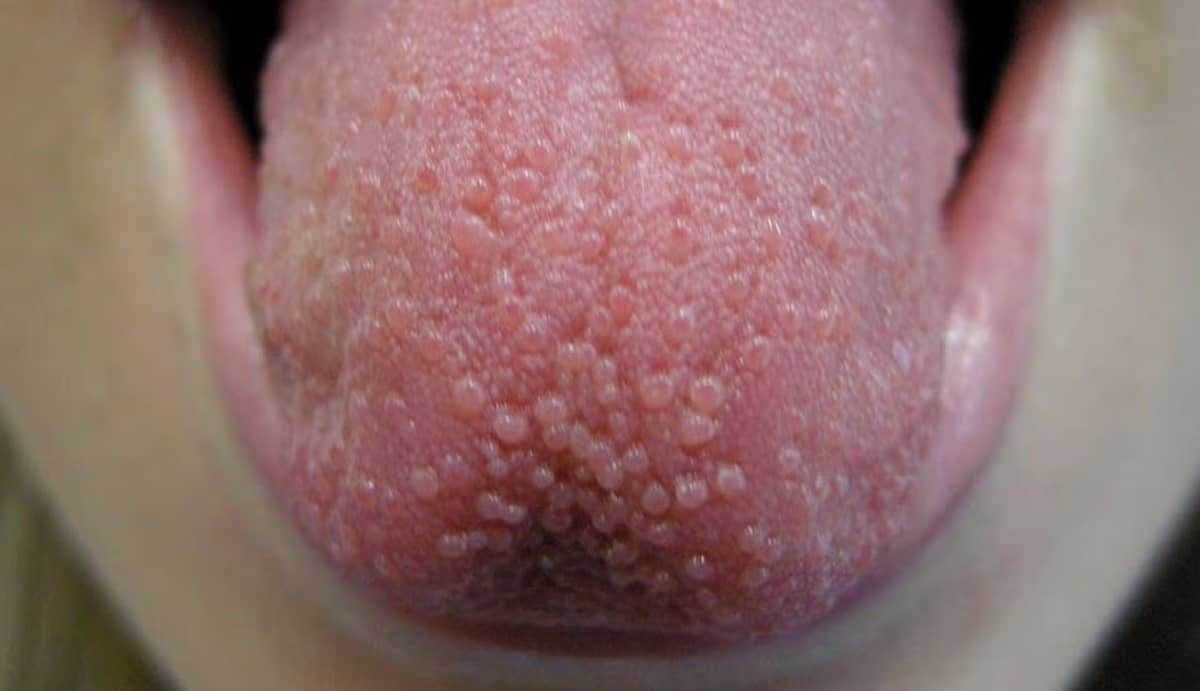
White Bumps and Coating on the Tongue
White bumps or coating appear as white or yellowish patches, often firm and painful, and may develop a surface coating. White colouring usually indicates the presence of pus, necrotic tissue, or a fungal infection.
Causes include:
- aphthae with a white crust;
- candidiasis — a white, curd-like coating;
- bacterial infection with suppuration;
- leukoplakia — keratinisation of the mucous membrane.
If white patches do not resolve within two weeks, medical advice should be sought.
Clear Blisters on the Tongue
Clear blisters on the tongue look like small fluid-filled vesicles. They feel soft to the touch and may burst, leaving a moist surface.
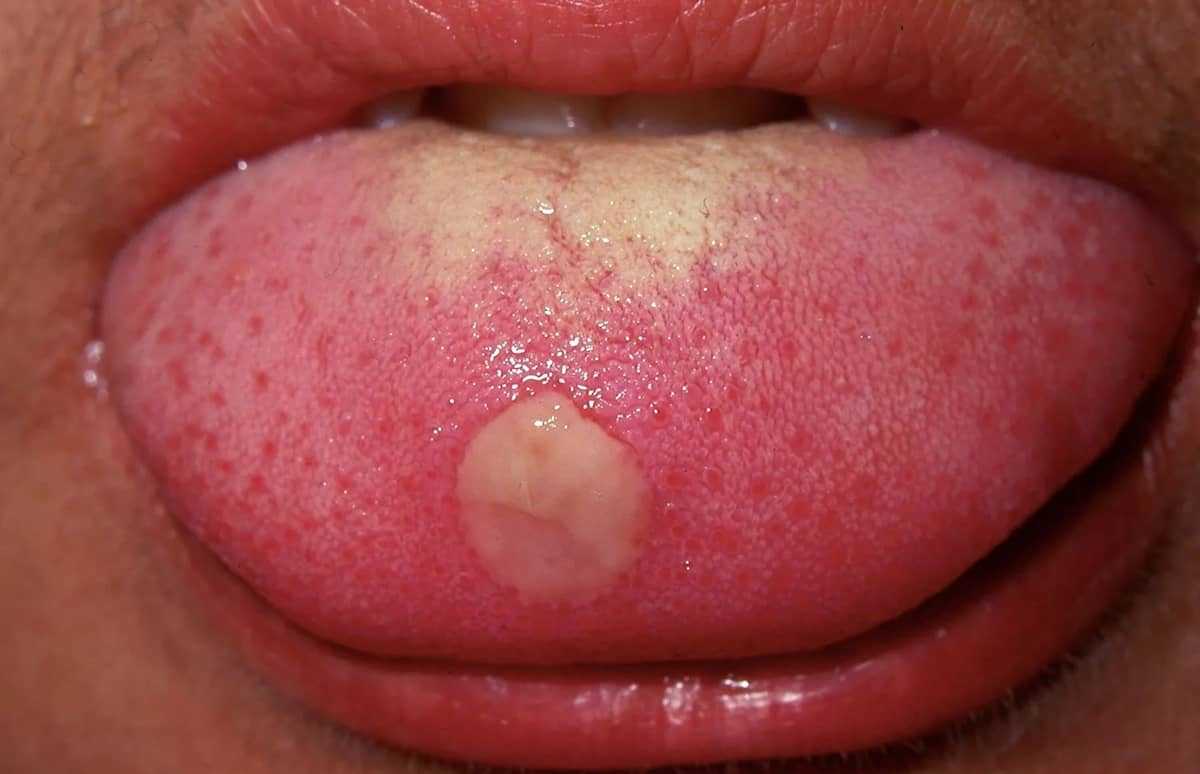
Causes:
- thermal burns (from hot food or drinks);
- chemical burns;
- herpes (initially clear, then becoming cloudy).
Herpetic blisters at the base of the tongue progress through stages: clear → cloudy → burst → develop a crust → heal. Important: herpes is contagious — observe strict hygiene.
Fine Red Rash on the Tongue
This presents as small red dots or spots scattered evenly across the tongue, sometimes extending to the palate, or occasionally as blisters on the back of the throat. In the early stages they are often painless.
Causes:
- infectious diseases (scarlet fever, measles in children);
- allergy to food, medication, or hygiene products;
- vitamin deficiency (B vitamins, folic acid);
- geographic tongue (desquamative glossitis).
A rash on a child’s tongue should always be assessed carefully to rule out a serious underlying condition.
Bumps on Different Parts of the Tongue: What Location Can Tell You
Where a bump appears on the tongue can reveal a great deal about its cause. Different areas of the tongue respond differently to trauma, irritants, and infections, so location is often a key diagnostic clue.
Bumps on the Tip and Sides of the Tongue
This area of the tongue is most vulnerable to injury: it is easily bitten during eating or speaking, burned by hot food, cut by a sharp tooth or utensil, or irritated by braces or other orthodontic appliances.
Appearance: individual, tender bumps that appear following trauma and may bleed slightly.
What helps: remove the source of irritation, rinse with antiseptic, eat soft foods. These usually heal within 3–5 days.
Bumps at the Root of the Tongue and Near the Throat
The root of the tongue lies close to the tonsils and the back of the throat, so blisters or bumps in this area are frequently linked to respiratory tract conditions.
Possible causes: follicular tonsillitis (blisters on the tonsils), pharyngitis, tonsillitis, oral herpes, and occasionally human papillomavirus.
Associated symptoms: pain on swallowing, a sensation of something caught in the throat, possible fever, and bumps at the base of the tongue.
Important: if bumps appear in the throat area, it is advisable to consult an ENT specialist rather than a dentist alone.
Bumps on the Dorsum (Top Surface) of the Tongue
The dorsum of the tongue has the greatest concentration of papillae, making papillitis — inflammation of one or more papillae — particularly common in this area.
Appearance: the papilla becomes red and painful to touch, sometimes presenting as a red or white lump.
Causes: irritation from spicy, acidic, or salty food, smoking, alcohol, infections, or allergies.
The dorsum of the tongue may also reflect systemic conditions such as vitamin deficiency, anaemia, or gastrointestinal disease.
The Main Causes of Tongue Bumps
Tongue bumps can arise for a variety of reasons. To understand why they have appeared, it is helpful to group the contributing factors into categories: infectious, traumatic, dental and ENT-related, allergic, systemic, and other.
Infectious Causes: Viruses, Bacteria, Fungi
- Herpes (herpetic stomatitis) — caused by herpes simplex virus type 1. Children are most commonly affected; primary infection may present with fever. Clear blisters appear first, followed by small ulcers with a white coating. An episode typically lasts around 10–14 days and requires antiviral treatment.
- Aphthae (aphthous stomatitis) — small ulcers with a white crust and red border. They arise due to stress, trauma, reduced immunity, or digestive problems, and tend to recur.
- Candidiasis (oral thrush) — a fungal infection caused by Candida. Common in children, elderly people, or following antibiotic use. The white, curd-like coating can be wiped away to reveal red mucosa underneath. May be accompanied by burning and dry mouth.
Traumatic Causes
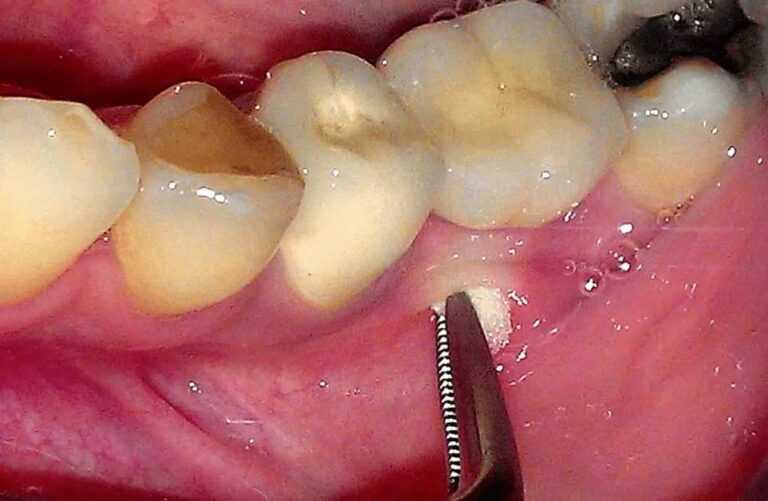
Mechanical: biting the tongue during eating or sleep, injury from teeth or fillings, irritation from braces or dentures, trauma from hard foods (bones, nuts, crackers).
Thermal: hot food or drinks (soups, tea, coffee). Severity ranges from mild redness, to blisters, to tissue necrosis.
Chemical: aggressive substances such as acids, alkalis, concentrated alcohol, certain medications (aspirin, iodine, brilliant green), or incorrect use of whitening products.
Traumatic injuries generally heal within 3–5 days. Antiseptic rinses, soft foods, and removing the source of irritation are all helpful.
Dental and ENT Conditions
Red bumps on the throat and tongue can arise from problems in the mouth or larynx.
- Dental factors: tooth decay, pulpitis, gum inflammation, poorly fitting dentures, or inadequate oral hygiene.
- ENT factors: tonsillitis, pharyngitis, and infectious diseases (scarlet fever, diphtheria, measles).
Infection from a primary site can spread to the tongue, which is why it is important to address all chronic problems in the mouth and throat.
Allergic Reactions and Irritation
- Food allergens: citrus fruits, chocolate, nuts, honey, seafood, food dyes, and preservatives. These can cause a fine red rash on the tongue, itching, and swelling.
- Contact allergens: toothpaste, mouthwash, fillings, dentures, braces, lip balms, or lip glosses.
- Medications: antibiotics and non-steroidal anti-inflammatory drugs. Reactions can be local (from dissolving tablets) or systemic.
- Irritants: smoking, alcohol, and spicy, acidic, or salty food.
How to recognise an allergic reaction: bumps appear quickly after contact with a particular product or substance, and resolve after taking an antihistamine.
Diagnosing Tongue Bumps
To treat tongue bumps effectively, it is essential to identify the cause first. Treating without a diagnosis can be harmful.
How a doctor determines the cause:
- Patient history and interview
- Visual examination of the mouth and tongue
- Laboratory tests
- Instrumental investigations
This comprehensive approach allows for accurate diagnosis and safe, targeted treatment — so that bumps resolve quickly and do not recur.
Treating Tongue Bumps
The most important step is identifying the cause. There is no single remedy that works in every case. Treatment always depends on the reason the bumps appeared: infection, trauma, allergy, or an underlying systemic condition.
A doctor typically works on three fronts simultaneously:
- addressing the underlying cause;
- reducing inflammation;
- relieving pain and discomfort.
Self-medicating without a diagnosis is inadvisable — without knowing the cause, this can prolong the problem or worsen the condition.
Treating Infectious Bumps
If bumps are caused by infection, treatment depends on the type.
- For herpes: antiviral medications and topical creams are prescribed, along with rest and temporarily avoiding close contact with others.
- For aphthous stomatitis: antiseptic rinses, anti-inflammatory gels, and wound-healing products are helpful. More complex cases may require additional treatment.
- For candidiasis: antifungal agents are used — either topical or oral tablets — and a reduction in sugar intake is recommended.
- For bacterial infections: treatment is guided by the identified pathogen; antibiotics may be used, but only on medical advice.
Treating Traumatic Bumps
If a bump has appeared following a bite or burn, the first step is to remove the source of irritation.
Rinse the mouth with cool water or an antiseptic. To reduce pain and swelling, a cold compress (wrapped in a cloth) can be applied.
The next step is to address the cause of the trauma:
- have a sharp tooth edge smoothed;
- replace a damaged filling;
- adjust a denture or braces;
- brush more gently.
Antiseptic rinses and anaesthetic gels support healing. Food should be soft and warm — avoiding anything spicy, acidic, or very hot.
Minor trauma typically resolves within a few days. If the wound does not heal or pus develops, see a doctor.
Treating Allergic Bumps
In this case, the priority is identifying the allergen. Sometimes simply changing toothpaste or eliminating a particular food is sufficient. Keeping a food diary can be helpful.
Antihistamines are used to relieve symptoms. In more severe cases, the doctor may prescribe stronger medication.
Once the cause has been identified, the best prevention is to avoid contact with the allergen entirely.
Treating Bumps Caused by Systemic Conditions
Sometimes tongue bumps are simply a signal of an internal health problem. In such cases, topical treatments provide only temporary relief.
- Gastrointestinal conditions: treating the underlying condition is essential — once it is brought under control, the tongue usually clears up.
- Vitamin deficiency or anaemia: appropriate supplements are prescribed and dietary adjustments are recommended.
- Diabetes: maintaining blood glucose levels and maintaining meticulous oral hygiene are key.
- Reduced immunity: specialist monitoring and supportive therapy are necessary.
The core principle is straightforward: for tongue bumps to resolve permanently, the underlying cause must be treated alongside the symptom. A comprehensive approach is what delivers lasting results.
Preventing Tongue Bumps
To reduce the likelihood of tongue bumps, consistent oral care and attention to general health are essential.
Proper Oral Hygiene
Brush your teeth twice a day for 2–3 minutes using a soft or medium-bristle toothbrush, and replace it every three months.
Do not neglect the tongue — clean it every morning with a dedicated tongue scraper or the reverse side of your toothbrush.
Use dental floss daily and, where possible, a water flosser. Choose alcohol-free mouthwash. Consistent oral hygiene reduces bacterial load and the risk of inflammation.
Diet and Lifestyle
Maintain a balanced diet: protein, vegetables, fruit, and healthy fats, with reduced sugar and confectionery.
Drink enough water (1.5–2 litres per day). Avoid smoking and excessive alcohol. Adequate sleep and stress reduction also strengthen the immune system.
Health Monitoring
Visit your dentist twice a year and have professional cleaning carried out. Address tooth decay and gum problems promptly.
If you have chronic conditions (diabetes, digestive disorders), keeping them under control is important.
Consistent prevention significantly reduces the risk of tongue bumps appearing, and when they do occur, they tend to resolve more quickly.
About the Author
General Dentist • Periodontist


Make an appointment
You can make an appointment by filling out the application form on the website, as well as using instant messengers:
Make an appointment
You can make an appointment by filling out the application form on the website, as well as using instant messengers:


Make an appointment easily using chatbots:
Also, call the numbers:
Modern dentistry and medical centre "MED-DEO"
Choose a clinic whose location is more convenient for you.
Kyiv, Holosiivska/Demiivska metro station
130 Lobanovskoho Avenue


Working hours:
Mon - Sun: 8:00 AM - 9:00 PM
No days off!
Call the numbers:
How to get to us? Create a route
Create a route
Kyiv, Akademistechko metro station
78A, Irpinska str.


Working hours:
Mon-Sun: 8.00-21.00
Without days off!
Call the numbers:
How to get to us?
Create a route
Create a route
Kyiv, Heroiv Dnipra metro station
32A, Heroiv Dnipra str.


Working hours:
Mon-Sun: 8.00-21.00
Without days off!
Call the numbers:
How to get to us?
Create a route
Create a route
Kyiv, Teatralna metro station
9B, E. Chykalenko (Pushkinska) str.


Working hours:
Mon-Sat: 8.00 - 21.00. Sun: by appointment.
Without days off!
Call the numbers:
How to get to us?
Create a route
Create a route
Відгук від клієнта
0:00
0:00


Your email will not be published on the site.