Special offer! Comprehensive professional teeth cleaning for only 1699 UAH.
Special offer! Comprehensive professional teeth cleaning for only 1699 UAH.
Special offer! Comprehensive professional teeth cleaning for only 1699 UAH.
Special offer! Comprehensive professional teeth cleaning for only 1699 UAH.
Special offer! Comprehensive professional teeth cleaning for only 1699 UAH.
Special offer! Comprehensive professional teeth cleaning for only 1699 UAH.
Special offer! Comprehensive professional teeth cleaning for only 1699 UAH.
Special offer! Comprehensive professional teeth cleaning for only 1699 UAH.
Special offer! Comprehensive professional teeth cleaning for only 1699 UAH.
Special offer! Comprehensive professional teeth cleaning for only 1699 UAH.
Sign up
 (044) 394 90 94
(044) 394 90 94  Holosiivska/Demiivska metro station
Doctors


 Prices
Blog
Contacts
Prices
Blog
Contacts
пр.Лобановського, 130, Київ, Україна
Temporarily closed
Opening soon
78A, Irpinska St., Kyiv, Ukraine
Temporarily closed
Opening soon
32A, Heroiv Dnipra St., Kyiv, Ukraine
Temporarily closed
Opening soon
9B, Yevhena Chykalenko St. (Pushkinska), Kyiv, Ukraine
Temporarily closed
Opening soon
Sign up
En
(044) 394 90 94
Back
Dentistry
General Dentistry
Dental surgery
Dental Implants
Maxillofacial Surgery
Dental prosthetics
Cosmetic dentistry

Professional Dental Hygiene

Periodontics
Orthodontic dentistry

Gnathology & TMJ Therapy

Pediatric Dentistry
Dental X-Rays
Back
Orthodontic Center
Orthodontic dentistry
Gnathology & TMJ Therapy
Back
Prosthodontic Center
Dental prosthetics
Back
MED-DEO Center for Maxillofacial Surgery & Facial Plastics
Maxillofacial Surgery
Plastic surgery
Back
Surgical Dental Center
Dental surgery
Dental Implants
Search on the site


Popular requests
Teeth whitening
Treatment of caries
Wisdom tooth extraction
Bracket system
Dental veneers
Tooth restoration
Pediatric dentist
Consultation with a dentist-therapist
Search results by: «».
Unfortunately, no results were found for your search: “Pediatric Endocrinologist”, nothing was found.
You may find these links useful:
Clinics "MED-DEO"
пр.Лобановського, 130, Київ, Україна
Temporarily closed
Opening soon
78A, Irpinska St., Kyiv, Ukraine
Temporarily closed
Opening soon
32A, Heroiv Dnipra St., Kyiv, Ukraine
Temporarily closed
Opening soon
9B, Yevhena Chykalenko St. (Pushkinska), Kyiv, Ukraine
Temporarily closed
Opening soon
Services
Dentistry Orthodontic Center Prosthodontic Center MED-DEO Center for Maxillofacial Surgery & Facial Plastics Surgical Dental CenterGeneral Dentistry
Dental surgery
Dental Implants
Maxillofacial Surgery
Dental prosthetics
Cosmetic dentistry
Professional Dental Hygiene
Periodontics
Orthodontic dentistry
Gnathology & TMJ Therapy
Pediatric Dentistry
Dental X-Rays
Orthodontic dentistry
Gnathology & TMJ Therapy
Dental prosthetics
Maxillofacial Surgery
Dental surgery
Dental Implants
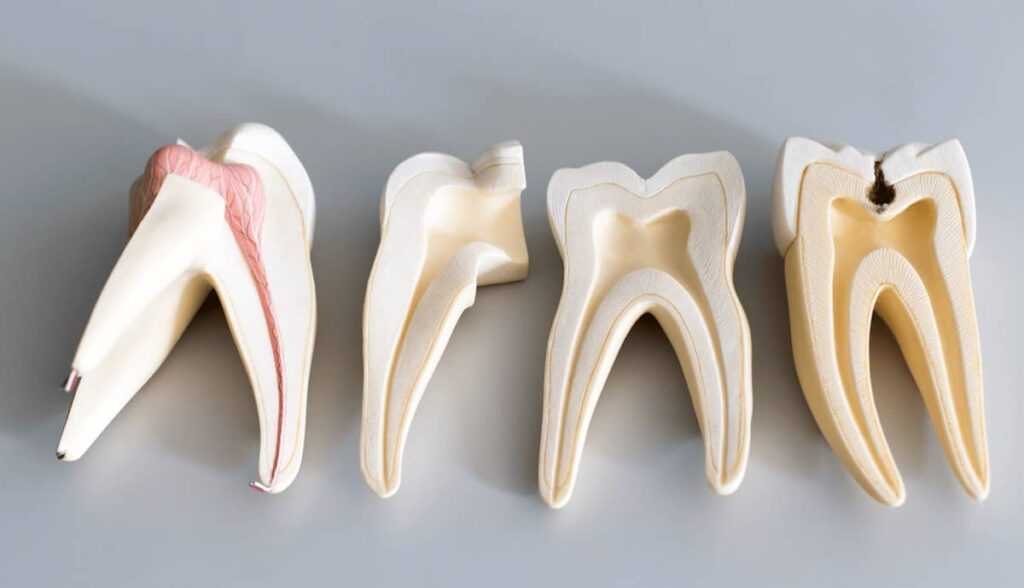
The number of canals in a tooth isn’t something that follows a fixed template. It varies from person to person and even between similar teeth in different individuals. That’s precisely why root canal treatment can be straightforward in one case and considerably more complex in another — every canal, including any additional ones, needs to be found and treated. Understanding these nuances helps explain why the same tooth can require very different treatment approaches in different patients.
What Root Canals Are and Where They’re Located
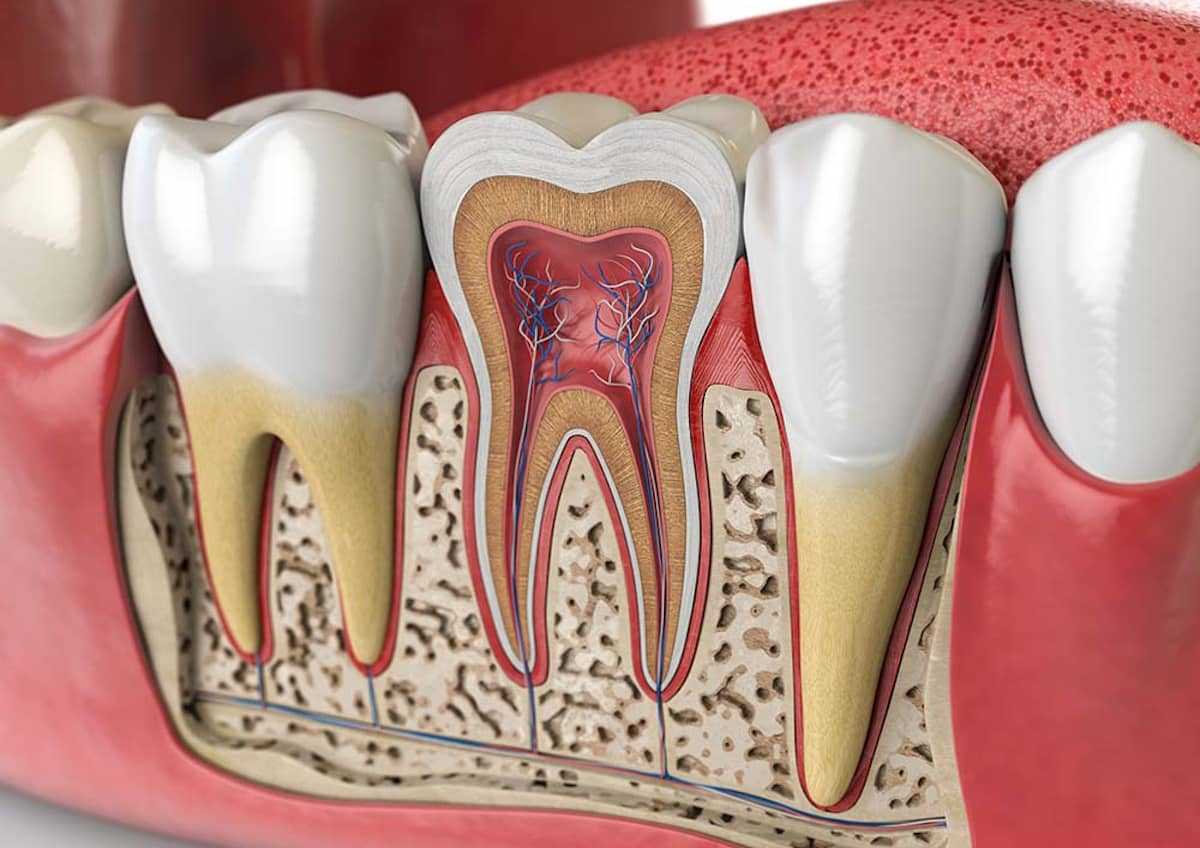
A root canal is a narrow space running through the inside of a tooth’s root. Think of it as a tiny passageway that houses everything responsible for keeping the tooth alive from within.
To avoid any confusion, here’s a simple breakdown:
- The root is the part of the tooth sitting beneath the gum line, anchoring it in the jawbone.
- The canal is the space inside that root.
- The pulp (what people often call “the nerve”) is what fills that space — nerve fibers and blood vessels.
Here’s how it all works: blood vessels and nerves enter the canal through a tiny opening at the tip of the root. The vessels nourish the tooth, while the nerves respond to cold, heat, or pressure. When decay reaches the canal, infection spreads into the pulp — and that’s when pain sets in.
One important distinction: the root is the structure itself, the canal is the space within it, and the nerve is just one component of what’s inside.
The number of canals generally corresponds to the number of roots — but not always on a one-to-one basis. A single root can contain two or even more canals.
What Determines the Number of Canals in a Tooth
There’s no fixed number, and it’s impossible to state with certainty how many canals any given tooth will have. There are only “typical patterns” — and in practice, the actual anatomy often differs.
Several factors influence canal count:
- Position in the mouth — front teeth are usually simpler; back teeth tend to be more complex.
- Root shape — roots can be narrow, wide, or branched.
- Individual anatomy — every person’s internal tooth structure is unique.
- Root fusion — sometimes multiple roots appear fused into one.
- Canal branching — canals themselves can curve or split inside the root.
Because of all this, the same type of tooth can have a different number of canals in different people — and that’s completely normal.
Why the Number of Roots Doesn’t Equal the Number of Canals
This is one of the most common misconceptions. People often assume: one root equals one canal. But that’s not how it works.
For example:
- A single root can contain two or even more canals.
- Conversely, a tooth with multiple roots may have just one canal in each.
The root is the external structure; the canals are what lies within. And that internal architecture can be far more complex than it appears from the outside.
Why You Can’t Determine the Exact Number of Canals Without an X-Ray
There’s no way to tell from the outside how many canals a tooth has. It can look completely ordinary while having a highly complex internal structure.
That’s why dentists always rely on imaging — most commonly X-rays. But even those don’t always reveal the full picture. The exact number of canals sometimes only becomes clear during treatment itself.
This isn’t a sign of error or oversight — some canals are extremely narrow or hidden, making them difficult to detect from the start.
How Many Canals Different Teeth Typically Have
Canal count depends heavily on which tooth is involved. There are rough benchmarks, but real-world anatomy frequently differs — and that’s perfectly normal.
Front teeth (incisors) Usually have 1 canal. In the lower jaw, 2 canals occasionally occur.
Canines Most commonly 1 canal. Two-canal variations exist but are uncommon.
Premolars (small back teeth) More variation here:
- Can have 1 or 2 canals
- Upper premolars more often have 2 canals, sometimes more
- Lower premolars are usually simpler — typically 1 canal, but not always
Molars (large back teeth) The most structurally complex teeth:
- Upper molars typically have 3–4 canals
- Lower molars usually have 2–3, sometimes more
Wisdom teeth (third molars) The least predictable of all. Canal count can range from 1 to 4 or more, and the canals are often curved or atypically shaped.
The bottom line: the farther back a tooth sits in the arch, the more complex its structure tends to be — and the more canals it’s likely to have. But the final answer is always individual — the same type of tooth can look completely different on the inside from one person to the next.
How Many Roots Does a Wisdom Tooth Have — and How Many Canals?
Wisdom teeth are the most unpredictable teeth in the mouth. Their structure varies so widely that it’s impossible to know how many roots a wisdom tooth has without imaging.
On average:
- Root count ranges from 1 to 3, sometimes more
- Canal count ranges from 1 to 4 or more
Fused or curved roots are common, and the canals themselves may be narrow, branched, or hidden from view.
The only way to know a wisdom tooth’s true anatomy is through an X-ray or cone beam CT scan — or sometimes only once treatment is underway. That’s exactly why wisdom teeth can be more challenging to treat or extract than other teeth.
How Many Nerves Does a Tooth Have — and What’s Actually Removed During Root Canal Treatment?
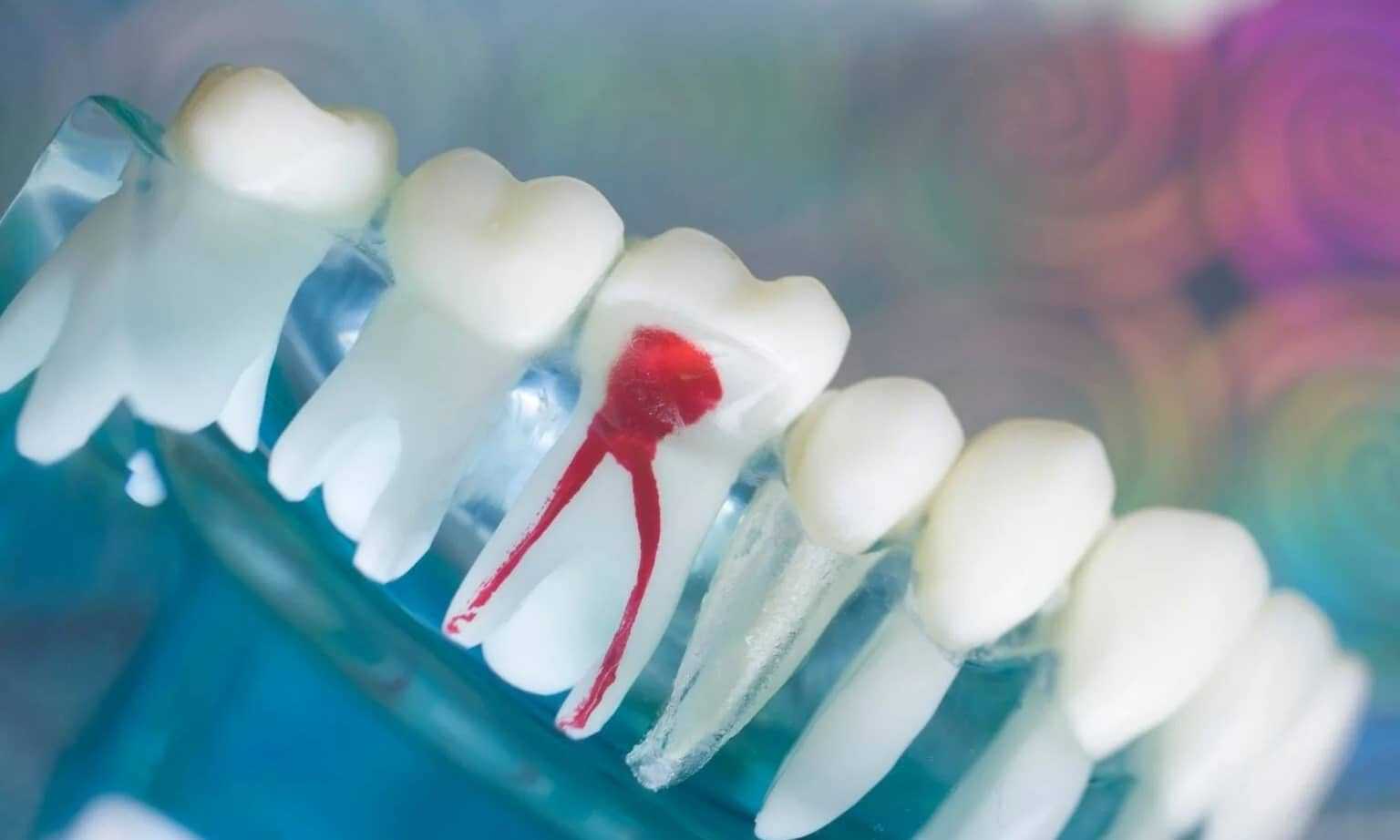
When patients say “they took out the nerve,” they’re usually referring to the soft tissue inside the tooth — the pulp. This isn’t a single, abstract nerve; it’s an entire system: nerve fibers, blood vessels, and connective tissue running through the canals.
During root canal treatment, the dentist removes this pulp — not some isolated nerve. Afterward, the canal is sealed with a special material to protect the tooth from reinfection.
So the more accurate answer to “how many nerves does a tooth have” is this: a tooth doesn’t have one nerve per tooth. Each canal contains nerve fibers as part of the pulp — and it’s this pulp tissue that’s removed during treatment.
How Dentists Determine the Number of Canals
To figure out how many canals a tooth has, dentists use a range of modern diagnostic tools. A tooth that looks simple on the outside can have a surprisingly complex internal structure.
Sometimes the full picture of a tooth’s canals only becomes clear during treatment itself, once the dentist is working inside the tooth.
X-ray — Shows the general shape of the roots and main canals. Helpful for spotting major branches, but may miss the finest canals.
Cone Beam CT (CBCT) — Provides a three-dimensional view of the tooth, allowing for more precise assessment of canal shape and position.
Apex locator — An electronic device that measures the length of a canal to the root tip, enabling highly accurate instrumentation.
Dental microscope — Allows the dentist to examine canals under magnification, making it possible to locate fine or hidden canals that don’t show up on imaging.
These tools significantly improve treatment accuracy — but even with all of them, the complete picture of a tooth’s canals often only emerges once the dentist is working inside.
Frequently Asked Questions
How many canals does a front tooth have?
Usually one — but in the lower jaw, two canals occasionally occur.
How many canals are in the 6th or 7th tooth?
These are large molars, so the structure is more complex. Upper molars typically have 3–4 canals; lower molars usually have 2–3, sometimes more.
Does the number of roots always equal the number of canals?
No. A single root can contain multiple canals, and a multi-rooted tooth may have just one canal per root. Canal count depends on internal anatomy, not external shape.
Can you determine the number of canals without an X-ray?
No. A tooth can look completely normal on the outside while having complex internal anatomy. The exact canal count is determined through X-ray, CT imaging, an apex locator, or during treatment itself.
Written by Yelena Tomashevska — prosthodontist and restorative dentist



Make an appointment
You can make an appointment by filling out the application form on the website, as well as using instant messengers:
Make an appointment
You can make an appointment by filling out the application form on the website, as well as using instant messengers:


Make an appointment easily using chatbots:
Also, call the numbers:
Modern dentistry and medical centre "MED-DEO"
Choose a clinic whose location is more convenient for you.
Kyiv, Holosiivska/Demiivska metro station
130 Lobanovskoho Avenue


Working hours:
Mon - Sun: 8:00 AM - 9:00 PM
No days off!
Call the numbers:
How to get to us? Create a route
Create a route
Kyiv, Akademistechko metro station
78A, Irpinska str.


Working hours:
Mon-Sun: 8.00-21.00
Without days off!
Call the numbers:
How to get to us?
Create a route
Create a route
Kyiv, Heroiv Dnipra metro station
32A, Heroiv Dnipra str.


Working hours:
Mon-Sun: 8.00-21.00
Without days off!
Call the numbers:
How to get to us?
Create a route
Create a route
Kyiv, Teatralna metro station
9B, E. Chykalenko (Pushkinska) str.


Working hours:
Mon-Sat: 8.00 - 21.00. Sun: by appointment.
Without days off!
Call the numbers:
How to get to us?
Create a route
Create a route
Відгук від клієнта
0:00
0:00


Your email will not be published on the site.