Special offer! Comprehensive professional teeth cleaning for only 1699 UAH.
Special offer! Comprehensive professional teeth cleaning for only 1699 UAH.
Special offer! Comprehensive professional teeth cleaning for only 1699 UAH.
Special offer! Comprehensive professional teeth cleaning for only 1699 UAH.
Special offer! Comprehensive professional teeth cleaning for only 1699 UAH.
Special offer! Comprehensive professional teeth cleaning for only 1699 UAH.
Special offer! Comprehensive professional teeth cleaning for only 1699 UAH.
Special offer! Comprehensive professional teeth cleaning for only 1699 UAH.
Special offer! Comprehensive professional teeth cleaning for only 1699 UAH.
Special offer! Comprehensive professional teeth cleaning for only 1699 UAH.
Sign up
 (044) 394 90 94
(044) 394 90 94  Holosiivska/Demiivska metro station
Sign up
(044) 394 90 94
(044) 394 90 94
Doctors


 Prices
Blog
Contacts
Prices
Blog
Contacts
пр.Лобановського, 130, Київ, Україна
Temporarily closed
Opening soon
78A, Irpinska St., Kyiv, Ukraine
Temporarily closed
Opening soon
32A, Heroiv Dnipra St., Kyiv, Ukraine
Temporarily closed
Opening soon
9B, Yevhena Chykalenko St. (Pushkinska), Kyiv, Ukraine
Temporarily closed
Opening soon
(044) 394 90 94
Back
Dentistry
General Dentistry
Dental surgery
Dental Implants
Maxillofacial Surgery
Dental prosthetics
Cosmetic dentistry
Professional Dental Hygiene

Periodontics
Orthodontic dentistry
Gnathology & TMJ Therapy
Pediatric Dentistry
Dental X-Rays
Back
Orthodontic Center
Orthodontic dentistry
Gnathology & TMJ Therapy
Back
Prosthodontic Center
Dental prosthetics
Back
MED-DEO Center for Maxillofacial Surgery & Facial Plastics
Maxillofacial Surgery
Plastic surgery
Back
Surgical Dental Center
Dental surgery
Dental Implants
Search on the site


Popular requests
Teeth whitening
Treatment of caries
Wisdom tooth extraction
Bracket system
Dental veneers
Tooth restoration
Pediatric dentist
Consultation with a dentist-therapist
Search results by: «».
Unfortunately, no results were found for your search: “Pediatric Endocrinologist”, nothing was found.
You may find these links useful:
Clinics "MED-DEO"
пр.Лобановського, 130, Київ, Україна
Temporarily closed
Opening soon
78A, Irpinska St., Kyiv, Ukraine
Temporarily closed
Opening soon
32A, Heroiv Dnipra St., Kyiv, Ukraine
Temporarily closed
Opening soon
9B, Yevhena Chykalenko St. (Pushkinska), Kyiv, Ukraine
Temporarily closed
Opening soon
Services
Dentistry Orthodontic Center Prosthodontic Center MED-DEO Center for Maxillofacial Surgery & Facial Plastics Surgical Dental CenterGeneral Dentistry
Dental surgery
Dental Implants
Maxillofacial Surgery
Dental prosthetics
Cosmetic dentistry
Professional Dental Hygiene
Periodontics
Orthodontic dentistry
Gnathology & TMJ Therapy
Pediatric Dentistry
Dental X-Rays
Orthodontic dentistry
Gnathology & TMJ Therapy
Dental prosthetics
Maxillofacial Surgery
Dental surgery
Dental Implants
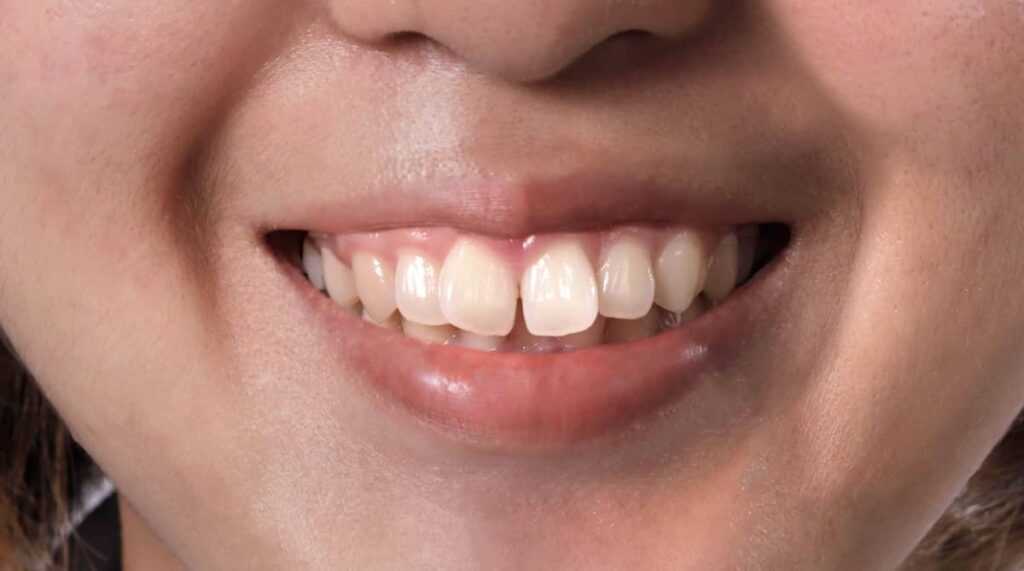
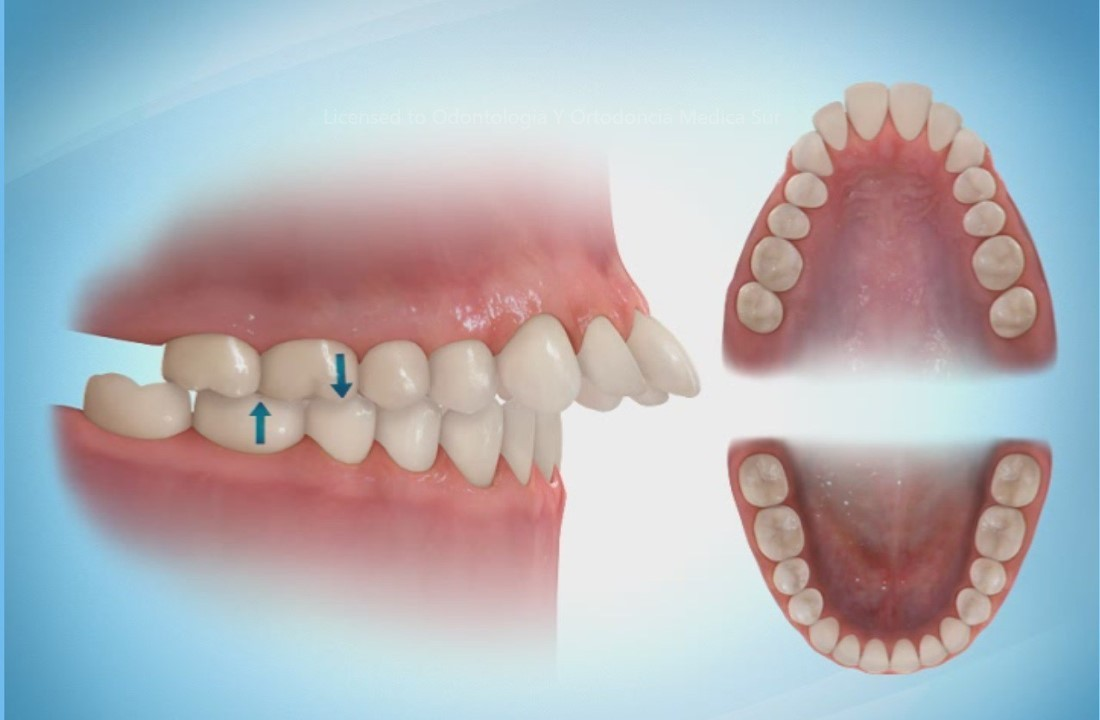
Tooth protrusion is an orthodontic condition in which the front teeth tilt or shift forward beyond the normal physiological range. Most commonly, it involves the upper incisors, though the lower arch can be affected as well. In simple terms, the teeth “jut out” forward – and this changes not just the appearance of your smile, but also your bite, the resting position of your lips, and your facial features overall.
Many people dismiss it as a purely cosmetic issue, but in practice, protrusion can affect chewing function, speech, and long-term dental health. Because the front teeth are misaligned, they bear excessive stress, wear down more quickly, and become more vulnerable to chipping or injury. That’s why protrusion warrants proper attention from an orthodontist.
What Tooth Protrusion Looks Like and Its Main Signs
The outward appearance of protrusion depends on how pronounced it is. In mild cases, a person simply notices that their front teeth stick out slightly. In more significant cases, the facial profile changes noticeably: the lips may not close fully at rest, the mouth tends to stay slightly open, and the chin can look less defined.
Sometimes the teeth appear too large or seem to “fan out” forward. Gaps may develop between them, and the smile can look disproportionate. For many patients, it’s the aesthetic discomfort that first brings them to see a dentist.
Protrusion: photo
Symptoms Worth Paying Attention To
Beyond visible changes, there are functional signs that shouldn’t be ignored:
- Difficulty closing the lips without effort
- Mouth frequently open at rest
- Front teeth protrude and interfere with a comfortable bite
- Teeth are more prone to injury from falls or impacts
- Difficulty biting into hard foods
- Certain sounds are hard to pronounce clearly
- A habit of breathing through the mouth develops
- Self-consciousness about smiling or being photographed
Causes of Tooth Protrusion
Tooth protrusion rarely has a single cause. It’s usually a combination of genetic factors, jaw development patterns, and habits built up over years.
Genetics and Anatomical Features
Some people are genetically predisposed to narrow jaws, insufficient space for their teeth, or a particular facial skeletal growth pattern. If a parent had similar bite issues, the risk for their child is higher.
Childhood Habits
Bite development is heavily influenced by early childhood behavior. The following habits can contribute to protrusion:
- Prolonged thumb-sucking
- Extended pacifier use beyond the recommended age
- Habitually resting the tongue between the teeth
- Mouth breathing
- Incorrect swallowing patterns
Insufficient Space in the Dental Arch
When the jaw is small but the teeth are relatively large, there simply isn’t enough room. In that situation, the front teeth tend to shift forward along the path of least resistance.
Changes in Adulthood
Sometimes protrusion develops or worsens in adulthood – for example, due to gum disease, tooth loss, shifting of neighboring teeth, or uneven distribution of chewing forces.
How Protrusion Differs from Retrusion
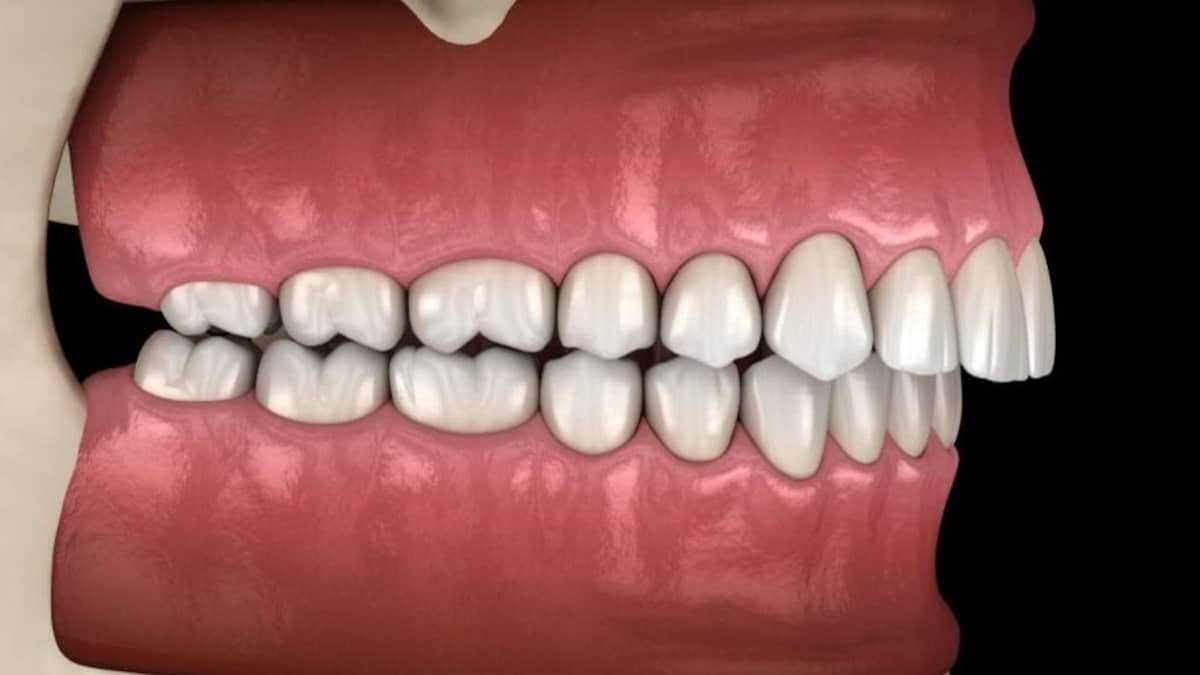
Tooth protrusion and retrusion are two distinct orthodontic conditions that describe opposite directions of front tooth movement or tilt – and despite sounding similar, they are not interchangeable.
Protrusion means the teeth tilt forward, toward the lips. The front incisors extend beyond the normal range, which can make the smile look more convex and give the facial profile a rounded, forward appearance. In some cases, the lips struggle to close without effort, and the front teeth become more susceptible to trauma.
Retrusion means the teeth tilt inward, toward the back of the mouth. The front teeth appear recessed or set too far back in the arch, which can make the smile look “closed off,” and the bite may involve excessive vertical overlap.
Put simply: protrusion means the teeth protrude too far forward; retrusion means they lean too far back. Both affect more than aesthetics – they influence chewing function, speech clarity, stress distribution on the teeth, and the functioning of the temporomandibular joint (TMJ).
Treatment approaches also differ. With protrusion, the orthodontist works to move the teeth back into the correct position and stabilize the bite. With retrusion, the opposite may be needed – bringing the teeth forward, adjusting incisor angulation, or correcting a deep bite. This is exactly why accurate diagnosis before treatment is non-negotiable.
How an Orthodontist Confirms the Diagnosis
A visual examination alone doesn’t give the full picture. Even when the front teeth are visibly protruded, it’s essential to understand why: is the problem purely about tooth angulation, or does it also involve jaw position, bite mechanics, habits, or growth patterns? That’s why orthodontic diagnosis is always comprehensive.
During the consultation, the orthodontist conducts a thorough examination – evaluating not just the teeth, but the entire dental and jaw system. The clinician will assess:
- Tooth position at rest and during smiling
- The degree of front incisor tilt
- Contact between upper and lower teeth
- Bite type and jaw closure
- Facial symmetry
- Lateral facial profile
- Lip movement during speech and at rest
- Lower jaw mobility
- Crowding or spacing between teeth
- Patient concerns about aesthetics, chewing, or speech
- Any habits that may have influenced bite development
The orthodontist may also ask whether mouth breathing was present in childhood, whether there’s a tongue-thrusting habit, and whether any orthodontic treatment has been done before. These details help identify not just the effect, but the root cause.
Following the initial assessment, the orthodontist determines whether the issue is a localized tooth shift or something deeper involving the jaws and bite as a whole – and the treatment plan follows from there.
Diagnostic Tests That May Be Needed Before Treatment
A thorough and accurate correction plan requires more than an examination. Additional diagnostics reveal what can’t be assessed visually and help predict treatment outcomes.
The most commonly ordered tests include:
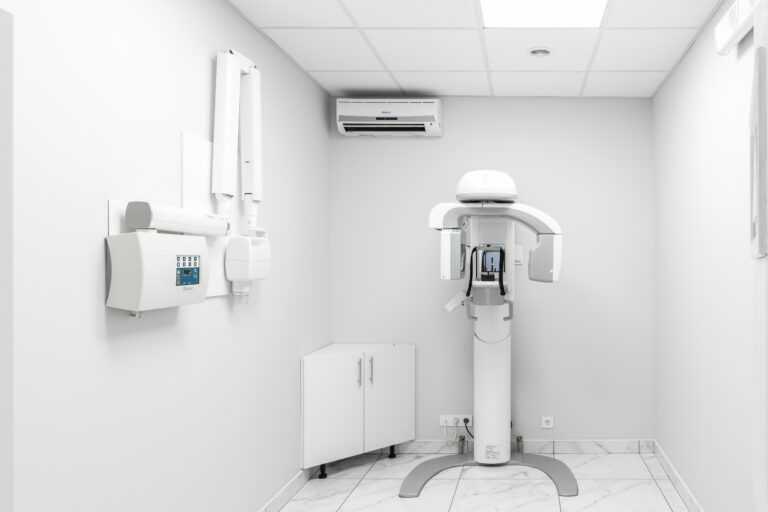
- Panoramic X-ray (OPG) – shows tooth roots, bone condition, hidden infections, impacted teeth, and other underlying dental issues
- Cephalometric X-ray (lateral skull) – assesses the relationship between the upper and lower jaws, growth direction, tooth angulation, and overall facial skeletal proportions
- Digital scanning or dental impressions – used to create precise models of the dental arches for measurement and movement planning
- Photographic records – a standardized series of facial and intraoral photos from multiple angles, used to analyze profile, smile aesthetics, and track changes over time
- Breathing and swallowing function assessment – conducted when mouth breathing, tongue posture issues, or other functional concerns are suspected
In some cases, referrals to other specialists may be needed – an ENT physician, periodontist, or oral and maxillofacial surgeon – particularly when nasal breathing problems, gum disease, or jaw anatomy are contributing factors.
Only after a complete diagnostic workup can the orthodontist answer the questions patients care about most: Do I need braces or aligners? Is there enough space, or will extractions be necessary? How long will treatment take? What results can I realistically expect?
Treating Protrusion: What Actually Works
Treatment is always tailored to the individual. There’s no one-size-fits-all solution. The approach depends on the patient’s age, the degree of tooth angulation, available space in the arch, bite type, jaw position, and overall oral health. That’s why two patients with outwardly similar presentations may end up with entirely different treatment plans.
The goal isn’t simply to “straighten the teeth” – it’s to restore proper functional positioning, improve jaw closure, harmonize the facial profile, and maintain those results long-term. Orthodontics offers several proven methods for achieving this.
Braces
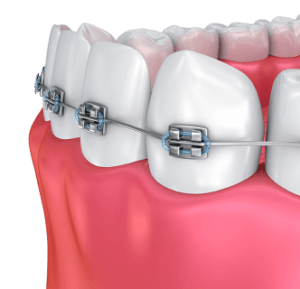
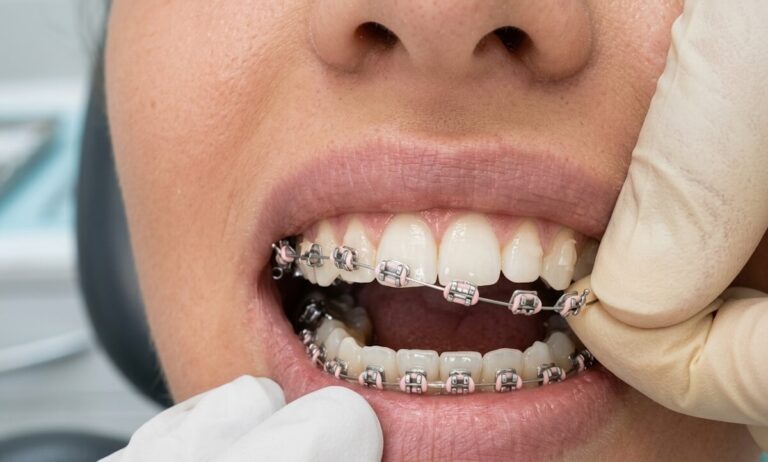
Braces are among the most effective treatments for significant protrusion. Fixed to the teeth and working continuously, they move teeth gradually and precisely. Through the interplay of archwires, brackets, and auxiliary components, the orthodontist can control root angulation, crown position, and arch form with a high degree of accuracy.
Braces are often the go-to choice for complex cases – not just correcting front tooth angulation, but also adjusting the bite, closing spaces, resolving crowding, or changing the relationship between the arches. Treatment progresses in stages: alignment first, then bite and angulation correction, then stabilization.
Clear Aligners
Aligners are removable, transparent trays that shift teeth incrementally through controlled, gentle pressure. They’re popular for their aesthetics and convenience – nearly invisible on the teeth, easy to remove for meals and oral hygiene.
Aligners can be effective for mild to moderate protrusion where complex tooth movements or major bite changes aren’t required. However, they’re not right for everyone. In more complex clinical situations, an orthodontist may recommend braces as the more predictable option.
Additional Orthodontic Appliances
In children and teenagers whose jaws are still developing, the orthodontist may use supplementary appliances – retainer-style plates, functional devices, or palatal expanders. These work not just on tooth position, but on guiding healthy bone development.
This approach is especially valuable in childhood, when intervention can be gentler and faster, leveraging the natural growth potential of the developing skeleton. In some cases, early treatment reduces the complexity of what’s needed later.
Tooth Extraction When Indicated
One of the most common patient concerns is whether healthy teeth will need to be removed. In many cases, no – but extraction becomes necessary when there simply isn’t enough space for the teeth to move correctly. If the arch is severely crowded and the front teeth are protruding because of that space deficit, extraction may be the only way to create the room needed.
This is never a default or automatic decision. Before recommending extraction, the orthodontist carefully reviews X-rays, arch models, facial profile, and projected outcomes. If a non-extraction path is viable, that’s typically the first option explored.
Orthognathic Surgery
In some cases, the underlying cause of protrusion isn’t just tooth position – it’s the structure or position of the jaws themselves. If one jaw is significantly displaced forward or backward, braces alone can’t fully resolve the problem.
In those situations, treatment may include orthognathic surgery – surgical repositioning of the jaws, performed in combination with orthodontic treatment. This approach is reserved for complex cases and can improve not only the bite, but also facial symmetry, chewing function, and breathing.
Once active treatment is complete, the teeth need to be held in their new position. This is done with retainers – custom appliances that prevent relapse. Without a proper retention phase, even excellent treatment outcomes can shift over time.
Can Treatment Be Done Without Extractions?
This is one of the questions orthodontists hear most. In many cases, yes. If adequate space can be gained through arch expansion, changes in tooth angulation, or smart movement planning, extractions aren’t needed.
That said, if there genuinely isn’t enough room, avoiding extraction can complicate treatment and compromise long-term stability. Every case is assessed individually.
Protrusion After Braces
Sometimes patients feel that their front teeth have started protruding again after completing treatment. There are several possible explanations:
- Retainers weren’t worn as prescribed
- Teeth are attempting to return to their original positions
- The patient is still adapting to the new facial profile
- Tongue posture or breathing habits have changed
- The original case was particularly complex
This is exactly why the retention phase matters – it’s the stage where results are consolidated through consistent retainer wear and follow-up appointments.
Frequently Asked Questions
Can protrusion get worse over time? Yes – particularly if harmful habits persist, space in the arch is limited, or treatment is delayed. The issue can become more noticeable over the years.
Is treatment painful? The treatment itself isn’t painful, but some temporary soreness or sensitivity is common after braces are adjusted or aligners are changed.
Can protrusion be corrected in adults? Absolutely. Modern orthodontics can effectively treat protrusion at any age. The key is proper diagnosis and a well-designed treatment plan.
Which treatment is most effective? The most effective treatment is the one designed for your specific clinical situation. For some patients that means braces; for others, aligners; and in certain cases, a combined approach works best.
Medically reviewed and written by Benedys Serhiy DDS — Prosthodontics, Restorative Dentistry & Oral Surgery
Make an appointment
You can make an appointment by filling out the application form on the website, as well as using instant messengers:
Make an appointment
You can make an appointment by filling out the application form on the website, as well as using instant messengers:


Make an appointment easily using chatbots:
Also, call the numbers:
Modern dentistry and medical centre "MED-DEO"
Choose a clinic whose location is more convenient for you.
Kyiv, Holosiivska/Demiivska metro station
130 Lobanovskoho Avenue


Working hours:
Mon - Sun: 8:00 AM - 9:00 PM
No days off!
Call the numbers:
How to get to us? Create a route
Create a route
Kyiv, Akademistechko metro station
78A, Irpinska str.


Working hours:
Mon-Sun: 8.00-21.00
Without days off!
Call the numbers:
How to get to us?
Create a route
Create a route
Kyiv, Heroiv Dnipra metro station
32A, Heroiv Dnipra str.
Working hours:
Mon-Sun: 8.00-21.00
Without days off!
Call the numbers:
How to get to us?
Create a route
Create a route
Kyiv, Teatralna metro station
9B, E. Chykalenko (Pushkinska) str.



Working hours:
Mon-Sat: 8.00 - 21.00. Sun: by appointment.
Without days off!
Call the numbers:
How to get to us?
Create a route
Create a route
Відгук від клієнта
0:00
0:00


Your email will not be published on the site.