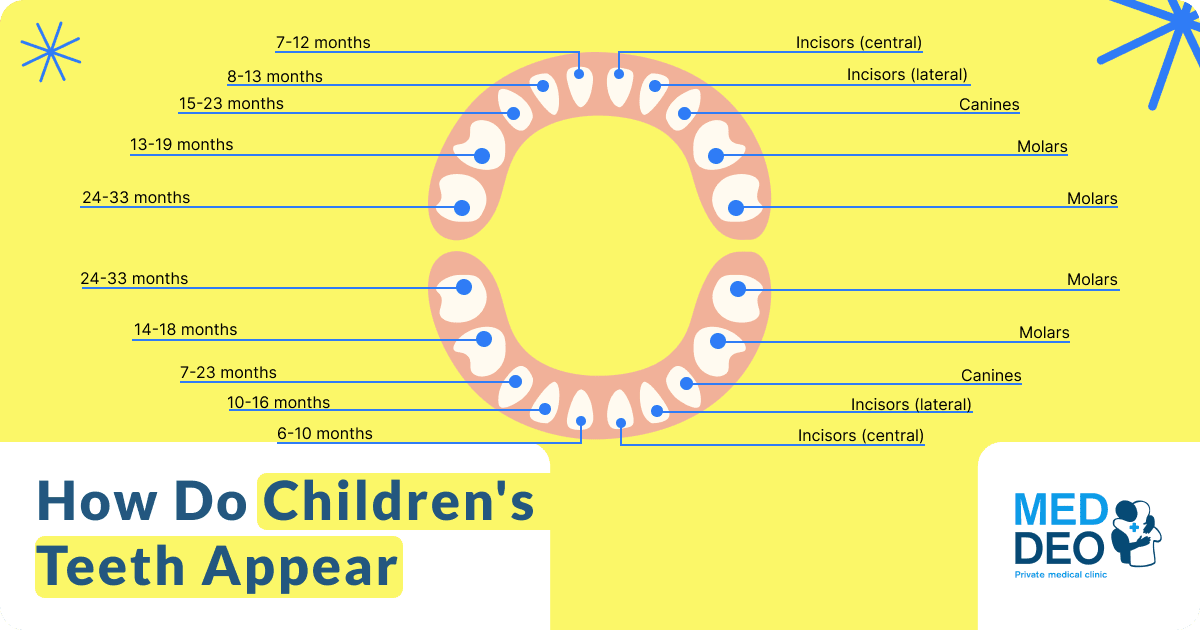
Children’s teeth emerge in a specific order and according to a certain sequence. The first teeth to erupt are baby teeth, which appear after birth in an established order. Typically, teeth of the same type emerge simultaneously on both sides of the jaw. It’s worth noting that in most cases, lower teeth begin to grow earlier than upper teeth. Primary dentition has several stages of development, including the appearance of baby teeth, then their loss and replacement with permanent teeth. It’s important to monitor your child’s dental development and regularly visit the dentist for timely diagnosis and treatment of potential problems. First Stage This begins with tooth eruption and lasts approximately 3.5 years. During this period, teeth fit closely together with no gaps between them, tooth wear is barely noticeable, and the bite is considered orthognathic because the lower jaw lags in growth. Second Stage This lasts from 3.5 to 6 years. The jaws grow and natural gaps appear between teeth. The bite gradually changes from orthognathic to straight, and tooth wear becomes more noticeable. Tooth Eruption Timeline Upper Jaw Teeth
Incisors (central): Eruption 7-12 months, Loss 6-8 years
Incisors (lateral): Eruption 8-13 months, Loss 7.5-8.5 years
Canines: Eruption 15-23 months, Loss 9-12 years
Molars: Eruption 24-33 months, Loss 9-12 years
Lower Jaw Teeth
Molars: Eruption 22-30 months, Loss 10-12 years
Incisors (central): Eruption 6-11 months, Loss 6-8 years
Incisors (lateral): Eruption 9-17 months, Loss 7-9 years
Canines: Eruption 16-24 months, Loss 10-12 years
Minor variations in sequence or timing of tooth emergence shouldn’t cause concern, as these are usually related to individual characteristics of the child.
Differences Between Baby and Permanent Teeth
Temporary teeth play an important role in children’s growth and development, providing necessary functions until they’re replaced by permanent teeth.
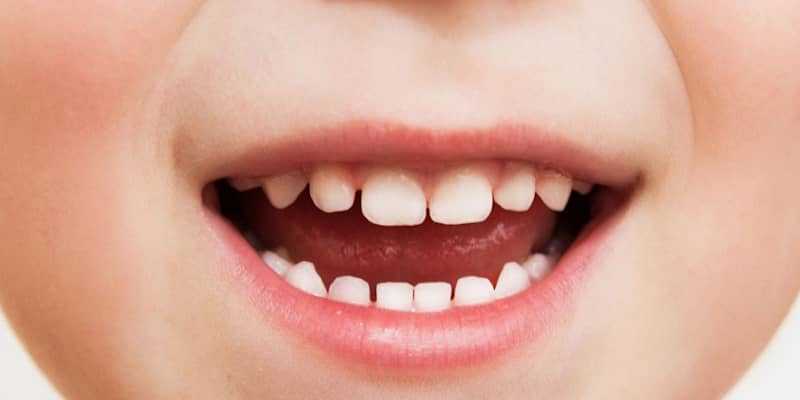
Baby teeth are smaller in size, with more rounded edges and thin enamel that’s easily damaged. They appear around six months of age and have short roots that eventually dissolve, allowing permanent teeth to take their place. Children have a total of 20 baby teeth, 10 on each jaw, and they help the child chew and speak.
Permanent teeth are larger and more varied in shape, with strong enamel and long roots designed for long-term use. Adults have 32 of them: 16 in the upper and lower jaws each. These teeth provide efficient chewing, support jaw structure, and serve throughout adult life.
When Do Permanent Teeth Form?
Permanent tooth formation begins even before birth, usually from the seventh month of pregnancy. The first permanent teeth erupt around age six, but in some children this process may start later. Most permanent teeth appear by age 12, but wisdom teeth may begin growing from age 17 or later. The roots of some teeth continue to develop even after eruption, making the process of permanent tooth formation lengthy and gradual, continuing into the teenage years.
When Do Baby Teeth Fall Out?
Baby teeth change during specific age periods. If permanent tooth growth is significantly delayed or symptoms appear, it’s recommended to show the child to a dentist to ensure there are no complications.
For parents’ convenience, dental practice recognizes a scheme for permanent tooth eruption in children starting from age 6.
So, baby teeth begin changing starting at age six. Typically, the first “adult” teeth are molars and central incisors. Then tooth replacement follows this pattern:
Ages 6-8: Front teeth – incisors (lateral and central) appear. First, teeth erupt on the lower jaw, slightly later on the upper jaw.
Ages 9-12: Canines and premolars change.
During adolescence, from age 12: Some children still have remaining back teeth changing.
It’s important for parents to understand that each child is individual, so these tooth eruption periods may vary somewhat. But overall, the sequence of eruption and timing of permanent tooth appearance remain as described above.
Why Is Baby Tooth Hygiene Important?
Caring for baby teeth is important for several reasons:
Oral health: Baby teeth protect gums and jaw bones, and problems like cavities or infections can negatively affect overall oral health.
Proper permanent tooth development: Baby teeth serve as guides for permanent teeth. If a baby tooth is lost too early due to poor care, this can lead to shifting of other teeth and eventually bite problems.
Chewing and speech skills: Baby teeth help children develop proper chewing and speech skills. Problems with baby teeth can hinder the learning process, causing difficulties with articulation or food chewing.
Pain and discomfort: Cavities and other baby tooth problems can cause severe pain and discomfort in children, affecting their overall well-being.
Oral hygiene habits: Early training of children in baby tooth care creates the foundation for good oral hygiene habits in the future. Children who learn to care for their teeth are more likely to maintain healthy hygiene throughout their lives.
Do Unpleasant Symptoms Occur with Permanent Tooth Eruption?
Most children experience permanent tooth eruption painlessly and without noticeable symptoms. However, there are cases when this process is accompanied by discomfort. One possible symptom is elevated body temperature, up to high readings of 38°C.
Other symptoms may include:
Itching or unpleasant sensations in the gum area
Pain or pressure in the gums
Redness or gum swelling
Due to pain and discomfort, children may refuse solid food or prefer soft food
Increased salivation
Fussiness and irritability
In What Sequence Do Permanent Teeth Erupt?
At ages 5-6, children begin growing their first permanent molars, which aren’t part of the primary dentition. Usually, lower molars appear slightly earlier than upper ones.
It’s important to understand how permanent teeth grow in children:
First, central incisors appear on the lower jaw, then on the upper jaw
Next, lateral incisors grow, appearing on both jaws simultaneously
Then premolars or small back teeth appear
Canines follow
Second and third molars complete the process
Delayed Baby Tooth Loss
If a child’s teeth don’t change on time, this may cause parental concern, but it doesn’t always indicate a problem. Usually, children begin losing baby teeth around age 6, and this process continues until ages 12-13. However, there are several reasons why baby tooth loss may be delayed:
Heredity: Some children inherit the tendency for later baby tooth loss from their parents.
Anodontia in children: This is a condition where a child is missing one or several teeth. This can be either a congenital anomaly or the result of other factors such as trauma, disease, or surgery. Anodontia can be partial, when several teeth are missing, or complete, when the child has no teeth at all.
In rare cases, permanent teeth may be absent (anodontia), leading to baby teeth not being replaced.
Developmental disorders: Some diseases or conditions, including Down syndrome, can affect tooth growth or jaw development, which may lead to delayed baby tooth loss.
Trauma or infections: Damage or infections to baby teeth or gums can slow the tooth loss process.
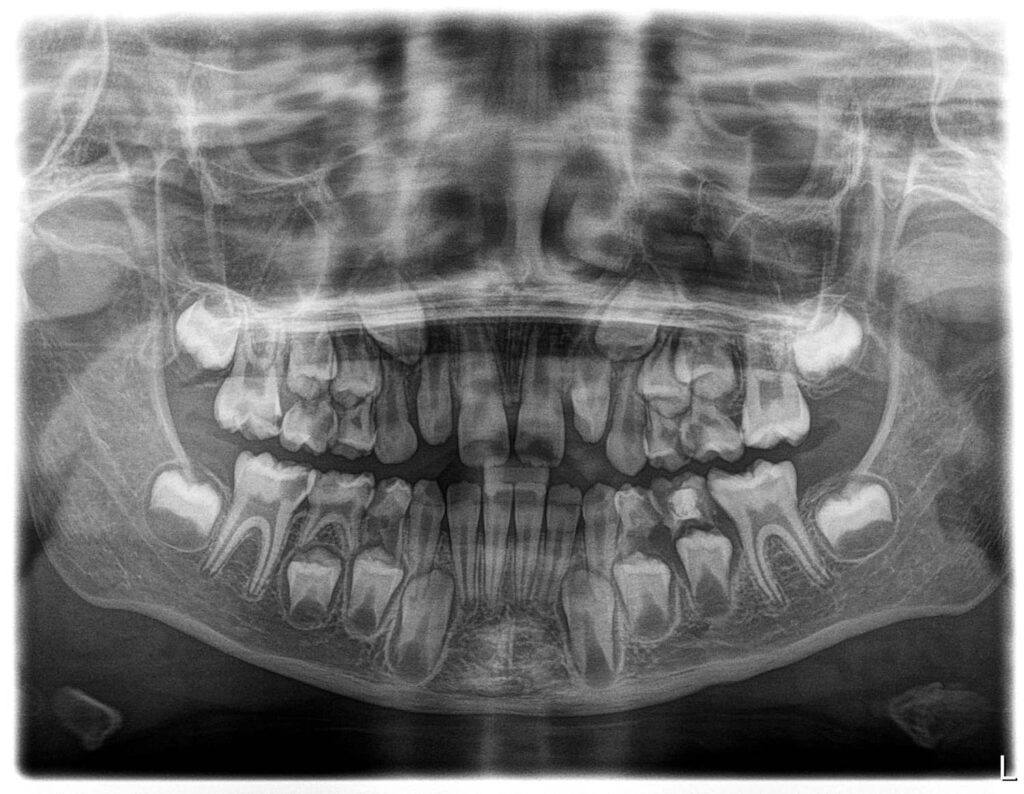
If your child shows delayed baby tooth loss, don’t delay consulting a dentist or pediatric orthodontist. At Med-Deo clinic in Kyiv, our specialists will conduct a thorough examination, take X-rays, and determine if there are reasons for concern. If necessary, specialists will develop optimal treatment options.
Remember that each child is unique, and the time when baby teeth change can vary. Consulting Med-Deo specialists will help you dispel all doubts and create conditions for healthy tooth development in your child.
The first permanent teeth usually begin erupting around ages 5-6. This marks the start of the mixed dentition period, which lasts until ages 13-14, when baby teeth are completely replaced by permanent ones.
Which permanent tooth erupts first?
In most children, the first to erupt are permanent lower central incisors, which replace the corresponding baby teeth. This process usually begins at ages 5.5-7. Simultaneously, deep in the mouth, behind all the baby teeth, the first permanent molars appear – chewing teeth that don’t have baby “predecessors.”
How long do permanent teeth take to grow?
The process of complete permanent dentition formation usually concludes by ages 14-15. By this time, the child has already erupted incisors, canines, premolars, and molars. The exception is third molars, better known as wisdom teeth – they may appear much later, in adulthood, and sometimes don’t form at all.
 (044) 394 90 94
  Holosiivska/Demiivska metro station


















Your email will not be published on the site.