Special offer! Comprehensive professional teeth cleaning for only 1699 UAH.
Special offer! Comprehensive professional teeth cleaning for only 1699 UAH.
Special offer! Comprehensive professional teeth cleaning for only 1699 UAH.
Special offer! Comprehensive professional teeth cleaning for only 1699 UAH.
Special offer! Comprehensive professional teeth cleaning for only 1699 UAH.
Special offer! Comprehensive professional teeth cleaning for only 1699 UAH.
Special offer! Comprehensive professional teeth cleaning for only 1699 UAH.
Special offer! Comprehensive professional teeth cleaning for only 1699 UAH.
Special offer! Comprehensive professional teeth cleaning for only 1699 UAH.
Special offer! Comprehensive professional teeth cleaning for only 1699 UAH.
Sign up
 (044) 394 90 94
(044) 394 90 94  Holosiivska/Demiivska metro station
Sign up
(044) 394 90 94
(044) 394 90 94
Doctors


 Prices
Blog
Contacts
Prices
Blog
Contacts
пр.Лобановського, 130, Київ, Україна
Temporarily closed
Opening soon
78A, Irpinska St., Kyiv, Ukraine
Temporarily closed
Opening soon
32A, Heroiv Dnipra St., Kyiv, Ukraine
Temporarily closed
Opening soon
9B, Yevhena Chykalenko St. (Pushkinska), Kyiv, Ukraine
Temporarily closed
Opening soon
(044) 394 90 94
Back
Dentistry
General Dentistry
Dental surgery
Dental Implants
Maxillofacial Surgery
Dental prosthetics
Cosmetic dentistry

Professional Dental Hygiene

Periodontics
Orthodontic dentistry
Gnathology & TMJ Therapy

Pediatric Dentistry
Dental X-Rays
Back
Orthodontic Center
Orthodontic dentistry
Gnathology & TMJ Therapy
Back
Prosthodontic Center
Dental prosthetics
Back
MED-DEO Center for Maxillofacial Surgery & Facial Plastics
Maxillofacial Surgery
Plastic surgery
Back
Surgical Dental Center
Dental surgery
Dental Implants
Search on the site


Popular requests
Teeth whitening
Treatment of caries
Wisdom tooth extraction
Bracket system
Dental veneers
Tooth restoration
Pediatric dentist
Consultation with a dentist-therapist
Search results by: «».
Unfortunately, no results were found for your search: “Pediatric Endocrinologist”, nothing was found.
You may find these links useful:
Clinics "MED-DEO"
пр.Лобановського, 130, Київ, Україна
Temporarily closed
Opening soon
78A, Irpinska St., Kyiv, Ukraine
Temporarily closed
Opening soon
32A, Heroiv Dnipra St., Kyiv, Ukraine
Temporarily closed
Opening soon
9B, Yevhena Chykalenko St. (Pushkinska), Kyiv, Ukraine
Temporarily closed
Opening soon
Services
Dentistry Orthodontic Center Prosthodontic Center MED-DEO Center for Maxillofacial Surgery & Facial Plastics Surgical Dental CenterGeneral Dentistry
Dental surgery
Dental Implants
Maxillofacial Surgery
Dental prosthetics
Cosmetic dentistry
Professional Dental Hygiene
Periodontics
Orthodontic dentistry
Gnathology & TMJ Therapy
Pediatric Dentistry
Dental X-Rays
Orthodontic dentistry
Gnathology & TMJ Therapy
Dental prosthetics
Maxillofacial Surgery
Dental surgery
Dental Implants
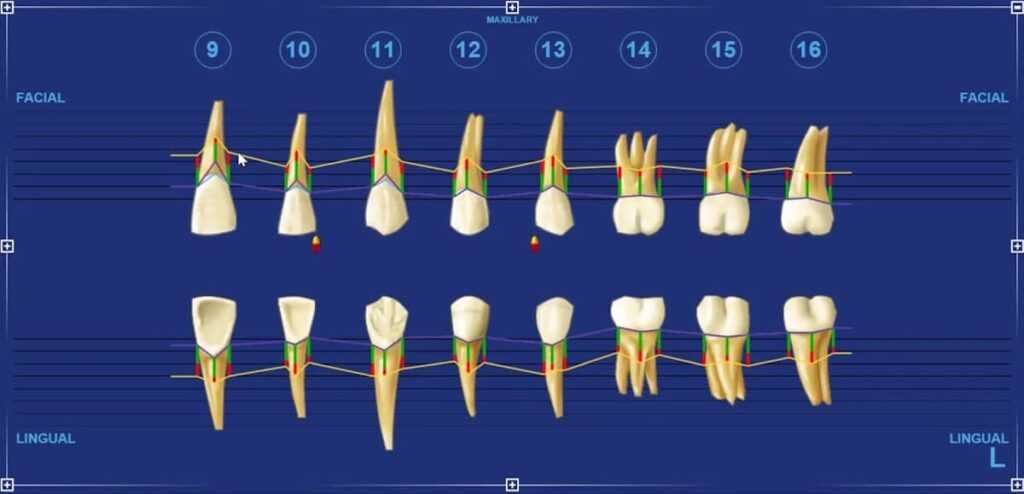

Periodontal chart is something most patients never think about — until gum problems actually appear. Yet it’s precisely this tool that helps a dentist see the full picture of the tissue condition around your teeth, rather than just surface-level symptoms.
What Is a Periodontal Chart
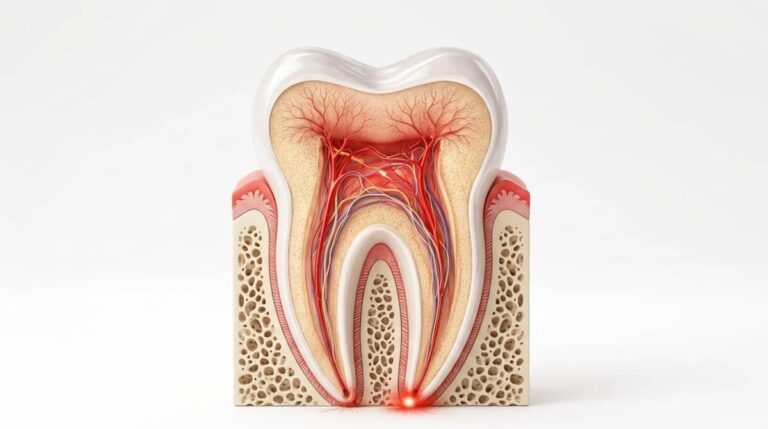
A periodontal chart is not simply a formal entry in a patient’s file. It is, essentially, a detailed “snapshot” of the condition of the gums and surrounding tissues around each tooth.
During the examination, the dentist checks each tooth one by one, noting key findings: whether there is bleeding or inflammation, how deep the gum pockets are, and whether any teeth show mobility or gum recession.
Why does this matter? Because this chart allows the dentist to move beyond a general visual impression and gain a precise understanding of what is happening with each individual tooth. This enables an accurate diagnosis and a treatment plan that actually works.
Simply put, the periodontal chart is the foundation without which it is difficult to properly assess gum health or track treatment outcomes.
What a Periodontal Chart Shows and What Data It Contains
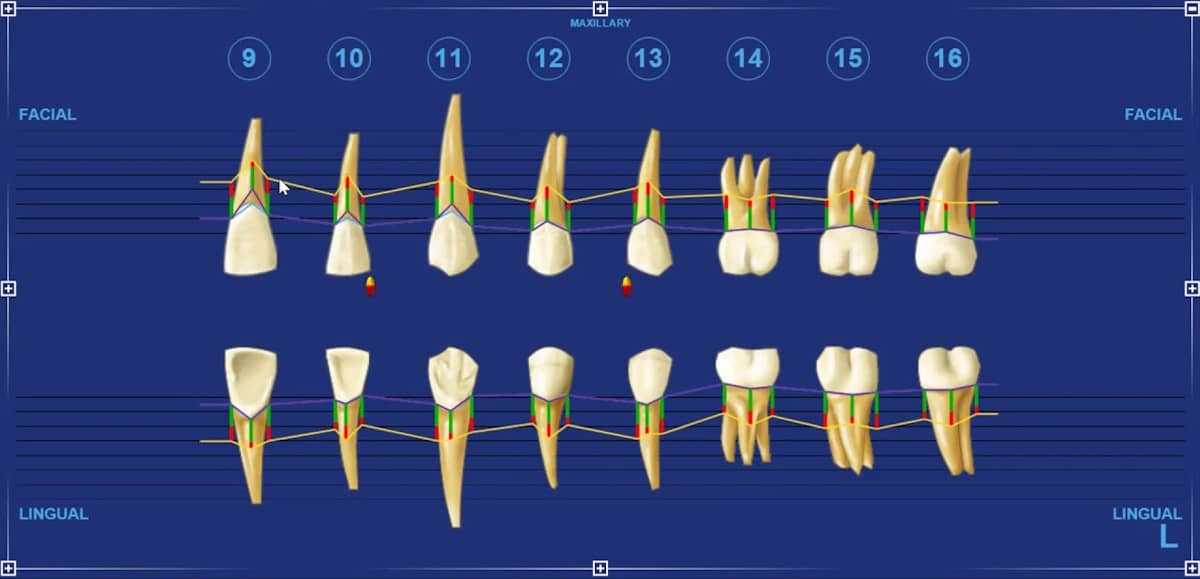
A periodontal chart is not just a set of numbers and markings — it is a clear, meaningful picture of what is happening with the gums and surrounding tissues. It helps the dentist see the problem at a deeper level, beyond what is visible on the surface.
Several key indicators are recorded. For instance, probing depth of the gum pockets — this reveals whether inflammation is present and how advanced it is. The deeper the pocket, the more serious the situation.
The chart also captures whether the gums bleed. Even occasional bleeding is already a signal that an inflammatory process is underway. Tooth mobility is assessed separately — this is a critical indicator, as it reflects the condition of the tissues holding the teeth in place.
Additionally, the dentist evaluates gum recession, the overall appearance of the tissues, and visible signs of inflammation. Taken together, these findings provide a complete picture: where exactly the problem is, how serious it is, and what needs to be done.
In short, it is precisely this data that allows the dentist to make an accurate diagnosis and select a treatment approach that genuinely fits the patient’s specific situation — rather than a one-size-fits-all response.
When a Periodontal Chart Is Needed
A periodontal chart is typically indicated when a patient has gum-related complaints: bleeding, swelling, bad breath, or teeth that have begun to feel slightly loose. It is also necessary when the dentist suspects gingivitis or periodontitis.
However, there is an important point — you do not need to wait for severe symptoms to develop. Sometimes it is better to investigate early, when gums only bleed occasionally or there is mild discomfort. In such cases, the chart helps detect the early stages of disease and stop its progression in time. It is also used for monitoring purposes — to evaluate whether treatment is producing results and how gum condition is changing over time.
How a Periodontal Chart Is Compiled
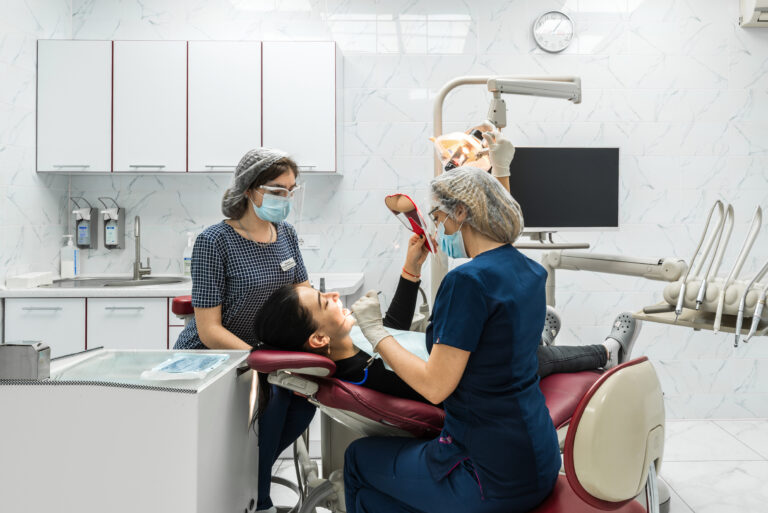
The process of compiling a periodontal chart is calm and methodical — the dentist collects all the necessary information step by step, without rushing, to ensure nothing is overlooked.
It begins with a discussion of your symptoms and sensations. The dentist may ask straightforward questions: do your gums bleed during brushing, is there any pain, unpleasant odor, pressure, or discomfort? Your oral hygiene habits are also discussed, as they can help identify potential contributing factors.
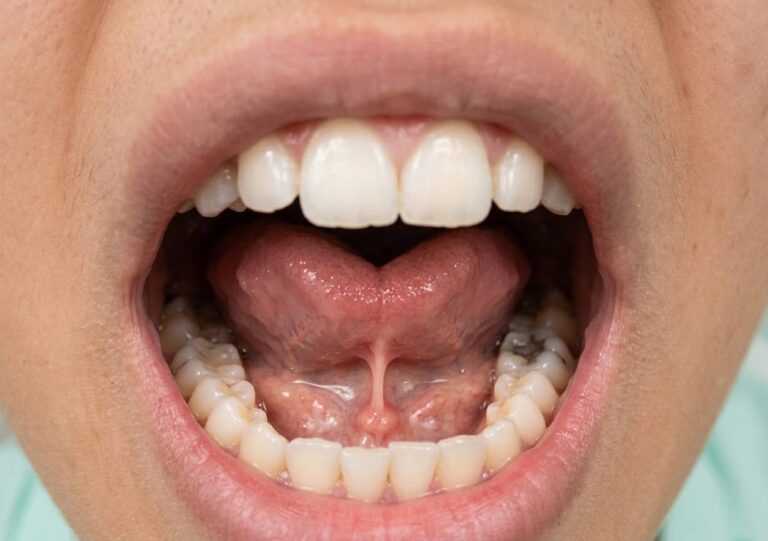
Next comes the visual examination. The dentist assesses the gums: their color, texture, and whether there is any swelling, redness, or other signs of inflammation. This stage provides a general overview, but it is not sufficient for a precise conclusion on its own.
The most critical part of the process is probing. Using a thin, specialized instrument, the dentist carefully measures the depth of the gum pocket at each tooth. This reveals what is happening beneath the gum line — where nothing is visible to the naked eye. These measurements indicate whether hidden inflammation is present and how advanced it is.
If needed, additional diagnostics may be ordered — such as X-rays or other imaging — to evaluate bone tissue condition and identify changes that cannot be seen during a clinical examination.
All findings are recorded in the periodontal chart. The result is not merely a description, but a clear and comprehensive picture of gum and tissue health — one that forms the basis for treatment planning and long-term monitoring.
How a Periodontal Chart Differs from a Routine Dental Examination
A routine dental check-up typically provides a general overview of oral health. The dentist looks for cavities, plaque, tartar, or obvious gum inflammation. It is a quick, surface-level assessment that helps identify visible problems — but does not reveal what is happening beneath the surface.
A periodontal chart represents an entirely different level of diagnostics. Here, the dentist does not simply observe — they measure and record specific parameters for each individual tooth. These include pocket depth, bleeding on probing, tooth mobility, and the condition of both gum and bone tissue. Each parameter is assessed with precision, making it possible to understand how serious the inflammation is, whether there is a risk of tissue breakdown, and which teeth require priority attention.
Another key distinction is longitudinal monitoring. A routine exam shows the condition at a single point in time, whereas a periodontal chart allows changes to be tracked over time: whether the situation is improving following treatment or whether the disease is progressing. This enables the dentist to make more informed decisions and adjust the treatment plan as needed.
In simple terms, a routine exam means taking a look at the surface; a periodontal chart means understanding what is happening beneath it — and keeping it under control. It transforms isolated observations into a system that supports the long-term health of gums and teeth in a careful, effective way.
Periodontal Chart vs. Dental Chart: What Is the Difference
A dental chart is a diagram familiar to both dentists and patients, used to record the condition of each tooth. It documents cavities, fillings, crowns, missing teeth, and other visible issues. It is a quick way to understand what is happening with the teeth themselves — but it says little about the tissues that hold them in place.
A periodontal chart, by contrast, focuses on the gums and periodontal tissues — that is, everything that supports the teeth. The dentist evaluates pocket depth, presence of inflammation, bleeding, tooth mobility, and bone condition. This makes it possible to determine whether the teeth are securely anchored, and whether there is a risk of periodontitis or future tooth loss.
The core difference lies in focus: the dental chart answers the question “what is the condition of the teeth themselves,” while the periodontal chart answers “how well are they supported, and are the surrounding gums healthy?”
When both are used together, a complete picture of oral health emerges — covering both the teeth and the gums. This allows the dentist to assess overall risk and plan treatment and preventive care with greater accuracy.
Article authored by general dentist and periodontist Yuliya Laskava


Make an appointment
You can make an appointment by filling out the application form on the website, as well as using instant messengers:
Make an appointment
You can make an appointment by filling out the application form on the website, as well as using instant messengers:


Make an appointment easily using chatbots:
Also, call the numbers:
Modern dentistry and medical centre "MED-DEO"
Choose a clinic whose location is more convenient for you.
Kyiv, Holosiivska/Demiivska metro station
130 Lobanovskoho Avenue


Working hours:
Mon - Sun: 8:00 AM - 9:00 PM
No days off!
Call the numbers:
How to get to us? Create a route
Create a route
Kyiv, Akademistechko metro station
78A, Irpinska str.


Working hours:
Mon-Sun: 8.00-21.00
Without days off!
Call the numbers:
How to get to us?
Create a route
Create a route
Kyiv, Heroiv Dnipra metro station
32A, Heroiv Dnipra str.
Working hours:
Mon-Sun: 8.00-21.00
Without days off!
Call the numbers:
How to get to us?
Create a route
Create a route
Kyiv, Teatralna metro station
9B, E. Chykalenko (Pushkinska) str.



Working hours:
Mon-Sat: 8.00 - 21.00. Sun: by appointment.
Without days off!
Call the numbers:
How to get to us?
Create a route
Create a route
Відгук від клієнта
0:00
0:00


Your email will not be published on the site.