Special offer! Comprehensive professional teeth cleaning for only 1699 UAH.
Special offer! Comprehensive professional teeth cleaning for only 1699 UAH.
Special offer! Comprehensive professional teeth cleaning for only 1699 UAH.
Special offer! Comprehensive professional teeth cleaning for only 1699 UAH.
Special offer! Comprehensive professional teeth cleaning for only 1699 UAH.
Special offer! Comprehensive professional teeth cleaning for only 1699 UAH.
Special offer! Comprehensive professional teeth cleaning for only 1699 UAH.
Special offer! Comprehensive professional teeth cleaning for only 1699 UAH.
Special offer! Comprehensive professional teeth cleaning for only 1699 UAH.
Special offer! Comprehensive professional teeth cleaning for only 1699 UAH.
Sign up
 (044) 394 90 94
(044) 394 90 94  Holosiivska/Demiivska metro station
Sign up
(044) 394 90 94
(044) 394 90 94
Doctors


 Prices
Blog
Contacts
Prices
Blog
Contacts
пр.Лобановського, 130, Київ, Україна
Temporarily closed
Opening soon
78A, Irpinska St., Kyiv, Ukraine
Temporarily closed
Opening soon
32A, Heroiv Dnipra St., Kyiv, Ukraine
Temporarily closed
Opening soon
9B, Yevhena Chykalenko St. (Pushkinska), Kyiv, Ukraine
Temporarily closed
Opening soon
(044) 394 90 94
Back
Dentistry
General Dentistry
Dental surgery
Dental Implants
Maxillofacial Surgery
Dental prosthetics
Cosmetic dentistry
Professional Dental Hygiene

Periodontics
Orthodontic dentistry

Gnathology & TMJ Therapy

Pediatric Dentistry
Dental X-Rays
Search on the site


Popular requests
Teeth whitening
Treatment of caries
Wisdom tooth extraction
Bracket system
Dental veneers
Tooth restoration
Pediatric dentist
Consultation with a dentist-therapist
Search results by: «».
Unfortunately, no results were found for your search: “Pediatric Endocrinologist”, nothing was found.
You may find these links useful:
Clinics "MED-DEO"
пр.Лобановського, 130, Київ, Україна
Temporarily closed
Opening soon
78A, Irpinska St., Kyiv, Ukraine
Temporarily closed
Opening soon
32A, Heroiv Dnipra St., Kyiv, Ukraine
Temporarily closed
Opening soon
9B, Yevhena Chykalenko St. (Pushkinska), Kyiv, Ukraine
Temporarily closed
Opening soon
Services
DentistryGeneral Dentistry
Dental surgery
Dental Implants
Maxillofacial Surgery
Dental prosthetics
Cosmetic dentistry
Professional Dental Hygiene
Periodontics
Orthodontic dentistry
Gnathology & TMJ Therapy
Pediatric Dentistry
Dental X-Rays

What Is Trigeminal Neuralgia:
Trigeminal neuralgia is a neurological condition characterized by sudden, severe pain and particularly intense pain episodes in the face. The primary and most common cause is compression of the trigeminal nerve by a blood vessel near the brain.
The trigeminal nerve is the main sensory nerve of the face. It provides sensation to the facial skin, the mucous membranes of the nose, mouth, and teeth. Inflammation of the trigeminal nerve is frequently confused with dental problems. Trigeminal neuralgia can radiate to the teeth, gums, jaw, or cheek. Pain episodes can be extremely intense, resembling a shooting sensation or an electric shock.
The prevalence of this condition involves the following characteristics: it most commonly occurs in people over the age of 40–50, it is slightly more common in women than in men, and it represents one of the most widespread causes of severe facial pain.
It is important to understand the distinction between neuralgia and neuritis, as these are somewhat different concepts both in terms of their origin and their symptomatology. Trigeminal neuralgia is intense pain along the course of the nerve due to compression or unknown causes, but the nerve itself is not structurally damaged. Neuritis, on the other hand, is direct inflammation of the trigeminal nerve, which can lead to disruption of its structure and function. In other words: neuralgia is sharp, episodic pain without actual inflammation per se, whereas neuritis is inflammation of the nerve itself, presenting not only with pain but also with possible muscle weakness, skin numbness, and impaired sensation.
It is also worth knowing that trigeminal neuralgia goes by several alternative names. For example, one such name is trigeminal neuralgia (derived from the Latin nervus trigeminus). The trigeminal nerve itself may also be referred to simply as the “fifth nerve.” In everyday clinical practice, patients frequently call neuralgia “nerve inflammation,” which in practical terms helps the physician and patient better understand each other.
Anatomy of the Trigeminal Nerve:
The role of the trigeminal nerve in the body is to provide sensation to the greater part of the face. It is precisely due to this nerve that a person perceives touch and pain, cold and warmth on the forehead, cheeks, lips, teeth, gums, and so on. The trigeminal nerve also controls the masticatory muscles, enabling jaw movement and thus the ability to chew food. To understand the mechanism underlying neuralgia, however, it is essential to examine the anatomy of the trigeminal nerve more closely.
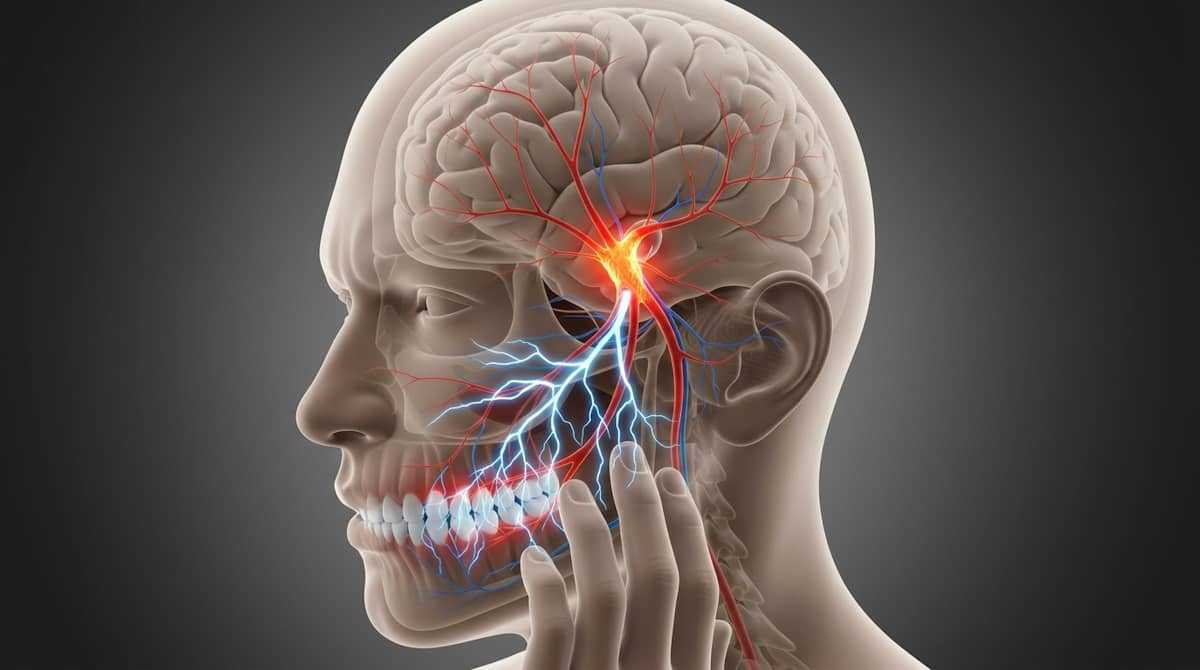
The trigeminal nerve belongs to the group of cranial nerves. In the general classification it occupies the fifth position and is therefore commonly referred to as the fifth cranial nerve. The anatomy of the trigeminal nerve specifically includes three main branches, each responsible for a different region of the face. That is, each branch provides its own portion of sensation and movement — a concept known as facial innervation.
The three main branches of the trigeminal nerve are as follows:
- Ophthalmic branch (V1): Responsible for sensation of the forehead, upper eyelid, the area around the eyes, and the nose. It carries no motor functions.
- Maxillary branch (V2): Responsible for sensation of the cheeks, upper lip, upper jaw and teeth, and part of the nose. It carries no motor functions.
- Mandibular branch (V3): Transmits signals from the lower jaw, lower teeth, chin, and controls the masticatory muscles. This is precisely why the trigeminal nerve and the teeth are so closely linked — pain in neuralgia frequently resembles dental pathology.
Viewed schematically, the nerve pathway is as follows: the trigeminal nerve exits the brainstem, enters the trigeminal ganglion (also called the Gasserian ganglion), and then divides into its three main branches — the ophthalmic branch (V1), directed toward the forehead, eyes, and upper nose; the maxillary branch (V2), directed toward the cheek, upper jaw, teeth, and upper lip; and the mandibular branch (V3), directed toward the lower jaw, chin, lower teeth and lip, and the masticatory muscles.
Notably, from an anatomical perspective, the trigeminal nerve is particularly susceptible to neuralgia because it passes through narrow bony foramina where it can be easily compressed by vessels or other surrounding tissues.
How Trigeminal Nerve Pain Manifests: Character and Localization:
Patients frequently ask what trigeminal nerve pain feels like, and the answer is that its manifestations are quite varied. The most characteristic features include sharp, shooting facial pain, burning pain, lightning-like pain resembling an electric shock, and sudden “stabbing” sensations in the jaw or cheek that are virtually unbearable.
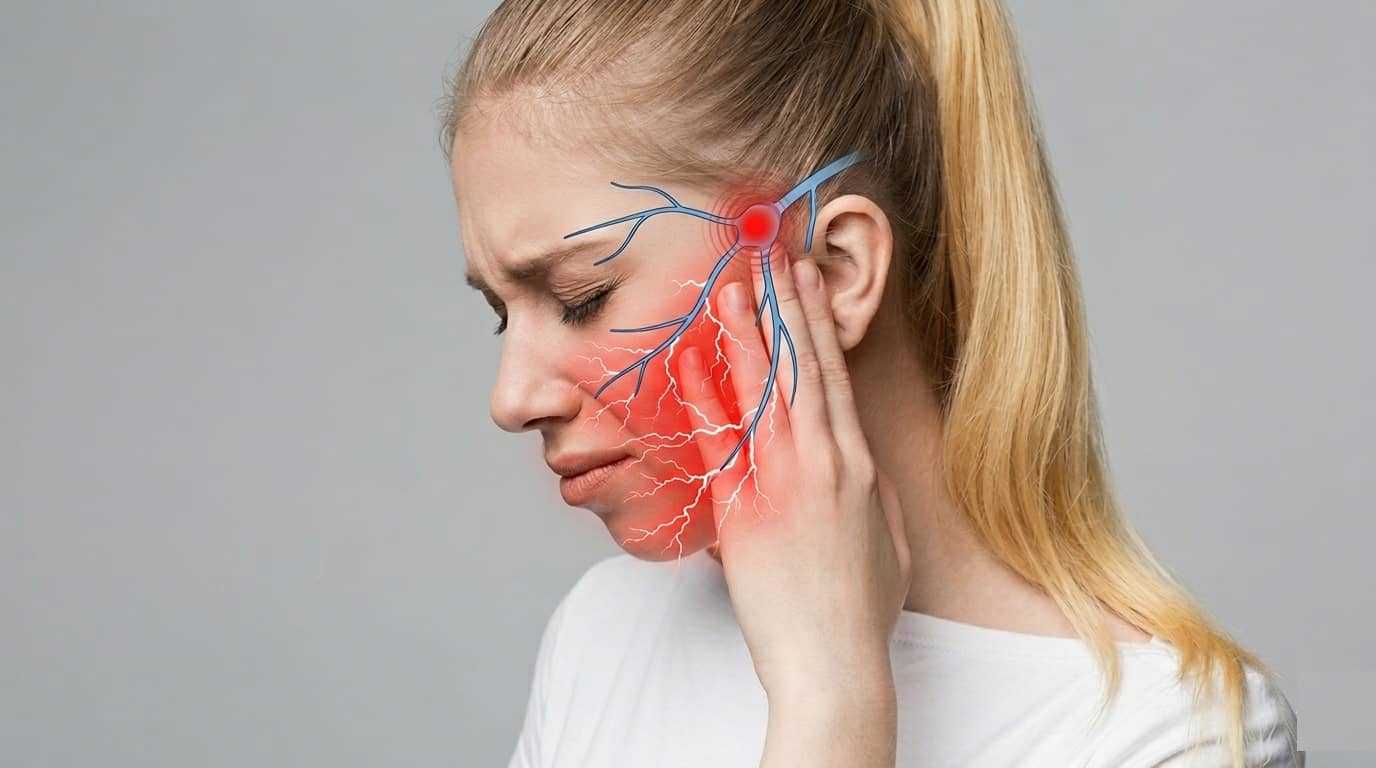
The duration of a pain episode ranges from a few seconds to one to two minutes. The frequency of trigeminal neuralgia attacks varies from isolated episodes to dozens per day. The localization of the pain depends on which branch of the nerve is affected. Typically, pain from trigeminal nerve involvement is unilateral — bilateral pain is extremely rare. The most common sites of involvement include the cheek, jaw, teeth, gums, the area around the eye, and the forehead. This is why trigeminal nerve pain and dental pain are so frequently confused with one another — the patient experiences intense pain in the corresponding zones and immediately suspects a dental cause.
Understanding precisely how trigeminal nerve pain presents is therefore critically important for identifying the problem quickly and seeking timely medical attention.
Causes of Trigeminal Nerve Inflammation:
There are many different factors that can cause irritation or inflammation of the trigeminal nerve. A comprehensive consideration of all potential causes allows the physician to address the problem most effectively. In clinical practice, these factors are conventionally divided as follows.
Primary (idiopathic) trigeminal neuralgia involves compression of the nerve by a blood vessel or demyelination of the nerve fibers (damage to the nerve sheath). It is important to clarify that “idiopathic” here means the exact cause is unknown — that is, the physician can see that the nerve is compressed or damaged but cannot determine why this has occurred in a specific individual.
Secondary neuralgia is caused by brain tumors, multiple sclerosis, the consequences of a stroke, or traumatic brain injury. Infectious causes include herpetic infection, sinusitis, and maxillary sinusitis (antritis). Dental factors are discussed in detail below. Other causes include hypothermia (exposure to cold), severe stress, and a weakened immune system.
Dental Causes of Neuralgia
Regardless of whether the nerve is called the trigeminal nerve or any of its colloquial equivalents, its branches run very close to the teeth, gums, and jaw, providing them with sensation. This is why the connection between the trigeminal nerve and the teeth is so frequently discussed — dental problems can provoke trigeminal neuralgia by irritating or traumatizing its branches.
Among the specific dental causes of trigeminal nerve involvement are inflammatory processes and dental diseases such as pulpitis, periodontitis, and periodontal disease; trigeminal nerve inflammation as a complication of dental procedures, including tooth extraction (particularly wisdom tooth extraction), implantation, and prosthetic work; inadequate root canal treatment involving incomplete debridement or overfilling beyond the root apex; cysts and granulomas in the jawbone; nerve trauma during dental interventions through mechanical compression or branch injury; and malocclusion with excessive pressure on the jaw.
Timely consultation with a dentist is therefore of great importance, because when trigeminal neuralgia is suspected, a dental examination should be performed alongside a neurological one.
Symptoms of Trigeminal Neuralgia:
When the trigeminal nerve is affected, the symptoms can be diverse. The primary symptom is intense, paroxysmal pain. Additional symptoms that are typical of trigeminal neuralgia include facial muscle spasms (i.e., mimetic spasms), skin redness, lacrimation, salivation, and facial numbness (also referred to as facial paresthesia).
Furthermore, trigeminal nerve involvement may manifest in behavioral changes. For example, a person may develop a fear of provoking a pain episode, leading them to avoid any touch to the face — including washing and brushing teeth — to restrict facial expressions, and to limit chewing or speaking. In other words, trigeminal nerve damage is not simply about severe facial pain; it is about a reduction in overall quality of life.
When trigeminal neuralgia worsens, symptoms progress, or pain becomes bilateral, immediate medical attention is required.
How to Distinguish Dental Pain from Neuralgia:
Patients frequently confuse the two conditions and struggle to tell them apart. It is therefore important to know the specific symptoms of trigeminal nerve inflammation and how they differ from those of dental inflammation. The trigeminal nerve can sometimes appear to mimic toothache, which is why accurate professional diagnosis is essential.
The table below presents the key distinguishing features:
Diagnosis of Trigeminal Neuralgia:
Diagnosing trigeminal neuralgia requires a comprehensive approach — what is known as differential diagnosis — in which the condition is examined from all angles and by multiple specialists, including a neurologist, a dentist, and others as needed. Such an examination involves gathering complete information about the patient’s health status and comparing possible diagnoses in order to exclude irrelevant ones. This, in turn, helps to visualize the full clinical picture, enabling a faster accurate diagnosis and effective resolution of the problem.
The comprehensive diagnostic measures involved include the following. First, the collection of a detailed medical history, encompassing a thorough description of the character of the pain, its localization, triggers, and frequency of episodes. Second, a neurological examination involving testing of facial sensitivity, reflexes, and identification of pain points. Third, a dental examination to assess the condition of the teeth, gums, and bite. Fourth, instrumental diagnostic methods such as MRI of the brain (to exclude tumors and vascular compression), CT of the skull, dental X-ray or radiovisiography, and panoramic jaw imaging. Fifth, laboratory investigations where necessary, as well as consultations with related specialists such as a neurosurgeon.
Non-Pharmacological Treatment of Neuralgia:
In cases of trigeminal nerve inflammation, non-pharmacological treatment is often employed prior to medication, or simply used as a complement to pharmacological therapy — that is, as part of a comprehensive treatment approach.
The methods of non-pharmacological treatment for trigeminal neuralgia include the following. Nerve blocks involve injections of anesthetics and corticosteroids into trigger zones for rapid pain relief. Physiotherapy encompasses magnetic therapy, laser therapy, ultrasound therapy, and electrophoresis, all aimed at reducing inflammation and nerve irritation and improving blood circulation in the tissues; these are administered in courses of several sessions with intervals of one to three months, with the precise frequency determined by the physician; their effectiveness lies in a gradual reduction of pain and release of tension in the affected facial area. Acupuncture and reflexotherapy are used as alternative or supplementary methods, employing fine needles or finger pressure on specific points, which can to some extent reduce pain, improve nervous system function, and decrease the frequency of neuralgia episodes. Massage, specifically a gentle massage of the face and cervical-collar zone, is used to improve circulation and relax the muscles in those areas, thereby reducing tension and discomfort.
All of these non-pharmacological methods have both advantages and limitations. Among their advantages: they can genuinely reduce pain and the frequency of neuralgia episodes, effectively relax the muscles and relieve tension, and work well as a complement to primary treatment. Among their limitations: they do not address the underlying cause of neuralgia, provide only temporary pain relief, and certainly cannot replace primary treatment as prescribed by a physician following diagnosis. In the majority of cases, trigeminal neuralgia requires at least pharmacological therapy.
Pharmacological Treatment of Neuralgia:
Pharmacological therapy is one of the most effective approaches for treating neuralgia, with the primary goals being to reduce pain, decrease the frequency of episodes, and stabilize the function of the trigeminal nerve. In most cases, properly selected medications effectively help to control symptoms. It should be noted that this is largely a matter of “symptom control,” because medications are unable to fully eliminate the underlying cause — particularly when that cause is, for example, vascular compression of the nerve, which would require surgical treatment.
The primary and most effective medications for pain episodes are anticonvulsants. These antiepileptic drugs are used to reduce excessive electrical activity in the nerve fibers (the impulses that generate pain). Specific agents in this category include carbamazepine, gabapentin, and pregabalin.
Additionally, the physician may prescribe non-steroidal or other anti-inflammatory drugs to reduce inflammation and pain, stronger analgesics for significant discomfort, muscle relaxants to relieve facial muscle spasm, and B-group vitamins to support the restoration of nerve tissue.
IMPORTANT REMINDER: All medications must be taken solely upon the prescription and recommendation of a physician.
Surgical Treatment of Trigeminal Neuralgia:
When medications for trigeminal neuralgia fail to produce results, the physician may recommend surgical treatment. The main indications for surgery include ineffectiveness of conservative therapy, intolerance to certain medications, or a severe course of the disease.
The principal surgical approaches for treating trigeminal nerve inflammation today are as follows. Microvascular decompression is considered the “gold standard” of surgery for relieving compression of the nerve by a blood vessel (compression referring to the nerve being compressed by an adjacent blood vessel). Radiofrequency rhizotomy involves the destruction of pain-transmitting nerve fibers using radiofrequency energy. Glycerol rhizotomy involves the injection of glycerol to damage the targeted pain-transmitting nerve fibers. Balloon compression involves compressing the nerve ganglion to interrupt pain signals. Radiosurgery (Gamma Knife) is a non-invasive method of delivering targeted radiation to the trigeminal nerve.
The choice of surgical method is determined by the physician, taking into account the individual cause of the neuralgia, the patient’s age, general condition, and severity of symptoms.
How to Manage Trigeminal Nerve Pain at Home. First Aid During an Acute Episode:
Many patients ask about managing trigeminal nerve pain at home, as they naturally wish to quickly relieve unpleasant episodes and shooting pain sensations. It should be noted, however, that home treatment is not a means of treating neuralgia effectively or permanently — it only complements professional medical care and the physician’s prescriptions. Nevertheless, the following guidance covers what can and cannot be done at home.
What CAN be done at home:
- Avoiding triggers: protecting against cold, wind, and sudden contact with the face.
- Gentle massage: light circular movements with the fingertips across the cheeks and jaw, careful kneading of the neck and temples.
- Warm procedures: gentle warmth may be applied to relax the muscles, but heat is strictly contraindicated during acute pain or active inflammation.
- Diet: avoiding hard, hot, and cold foods, with a preference for soft dishes.
- Daily routine: adequate sleep, stress reduction, short breaks during work, rest for the eyes, and light stretching exercises throughout the day.
- Breathing exercises and relaxation: slow deep breathing, brief meditations, and facial muscle relaxation.
- Vitamin support: B-group vitamins and magnesium to support nerve tissue recovery and maintain overall energy levels.
What CANNOT be done when trigeminal nerve inflammation is present:
- Applying heat during acute inflammation.
- Self-administering potent medications.
- Ignoring symptoms.
ALGORITHM for managing an ACUTE PAIN EPISODE:
- Ensure rest: stop all activities that may intensify the pain.
- Take medication: if the physician has prescribed a treatment plan, follow it, or clarify the appropriate medication with the physician.
- Avoid triggers: do not touch the face, minimize speaking.
- Create comfortable conditions: a darkened, quiet room, protected from drafts.
- Practice calming techniques: slow, steady breathing and full-body relaxation.
Prevention of Trigeminal Neuralgia:
After neuralgia has been treated, it is important to follow preventive recommendations to help ensure it does not recur. This goes beyond simply adopting a healthy lifestyle — it involves specific, concrete actions to effectively prevent relapses.
In addition to knowing how to treat trigeminal nerve inflammation, one should work to prevent it through the following measures: protecting the face from hypothermia by wearing appropriate clothing in cold weather such as scarves and hats; maintaining oral hygiene through regular dental visits and timely treatment of cavities and inflammatory gum disease; treating chronic infections including sinusitis, antritis, and herpes; strengthening the immune system through a balanced diet, vitamins, moderate physical activity, and adequate hydration — this also encompasses stress management through relaxation techniques, sufficient sleep, and psychotherapy when necessary; and adhering to all physician recommendations, including taking maintenance doses of prescribed medications and attending scheduled preventive check-ups.
If the first symptoms of neuralgia appear, consult a specialist immediately. Do not delay — only a physician is able to determine the precise cause and prescribe the correct treatment.
Author:
David Keyan, MD, DMD — Dental Surgeon, Oral and Maxillofacial Surgeon, Plastic Surgeon.




Make an appointment
You can make an appointment by filling out the application form on the website, as well as using instant messengers:
Make an appointment
You can make an appointment by filling out the application form on the website, as well as using instant messengers:


Make an appointment easily using chatbots:
Also, call the numbers:
Modern dentistry and medical centre "MED-DEO"
Choose a clinic whose location is more convenient for you.
Kyiv, Holosiivska/Demiivska metro station
130 Lobanovskoho Avenue


Working hours:
Mon - Sun: 8:00 AM - 9:00 PM
No days off!
Call the numbers:
How to get to us? Create a route
Create a route
Kyiv, Akademistechko metro station
78A, Irpinska str.


Working hours:
Mon-Sun: 8.00-21.00
Without days off!
Call the numbers:
How to get to us?
Create a route
Create a route
Kyiv, Heroiv Dnipra metro station
32A, Heroiv Dnipra str.
Working hours:
Mon-Sun: 8.00-21.00
Without days off!
Call the numbers:
How to get to us?
Create a route
Create a route
Kyiv, Teatralna metro station
9B, E. Chykalenko (Pushkinska) str.



Working hours:
Mon-Sat: 8.00 - 21.00. Sun: by appointment.
Without days off!
Call the numbers:
How to get to us?
Create a route
Create a route
Відгук від клієнта
0:00
0:00


Your email will not be published on the site.