Special offer! Comprehensive professional teeth cleaning for only 1699 UAH.
Special offer! Comprehensive professional teeth cleaning for only 1699 UAH.
Special offer! Comprehensive professional teeth cleaning for only 1699 UAH.
Special offer! Comprehensive professional teeth cleaning for only 1699 UAH.
Special offer! Comprehensive professional teeth cleaning for only 1699 UAH.
Special offer! Comprehensive professional teeth cleaning for only 1699 UAH.
Special offer! Comprehensive professional teeth cleaning for only 1699 UAH.
Special offer! Comprehensive professional teeth cleaning for only 1699 UAH.
Special offer! Comprehensive professional teeth cleaning for only 1699 UAH.
Special offer! Comprehensive professional teeth cleaning for only 1699 UAH.
Sign up
 (044) 394 90 94
(044) 394 90 94  Holosiivska/Demiivska metro station
Doctors


 Prices
Blog
Contacts
Prices
Blog
Contacts
пр.Лобановського, 130, Київ, Україна
Temporarily closed
Opening soon
78A, Irpinska St., Kyiv, Ukraine
Temporarily closed
Opening soon
32A, Heroiv Dnipra St., Kyiv, Ukraine
Temporarily closed
Opening soon
9B, Yevhena Chykalenko St. (Pushkinska), Kyiv, Ukraine
Temporarily closed
Opening soon
Sign up
En
(044) 394 90 94
Back
Dentistry
General Dentistry
Dental surgery
Dental Implants
Maxillofacial Surgery
Dental prosthetics
Cosmetic dentistry
Professional Dental Hygiene

Periodontics
Orthodontic dentistry
Gnathology & TMJ Therapy

Pediatric Dentistry
Dental X-Rays
Back
Orthodontic Center
Orthodontic dentistry
Gnathology & TMJ Therapy
Back
Prosthodontic Center
Dental prosthetics
Back
MED-DEO Center for Maxillofacial Surgery & Facial Plastics
Maxillofacial Surgery
Plastic surgery
Back
Surgical Dental Center
Dental surgery
Dental Implants
Search on the site


Popular requests
Teeth whitening
Treatment of caries
Wisdom tooth extraction
Bracket system
Dental veneers
Tooth restoration
Pediatric dentist
Consultation with a dentist-therapist
Search results by: «».
Unfortunately, no results were found for your search: “Pediatric Endocrinologist”, nothing was found.
You may find these links useful:
Clinics "MED-DEO"
пр.Лобановського, 130, Київ, Україна
Temporarily closed
Opening soon
78A, Irpinska St., Kyiv, Ukraine
Temporarily closed
Opening soon
32A, Heroiv Dnipra St., Kyiv, Ukraine
Temporarily closed
Opening soon
9B, Yevhena Chykalenko St. (Pushkinska), Kyiv, Ukraine
Temporarily closed
Opening soon
Services
Dentistry Orthodontic Center Prosthodontic Center MED-DEO Center for Maxillofacial Surgery & Facial Plastics Surgical Dental CenterGeneral Dentistry
Dental surgery
Dental Implants
Maxillofacial Surgery
Dental prosthetics
Cosmetic dentistry
Professional Dental Hygiene
Periodontics
Orthodontic dentistry
Gnathology & TMJ Therapy
Pediatric Dentistry
Dental X-Rays
Orthodontic dentistry
Gnathology & TMJ Therapy
Dental prosthetics
Maxillofacial Surgery
Dental surgery
Dental Implants
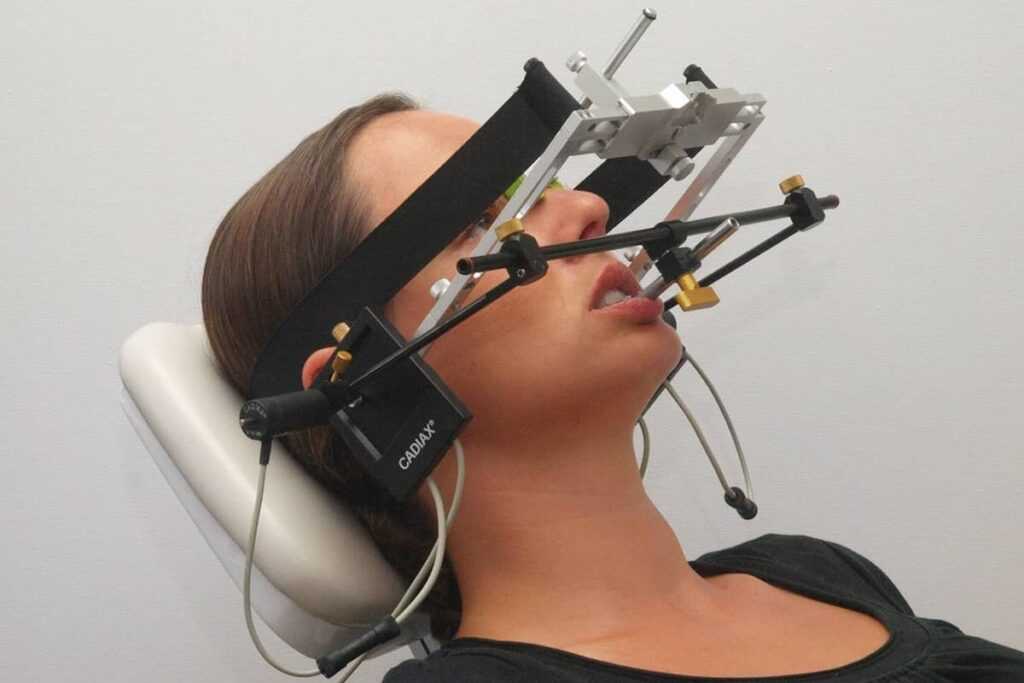

Axiography is an examination that helps determine how your lower jaw actually moves and how the temporomandibular joint (TMJ) functions. Not by eye and not from impressions, but dynamically — during real movements.
Why does this matter? Because many dental problems are connected not only to the teeth themselves, but to how the joint works. If this is overlooked, even perfectly aligned teeth after braces can come with pain or discomfort.
That is why axiography is often prescribed:
- before braces
- before prosthetics or implants
- for pain, clicking, or tension in the jaw
In some cases, it is simply impossible to create a truly accurate and safe treatment plan without this examination.
What Is Axiography and What Does It Show
What is axiography? Put it as simply as possible — it is a “recording of jaw movements.”
During the examination, specialized equipment captures:
- how you open and close your mouth
- whether the jaw moves straight or shifts to the side
- how both joints function
- whether there are restrictions or “disruptions” in movement
To the patient, this looks like a set of graphs. To the dentist, it is highly precise information about joint function.
Through axiography in orthodontics, it is possible to identify:
- TMJ dysfunction
- joint overload
- incorrect jaw movement trajectory
- hidden problems that have not yet produced significant symptoms
And this is the key point: sometimes a person feels only mild discomfort, but the joint is already functioning incorrectly.
When Axiography Is Prescribed
Axiography is typically prescribed in two main situations: either there are already complaints related to the jaw, or complex dental treatment is being planned that will affect the bite and joint function.
Most commonly, a dentist refers a patient for axiography when there is:
- clicking or crunching in the jaw
- pain in the joint area or near the ear
- a sensation of tension in the jaw
- difficulty opening the mouth
- bite irregularities
The second situation is preparation for treatment — for example:
- before braces
- before prosthetics
- before implantation
In these cases, the goal is not simply to “straighten the teeth,” but to do so in a way that does not harm the joint.
Symptoms That Warrant a Diagnostic Evaluation
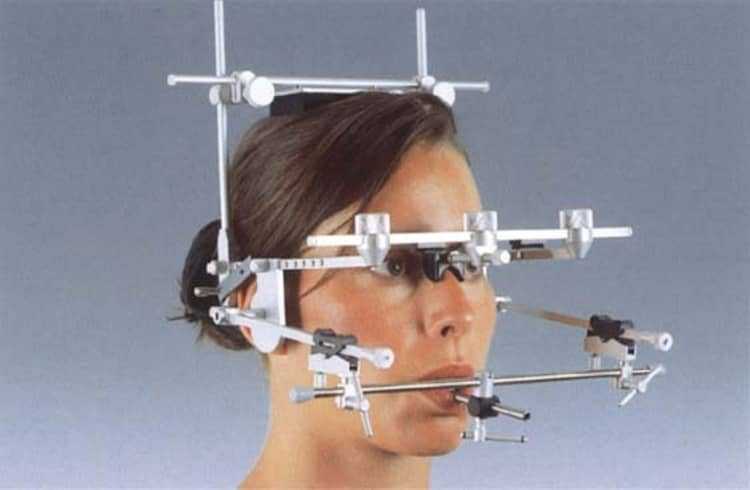
There are a number of sensations and signs that should not be ignored. They do not always indicate a serious problem, but they often signal that the temporomandibular joint is not functioning optimally and should be checked.
Clicking or crunching in the jaw Occurs when opening or closing the mouth. Sometimes barely noticeable, sometimes quite pronounced. May indicate a disruption in joint movement.
A sense of jaw misalignment A feeling that the jaw moves not straight ahead, but slightly to one side or unevenly.
Pain while chewing Discomfort may appear when eating hard foods or even under normal jaw load.
Limited mouth opening A sensation that the mouth does not open fully, or opens with resistance.
Jaw catching or locking Movements that feel jerky or interrupted, sometimes with a sensation of blockage.
Frequent headaches with no obvious cause Particularly if they recur and are not linked to other evident factors such as stress or lack of sleep.
Important: the presence of one or even several of these symptoms does not necessarily mean a serious diagnosis. However, it is a reason not to ignore the situation and to have the joint assessed. Problems identified at an early stage are generally far easier to correct than those that have progressed.
Axiography Before Braces, Prosthetics, and Implants
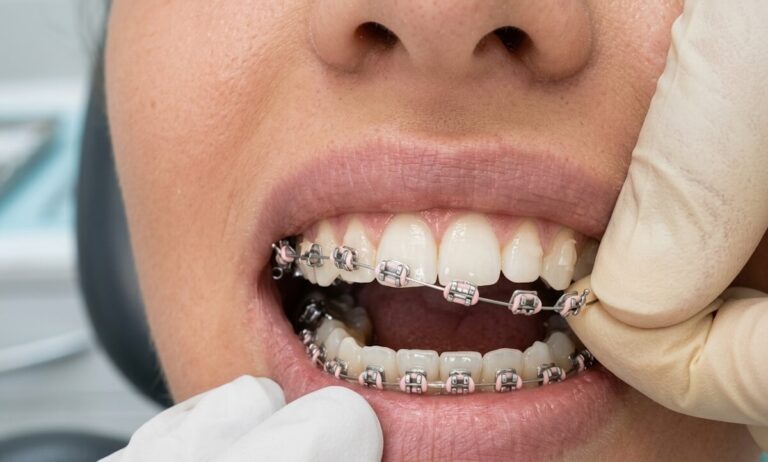
Axiography before braces is a step that is often underestimated.
When complex treatment is planned, the dentist alters the position of the teeth or the load placed on them. And the teeth are part of a system that is directly connected to the joint. Axiography before prosthetics and implantation helps clarify exactly how the jaw moves and how the joint functions. This matters because the dentist is not simply restoring teeth — they are establishing the correct bite and load distribution.
If these factors are not taken into account, even high-quality crowns or implants may over time cause discomfort, overload, or joint problems.
Jaw axiography helps to:
- determine the correct position of the lower jaw
- understand how load is distributed
- avoid joint overload following treatment
Without it, there is a risk that after a result that looks perfect from the outside, the following may develop:
- pain
- clicking
- jaw tension
In other words — the aesthetics may be there, but the comfort may not.
How Axiography Is Performed
Axiography is a straightforward and calm procedure. It is painless, requires no interventions, and is generally well tolerated — even though the equipment may look unusual at first glance.
Here is how it unfolds, step by step:
Preparation The dentist briefly explains what will happen and which movements will be required. In some cases, a preliminary examination is conducted: the bite and jaw mobility are assessed, and symptoms such as pain, clicking, or tension are clarified.
Equipment placement A specialized system — typically arches or sensors — is fitted to the head and lower jaw. It may look a little unusual, but it is entirely painless and non-traumatic. The structure is lightweight and easy to get used to.
Movement recording The TMJ diagnostic session then begins. You will be asked to perform simple actions: open and close your mouth, move the jaw forward, backward, and to the sides. During this process, the device records all movements and converts them into precise digital data.
Results analysis The dentist receives graphs and recordings of jaw movement. However, what matters most is not the graphs themselves, but their correct interpretation. The dentist evaluates whether there are deviations, asymmetry, or joint overload, and draws conclusions accordingly.
The entire procedure takes approximately 20 to 40 minutes on average. No recovery time is needed afterward — you can return to your normal activities immediately.
What the Patient Receives After Axiography
It is important to understand: the value lies not in the examination itself, but in what it provides.
After axiography, you receive:
- an objective understanding of how your jaw functions
- a clear explanation from your dentist
- a solid foundation for a precise treatment plan
This means that treatment will not be approximate — it will be as accurate as possible.
How the results influence the treatment plan
In practice, this means:
- the dentist may revise the initial plan
- the diagnosis is refined
- tooth or jaw positioning is adjusted
- the risk of complications is reduced
In other words, axiography is not just a way to treat — it is a way to treat correctly from the very first attempt.
Why Axiography Is Often Combined With Other Diagnostics
A single method does not provide the full picture.
TMJ axiography shows movement (function), but not structure.
That is why it is often supplemented with:
- CT scan or X-ray
- bite analysis
- clinical examination
Together, these provide a complete understanding of the situation — and a significantly more accurate treatment outcome.
What Affects the Price of Axiography
The price of axiography can vary — and that is perfectly normal. It is not only about the procedure itself, but about what you actually receive along with it.
Equipment plays a role first. There are simpler systems, and there are modern digital ones — the latter provide a more precise and detailed picture of jaw movement. These examinations are usually more expensive, but the benefit is greater, especially when complex treatment is planned.
The specialist also matters. It is not enough to simply “record measurements” — they need to be correctly interpreted. An experienced clinician can identify nuances that genuinely affect the course of treatment, and this expertise is reflected in the cost.
The scope of the service is another factor. In some clinics, the procedure covers only the movement recording; in others, it includes a full diagnostic session with explanation, analysis, and recommendations. These represent different levels of service, and the price differs accordingly.
Finally, what is included in the price matters. Sometimes the consultation and analysis are already included; sometimes they are billed separately. It is worth clarifying this in advance so you know exactly what you are paying for.
Ultimately, it is better not to focus solely on price. What matters more is how well the examination helps you understand the actual problem — and how effectively it helps avoid errors in treatment.
FAQ
What is axiography? It is an examination that shows how the lower jaw moves and how the joint functions. It is essential for accurate treatment planning.
Is axiography painful? No. The procedure is non-invasive, painless, and generally well tolerated.
When is axiography needed before braces? When there is a suspicion of joint problems or a complex bite. It helps avoid errors and complications.
Does axiography help with TMJ problems? Yes. It does not treat on its own, but it allows the underlying cause to be identified and the appropriate treatment to be selected.
Written by Andriy Kratik, Prosthodontist, Restorative Dentist, Oral Surgeon & Dental Implantologist

Make an appointment
You can make an appointment by filling out the application form on the website, as well as using instant messengers:
Make an appointment
You can make an appointment by filling out the application form on the website, as well as using instant messengers:


Make an appointment easily using chatbots:
Also, call the numbers:
Modern dentistry and medical centre "MED-DEO"
Choose a clinic whose location is more convenient for you.
Kyiv, Holosiivska/Demiivska metro station
130 Lobanovskoho Avenue


Working hours:
Mon - Sun: 8:00 AM - 9:00 PM
No days off!
Call the numbers:
How to get to us? Create a route
Create a route
Kyiv, Akademistechko metro station
78A, Irpinska str.


Working hours:
Mon-Sun: 8.00-21.00
Without days off!
Call the numbers:
How to get to us?
Create a route
Create a route
Kyiv, Heroiv Dnipra metro station
32A, Heroiv Dnipra str.


Working hours:
Mon-Sun: 8.00-21.00
Without days off!
Call the numbers:
How to get to us?
Create a route
Create a route
Kyiv, Teatralna metro station
9B, E. Chykalenko (Pushkinska) str.


Working hours:
Mon-Sat: 8.00 - 21.00. Sun: by appointment.
Without days off!
Call the numbers:
How to get to us?
Create a route
Create a route
Відгук від клієнта
0:00
0:00


Your email will not be published on the site.