Many people are familiar with that unpleasant sensation when, after eating a sour apple or lemon, the teeth seem to “clench up” and a tart, puckering feeling sets in. This is often how oskoma manifests in the teeth. But what exactly is oskoma, what else is it called, and why does it occur? Let’s dive right in.
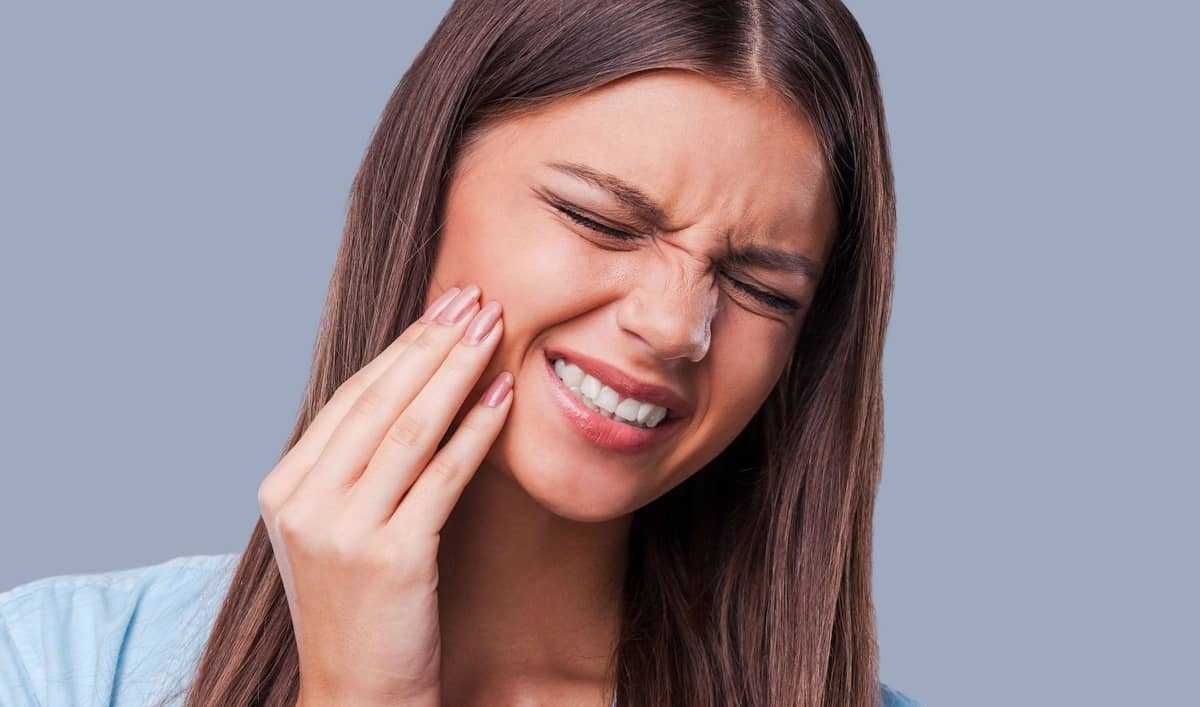
In simple terms, oskoma is an unpleasant sensation of tartness, heightened sensitivity, or even soreness in the teeth after exposure to certain irritants — most often sour foods or drinks. And oskomina is, in essence, the very same thing. Patients often use these two interchangeable terms to describe the same unpleasant sensations — some say “oskoma,” others “oskomina.”
The cause of oskoma most often lies in increased tooth sensitivity. In professional circles, dentists refer to this as dental hyperesthesia and emphasize that this condition is not a disease in itself, but merely a symptom.
Why Oskoma Occurs in the Teeth
From a dental standpoint, oskoma occurs when the tooth enamel thins, exposing more sensitive structures underneath. As a result, cold, acid, heat, and mechanical irritants reach the dentin (located beneath the enamel) and, in turn, the tooth’s nerve endings. This is precisely what causes the heightened sensitivity. Interestingly, though, oskoma isn’t always tied to food — it’s often triggered by tooth decay or gum problems as well. That said, these too are ultimately connected to the tooth losing its natural protection and becoming more sensitive.
Now let’s take a closer look at the various causes of oskoma.
Dental Causes
Several dental conditions can trigger oskomina in the teeth:
Tooth decay – destroys the hard tissues of the tooth.
Enamel microcracks – “let through” irritants to the inner structures.
Tooth wear (abrasion) – reduces enamel thickness.
Chips – create isolated areas of increased vulnerability in the tooth.
Enamel erosion – often caused by acid exposure, leading to mineral loss (demineralization).
Gum recession – exposes the tooth necks and uncovers sensitive areas of the root.
Plaque and tartar buildup – irritate the gums and trigger inflammation.
Wedge-shaped defects – expose the dentin located beneath the enamel.
What all these conditions have in common is that they make the tooth more vulnerable and increase its sensitivity, especially heightening the reaction to sour foods. This is often what leads to oskoma.
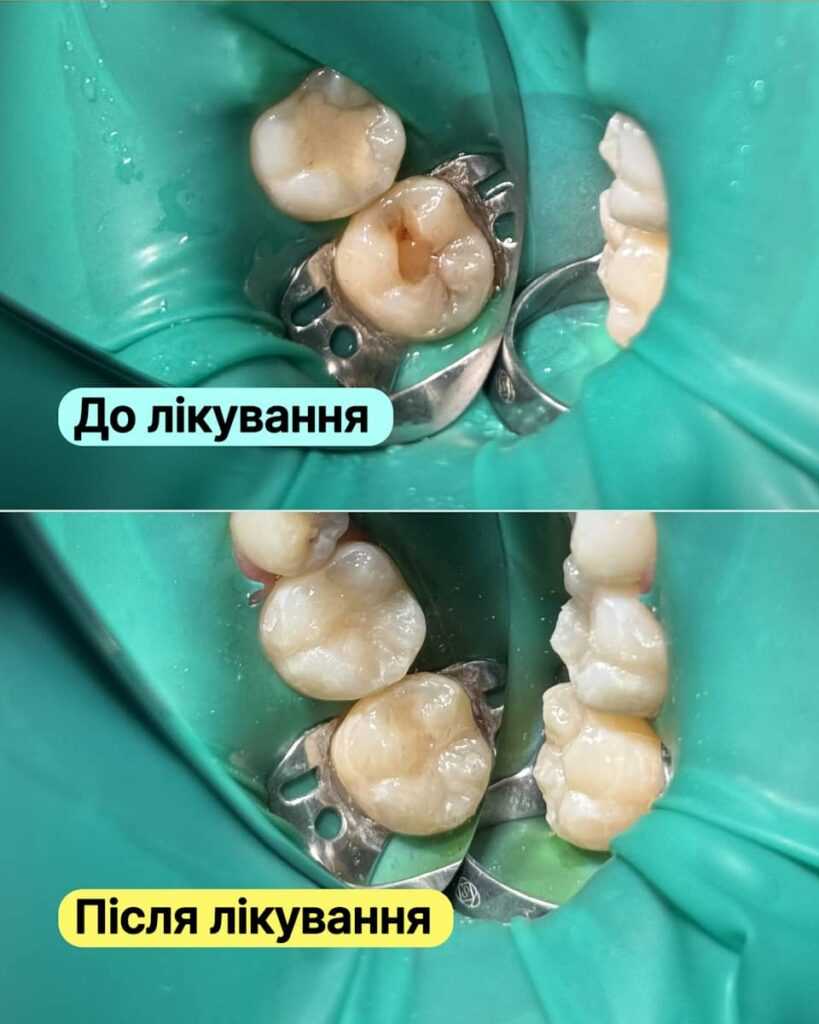
Patient’s Story 🦷 Treatment of Secondary Caries and Replacement of an Old Filling
📸 In the photo:
Before treatment — a damaged filling and secondary caries that developed underneath it.
After treatment — the tooth restored with a modern composite restoration that precisely reproduces its natural shape and chewing surface.
During treatment, the caries-affected tissues were removed and the old filling was replaced with a new composite restoration of tooth 4.6.
Timely replacement of damaged fillings helps stop the development of secondary caries, preserve healthy tooth tissues, and avoid more complex treatment in the future.
The cause of oskoma isn’t always linked to dental or gum disease. Sometimes this symptom arises from:
Citrus fruits.
Sour berries.
Carbonated drinks.
Sour juices.
Aggressive at-home whitening.
Using a toothbrush that’s too hard.
Toothpaste with excessive abrasiveness.
All of these factors can also damage the enamel and temporarily increase tooth sensitivity. In addition, conditions such as bruxism (involuntary teeth grinding), dry mouth, and acid reflux can have a negative impact. In these cases, the enamel is placed under additional strain, wears down or erodes faster, and becomes even more vulnerable to acid exposure.
How Oskomina Manifests — and When It’s No Longer a “Normal” Reaction
Most commonly, oskomina in the teeth shows up through typical symptoms such as:
A tart feeling in the mouth.
Reaction to sour foods.
Reaction to cold and hot temperatures.
Discomfort specifically while chewing.
Brief, short-lived pain.
Occasional burning or aching pain.
That said, it’s important to understand the difference between a one-off reaction after eating something sour and a symptom that recurs on a regular basis. Let’s look at this in more detail below.
A Brief Reaction After Sour Foods
It’s worth noting separately that discomfort after eating something sour can pass quickly and not recur at all. This usually happens when sensitivity follows fruit — for example, lemon, cherries, sour apples, or grapefruit. In other words, this is simply a temporary effect on the enamel surface, and in most cases there’s nothing serious going on in terms of tooth or gum disease.
Warning Signs
If a symptom like sensitivity to sour foods doesn’t go away over an extended period, that’s a warning sign. In other words, if oskoma keeps recurring regularly, gets worse over time, appears in response to more than just sour foods, comes with pain, or is triggered by brushing or cold air — that’s when you should definitely see a dentist. At that point, the issue may no longer be simple sensitivity, but rather tooth decay, enamel erosion, or another dental problem.
What to Do Right After Oskomina Appears
If oskomina appears in your mouth after eating something sour, here’s a simple course of action we recommend:
Rinse your mouth with plain water.
Don’t brush your teeth right after eating something sour. This is important to avoid further damaging the enamel.
Limit very acidic foods and drinks for a while.
Use a soft toothbrush.
Choose a low-abrasive toothpaste. Consult your dentist about this.
Continue practicing gentle oral hygiene going forward, since your enamel now has sensitive areas.
These steps will help both reduce discomfort and protect your tooth enamel from further irritation in the future.
Home Remedies: What Can Help and What Can Hurt
Searches like “oskomina in teeth: home remedies” are quite popular among patients today, since people naturally want relief from this unpleasant sensation right away. But not all home remedies are safe or effective.
For example, rinsing your mouth with water after something sour does reduce discomfort, but only temporarily. As for rinsing with salt or baking soda solutions, herbal decoctions, or mouthwash — this isn’t recommended unless specifically prescribed by a dentist. That’s because such remedies won’t address the underlying cause of oskoma, and they may even do harm — for instance, by worsening the condition of the enamel and significantly increasing existing sensitivity.
WARNING: If oskoma doesn’t go away within a few days, keeps recurring frequently, and is accompanied by toothache — don’t delay and don’t try to treat it yourself. See a dentist as soon as possible!
How a Dentist Treats Oskoma
What exactly is oskomina? It’s the teeth’s direct reaction to one irritant or another. That’s precisely why treatment targets not the symptom itself, but its root cause. In other words, the best way to get rid of oskoma is to identify what’s causing it and eliminate the trigger.
How Diagnosis Works
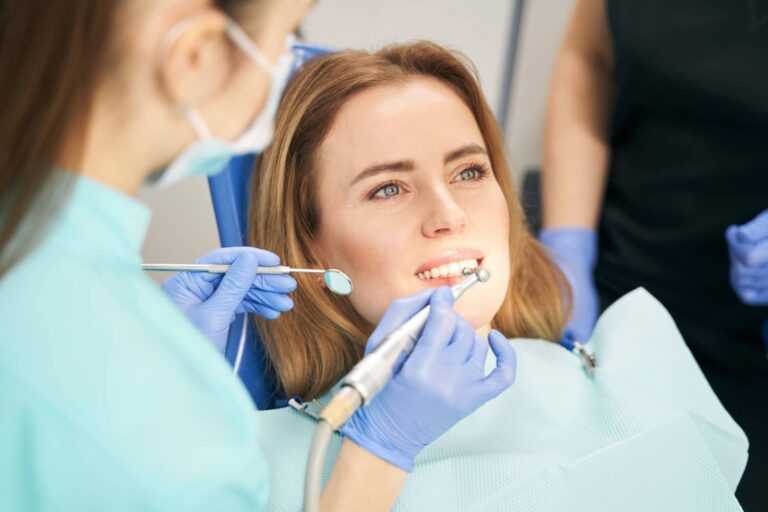
During a consultation, the dentist performs diagnostic steps such as:
Examining the oral cavity.
Assessing the condition of the enamel and gums.
Checking for tooth decay.
Checking for enamel erosion.
Looking for cracks, chips, or wedge-shaped defects.
Assessing plaque and tartar buildup.
Reviewing the patient’s home care routine and dietary habits based on their own account.
It’s precisely this comprehensive approach that makes it possible to pinpoint the true cause of the problem — and, in turn, effectively resolve the oskomina.
Treatment Options That May Be Used
Depending on the diagnostic findings, a dentist may apply various treatment methods, including:
Treating tooth decay – to address affected areas and reduce sensitivity.
Professional cleaning – to remove plaque and tartar that irritate both the teeth and gums.
Enamel remineralization – to strengthen weakened enamel and reduce sensitivity.
Fluoride treatment – for additional enamel protection and reinforcement.
Sealing sensitive areas – to cover exposed, vulnerable spots on the tooth, such as dentin.
Treating gum disease – to address inflammation and sensitivity near the gum line, where the so-called tooth neck is located.
In some cases, as additional support for getting rid of oskoma, a dentist may recommend special desensitizing toothpaste. Simply put, these are toothpastes designed for increased tooth sensitivity. Combined with the main treatment, they help make the teeth’s reaction to sour, cold, or hot stimuli less pronounced.
To reduce the risk of oskoma recurring — and of sensitive tooth reactions to irritants in general — dentists recommend the following:
Use a soft toothbrush.
Choose toothpaste that isn’t highly abrasive.
Keep your intake of acidic foods in check.
Rinse your mouth with plain water after eating and drinking.
Don’t brush your teeth right after eating something sour.
Get regular preventive checkups with your dentist.
Visit the dentist for professional cleanings to remove plaque and tartar.
Maintain gentle oral hygiene daily, on an ongoing basis.
If tooth sensitivity to sour foods occurs too often or noticeably intensifies, you shouldn’t count on it simply going away on its own. It’s far better for your dental health to see a dentist promptly and address the root cause of the oskoma. That way, you can not only get rid of the discomfort but also prevent further dental problems from developing.
Questions and Answers (FAQ)
Are oskoma and oskomina the same thing?
Yes, essentially they’re the same thing. In everyday life, people use these two terms to describe the unpleasant sensations in the mouth after eating something sour. They’re typically used as synonyms.
Why does oskoma appear after apples, cherries, or citrus fruits?
Oskoma appears after apples, cherries, or citrus fruits because fruit acids temporarily affect the enamel and irritate sensitive areas of the teeth.
Can oskoma go away on its own?
Oskoma can go away on its own if it’s a brief, one-off reaction after something sour. However, if it recurs regularly or intensifies, you should see a dentist as soon as possible.
Is it okay to brush your teeth right after eating something sour?
No, you shouldn’t brush your teeth right after eating something sour, as this can cause further enamel damage. It’s better to wait about 30 minutes — rinsing your mouth with water first, and only then brushing.
Do home remedies help with oskomina?
Home remedies only provide temporary relief for oskomina and don’t address the underlying cause of the sensitivity.
When does oskomina in the mouth require a dental checkup?
Oskomina in the mouth requires a dental checkup when it occurs frequently, becomes more intense, is accompanied by pain, or triggers a reaction not just to sour foods but also to cold, hot, sweet stimuli, or any contact with the teeth.
The author of this article is Lyudmila Overchuk, a general dentist and periodontist.
 (044) 394 90 94
  Holosiivska/Demiivska metro station


















Your email will not be published on the site.