Special offer! Comprehensive professional teeth cleaning for only 1699 UAH.
Special offer! Comprehensive professional teeth cleaning for only 1699 UAH.
Special offer! Comprehensive professional teeth cleaning for only 1699 UAH.
Special offer! Comprehensive professional teeth cleaning for only 1699 UAH.
Special offer! Comprehensive professional teeth cleaning for only 1699 UAH.
Special offer! Comprehensive professional teeth cleaning for only 1699 UAH.
Special offer! Comprehensive professional teeth cleaning for only 1699 UAH.
Special offer! Comprehensive professional teeth cleaning for only 1699 UAH.
Special offer! Comprehensive professional teeth cleaning for only 1699 UAH.
Special offer! Comprehensive professional teeth cleaning for only 1699 UAH.
Sign up
 (044) 394 90 94
(044) 394 90 94  Holosiivska/Demiivska metro station
Sign up
(044) 394 90 94
(044) 394 90 94
Doctors


 Prices
Blog
Contacts
Prices
Blog
Contacts
пр.Лобановського, 130, Київ, Україна
Temporarily closed
Opening soon
78A, Irpinska St., Kyiv, Ukraine
Temporarily closed
Opening soon
32A, Heroiv Dnipra St., Kyiv, Ukraine
Temporarily closed
Opening soon
9B, Yevhena Chykalenko St. (Pushkinska), Kyiv, Ukraine
Temporarily closed
Opening soon
(044) 394 90 94
Back
Dentistry
General Dentistry
Dental surgery
Dental Implants
Maxillofacial Surgery
Dental prosthetics
Cosmetic dentistry
Professional Dental Hygiene

Periodontics
Orthodontic dentistry
Gnathology & TMJ Therapy
Pediatric Dentistry
Dental X-Rays
Back
Orthodontic Center
Orthodontic dentistry
Gnathology & TMJ Therapy
Back
Prosthodontic Center
Dental prosthetics
Back
MED-DEO Center for Maxillofacial Surgery & Facial Plastics
Maxillofacial Surgery
Plastic surgery
Back
Surgical Dental Center
Dental surgery
Dental Implants
Search on the site


Popular requests
Teeth whitening
Treatment of caries
Wisdom tooth extraction
Bracket system
Dental veneers
Tooth restoration
Pediatric dentist
Consultation with a dentist-therapist
Search results by: «».
Unfortunately, no results were found for your search: “Pediatric Endocrinologist”, nothing was found.
You may find these links useful:
Clinics "MED-DEO"
пр.Лобановського, 130, Київ, Україна
Temporarily closed
Opening soon
78A, Irpinska St., Kyiv, Ukraine
Temporarily closed
Opening soon
32A, Heroiv Dnipra St., Kyiv, Ukraine
Temporarily closed
Opening soon
9B, Yevhena Chykalenko St. (Pushkinska), Kyiv, Ukraine
Temporarily closed
Opening soon
Services
Dentistry Orthodontic Center Prosthodontic Center MED-DEO Center for Maxillofacial Surgery & Facial Plastics Surgical Dental CenterGeneral Dentistry
Dental surgery
Dental Implants
Maxillofacial Surgery
Dental prosthetics
Cosmetic dentistry
Professional Dental Hygiene
Periodontics
Orthodontic dentistry
Gnathology & TMJ Therapy
Pediatric Dentistry
Dental X-Rays
Orthodontic dentistry
Gnathology & TMJ Therapy
Dental prosthetics
Maxillofacial Surgery
Dental surgery
Dental Implants
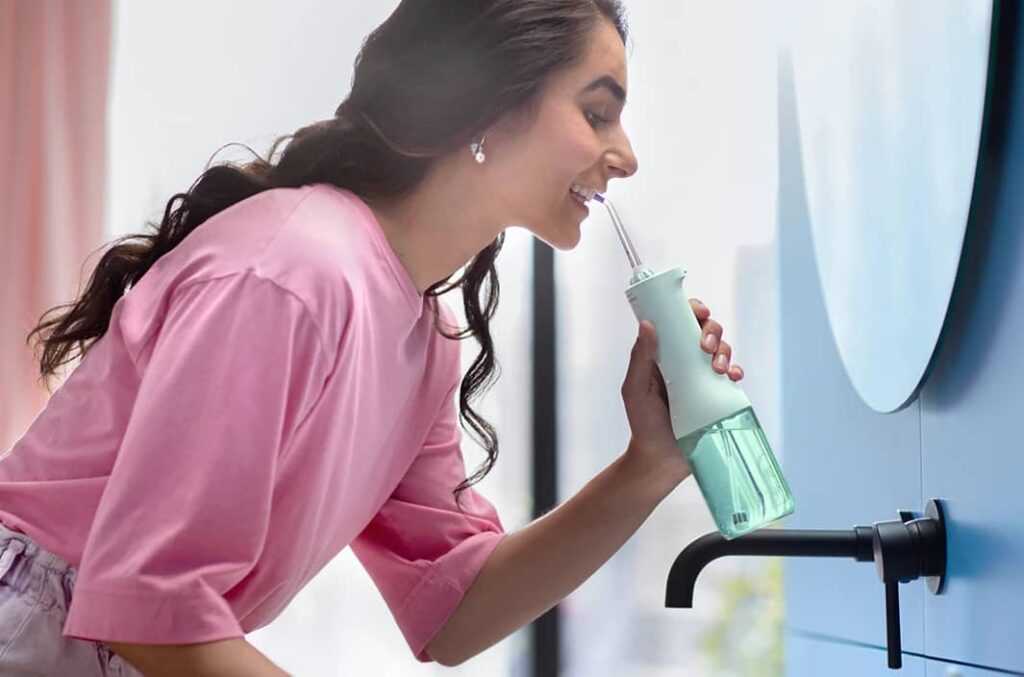

What is a water flosser? It is an electric device that delivers a pulsating stream of water to clean the spaces between teeth and the gums. Water flossers are being talked about more and more often, and there are plenty of reasons for that.
- A regular toothbrush doesn’t clean everything.
- Dental floss also cleans imperfectly.
- Cavities frequently develop between teeth.
- The number of people with braces and implants has grown.
- People are paying more attention to prevention.
- In practice, a water flosser is convenient and non-traumatic.
- It works very gently in cases of gum inflammation or bleeding.
- It is ideal for daily use by the whole family.
A water flosser is more effective than dental floss and helps clean all hard-to-reach areas in the oral cavity. This significantly reduces the number of bacteria that cause cavities. The result: nothing but fresh, pleasant breath. Below we will cover everything in detail — what a water flosser is, what exactly it is used for, how to use a water flosser, and more.
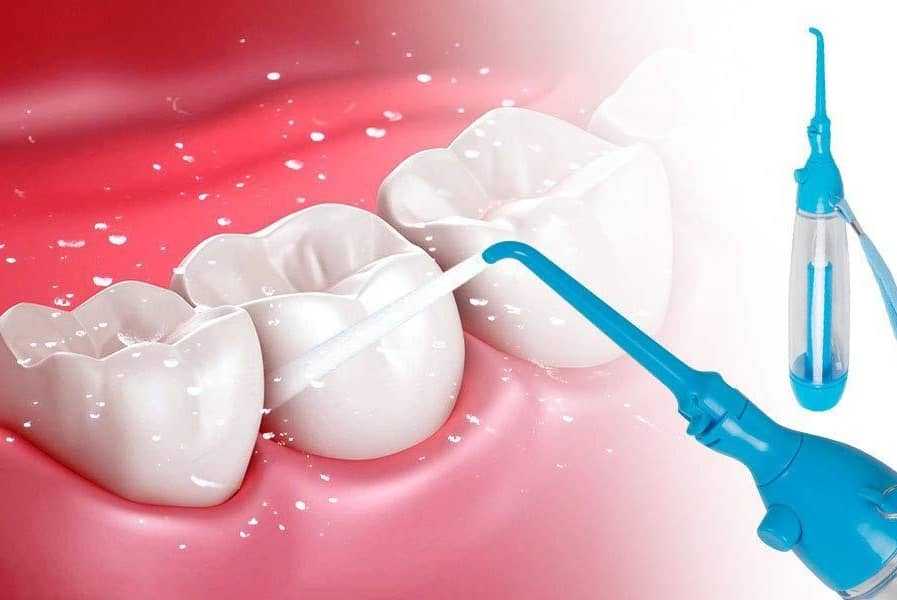
What Is a Water Flosser and How Does It Work
A water flosser is a modern dental cleaning device that reaches even those areas a toothbrush cannot, using a stream of water. Its name comes from the Latin word “irrigare,” meaning “to irrigate.”
The design of a water flosser includes the following components:
- Handle — the part you hold in your hand. It usually has a power button and mode-switching controls.
- Water reservoir — a container filled with either water or a special solution. The fuller it is, the longer you can use it without refilling.
- Flosser tip, also called a jet tip — a thin nozzle through which the water stream is delivered. Tips come in different types, for example, for braces, implants, or sensitive gums.
- Motor-compressor — a water pressure regulator that serves as the “heart” of the device. It controls the stream, making it pulsating when needed.
IMPORTANT NOTE ON FILLING THE WATER FLOSSER: The water should be at a comfortable temperature and purified — either bottled or filtered. Boiled water is acceptable but not recommended, as it may cause scale buildup in the reservoir. As for solutions, dentists may prescribe a special water flosser solution or a diluted antiseptic such as chlorhexidine or miramistin.
The operating principle is simple: the water flosser creates a pressurized stream of water that washes away dental plaque and food debris.
A water flosser truly differs from a toothbrush in terms of oral hygiene. The key difference is that a toothbrush only cleans the surface of the teeth, while a water flosser reaches all the spaces between teeth and along the gumline. This provides far better prevention of many dental problems.
What Is a Water Flosser For: Who Really Needs One
To put it briefly, a water flosser is for deep cleaning. But it is especially suitable for the following groups of people:
- Wearers of braces and aligners.
- Owners of implants and crowns.
- People with gingivitis and bleeding gums.
- Those prone to tartar buildup.
- Patients with deep gum pockets.
- Anyone who wants a comprehensive oral hygiene routine.
Why is a water flosser most strongly recommended for these people? The explanation is straightforward. They all share a common challenge: areas that are difficult or impossible to clean properly with a toothbrush. A water flosser quickly and effectively flushes everything out of those areas with a stream of water. It also works gently when there are sensitive gums or deep gum pockets (periodontitis).
Overall, a water flosser plays a very important role in the oral hygiene of absolutely everyone. It is beneficial to all as a tool for cavity prevention. In other words, even people without orthodontic appliances or dental issues — perfectly healthy individuals — need it. Prevention, as we know, is better than treatment!
Today, many patients are not only asking what a water flosser is, but also whether it is essential for daily hygiene. No, it is not mandatory, but it is recommended by dentists as a powerful addition to your routine. By removing what the toothbrush leaves behind, a water flosser flushes everything out of crevices and gaps. The result: bacteria have nowhere to multiply and damage your teeth.
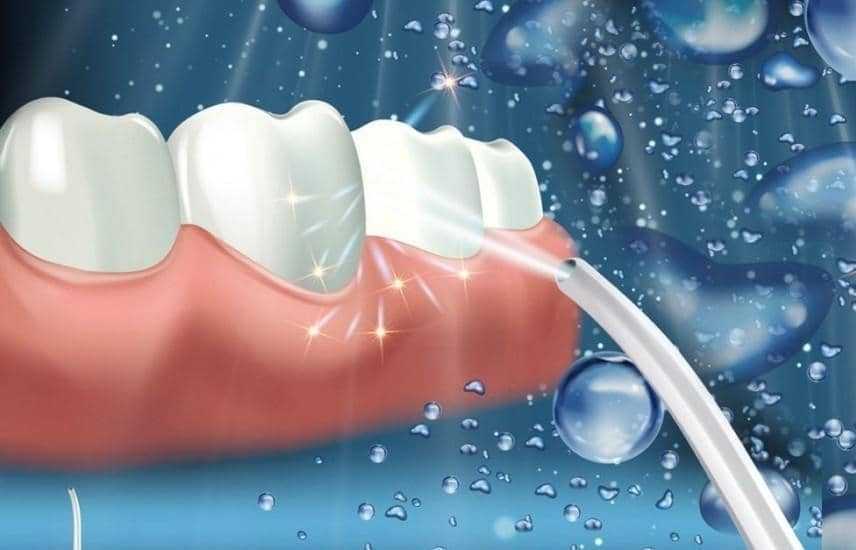
Why Regular Teeth Brushing Is Not Enough
We have covered what a water flosser is and how it complements regular toothbrushing. But why is regular brushing still not enough? Let’s take a closer look.
Scientific evidence confirms that even with thorough, correct brushing, a toothbrush cleans only approximately 60% of the tooth surface. It cannot reach the spaces between teeth or beneath the gumline where pockets are located. Yet those are precisely the areas where bacteria and food particles most often accumulate — the triggers for future cavities and gum inflammation. Teeth may appear completely clean, but bacteria remain in these hard-to-reach spots regardless. From there, they quickly lead to cavities, bleeding gums (gingivitis), bad breath, and more. This is exactly where a water flosser becomes an indispensable addition, giving you confidence in 100% oral cleanliness.
Benefits of a Water Flosser: What It Actually Delivers
A water flosser offers real, practice-backed benefits. These include:
- 20–30% more effective than dental floss, according to clinical scientific studies.
- Gum massage and improved blood circulation.
- Reduced bleeding and inflammation.
- Cleaning of gum pockets.
- Effective prevention of periodontitis.
- Elimination of bad breath.
- Thorough cleaning around dental appliances such as braces, crowns, and implants.
If we break these benefits down logically, the action of a water flosser is sequential: it flushes food debris and plaque from hard-to-reach areas → gum inflammation decreases and bacterial load is reduced → less plaque on teeth and reduced bleeding → lower risk of cavities and prevention of periodontitis → fewer issues with bad breath and complications around braces, crowns, or implants.
IMPORTANT: All of these benefits are not a “marketing campaign.” They are the results of real research and years of observation by dental professionals. Dental floss, which is also designed for the spaces between teeth, only mechanically scrapes away plaque. A water flosser washes it out with a stream of water rather than just superficially “scraping” it like floss does. In other words, they do not replace each other — they complement each other. The main takeaway about a water flosser and what it is for: ensuring long-term gum and tooth health.
Water Flosser with Braces, Implants, and Dentures
Oral hygiene always receives special attention when a person has braces, implants, dentures, or similar appliances. For wearers of orthodontic appliances, a water flosser moves from the “recommended” category to the “essential” category. This is because food debris gets trapped in these structures more easily and bacteria accumulate faster. A regular toothbrush is simply not capable of thorough cleaning in these cases.
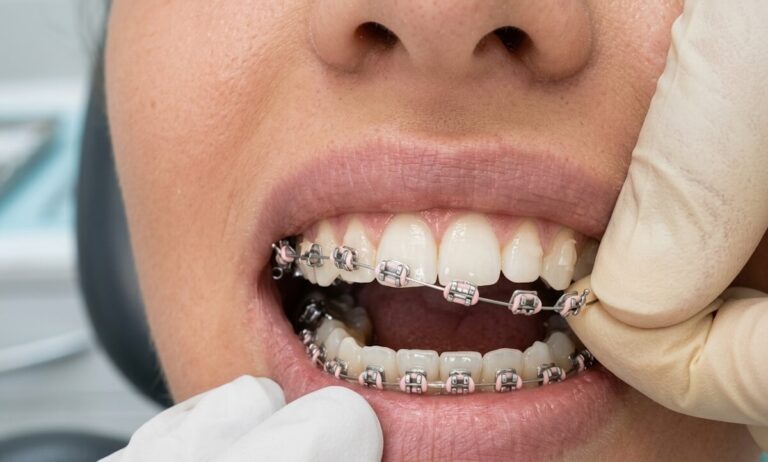
Water Flosser with Braces and Aligners
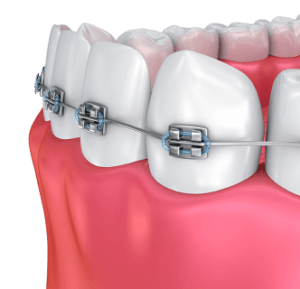
Knowing how to use a water flosser properly when wearing braces or aligners is important. Braces create so-called “traps” for food and plaque buildup. Their wires and brackets interfere with thorough, complete cleaning. The risk of cavities and gum inflammation increases even further as a result.
Key points when using a water flosser with braces or aligners:
- Recommended pressure level for braces: from 600 kPa. A slightly stronger flow is needed here to thoroughly flush everything out from under the appliance.
- Recommended tip: an orthodontic tip is advised (cone-shaped with a thin end). It allows precise access to all difficult areas.
- Cleaning technique around wires and brackets: guide the water stream along each wire and around each bracket, pausing at these zones.
- Caution: too strong a stream may damage the attachment of a bracket or aligner, so always start testing at the minimum pressure level.
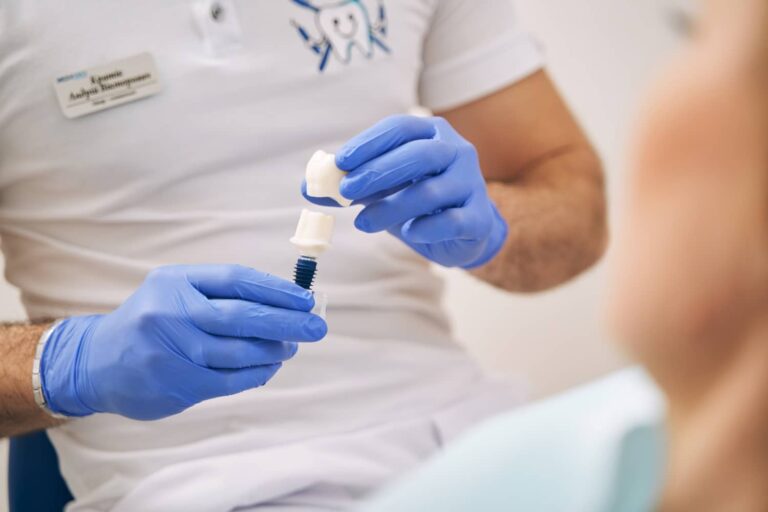
Water Flosser with Implants, Crowns, and Bridges
When using a water flosser with implants, crowns, and bridges, there are also specific considerations:
- Risk zone: the area between the crown and the gums, where bacteria accumulate, is more prone to inflammation.
- Tip for implants: a tip with a small brush at the end is recommended for gentle, non-traumatic cleaning.
- Recommended pressure: soft mode, approximately 200–400 kPa.
When orthodontic appliances are present, complications can sometimes arise — for example, inflammation around an implant (peri-implantitis). A water flosser helps clean these areas significantly better. Regular use therefore reduces the risk of such inflammation and its progression.
How to Use a Water Flosser Correctly
Using a water flosser does not require complex steps. However, knowing the correct sequence is what ensures effectiveness and safe use. Below is a detailed step-by-step guide.
Step-by-Step Instructions
- Step 1: Fill the reservoir with water or a solution.
- Step 2: Attach the tip (standard, orthodontic, or brush tip).
- Step 3: Start at the minimum pressure setting and gradually increase to a comfortable level.
- Step 4: Lean over the sink with your mouth slightly open.
- Step 5: Direct the tip at a 90° angle to your teeth.
- Step 6: Move from tooth to tooth in sequence, paying special attention to the spaces between teeth and the gumline.
- Step 7: Keep the session to no more than 15 minutes.
- Step 8: Rinse the tip after use.
When and How Often to Use a Water Flosser
The ideal frequency of use is daily — in the morning and/or evening, after brushing your teeth with a toothbrush. It is important to understand: a water flosser does not replace a toothbrush, it only complements it. Use it after brushing, not instead of it. If you have braces, use a water flosser at minimum after every meal. A simple rule to remember: always use it AFTER the toothbrush to clean what remains in hard-to-reach areas.
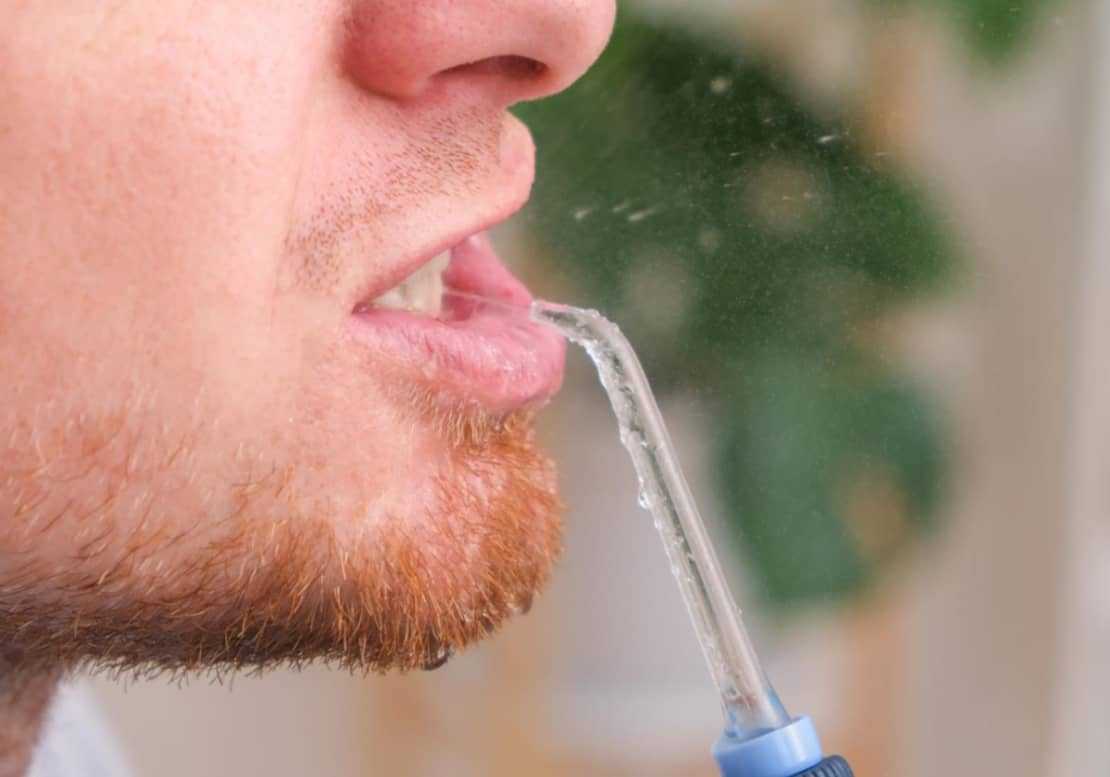
How to Choose a Water Flosser: Types and Key Features
The choice of a water flosser depends on a person’s needs, lifestyle, and budget. If it is needed for the whole family, a countertop model with a large reservoir is the better choice. For personal use or frequent travel, a portable model is preferable. Below is a detailed overview of these types and their key features.
Countertop Water Flosser
This is the classic home water flosser. It has a separate container, a hose, and a tip, and it runs on mains power. The main advantage of the countertop type is its large reservoir, with a capacity of approximately 300–650 ml. It offers a wider pressure range and allows for extended sessions without frequent refilling. It is suitable for both gentle cleaning and care around braces or implants. This type is ideal for the whole family and for regular home dental care. The only potential drawback is that it takes up considerable space on the bathroom shelf — due to the large reservoir and the various tips that typically come with it. It is also not suitable for travel, which is why it is recommended as a home-use device.
Portable Water Flosser
A portable water flosser is a compact device where everything — reservoir and mechanism — is housed in a single body. It runs on a rechargeable battery. The main advantage of the portable type is its mobility. It fits easily into a bag or suitcase, making it convenient to take on trips or even to the office. It also works perfectly well for regular personal use at home, especially if you prefer a device that takes up minimal space in the bathroom. The only potential downside is its smaller reservoir, typically 100–250 ml, which is still sufficient for regular oral hygiene — you will simply need to refill it more often. In addition, portable models generally have lower pressure, which may make them less effective for use with braces or implants.
Key Features to Consider When Choosing
To choose the right water flosser, it is important to look not only at the type but also at specific technical parameters. These determine how effectively and comfortably the device will work for you.
Key features to look for when choosing:
- Pressure level (kPa): 200–500 kPa for general use; from 600 kPa for braces. Always start at the minimum.
- Stream type (mode): single-jet (budget option), pulsating (optimal), micro-bubble (premium segment).
- Pulse frequency: the optimal range for adults and children is approximately 1,200–1,500 pulses per minute.
- Reservoir capacity: 150 ml ≈ 1–2 minutes of use; 650 ml ≈ up to 10–15 minutes.
- Included tips: check for orthodontic, periodontal, and implant tips as needed.
- Certification: look for ADA (American Dental Association) approval as a mark of quality, confirming the device is safe and effective in practice.
In terms of price, countertop models tend to cost more due to their greater power and larger reservoir. Portable models are correspondingly more budget-friendly.
Water Flosser for Children: Age and Considerations
Is a water flosser suitable for children, and from what age? Yes, a water flosser is approved for children from the age of 6–8 years, when permanent teeth begin to emerge. However, it is essential that use is supervised by an adult at all times. Adults can both explain how to use the device and assist throughout the process. It is also important to pay attention to the water pressure for younger users. It should be set to the minimum mode: 100–200 kPa. This ensures a gentle stream that will not damage the gums during cleaning. If the model features a pulsating stream, children should start using it exclusively in the gentlest mode.
A water flosser is especially beneficial for children wearing braces — which typically happens during childhood, when correcting the bite is easiest. At this stage, the jaw is still growing and orthodontic treatment is more effective. If a child with braces fails to thoroughly clean both their teeth and the appliance from food debris and plaque, the risk of rapid cavity development and gum inflammation increases significantly.
A water flosser also helps establish the habit of independently caring for one’s teeth and build proper oral hygiene routines. Before the very first use, however, a consultation with a pediatric dentist is recommended. The dentist can help select the correct mode, assess the condition of the teeth and gums, and teach the child how to hold the tip and direct the water stream correctly.
Potential Risks and When a Water Flosser Can Be Harmful
In general, a water flosser is a beneficial device for cleaning teeth and gums. However, when used incorrectly, it can occasionally cause harm. A common mistake people make is applying too much pressure. A powerful stream of water is not suitable for everyone and can actually damage the gums. In addition, if the tip is held at the wrong angle, the stream will not reach the tooth surfaces and gumline properly — meaning it will not fulfill its primary function of removing food debris and plaque.
Signs that a water flosser is being used incorrectly include increased bleeding and pain during cleaning. Contraindications include acute inflammatory processes in the mouth and the early post-operative period following tooth extraction or implant placement. Treatment and recovery come first — the water flosser can be reintroduced only with the dentist’s approval.
It is important to remember that a water flosser does not replace a toothbrush, dental floss, or regular dental check-ups. It effectively complements your core oral care routine, and for any dental concerns, professional advice from a dentist remains essential.
Frequently Asked Questions (FAQ)
What is a water flosser and what is it used for?
A water flosser is a device for deeper cleaning of teeth, the spaces between them, and the gums. It is used to finish the cleaning process after a toothbrush by reaching many hard-to-access areas.
Should you use a water flosser before or after brushing your teeth?
You should use a water flosser after brushing your teeth. It removes everything that the toothbrush leaves behind.
What is the difference between a portable and a countertop water flosser, and which should you choose?
A portable water flosser differs from a countertop model in that it has a smaller reservoir and a more compact design, but delivers a less powerful water stream.
Can you use a water flosser with braces and implants?
Yes, using a water flosser with braces and implants is not only possible but highly recommended. It cleans both the teeth and the appliances very effectively, preventing cavities and gum inflammation from developing.
From what age can you buy a water flosser for a child?
A water flosser can be used by children from the age of 6–8 years — the recommended period when the first permanent teeth appear. Always use under adult supervision.
What can you put in a water flosser besides water?
You can use an antiseptic solution in a water flosser, but only on your dentist’s recommendation and not on a permanent basis. Mouthwash is not recommended for this purpose.
The author of this article is Vyacheslav Zubriy, an orthodontist, general dentist, and oral surgeon.
Make an appointment
You can make an appointment by filling out the application form on the website, as well as using instant messengers:
Make an appointment
You can make an appointment by filling out the application form on the website, as well as using instant messengers:


Make an appointment easily using chatbots:
Also, call the numbers:
Modern dentistry and medical centre "MED-DEO"
Choose a clinic whose location is more convenient for you.
Kyiv, Holosiivska/Demiivska metro station
130 Lobanovskoho Avenue


Working hours:
Mon - Sun: 8:00 AM - 9:00 PM
No days off!
Call the numbers:
How to get to us? Create a route
Create a route
Kyiv, Akademistechko metro station
78A, Irpinska str.


Working hours:
Mon-Sun: 8.00-21.00
Without days off!
Call the numbers:
How to get to us?
Create a route
Create a route
Kyiv, Heroiv Dnipra metro station
32A, Heroiv Dnipra str.
Working hours:
Mon-Sun: 8.00-21.00
Without days off!
Call the numbers:
How to get to us?
Create a route
Create a route
Kyiv, Teatralna metro station
9B, E. Chykalenko (Pushkinska) str.



Working hours:
Mon-Sat: 8.00 - 21.00. Sun: by appointment.
Without days off!
Call the numbers:
How to get to us?
Create a route
Create a route
Відгук від клієнта
0:00
0:00


Your email will not be published on the site.