Special offer! Comprehensive professional teeth cleaning for only 1699 UAH.
Special offer! Comprehensive professional teeth cleaning for only 1699 UAH.
Special offer! Comprehensive professional teeth cleaning for only 1699 UAH.
Special offer! Comprehensive professional teeth cleaning for only 1699 UAH.
Special offer! Comprehensive professional teeth cleaning for only 1699 UAH.
Special offer! Comprehensive professional teeth cleaning for only 1699 UAH.
Special offer! Comprehensive professional teeth cleaning for only 1699 UAH.
Special offer! Comprehensive professional teeth cleaning for only 1699 UAH.
Special offer! Comprehensive professional teeth cleaning for only 1699 UAH.
Special offer! Comprehensive professional teeth cleaning for only 1699 UAH.
Sign up
 (044) 394 90 94
(044) 394 90 94  Holosiivska/Demiivska metro station
Doctors


 Prices
Blog
Contacts
Prices
Blog
Contacts
пр.Лобановського, 130, Київ, Україна
Temporarily closed
Opening soon
78A, Irpinska St., Kyiv, Ukraine
Temporarily closed
Opening soon
32A, Heroiv Dnipra St., Kyiv, Ukraine
Temporarily closed
Opening soon
9B, Yevhena Chykalenko St. (Pushkinska), Kyiv, Ukraine
Temporarily closed
Opening soon
Sign up
En
(044) 394 90 94
Back
Dentistry
General Dentistry
Dental surgery
Dental Implants
Maxillofacial Surgery
Dental prosthetics
Cosmetic dentistry
Professional Dental Hygiene

Periodontics
Orthodontic dentistry
Gnathology & TMJ Therapy
Pediatric Dentistry
Dental X-Rays
Back
Orthodontic Center
Orthodontic dentistry
Gnathology & TMJ Therapy
Back
Prosthodontic Center
Dental prosthetics
Back
MED-DEO Center for Maxillofacial Surgery & Facial Plastics
Maxillofacial Surgery
Plastic surgery
Back
Surgical Dental Center
Dental surgery
Dental Implants
Search on the site


Popular requests
Teeth whitening
Treatment of caries
Wisdom tooth extraction
Bracket system
Dental veneers
Tooth restoration
Pediatric dentist
Consultation with a dentist-therapist
Search results by: «».
Unfortunately, no results were found for your search: “Pediatric Endocrinologist”, nothing was found.
You may find these links useful:
Clinics "MED-DEO"
пр.Лобановського, 130, Київ, Україна
Temporarily closed
Opening soon
78A, Irpinska St., Kyiv, Ukraine
Temporarily closed
Opening soon
32A, Heroiv Dnipra St., Kyiv, Ukraine
Temporarily closed
Opening soon
9B, Yevhena Chykalenko St. (Pushkinska), Kyiv, Ukraine
Temporarily closed
Opening soon
Services
Dentistry Orthodontic Center Prosthodontic Center MED-DEO Center for Maxillofacial Surgery & Facial Plastics Surgical Dental CenterGeneral Dentistry
Dental surgery
Dental Implants
Maxillofacial Surgery
Dental prosthetics
Cosmetic dentistry
Professional Dental Hygiene
Periodontics
Orthodontic dentistry
Gnathology & TMJ Therapy
Pediatric Dentistry
Dental X-Rays
Orthodontic dentistry
Gnathology & TMJ Therapy
Dental prosthetics
Maxillofacial Surgery
Dental surgery
Dental Implants
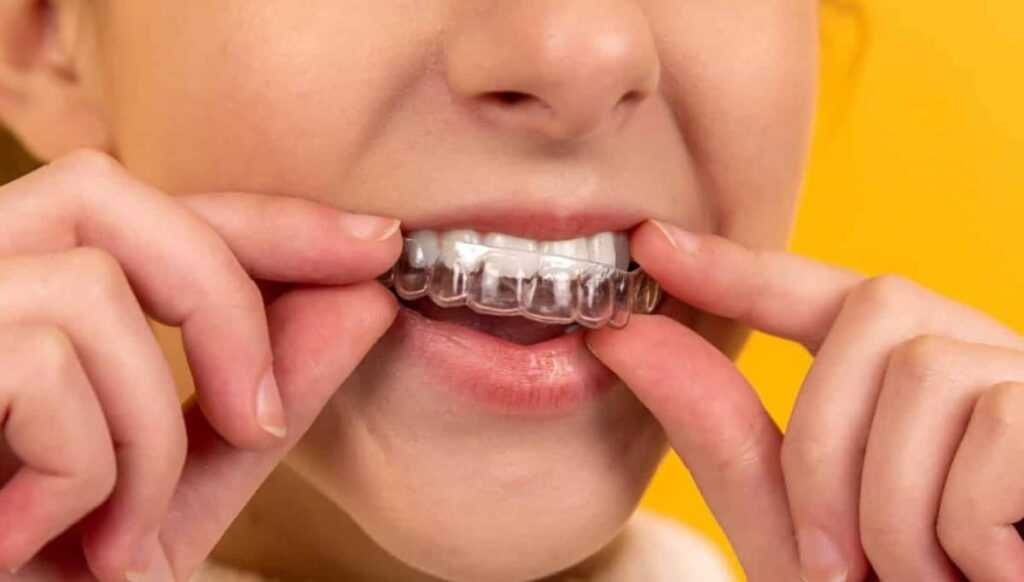

What Is a Splint and How Does Splint Therapy Work
A splint is a custom occlusal splint/mouthguard used in the treatment of TMJ dysfunction (temporomandibular joint disorder), bruxism, and occlusal irregularities. With bruxism, a person unconsciously clenches or grinds their teeth. Malocclusion, in turn, is a condition where the teeth do not come together properly. Every dental splint is fabricated individually — custom-made to match each patient’s unique anatomy.
Splint therapy is not simply a “night guard,” as patients often assume. It is an integral part of gnathological treatment. Specifically, it helps to:
- Relax the masticatory muscles
- Stabilize the position of the lower jaw
- Restore correct dental occlusion
- Reduce the load on the temporomandibular joint
- Eliminate joint clicking and teeth grinding
- Relieve pain and discomfort in the jaw and surrounding muscles
A properly fitted dental splint addresses not only the symptoms — such as pain and muscle tension — but also the underlying cause of the problem, allowing the jaw to function correctly and consistently.
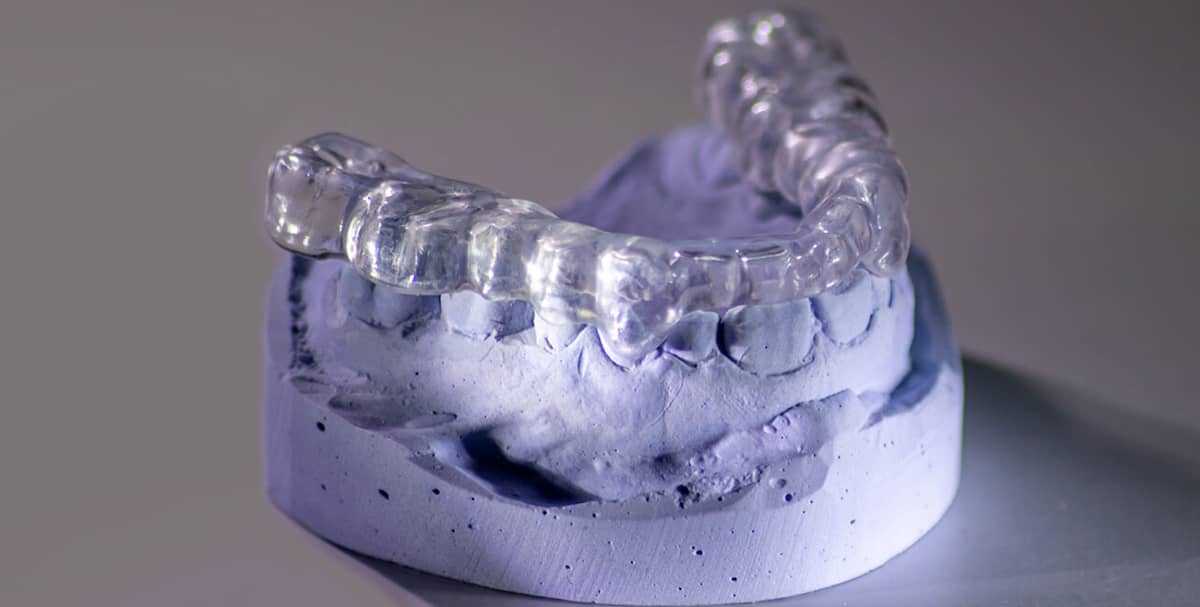
Splint, Joint Mouthguard, or Muscle Relaxation Splint: What’s the Difference?
Patients frequently confuse these terms, and understandably so — the distinctions are subtle. Here is a breakdown:
- Splint — the general term for a custom therapeutic oral appliance prescribed by a clinician to correct the bite, unload the joint, or stabilize the jaw. Its design and purpose vary depending on the condition being treated. Also referred to as a splint appliance.
- Joint mouthguard — a type of splint that works specifically with the temporomandibular joint (TMJ). Its primary goal is to reposition the jaw and reduce joint loading, eliminating clicking and allowing smooth, pain-free movement. Also called a joint stabilization splint.
- Muscle relaxation splint — another type of splint, focused primarily on the muscles. It relaxes the masticatory muscles and relieves spasm, which is common in bruxism. Also known as a myorelaxation splint.
Key takeaway: All these terms are closely related, but differ in what the appliance primarily targets — the joint or the muscles.
When Is Splint Therapy Prescribed?
Splint therapy is prescribed following an examination by a dentist or gnathologist. The main indications include:
- Jaw pain or pain near the ear
- Clicking or popping in the joint
- Bruxism (involuntary teeth grinding or clenching)
- Headaches
- Facial muscle fatigue or tension (a sense of tightness or tiredness)
- Malocclusion
Important: Treatment decisions are never made based on “symptoms found online.” Only after proper clinical diagnosis can a doctor determine whether a splint is needed — and if so, which type: a myorelaxation or joint stabilization appliance.
Symptoms That May Indicate TMJ Dysfunction
Pay attention if you experience any of the following:
- Pain when opening the mouth
- Limited jaw movement (during mouth opening or speaking)
- Jaw deviation or clicking when chewing
- Asymmetric mouth opening
- Frequent headaches
- Tension in the neck and shoulders
These symptoms do not always indicate a serious pathology requiring a splint, but they are always a reason to consult a specialist.
When Does a Muscle Relaxation Mouthguard Actually Help?
A myorelaxation mouthguard for TMJ treatment is genuinely effective when the issue involves:
- Overworked or tense masticatory muscles
- Bruxism (clenching and grinding)
- Functional disorders without significant structural changes in the joint
That said, it is not a universal solution for all conditions. Complex cases such as disc displacement or joint arthrosis require different treatment approaches. When reading reviews about myorelaxation mouthguards, keep in mind that they perform best when muscle-related issues are the primary concern.
How Splint Treatment Works
Splint therapy follows a clear, logical sequence:
- Consultation — the patient’s complaints are gathered and an initial examination is performed
- Diagnosis — the bite, muscle function, and joint are assessed
- Fabrication — the custom splint is made in a dental laboratory based on the patient’s anatomy
- Fitting — the clinician checks for comfort and precise fit
- Wear schedule — determined together with the doctor; typically nocturnal, or a combined regimen
- Monitoring and jaw repositioning — regular follow-up visits for adjustment and proper treatment progression
In some cases, a myorelaxation splint is used as the first phase of treatment to release tension in the masticatory muscles and eliminate pain and spasm. From there, the clinician determines the correct jaw position and selects the next type of splint as needed (e.g., a joint stabilization appliance).
Prevention in this context involves bruxism management and early TMJ diagnosis through regular check-ups with a gnathologist or dentist. During ongoing splint therapy, it is equally important to maintain the prescribed wear schedule, care for the appliance properly, and store it in its designated container.
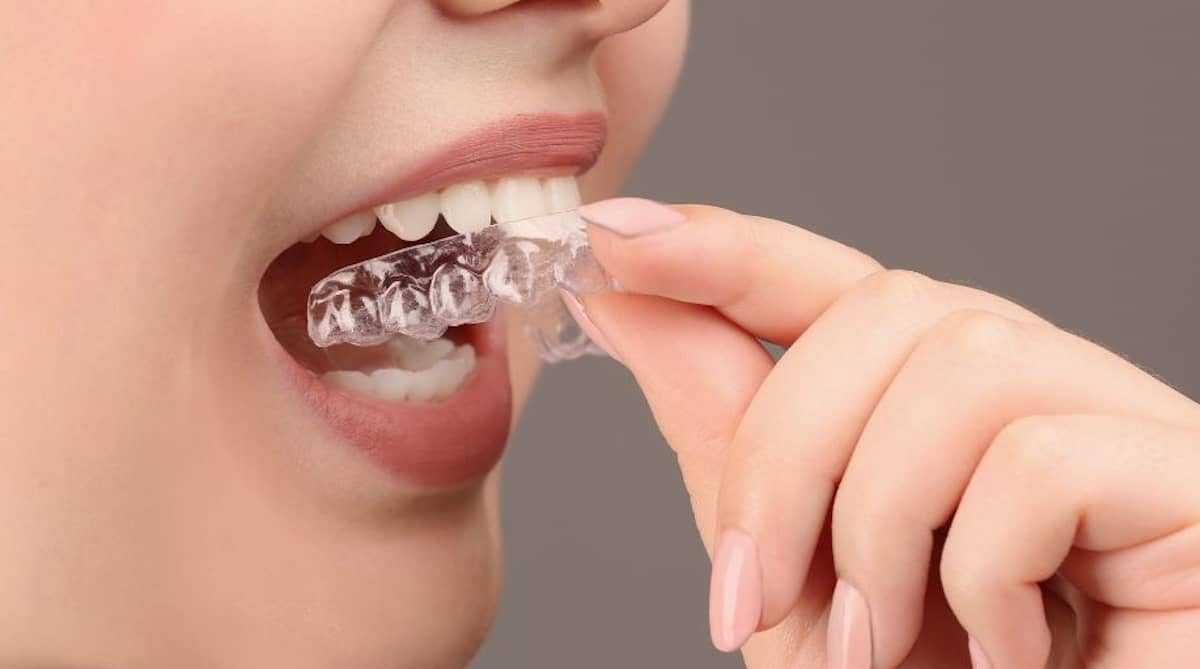
How Long to Wear a Splint and How to Care for It
The duration of splint wear — whether a joint mouthguard or a myorelaxation appliance — is individual, but typically ranges from several weeks to several months. Treatment effectiveness depends on:
- Consistent and regular use of the appliance
- Accurate fit (through custom fabrication and periodic adjustment)
- Following all clinical recommendations
Caring for your splint is straightforward. Simply:
- Rinse it after every use
- Clean it with a soft-bristled brush
- Store it in a protective case
- Keep it away from high temperatures
Remember: Even the highest-quality splint will not deliver results without proper use and maintenance.
What Affects the Price of a Splint Mouthguard?
The cost of a splint mouthguard cannot be a fixed, one-size-fits-all figure — it depends on several factors:
- The scope of diagnostics and clinical complexity of the case
- The type of appliance (e.g., a standard splint versus a myorelaxation design)
- The number of follow-up visits and the need for adjustments
- The experience of the treating gnathologist
Splint therapy is not simply the fabrication of a mouthguard — it is a comprehensive diagnostic and treatment process with measurable outcomes. The extent of the examination, the complexity of the case, and the number of treatment stages all contribute to the overall cost. A properly selected appliance and a well-structured treatment plan resolve the patient’s problem and significantly improve their quality of life.
FAQ
What is a dental splint?
A dental splint is a custom therapeutic mouthguard (oral appliance) fabricated from impressions of your teeth. It relaxes the masticatory muscles, redistributes bite load, and stabilizes TMJ function.
How is a joint mouthguard different from a regular mouthguard?
A joint mouthguard is a therapeutic device that repositions the jaw and improves joint function. It is used for bruxism, clicking, and pain. A standard mouthguard, by contrast, simply protects the teeth — for example, from wear or during sports.
How much does a splint mouthguard cost?
The price depends not only on the type of appliance, but also on the diagnostic workup, the complexity of the clinical case, and the number of subsequent follow-up and adjustment visits.
Written by Tetyana Zhyvilova
Pediatric Dentist | Orthodontist | Therapeutic Dentist | Gnathologist

Make an appointment
You can make an appointment by filling out the application form on the website, as well as using instant messengers:
Make an appointment
You can make an appointment by filling out the application form on the website, as well as using instant messengers:


Make an appointment easily using chatbots:
Also, call the numbers:
Modern dentistry and medical centre "MED-DEO"
Choose a clinic whose location is more convenient for you.
Kyiv, Holosiivska/Demiivska metro station
130 Lobanovskoho Avenue


Working hours:
Mon - Sun: 8:00 AM - 9:00 PM
No days off!
Call the numbers:
How to get to us? Create a route
Create a route
Kyiv, Akademistechko metro station
78A, Irpinska str.


Working hours:
Mon-Sun: 8.00-21.00
Without days off!
Call the numbers:
How to get to us?
Create a route
Create a route
Kyiv, Heroiv Dnipra metro station
32A, Heroiv Dnipra str.


Working hours:
Mon-Sun: 8.00-21.00
Without days off!
Call the numbers:
How to get to us?
Create a route
Create a route
Kyiv, Teatralna metro station
9B, E. Chykalenko (Pushkinska) str.


Working hours:
Mon-Sat: 8.00 - 21.00. Sun: by appointment.
Without days off!
Call the numbers:
How to get to us?
Create a route
Create a route
Відгук від клієнта
0:00
0:00


Your email will not be published on the site.