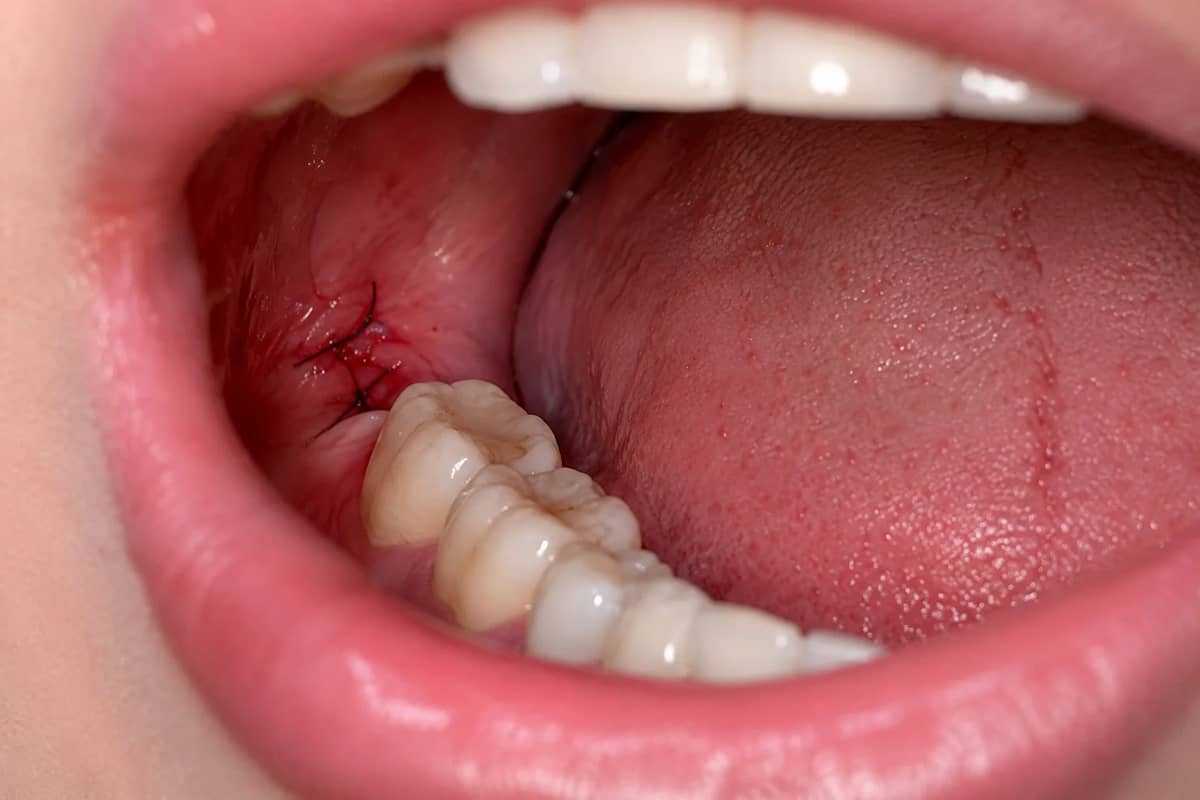
Sutures are placed after a tooth extraction to protect the wound and ensure proper healing. They help preserve the blood clot, which is critical for reducing the risk of bleeding or infection. Suture removal after tooth extraction is a routine, painless procedure – and for non-absorbable stitches, it’s always required. While it may cause some anxiety for many patients, in modern dental practice the procedure is quick and comfortable.
WHAT THIS ARTICLE COVERS: The types of sutures used and how long healing takes. Also: at-home care after suture removal, warning symptoms during healing, and when to see your dentist.
Why Sutures Are Placed and What Types of Suture Material Exist
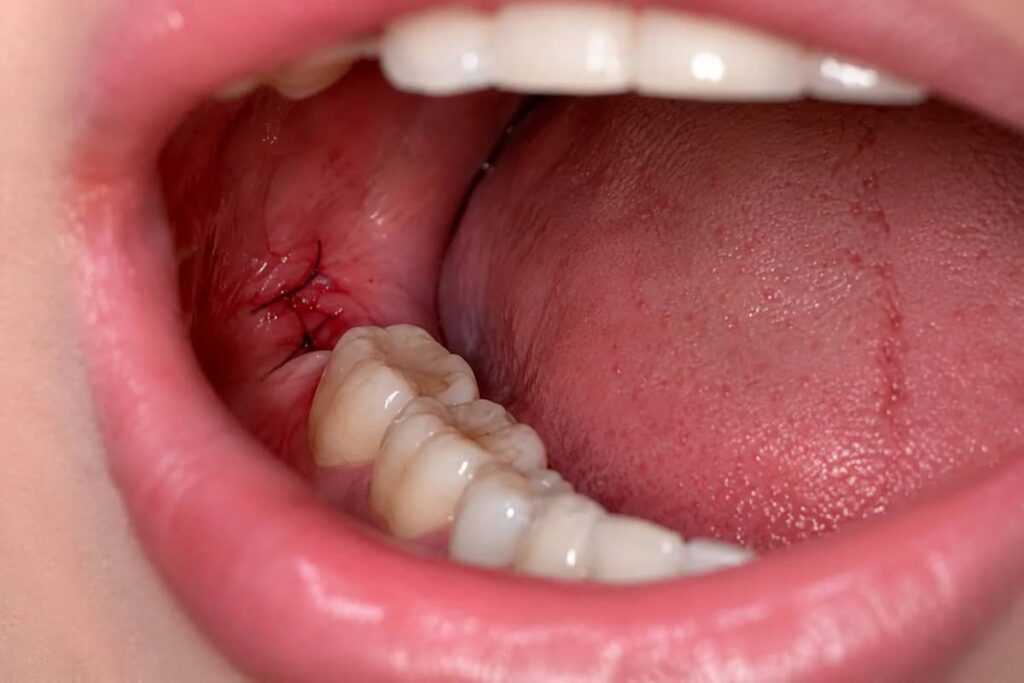
After a routine, uncomplicated tooth extraction, sutures are usually not necessary. However, there are situations involving complex or surgical extractions – for example, wisdom teeth, teeth that haven’t fully erupted, or severely damaged teeth. Teeth with unusually positioned roots also fall into this category. In these cases, sutures are placed after the extraction. They hold the wound edges together, protect the naturally formed blood clot, and prevent potential complications. This all accelerates tissue healing so the patient can find relief as quickly as possible.
There are two types of sutures:
Absorbable sutures. Most commonly made from catgut (a natural surgical material) or modern synthetic alternatives. These stitches gradually dissolve in the tissue and typically do not require removal. On average, they dissolve within 5-7 days, sometimes longer, depending on the specific material and the individual’s healing process.
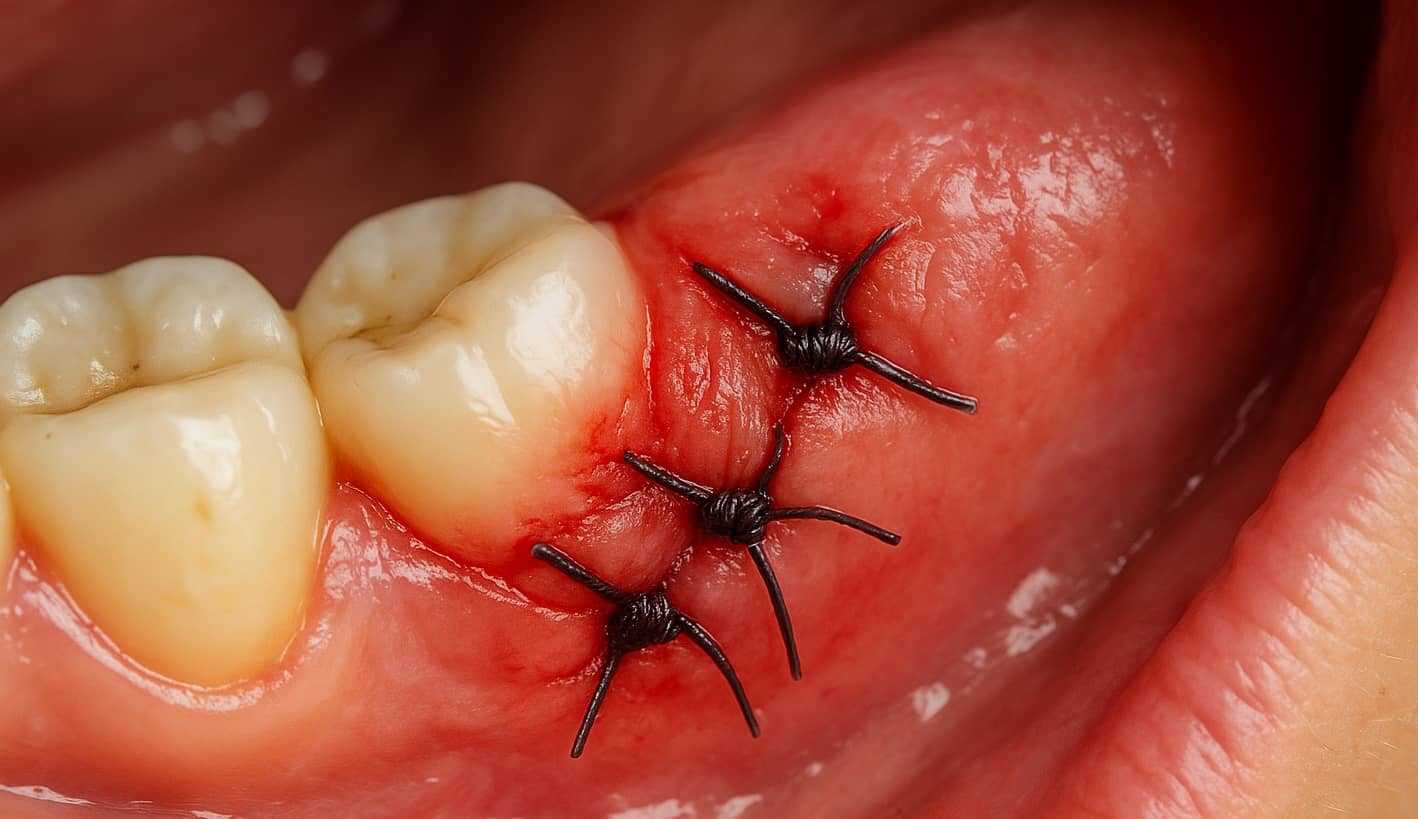
Non-absorbable sutures. These provide more secure tissue fixation and allow the surgeon to better monitor the healing process – which is why many oral surgeons prefer them. However, they do require a scheduled removal appointment.
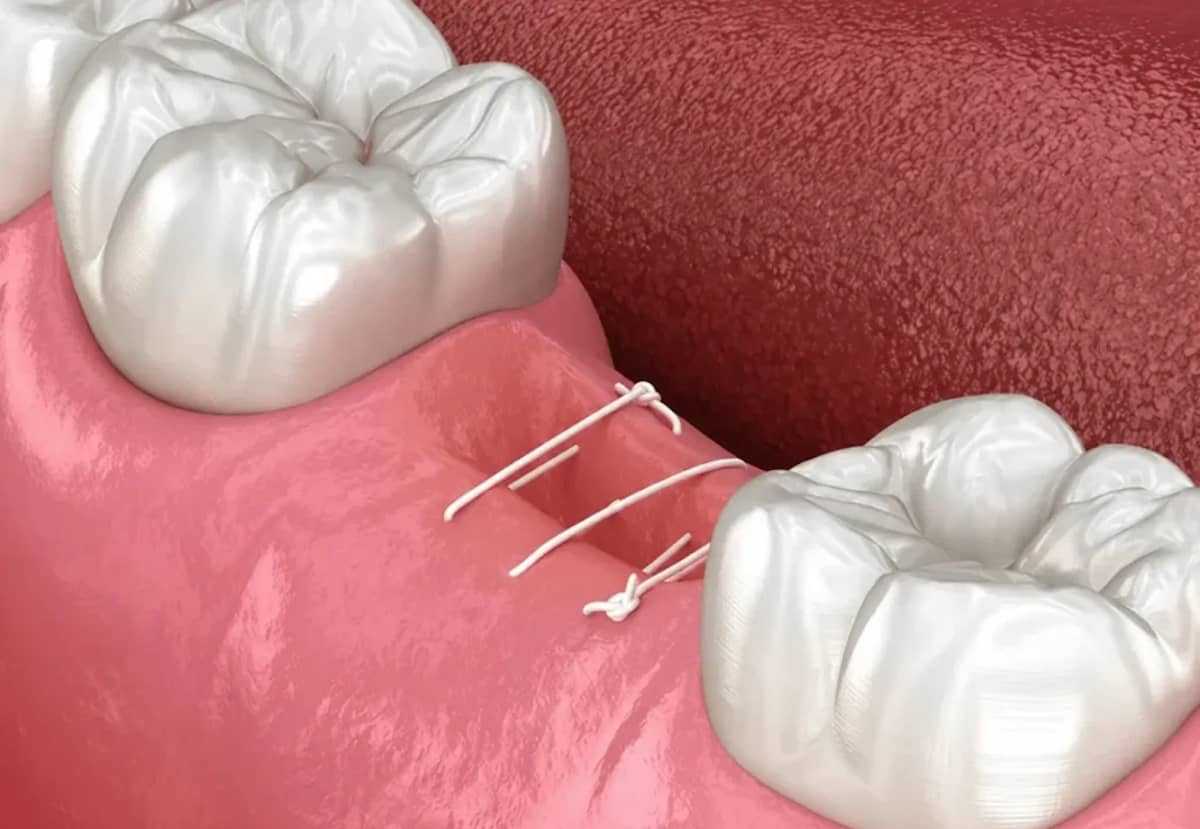
Sutures also differ by technique: there is the continuous suture and the interrupted (nodal) suture. The choice depends on the location and size of the wound after extraction, as well as other specifics of the procedure. This decision is made by the dentist during the surgery.
Scientific Rationale: International studies confirm that the classification of suture materials (absorbable vs. non-absorbable, natural vs. synthetic) and their proper selection are critical for preventing complications and ensuring optimal wound healing in maxillofacial surgery.
When Are Sutures Removed After Tooth Extraction?
Patients often wonder: when exactly are sutures removed after a tooth extraction? In most cases, it’s 5-10 days after the procedure. If the extraction was complex – involving, for example, a significant incision in the gum or other surgical steps – the timeframe may extend to approximately 14 days.
The exact date is always determined by the dentist after evaluating the suture site. It’s important to understand that premature removal is inadvisable: it can slow healing, cause the wound edges to separate, or even trigger bleeding. At the same time, delayed removal is also problematic – it can lead to the suture becoming embedded in the tissue, tissue trauma, and plaque accumulation.
This is exactly why it’s so important not to skip your follow-up appointment and to come in for suture removal on the day your dentist has scheduled.
When Are Wisdom Tooth Sutures Removed?
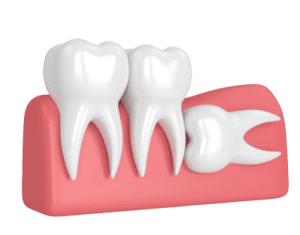
Wisdom tooth sutures deserve special attention. Removing so-called “eights” is typically more complex than extracting other teeth. The dentist often needs to make a gum incision or split the tooth into sections, since wisdom teeth sit deep in the jaw and are more difficult to access. This approach actually allows the tooth to be removed more efficiently and creates better conditions for healing. The extraction itself is painless thanks to anesthesia, regardless of the complexity.
Because of the somewhat greater scope of the procedure, wisdom tooth sutures may stay in longer – approximately 7-14 days. This has absolutely no bearing on pain levels or discomfort. It is a completely normal healing timeframe and is no cause for concern.
Does Suture Removal Hurt?
If you’re worried about whether suture removal after a tooth extraction is painful – honestly, no. The process is painless in virtually all cases. If needed, the dentist can administer local anesthesia. At most, you may feel a slight tugging sensation on the gum tissue or a brief moment of discomfort – that’s it, and it’s simply the mechanical sensation of the thread being pulled out.
The step-by-step technique for suture removal is as follows:
The dentist applies antiseptic to the area.
Surgical scissors are used to carefully cut the suture.
Anatomical tweezers are then used to gently remove the suture material.
The dentist evaluates the wound and assesses how healing is progressing.
A second antiseptic application is performed if necessary.
It’s worth noting that for patients with a low pain threshold (heightened sensitivity), local anesthesia is an option – though in practice, it’s rarely needed for this procedure. The whole thing is quick and quite comfortable.
How Long Does the Wound Take to Heal After Suture Removal: Real-World Timelines
Many patients also want to know how long it takes for the wound to heal after suture removal. It’s important to understand that healing is a gradual process made up of several stages. Here’s a simple breakdown.
The stages of healing are as follows:
Initial wound closure – In the first few days, the wound begins to heal and a protective blood clot forms in the socket (the space where the tooth was).
Gradual socket fill-in – New granulation tissue actively forms to fill the space left by the extracted tooth.
Final healing – After suture removal, the tissue fully recovers over 7-10 days. The gum becomes firmer and the risk of injury decreases significantly.
Scientific evidence: According to a literature review by Kharkiv National Medical University, the wound healing process consists of four main stages: hemostasis, inflammation, proliferation (formation of new tissue), and remodeling. Remodeling begins after 2–3 weeks, and it can take up to 6 months for the scar to fully mature bsmu.
That said, healing speed varies from person to person due to a number of factors:
Complexity of the extraction
Patient’s age
Overall health
Quality of oral hygiene
Lifestyle habits (e.g., smoking)
Adherence to the dentist’s aftercare instructions
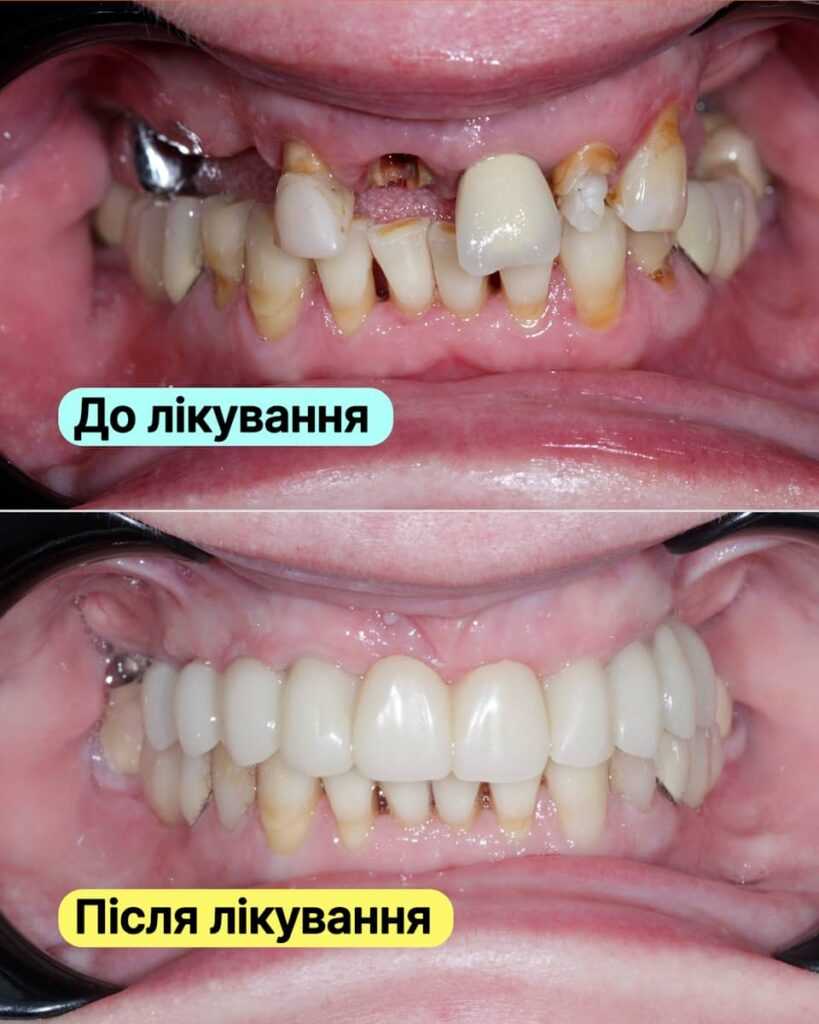
Patient’s Story 🦷 Dental Implantation Using the All-on-6 Method
A 50-year-old patient came to the clinic with complaints of significant destruction and missing teeth in the upper jaw, which affected both chewing function and the aesthetics of the smile.
📸 In the photo:
Before treatment — significant tooth loss and destruction of the upper jaw dental arch;
After treatment — full restoration of the dental arch with a permanent prosthetic конструкtion.
The treatment was carried out in two stages:
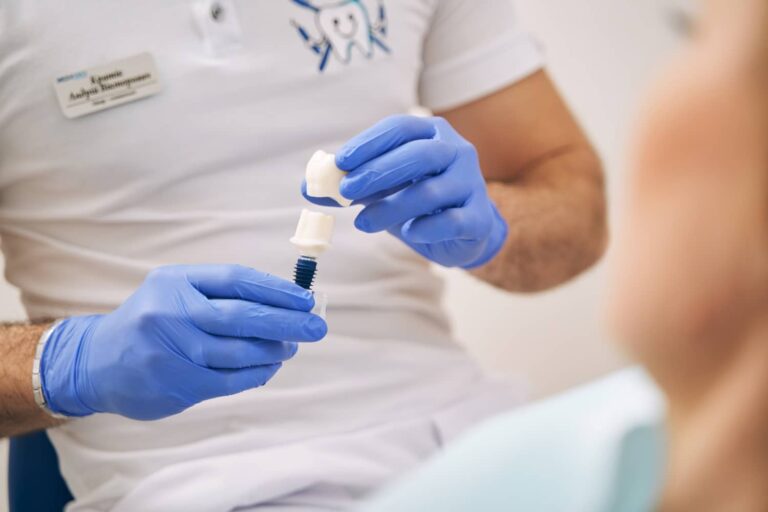
During the first stage, implantation under sedation was performed with placement of 6 Osstem implants in the upper jaw with immediate loading.
After 6 months, permanent prosthetics were performed using the All-on-6 method on a titanium bar.
As a result, the patient received a fully restored dental arch, stable support for chewing, and a natural smile aesthetic ✨
Proper wound care after suture removal is a critical period. Good aftercare helps complete the healing process fully and quickly, without complications. Even though the bulk of recovery has already occurred, the socket remains sensitive for some time and requires careful attention.
Key at-home wound care recommendations after suture removal:
Rinse with an antiseptic (chlorhexidine) or herbal rinses as recommended by your dentist.
Use a soft-bristled toothbrush.
Maintain thorough oral hygiene.
Avoid hard, very hot, spicy, and acidic foods for a few days.
Refrain from smoking and alcohol.
Avoid strenuous physical activity during the healing period.
Do not visit saunas or steam rooms.
Do not touch the wound with your tongue or fingers.
Keep the wound area at rest and avoid any trauma to the extraction site.
IMPORTANT: Any healing ointments or physiotherapy treatments should only be used if prescribed by your dentist. Beyond the recommendations listed above, do not take any additional steps on your own.
Warning Signs: When to See a Dentist Urgently After Suture Removal
After the procedure, it’s important to know the difference between normal healing and symptoms that may indicate complications. This is especially relevant when sutures were placed after a tooth extraction. Understanding what’s normal – and what isn’t – helps you avoid unnecessary panic while also ensuring you don’t miss the moment when professional help is needed.
A handy checklist of symptoms:
NORMAL
Mild, dull pain or discomfort
Slight gum sensitivity in the first few days
Moderate redness at the treatment site
NOT NORMAL – see a dentist urgently:
Increasing, throbbing pain
Significant gum swelling
Bleeding that won’t stop
Signs of pus or discharge
Bad breath
Fever
A sudden spike in pain after a period of improvement
These symptoms are signs of abnormal healing. They may point to wound infection, dry socket (alveolitis), blood vessel damage, or other complications. In most cases, seeing a dentist promptly allows even these issues to be resolved quickly, preventing serious consequences down the line.
Can You Remove Sutures Yourself?
The answer here is unequivocal: no. Self-removal of sutures after a tooth extraction is strongly discouraged – even if the thread looks accessible or is partially sticking out. The home environment is not sterile, which means infection can enter the wound. There is also a risk of damaging the mucous membrane, causing bleeding, or allowing the wound edges to separate – all of which can lead to improper tissue regeneration and eventual scarring.
There are situations where a catgut suture or other absorbable material has partially come loose and starts to mildly interfere with chewing or speaking. Even then, do not cut or pull it out yourself. The right move is simply to contact your dentist as soon as possible.
REMEMBER: Timely suture removal, your follow-up check-up, and following all of your dentist’s instructions are the key ingredients for a smooth, fast, complication-free recovery.
Frequently Asked Questions (FAQ)
When are sutures removed after a tooth extraction?
Sutures are typically removed 5-7 days after a tooth extraction. In more complex cases – such as wisdom tooth removal – this timeframe may extend to 14 days.
Is suture removal after a tooth extraction painful?
Suture removal is not painful. The procedure takes just a few minutes and is relatively comfortable. Most patients feel nothing more than a slight tug on the thread.
How long does the wound take to heal after suture removal?
The wound heals in approximately 7-10 days after suture removal. The exact duration depends on the complexity of the extraction, individual healing factors, and how well the dentist’s aftercare instructions are followed.
Do absorbable sutures need to be removed?
In most cases, absorbable sutures do not require removal. They break down on their own and disappear completely as the wound heals. If a thread begins to bother you or feels loose, contact your dentist.
How should I care for the wound after suture removal?
Post-removal wound care involves maintaining thorough oral hygiene, using a soft-bristled toothbrush, avoiding trauma to the area, and following all of your dentist’s recommendations.
What should I do if a suture comes loose or falls out on its own?
If a suture comes loose or falls out, the most important thing is not to panic. If you’re not experiencing any discomfort, simply contact your dentist – they’ll advise you on next steps. If pain, bleeding, or swelling develops, make an appointment to be seen as soon as possible.
The author of this article is Andrii Kratik, a prosthodontist, general dentist, oral surgeon, and implantologist.
 (044) 394 90 94
  Holosiivska/Demiivska metro station

















Your email will not be published on the site.