Special offer! Comprehensive professional teeth cleaning for only 1699 UAH.
Special offer! Comprehensive professional teeth cleaning for only 1699 UAH.
Special offer! Comprehensive professional teeth cleaning for only 1699 UAH.
Special offer! Comprehensive professional teeth cleaning for only 1699 UAH.
Special offer! Comprehensive professional teeth cleaning for only 1699 UAH.
Special offer! Comprehensive professional teeth cleaning for only 1699 UAH.
Special offer! Comprehensive professional teeth cleaning for only 1699 UAH.
Special offer! Comprehensive professional teeth cleaning for only 1699 UAH.
Special offer! Comprehensive professional teeth cleaning for only 1699 UAH.
Special offer! Comprehensive professional teeth cleaning for only 1699 UAH.
Sign up
 (044) 394 90 94
(044) 394 90 94  Holosiivska/Demiivska metro station
Sign up
(044) 394 90 94
(044) 394 90 94
Doctors


 Prices
Blog
Contacts
Prices
Blog
Contacts
пр.Лобановського, 130, Київ, Україна
Temporarily closed
Opening soon
78A, Irpinska St., Kyiv, Ukraine
Temporarily closed
Opening soon
32A, Heroiv Dnipra St., Kyiv, Ukraine
Temporarily closed
Opening soon
9B, Yevhena Chykalenko St. (Pushkinska), Kyiv, Ukraine
Temporarily closed
Opening soon
(044) 394 90 94
Back
Dentistry

General Dentistry
Dental surgery
Dental Implants
Maxillofacial Surgery
Dental prosthetics
Cosmetic dentistry

Professional Dental Hygiene

Periodontics
Orthodontic dentistry

Gnathology & TMJ Therapy

Pediatric Dentistry

Dental X-Rays
Back
Orthodontic Center
Orthodontic dentistry
Gnathology & TMJ Therapy
Back
Prosthodontic Center
Dental prosthetics
Back
MED-DEO Center for Maxillofacial Surgery & Facial Plastics
Maxillofacial Surgery
Plastic surgery
Back
Surgical Dental Center
Dental surgery
Dental Implants
Search on the site


Popular requests
Teeth whitening
Treatment of caries
Wisdom tooth extraction
Bracket system
Dental veneers
Tooth restoration
Pediatric dentist
Consultation with a dentist-therapist
Search results by: «».
Unfortunately, no results were found for your search: “Pediatric Endocrinologist”, nothing was found.
You may find these links useful:
Clinics "MED-DEO"
пр.Лобановського, 130, Київ, Україна
Temporarily closed
Opening soon
78A, Irpinska St., Kyiv, Ukraine
Temporarily closed
Opening soon
32A, Heroiv Dnipra St., Kyiv, Ukraine
Temporarily closed
Opening soon
9B, Yevhena Chykalenko St. (Pushkinska), Kyiv, Ukraine
Temporarily closed
Opening soon
Services
Dentistry Orthodontic Center Prosthodontic Center MED-DEO Center for Maxillofacial Surgery & Facial Plastics Surgical Dental CenterGeneral Dentistry
Dental surgery
Dental Implants
Maxillofacial Surgery
Dental prosthetics
Cosmetic dentistry
Professional Dental Hygiene
Periodontics
Orthodontic dentistry
Gnathology & TMJ Therapy
Pediatric Dentistry
Dental X-Rays
Orthodontic dentistry
Gnathology & TMJ Therapy
Dental prosthetics
Maxillofacial Surgery
Dental surgery
Dental Implants
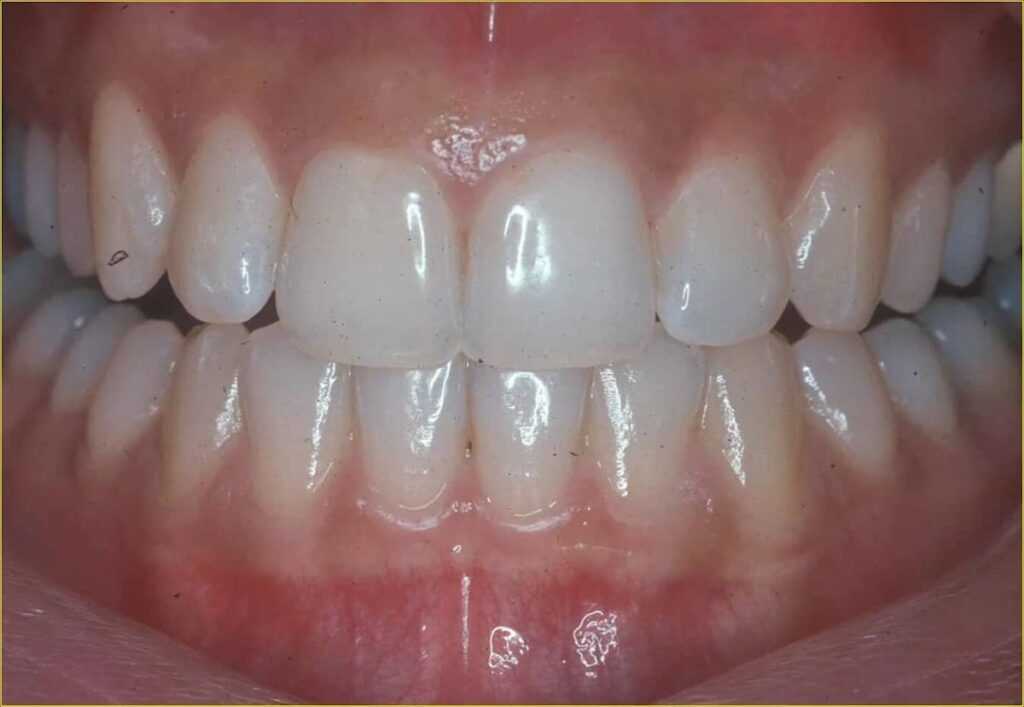
Gingivitis is an inflammatory gum disease caused by the buildup of dental plaque and bacteria. It is one of the most common dental conditions, affecting children, teenagers, pregnant women, and adults alike. Gingivitis is easily treatable in its early stages — the sooner treatment begins, the better the chances of eliminating the disease entirely. However, if left untreated, gingivitis can lead to serious complications, including periodontitis and tooth loss. In this article, we cover the main symptoms of gingivitis, what causes it, the different types of the disease, and the methods used for diagnosis and prevention. Seeking timely dental care is essential to detect and treat gingivitis before complications develop.
What Is Gingivitis: Definition and Prevalence
The term “gingivitis” comes from the Latin word gingivitis, where gingiva means “gum” and -itis means “inflammation.” It refers to inflammation of the gums that does not compromise the attachment between the teeth and the gum tissue — unlike periodontitis.
Gingivitis occurs across all age groups. It is particularly common in children aged 3 to 5, teenagers, and pregnant women. The nature of the disease changes with age: as an independent condition, gingivitis primarily affects people under 30, while a chronic form is more commonly diagnosed after the age of 35.
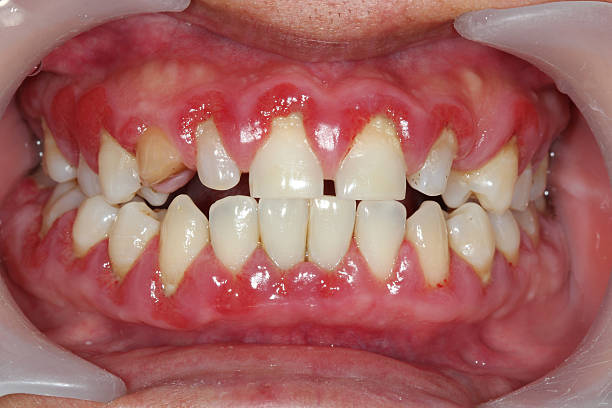
Gingivitis can exist as a standalone disease or as a symptom of another condition, such as periodontitis. The photos below illustrate the difference between healthy gums and gums affected by gingivitis.
Photo of healthy gums
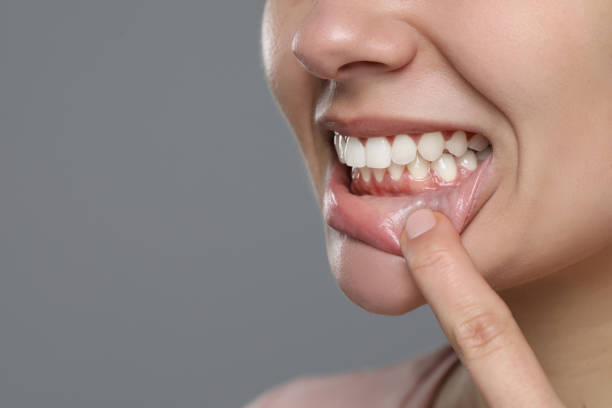
Caption: Gingivitis photo
Gingivitis Symptoms: How to Recognize the Disease
The primary symptoms of gingivitis include redness, swelling, and bleeding of the gums. These signs typically become noticeable during tooth brushing or when eating hard foods. Gingivitis is also accompanied by persistent bad breath. The gums take on a bluish-red hue, become painful, and cause discomfort while eating. However, these symptoms do not appear all at once. In its earliest stages, gingivitis may be virtually asymptomatic — there is no pain yet, but slight bleeding and redness are already present.
Gingivitis is much easier to treat in the early stages, which is why even minor symptoms should not be ignored. Do not delay visiting your dentist.
Gingivitis symptoms may appear individually or in combination. Only a qualified dentist can provide an accurate diagnosis and prescribe the appropriate treatment.
Causes of Gingivitis: Internal and External Factors
The causes of gingivitis fall into two categories: internal and external.
Internal causes of gingivitis include poor oral hygiene, gum injury due to malocclusion or tooth eruption, disorders of the circulatory, endocrine, or cardiovascular systems, vitamin deficiency — particularly a pronounced lack of vitamins C and D — and gum inflammation as a consequence of infectious diseases such as measles, diabetes, tuberculosis, and diphtheria.
However, gingivitis is not triggered solely by internal factors. External causes include physical trauma to the gums from poorly fitted temporary teeth or crowns, burns from excessively hot food or beverages, mechanical damage from very hard foods, chemical damage from acids, alkalis, solvents, or reactive metals, external infections, substandard dental work, orthodontic appliances such as braces, smoking — including conventional cigarettes, e-cigarettes, and hookah — prolonged use of certain medications, and chronic mouth breathing.
All of these factors accelerate the formation of dental plaque. Within 6 to 12 hours, plaque develops into a biofilm, and within approximately 60 hours, that biofilm hardens into tartar. Tartar irritates the gum tissue, causing redness, bleeding, and the formation of gum pockets — all of which trigger gingivitis. This is why it is so important to brush your teeth properly and consistently to remove plaque. This is especially critical during early childhood, adolescence, and pregnancy. Any hormonal changes, when combined with poor oral hygiene, can provoke the onset of gingivitis.
Types and Classification of Gingivitis
Gingivitis can be classified by its course, clinical presentation, and location. Patients cannot determine the type of gingivitis on their own — that is the dentist’s role. Nevertheless, understanding the different forms of gingivitis is worthwhile for everyone.
By course, gingivitis is divided into two types: acute and chronic. Acute gingivitis presents with sudden, clearly pronounced symptoms. Chronic gingivitis alternates between periods of flare-up and remission.
By clinical presentation, the disease is categorized into four types. Catarrhal gingivitis is the most common form, characterized by redness, swelling, bleeding, a burning sensation, and gum pain. Hypertrophic gingivitis is most frequently diagnosed in teenagers, pregnant women, and people with diabetes, and its hallmark is the enlargement of the interdental papillae. Atrophic gingivitis is marked by an acute sensitivity to temperature changes — the patient experiences pain when consuming hot or cold food and drinks, and visible signs include a reduction in the volume of the mucous membrane and exposure of the tooth necks. Ulcerative gingivitis, also known as ulcerative-necrotizing gingivitis, is the most severe form of the disease. It produces ulcers on the gums, tissue necrosis, intense pain, a foul odor, elevated body temperature, and swollen lymph nodes.
By location, gingivitis is classified as either localized or generalized. In the localized form, the disease affects the gum area around one or several teeth. Generalized gingivitis spreads across one or both jaws. A dentist can determine the specific type of gingivitis after a thorough examination and any necessary diagnostic tests.
Gingivitis vs. Periodontitis: What Is the Difference?
Patients often confuse gingivitis with periodontitis and vice versa, unsure of what sets the two apart. Gingivitis is inflammation of the gums only, with no disruption of the tooth-gum attachment. Periodontitis, on the other hand, involves irreversible destruction of the periodontal tissues. In periodontitis, the junctional epithelium breaks down, the gums lose their attachment to the teeth, true periodontal pockets form, the alveolar bone begins to atrophy, and teeth become mobile and shift position.
Gingivitis is a reversible condition that can and should be treated. Periodontitis is an irreversible process that carries the risk of tooth loss. If gingivitis is left untreated, it will progress to periodontitis. Periodontitis also requires treatment, but strictly under professional supervision. Self-diagnosis of gingivitis, as well as self-treatment of either gingivitis or periodontitis, can have devastating consequences.
Gingivitis in Children: Causes, Symptoms, and Key Considerations
Gingivitis is particularly common in two groups of children: those aged 3 to 5 and those in adolescence. The primary cause remains inadequate oral hygiene. Here are the key situations in which parents should pay close attention to their children’s gum health: during teething, when baby teeth are being replaced by permanent teeth, during puberty, after a gum injury, when the immune system is weakened, and after the placement of orthodontic appliances or braces.
It is important to monitor the amount of sugar in a child’s diet. This means limiting not only sweets and candy but also beverages with high sugar content. For example, 100 grams of store-bought juice contains approximately 14% sugar. Sugary foods promote bacterial growth in the mouth and contribute to fermentation — a direct pathway to gum and tooth damage. Therefore, sugar intake should be kept to a minimum.
The symptoms of gingivitis in children are the same as in adults. However, children may not understand what is happening to them — they do not complain of pain in the early stages and may not notice changes in their gums. Parents must recognize the importance of professional dental hygiene and teach their children proper oral care habits. Toothbrushes and toothpaste for young children should be of high quality. Teeth should be brushed twice a day using vertical strokes, and the mouth should be rinsed with clean water or a specialized mouthwash after meals and drinks.
To ensure gingivitis in children is detected and treated promptly, regular visits to a pediatric dentist are essential. Treatment for young patients typically involves professional, painless cleaning of the teeth and gums, antiseptic rinses, and anti-inflammatory gels or ointments. The dentist may also recommend treating any underlying conditions. Every case is unique, so there is no one-size-fits-all remedy for childhood gingivitis.
Gingivitis During Pregnancy: Hormones and Risks
Pregnancy gingivitis becomes most pronounced during the second trimester. Up to 70% of expectant mothers experience gum inflammation. This occurs because hormonal changes during pregnancy elevate estrogen and progesterone levels, making the gums more sensitive to plaque — especially in women who already had gum problems before becoming pregnant.
Pregnancy gingivitis is treatable, although it can sometimes be more difficult to manage. If ignored, however, it can contribute to miscarriage or preterm delivery. Pregnant women and those planning a pregnancy should visit their dentist or periodontist at least once every six months, and it is essential to schedule a visit during the second trimester.
Pregnant women should brush their teeth and gums at least twice a day for a minimum of two minutes. Once a day, the spaces between the teeth should be cleaned with dental floss, which helps remove plaque from hard-to-reach areas.
Non-surgical treatment of gingivitis during pregnancy is completely safe for both the mother and the baby. Better still is maintaining a regular gingivitis prevention routine.
Risk Groups: Who Is Most Likely to Develop Gingivitis?
In addition to children and pregnant women, several other groups are at elevated risk of developing gingivitis.
Smokers face a threefold increase in the risk of periodontitis. In smokers, gum inflammation often progresses without noticeable symptoms — the gums do not bleed — which is why regular professional dental cleanings are strongly recommended as a preventive measure.
Women experiencing hormonal changes are also at risk. Beyond pregnant women, this includes women going through menopause and girls in puberty.
People with diabetes have a scientifically established bidirectional relationship between diabetes and periodontitis. Individuals with diabetes are 2.9 times more likely to be diagnosed with periodontitis.
People with weakened immune systems should visit a dentist to have their gum health assessed after any serious illness.
People with poor oral hygiene habits may find that home brushing alone is insufficient. A professional cleaning at least once every six months is highly recommended.
Gingivitis Prevention: How to Protect Your Gums from Inflammation
Preventing gingivitis and keeping gum inflammation at bay involves a comprehensive set of measures. Following them consistently can mean never having to deal with gingivitis at all.
Proper oral hygiene means brushing your teeth twice a day for two to three minutes and using dental floss or interdental brushes. Choosing the right toothbrush and toothpaste is also important — soft bristles are recommended for children and people with sensitive gums, and therapeutic toothpastes with anti-inflammatory ingredients can be beneficial. Alcohol-free mouthwashes with antiseptic properties should be used as well. Regular dental visits — including a check-up and professional cleaning at least twice a year, or three times a year for those in risk groups — are essential. A balanced diet rich in vitamins C and D, omega-3 fatty acids, and fiber, combined with a reduction in simple carbohydrates and sugar, supports gum health. Quitting smoking, strengthening the immune system, and promptly treating related conditions such as diabetes and immune disorders are equally important.
Gingivitis prevention should become a way of life. Fifteen minutes a day at home and timely visits to your dentist are all it takes to keep gum bleeding and inflammation from ever becoming a concern.
When to See a Dentist Immediately: A Checklist of Warning Signs
Delaying a dental visit when it comes to preventing gingivitis is never a good idea. But sometimes symptoms appear only after the disease has already progressed. Here is a checklist of warning signs that call for an immediate appointment with your dentist: severe gum pain, pus discharge, bleeding from the gums that does not stop, elevated body temperature, swollen lymph nodes, exposed tooth roots, loose teeth, ulcers in the mouth, and persistent bad breath that cannot be resolved with oral hygiene.
These symptoms may indicate that gingivitis has progressed to periodontitis or point to other serious conditions. It is important to remember that self-treating gingivitis can lead to complications.
In severe cases of gingivitis, the dentist may prescribe antibiotic injections following a professional cleaning. Surgical treatment, including curettage and gum grafting, may occasionally be necessary. In most cases, however, simple medications are sufficient. Gingivitis is curable, and even if it has progressed to periodontitis, professional dental care is available to help. Take care of your gums and teeth!
Article author: Liudmyla V. Overchuk, DDS, General Dentist and Periodontist at Med-Deo Dental Clinic



Make an appointment
You can make an appointment by filling out the application form on the website, as well as using instant messengers:
Make an appointment
You can make an appointment by filling out the application form on the website, as well as using instant messengers:


Make an appointment easily using chatbots:
Also, call the numbers:
Modern dentistry and medical centre "MED-DEO"
Choose a clinic whose location is more convenient for you.
Kyiv, Holosiivska/Demiivska metro station
130 Lobanovskoho Avenue


Working hours:
Mon - Sun: 8:00 AM - 9:00 PM
No days off!
Call the numbers:
How to get to us? Create a route
Create a route
Kyiv, Akademistechko metro station
78A, Irpinska str.


Working hours:
Mon-Sun: 8.00-21.00
Without days off!
Call the numbers:
How to get to us?
Create a route
Create a route
Kyiv, Heroiv Dnipra metro station
32A, Heroiv Dnipra str.
Working hours:
Mon-Sun: 8.00-21.00
Without days off!
Call the numbers:
How to get to us?
Create a route
Create a route
Kyiv, Teatralna metro station
9B, E. Chykalenko (Pushkinska) str.




Working hours:
Mon-Sat: 8.00 - 21.00. Sun: by appointment.
Without days off!
Call the numbers:
How to get to us?
Create a route
Create a route
Відгук від клієнта
0:00
0:00


Your email will not be published on the site.