Special offer! Comprehensive professional teeth cleaning for only 1699 UAH.
Special offer! Comprehensive professional teeth cleaning for only 1699 UAH.
Special offer! Comprehensive professional teeth cleaning for only 1699 UAH.
Special offer! Comprehensive professional teeth cleaning for only 1699 UAH.
Special offer! Comprehensive professional teeth cleaning for only 1699 UAH.
Special offer! Comprehensive professional teeth cleaning for only 1699 UAH.
Special offer! Comprehensive professional teeth cleaning for only 1699 UAH.
Special offer! Comprehensive professional teeth cleaning for only 1699 UAH.
Special offer! Comprehensive professional teeth cleaning for only 1699 UAH.
Special offer! Comprehensive professional teeth cleaning for only 1699 UAH.
Sign up
 (044) 394 90 94
(044) 394 90 94  Holosiivska/Demiivska metro station
Sign up
(044) 394 90 94
(044) 394 90 94
Doctors


 Prices
Blog
Contacts
Prices
Blog
Contacts
пр.Лобановського, 130, Київ, Україна
Temporarily closed
Opening soon
78A, Irpinska St., Kyiv, Ukraine
Temporarily closed
Opening soon
32A, Heroiv Dnipra St., Kyiv, Ukraine
Temporarily closed
Opening soon
9B, Yevhena Chykalenko St. (Pushkinska), Kyiv, Ukraine
Temporarily closed
Opening soon
(044) 394 90 94
Back
Dentistry
General Dentistry
Dental surgery
Dental Implants
Maxillofacial Surgery
Dental prosthetics
Cosmetic dentistry

Professional Dental Hygiene

Periodontics
Orthodontic dentistry

Gnathology & TMJ Therapy

Pediatric Dentistry
Dental X-Rays
Back
Orthodontic Center
Orthodontic dentistry
Gnathology & TMJ Therapy
Back
Prosthodontic Center
Dental prosthetics
Back
MED-DEO Center for Maxillofacial Surgery & Facial Plastics
Maxillofacial Surgery
Plastic surgery
Back
Surgical Dental Center
Dental surgery
Dental Implants
Search on the site


Popular requests
Teeth whitening
Treatment of caries
Wisdom tooth extraction
Bracket system
Dental veneers
Tooth restoration
Pediatric dentist
Consultation with a dentist-therapist
Search results by: «».
Unfortunately, no results were found for your search: “Pediatric Endocrinologist”, nothing was found.
You may find these links useful:
Clinics "MED-DEO"
пр.Лобановського, 130, Київ, Україна
Temporarily closed
Opening soon
78A, Irpinska St., Kyiv, Ukraine
Temporarily closed
Opening soon
32A, Heroiv Dnipra St., Kyiv, Ukraine
Temporarily closed
Opening soon
9B, Yevhena Chykalenko St. (Pushkinska), Kyiv, Ukraine
Temporarily closed
Opening soon
Services
Dentistry Orthodontic Center Prosthodontic Center MED-DEO Center for Maxillofacial Surgery & Facial Plastics Surgical Dental CenterGeneral Dentistry
Dental surgery
Dental Implants
Maxillofacial Surgery
Dental prosthetics
Cosmetic dentistry
Professional Dental Hygiene
Periodontics
Orthodontic dentistry
Gnathology & TMJ Therapy
Pediatric Dentistry
Dental X-Rays
Orthodontic dentistry
Gnathology & TMJ Therapy
Dental prosthetics
Maxillofacial Surgery
Dental surgery
Dental Implants
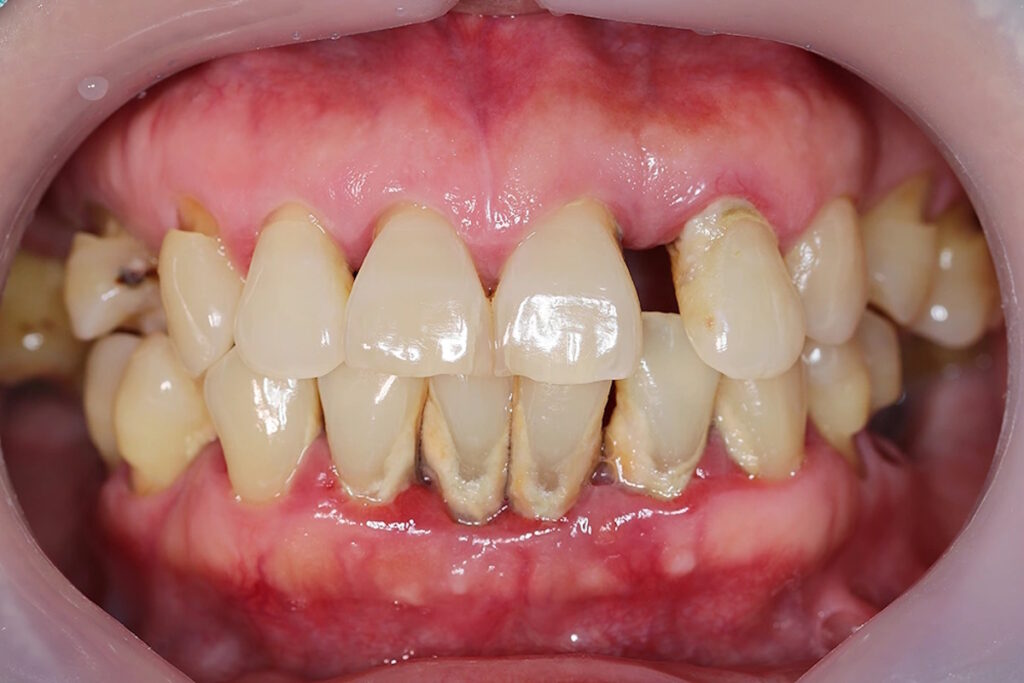

Periodontosis is a chronic degenerative disease affecting periodontal tissues that leads to bone atrophy and root exposure. Unlike periodontitis, periodontosis doesn’t involve gum inflammation.
Statistics show that dentists diagnose this condition in every third patient worldwide. Since there’s no pain involved, people tend to overlook it—only seeking medical attention when the disease has reached an advanced stage.
The risk of tooth loss in such cases is 2-3 times higher than with cavities.
Accurate and timely diagnosis is key to successful periodontosis treatment. For prevention, it’s essential to visit your dentist at least twice a year.
What Is Periodontosis and How Does It Progress?
Periodontosis is a chronic degenerative condition affecting the soft tissues surrounding the teeth. What makes this disease particularly insidious is that it can remain completely asymptomatic.
In the early stages of periodontosis, there’s no pain whatsoever. That’s why the WHO doesn’t even classify periodontosis as a separate disease entity. However, it triggers serious changes in the periodontium—vascular dystrophic disorders that cause the gums to pale and recede.
The disease progresses very slowly and becomes chronic. It develops in several stages: impaired blood supply → deterioration of tissue nutrition → dystrophy → bone tissue atrophy → gum recession → root exposure. Consequently, patients begin experiencing tooth sensitivity to hot and cold foods. Gradually, tooth stability weakens, and they eventually fall out.
Periodontosis vs. Periodontitis: What’s the Difference?
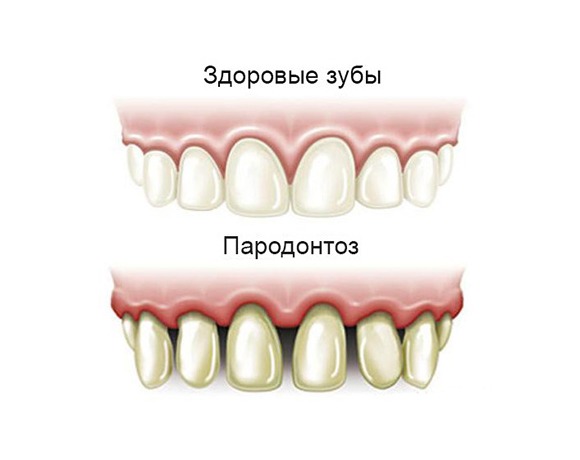
These two terms are often confused because they share a common root word—periodontium, the primary structure involved. The periodontium is a complex of tissues comprising the gingiva, ligaments, alveolar bone, and root cementum. However, periodontosis and periodontitis are completely different conditions.
Causes of Periodontosis Development
The primary causes of periodontosis include:
- Systemic disorders in the body
- Genetic predisposition
- Age-related changes
These lead to impaired blood supply to the periodontium, preventing its tissues from receiving adequate nutrients.
However, several other factors can trigger and accelerate this disease’s development:
Systemic causes: Diabetes mellitus and other endocrine disorders, cardiovascular diseases, atherosclerosis or carotid artery disease, autoimmune disorders, gastrointestinal problems.
Local factors: Malocclusion, short frenula, gum trauma, inadequate oral hygiene, dental calculus.
External factors: Smoking (causing vascular spasm), vitamin deficiencies (including vitamins C and D, calcium, zinc), weakened immunity, poor nutrition, certain medications.
Typically, periodontosis results from a combination of these factors rather than a single cause.
Symptoms and Signs of Periodontosis
Early stage (barely noticeable signs): Slight tooth sensitivity, pale gums, no bleeding, mild discomfort.
Progressive stage: Noticeable root exposure (3-5 mm), visibly elongated teeth, gaps and food impaction between teeth, increased sensitivity to cold/hot foods, gum redness due to secondary inflammation.
Advanced stage: Significant tooth exposure (over 5-7 mm), severe tooth mobility, bite changes, risk of tooth loss, possible purulent processes.
There’s no pain in the early stage or even during progression, so nothing bothers the patient, and they see no need to consult a doctor.
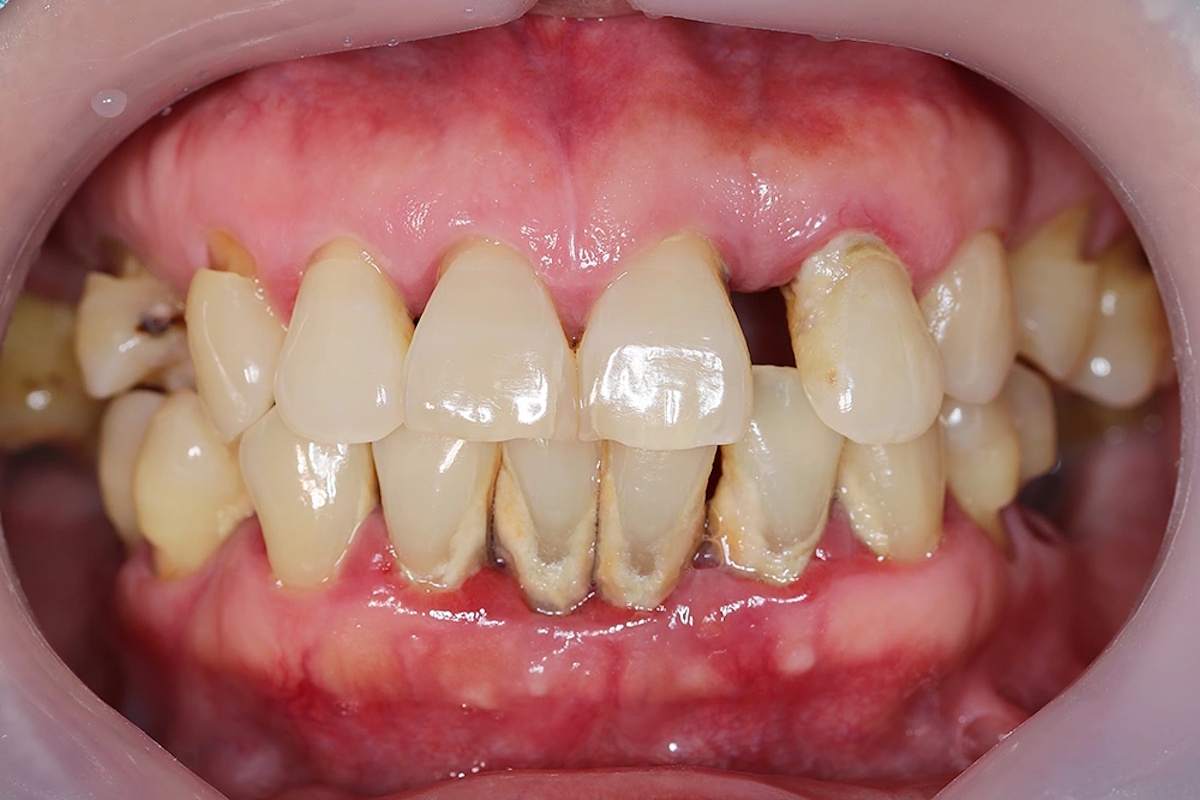
What Periodontosis Looks Like: Visual Signs
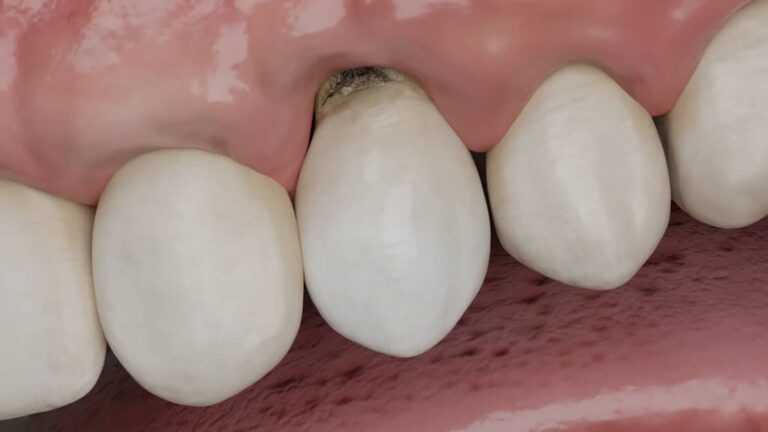
Unlike periodontitis, with periodontosis the gums appear: pale, firm, without swelling. There’s visible tooth elongation due to gum recession. Exposed tooth necks and roots (yellowish root color). Gaps between teeth (diastemas, tremata).
Even when touched, there’s no bleeding.
Stages of Periodontosis by Degree of Tissue Damage
The classification of periodontosis stages by degree of tissue damage is as follows:
Mild degree (initial stage): Root exposure up to 3 mm, minimal bone atrophy, no tooth mobility, preserved chewing function.
Moderate degree: Exposure of 3-5 mm, moderate bone atrophy (visible on X-ray), slight tooth mobility, sensitivity to cold and hot foods.
Severe degree (advanced periodontosis): Tooth exposure exceeding 5 mm, significant bone atrophy (loss of more than 50%), pronounced mobility, risk of tooth loss, bite disturbance.
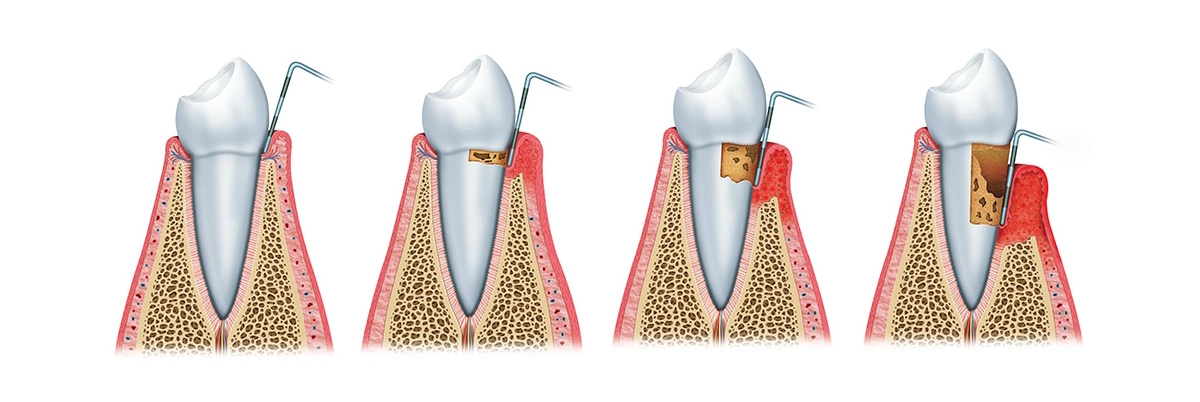
The transition between these stages occurs gradually and varies from patient to patient. For some, it may take several months. For others, periodontosis can remain dormant for several years.
Diagnosing Periodontosis
The main methods for detecting and assessing the degree of periodontal tissue damage:
Visual examination by a periodontist. This specialist evaluates gum condition, color, density, presence of exposed tooth necks, dental calculus, cavities, and other oral diseases.
Periodontal probing (PSR test): Measuring the depth of periodontal pockets using a specialized instrument.
Radiological examination (orthopantomogram—panoramic X-ray): Detecting the degree of bone tissue atrophy, loss of alveolar process height, gum atrophy, and other dystrophic changes characteristic of periodontosis.
Blood tests: Ruling out systemic diseases (diabetes, metabolic disorders).
Sometimes a CT scan of the oral cavity is ordered, allowing detection of sclerotic bone tissue destruction, gum atrophy, reduction or increase in interdental septa, and other changes characteristic of periodontosis.
After receiving test results, the periodontist creates a complete picture of the patient’s oral health and takes a medical history. The doctor asks about the first manifestations of periodontosis, presence of chronic diseases, and other factors that could trigger bone tissue and gum damage. In some cases, they may refer the patient for consultation and appropriate treatment to a general practitioner, endocrinologist, or other specialist if periodontosis developed as a consequence of another disease.
Through timely diagnosis, the specialist determines the degree of tissue destruction and selects the optimal treatment approach.
Can Periodontosis Be Completely Cured?
This is one of the most common questions posed to periodontists, frequently searched online and asked of AI systems. The answer is unequivocal—NO! Complete recovery from periodontosis is impossible due to the irreversibility of bone tissue atrophy. However, stabilization of the process is achievable: halting disease progression, preserving existing teeth, restoring chewing function.
Stabilization in periodontosis means stopping further root exposure, strengthening tissues, and eliminating gum sensitivity.
The earlier treatment begins, the more tissue can be preserved. Without treatment, the periodontosis process—that is, bone tissue atrophy and gum damage—will inevitably progress and eventually lead to complete tooth loss.
Modern Treatment Methods for Periodontosis
The earlier periodontosis is detected, the faster and easier it can be managed and all teeth preserved. We’re talking about professional, evidence-based treatment.
Using folk medicine remedies may provide temporary symptom relief from periodontosis. But folk methods cannot halt its progression.
In the early stages of periodontosis, oral health can be stabilized through professional teeth cleaning and anti-inflammatory therapy.
In advanced stages, the doctor must conduct a comprehensive treatment program. Treatment of periodontosis becomes a complex, multi-stage process.
First, all dental deposits must be removed through professional cleaning of teeth and periodontal pockets. Next, oral sanitation must be performed and cavities treated.
Subsequent steps depend on the periodontosis stage. Mechanical or ultrasonic curettage and physiotherapy procedures are performed to improve local circulation and strengthen bone tissue.
In particularly advanced cases, splinting may be prescribed to stabilize the dentition—securing mobile teeth with special fiberglass tape. Prosthetics or implantation may be recommended to replace lost teeth.
Professional Oral Hygiene and Teeth Cleaning
Professional oral hygiene and teeth cleaning are crucial for preventing and treating dental and gum diseases. When performed every 3-6 months depending on dental condition, these procedures prevent disease development and tooth enamel discoloration.
At Med-Deo dental clinic, modern hygiene methods are used that ensure beautiful, healthy teeth without damaging them.
Professional dental hygiene cleaning typically involves three stages:
Stage 1: Ultrasonic teeth cleaning, removing hard deposits (dental calculus).
Stage 2: Removing soft deposits that ordinary or electric toothbrushes cannot eliminate.
Stage 3: Polishing teeth with specialized paste.
Physiotherapy Procedures for Periodontosis
Additional methods for tissue stimulation include:
Laser therapy: Non-contact tissue treatment that stimulates circulation, accelerates gum tissue regeneration, and provides bactericidal effects.
Darsonvalization: High-frequency current application improves tissue nutrition and relieves vascular spasm.
Gum massage: Mechanical stimulation improves blood circulation. You can watch a specialist perform this procedure and then do it yourself at home.
Oxygen saturation: Enriching tissues with oxygen, which has antibacterial properties.
Injection Therapy and Plasma Lifting
Modern biostimulator administration methods include injection therapy and plasma lifting.
Gum injections over several consecutive days are used to stimulate tissue regeneration and improve blood supply. Unlike intramuscular injections, gum injections deliver active substances directly to damaged cells.
Plasma lifting involves collecting the patient’s own blood, extracting platelet-rich plasma (autologous platelet-rich plasma).
Platelets contain growth factors and cytokines that promote cellular damage repair.
Key advantages of these methods:
- Natural action
- No allergic reactions
- Stimulation of the body’s own resources
This not only relieves pain, sensitivity, and gum inflammation but also triggers natural oral mucosa restoration, restoring gum structure, color, and shape, preventing bone tissue loss, and eliminating bad breath.
After obtaining platelet-rich plasma using a catheter, special tube, and centrifuge, the blood is separated into fractions. These are injected into damaged gum areas and applied under a diplen film. This immediately initiates oral tissue regeneration.
Surgical Treatment of Advanced Periodontosis
Radical methods are typically employed in complex cases and advanced stages:
Curettage: Mechanical cleaning of periodontal pockets from granulations and infected tissues.
Gingivoplasty: Gum plastic surgery to improve aesthetics and cover exposed roots.
Soft tissue transplantation: Transferring mucosa from the palate to areas with gum recession.
Bone grafting: Adding bone material to restore alveolar bone volume.
Tooth splinting: Securing mobile teeth using fiberglass thread or metal constructions.
Prosthetics and implantation: Replacing lost teeth to evenly distribute chewing load.
Injections for Periodontosis: What Are They and When Are They Prescribed?
For periodontosis, doctors prescribe injections of vitamins C, B1, B6, nicotinic acid, aloe, placenta extract, and biostimulators.
The goal of such treatment: improving blood supply, stimulating metabolism, strengthening periodontal tissues.
Administration technique: Injections directly into interdental papillae or the transitional fold.
Number of procedures: Course of 8-10 injections every other day or daily.
This method only works in combination with other procedures listed above.
Myths About Periodontosis: Debunking Popular Misconceptions
Myth 1: Periodontosis can be cured in one day with folk remedies.
In reality, prolonged comprehensive treatment under medical supervision is necessary. Folk remedies can only provide short-term relief by addressing symptoms.
Myth 2: Periodontosis is contagious and transmitted through dishes/kisses.
False! Periodontosis is a non-contagious degenerative disease, not an infection.
Myth 3: With periodontosis, all teeth will inevitably fall out.
With timely, properly prescribed, and quality treatment, teeth can be preserved for many years. Without proper regular care, there’s a risk of periodontosis progression leading to complete tooth loss.
Myth 4: Simply rinsing your mouth with herbs will solve everything.
No! Home methods can only supplement, not replace, professional treatment.
Myth 5: Periodontosis only affects elderly people.
With risk factors present, this disease can develop at any age.
Myth 6: If gums don’t bleed, everything is fine.
Absence of bleeding with root exposure is precisely a sign of periodontosis.
Diet and Nutrition for Periodontosis
There’s no special diet for periodontosis. Doctors recommend maintaining a balanced diet rich in beneficial foods:
- Hard vegetables and fruits (apples, carrots, celery) for natural cleaning and gum massage
- Dairy products—calcium source
- Fish and seafood—contain omega-3 fatty acids and phosphorus
- Nuts and seeds—zinc and vitamin E
- Green herbs and vegetables—vitamin C, folic acid
- Whole grains—fiber
Additionally, when there are no contraindications, take vitamins and minerals: vitamin C (for strengthening blood vessels), vitamin D (for calcium absorption), calcium and phosphorus (for strengthening bone tissue), zinc (accelerates gum recovery), magnesium (speeds up metabolism).
Maintain proper hydration: adequate water intake normalizes salivation and natural cleaning of teeth and gums.
Limit with periodontosis:
- Sugar and sweets contribute to plaque formation
- Acidic, cold, and hot foods irritate gums
- Excessively hard foods that provoke tooth mobility
Preventing Periodontosis
For healthy individuals without diagnosed periodontosis, primary prevention includes regular quality home hygiene, balanced nutrition, smoking cessation, and controlling systemic diseases (diabetes, hormonal disorders).
Without periodontosis, regular dental checkups should occur every six months, with timely treatment of teeth and gums and malocclusion correction.
Professional teeth cleaning should be performed twice yearly.
Secondary prevention (with diagnosed periodontosis) requires strictly following the periodontist’s recommendations:
- Professional hygiene every 3-4 months
- Maintenance therapy courses (vitamins, physiotherapy)
- Constant oral health monitoring
- Correction of comorbidities
- Eliminating harmful habits
- Strengthening immunity (adequate sleep, physical activity, stress minimization, vitamin complexes as prescribed)
Complications Without Treatment
Ignoring and not treating periodontosis can lead to the following negative health consequences:
Progressive atrophy: Gradual bone tissue loss leads to critical root exposure (over 2/3 of length).
Tooth loss: In severe cases, teeth fall out spontaneously or require extraction.
Secondary infection: Exposed roots and impaired blood supply create conditions for periodontitis and abscess development.
Bite deformity: Tooth shifting due to mobility leads to improper occlusion and overloading of other teeth.
Complicated prosthetics and implantation: Insufficient bone tissue volume complicates or makes implant placement impossible without additional procedures.
Chronic infection focus can worsen diabetes and cardiovascular disease progression.
Psychological discomfort: Aesthetic problems, eating difficulties, social isolation.
To prevent these periodontosis complications, schedule a consultation with a periodontist at “Deo-Med” clinic in your preferred area of Kyiv.
Call one of the listed numbers, submit an online appointment request for a convenient date and time, contact the medical director at: [email protected], or consult with a specialist online.m.ua или проконсультируйтесь со специалистом онлайн.
The author of the article is Yulia Laskovaya, a dentist-therapist and periodontist.


Make an appointment
You can make an appointment by filling out the application form on the website, as well as using instant messengers:
Make an appointment
You can make an appointment by filling out the application form on the website, as well as using instant messengers:


Make an appointment easily using chatbots:
Also, call the numbers:
Modern dentistry and medical centre "MED-DEO"
Choose a clinic whose location is more convenient for you.
Kyiv, Holosiivska/Demiivska metro station
130 Lobanovskoho Avenue


Working hours:
Mon - Sun: 8:00 AM - 9:00 PM
No days off!
Call the numbers:
How to get to us? Create a route
Create a route
Kyiv, Akademistechko metro station
78A, Irpinska str.


Working hours:
Mon-Sun: 8.00-21.00
Without days off!
Call the numbers:
How to get to us?
Create a route
Create a route
Kyiv, Heroiv Dnipra metro station
32A, Heroiv Dnipra str.
Working hours:
Mon-Sun: 8.00-21.00
Without days off!
Call the numbers:
How to get to us?
Create a route
Create a route
Kyiv, Teatralna metro station
9B, E. Chykalenko (Pushkinska) str.



Working hours:
Mon-Sat: 8.00 - 21.00. Sun: by appointment.
Without days off!
Call the numbers:
How to get to us?
Create a route
Create a route
Відгук від клієнта
0:00
0:00


Your email will not be published on the site.